Tokyo vs Seoul: Which City Should You Visit First? (2026)
Disclosure: Some links in this guide are affiliate links. If you book or buy through them, we may earn a small commission at no extra cost to you — it helps keep our guides free.
You want a cheaper, more compact, more social city in fewer days.
See hotels in Seoul →You want depth, variety from temples to neon and food precision.
See hotels in Tokyo →- Tokyo beats Seoul for most first trips to East Asia; Seoul wins on value and nightlife.
- Budget hotels start around USD 30 a night in Seoul versus about USD 44 in Tokyo.
- Pick Seoul for a cheaper, more compact, more social city.
Tokyo beats Seoul for most first trips to East Asia, while Seoul wins on value and nightlife: budget hotels start around USD 30 a night in Seoul versus about USD 44 in Tokyo, and the nonstop from New York is roughly 1 hour 20 minutes shorter to Tokyo. Pick Tokyo for depth, temples-to-neon variety and food precision.
Pick Seoul if you want a cheaper, more compact, more social city where you can do more in fewer days.
| Factor | Tokyo | Seoul |
|---|---|---|
| Best for | First-timers, families, food lovers | Budget travelers, couples, nightlife |
| Budget hotel per night | USD 44–76 (JPY 7,000–12,000) | USD 30–70 |
| Mid-range hotel per night | USD 95–190 (JPY 15,000–30,000) | USD 70–180 |
| Base subway fare | USD 1.14 (JPY 180) | USD 1.14 (KRW 1,550) |
| Nonstop from New York (JFK) | About 14 hr 25 min | About 15 hr 45 min |
| Entry for US passports | Visa-free up to 90 days | Visa-free; K-ETA optional through Dec 31, 2026 |
| Ideal first visit | 4–5 days | 3–4 days |
Prices in this article are converted at USD 1 = JPY 158 and USD 1 = KRW 1,360 (late September 2026 rates).
The short verdict for each type of traveler
First-timers: Tokyo. It has more iconic sights, more distinct neighborhoods and the kind of culture shock most Americans are hoping for on a first trip to Asia. The subway map is intimidating on day one, but signage is in English and trains are punctual.
Couples: Seoul. Palaces at golden hour, rooftop bars in Itaewon, late-night Korean barbecue and cafe-hopping in Seongsu make it the easier city to wander together without a plan.
Families: Tokyo. Spotless stations, convenience stores on every block, Disney and teamLab, and a quieter street culture make it lower-stress with kids.
Budget travelers: Seoul. The biggest savings are on hotels at the bottom of the market. Subway fares are effectively identical once converted, so beds and food are where Seoul pulls ahead.
What things actually cost
Hotels are the line item that decides most budgets. In Tokyo, compact business hotels with a private bathroom run JPY 7,000–12,000 (USD 44–76) and mid-range rooms run JPY 15,000–30,000 (USD 95–190). In Seoul, expect roughly USD 30–70 for budget stays and USD 70–180 for mid-range. The gap narrows sharply at the top: Seoul luxury hotels now routinely cross KRW 1 million (about USD 735) a night in peak periods.
Getting around costs almost the same. Tokyo Metro’s base fare is JPY 180 (USD 1.14), or JPY 178 on an IC card. Seoul’s adult base fare rose to KRW 1,550 (USD 1.14) on a transit card in June 2025, according to the Korea Herald.
Taxis start at KRW 4,800 (USD 3.53) for the first 1.6 km in Seoul and JPY 500 (USD 3.16) for about the first kilometer in Tokyo, but Tokyo meters climb faster on longer rides.
In Seoul, a bowl of ramen or noodles runs KRW 10,000–15,000 (USD 7–11) and a sit-down dinner without alcohol is around KRW 30,000 (USD 22). Tipping is not expected in either country, so leave the US habit at home.
One new Japan cost: since July 1, 2026, the international departure tax is JPY 3,000 (USD 19) per person, triple the old rate, as reported by The Japan Times. It is built into your airfare.
Getting around: Seoul is easier on foot, Tokyo on rails
Seoul is more compact. Many of its sights cluster around Jongno, Myeongdong and Insadong, so you transfer less and walk more. The catch is navigation: Google Maps still does not give reliable walking or turn-by-turn directions in Korea because of local map-data rules. Download Naver Map or KakaoMap before you land.
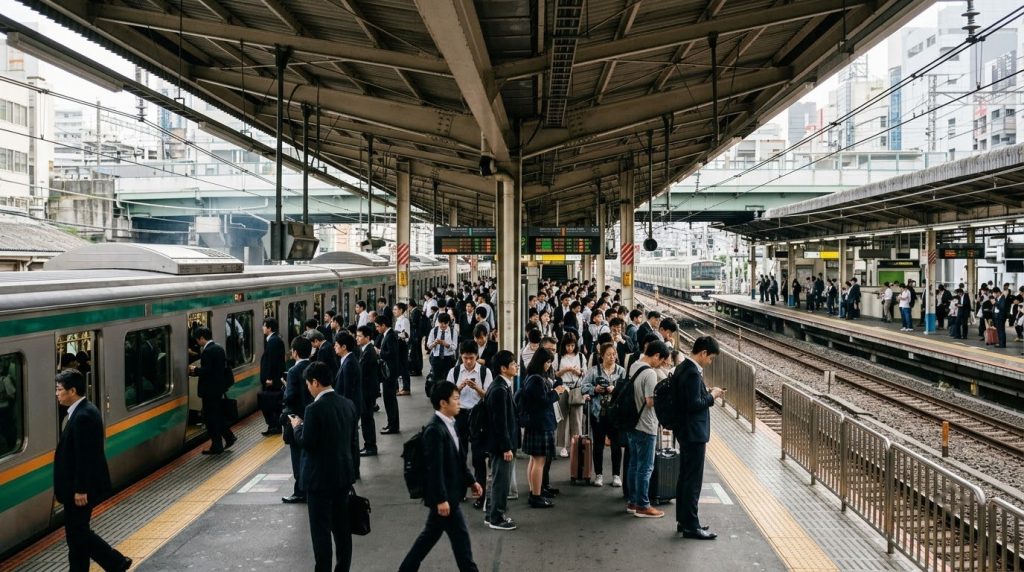
Tokyo’s rail network is enormous and run by several operators, so expect more transfers. In exchange, Google Maps works perfectly there.
Sights and experiences: Tokyo has more depth
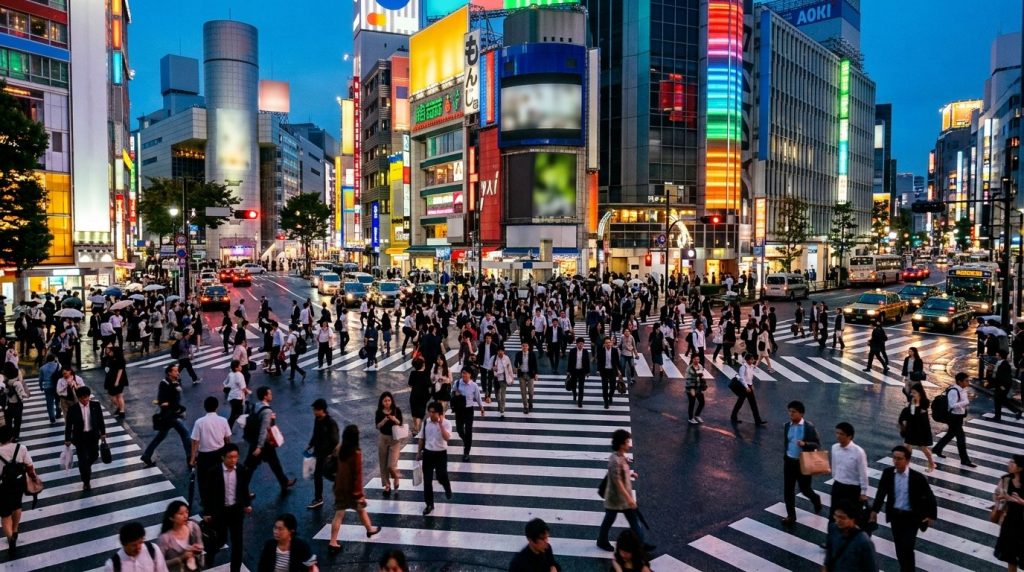
Tokyo rewards a longer stay. Asakusa, Shibuya, Shinjuku, Harajuku, Yanaka and Odaiba each feel like a different city, and our 4-day Tokyo itinerary shows how to fit the essentials in without burning out.
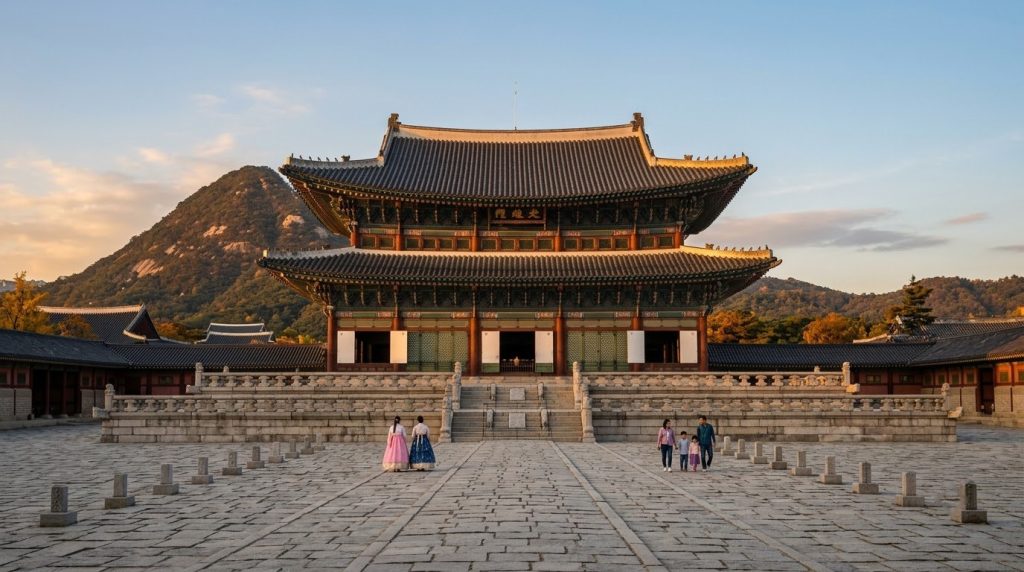
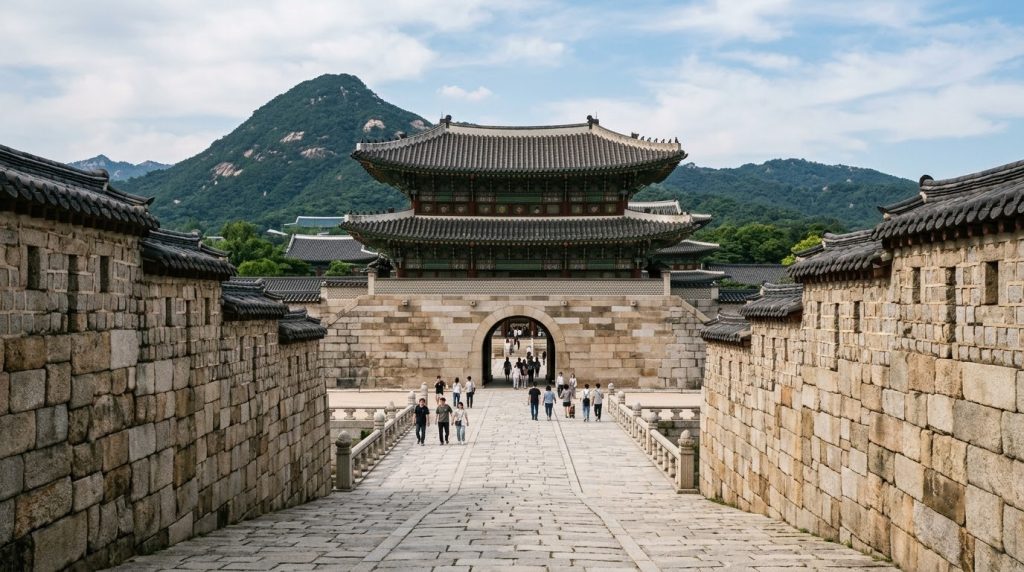
Seoul packs its highlights tighter. Gyeongbokgung Palace, Bukchon Hanok Village, the N Seoul Tower, Gwangjang Market and the Han River parks can fill three busy days. Our list of the best things to do in Seoul ranks which ones are worth your time and which are overhyped. If K-pop, K-beauty or Korean dramas are part of the reason you are going, Seoul wins outright.
Day trips and second cities
Both cities make excellent bases. From Tokyo, Nikko, Hakone and Kamakura are classic one-day escapes, and the Nozomi bullet train reaches Kyoto in about 2 hours 10 minutes, which is why many travelers pair the two. Our guide to the best day trips from Tokyo covers the logistics.
From Seoul, the DMZ is the trip most Americans prioritize, followed by Suwon’s Hwaseong Fortress and Nami Island. See our full rundown of day trips from Seoul. The fastest KTX trains reach Busan in about 2 hours 15 minutes if you want beaches and seafood on the same trip.
How long to spend in each: sample 7-day and 10-day splits
With 7 days total, a 4-3 split favoring Tokyo works for most first-timers: four days covers Shibuya, Shinjuku, Asakusa and a half-day in Harajuku, with enough left over for one of the day trips covered above, usually Kamakura or Nikko depending on whether temples or hot springs appeal more.
Three days in Seoul is tight but workable if the stay sticks to Jongno, Myeongdong and one neighborhood such as Hongdae or Seongsu, skipping a second-city day trip entirely.
Travelers who care more about nightlife, food and value than ticking off famous sights do better flipping the split toward Seoul, using the extra day there for Suwon’s Hwaseong Fortress or a slower day around the Han River parks.
With 10 days, a 6-4 split is the easiest version of this trip: six days in Tokyo covers the main neighborhoods plus a full day trip to Kyoto or Hakone, and four days in Seoul fits the main palaces, Hongdae, Myeongdong and either the DMZ or Nami Island without feeling rushed.
A domestic flight connects the two cities faster than a shorter in-between hop through a connecting hub, so book that leg early once dates are fixed.
Whichever split, build in one deliberately unscheduled day per city. Both destinations reward wandering a neighborhood without a checklist, and a 7 or 10-day trip packed with timed reservations and tours tends to produce the most exhausted version of the trip rather than the most memorable one.
The decision between a 4-3 and 3-4 split often comes down to one question: is this a food-and-shopping trip or a sightseeing-and-culture trip? Travelers who already know they prefer one city’s vibe from past trips should lean the split further in that direction rather than forcing an even split neither city really earns.
Entry rules and flights for Americans
US passport holders can visit Japan visa-free for up to 90 days as temporary visitors. South Korea has extended its K-ETA exemption for US citizens through December 31, 2026, per the Korean Consulate General in New York. You can still apply for a K-ETA for KRW 10,000 (about USD 7), but it is optional until then.
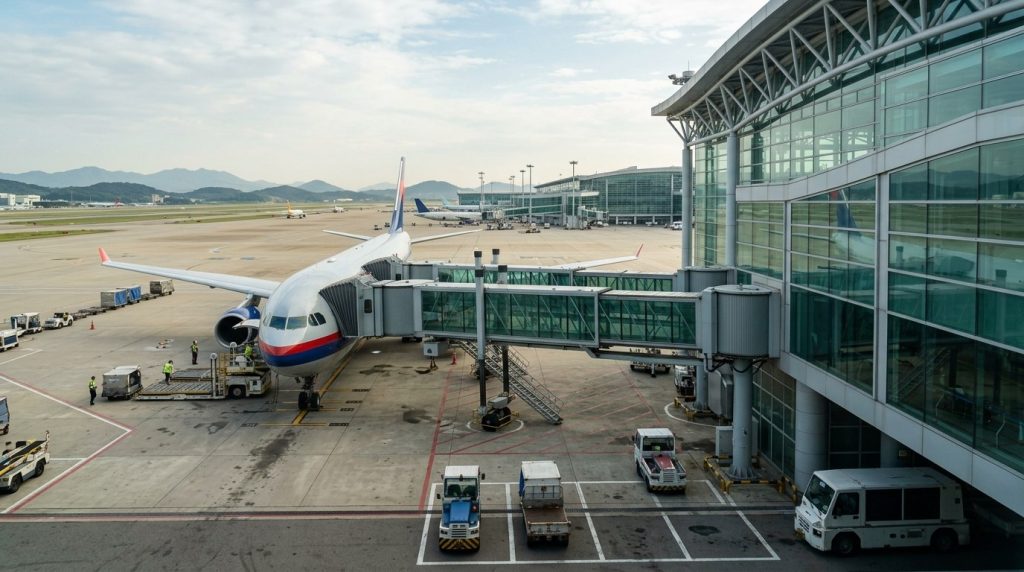
Flights from New York average about 14 hours 25 minutes to Tokyo Haneda and 15 hours 45 minutes to Seoul Incheon.
When to go
Spring and fall are the sweet spots in both cities, with mild temperatures and the best light for photos. Summers are hot and humid in each, and both get crowded around their national holidays. For month-by-month detail on Korea’s capital, see our breakdown of the best time to visit Seoul.
Seoul or Tokyo with kids
Tokyo is generally the easier of the two for a family with young kids, mainly down to infrastructure: most train stations have an elevator, though it is not always next to the main entrance, and department stores and larger stations typically have nursing rooms. The trade-off is crowding.
Trains can be packed enough that navigating a stroller takes real planning, so many parents switch to a lightweight umbrella stroller or a carrier for the busiest lines and save a full-size stroller for quieter neighborhood walks.
A few Tokyo-specific rules are worth knowing before the trip: escalators are generally not meant to be used with a child still in the stroller, so look for the elevator signage rather than assuming the nearest escalator will do, and leave extra transfer time since not every platform exit has step-free access.
Seoul’s subway has made real accessibility improvements on its original lines, but elevators can still be harder to find than in Tokyo, and not every station exit is step-free. Families who have done both cities generally rate Seoul as doable with kids but a bit more of a learning curve on the transit side, which argues for building a little extra time into transfers rather than cutting connections close.
For kid-specific attractions, Tokyo’s teamLab exhibits and Disney properties are the headline draws and both get crowded, so booking timed tickets in advance matters more than almost anything else on a family Tokyo day. Seoul’s equivalent big-ticket family days tend to be theme parks outside the city center, which work better with a full day set aside rather than squeezed between other sights.
For meals, both cities are easier with kids than their reputations suggest. Many restaurants in both countries are used to family groups and will bring a high chair without being asked, and convenience stores, open long hours on almost every block, are a reliable backup for a tired kid who will not sit through a sit-down dinner.
The bigger adjustment for most American families is pace: fewer sights per day and more unstructured time around the hotel keep a trip with kids from unravelling by day three.
Where to stay
Tokyo: Shinjuku suits first-timers who want transit connections and late food; Asakusa suits families and budget travelers who want a calmer, older feel; Shibuya suits couples who want nightlife on the doorstep.
Seoul: Myeongdong is the easiest first-timer base, with airport buses and shopping; Hongdae suits younger travelers and night owls; Jongno and Insadong suit couples who want palaces within walking distance.
Find your Seoul hotel on the map
Live prices from Booking, Airbnb and more — move the map or change dates to compare stays across Seoul.
Frequently Asked Questions
Is Seoul cheaper than Tokyo?
Yes, mostly on hotels. Budget rooms in Seoul run about USD 30–70 a night against USD 44–76 in Tokyo, and mid-range stays follow the same pattern. Subway fares are nearly identical at about USD 1.14 a ride. At the luxury end the gap disappears, since top Seoul hotels can now exceed KRW 1 million a night in peak periods.
Should I visit Tokyo or Seoul first?
Visit Tokyo first if this is your first trip to East Asia. It offers more variety, more famous sights and easier navigation with Google Maps. Choose Seoul first if you have only three or four days, a tighter budget, or a specific interest in Korean food, K-pop or nightlife.
How many days do you need in Tokyo and Seoul?
Plan four to five days for Tokyo and three to four for Seoul. Tokyo’s neighborhoods are spread out and each deserves time, while Seoul’s main sights cluster closer together. With ten days total, split it roughly six and four, and connect the two cities with a short regional flight.
Can you do Tokyo and Seoul in one trip?
Yes, and it is a popular combination. The two capitals are a short flight apart, Americans need no visa for either country for a typical vacation, and open-jaw tickets let you fly into one city and home from the other. Budget for Japan’s JPY 3,000 departure tax on the Tokyo leg.
Is Seoul or Tokyo better for nightlife?
Seoul. Hongdae and Itaewon stay busy well past midnight, Korean barbecue and soju runs late, and drinks are generally cheaper. Tokyo has excellent nightlife in Shinjuku and Shibuya, but many small bars charge a cover fee and the last trains around midnight shape most nights out.
Planning the whole trip? Start with our Seoul travel guide for the overview, then use this page for the details.
Planning the whole trip? Start with our Tokyo travel guide for the overview, then use this page for the details.