
Disclosure: Some links in this guide are affiliate links. If you book or buy through them, we may earn a small commission at no extra cost to you — it helps keep our guides free.
Seoul Travel Guide: Best Photo Spots & Hidden Gems (2026)
Seoul hits you with contrast the moment you arrive. One minute you walk past a 600-year-old palace, the next you stand inside a futuristic design plaza where every surface glows with LED light. The city welcomed 17.5 million international visitors in 2024 (Korea Tourism Organization, 2025), and numbers keep climbing. This guide covers the spots that actually matter: where to get photos that don’t look like everyone else’s Instagram, viewpoints that won’t cost a fortune, and neighborhoods locals keep to themselves.
Key Takeaways
– N Seoul Tower, Gyeongbokgung Palace, and Bukchon Hanok Village are the top 3 photo spots — go before 8am to beat the crowds
– Ikseon-dong and Euljiro are Seoul’s best hidden gems, each under 15 minutes from central Seoul by subway
– Best time to visit is October (autumn foliage) or late March to early April (cherry blossoms) — avoid July-August monsoon
– T-money card costs 2,500 won and works on all subways, buses, and even convenience storesWe only recommend services we have researched thoroughly.
For more Asia travel inspiration, check our best tours in Tokyo and Bali travel guide.
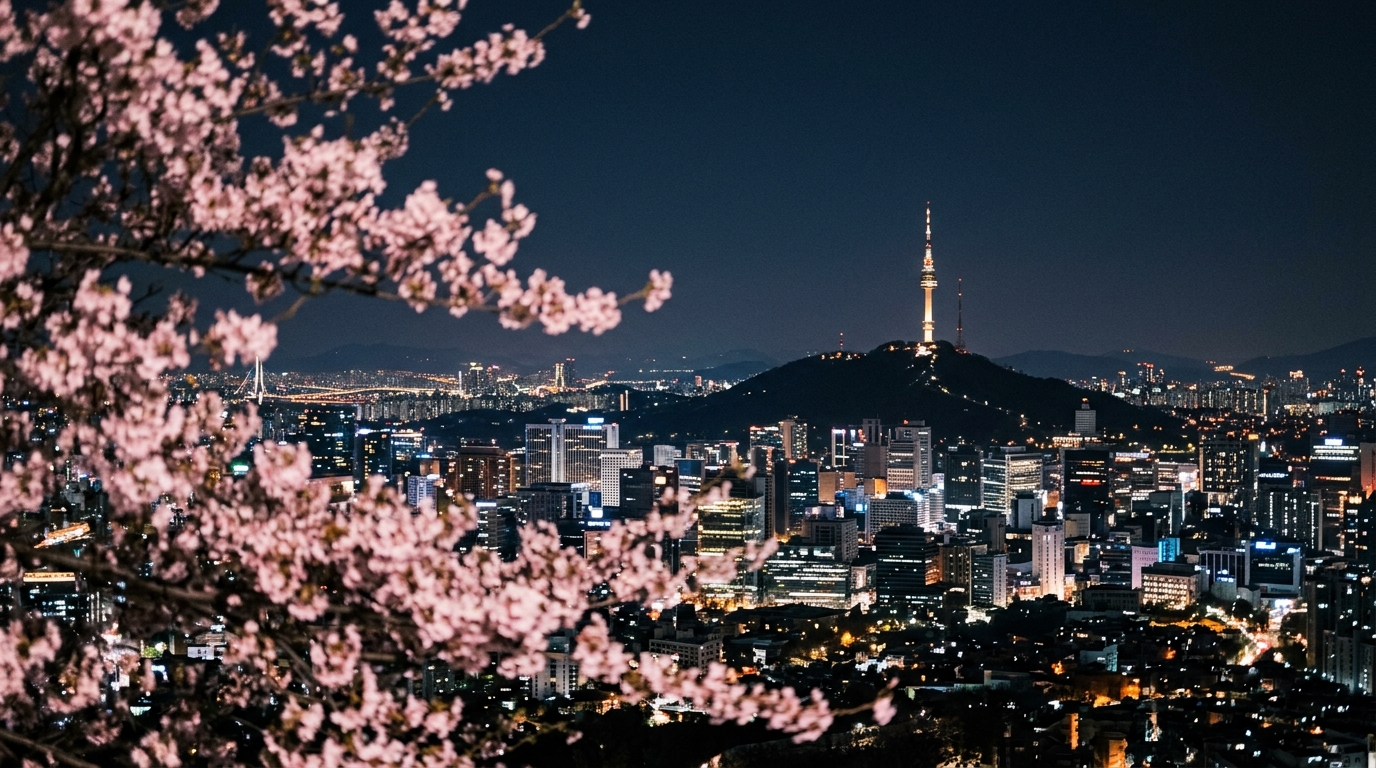
Best Photo Spots in Seoul
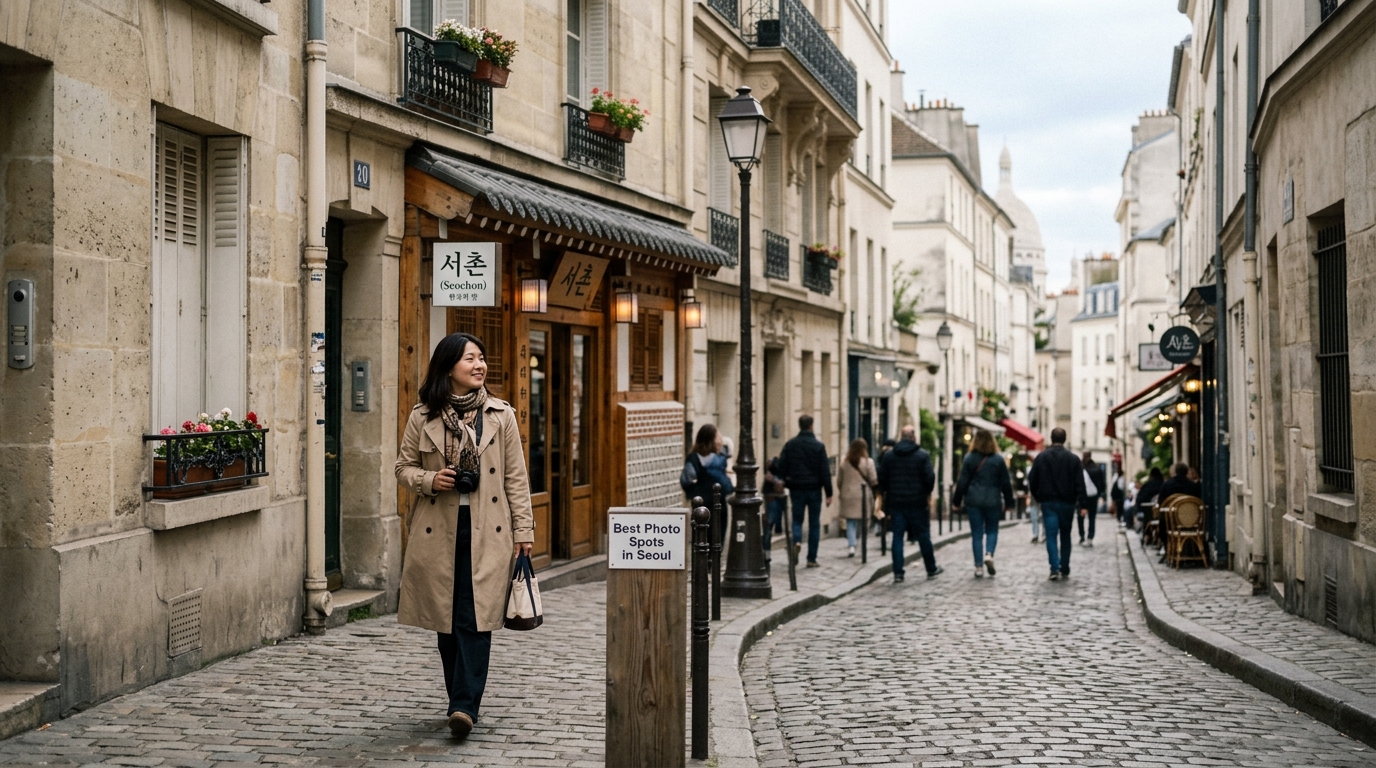
Seoul is absurdly photogenic once you know where to stand. These five spots deliver the strongest images, regardless of your camera gear.
N Seoul Tower
Perched 480 meters above sea level on Namsan Mountain, N Seoul Tower gives you a 360-degree view of the entire city. The tower draws over 8 million visitors a year (N Seoul Tower, 2025). The love locks terrace makes for colorful foreground interest with the city blurred behind.
We recommend: skip the cable car (15,000 won round trip) and walk up Namsan’s southern trail instead. It takes 25-30 minutes, costs nothing, and you’ll pass through the old city wall with zero crowds. Best light is golden hour — aim to arrive at 4:30pm for sunset shots with the Han River catching the last light.
Gyeongbokgung Palace
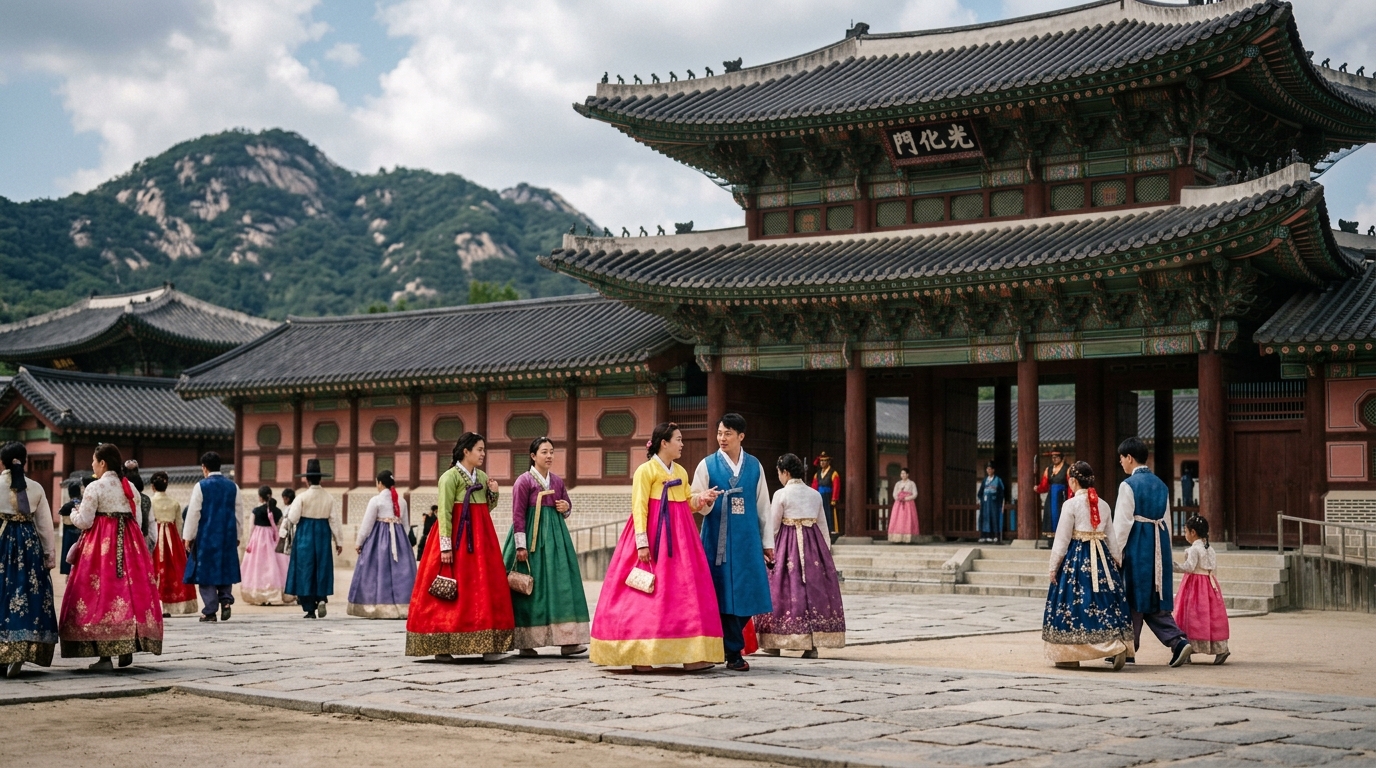
Gyeongbokgung is the largest of Seoul’s five grand palaces, built in 1395 during the Joseon Dynasty. The main gate (Gwanghwamun) with Bugaksan Mountain behind it frames perfectly in wide-angle. The real photo hack: rent a hanbok. Entry becomes free if you wear one, and rental shops near Exit 4 of Gyeongbokgung Station charge 15,000-30,000 won for 4 hours (Visit Seoul, 2026). The courtyard inside Geunjeongjeon Hall has the best symmetry — stand dead center and shoot straight on.
Bukchon Hanok Village
Bukchon holds over 900 hanok (traditional Korean houses), some dating back to the 1930s, wedged between Gyeongbokgung and Changdeokgung palaces. The narrow uphill alley on Bukchon-ro 11-gil is the money shot: tiled roofs cascading down toward modern high-rises in the distance. Problem: 20,000 people pack into these lanes on weekends. Go at 7am on a weekday. The light is soft, the streets are empty, and you’ll have the entire alley to yourself for 20-30 minutes before the first tour group shows up.
Dongdaemun Design Plaza
DDP, designed by Zaha Hadid, opened in 2014 and looks like something that crash-landed from 2150. The building has zero straight lines — 45,133 curved aluminum panels wrap the entire structure (Dongdaemun Design Plaza, 2025). Shoot the exterior at blue hour (right after sunset) when the LED rose garden lights up with 25,550 white roses. Inside, the spiral staircase near the design museum makes for striking architectural abstracts. Free entry to the exterior and most public areas.
Ihwa Mural Village
Ihwa sits on a hillside east of Daehangno, covered in murals painted by local artists since 2006 as part of a public art project. The angel wing mural on the main stairway is the most photographed, but walk 100 meters further up toward Naksan Park and you’ll find quieter murals with the city skyline behind them. Unlike Bukchon, this is a residential area — keep your voice down and don’t block doorways. Best light is late afternoon when the sun hits the east-facing walls.
The 4-Day Seoul Itinerary
The plan we use ourselves — sent straight to your inbox.
- Day-by-day route
- Where to stay
- Real 2026 costs
Free · No spam · Unsubscribe anytime
Find your Seoul hotel on the map
Live prices from Booking & Airbnb — tap a pin to compare stays around Myeongdong and Hongdae and beyond.
Where to Get the Best City Views
Namsan Park
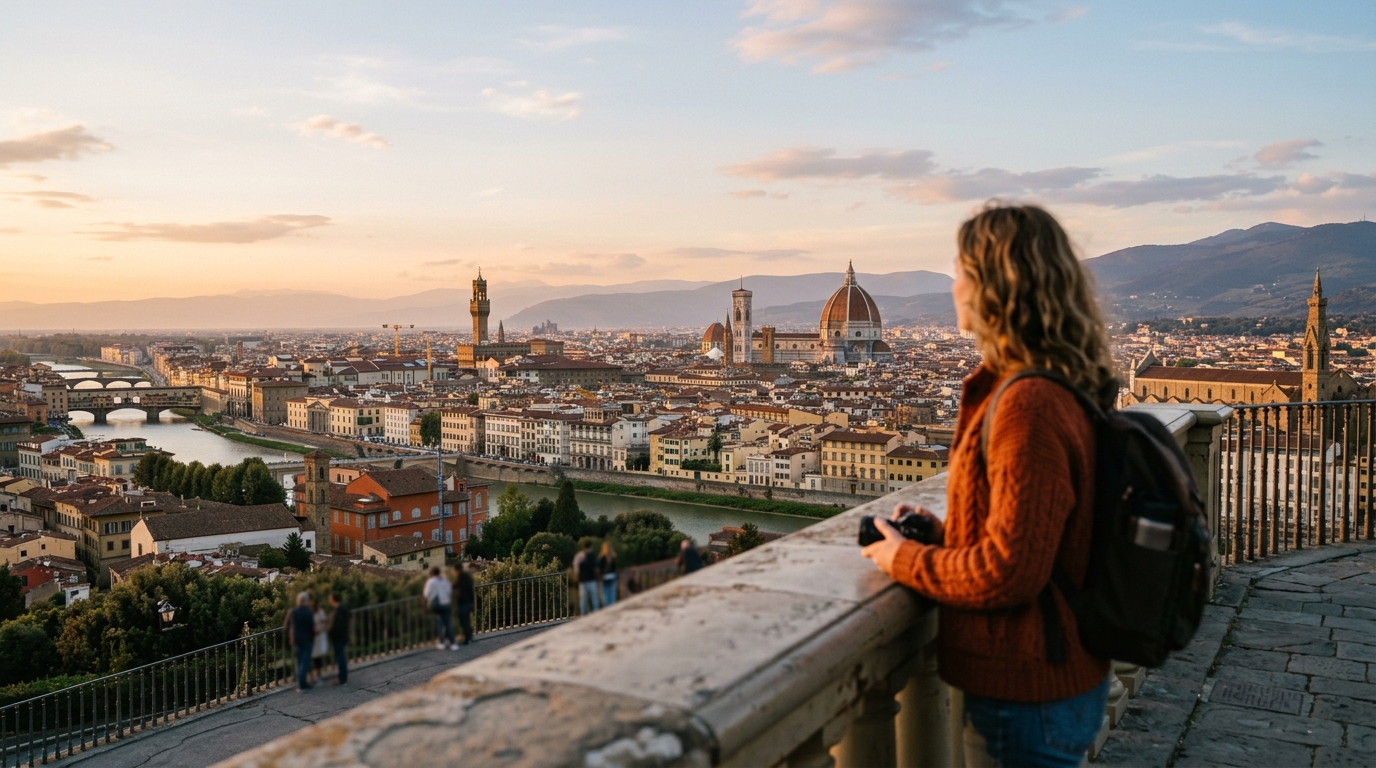
Namsan Park wraps around Namsan Mountain below the tower, and the northern pedestrian path offers the best free view of central Seoul. From the park’s northern edge near Namsan Library, you see Gyeongbokgung Palace, the Blue House, and Bukhansan Mountain in one sweep. The path is lit at night, making it one of the few safe nighttime viewpoints in the city.
Lotte World Tower
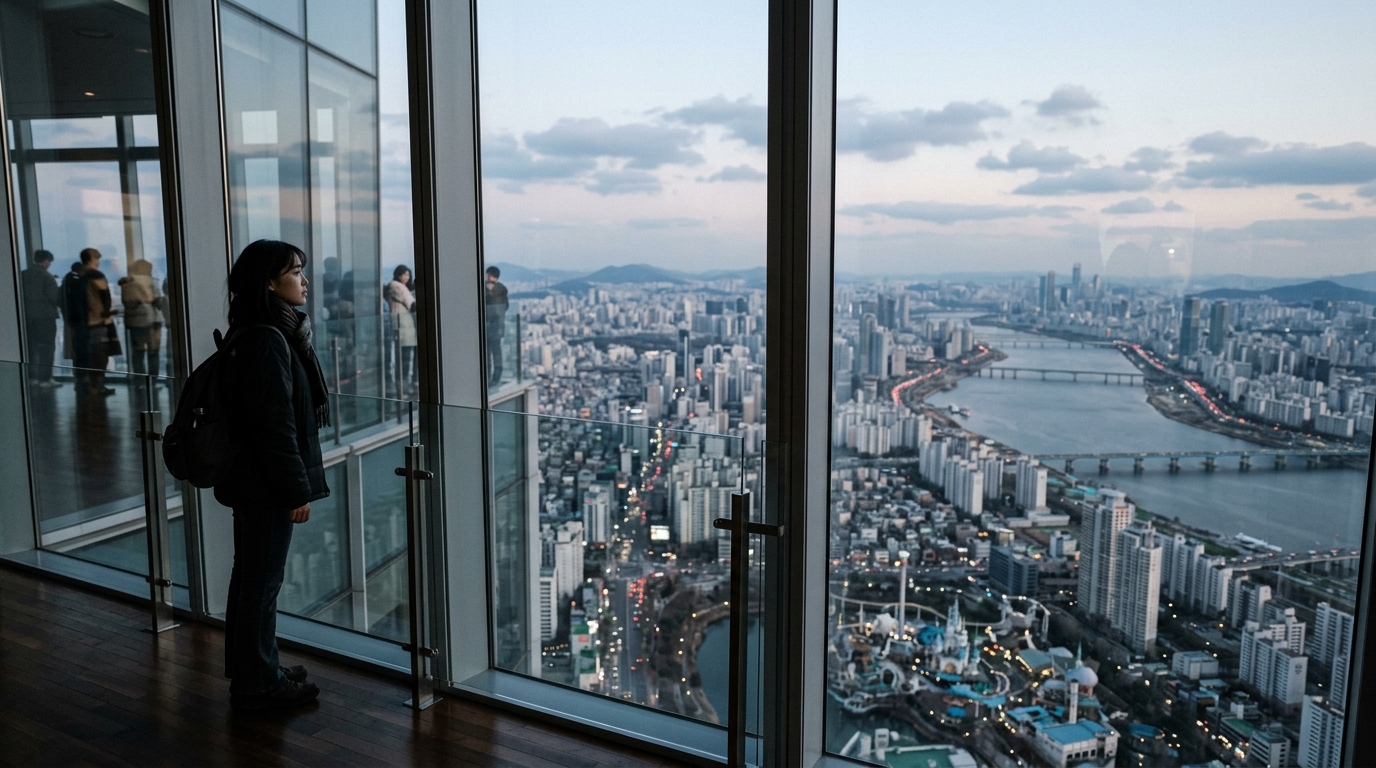
At 555 meters and 123 floors, Lotte World Tower is the tallest building in South Korea and the fifth tallest in the world. Seoul Sky observatory on floors 117-123 has a glass-floored Sky Deck that extends over the edge — look straight down and there’s nothing but 500 meters of air between you and the ground. Entry costs 27,000 won for adults (Lotte World Tower, 2026). Go on a clear weekday morning — weekends have 45-60 minute queues.
Haneul Park
Haneul Park sits on a former landfill site in the World Cup Park complex in Sangam-dong. The transformation from garbage dump to grassland is wild — now you stand in chest-high silver grass with the Han River and Seoul’s western skyline behind you. October is peak season when the pampas grass turns silver and the sunset lines up behind the river. Free entry, 291 wooden steps going up. Worth every step.
Nodeul Island
Nodeul Island is an artificial island in the middle of the Han River, connected by a pedestrian bridge from Yongsan Station. Most tourists zoom past it on the subway without noticing it exists. There’s a music lounge, a bookstore, and wide open grass lawns where young Seoulites picnic with fried chicken and beer. The view south toward the 63 Building and Yeouido at sunset is quietly spectacular. No entry fee, open until midnight.
Banpo Bridge
Banpo Bridge spans the Han River with 380 water jets shooting 43 meters sideways in rainbow colors, set to K-pop and classical music. The Moonlight Rainbow Fountain runs from April to October, with 20-minute shows at 8pm and 8:30pm on weekdays (Seoul Metropolitan Government, 2026). Shoot from the southern bank near Some Sevit floating islands for reflections of the colored water on the river surface.
Hidden Gems Locals Actually Recommend
Ikseon-dong
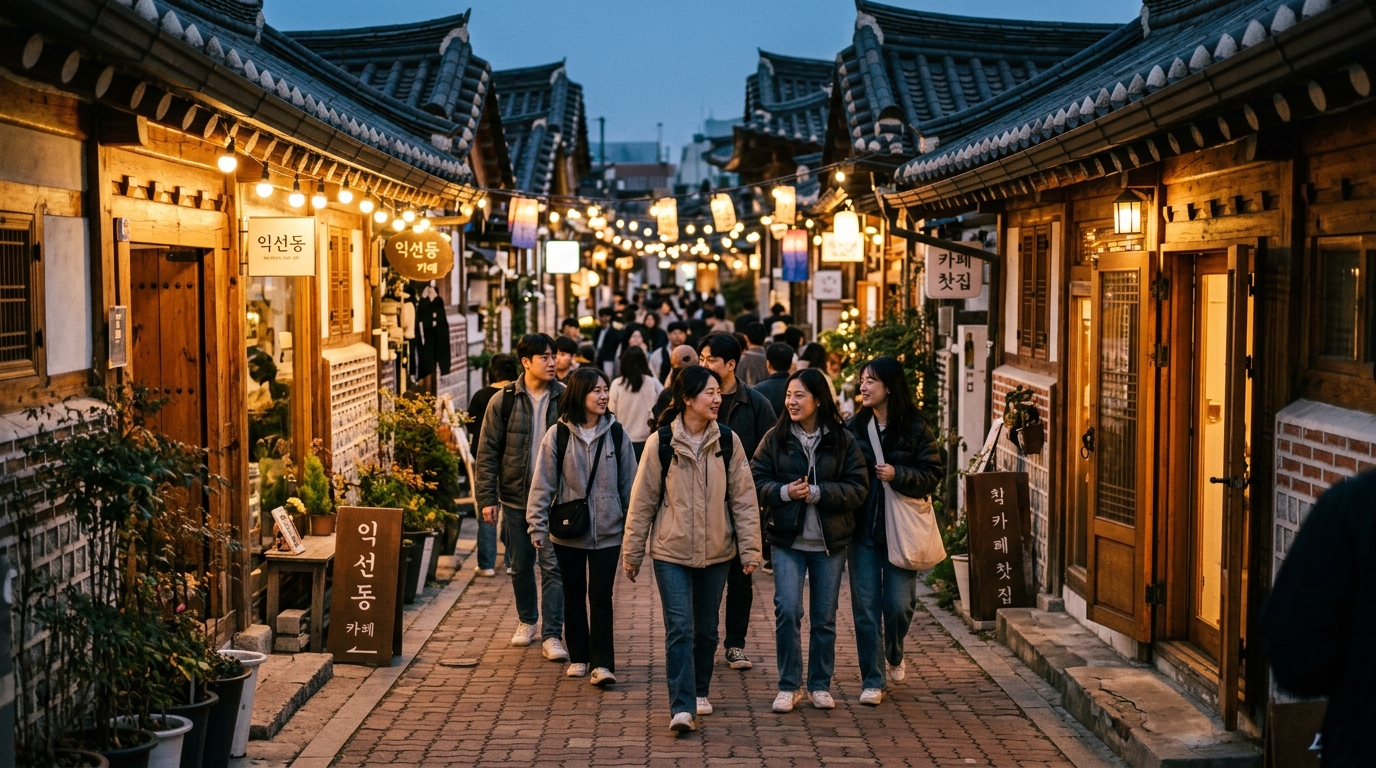
Ikseon-dong is a maze of 1920s hanok alleys squeezed between Insadong and Jongno, completely overlooked until about 2018 when young entrepreneurs started turning the old houses into concept cafes and indie boutiques. Each alley is maybe 2 meters wide, with tiled roofs brushing against each other overhead. Go on a Tuesday or Wednesday afternoon — weekends here feel like a K-drama queue. Cafe Onion, set in a converted hanok with a courtyard, is the most photogenic stop. Get the pandoro pastry and a flat white, then wander the back alleys behind it where nobody goes.
Euljiro
Euljiro is what happens when a post-war industrial district refuses to gentrify quietly. During the day, it’s still printing presses, metal workshops, and lighting stores stacked floor to ceiling. After dark, hidden bars and galleries open behind unmarked metal doors on the third and fourth floors of old factory buildings. Nogari Alley — a row of standing-room-only bars serving fried pollack and draft beer for under 5,000 won — is the entry point. From there, ask locals which “rooftop” is open that night. The scene shifts monthly.
Seonyudo Park
Seonyudo is a former water treatment plant turned eco-park on an island in the Han River. The old filtration tanks are now aquatic gardens with water lilies and carp. An arched pedestrian bridge connects it to the mainland near Hapjeong Station. On weekdays, you might see 20 people total. The old concrete structures with vines crawling over them make for moody, industrial-nature photos that look nothing like the rest of Seoul.
What makes Seonyudo special isn’t the park itself — it’s the full panorama of Seoul’s skyline that wraps around you from the center of the river. From here you see Mapo Bridge, the KBS building, Yeouido’s financial towers, and Namsan in the distance, all at once, with water on all sides.
Mullae Art Village
Mullae-dong has been Seoul’s ironworking district since the 1970s. About 15 years ago, artists started renting cheap spaces between the metal workshops, and now there are over 60 small galleries and studios tucked between functioning steel factories. The contrast is surreal — sparks from welding next door to an oil painting exhibition. Most galleries open around 2pm and close by 7pm. Don’t miss Gallery Meme in the central alley.
Gwangjang Market
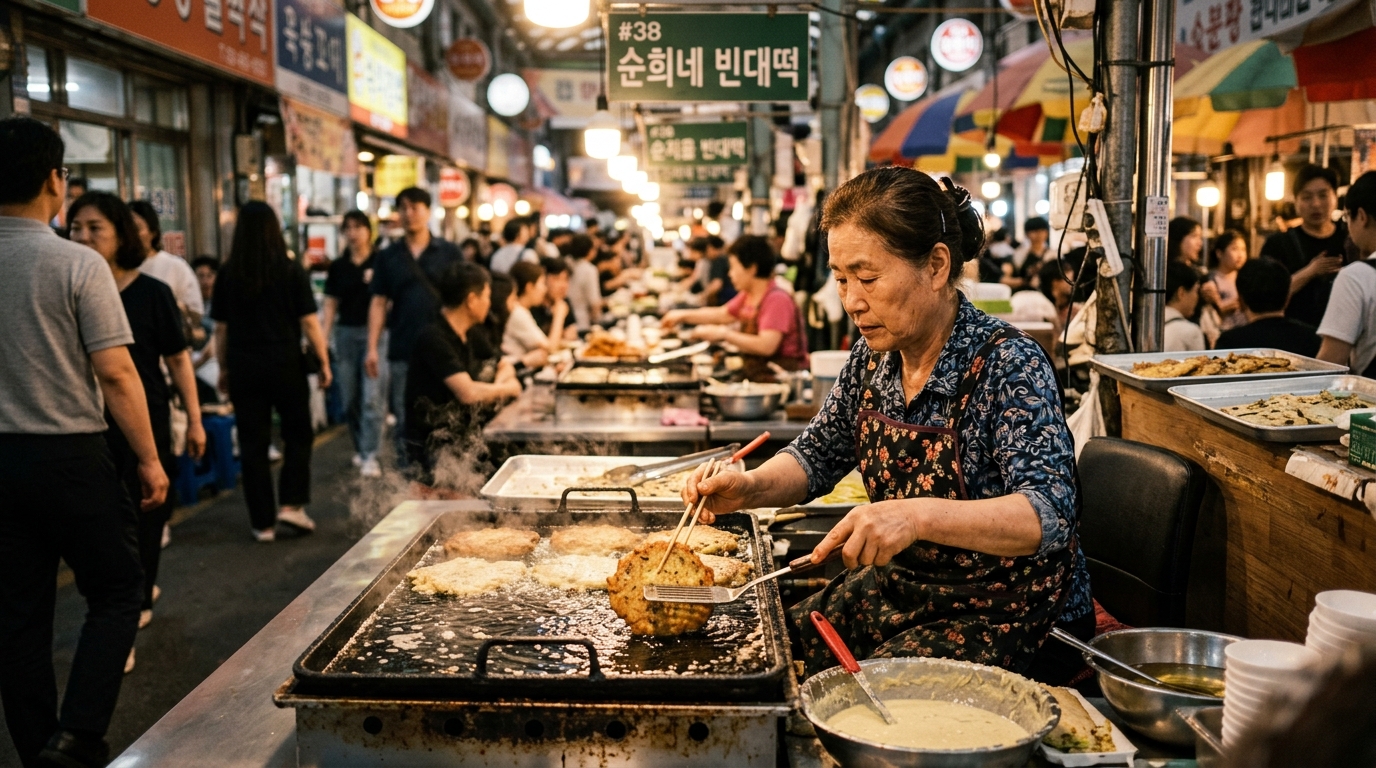
Gwangjang Market opened in 1905 and still operates as Seoul’s primary fabric and vintage clothing market on the second floor. But the ground floor food alley is why you’re here: over 200 food stalls serving bindaetteok (mung bean pancakes, 4,000 won), mayak gimbap (“addictive” mini seaweed rice rolls, 3,000 won), and tteokbokki in spicy gochujang sauce (Korea Tourism Organization, 2025). Go at 10:30am — the stalls are freshly stocked, the ajummas (aunties) are in a good mood, and you’ll get a seat without waiting. By noon the alley is shoulder-to-shoulder. Bring cash — many stalls don’t take cards.
The 4-Day Seoul Itinerary
Hour-by-hour plan, where to stay and what it really costs — free PDF.
Free · No spam · Unsubscribe anytime
First Time in Seoul? What to Know
Best Time to Visit
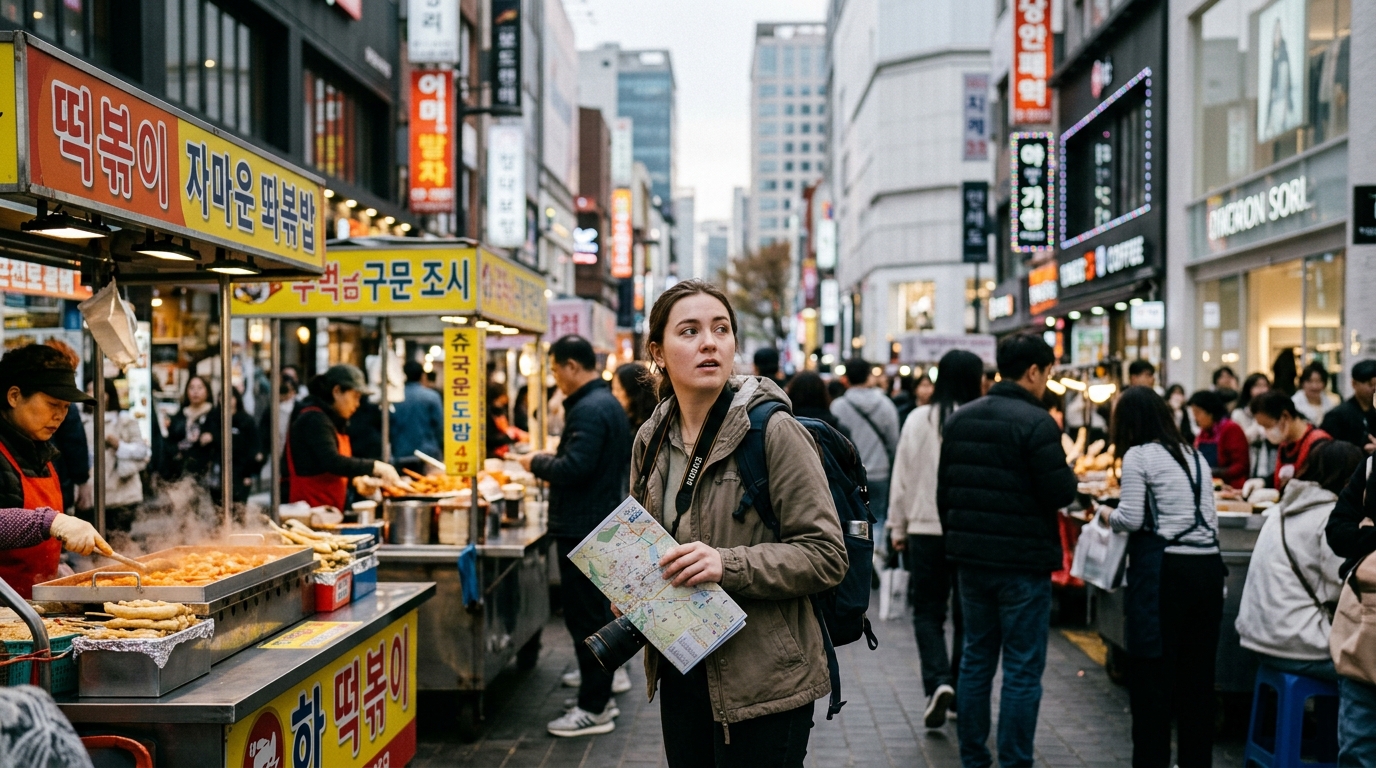
October is ideal: daytime temperatures hover around 20 degrees Celsius, the sky is crisp blue, and every mountain in the city turns red and gold with autumn foliage. Late March to early April delivers cherry blossoms — Yeouido and Seokchon Lake are the best viewing spots, but arrive before 8am. Avoid July (monsoon, 300mm+ of rain) and August (35 degrees Celsius with 90% humidity). For more seasonal travel tips across Asia, check our best time to visit Bali.
Getting Around Seoul
Buy a T-money card at any convenience store (2,500 won, then load with cash at subway station machines). One card works on all subways, buses, and even taxis. Subway fares are 1,250-1,550 won per journey depending on distance. Download Naver Map — Google Maps doesn’t work properly for walking directions in Korea. For taxis, Kakao Taxi is the local Uber equivalent, but you need a Kakao account. Regular taxis start at 3,800 won.
Where to Stay in Seoul
- Myeongdong — best for first-timers. Central, English-friendly, walking distance to Namsan and the palaces. Hotels from 80,000 won per night.
- Hongdae — best for nightlife and young travelers. Cheap eats, street performances, clubs until 5am. Guesthouses from 25,000 won per night.
- Insadong — best for culture and traditional experiences. Walking distance to Gyeongbokgung, surrounded by tea houses and galleries. Hanok stays from 100,000 won per night.
Seoul Budget Tips
Seoul can be surprisingly affordable once you know the system. Street food meals cost 3,000-5,000 won ($2-4 USD). Most palaces are free or under 3,000 won. Museums are free on the last Wednesday of every month. A 7-day SIM card with unlimited data costs around 30,000 won from SK Telecom or KT — pick it up at Incheon Airport arrivals. A travel eSIM from Airalo is the easiest option — install it before you fly and skip the airport SIM queue.
Must-Visit Places Beyond the Usual
Gyeongbokgung Palace + Hanbok Rental
Rent a hanbok from any shop near Exit 4 (15,000-30,000 won for 4 hours), enter Gyeongbokgung for free, and spend 90 minutes exploring the courtyards. Go right when it opens at 9am.
Insadong
Insadong is the cultural artery of Seoul, lined with galleries, antique shops, and traditional tea houses. Ssamziegil, a spiral-building shopping complex without stairs (you walk up a continuous ramp), packs 70-plus indie craft shops into one space. On weekends, the main street closes to cars and fills with calligraphers and street performers.
Hongdae
Hongdae (the area around Hongik University) is Seoul’s youth culture epicenter. The afternoon street performances along Eoulmadang-ro are better than the clubs at night — K-pop dance cover groups, acoustic guitarists, and magic shows compete for attention in an unofficial talent show that runs from 2pm until dark. Duck into any cafe basement for live indie music. Free entry, buy one drink.
Common Ground
Common Ground near Konkuk University is built from 200 shipping containers painted bright blue, housing over 70 indie fashion brands, pop-up stores, and food trucks in the central courtyard. The rooftop terrace on the third floor gives you a clean shot of the containers against the Seoul skyline. Open 11am-10pm daily, free entry.
Starfield Library
Starfield Library inside COEX Mall is a 13-meter-tall open library with over 50,000 books on floor-to-ceiling curved shelves under a glass ceiling. It’s free, open 10am-10pm, and the escalator in the center makes for symmetrically perfect wide-angle shots. Go at 10am on a weekday — by 1pm it’s packed. The library is directly connected to Samseong Station (Line 2).
Frequently Asked Questions
How many days do you need in Seoul?
Three to four days is the minimum for a balanced visit. Day 1: palaces and Insadong. Day 2: photo spots and Namsan. Day 3: hidden gems (Ikseon-dong, Euljiro, Seonyudo). Four days lets you add a Bukhansan hike or a DMZ day trip. For more city planning tips, see our Tokyo itinerary guide.
What is the best month to visit Seoul?
October offers the best combination of weather (15-22 degrees Celsius), scenery (autumn foliage across every mountain in the city), and manageable crowds outside the Chuseok holiday period. Book flights 2-3 months ahead for October — it’s the most popular month. You can compare flights on Aviasales to find the cheapest dates and routes.
Where should first-time visitors stay in Seoul?
Myeongdong is the best base for first-timers: central location, English-friendly, walking distance to Namsan, Gyeongbokgung, and Insadong. Hongdae is better if nightlife matters more. Insadong is ideal for cultural travelers.
Is Seoul expensive?
Seoul can be budget-friendly if you eat at local markets (meals from 3,000-5,000 won), use the subway, and visit free attractions. Mid-range travelers budget 80,000-150,000 won per day. Luxury travelers will find world-class hotels from 300,000 won per day upward.
Do I need to speak Korean in Seoul?
No — subway signs are in English, major attractions have English info, and younger Koreans in tourist areas speak basic English. But learn “annyeonghaseyo” (hello), “kamsahamnida” (thank you), and “juseyo” (please) — it goes a long way.