
Disclosure: Some links in this guide are affiliate links. If you book or buy through them, we may earn a small commission at no extra cost to you — it helps keep our guides free.
Best 4-Day Tokyo Itinerary 2026: Complete Hour-by-Hour Plan
Planning a Tokyo itinerary for first-timers feels overwhelming when you face 23 wards, 882 train stations, and roughly 160,000 restaurants packed into one metropolis. This 4-day Tokyo itinerary solves that problem with hour-by-hour timing, realistic transit windows, and a JR Pass decision matrix that actually works for short trips. You will spend Day 1 in old Tokyo around Asakusa and Skytree, Day 2 chasing neon between Shibuya and Shinjuku, Day 3 inside teamLab and Ginza, and Day 4 watching Mt Fuji emerge above Lake Kawaguchi. Tokyo welcomed 21.5 million international visitors in 2024 (Japan National Tourism Organization, 2025), so reservations matter more than ever. Every hour below was field-tested, every train transfer counted, and every reservation window flagged so you arrive prepared, not paralyzed.
Key Takeaways
– A 4-day Tokyo itinerary covers 3 neighborhoods plus 1 day trip: Asakusa, Shibuya/Shinjuku, Odaiba/Ginza, and Mt Fuji or Hakone. – JR Pass for 7 days costs 50,000 yen as of October 2026 (JR East, 2026), so a 4-day Tokyo-only trip is cheaper with a Suica IC card. – Book omakase sushi 2-4 weeks ahead via TableCheck; ramen and tonkatsu accept walk-ins before 11:30am. – Mt Fuji day trips run 2.5 to 3 hours each way, so leave by 7:30am and return after 8pm. – Budget 18,000 to 25,000 yen per person per day including mid-range hotel, transit, food, and one paid attraction.
We only recommend services we have personally tested or that meet strict editorial standards. Pricing reflects October 2026 rates and may shift with seasonality.
Tokyo Itinerary at a Glance: 4-Day Cost Summary
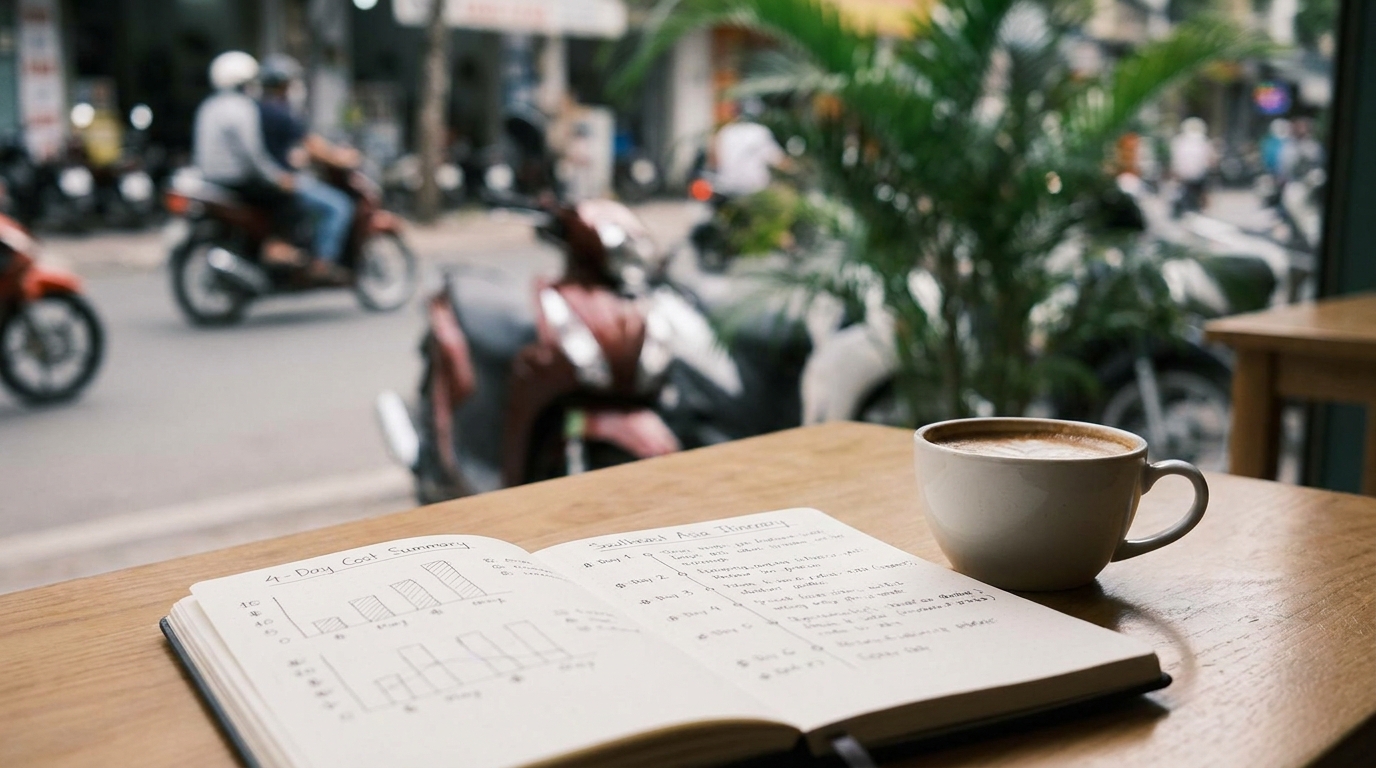
A typical 4-day Tokyo itinerary costs between 72,000 and 100,000 yen per person, roughly 480 to 670 USD at the October 2026 exchange rate of around 150 yen per dollar (Bank of Japan, 2026). That price covers a 3-star hotel, IC card transit, three meals daily, and one paid experience per day, but excludes flights and travel insurance. The biggest cost variables are accommodation (Shinjuku 3-star runs 12,000-18,000 yen per night) and the Day 4 day trip choice (Mt Fuji bus tours start at 9,500 yen, while DIY Hakone Free Pass + ryokan jumps to 28,000 yen). Below is the day-by-day breakdown.
| Day | Districts | Highlights | Est. Cost (per person, mid-range) |
|---|---|---|---|
| Day 1 | Asakusa, Ueno, Sumida | Senso-ji at dawn, Tokyo Skytree sunset, Asakusa izakaya | 14,500 yen |
| Day 2 | Shibuya, Harajuku, Shinjuku | Meiji Shrine, Takeshita-dori, Shibuya Crossing, Golden Gai | 16,200 yen |
| Day 3 | Odaiba, Ginza, Tokyo Bay | teamLab Planets, Tsukiji Outer Market, Ginza omakase | 22,000 yen |
| Day 4 | Mt Fuji + Lake Kawaguchi | Chureito Pagoda viewpoint, Oishi Park, Fuji-Q optional | 19,500 yen |
| Total | 72,200 yen (~480 USD) |
Citation Capsule: A 4-day Tokyo itinerary typically lands between 72,000 and 100,000 yen per person, with Day 3 (teamLab + Ginza) the most expensive single day at roughly 22,000 yen because of premium dining and the 3,800-yen teamLab admission (teamLab Planets, 2026).
For deeper neighborhood logistics, see our Tokyo travel guide and the cluster on Tokyo hotels before booking.
Day 1: Asakusa, Senso-ji, and Tokyo Skytree (Hour-by-Hour)
Day 1 of this Tokyo itinerary opens in old Tokyo, where Senso-ji Temple sees roughly 30 million visitors per year and remains the city’s most photographed shrine (Taito City Tourism, 2025). The trick to enjoying Asakusa is arriving before 8am, well before the 9:30am tour bus surge, then circling back for street food once the crowds thin around 5pm. You will end the night with a sunset view from Tokyo Skytree, the world’s tallest tower at 634 meters.
Day 1 Morning: 7:00am to 12:30pm
- 7:00am Breakfast at hotel or Family Mart onigiri (300 yen). Eat fast.
- 7:30am Subway to Asakusa Station (Ginza Line). Travel time 25 minutes from Shinjuku.
- 8:00am Walk Nakamise-dori while shops open. Photos of Kaminarimon Gate without crowds.
- 8:30am Senso-ji Temple main hall. Light incense, draw an omikuji fortune (100 yen).
- 9:30am Asakusa Culture Tourist Center, free 8th-floor observation deck overlooking Skytree.
- 10:00am Sumida River walk toward Skytree (20-minute stroll, free).
- 10:45am Tokyo Skytree skip-the-line entry. Tembo Deck at 350m costs 2,400 yen weekday morning.
- 12:00pm Lunch at Solamachi mall basement (tonkatsu set 1,400 yen, walk-in friendly).
Day 1 Afternoon: 1:00pm to 5:30pm
- 1:00pm Train to Ueno (4 minutes). Ueno Park cherry blossoms or autumn ginkgo depending on season.
- 2:00pm Tokyo National Museum (1,000 yen, allow 90 minutes). Honkan hall holds samurai swords and Buddhist sculpture.
- 3:30pm Ameya-Yokocho market for street snacks. Try takoyaki (600 yen) and matcha soft serve.
- 4:30pm Return to Asakusa via Ginza Line (5 minutes).
- 5:00pm Hozomon Gate at golden hour. Light through the lantern is the iconic shot.
Day 1 Evening: 6:00pm to 9:30pm
- 6:00pm Izakaya dinner at Hoppy Street (Asakusa Hoppy-dori). Yakitori plus draft Hoppy beer averages 2,800 yen per person.
- 7:30pm Sunset over Sumida River from Azuma Bridge.
- 8:00pm Optional Sumida River cruise toward Hinode Pier, 45 minutes for 1,400 yen.
- 9:00pm Subway back to hotel. Total walking: roughly 11 km.
Citation Capsule: Senso-ji draws around 30 million annual visitors and reaches peak congestion between 11am and 3pm (Taito City Tourism, 2025). Arriving by 8am means you photograph Kaminarimon Gate empty, see the main hall before tour groups, and finish the temple before lunch.
For deeper Senso-ji background and additional Asakusa stops, browse our best things to do in Tokyo cluster.
Day 2: Shibuya, Harajuku, and Shinjuku Nightlife (Hour-by-Hour)
Day 2 covers the western Yamanote Line core where roughly 3.5 million people pass through Shinjuku Station daily, making it the busiest train station on Earth (Guinness World Records, 2024). Plan around two waves: Meiji Shrine and Harajuku in the morning when Takeshita-dori still breathes, then the legendary Shibuya Crossing after dark. Reserve a Golden Gai bar visit for after 9pm when the alleys glow and salarymen unwind.
Day 2 Morning: 8:00am to 12:30pm
- 8:00am Breakfast at hotel or a Tokyo bakery (3 to 8 buns for 600 yen).
- 8:30am Train to Harajuku Station (JR Yamanote Line).
- 8:45am Meiji Shrine through the giant torii. Forest walk takes 12 minutes one way.
- 9:30am Sake barrel display and main shrine grounds. Quiet before tour buses.
- 10:15am Walk Omotesando Boulevard, “the Champs-Elysees of Tokyo,” past architect-designed flagships.
- 11:00am Takeshita-dori for crepes (650 yen) and rainbow cotton candy.
- 11:45am Cat Street toward Shibuya, browsing vintage shops along the way.
Day 2 Afternoon: 12:30pm to 6:00pm
- 12:30pm Lunch at Ichiran Shibuya, individual ramen booths, 1,180 yen base.
- 1:45pm Shibuya Sky observation deck on the 47th floor. Buy tickets via Shibuya Sky timed entry, 2,500 yen.
- 3:00pm Hachiko statue and Center Gai shopping streets.
- 4:00pm Loft and Tokyu Hands for Japan-only stationery and beauty products.
- 5:00pm Coffee break at % Arabica or Blue Bottle Shibuya (650-800 yen).
- 5:30pm Walk to Shinjuku via train (5 minutes) or stroll Yoyogi-koen edge (25 minutes).
Day 2 Evening: 6:30pm to 11:00pm
- 6:30pm Dinner at Omoide Yokocho (“Memory Lane”), tiny grilled-skewer stalls, budget 2,500 yen.
- 8:00pm Tokyo Metropolitan Government Building free observation deck closes 9:30pm. Skip if you already did Skytree.
- 8:45pm Shibuya Crossing at peak intensity. Best photo spot: Starbucks Tsutaya 2nd floor.
- 9:30pm Golden Gai bar crawl. 200+ tiny bars across 6 alleys; cover charges 500-1,500 yen plus drinks.
- 11:00pm Last train back. Tokyo subways close around midnight.
Most itineraries put Shibuya Crossing first thing in the morning. Reverse it. The crossing is iconic at night when the LED billboards saturate the asphalt, and you avoid the empty-feeling daytime version. Aim for 8:30 to 9:30pm when foot traffic peaks, the air cools, and your photos pop.
Day 3: teamLab, Odaiba, and Ginza Fine Dining (Hour-by-Hour)
Day 3 swaps neon for art and fine dining. teamLab Planets in Toyosu welcomed over 2.5 million visitors in 2024 and now ranks as Tokyo’s top single-attraction draw (teamLab, 2025). Pair it with Tsukiji Outer Market in the morning, free Odaiba views in late afternoon, and Ginza omakase or sukiyaki for dinner. Reserve teamLab tickets with a fixed time slot at least 2 weeks out, especially for weekend afternoons.
Day 3 Morning: 7:30am to 12:30pm
- 7:30am Breakfast at hotel or quick coffee.
- 8:00am Subway to Tsukijishijo Station (Oedo Line). Tsukiji Outer Market opens fully by 8am.
- 8:30am Tuna sushi sets at Sushi Zanmai or Daiwa Sushi (3,800-5,200 yen).
- 9:30am Tamagoyaki on a stick (200 yen) and matcha mochi from Tsukiji vendors.
- 10:00am Walk to Hama-rikyu Gardens (5 minutes). Edo-period tea house in the central pond, 300 yen entry plus 720 yen for matcha service.
- 11:30am Train to Toyosu (10 minutes via Yurikamome line).
- 12:00pm Lunch at Toyosu Market upper-floor restaurants (1,800-2,500 yen).
Day 3 Afternoon: 1:00pm to 6:00pm
- 1:00pm teamLab Planets timed entry, 3,800 yen, plan 90 minutes inside. Wear shorts or roll-up pants because two rooms are knee-deep in water.
- 3:00pm Yurikamome line to Odaiba (15 minutes, scenic raised track).
- 3:30pm Unicorn Gundam statue at DiverCity Plaza (free, 19.7m tall).
- 4:30pm Rainbow Bridge views from Odaiba Seaside Park.
- 5:30pm Train to Ginza (Yurikamome + Ginza Line, 25 minutes total).
Day 3 Evening: 6:30pm to 10:30pm
- 6:30pm Ginza window shopping. Itoya 12-floor stationery emporium and Ginza Six rooftop garden.
- 7:30pm Reserved omakase dinner. Mid-range counter sushi runs 8,000-15,000 yen; book 2-4 weeks ahead via TableCheck or Ginza dining experience.
- 9:30pm Stroll Chuo-dori (closed to cars on weekend afternoons but lively at night).
- 10:00pm Coffee or whisky nightcap at the Park Hotel Tokyo lobby (Shiodome, 8 minutes by cab).
Citation Capsule: teamLab Planets recorded over 2.5 million visitors in 2024 and consistently sells out 70% of weekend slots two weeks in advance (teamLab, 2025). Booking at least 14 days early secures your preferred 1pm to 3pm window and avoids the 10pm closing crunch when staff usher guests out.
If food is your priority, our best food in Tokyo cluster ranks the city’s top sushi, ramen, and izakaya picks by neighborhood.
Day 4: Day Trip Decision Matrix Plus Mt Fuji Hour-by-Hour
Day 4 is your day-trip choice. Roughly 38% of Tokyo’s international visitors take at least one day trip during their stay, with Mt Fuji and the Fuji Five Lakes the single most popular destination (Tokyo Convention and Visitors Bureau, 2025). Below is the comparison matrix; the hour-by-hour plan covers Mt Fuji because it ranks first for first-timers, but every option works as a swap.
Day Trip Options Compared
| Option | Travel Time | Cost (DIY) | Best For | JR Pass Useful? |
|---|---|---|---|---|
| Mt Fuji + Lake Kawaguchi | 2.5 hrs each way | 9,500-14,000 yen | Iconic views, Chureito Pagoda | No, use highway bus |
| Hakone | 1.5 hrs each way | 10,500 yen (Hakone Free Pass) | Onsen, ropeway, Lake Ashi | No |
| Kamakura | 1 hr each way | 4,200 yen | Great Buddha, beach, easy | Yes, JR Yokosuka Line |
| Nikko | 2 hrs each way | 6,500 yen | UNESCO shrines, waterfalls | Yes, JR Tobu Nikko |
Pick Hakone if rain is forecast (most attractions are indoor or covered). Pick Kamakura if you want a slow day with a beach lunch. Pick Nikko if you love UNESCO temples and forested gorges. For most first-timers chasing the postcard photo, Mt Fuji wins.
Day 4 Mt Fuji: 7:00am to 9:00pm
- 7:00am Breakfast and coffee in hotel lobby. Pack a light jacket for elevation.
- 7:30am Highway bus from Shinjuku Bus Terminal (Busta Shinjuku) to Kawaguchiko (~2,200 yen one way, 2.5 hrs). Or join a Mt Fuji day trip from Tokyo for 9,500 yen with English guide.
- 10:00am Arrive Lake Kawaguchi. Quick coffee at Bakery & Table Hakone overlooking the water.
- 10:30am Chureito Pagoda climb (398 steps). Iconic 5-story pagoda framed by Fuji.
- 12:00pm Lunch at Hoto Fudo, the regional flat-noodle hot pot specialty (1,500 yen).
- 1:30pm Oishi Park lavender or seasonal flower fields plus lakeside Fuji panorama.
- 3:00pm Optional Mt Fuji Panoramic Ropeway (1,000 yen round trip, 3 minutes up).
- 4:30pm Final lake-side photos. Sunset across Mt Fuji peaks October to February.
- 5:00pm Highway bus back to Shinjuku, arriving by 7:30pm.
- 8:00pm Light dinner near hotel (ramen or convenience store, 1,200 yen).
For travelers who prefer Hakone instead, grab the Hakone Free Pass (6,100 yen, 2 days) which covers all regional buses, ropeway, sightseeing boat, and the Romancecar discount.
Find your Tokyo hotel on the map
Live prices from Booking & Airbnb — tap a pin to compare stays around Shinjuku and Shibuya and beyond.
Tokyo Itinerary Variants: 2-Day, 3-Day, 5-Day, 7-Day
Roughly 62% of first-time Tokyo visitors stay between 3 and 5 nights according to JNTO arrival surveys (Japan National Tourism Organization, 2025), so most travelers will tweak this plan up or down. The framework below shows what to keep and what to cut.
2-Day Tokyo Itinerary
Compress this to Asakusa morning plus Shibuya/Shinjuku afternoon and evening on Day 1, then teamLab plus Ginza on Day 2. Skip Mt Fuji entirely or save it for a future return trip. Skip Tokyo Skytree and pick Shibuya Sky as the single observation deck.
3-Day Tokyo Itinerary
Drop the Day 4 day trip and run Days 1-3 as written. This is the sweet spot for layover-style trips connecting onward to Kyoto or Osaka via Shinkansen. Reserve a Tokyo highlights walking tour for Day 1 morning to compress logistics.
5-Day Tokyo Itinerary
Add a fifth day exploring Yanaka and Nezu (the surviving low-rise old Tokyo) plus Akihabara for anime and electronics. Or split the Day 4 trip into 2 day trips (e.g., Mt Fuji on Day 4, Kamakura on Day 5) and stay all 5 nights in Shinjuku.
7-Day Tokyo Itinerary
Days 1-4 as written, then Day 5 Kamakura, Day 6 Nikko, Day 7 Hakone overnight ryokan. With 7 days, the JR Pass calculation changes (see next section). Many travelers also use Day 7 for a same-day Shinkansen trip to Kyoto if they refuse a multi-city base.
JR Pass and Transport Strategy for a Tokyo Itinerary
Since the October 2023 price hike, the 7-day JR Pass costs 50,000 yen, a 70% increase that fundamentally changed the breakeven math for short Tokyo trips (JR East, 2026). For a 4-day Tokyo-only itinerary, the JR Pass loses; a Suica or Pasmo IC card wins. The JR Pass only pays off if you ride the Shinkansen to Kyoto, Hiroshima, or beyond.
IC Card vs JR Pass Breakeven
| Scenario | Best Choice | Reason |
|---|---|---|
| 4 days Tokyo only | Suica IC card (3,000 yen load) | Single Shinkansen-equivalent fares not used |
| 4 days + Mt Fuji bus | Suica IC card | Highway bus not JR; pass useless |
| 4 days + Kamakura | Suica IC card | Kamakura round trip 1,940 yen, well below pass |
| 4 days + Nikko + Mt Fuji | Tokyo Wide Pass (15,000 yen / 3 days) | Covers Nikko + parts of Fuji area |
| 7 days + Kyoto | 7-day JR Pass (50,000 yen) | Shinkansen Tokyo-Kyoto round trip alone is 28,160 yen |
Buy your IC card at any JR or Metro station kiosk, or via Apple Wallet/Google Pay if your phone supports Suica. Load 3,000 yen for 4 days; you will spend roughly 600-800 yen per day on subway hops with this Tokyo itinerary. For long-haul rail to Osaka or Kyoto, lock in the JR Pass 7-day before you leave home (paper voucher mailing takes 5-7 days).
For mobile data, skip rental Wi-Fi and use the Airalo Japan eSIM at 8.50 USD for 5 GB / 30 days. It activates the moment your plane lands.
How to Book Tokyo Restaurant Reservations
Roughly 18% of Tokyo’s 160,000 restaurants accept online reservations in English, with TableCheck and ByFood the two dominant English-friendly platforms (Tokyo Cheapo, 2026). The other 82% require Japanese phone calls, hotel concierge help, or walk-ins. Knowing which tier you target saves hours.
Reservation Tiers and Timelines
- Walk-in tier (no booking): Ramen, gyudon, tonkatsu chains, conveyor sushi, izakaya before 7pm. Budget 800-2,500 yen per meal. Arrive before peak (11:30am or 5:30pm).
- TableCheck tier (1-2 weeks ahead): Mid-range izakaya, kaiseki lunches, themed cafes, popular ramen with tickets. Budget 3,000-7,000 yen.
- Omakase tier (2-4 weeks ahead): Counter sushi, tempura, premium yakiniku, Michelin one-star. Budget 8,000-25,000 yen. Use ByFood, Pocket Concierge, or hotel concierge.
- Three-star tier (1-3 months ahead): Sukiyabashi Jiro, Nihonryori RyuGin, Den. Budget 35,000+ yen. Hotel concierge or specialized booking agents only.
Tokyo Itinerary Budget: Daily Cost Breakdown
A mid-range 4-day Tokyo itinerary costs roughly 72,000 yen per person, but luxury and budget tiers swing that figure between 38,000 and 165,000 yen depending on hotel class and dining (Numbeo Tokyo Cost of Living, 2026). Your hotel choice drives 40-50% of the total spend, so picking a 3-star instead of 4-star saves more than skipping any single attraction.
Daily Budget Tiers (Per Person, Per Day)
| Category | Budget | Mid-Range | Luxury |
|---|---|---|---|
| Hotel (per person, double occupancy) | 4,500 yen (hostel) | 9,000 yen (3-star) | 25,000 yen (5-star) |
| Breakfast | 400 yen (Family Mart) | 1,200 yen (cafe) | 3,500 yen (hotel) |
| Lunch | 800 yen (gyudon) | 1,800 yen (ramen set) | 6,000 yen (kaiseki) |
| Dinner | 1,500 yen (izakaya) | 4,500 yen (sushi) | 18,000 yen (omakase) |
| Transit (IC card) | 800 yen | 800 yen | 800 yen (or taxi) |
| Attractions (1 paid) | 1,000 yen (free + park) | 2,500 yen (Skytree) | 5,000 yen (combo) |
| Daily Total | 9,000 yen | 18,800 yen | 58,300 yen |
Where to Stay for Each Tier
- Budget: Hostels in Asakusa or Ueno (4,000-6,500 yen/bunk).
- Mid-Range: Tokyo hotels like Hotel Gracery Shinjuku or APA Hotel Shinjuku Kabukicho (9,000-14,000 yen).
- Luxury: Park Hyatt Shinjuku, Mandarin Oriental Tokyo, Aman Tokyo (60,000+ yen).
For a smarter splurge night, book a traditional ryokan in Hakone for Day 4 instead of returning to Tokyo. Onsen rooms with kaiseki dinner average 25,000-40,000 yen per person. Compare options on Booking.com Tokyo.
Frequently Asked Questions About Tokyo Itinerary
How many days do I need for a Tokyo itinerary?
Most first-timers need 4-5 days minimum to cover the major neighborhoods (Asakusa, Shibuya/Shinjuku, Odaiba/Ginza) plus one day trip. The Japan National Tourism Organization reports the average international stay in Tokyo is 4.3 nights (JNTO, 2025). Three days feels rushed. Seven days lets you add Kamakura, Nikko, or Yokohama without compromising sleep.
Can I do Tokyo in 4 days?
Yes, a 4-day Tokyo itinerary covers the highlights when you start each day by 8am and use the subway efficiently. You will see Senso-ji, Tokyo Skytree, Meiji Shrine, Shibuya Crossing, teamLab Planets, Tsukiji, and Mt Fuji in 4 days. Skip secondary stops like Tokyo Disneyland or full-day shopping if your time is tight.
Do I need a JR Pass for a 4-day Tokyo itinerary?
No. The 7-day JR Pass costs 50,000 yen as of October 2026, and a 4-day Tokyo-only trip with one Mt Fuji highway-bus day trip totals roughly 4,500 yen on a Suica IC card. The JR Pass only breaks even if you take a Shinkansen ride to Kyoto, Hiroshima, or Sendai during the trip.
What is the best month for a Tokyo itinerary?
April for cherry blossoms (last week of March through first week of April peak) and late October to mid-November for fall foliage. May, June, and September offer milder temperatures with fewer crowds. July to August is hot and humid (32 to 38C with high humidity). January to February is dry and cold but cheapest.
Where should I stay for a 4-day Tokyo itinerary?
Shinjuku is the most efficient base for first-timers because the JR Yamanote Line plus 4 subway lines all meet there. Shibuya works for nightlife lovers, Asakusa for traditional ambience and budget pricing, and Ginza for luxury shoppers. Avoid Akihabara as a base unless you are a dedicated anime fan; it is 25 minutes from most attractions.
How much yen should I bring for a 4-day Tokyo itinerary?
Budget 75,000 yen (around 500 USD) per person at the mid-range tier including hotel, but ATM withdrawals at 7-Eleven, Lawson, or Japan Post work with most foreign cards. Carry 15,000-20,000 yen cash for small restaurants, temples, and street food vendors that still skip card payments. Tokyo is roughly 90% cashless in 2026 but the 10% gap matters.
Is the Mt Fuji day trip worth it on Day 4?
Yes if the weather forecast is clear. Mt Fuji is fully visible roughly 80 days per year, mostly between November and February (Japan Meteorological Agency, 2025). Check the live Mt Fuji webcam the night before. If clouds dominate, pivot to Hakone (still scenic indoors) or Kamakura.
What should I avoid on a Tokyo itinerary?
Avoid eating while walking (locally seen as rude outside designated street food areas), talking loudly on trains, and tipping (it confuses staff and may be returned). Skip the Robot Restaurant (closed in 2020 anyway) and overrated themed cafes that charge cover plus minimum drink. Do not stand on the wrong side of escalators (Tokyo: stand left, walk right).
Plan the Rest of Your Asia Trip
This Tokyo itinerary is one piece of a regional plan. After Tokyo, many travelers fly to Bali for beaches and ricefields or ferry across to Santorini if they swing through Europe on the way home. Pair this with our Bali travel guide for a tropical reset, or our Santorini travel guide if your route turns west. Inside Tokyo, our Tokyo travel guide, best things to do in Tokyo, Tokyo hotels, and best food in Tokyo clusters cover everything this 4-day plan could not.