How Many Days in Seoul Do You Really Need? (2026)
Disclosure: Some links in this guide are affiliate links. If you book or buy through them, we may earn a small commission at no extra cost to you — it helps keep our guides free.
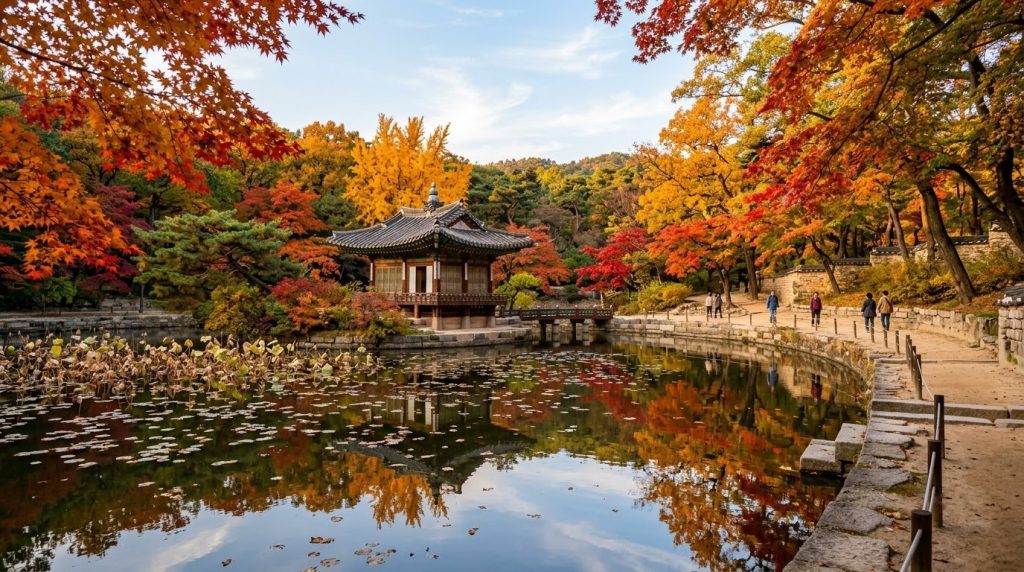
Four days in Seoul is the right answer for most first-time visitors: 3 full days covers the palaces, markets and the main neighborhoods, and the 4th day buys you a DMZ tour or simply a slower pace after a 13-to-16-hour flight from the US. Three days works if Seoul is one stop on a longer Korea or Japan trip.
Five to seven days makes sense only if you plan day trips, shopping or a food-heavy trip. Below is what each trip length actually gets you.
| Trip length | What it covers | Who it suits |
|---|---|---|
| 2 days | One palace, Bukchon, Insadong, Myeongdong, one market | Stopover or layover travelers |
| 3 days | Palaces, markets, Hongdae, N Seoul Tower, Gangnam or Seongsu | Travelers adding Busan or Tokyo |
| 4 days | All of the above plus a DMZ tour or a full rest day | Most first-timers from the US |
| 5-7 days | Day trips, cafe and shopping neighborhoods, Han River evenings | Repeat visitors, K-culture fans, food travelers |
Why 4 days is the sweet spot for first-timers
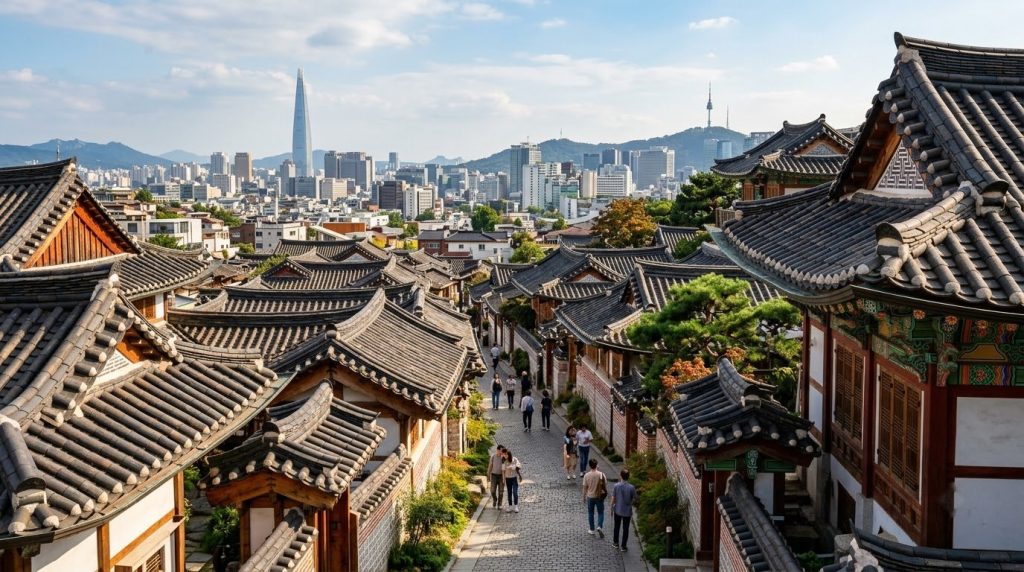
Seoul spreads across both banks of the Han River, so it does not compress well. The historic core (Gyeongbokgung, Bukchon, Insadong) fills one day. Markets and street food fill another. Hongdae plus Gangnam or Seongsu fill a third.
Jet lag is the other reason. A nonstop from LAX runs about 13 hours, from New York 15-16 hours, and you lose a calendar day flying west. Count arrival day as a half day at best.
The fourth day is your flexible slot: a DMZ tour, a rainy-day backup, or a palace you skipped. If you want a ready-made plan, our 4-day Seoul itinerary lays it out day by day, so this post will not repeat it. For the full list of sights to fit into those days, see our rundown of the best things to do in Seoul.
What 3 days in Seoul gets you (and what it leaves out)
Three days is enough to see Seoul’s highlights if you are disciplined. A realistic split looks like this:
– Day 1: Gyeongbokgung Palace, Bukchon, Insadong, then Gwangjang Market for dinner. – Day 2: Myeongdong, Namsan and N Seoul Tower, then Hongdae in the evening. – Day 3: Gangnam or Seongsu for cafes and shopping, then the Han River parks at sunset.
What gets cut: any day trip, a second palace, and downtime. Plan around closures, too. Gyeongbokgung is closed on Tuesdays, and in September and October it runs 9 am to 6 pm with last entry at 5 pm, according to the Korea Tourism Organization.
Adult entry is only KRW 3,000 (about USD 2, converted at USD 1 = KRW 1,350), so the palace is never a budget problem, but the wrong weekday can wreck a tight plan.
When 5 to 7 days is worth it
Stay longer if you want to get out of the city. General DMZ tours from Seoul are operating in 2026, with basic tours listed from USD 40 on DMZTours.com, typically covering Imjingak, the Third Infiltration Tunnel and Dora Observatory.
Note that the Joint Security Area at Panmunjom is not part of public tours right now: operators say regular JSA tours have been unavailable since a July 2023 incident, and the military can cancel any DMZ tour on the day without notice.
Beyond the DMZ, a longer stay lets you work through our list of the best day trips from Seoul without losing your city days. Five to seven days also suits K-pop fans, skincare shoppers and serious eaters.
Who should skip the long stay and do fewer days instead
Not every traveler needs four days. Cut Seoul to 2-3 days if:
– You are combining Seoul with Busan. The fastest KTX train to Busan takes about 2 hours 18 minutes, and most departures fall in the 2-3 hour range, per Rail Ninja’s schedule data.
Busan’s beaches and seafood are a better use of days 4 and 5 than a fifth day in Seoul. – You are pairing Korea with Japan. On a 10-day Asia trip, 3 days in Seoul and the rest in Tokyo or Osaka is a common, sensible split. – You dislike big cities. Seoul is dense, fast and loud.
If crowds wear you out, a short, focused visit beats a week of subway transfers.
Still on the fence about the city as a whole? Our honest take on whether Seoul is worth visiting covers the downsides as well as the highlights.
How season changes the number of days
Spring and fall are the easiest seasons to cover ground on foot, so 3-4 days goes far. In the summer monsoon or the January cold, add a buffer day. Our guide to the best time to visit Seoul breaks down each month and what it means for your plans.
Getting in: what eats into day one
Two practical points for US travelers:
– Entry: US passport holders are exempt from the K-ETA electronic travel authorization through December 31, 2026, under Korea’s temporary exemption (EY Global Tax News lists the US among 19 exempt countries).
Check the official K-ETA site before you fly in 2027, when the rules may change. – Airport transfer: The AREX express train runs nonstop from Incheon to Seoul Station in about 43 minutes. Listed fares range from KRW 9,500 to KRW 13,000 (USD 7-10) depending on the source and booking channel.
A taxi runs about KRW 40,000-54,000 (USD 30-40) plus a KRW 7,900 toll, per Visit Seoul.
How much a Seoul trip costs by length of stay
Seoul rewards a flexible budget more than a fixed one, because the gap between a backpacker day and a mid-range day is wide. Nomadic Matt’s 2026 South Korea guide puts a backpacker day, staying in hostel dorms, cooking some meals and riding the subway, at roughly USD 55 (KRW 75,000).
A mid-range day with a private room, sit-down meals and the odd paid activity runs closer to USD 100 (KRW 135,000). Comfort travelers who add hotel breakfasts, taxis and daily tours should expect noticeably more than that.
Transport is one of the few genuine bargains at this price level. A single subway or bus ride costs under USD 1.50, according to Seoul cost breakdowns on Tripwis, and the same T-money card covers buses, subways and many taxis, so there is no need to work out separate fares for each trip. That keeps daily transport cheap even on a day that crosses the city twice.
Accommodation is the biggest lever on the total. Hostel dorm beds commonly run USD 15 to 25 a night, while a 3-star hotel room in a central base like Myeongdong or Jongno typically falls in the USD 70 to 120 range per night, which splits to a modest add-on for two people sharing.
Card payments are accepted almost everywhere, including convenience stores and most restaurants, so there is little need to carry large amounts of cash. Keep a small amount of KRW on hand mainly for street-food stalls and traditional markets that still prefer it.
Food swings the daily number more than people expect. Street food and casual restaurants keep a meal under USD 10 in most neighborhoods, while a sit-down Korean barbecue dinner with drinks can run well past USD 25 to 30 a person.
Stretching a trip from three days to four rarely adds an expensive sight, since Seoul’s big palaces and markets charge only small entry fees; the extra day mostly adds one more round of transport and meals, both inexpensive by US standards.
Scaled out, a mid-range three-day trip for one person lands near USD 300 before flights, and a fourth day adds roughly USD 100 on top of that, mostly in food, transport and a hotel night rather than anything exotic.
Day trips worth adding once you have more than four days
Travelers who extend beyond four days usually want something besides another round of palaces and markets. Two options pair well with a longer Seoul stay and do not require the DMZ’s advance booking and ID checks.
Nami Island, the tree-lined river island used in countless Korean dramas, is reached by a short ferry after a train or shuttle bus from central Seoul; door to door it runs about 1 to 1.5 hours depending on the route.
Sources differ on the exact entrance-plus-ferry fee, with figures from about KRW 8,500 to KRW 16,000 (roughly USD 6 to 12) turning up across ticketing sites, so budget toward the higher end and treat any lower quote as a bonus. Shuttle buses from areas like Insadong add a further round-trip fee on top of the island ticket. Plan at least half a day once travel time is included.
Suwon Hwaseong Fortress, a UNESCO-listed 18th-century walled fortress about 30 to 60 minutes from Seoul by train depending on whether you take a direct line or the subway, is the better pick for history-focused travelers with less time. Walking the fortress walls themselves is free.
Entry to Hwaseong Haenggung, the temporary palace inside the walls, costs KRW 2,000 (about USD 1.50) for adults, according to the official Visit Korea tourism site, with discounted rates for teenagers and children. The walk around the full fortress loop takes a couple of hours; plan a half day including the train ride.
Either destination fits neatly into a fifth or sixth day without competing with the DMZ, Busan or the day-trip list already covered elsewhere on this site.
Several tour operators bundle Suwon Hwaseong with the nearby Korean Folk Village, a recreated traditional village with craft demonstrations, into one guided full-day trip, which suits travelers who would rather not manage train connections themselves on a day they are already adding to a longer stay.
Seoul etiquette and manners worth knowing before you go
None of this is complicated, but a few habits stand out to locals and are easy to get wrong on a first trip.
- On the subway, do not eat or drink inside the carriage; a coffee is fine on the platform but not once you board. Give up the priority seats, usually marked in a different color, for elderly passengers, pregnant women and people with disabilities, even if the car looks empty of anyone who needs them at that moment.
- If someone pours you a drink, especially an older person, accept and pour in return using two hands, or at least steady your pouring arm with your other hand at the wrist or elbow. When drinking with someone considerably older, it is polite to turn slightly away from them as you drink rather than face them directly.
- Tipping is not expected anywhere in Seoul, from restaurants to taxis to hotel staff, and attempting to leave one can occasionally cause confusion rather than appreciation.
- Some traditional restaurants, guesthouses and most Korean homes expect shoes off at the door; look for a low step or a shelf of shoes near the entrance as the cue.
- At a shared meal, it is standard to wait for the eldest person at the table to start eating before anyone else picks up chopsticks.
- On escalators, stand to the right and keep the left side clear for people walking, a habit followed across most Seoul subway stations.
The official Visit Seoul etiquette guide and several Korea-based travel blogs cover these points in more detail, and following them costs nothing beyond a little attention on your first day in the city.
Where to stay
Where you base yourself matters more on a short trip, because every transfer costs time.
– Myeongdong / Jung-gu: Central, walkable to Namsan and the palaces, and an easy hop from Seoul Station. Best for first-timers on a 3-4 day trip. – Jongno / Insadong: Closest to Gyeongbokgung, Bukchon and the traditional side of Seoul. Good for history-focused travelers and couples. – Hongdae: Younger, cheaper and lively late into the night. Suits budget travelers and nightlife fans.
Find your Seoul hotel on the map
Live prices from Booking, Airbnb and more — move the map or change dates to compare stays across Seoul.
Frequently Asked Questions
Are 3 days in Seoul enough?
Yes, if you only want the main sights. Three days covers Gyeongbokgung, Bukchon, Insadong, a market or two, N Seoul Tower, Hongdae and one neighborhood south of the river. It does not leave room for a DMZ tour or downtime, so first-timers flying in from the US usually do better with four days, especially once jet lag is factored in.
Is 7 days in Seoul too much?
Not if you use it well. Seven days lets you add a DMZ tour and other day trips, explore cafe and shopping districts like Seongsu, and take slow evenings by the Han River. If you only care about landmarks, a week is more than you need, and you would get more out of splitting it between Seoul and Busan.
Can I do a DMZ tour on a short Seoul trip?
You can, but it takes most of a day, so it only fits comfortably on a 4-day trip or longer. General DMZ tours from Seoul are running in 2026, with basic tours listed from USD 40. The Joint Security Area at Panmunjom is not part of regular public tours, and any DMZ tour can be canceled on the day by the military.
Do US citizens need a K-ETA for Seoul in 2026?
No. US passport holders are temporarily exempt from the K-ETA through December 31, 2026, so you can enter visa-free for tourism with a valid passport. The exemption has been extended year by year, so check the official K-ETA website before booking a trip for 2027 or later.
How many days do I need for Seoul and Busan together?
Plan at least 6-7 days: about 4 in Seoul and 2-3 in Busan. The fastest KTX train between the two cities takes about 2 hours 18 minutes, so the transfer costs you half a day at most. Fly into Incheon and, if schedules allow, out of Busan’s Gimhae airport to avoid backtracking.
Planning the whole trip? Start with our Seoul travel guide for the overview, then use this page for the details.