Where to Stay in Seoul 2026: Best Neighborhoods & Areas
Disclosure: Some links in this guide are affiliate links. If you book or buy through them, we may earn a small commission at no extra cost to you — it helps keep our guides free.
- Myeongdong is the safest first-timer base: mid-range doubles run about 150,000-260,000 won (roughly $108-187) and two airport train lines stop nearby.
- Hongdae is the cheapest lively area, with hostel dorm beds from around 25,000-40,000 won ($18-29) and nightlife that runs past 4am.
- Gangnam skews upscale, with mid-range rooms at 150,000-240,000 won ($108-173) and luxury suites now breaching 1,000,000 won ($720+) during peak K-pop weekends.
- Insadong and Itaewon are the value picks: guesthouses and hostels start near 20,000-55,000 won ($15-40) a night.
- A T-money card costs 2,500 won and links all five neighborhoods, so any subway-adjacent hotel keeps the whole city within 40 minutes.
Pick your area
The short answer on where to stay in Seoul: pick Myeongdong for a first trip, Hongdae if you want nightlife and cheaper beds, Gangnam for upscale hotels and shopping, Insadong for culture and families, and Itaewon for food and budget stays.
Every one of these areas sits on the subway, so you are rarely more than 30-40 minutes from anywhere else in the city. The real decision is about the vibe you want to walk out into each morning, not distance.
Quick answer: Myeongdong is the best first-trip base, with Hongdae for nightlife and cheaper beds, Gangnam for upscale hotels, Insadong for culture and families, and Itaewon for food and budget stays.
Prices matter more than they used to. Record tourism and a weak won have pushed Seoul hotel rates up sharply.
This guide breaks down the five neighborhoods most travelers choose, with real 2026 nightly ranges in Korean won and US dollars, plus a comparison table and a traveler-type cheat sheet so you can book the right area the first time.
Myeongdong is effortless for a first visit but noisy at night, while Hongdae feels younger and cheaper but light on quiet mornings. Splitting a stay between Insadong and Hongdae works well: calm mornings near the palaces, loud nights near the clubs.
Find your Seoul hotel on the map
Live prices from Booking & Airbnb — tap a pin to compare stays around Myeongdong and Hongdae and beyond.
Seoul Neighborhoods at a Glance
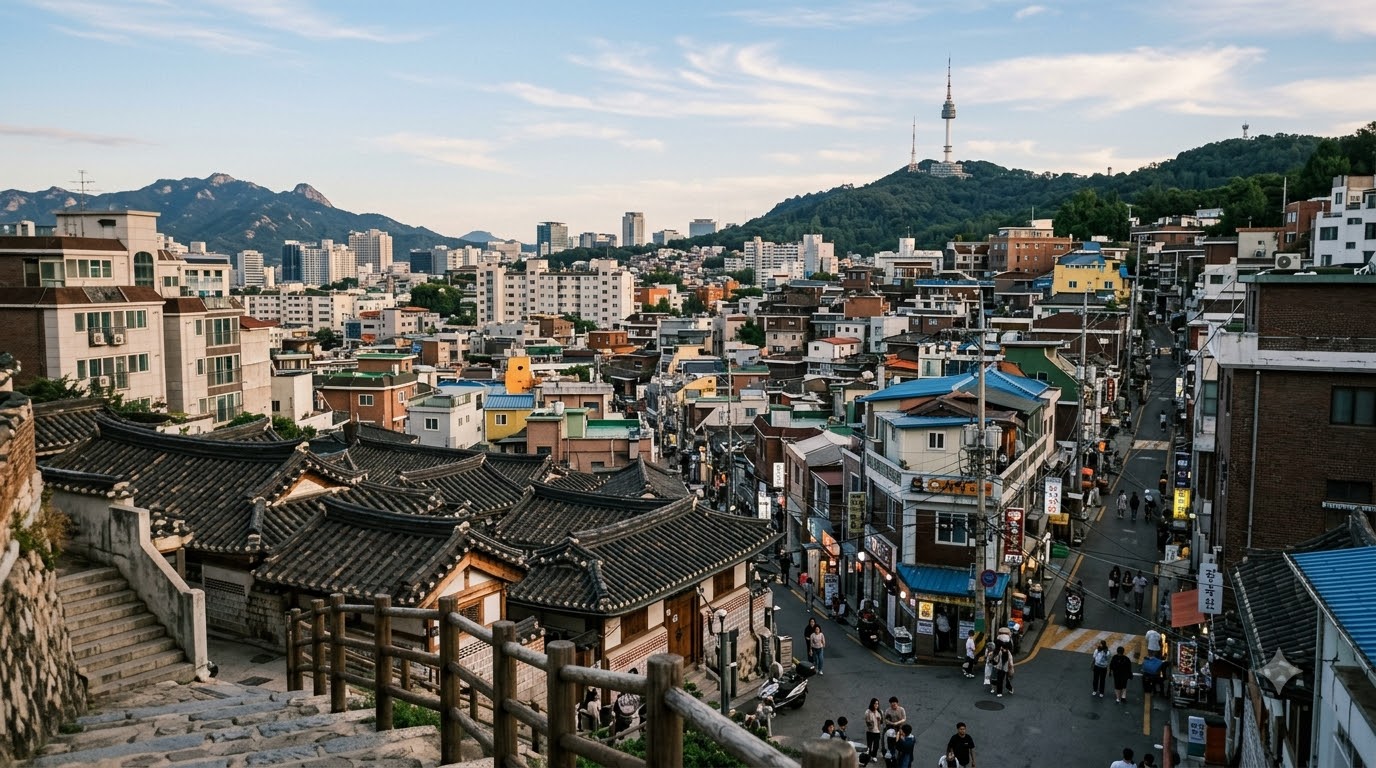
If you only read one section, read this table. It maps each neighborhood to the traveler it suits and the 2026 nightly price you should expect for a standard double room, based on booking-platform sampling across Trip.com, KAYAK, and Tripadvisor in early 2026.
Rates are converted at roughly 1,390 won to the dollar, the weak-won level driving Korea’s tourism boom, and they climb sharply during cherry blossom season and major concert weekends.
| Neighborhood | Best for | Budget (dorm/guesthouse) | Mid-range double | Upscale/luxury |
|---|---|---|---|---|
| Myeongdong | First-timers, shoppers | 55,000-75,000 won ($40-54) | 150,000-260,000 won ($108-187) | 350,000+ won ($250+) |
| Hongdae | Nightlife, younger & solo | 25,000-40,000 won ($18-29) | 90,000-160,000 won ($65-115) | ~200,000 won ($144) |
| Gangnam | Upscale stays, business | ~100,000 won ($72), scarce | 150,000-240,000 won ($108-173) | 330,000-1,000,000+ won ($240-720+) |
| Insadong | Culture, families, couples | 37,000-55,000 won ($27-40) | 90,000-150,000 won ($65-108) | ~200,000 won ($144) |
| Itaewon | Food, diversity, budget | 20,000-35,000 won ($15-25) | 70,000-140,000 won ($50-100) | ~150,000 won ($108) |
Two things to notice. First, the gap between the cheapest and most expensive areas is enormous, a dorm bed in Itaewon costs less than a tenth of a Gangnam luxury suite. Second, mid-range prices cluster tightly around 100,000-160,000 won ($72-115) almost everywhere, so a comfortable 3-star room is affordable no matter which neighborhood matches your style.
For the wider planning picture, our Seoul travel guide covers photo spots and hidden gems in each of these districts.
Myeongdong: Best for First-Timers

Stay in Myeongdong if this is your first Seoul trip and you want zero friction. This is the city’s retail heart, a dense grid of skincare shops, department stores, and street-food carts between Myeongdong and Euljiro 1-ga stations. The practical draw is transport: the AREX airport express and the Airport Limousine bus both connect here, so you can get from Incheon to your hotel lobby without a transfer while jet-lagged.
Mid-range hotels dominate the area:
- Mid-range doubles (e.g. Lotte City Hotel Myeongdong, Nine Tree Premier): 150,000-260,000 won ($108-187) a night in 2026.
- Budget guesthouses a few blocks off the main drag: 55,000-75,000 won ($40-54).
- Airport links: both the AREX express and the Airport Limousine bus stop here, no transfer needed.
- Trade-off: heavy weekend foot traffic and central lanes that stay busy until late.
If you sleep lightly, ask for a high floor facing away from the pedestrian street.
Myeongdong also puts you within a short walk or one subway stop of Namsan and N Seoul Tower, plus fast links to the palaces. It pairs naturally with a packed sightseeing schedule, so it is our default recommendation for anyone following a tight 4-day Seoul itinerary.
Hongdae: Best for Nightlife and Younger Travelers

Choose Hongdae if you are in your 20s or 30s, travel solo, or want the cheapest lively base in the city. Anchored by Hongik University, this west-side district runs on live-music venues, indie clubs, buskers, and cafes that stay open absurdly late. Hongdae dorms run about 30,000 won a night, typically within a five-minute walk of a subway entrance.
- Hostel dorm beds: 25,000-40,000 won ($18-29), the lowest reliable rates of the five areas.
- Private mid-range rooms: 90,000-160,000 won ($65-115).
- Nightlife: club scene runs past 4am on weekends around Hongik University Station Exit 9.
- Airport access: the AREX line stops at Hongik University Station, nearly as easy as Myeongdong.
The energy is the point. Streets around Hongik University Station Exit 9 fill with street performers most evenings, and the club scene runs past 4am on weekends. That makes Hongdae ideal for people who want to be in the middle of it and a poor fit for anyone chasing quiet. The AREX line stops at Hongik University Station, so airport access is nearly as easy as Myeongdong.
Hongdae is also a strong base for eating and bar-hopping. If food is a priority, many of the spots we flag in our roundup of the best things to do in Seoul sit within a short subway ride of here.
Gangnam: Best for Upscale Stays and Shopping
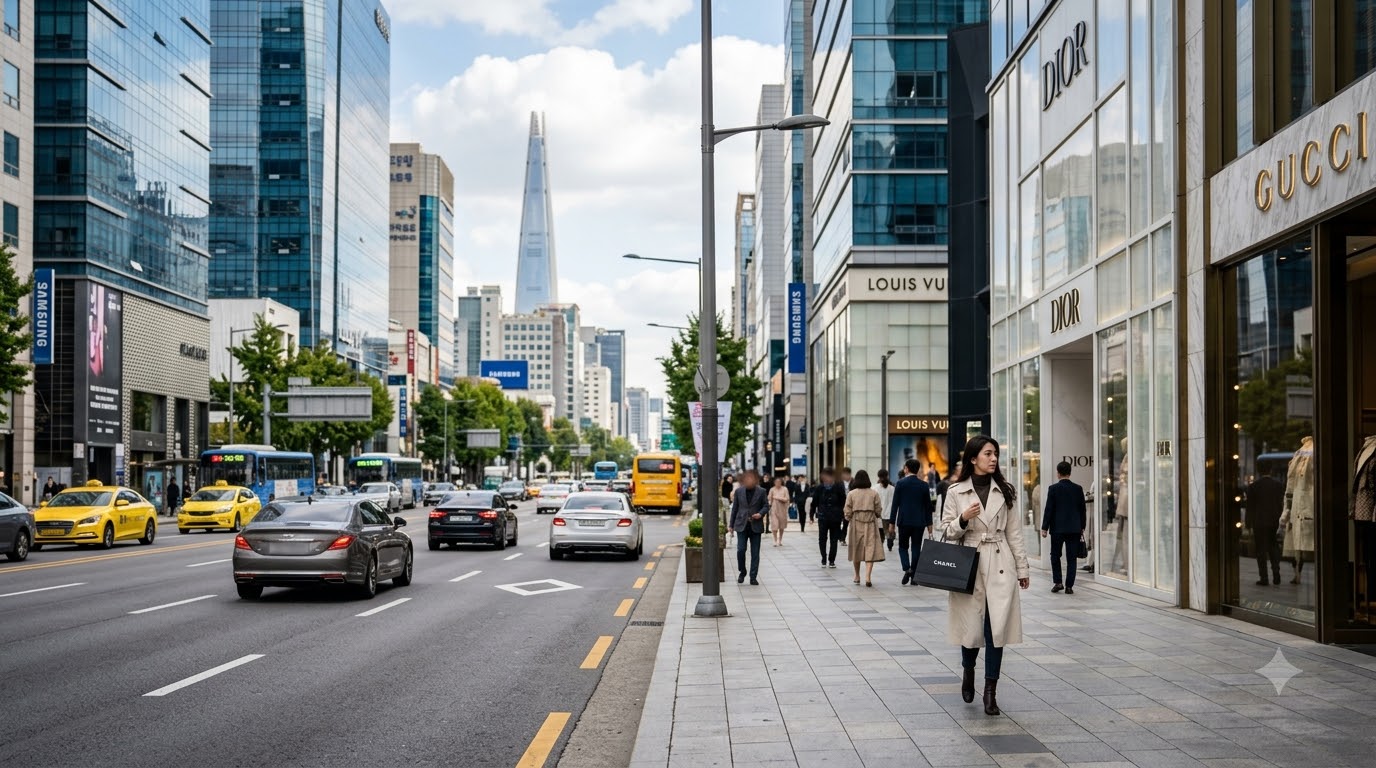
Base yourself in Gangnam if you want polished hotels, designer shopping, and a business-district calm at night. South of the Han River, Gangnam is wide boulevards, glossy malls, and Seoul’s densest cluster of upscale and luxury properties.
Mid-range rooms run 150,000-240,000 won ($108-173), and the top end has climbed hard: luxury suites in the district now breach 1,000,000 won ($720+) a night during peak demand (mysouthkoreastay.com, 2025), driven by K-pop concert weekends at nearby arenas.
Gangnam is less about tourist sights and more about lifestyle:
- Mid-range rooms: 150,000-240,000 won ($108-173).
- Luxury suites: 330,000 to over 1,000,000 won ($240-720+) during K-pop concert weekends.
- Cheap beds are scarce; even modest hotels rarely dip below 100,000 won ($72).
- Sightseeing catch: the palaces, Bukchon, and Insadong sit north of the river, adding 25-40 minutes on the subway.
Nearby lifestyle draws include COEX Mall, the Starfield Library, and Bongeunsa temple, plus easy access to Jamsil and Lotte World Tower one district over.
Budget travelers should look elsewhere. Cheap beds are scarce in Gangnam, and even modest hotels rarely dip below 100,000 won ($72). But if you value a quiet, upscale return each evening over walkable street life, it delivers.
Insadong: Best for Culture and Families
Pick Insadong if you want traditional Seoul on your doorstep without the noise of Myeongdong. Tucked between Gyeongbokgung and Changdeokgung palaces, Insadong is teahouses, antique galleries, calligraphy shops, and the restored hanok alleys of neighboring Bukchon. It is central, walkable, and noticeably calmer after dark, which is why it works well for families and couples.
Value is the surprise here. Hostels and guesthouses start around 37,000-55,000 won ($27-40), with the well-reviewed Insadong Hostel and similar spots at the low end, while mid-range hotels run 90,000-150,000 won ($65-108). Boutique hanok stays and small heritage hotels sit near 200,000 won ($144) if you want the traditional courtyard experience.
The location is the real value. You can walk to Gyeongbokgung, Bukchon Hanok Village, and Jongno’s food streets, then reach Myeongdong in one subway stop. For travelers building their trip around history and palace visits, Insadong keeps the best of it within walking distance, which is worth weighing against the season you visit in our guide to the best time to visit Seoul.
Itaewon: Best for Food, Diversity, and Budget
Stay in Itaewon for the most international food scene and the lowest overall prices. Long Seoul’s most diverse neighborhood, Itaewon is halal restaurants, Middle Eastern bakeries, craft-beer bars, and cuisines you will not easily find elsewhere in the city.
- Dorm beds: 20,000-35,000 won ($15-25), the cheapest of the five areas.
- Mid-range hotels (e.g. the long-running Hamilton): 70,000-140,000 won ($50-100).
- Transport: Itaewon Station on Line 6, a short ride from Yongsan’s museums and Myeongdong’s shops.
- Best fit: budget travelers, repeat visitors, and anyone who eats their way through a city.
The vibe is relaxed and global rather than distinctly Korean, which some travelers love and others skip. Nightlife is strong but more bar-and-lounge than Hongdae’s club sprawl. Itaewon Station puts you on Line 6, with the museums of Yongsan and the shops of Myeongdong both a short ride away.
Itaewon suits budget-conscious travelers, repeat visitors who already did the palace circuit, and anyone who eats their way through a city. If your priority is saving money without leaving central Seoul, it is the strongest value on this list.
How to Choose Your Seoul Neighborhood by Traveler Type
Match the area to your trip, not the other way around. Here is the quick logic for choosing where to stay in Seoul:
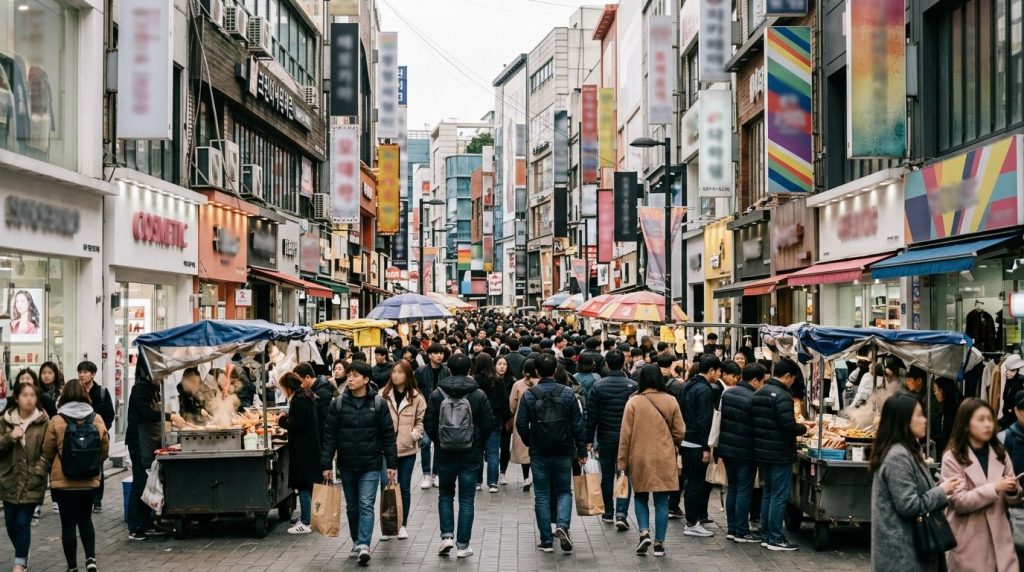
- First-time visitor on a tight schedule: Myeongdong. Easiest airport access, central, mid-range prices.
- Solo or budget traveler under 35: Hongdae or Itaewon. Cheapest beds, most social energy.
- Couple wanting atmosphere: Insadong. Traditional streets, calm nights, walkable palaces.
- Family with kids: Insadong or Myeongdong. Central, safe, close to major sights.
- Business or luxury traveler: Gangnam. Polished hotels, shopping, quiet evenings.
- Foodie or repeat visitor: Itaewon or Hongdae. Widest range of restaurants and late-night eats.
If you cannot decide, split your stay. Two or three nights in a central, calmer area like Insadong or Myeongdong, followed by a couple of nights in Hongdae or Itaewon, gives you two very different sides of the city without long transfers.
Getting Around: Why Subway Access Matters Most
The single most important booking rule in Seoul is to stay within a 5-minute walk of a subway station. Seoul’s metro is fast, clean, cheap, and signed in English, and it renders the exact neighborhood less critical than first-timers fear. A base subway ride costs 1,400 won with a T-money card, and the card itself is 2,500 won at any convenience store or station machine.
Every neighborhood in this guide is subway-connected, and cross-city trips between them typically run 20-40 minutes. A few booking rules follow from that:
- Stay within a 5-minute walk of a subway station; it matters more than the exact neighborhood.
- Base subway ride: 1,400 won with a T-money card (the card itself is 2,500 won).
- A cheaper hotel one stop from the action often beats a pricier room in the thick of it, so let station distance break a tie on price.
- Confirm your hotel’s nearest station and exit number before booking.
- Check whether it sits on an AREX-connected line if you want a transfer-free ride from Incheon.
Frequently Asked Questions
What is the best area to stay in Seoul for first-time visitors?
Myeongdong is the best area for first-timers. It is central, packed with shops and restaurants, and connected directly to Incheon Airport by both the AREX train and the Limousine bus. Mid-range doubles run about 150,000-260,000 won ($108-187) in 2026, and you are within a short subway ride of the palaces, N Seoul Tower, and most major sights.
Is Seoul expensive for accommodation in 2026?
Seoul is moderately expensive and getting pricier. Seoul-Incheon room rates rose sharply in 2025, driven by record tourism and a weak won. That said, hostel dorm beds still start near 20,000-40,000 won ($15-29) in areas like Itaewon and Hongdae, and comfortable mid-range rooms are widely available at 100,000-160,000 won ($72-115).
Where should I stay in Seoul for nightlife?
Hongdae is the top nightlife pick, with live-music venues, clubs, and cafes that run past 4am, plus the cheapest dorm beds in the city at around 25,000-40,000 won ($18-29). Itaewon is the runner-up, with a more bar-and-lounge scene and a strong international food and drink culture. Both sit directly on the subway.
Is Gangnam a good area for tourists to stay?
Gangnam is a good base if you want upscale hotels, shopping, and quiet evenings, but it is less convenient for classic sightseeing. Most historic attractions, the palaces, Bukchon, and Insadong, sit north of the Han River, adding 25-40 minutes by subway. Expect mid-range rooms at 150,000-240,000 won ($108-173) and luxury rates that can exceed 1,000,000 won ($720+) on peak weekends.
How many days do I need in Seoul, and does it change where I stay?
Most first trips work well at 3 to 4 days, which is enough for the palaces, a couple of neighborhoods, and a day trip. For a stay that short, a central base like Myeongdong or Insadong saves transit time. For five nights or more, consider splitting between a calm central area and a livelier one like Hongdae. Our 4-day Seoul itinerary shows how the routing works from a central hotel.
Final Thoughts
Where to stay in Seoul comes down to the version of the city you want to wake up in: Myeongdong for ease, Hongdae for energy, Gangnam for polish, Insadong for history, or Itaewon for food and value.
Because the subway ties all five together within 40 minutes, no choice locks you out of anything, so book the neighborhood that matches your pace and prioritize a room close to a station. From there, the rest of your trip planning, timing, sights, and routing, falls into place through the rest of our Seoul travel guide.