
Disclosure: Some links in this guide are affiliate links. If you book or buy through them, we may earn a small commission at no extra cost to you — it helps keep our guides free.
Best Time to Visit Seoul in 2026: Season-by-Season Guide
The best time to visit Seoul is late April through May and again from mid-September through early November, when daytime temperatures sit in a comfortable 15-24C range and rain stays low. Those two windows dodge both the freezing winter and the summer monsoon, which dumps roughly 415mm of rain on the city in July alone (Climates to Travel, 2026). If you are chasing cherry blossoms specifically, aim for the first two weeks of April.
Seoul runs on a four-season continental climate, so the month you pick changes the trip completely. April gives you pink blossom tunnels and mild afternoons. August gives you 30C heat, sticky humidity, and sudden downpours. October gives you gold-and-red foliage across the palace grounds and mountain trails. This guide breaks down the weather month by month, pins down the 2026 cherry blossom forecast, and flags the festivals and crowd spikes worth planning around.
Key Takeaways
– Best overall windows: late April to May and mid-September to early November, with highs of 15-24C and low rainfall
– Cherry blossoms 2026: first bloom around April 1, peak bloom roughly April 8-10 in Seoul, arriving 2-7 days earlier than the long-term average (Korea Meteorological Administration, 2026)
– Avoid if you can: July and August, when monsoon rain hits 415mm and 350mm respectively and highs reach 30C
– Autumn foliage peak: late October to mid-November, best seen at Namsan, Bukhansan, and the palace gardens
– Cheapest, quietest month: January, cold at a -2.1C average but with the thinnest crowds and lowest flight and hotel prices[PERSONAL EXPERIENCE] We visited Seoul in the last week of October and it was the easiest weather we have had anywhere in East Asia. We walked the full loop around Seoul Fortress Wall in a light jacket, and the maples behind Changdeokgung were peaking that exact week. When we came back in early August the next year, one afternoon storm off the Han River soaked us in about four minutes flat.
The Short Answer: When to Visit Seoul
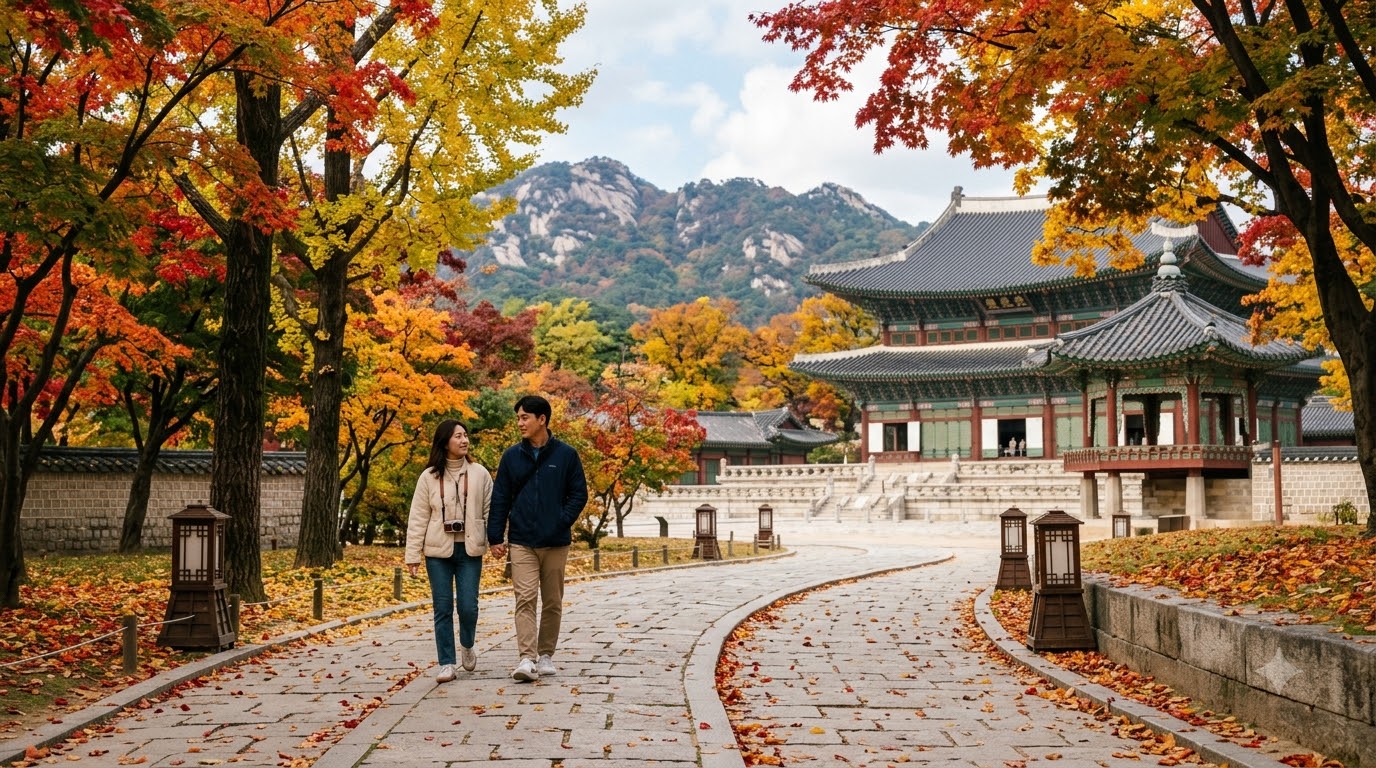
Pick spring or autumn unless you have a specific reason not to. Spring (late March to May) and autumn (September to November) are the two shoulder seasons where Seoul is warm enough to walk all day but dry enough that you are not planning around rain. Both seasons carry the city’s signature scenery: cherry blossoms in spring, red-and-gold foliage in autumn.
Summer and winter are the trade-off seasons. Summer brings the East Asian monsoon, called jangma, plus heat and humidity that make long sightseeing days rough. Winter is dry and often sunny but genuinely cold, with January averaging -2.1C and overnight lows dipping to -6C. Neither is a dealbreaker, but each asks you to pack and plan differently. If your dates are locked to a specific month, jump to the season sections below and to our full Seoul travel guide for the wider picture.
The 4-Day Seoul Itinerary
The plan we use ourselves — sent straight to your inbox.
- Day-by-day route
- Where to stay
- Real 2026 costs
Free · No spam · Unsubscribe anytime
Seoul Weather Month by Month (2026)
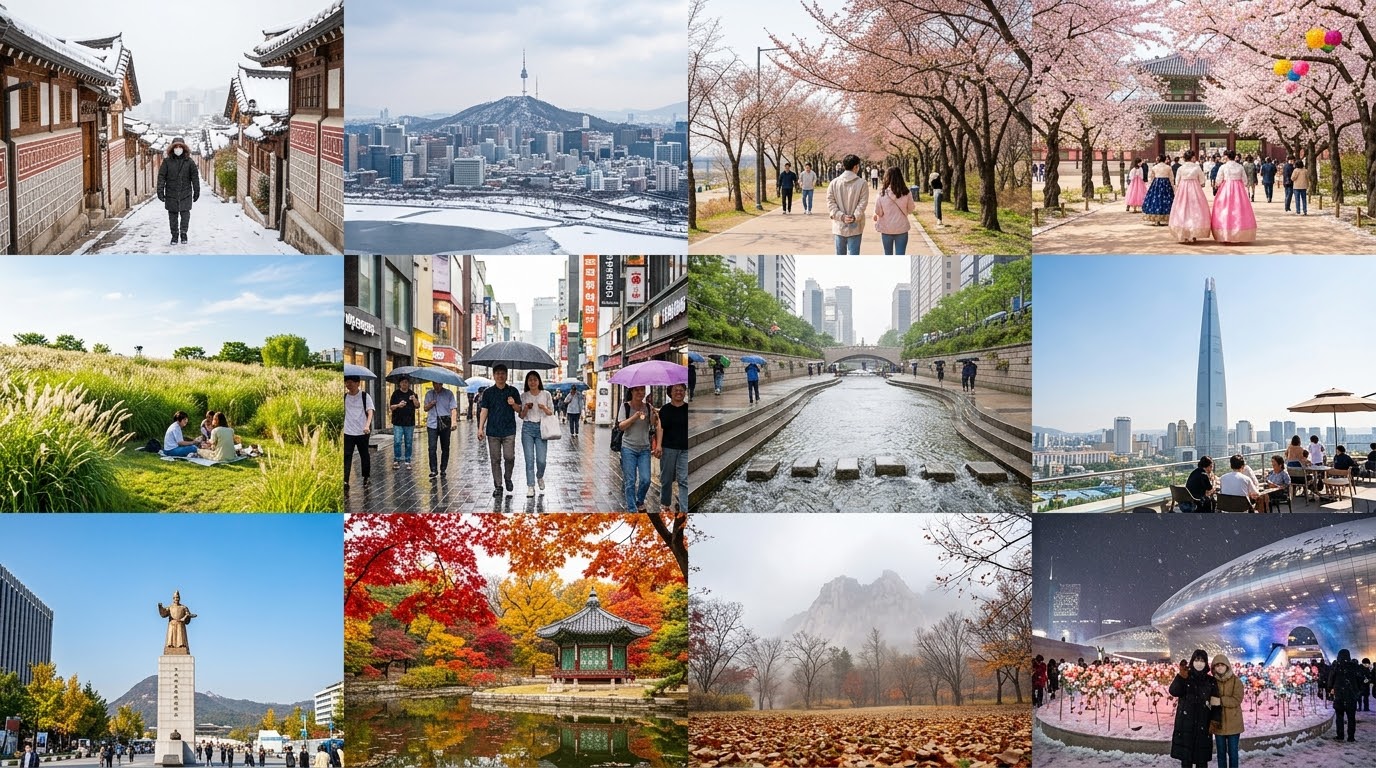
Seoul’s temperature swings hard across the year, from a -2.1C January mean to 26.3C in August. The table below shows the average daily mean temperature and monthly rainfall for each month, so you can match your tolerance for cold, heat, and rain to a travel window.
| Month | Avg high (C) | Avg low (C) | Mean (C) | Rainfall (mm) | Feel |
|---|---|---|---|---|---|
| January | 2 | -6.2 | -2.1 | 15 | Cold, dry, quiet |
| February | 5 | -3.8 | 0.6 | 30 | Cold, thawing |
| March | 10.9 | 1.3 | 6.1 | 35 | Cool, first blossoms late |
| April | 17.8 | 7.4 | 12.6 | 75 | Mild, peak blossom season |
| May | 23.5 | 13 | 18.3 | 105 | Warm, green, excellent |
| June | 27.5 | 18.3 | 22.9 | 130 | Warm, humidity building |
| July | 28.9 | 22 | 25.5 | 415 | Hot, peak monsoon |
| August | 29.9 | 22.6 | 26.3 | 350 | Hottest, humid, stormy |
| September | 26.1 | 17.2 | 21.6 | 140 | Warm, drying out |
| October | 20.1 | 9.9 | 15 | 50 | Ideal, foliage begins |
| November | 11.7 | 2.7 | 7.2 | 50 | Cool, foliage peak early |
| December | 4 | -4.1 | 0 | 25 | Cold, dry, festive |
Source: Climates to Travel, 2026. Two numbers jump out. First, July and August together account for more rain than the rest of the year combined. Second, April, October, and November sit in the sweet spot of mild temperatures and modest rainfall, which is exactly why they draw the biggest crowds.
Find your Seoul hotel on the map
Live prices from Booking & Airbnb — tap a pin to compare stays around Myeongdong and Hongdae and beyond.
Spring in Seoul (March to May): Cherry Blossoms
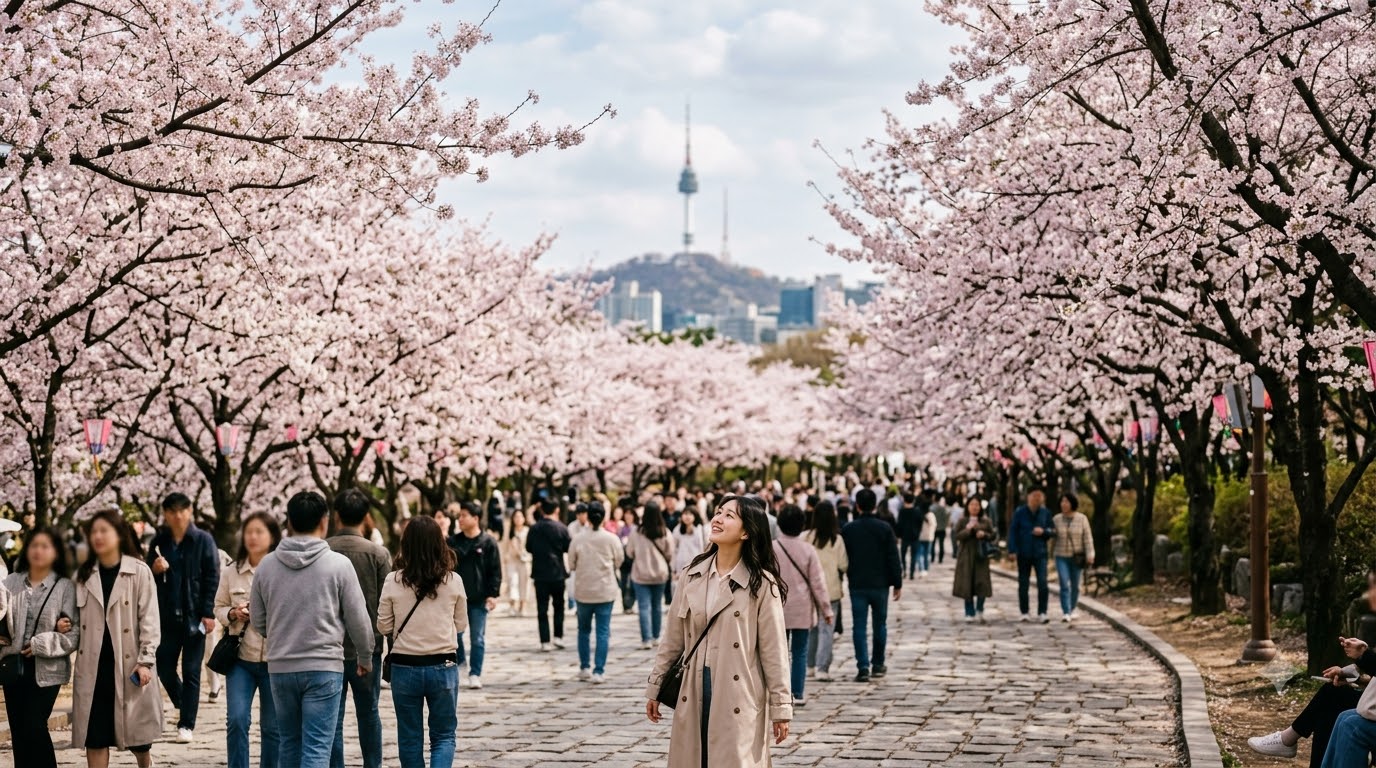
Spring is the most popular time to visit Seoul, and April is the headline month. Temperatures climb from a chilly 6.1C mean in March to a pleasant 18.3C in May, and the whole city turns pink for about ten days when the cherry blossoms open.
For 2026, the Korea Meteorological Administration forecasts first bloom in Seoul around April 1, with peak bloom, when the trees are fully open, landing roughly April 8-10. Blossoms are expected 2-7 days earlier than the long-term average this year, so if your dates are flexible, front-load the first half of April rather than the second. Peak bloom holds for only four to seven days, so timing matters.
Where and When to See the Blossoms
Where and when to catch peak bloom:
- Yeouido Yunjungno street (behind the National Assembly): host of the Yeouido Spring Flower Festival in early April; peaks April 7-14.
- Seokchon Lake beside Lotte World: frames blossoms against the water; peaks April 7-14.
- Gyeongbokgung and Changdeokgung palace grounds: bloom beautifully and pair with a sightseeing day.
- Peak-bloom forecast 2026: first bloom around April 1, full bloom roughly April 8-10, 2-7 days earlier than the long-term average.
- Peak holds only four to seven days, so front-load the first half of April. Late April into May is arguably the single best stretch of the year: blossoms give way to fresh green, temperatures are mild, and the summer rains have not arrived. It is a great time to work through a packed 4-day Seoul itinerary without weather getting in the way.
The 4-Day Seoul Itinerary
Hour-by-hour plan, where to stay and what it really costs — free PDF.
Free · No spam · Unsubscribe anytime
Summer in Seoul (June to August): Heat and Monsoon

Summer is the season to approach with caution. The monsoon, jangma, typically sets in from late June and runs through July, and the rain totals are serious: 415mm in July and 350mm in August, against just 50mm in October. August is also the hottest month, with an average high of 29.9C and humidity that pushes the real-feel much higher.
That does not make summer a write-off. How to make summer work:
- July rainfall: about 415mm; August: about 350mm, against just 50mm in October.
- August is the hottest month, averaging 29.9C highs with high humidity.
- Rain usually falls in concentrated bursts, with clear, hot stretches between storms.
- Prices for flights and hotels can soften outside the early-August domestic holiday peak.
- Pack a compact umbrella and quick-dry clothing, and keep a flexible plan that can shift indoors (museums, underground arcades around Gangnam and Myeongdong, air-conditioned palaces) on storm days. Our roundup of the best things to do in Seoul flags plenty of rain-proof options.
Autumn in Seoul (September to November): Foliage
Autumn rivals spring for the title of best time to visit Seoul, and many locals will tell you it wins. The monsoon fades through September, humidity drops, and October settles into a near-ideal 15C mean with only 50mm of rain. Skies are clear, the air is crisp, and the city’s mountains and palace gardens turn red, orange, and gold.
Foliage peaks later than most first-timers expect, usually from late October to mid-November in Seoul proper. When we walked the full Seoul Fortress Wall loop in the last week of October, the maples behind Changdeokgung were peaking that exact week in nothing heavier than a light jacket. Where to see autumn color:
- Namsan below N Seoul Tower: easy, central, and photogenic.
- Bukhansan and Seoul Fortress Wall trails: the best hiking-and-foliage combination.
- Huwon secret garden at Changdeokgung: peak color inside the palace grounds.
- Timing: colors peak late October to mid-November; early November keeps strong color with thinner crowds.
- Pack a warmer layer as the November mean slips to 7.2C. Autumn’s stable weather and comfortable temperatures also make it the easiest season for deciding where to stay in Seoul, since you can base yourself anywhere and walk freely.
Winter in Seoul (December to February): Cold and Quiet
Winter is cold, dry, and surprisingly underrated. January is the coldest month at a -2.1C mean with lows around -6.2C, and February stays near freezing before March begins the thaw. Snow falls but rarely piles deep in the city center. What you get in exchange is the year’s clearest value: the lowest flight and hotel prices and the thinnest crowds at major sights.
Winter Seoul has its own appeal. Palace courtyards under a dusting of snow are genuinely beautiful, the street food scene, hotteok, tteokbokki, roasted chestnuts, comes into its own, and the jjimjilbang bathhouse culture makes far more sense at -5C. Day trips to nearby ski resorts and the frozen-river ice fishing festivals are winter-only draws. Pack a proper insulated coat, gloves, and a hat, plan more indoor time, and you can have a rewarding low-cost trip. Just know the daylight is short and the wind off the Han River bites.
Crowds, Prices, and Festivals to Plan Around
Peak crowds track peak scenery. The busiest and priciest windows are cherry blossom season in early April, autumn foliage in late October to early November, and the Korean domestic holidays: Seollal (Lunar New Year, mid-February in 2026) and Chuseok (autumn harvest, around late September to early October). During Seollal and Chuseok, many small businesses and family-run restaurants close for several days, and transport books out fast, so check the dates before locking travel plans.
Crowd, price, and festival dates worth planning around:
- Busiest and priciest windows: cherry blossoms in early April and autumn foliage from late October to early November.
- Domestic holidays: Seollal (Lunar New Year, mid-February 2026) and Chuseok (late September to early October), when many family-run restaurants close and transport books out.
- Thinnest crowds and lowest prices: early December, January, and the first half of March.
- Spring festival: Yeouido Spring Flower Festival, early April.
- Autumn festival: Seoul Lantern Festival along the Cheonggyecheon stream, November. Whenever you go, a T-money transit card and a rough day-by-day plan will save you the most time, and our Seoul travel guide covers the transport basics for first-timers.
Best Time to Visit Seoul for Your Trip Type
The right month depends on what you want from the trip. Use this quick guide to match your priorities to a season.
- Cherry blossoms: first two weeks of April, targeting April 8-10 for peak bloom in 2026.
- Autumn foliage: late October to mid-November for the strongest color in the city.
- Best all-round weather: May and late September to early October, mild and dry.
- Lowest budget: January, cold but cheapest for flights and hotels with the fewest crowds.
- Fewest tourists at big sights: December through early March, outside the Seollal holiday.
- Food, markets, and indoor Seoul: any season, but winter suits the street-food and bathhouse scene best.
Once you have picked a season, the rest of the trip falls into place quickly. Pair your dates with a ready-made 4-day Seoul itinerary and a shortlist of the best things to do in Seoul, then sort out where to stay in Seoul close to a subway line.
Frequently Asked Questions
What is the best month to visit Seoul?
May and October are the two strongest single months. Both bring mild temperatures, a mean around 15-18C, and low rainfall of roughly 50-105mm, and they sit just outside the peak-crowd blossom and foliage rushes. April is the best month specifically for cherry blossoms.
When do the cherry blossoms bloom in Seoul in 2026?
The Korea Meteorological Administration forecasts first bloom around April 1, 2026, with peak bloom in Seoul roughly April 8-10. Blossoms are expected 2-7 days earlier than the long-term average this year, so plan for the first half of April and check updated forecasts closer to your dates, since bloom timing shifts with the weather.
What is the rainiest time in Seoul?
July and August, during the summer monsoon known as jangma. July averages about 415mm of rain and August about 350mm, together making up most of the city’s annual rainfall. Rain often falls in heavy bursts rather than all day, but sightseeing plans should stay flexible.
Is winter a good time to visit Seoul?
Yes, if you handle cold well. January averages -2.1C with lows near -6C, but you get the lowest prices, the fewest crowds, snow-dusted palaces, and Seoul’s best street-food and bathhouse experiences. Pack a proper insulated coat and plan more indoor time.
How many days do you need in Seoul?
Four full days is a comfortable amount for a first visit, enough to cover the main palaces, a couple of neighborhoods like Bukchon and Hongdae, a day trip, and time to eat well. Add a day or two if you want the DMZ or a nearby city such as Suwon.
Seoul rewards a little timing homework more than most cities, simply because the seasons are so distinct. Line up your visit with late spring or autumn and you get the easy weather and the scenery that made the city famous. Come in summer or winter and, with the right packing and a flexible plan, you still get a great trip, often for less money and with far fewer people in the frame.