Disclosure: Some links in this guide are affiliate links. If you book or buy through them, we may earn a small commission at no extra cost to you — it helps keep our guides free.
20 Best Things to Do in Seoul 2026: Palaces, Bukchon & DMZ
The best things to do in Seoul in 2026 pair 600-year-old palaces with all-night food markets, hilltop towers, and a day trip to the world’s most fortified border. Seoul is the entry point for most of the record 18.9 million foreign visitors South Korea welcomed in 2025, and arrivals kept climbing into a record 4.76 million in the first quarter of 2026 (Korea Tourism Organization, 2026). This guide sorts 20 experiences that actually earn a place on your itinerary, with real 2026 prices, opening hours, and the timing details that keep you out of the worst crowds.
We have grouped everything by neighborhood so you can plan tight, walkable days instead of crisscrossing the city on the subway. You will find the grand palaces, the hanok lanes of Bukchon, the shopping and street food of Myeongdong, the student energy of Hongdae, the view from N Seoul Tower, a DMZ border tour, and two easy day trips. For the wider picture, start with our Seoul travel guide and work outward from there.
Key Takeaways
– Palaces are cheap. Gyeongbokgung entry is 3,000 KRW, and a 10,000 KRW Royal Palace Pass covers five heritage sites for three months (Cultural Heritage Administration, 2026).
– Hanbok gets you in free. Renting a hanbok (from about 15,000 KRW for 2 to 4 hours) waives palace admission entirely.
– N Seoul Tower observatory tickets run 21,000 KRW online versus 29,000 KRW at the door, so book ahead.
– A half-day DMZ tour costs roughly 55,000 to 75,000 KRW and reaches the Third Tunnel and Dora Observatory; JSA access remains restricted in 2026.
– Bukchon Hanok Village closes its residential lanes to tourists after 5:00 p.m., with 100,000 KRW fines for stragglers.[PERSONAL EXPERIENCE] We spent five days walking Seoul in October, when the palace gardens turned gold and the evenings finally cooled off. Our favorite hour was sunset from Namsan, watching the city switch its lights on while a paper bag of hotteok warmed our hands. The subway made every one of these stops painless.
Seoul’s Top Attractions at a Glance

| Attraction | Price (2026) | Hours | Area |
|---|---|---|---|
| Gyeongbokgung Palace | 3,000 KRW | 9am-6pm, closed Tuesdays | Jongno |
| Bukchon Hanok Village | Free | Lanes close 5pm-10am | Jongno |
| N Seoul Tower observatory | 21,000 KRW online | Late morning to 11pm | Namsan |
| Myeongdong street food | 3,000-8,000 KRW/bite | Evenings | Jung-gu |
| Gwangjang Market | Free entry | Around 9am-11pm | Jongno |
| DMZ half-day tour | 55,000-75,000 KRW | Half day | Border, 55km north |
The 4-Day Seoul Itinerary
The plan we use ourselves — sent straight to your inbox.
- Day-by-day route
- Where to stay
- Real 2026 costs
Free · No spam · Unsubscribe anytime
How Many Days Do You Need in Seoul?
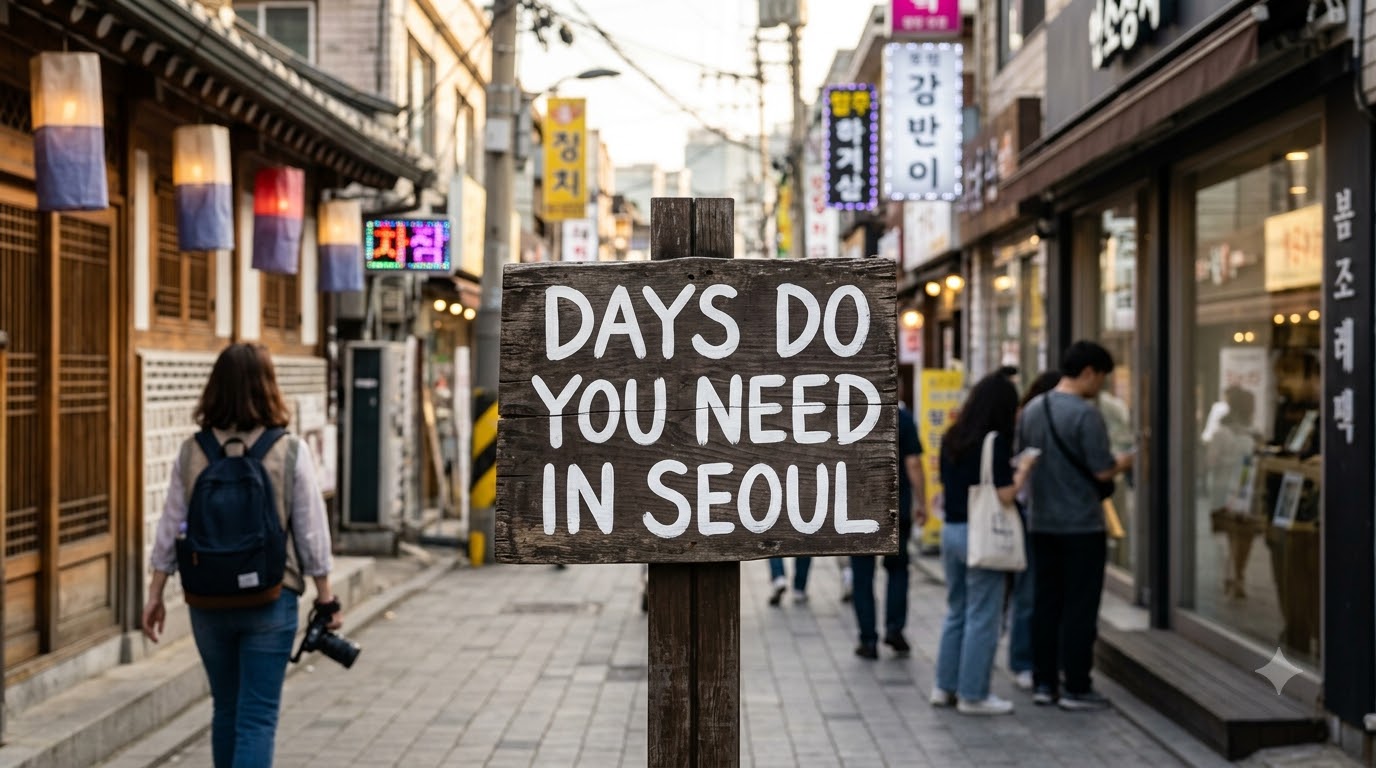
Plan at least three full days to cover Seoul’s headliners, and four or five if you want a DMZ tour and a day trip. Three days handles the palaces, Bukchon, Myeongdong, Hongdae, and N Seoul Tower without rushing. A fourth day frees you for the border, and a fifth lets you reach Nami Island or Everland. We group attractions by district each day, since hopping across the city eats time even on an efficient metro. For a ready-made structure, our 4-day Seoul itinerary maps the neighborhoods in order.
Tour the Grand Palaces: Gyeongbokgung and Changdeokgung
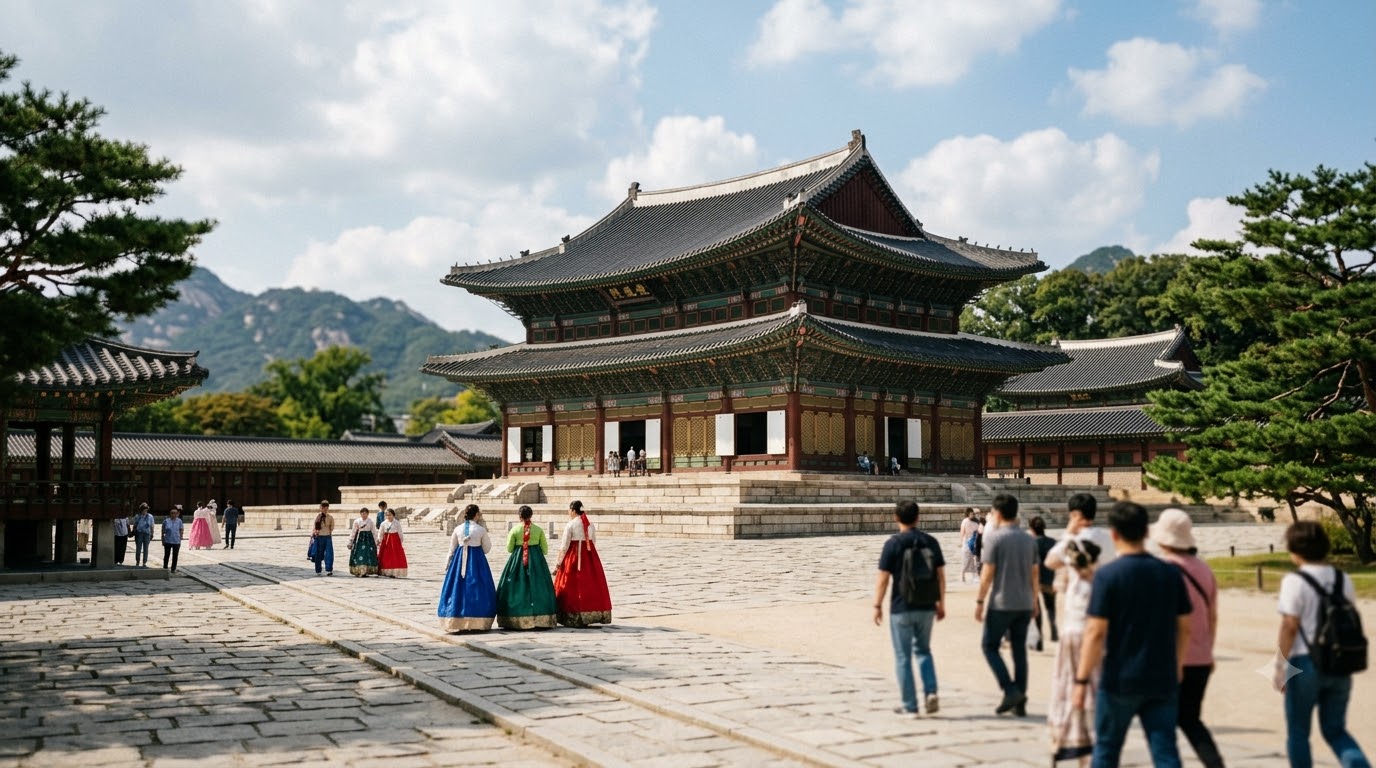
Start with the palaces, because they anchor Seoul’s history and sit within a short walk of each other. Gyeongbokgung, the largest of the five Joseon-era palaces, charges just 3,000 KRW and opens 9:00 a.m. to 6:00 p.m. from March to October (until 6:30 p.m. in summer, 5:00 p.m. in winter), closed Tuesdays. Time your visit around the Royal Guard Changing Ceremony at the main gate, held at 10:00 a.m. and 2:00 p.m. for about 20 minutes.
Changdeokgung, a 15-minute walk east, is the UNESCO-listed favorite thanks to its Secret Garden (Huwon), best seen on a timed guided walk. If you plan to see more than two palaces, buy the Royal Palace Pass.
Key palace-visiting facts at a glance:
- Gyeongbokgung: 3,000 KRW, open 9:00 a.m. to 6:00 p.m. March-October (6:30 p.m. summer, 5:00 p.m. winter), closed Tuesdays.
- Royal Guard Changing Ceremony: free, at the main gate at 10:00 a.m. and 2:00 p.m., about 20 minutes each.
- Changdeokgung Secret Garden (Huwon): 3,000 KRW palace entry plus a 5,000 KRW timed guided walk, closed Mondays.
- Royal Palace Pass: 10,000 KRW, covers five palaces plus Jongmyo Shrine for three months.
| Palace / Site | Standalone Ticket (2026) | Highlight | Closed |
|---|---|---|---|
| Gyeongbokgung | 3,000 KRW | Guard ceremony, throne hall | Tuesday |
| Changdeokgung | 3,000 KRW (+5,000 Secret Garden) | Huwon garden walk | Monday |
| Changgyeonggung | 1,000 KRW | Quiet grounds, greenhouse | Monday |
| Deoksugung | 1,000 KRW | Western-style halls | Monday |
| Royal Palace Pass | 10,000 KRW | All above + Jongmyo, 3 months | — |
The 4-Day Seoul Itinerary
Hour-by-hour plan, where to stay and what it really costs — free PDF.
Free · No spam · Unsubscribe anytime
Find your Seoul hotel on the map
Live prices from Booking & Airbnb — tap a pin to compare stays around Myeongdong and Hongdae and beyond.
Rent a Hanbok and Wander Bukchon Hanok Village
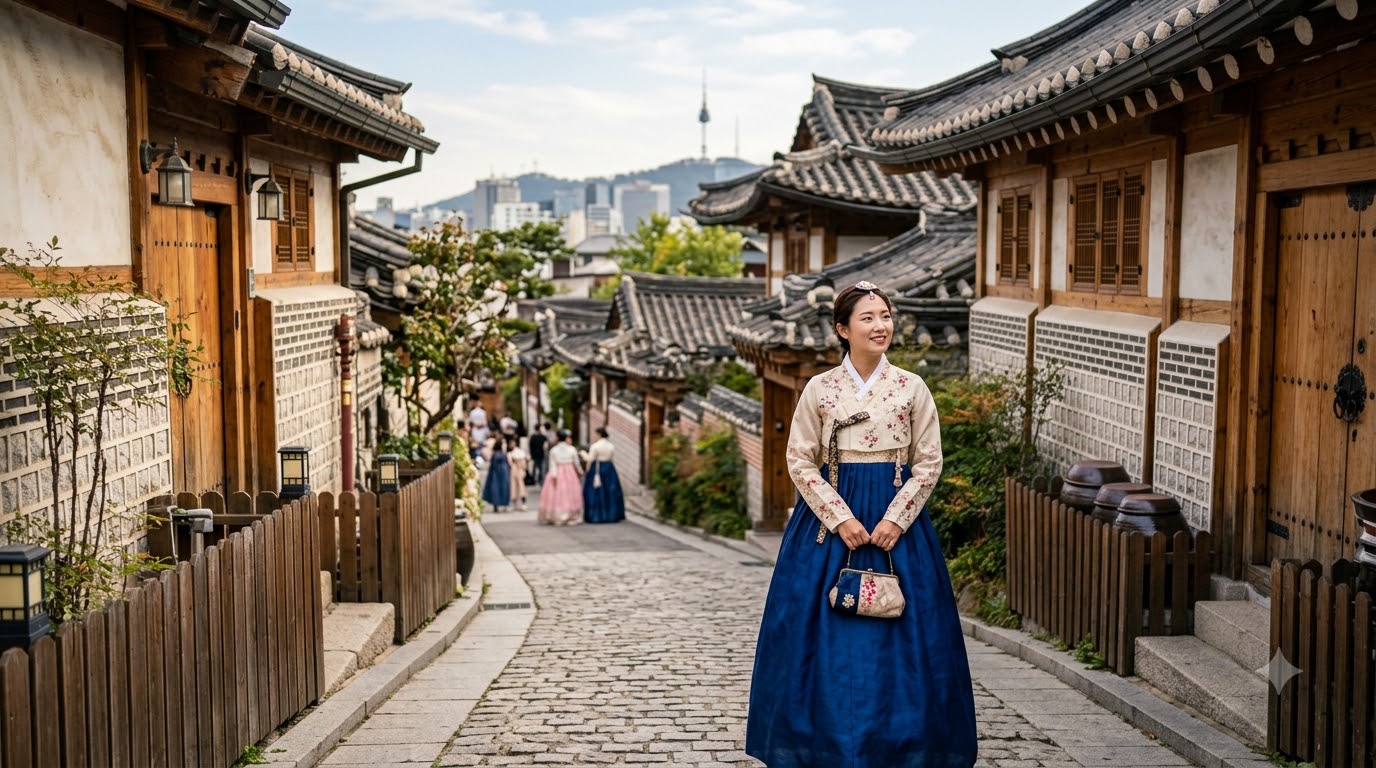
Rent a hanbok before the palaces and you enter every royal site for free, which quickly pays for the outfit. Rental shops around Anguk Station charge from about 15,000 KRW for a 2-to-4-hour turn and up to 40,000 KRW for the full day, hair styling and accessories included. In your hanbok, walk the narrow lanes of Bukchon Hanok Village, a living residential neighborhood of restored traditional houses wedged between Gyeongbokgung and Changdeokgung.
Bukchon is a real neighborhood, not an open-air museum, so respect the rules:
- Core residential alleys close to tourists 5:00 p.m. to 10:00 a.m. (enforced since 2025).
- Staying late risks a 100,000 KRW fine, with “Bukchon Guardian” volunteers patrolling the lanes.
- Hanbok rental: from about 15,000 KRW for 2-4 hours, up to 40,000 KRW for a full day with hair styling and accessories.
- Wearing a hanbok waives admission at all five royal palaces.
- Best window for quiet photos: mid-morning on a weekday.
Shop and Snack Your Way Through Myeongdong
Myeongdong is Seoul’s most concentrated shopping and street-food district, and it is best after dark when the food carts fire up. The grid of pedestrian streets packs Korean skincare flagships, global fashion labels, and rows of stalls selling grilled cheese lobster, tornado potatoes, and egg bread for roughly 3,000 to 8,000 KRW a bite. Prices here run higher than local markets, but the sheer variety makes it worth one evening.
Come hungry and pace yourself across a dozen small plates. For a deeper look at where locals actually eat, from Gwangjang Market to Michelin-listed hole-in-the-walls, see our guide to the best food in Seoul.
Feel Seoul’s Youth in Hongdae
Hongdae is the student and indie-music quarter around Hongik University, and it is where Seoul feels youngest and loudest. Weekend evenings bring free busking performances to the main street, where K-pop dance crews and singers draw crowds until midnight. The area stacks budget eateries, themed cafes, vintage shops, and late-night bars into a walkable few blocks.
We think Hongdae pairs well with an afternoon in nearby Yeonnam-dong, a quieter cafe district along a former railway park. Nights run long here, so plan your subway ride back before the last train around midnight, or budget for a taxi.
Ride Up to N Seoul Tower on Namsan
The view from N Seoul Tower is Seoul’s classic panorama, and sunset is the moment to catch it. Perched on Namsan mountain, the tower’s observatory costs 21,000 KRW for adults booked online, rising to 29,000 KRW if you buy at the door.
- Observatory ticket: 21,000 KRW online versus 29,000 KRW at the door.
- Reach the base by Namsan cable car, a short bus, or a 20-to-30-minute uphill walk through the forested park.
- Arrive about an hour before sunset to ride up in daylight and stay for the city lights.
- Namsan Park trails are a free alternative if you skip the observatory itself.
We timed our own climb for an hour before sunset, rode up in daylight, and stayed at the top long enough to watch the whole skyline switch on. The love-lock fences on the terrace are a photo staple either way.
Take a DMZ Tour to the Korean Border
A guided DMZ tour is Seoul’s most sobering day out, reaching the tense buffer zone between the two Koreas. Standard half-day tours cost roughly 55,000 to 75,000 KRW and cover the Third Infiltration Tunnel, Dora Observatory looking into North Korea, and Imjingak Park, returning to central Seoul by early afternoon. You must book ahead and carry your passport; independent access is not allowed.
Quick facts before you book a DMZ tour:
- Half-day tour: 55,000-75,000 KRW, back in central Seoul by early afternoon.
- Covers the Third Infiltration Tunnel, Dora Observatory, and Imjingak Park.
- Passport required; independent access to the zone is not allowed.
- JSA/Panmunjom add-on (around 150,000 KRW) has been suspended or heavily restricted since mid-2023, so confirm exactly what your tour includes before paying.
Eat at Gwangjang and the Night Markets
Gwangjang Market is the oldest and most atmospheric place to eat in Seoul, and it costs nothing to walk in. On our last trip we spent an afternoon at Gwangjang sampling bindaetteok and mayak gimbap for under 10,000 KRW between the two of us, sharing a counter with office workers on their lunch break. The covered aisles are packed with stalls frying bindaetteok (mung-bean pancakes), rolling mayak gimbap, and slicing raw beef tartare, with most plates between 5,000 and 12,000 KRW. Grab a stool at a counter, point at what your neighbor is eating, and share a table.
For dessert or a nightcap, the riverside and university night markets keep going late. Pair a market crawl with a stroll along the Cheonggyecheon stream, a restored waterway that cuts through downtown and lights up after dark.
Take an Easy Day Trip from Seoul
Two day trips stand out if you have a spare day, and both connect to the city by public transport or organized tours. Nami Island, a half-moon of tree-lined paths about 90 minutes northeast, charges from 13,000 KRW including the round-trip ferry and is famous for its photogenic tree tunnels. Everland, South Korea’s biggest theme park, sits south of the city and is the pick for families and coaster fans.
| Day Trip | 2026 Cost | Travel Time | Best For |
|---|---|---|---|
| Nami Island | From 13,000 KRW (ferry incl.) | ~90 min | Scenery, autumn foliage |
| Everland | ~39,000 KRW online / 59,000 gate | ~60-90 min | Families, rides, pandas |
| DMZ (half-day) | 55,000-75,000 KRW | Half day | History, the border |
Everland day passes drop to around 39,000 KRW when you book the foreigner ticket online, versus roughly 59,000 KRW at the gate. Go on a weekday to shorten ride queues.
Getting Around Seoul
Seoul’s subway is the fastest, cheapest way to reach every attraction above, and a T-money card ties it together. Across our trips we’ve taken the AREX both ways and still found the subway faster than taxis for every stop on this list.
- T-money card: base subway fare 1,400 KRW, also valid on buses and in many taxis and shops.
- AREX Express: Incheon Airport to Seoul Station in about 43 minutes for 13,000 KRW, or a touch less booked online.
- Trains run frequently until around midnight, and station signage is bilingual.
If you would rather stay near the action, our where to stay in Seoul guide breaks down the best base neighborhoods for first-timers.
When to Visit for the Best Experience
Time your trip for April or October and you will catch Seoul at its best. Cherry blossoms usually peak in the first two weeks of April, while autumn foliage turns the palace gardens gold from mid-to-late October, both bringing mild, dry days. These are also the busiest and priciest weeks, so book lodging two to three months ahead.
Shoulder months like March, June, and November trade a little weather risk for 15 to 30 percent lower prices and thinner crowds. Winters are cold, with lows regularly below freezing, and summers are hot and humid with a July monsoon. Our best time to visit Seoul guide covers the month-by-month trade-offs.
Frequently Asked Questions
What is the number one thing to do in Seoul?
Touring Gyeongbokgung Palace tops most lists because it is cheap (3,000 KRW), central, and packed with history, including the Royal Guard Changing Ceremony at 10:00 a.m. and 2:00 p.m. Rent a hanbok nearby and you get in free. Pair it with a walk through neighboring Bukchon Hanok Village to fill a half day.
How many days do you need in Seoul?
Plan three days minimum to cover the palaces, Bukchon, Myeongdong, Hongdae, and N Seoul Tower without rushing. Add a fourth day for a DMZ border tour and a fifth for a day trip to Nami Island or Everland. Grouping attractions by neighborhood each day keeps your subway time down.
Is Seoul expensive to visit in 2026?
Seoul is mid-range for a major Asian capital, and many highlights are cheap or free. Palace entry is 1,000 to 3,000 KRW, market street food runs 3,000 to 12,000 KRW a plate, and the subway starts at 1,400 KRW. Your biggest costs are hotels and paid attractions like N Seoul Tower (21,000 KRW) and theme parks.
Can you visit the DMZ from Seoul?
Yes, guided half-day DMZ tours run daily from central Seoul for about 55,000 to 75,000 KRW and reach the Third Tunnel and Dora Observatory. You must book ahead and bring your passport. Tours to the Joint Security Area (Panmunjom) have been restricted since 2023, so confirm what your specific tour includes.
What is the best time to visit Seoul?
April and October are the best months, with mild weather, cherry blossoms in early April, and autumn foliage in mid-to-late October. These peak weeks bring crowds and higher prices, so book two to three months out. March, June, and November offer decent weather with prices 15 to 30 percent lower.
Plan Your Seoul Trip
Seoul rewards travelers who plan around its neighborhoods: spend a morning on the palaces and Bukchon, an evening in Myeongdong or Hongdae, and reserve a full day each for the DMZ and a countryside escape. Book timed palace and tower tickets online to save both money and queue time, load a T-money card on arrival, and aim for April or October if your dates are flexible. With three to five days and this list in hand, you will see the best of the city without wasting an hour.