Is Seoul Safe? An Honest Guide for American Travelers (2026)
Disclosure: Some links in this guide are affiliate links. If you book or buy through them, we may earn a small commission at no extra cost to you — it helps keep our guides free.
Yes, Seoul is safe for most visitors: the US State Department rates South Korea at Level 1, its lowest of 4 risk tiers (last updated 28 May 2025), and the country’s homicide rate was 0.489 per 100,000 people in 2024, against 5.763 in the US in 2023. Violent crime against tourists is rare.
The real risks are overcharging taxis, crowded nightlife streets, harassment around bars, and the background noise of North Korea, which official advisories say to monitor, not fear.
| Risk | Reality | What to do |
|---|---|---|
| Violent crime | Rare; foreigners are seldom targeted | Normal city awareness |
| Taxi overcharging | The most common tourist complaint | Use licensed taxis, insist on the meter |
| Nightlife harassment | Reported around Itaewon, Gangnam, Hongdae bars | Watch your drink, go home in a group |
| Crowd crush | Itaewon, Halloween 2022, 159 deaths | Skip packed alleys on big party nights |
| North Korea | Tension can rise with little notice | Enroll in STEP, follow local alerts |
| Typhoons | Season runs June to November | Check the forecast, keep plans flexible |
The honest answer: safer than most American cities
Visit Seoul’s safety page, the official tourism site, says most of the city is safe day and night, including for women traveling alone. Canada says “take normal security precautions,” and the UK FCDO calls crime against foreigners rare, with occasional thefts.
A homicide rate under 0.5 per 100,000 puts South Korea near Japan (0.229) and below England and Wales (0.930). Still deciding on the trip itself? Our take on whether Seoul is worth visiting covers cost and crowds.
Neighborhoods to avoid at night (and when)
No district is off-limits. The cautions are about timing and crowds:
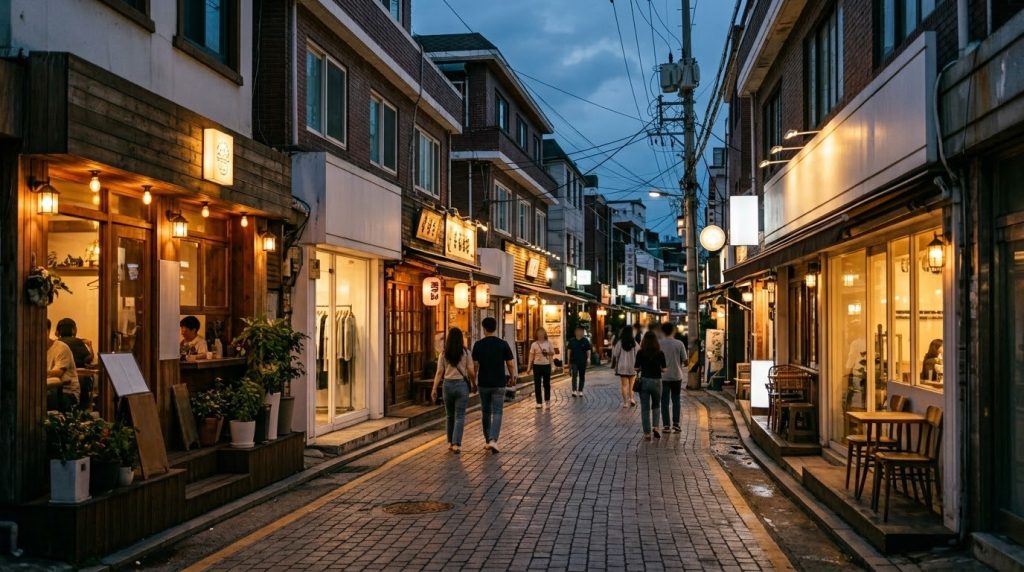
– Itaewon on Halloween weekend. On 29 October 2022, a crowd crush in a narrow alley killed 159 people, 2 of them American.
If you land in late October, enjoy the area on a weeknight instead. – Itaewon, Gangnam and Hongdae bar strips after midnight. Canada’s advisory names these three for harassment and sexual assault around bars, and the UK flags Itaewon for theft.
Go, but never leave a drink unattended. – Dark alleys and parking lots anywhere, per Visit Seoul. – Protest zones. Demonstrations are common in central Seoul. Most are peaceful, but foreigners are legally barred from political activity, so keep your distance.
The scams that actually happen in Seoul
Taxi overcharging. In July 2026, the Korea Herald reported a tourist charged KRW 690,800 (about USD 510) for a ride to Incheon Airport that normally costs around KRW 70,000 (about USD 52) including tolls. A Seoul driver was also fined for charging KRW 56,000 (USD 41) when the meter showed KRW 32,600 (USD 24).
Walk past unlicensed “call vans” soliciting in airport arrivals halls to the official taxi rank. Licensed taxis carry QR codes for reporting unfair fares, and the Seoul city government says overcharging drivers face fines of KRW 200,000–600,000 (USD 150–445). Prices here are converted at USD 1 = KRW 1,350.
Friendly strangers with a “survey.” Pairs of young people near Myeongdong or Insadong may chat about your energy or ancestors, then invite you to a ceremony ending in a donation request. Say no and keep walking.
Unpriced shops and stalls. Visit Seoul advises using businesses with posted prices and asking vendors first.
Transport safety: subway, taxis and roads
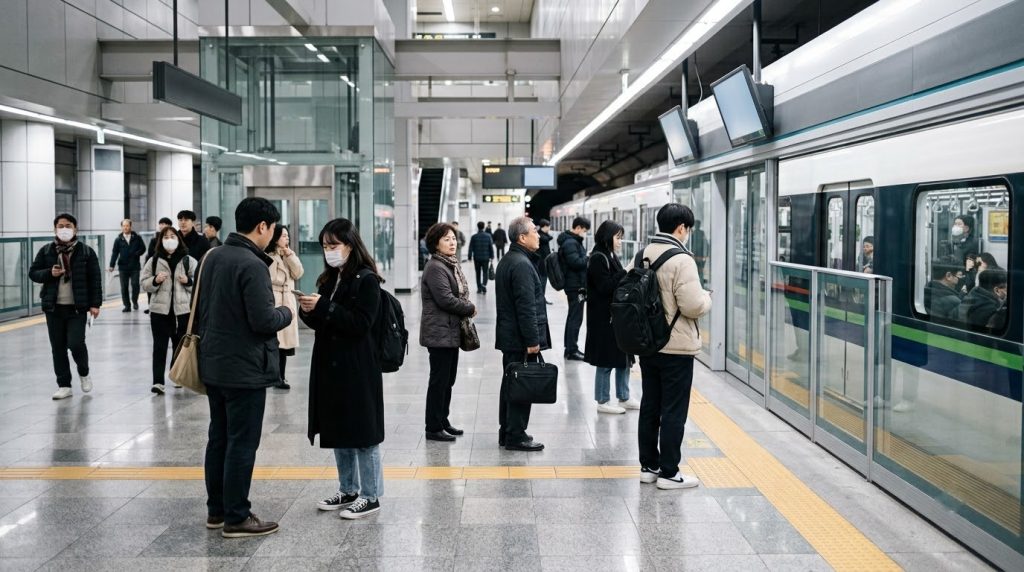
The subway is clean, well lit and covered by CCTV, and it reaches nearly everything on our list of the best things to do in Seoul.
In taxis, check the meter is on, pay only the metered fare plus tolls, and carry your address in Korean, since most drivers speak little English. Black “call vans” have no meter, so agree the price first. Canada warns that fatal road collisions are very high, so look both ways even on a green walk signal.
The DMZ, one of the most popular day trips from Seoul, is visited only on organized tours, so book an established operator.
Solo and female travel in Seoul
Seoul is one of Asia’s easiest big cities for a woman alone: solo dining is normal, and the subway is well lit and watched by CCTV. The caveat is nightlife: Canada notes that sexual assault and harassment “are not uncommon” around bars in Itaewon, Gangnam and Hongdae. Order your own drinks, keep them with you, and use a licensed taxi rather than a stranger’s offer of a ride.
North Korea, drills and typhoons: what official sources say
The US State Department keeps South Korea at Level 1, while noting that the country routinely holds military exercises and civil defense drills. The UK says tension on the Korean Peninsula “can change with little notice,” often after missile tests or joint US-Korean exercises. That is a reason to stay informed, not to cancel.
If sirens sound during a scheduled drill, traffic may stop and people may be asked to shelter in metro stations or basements. Follow instructions. Enroll in the State Department’s STEP program so the US Embassy can reach you.
Typhoon season runs June to November; our guide to the best time to visit Seoul weighs weather against crowds.
Laws and cultural differences that catch tourists out
South Korea’s drug laws are far stricter than most visitors expect. Possession of marijuana, CBD products or other recreational drugs is a criminal offense no matter whether they are legal at home, and guidance for travelers to the country warns that penalties for use or trafficking can run to long prison sentences, with arrest typically immediate rather than a warning.
Some prescription medication that is routine elsewhere, including certain ADHD and strong painkillers, can also need advance paperwork to bring in, so check with a Korean embassy before you pack anything beyond common over-the-counter items.
Smoking rules are easy to break without noticing. Lighting up is banned at bus stops, in plazas and across many outdoor public areas, with fines of up to KRW 100,000 (about USD 74), and the ban now covers e-cigarettes in no-smoking zones under an April 2026 rule change. Indoors, smoking is prohibited in restaurants, bars and cafes over 150 square meters.
Look for the small smoking booths near transit hubs rather than stepping just outside a cafe door.
Drinking alcohol in public is legal, and parks and riversides fill with picnicking drinkers on weekends, but disorderly conduct while drunk can bring a fine and a trip to the police station. The legal drinking age is 19.
Jaywalking is enforced more than first-time visitors assume. Crossing outside a marked crosswalk carries a fine of KRW 20,000 (about USD 15), and police have issued on-the-spot fines to foreign tourists in locations such as Jeju; the fine can double for repeat offenses. Use the crosswalk even when traffic looks clear, since drivers do not reliably yield to pedestrians who step out early.
Photography near military checkpoints, bridges and anything that looks official is best avoided without asking first, especially close to the DMZ, where tourists have had cameras checked after photographing restricted infrastructure. Visit on an organized tour, follow the guide’s instructions exactly and keep your phone away until you are told photos are allowed.
Health, water and the air: what you need to know
Tap water in Seoul is officially safe to drink. Visit Seoul, the city’s tourism site, states that tap water is safe for both hygiene and drinking, backed by the same standard from the Korea Water Resources Corporation.
In practice many locals still prefer bottled or filtered water out of habit rather than any documented safety issue, and water coolers are common in restaurants, hotels and offices if you want an alternative. Carrying a reusable bottle works either way.
Pharmacies, marked with a green cross, are easy to find in every neighborhood and stock common over-the-counter medication for colds, pain and stomach upsets. Pharmacists often speak limited English, so a translation app helps describe symptoms. Prescription-only medication needs a local doctor’s visit first; walk-in clinics near major stations can usually see a tourist the same day for non-emergency issues.
The bigger seasonal health factor is fine or “yellow” dust, which peaks from February through April and can push air quality readings well into unhealthy ranges; one tracking service recorded area AQI readings above 150 during a dust event in March 2026.
On bad-air days, convenience stores such as CU and GS25 sell certified KF94 or higher-rated masks that filter fine particles far better than a basic cloth mask.
Check a local air-quality app before heading out on a hazy morning, and anyone with asthma or a respiratory condition should keep a mask on hand through these months regardless of the daily reading. Outside this window, air quality is rarely a concern for a short visit.
Summer heat and humidity are a bigger daily hazard than any crime statistic. July and August push conditions high enough that heat exhaustion is a real risk for visitors doing a full day of sightseeing, so pace outdoor plans for morning and evening and carry water rather than relying on finding a shop.
International-standard hospitals such as Severance and Samsung Medical Center in Seoul have English-speaking staff and are set up for foreign patients, which is useful to know before you need them rather than after.
Travel insurance that covers treatment abroad is worth buying regardless of how healthy the trip looks on paper, since even a routine emergency-room visit can run into hundreds of dollars without it.
Accessibility, apps and what to pack
Seoul’s subway is one of the more accessible systems in Asia. After years of advocacy and an elevator-installation push by the city government, close to all of the system’s busiest stations, those handling 3,000 or more riders a day, are now step-free, and major lines carry wheelchair users and parents with strollers without much trouble.
Audio signals exist at many crosswalks, though coverage is incomplete, so travelers with vision or mobility needs should still build extra time into transfers at older, smaller stations.
Google Maps will frustrate you here. South Korean security rules restrict how much detailed map data can leave the country, so Google’s walking and driving directions are unreliable in practice. Download Naver Map or KakaoMap before you land, both available in English, and pair either with the Papago translation app for reading menus and signs.
These three apps solve most of the small daily friction that makes a trip feel harder than it needs to be.
For packing, outlets use round two-pin C and F style plugs at 220V, so bring an adapter if your devices need one. Pack layers: summers are hot and humid, winters are dry and cold, and spring brings the fine-dust season described above, so a few KF94 masks are worth packing from February to April.
Comfortable, closed shoes work better than sandals for subway stairs and uneven palace courtyards, and a light rain jacket covers sudden summer downpours.
A T-money card, sold at convenience stores and subway kiosks, works across the subway, city buses and most taxis, and saves buying a paper ticket at every stop. An eSIM or an airport-counter SIM gives data from the moment you land, which matters most for Naver Map and Papago rather than for calls.
If you need a wheelchair-accessible taxi, call ahead through your hotel rather than trying to hail one on the street, since most regular taxis are standard sedans.
Who should think twice about Seoul right now
– Travelers who will spend the trip refreshing North Korea headlines. The advisories don’t flag tourist danger, but the worry is real for some. – Anyone set on Itaewon’s Halloween street party. Plan around the crowds. – People who need English everywhere. Outside hotels and big sights, you’ll need a translation app.
What to do in an emergency in Seoul
– 112: police (theft, assault, any crime) – 119: fire and ambulance – 1339: medical help for international visitors – 1330: Korea’s tourist hotline for scams, lost items and interpretation
Police provide free interpretation in emergencies. Buy travel insurance with medical cover; many US health plans don’t cover care abroad.
Entry is simple for Americans: US passport holders are exempt from the K-ETA through 31 December 2026 and need one from 1 January 2027. Nonstop flights from New York take about 15 to 16 hours.
Where to stay
– Myeongdong: central and busy until late. Best for first-timers who want short, well-lit walks home. – Jongno and Insadong: quieter streets near the palaces, good for couples and families. – Hongdae: young and loud, best for solo travelers who want nightlife within walking distance.
If you are building a route, our 4-day Seoul itinerary shows how each base works.
Find your Seoul hotel on the map
Live prices from Booking, Airbnb and more — move the map or change dates to compare stays across Seoul.
Frequently Asked Questions
Is Seoul safe for Americans?
Yes. The US State Department rates South Korea at Level 1, “Exercise normal precautions,” its lowest level, last updated 28 May 2025. Americans face the same small risks as everyone else: taxi overcharging, nightlife harassment and theft in crowded spots. Enroll in STEP so the US Embassy in Seoul can contact you if the security situation changes.
Is it safe to walk around Seoul at night?
Generally yes. Visit Seoul, the city’s official tourism site, says most areas are safe day and night, including for women alone. Main streets stay lit and busy late. Use normal sense: avoid dark alleys and empty parking lots, keep your drink in sight in bar districts, and take a licensed taxi rather than accepting a ride from a stranger.
Is Seoul safe because of North Korea?
For tourists, yes. Governments in the US, UK and Canada keep South Korea at their lowest or normal-precaution level while noting that peninsula tension can rise quickly, often after missile tests or military exercises. Practically, that means following the news, enrolling in STEP and obeying instructions if civil defense sirens sound during a drill.
What are the most common scams in Seoul?
Taxi overcharging tops the list, especially unlicensed “call vans” at Incheon Airport and inflated fares on airport runs. Other common traps are friendly strangers offering a “survey” that leads to a donation request, and bars without posted prices. Use licensed taxis, report bad fares with the in-car QR code, and walk away from anything unpriced.
Planning the whole trip? Start with our Seoul travel guide for the overview, then use this page for the details.