Is Seoul Expensive? Real Prices and How to Save (2026)
Disclosure: Some links in this guide are affiliate links. If you book or buy through them, we may earn a small commission at no extra cost to you — it helps keep our guides free.
- No, Seoul is not expensive by American standards: a subway ride is USD 1.15 and bibimbap about USD 5.93.
- Gyeongbokgung Palace costs USD 2.22 to enter.
- Costs climb at hotels and Korean BBQ dinners; most first-timers do Seoul on USD 96–176 a day.
No, Seoul is not expensive by American standards: a subway ride costs USD 1.15 (KRW 1,550), a bowl of bibimbap runs about USD 5.93 (KRW 8,000), and Gyeongbokgung Palace charges USD 2.22 (KRW 3,000) to get in. The bill climbs in two places, hotels and Korean BBQ dinners, so a comfortable trip still adds up.
Most first-timers can do Seoul well on USD 96–176 a day before flights, and budget travelers can go much lower. All prices below are converted at USD 1 = KRW 1,350.
| Item | Typical price | How to save |
|---|---|---|
| Subway ride (transit card) | USD 1.15 (KRW 1,550) | Ride before 6:30 a.m. for 20% off, or buy a Climate Card pass |
| 3-day unlimited transit pass | USD 7.41 (KRW 10,000) plus USD 2.22 card | Worth it from about 3 rides a day |
| Gimbap / bibimbap / gukbap | USD 3.33–7.41 (KRW 4,500–10,000) | Eat lunch at local rice and soup spots |
| Pork BBQ (samgyeopsal), per serving | USD 11.85 (KRW 16,000) | Order for the table, not per person extras |
| Gyeongbokgung Palace | USD 2.22 (KRW 3,000) | Free if you wear a hanbok |
| N Seoul Tower observatory | USD 21.48 (KRW 29,000) | Walk up Namsan for the free view instead |
| Budget hotel or guesthouse | USD 30–70 a night | Book early for spring and fall |
| Mid-range hotel | USD 70–180 a night | Stay one or two stops off the main hubs |
Where Seoul is genuinely cheap
Getting around is the clearest win. The Seoul Metropolitan Government fare table puts the adult base fare at KRW 1,550 on a transit card and KRW 1,650 for a single-ride ticket, with KRW 100 added per extra 5 km once a trip passes 10 km. That is roughly the price of a vending-machine coffee back home.
Taxis are reasonable too: Numbeo’s crowd-sourced data shows a KRW 4,800 (USD 3.56) flag fall.
Culture is cheap as well. The VisitKorea listing for Gyeongbokgung lists adult entry at KRW 3,000, free for visitors under 19 or over 65, and the palace closes on Tuesdays. The Royal Palaces and Tombs Center also runs free admission for hanbok wearers, which is why you see so many rented outfits around Gwanghwamun.
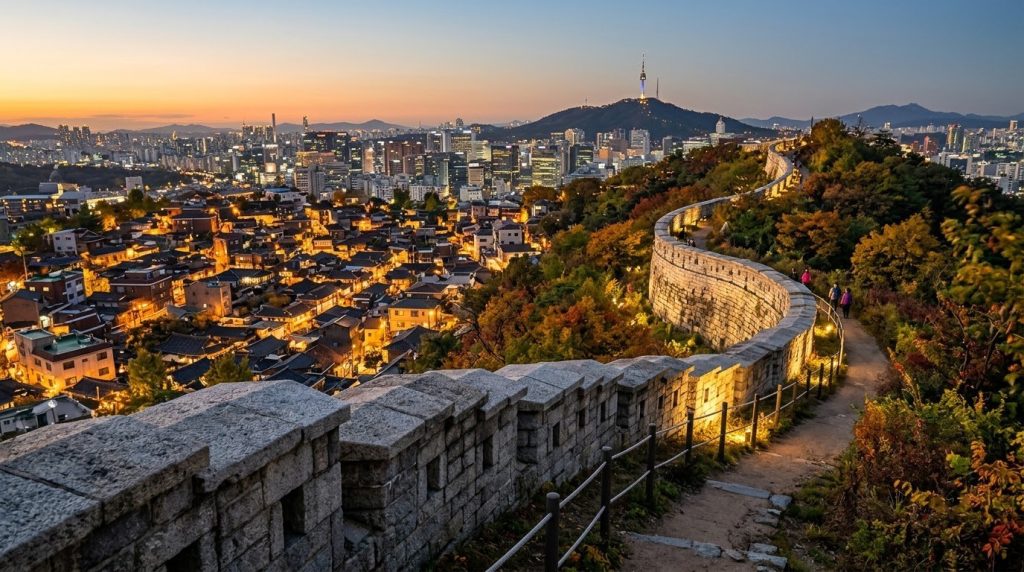
Many of the best things to do in Seoul cost little or nothing: Bukchon, Cheonggyecheon, Namsan’s trails.
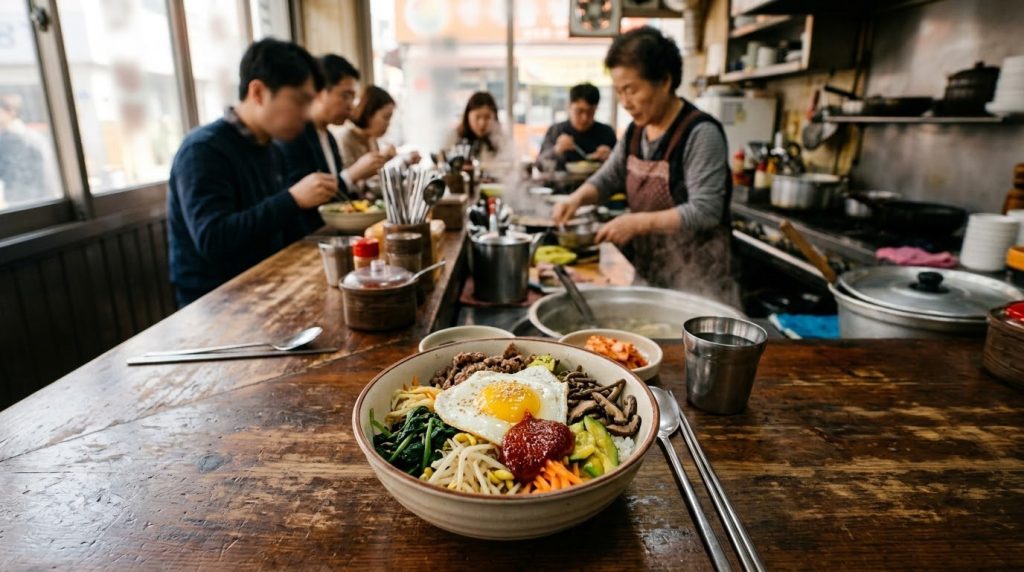
Everyday food stays friendly. Creatrip’s April 2026 price guide lists gimbap at KRW 4,500, bibimbap at KRW 8,000 and gukbap (rice soup) at KRW 10,000, and Numbeo puts an inexpensive restaurant meal at KRW 12,000 (USD 8.89). A takeout coffee runs about KRW 3,000 (USD 2.22).
Where your money actually goes
Hotels are the biggest line on most Seoul budgets. Budget rooms and guesthouses generally run USD 30–70 a night and mid-range hotels USD 70–180, with the top of that range hit in peak cherry-blossom and autumn-foliage weeks. Check the best time to visit Seoul before you lock in dates, because shoulder weeks are where the room rates soften.
Sit-down dinners are the second surprise. Korean BBQ is priced per serving (Creatrip lists samgyeopsal at KRW 16,000 and beef bulgogi at KRW 18,000), and a group of hungry adults orders several. Numbeo puts a mid-range meal for two at KRW 90,000 (USD 66.67). Cafe culture adds up quietly too: eat-in coffee at a design cafe is closer to KRW 6,000 (USD 4.44), and Numbeo’s average cappuccino is KRW 5,494.
Big-ticket attractions are the third: the N Seoul Tower observatory lists adult admission at KRW 29,000 (USD 21.48) on its official site.
A realistic daily budget for Seoul
Creatrip’s 2026 budget breakdown, converted at USD 1 = KRW 1,350, gives a useful frame:
– Budget: KRW 57,000–106,000 a day (USD 42–79), with guesthouses, street food and transit. – Standard: KRW 129,000–238,000 a day (USD 96–176), with a mid-range hotel and a couple of sit-down meals. – Comfort: KRW 255,000–525,000 a day (USD 189–389), with nicer hotels, taxis and paid attractions.
Those figures exclude flights, which will be your largest single cost from the US. Trip length matters more than daily spend; our guide to how many days in Seoul helps you avoid paying for nights you will not use.
Entry is free for Americans for now: the US State Department notes that the K-ETA exemption for US passport holders runs through December 31, 2026, and a K-ETA will be required from January 1, 2027.
How to save money in Seoul without skipping the good stuff
– Buy a Climate Card short-term pass. The Seoul city Climate Card page lists KRW 5,000 for 1 day, 8,000 for 2, 10,000 for 3, 15,000 for 5 and 20,000 for 7 days, plus KRW 3,000 for the card. The 30-day version ended in 2026, but the tourist passes continue. – Take the all-stop airport train.
The AREX express to Seoul Station is KRW 13,000 (USD 9.63), while the all-stop train costs KRW 4,150–5,350 (USD 3.07–3.96) and takes under an hour. – Make lunch your big meal. Rice, soup and noodle shops cost a fraction of BBQ dinners. – Rent a hanbok for a morning and see the palaces free. – Use day trips wisely.
The best day trips from Seoul by subway or intercity bus cost far less than a guided tour.
Who should not expect Seoul to be cheap
Skip the “Seoul on a shoestring” idea if you want a central four- or five-star hotel during cherry-blossom season, plan to eat Korean BBQ every night, or travel as a family that needs two rooms or a large suite. Shoppers are the other group: Myeongdong and Seongsu make it very easy to overspend.
If those describe your trip, budget at the standard or comfort level above. Still deciding? Our honest take on whether Seoul is worth visiting and the head-to-head on Seoul vs Tokyo cover the trade-offs.
Flight costs from the US to Seoul
Flights are the cost that catches most first-time visitors off guard, since none of the per-day figures above include getting there.
From the West Coast, fare trackers currently show Korean Air and other carriers selling one-way tickets from Los Angeles from around USD 357 on the cheapest fare classes, with round trips more typically landing between USD 714 and USD 1,014 depending on season and how far ahead you book.
From East Coast cities the flight is longer, usually with one connection, and fares generally sit higher than the West Coast routes above.
Seasonality matters as much here as it does for hotels. Fares climb around the cherry-blossom weeks in spring and the autumn foliage season, the same windows that push hotel rates toward the top of the standard range, so a trip timed for just before or after those peaks can save on both the flight and the room at once.
September is frequently cited as one of the cheaper months to fly, which lines up with milder weather and before the autumn colors draw crowds back.
Build the flight into your total budget before comparing hotel tiers. A USD 700 round-trip fare on top of a week of standard-tier spending changes the per-day math of the whole trip far more than the difference between a budget and mid-range hotel room.
Layover routes through Tokyo, Taipei or a West Coast hub sometimes undercut nonstop fares, especially on budget-friendly Asian carriers, and can be worth the extra hour or two in the air if the saving is significant.
Set a fare alert for your dates a few months out rather than booking the first price you see, since Seoul routes from major US gateways see enough competition between Korean, US and other Asian carriers that prices do move.
Nightlife costs: bars, soju and karaoke rooms
A night out in Seoul can be cheap or expensive depending almost entirely on where you drink. A bottle of soju from a convenience store costs as little as KRW 2,000 to KRW 4,000 (about USD 1.50 to USD 3), and ordering it at a casual restaurant alongside food runs closer to KRW 5,000 (about USD 3.70).
Draft beer at an ordinary bar is a similar price to soju, while mixed drinks and cocktails at a proper bar or club run anywhere from KRW 5,000 to KRW 14,000 (roughly USD 3.70 to USD 10) depending on the venue and the neighborhood.
Hongdae and Itaewon have the densest concentration of bars aimed at a younger, more international crowd, and prices there run toward the higher end of those ranges, especially at clubs with a cover charge.
Noraebang (private karaoke rooms) are a cheaper group activity than a club: rooms are typically rented by the hour and split among the group, which keeps the per-person cost low even on a night that includes several drinks beforehand.
Pre-drinking before heading out, a common local habit known as hoesik-style drinking among groups of friends, is one of the simplest ways to keep a night’s total down, since bar and club markups apply only to what you buy once you arrive.
Convenience stores are the other quiet money-saver. Most carry a small table and chairs out front or just inside, and buying a few canned cocktails or beers there to drink on site, rather than at a bar, is a completely normal and accepted way to spend a casual evening in Seoul at a fraction of bar prices.
Street food stalls around nightlife districts also fill the gap between dinner and a late bar crawl for a few dollars a skewer, which keeps a long night from turning into an expensive one just because everyone got hungry at 1 a.m.
Staying connected: SIM cards, eSIMs and pocket WiFi
Seoul makes it easy to stay online cheaply. A rented pocket WiFi device, often called a WiFi egg, typically costs around USD 2 to USD 7 a day with airport pickup and return at Incheon or Gimpo, and can be shared across an entire travel group on one device rather than buying several SIMs.
A physical prepaid SIM bought at the airport usually costs in the range of KRW 20,000 to KRW 40,000 (about USD 15 to USD 30) for a trip-length package, sometimes with a small extra charge for a nano or micro card size.
Tourist eSIMs are the simplest option if your phone supports them, since they activate before you land and need no airport counter visit at all; prices vary by provider and data allowance, so compare a couple of options against the SIM and WiFi-egg prices above before buying.
For a solo traveler on a short trip, an eSIM or single SIM is usually the better value; for a family or group of three or more, splitting one pocket WiFi device is typically the cheapest way to keep everyone connected.
Free WiFi is common in cafes, subway stations and most hotels, which covers a lot of casual browsing, but it is not reliable enough to navigate by on foot between neighborhoods.
Given how cheap a week of data is relative to everything else on this list, treat it as a fixed small cost rather than something to shop around for extensively; the time saved not getting lost in Seoul’s dense street grid is worth more than the few dollars you might save switching providers.
Where to stay
– Myeongdong and Jung-gu: the most central base for first-timers, close to Seoul Station for the airport train. Prices are higher, rooms smaller. – Hongdae: the best value for budget travelers and younger groups, with cheap food, nightlife and a direct airport rail link. – Insadong and Jongno: the pick for culture-focused couples who want to walk to Gyeongbokgung and Bukchon.
Find your Seoul hotel on the map
Live prices from Booking, Airbnb and more — move the map or change dates to compare stays across Seoul.
Frequently Asked Questions
Is USD 100 a lot of money in Seoul?
USD 100 is about KRW 135,000, which covers a solid standard day in Seoul excluding your hotel: unlimited transit, a palace, a cheap lunch, a BBQ dinner and coffee. It will not stretch to a hotel plus a full day of activities unless you stay in a budget guesthouse, so treat it as a daily spending allowance on top of accommodation.
Is USD 1,000 enough for a week in Seoul?
USD 1,000 for seven days excluding flights works out to about USD 143 a day, which sits inside the standard range of USD 96–176. That covers a mid-range or budget hotel, transit and everyday food. It gets tight if you want a central upscale hotel, nightly BBQ and paid attractions, so choose where to spend.
Is Seoul cheaper than Tokyo?
On day-to-day spending the two are close. Seoul’s subway base fare is KRW 1,550 (USD 1.15), and local meals start around KRW 4,500–10,000. Hotel prices overlap heavily, so the cheaper city depends on your dates and neighborhood rather than a fixed gap. Compare live room rates for your specific dates before deciding.
How much is a meal in Seoul?
A simple meal costs USD 3.33–7.41 (KRW 4,500–10,000) for gimbap, bibimbap or gukbap, and Numbeo puts an inexpensive restaurant meal at KRW 12,000 (USD 8.89). Korean BBQ costs about KRW 16,000 per pork serving, and a mid-range dinner for two is around KRW 90,000 (USD 66.67).
Do I need cash in Seoul?
Cards work in most convenience stores, cafes and restaurants, but transit cards are topped up with cash and some market stalls prefer it, so carry a modest amount of won. A single-ride subway ticket costs KRW 1,650 versus KRW 1,550 on a card, so get a transit card early.
Planning the whole trip? Start with our Seoul travel guide for the overview, then use this page for the details.
Want to compare daily costs across destinations? See our Travel Cost Index.