How Many Days in Switzerland (2026)
Disclosure: Some links in this guide are affiliate links. If you book or buy through them, we may earn a small commission at no extra cost to you — it helps keep our guides free.
- 7 days for two bases and three to four mountain excursions; 3 to 4 days for one base and one excursion.
- Weather can bump a Jungfraujoch or Mount Pilatus trip and erase a day you did not budget for.
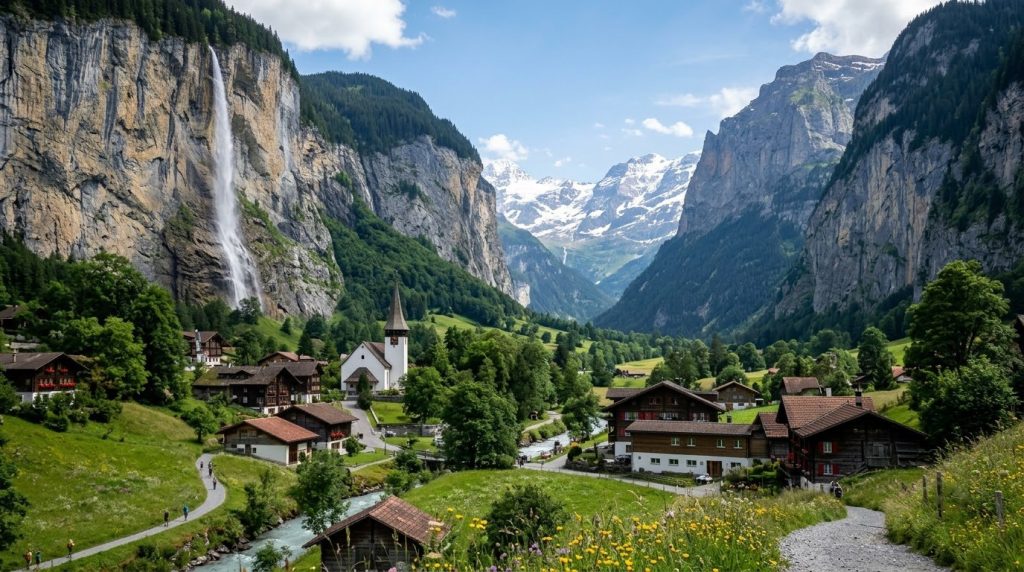
The answer to how many days in Switzerland you need is 7 days for two bases and three to four mountain excursions, or 3 to 4 days for one base and a single excursion. The right answer changes if a Jungfraujoch or Mount Pilatus trip gets bumped by weather, because that single delay can erase a day you did not budget for.
| Trip length | Bases | Usable excursion days | Approx cost/person (USD) | Best for |
|---|---|---|---|---|
| 3 to 4 days | 1 | 1 to 2 | ~1,300 | A stopover or add-on to a wider Europe trip |
| 7 days | 2 | 3 to 4 | ~2,600 | First-timers who want the Alps and a city base |
| 10 days or more | 3 | 5 to 7 | ~3,600 | Repeat visitors or anyone adding Zermatt or Ticino |
Costs above are a mid-range per-person estimate (Swiss Travel Pass plus accommodation and food) and exclude international flights; see the research notes for the exact build.
3 to 4 Days: One Base, One or Two Excursions
Three to four days works when you pick one base, most often Interlaken or Lucerne, and let the rest of the trip revolve around a single mountain excursion. A Jungfraujoch round trip from Interlaken Ost already takes 2 to 2.5 hours each way, so that day is gone before you factor in time at the summit.
That leaves one arrival day, one Jungfraujoch day, and either a rest day or a shorter second excursion such as Mount Pilatus, which costs CHF 84 (USD 104) at full price. Trying to add a second base inside 4 days means two half-packed suitcases and one excursion done properly instead of two done well.
A 3-day Swiss Travel Pass at CHF 254 (USD 314) is usually enough transport for this length, since you are only moving within one region rather than between two. For the fastest version of this trip, follow the 3-day Interlaken itinerary, which sequences a single base around one mountain day.
7 Days: The Standard Answer, and Why
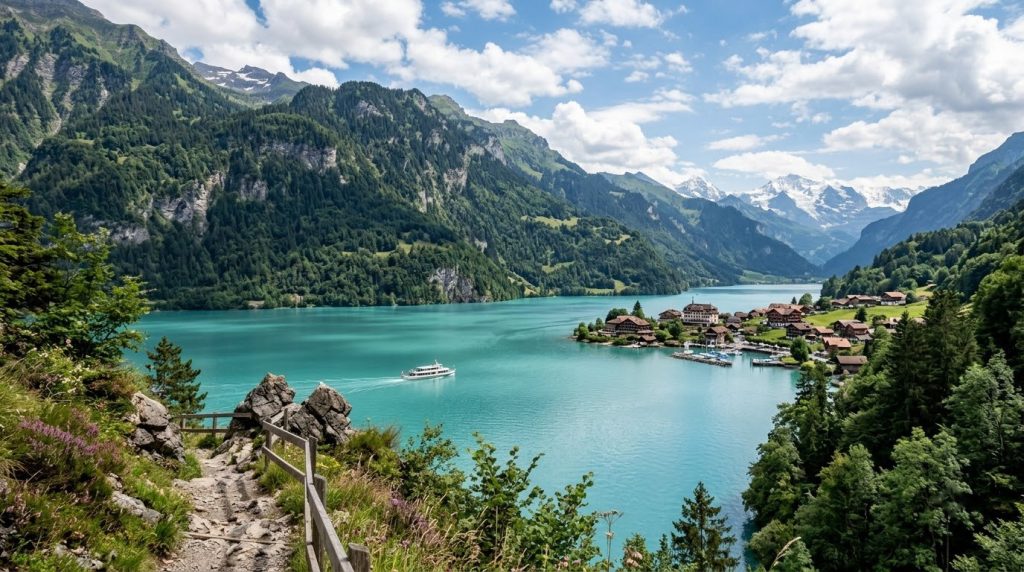
Seven days is the standard answer because it is the shortest trip length that supports two bases without turning every day into a train transfer. A typical split is 3 to 4 nights in the Interlaken region for the Jungfrau excursions, then 2 to 3 nights in Lucerne or Zurich for a lower-altitude pace.
That split yields 3 to 4 usable excursion days once you subtract the two half-days lost to changing base and one buffer day held in reserve for weather.
A Swiss Travel Pass for 6 days runs CHF 399 (USD 493) in second class and covers trains, boats, and most city transit between the two bases, which is the main reason 7 days prices out closer to double a 3-day trip rather than triple it.
The extra nights also give you room to move a delayed excursion to a different day without cancelling anything else, which a 3-day trip cannot absorb. If you are deciding which of the two anchor towns to spend more nights in, Interlaken versus Lucerne breaks down the trade-offs by cost and scenery.
For the full day-by-day route at this length, use the Switzerland itinerary rather than rebuilding it here.
10 Days or More: When the Extra Days Actually Pay Off
Ten days or more pays off once you add a third base, such as Zermatt for the Matterhorn or Lugano for Ticino’s Italian-speaking side, because that third region is what a 7-day trip has no room for.
The extra 3 days do not just add rest time, they add 2 to 3 more usable excursion days once travel between three bases and one weather buffer are subtracted.
An 8-day Swiss Travel Pass costs CHF 439 (USD 542), which covers most of a 10-day trip and means the incremental cost per extra day drops sharply after day 7, since the pass and the fixed logistics of getting between regions are already paid for.
This is the trip length where a Zermatt add-on for Matterhorn views, or a Ticino detour for a different climate entirely, starts to make sense instead of feeling like padding. It is also the first trip length with enough slack to lose an entire excursion day to weather and still complete every base on the list.
Why Weather Makes a Buffer Day Non-Negotiable
A single day of bad weather at altitude can erase one of your excursion days entirely, which is why every trip length above should include one buffer day that is not assigned to anything specific. Weather at altitude is also a safety issue, and our Switzerland safety guide ranks trail falls and sudden storms above crime as the real risk.
Jungfraujoch and Mount Pilatus are both exposed, high-altitude viewpoints, and low cloud or high wind can close cable cars or bury the view in fog with little notice. Moving a mountain excursion by a day is usually possible if you have not locked every day to a fixed plan, but it is not possible if your itinerary has zero slack.
On a 3-day trip, that means treating the mountain day as the one flexible day and keeping the other two as low-altitude backups.
On a 7-day or 10-day trip, build the buffer into whichever base has the most weather-dependent excursion, typically the Jungfrau region, and treat a clear day there as the trigger to go rather than a fixed calendar slot.
Skipping this buffer is the single most common reason travelers finish a Switzerland trip having missed the one view they booked the trip around.
When Fewer Days in Switzerland Is the Better Trip
Fewer days is the better trip when Switzerland is one stop inside a longer multi-country Europe itinerary rather than the sole destination, because 3 to 4 focused days beat 7 rushed ones split across too many stops.
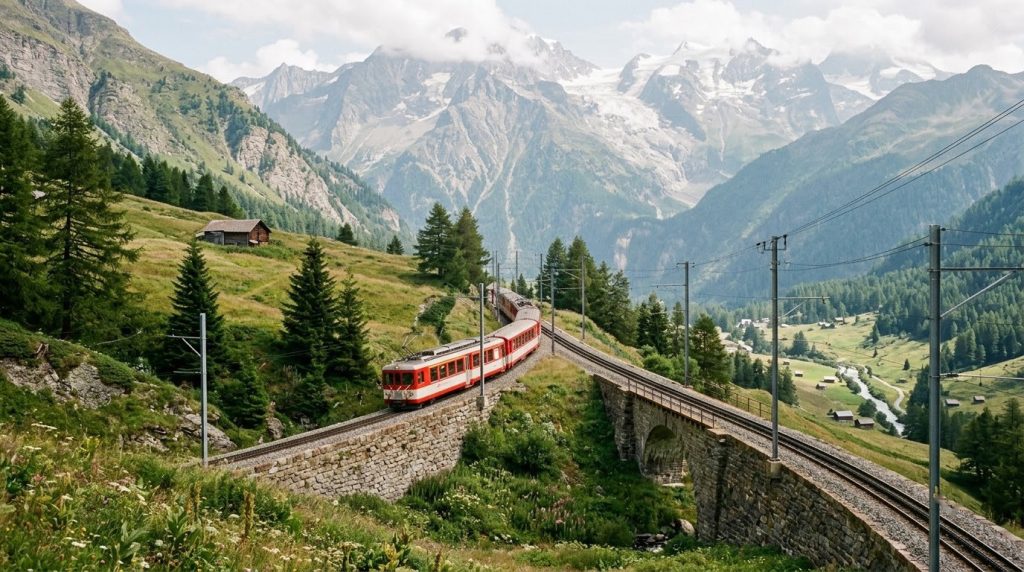
It is also the better call if your budget caps out before a 6-day or 8-day Swiss Travel Pass makes sense, since a 3-day pass at CHF 254 (USD 314) plus one base keeps costs contained without the trip feeling incomplete.
Travelers connecting through Zurich or Geneva on the way to another country, or fitting Switzerland between two other Alpine stops, get more value from one well-executed excursion than from a longer trip that spends its extra days on trains.
If your flights already land in Zurich, a short Swiss Alps detour built around the Swiss Alps travel guide captures the highlights without the extra bases a 7-day trip assumes.
Handling Luggage When You Change Bases
Every base change in a 7-day or 10-day trip means moving bags, and Swiss stations make that easier than most. SBB lists day rates at its Travel Centres that match its on-site locker rates, roughly CHF 6 to 16 per day (USD 7 to 19) in 2026. Prices can rise around regional events and holidays.
The Travel Centre deposit takes bulky items up to 23 kg per piece, for anything from one day to one month. Space is limited and acceptance is not guaranteed, so do not plan a tight connection around it. A small locker is the safer choice for a daypack plus one roller bag.
The practical use is the day you check out of one base: drop the suitcase at the station, take the excursion with a light bag, and collect everything on the way to the next base. That avoids dragging luggage up a cable car and saves a hotel return trip.
What a Jungfraujoch Day Actually Involves
Jungfraujoch is the excursion that most often decides how many days a first trip needs, so the details matter. The station sits at 3,454 m (about 11,330 ft), which the Jungfrau Railways call the highest railway station in Europe. The Sphinx Observation Deck is higher, at 3,571 m. Snow and ice stay on the plateau all 365 days a year, so warm layers are needed even in July.
Prices on the operator’s own site for 2026 start at CHF 100.60 (USD 121) for the Jungfraujoch ticket and CHF 129.60 (USD 156) for a return trip that includes the Eiger Express gondola from Grindelwald Terminal. A Good Morning Ticket gives 15% off and is valid from May 1 to October 31, 2026. A guaranteed seat reservation adds CHF 10 (USD 12).
- Check the summit webcam the evening before and again at breakfast.
- Reserve a seat on a clear-forecast morning rather than months ahead for a fixed date.
- Keep the next day light so a postponed ascent has somewhere to go.
A Simple Order of Days for a 7-Day Trip
The trip lengths above work best when the days are ordered around weather rather than the calendar. A workable pattern for 7 days starts with an easy arrival day in the Interlaken area, which keeps the next two days free for the Jungfrau region. Whichever of those days has the clearest forecast gets the summit; the other becomes a lower-altitude valley or lake day.
Day 4 is the base change, with luggage left at the station and a half-day excursion on the way. Days 5 and 6 in Lucerne or Zurich hold the second mountain trip, such as Pilatus, plus a city or lake day. Day 7 stays empty until the forecast is known, then absorbs whatever was postponed.
This sequence keeps the long transfers away from the days that matter most and gives each mountain trip a fallback day beside it.
Where to Stay for Each Trip Length
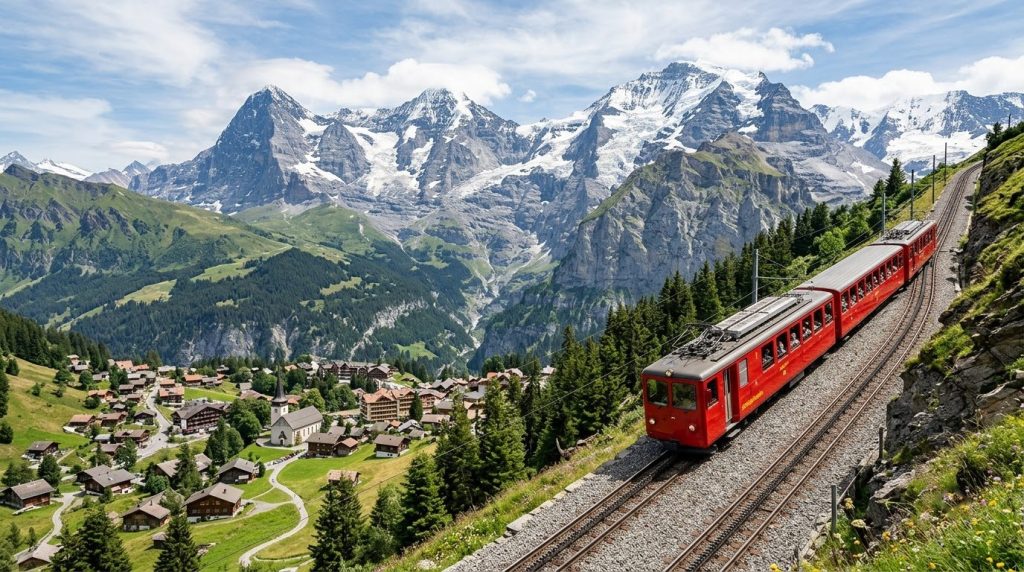
For 3 to 4 days, stay in one base, Interlaken for Jungfrau access or Lucerne for easier onward rail connections. For 7 days, split nights between Interlaken and Lucerne, or swap Lucerne for Zurich if you want a bigger city for the second half.
For 10 days or more, add a third base such as Zermatt or Lugano, and place it last on the route so the highest-altitude or longest-transfer stop does not eat into the earlier excursion days.
Find your Switzerland hotel on the map
Live prices from Booking, Airbnb and more — move the map or change dates to compare stays across Switzerland.