
Perfect 3-Day Interlaken Itinerary 2026: Hour-by-Hour Plan + Costs
Most travelers wonder how many days in Interlaken — the answer is 3 minimum, 5 ideal. This interlaken itinerary packs three full days of Alpine adventure into a confident, hour-by-hour plan: arrival logistics, a Harder Kulm sunset, a full-day Jungfraujoch run, and the Lauterbrunnen valley with Mürren cliff views. Pricing covers three budget tiers (CHF 350 lean, CHF 700-900 mid, CHF 1,500 luxury) and the math behind the Jungfrau Travel Pass — a CHF 195 card that pays for itself by mid-morning on Day 2 if you plan it right.
We built this 3-day plan after running the numbers from Jungfrau Railways, Switzerland Tourism, and Interlaken.swiss, then cross-checked transport timing with Swiss Travel System. Whether you arrive on a tight Eurail schedule or fly into Zurich, this guide tells you exactly when to leave the hotel, which train to board, what lunch costs, and where to stand for the best photo. Skip the second-guessing — read on for the full plan.
Key Takeaways
- Total budget tiers: CHF 350 lean (hostel + picnic), CHF 700-900 mid (3-star hotel + restaurant lunches), CHF 1,500+ luxury (4-star + private transfers + premium tours)
- Must-not-miss day: Day 2 to Jungfraujoch — Top of Europe at 3,454 m, the only stop unique to this region (CHF 261 standard ticket without pass)
- Weather backup: Trümmelbach Falls (CHF 16, indoor), St Beatus Caves, Funky Chocolate Club, and Bödelibad swimming pool cover any rain day
- Transport pass: Jungfrau Travel Pass at CHF 195 (3-day) wins for Jungfraujoch-focused trips; Swiss Travel Pass at CHF 244 (3-day) wins if you arrive from Zurich and want broader country coverage
- Best base: Stay near Interlaken Ost station — every day trip departs from here, saving 8-12 minutes per direction
- Booking lead time: Reserve Jungfraujoch tickets 2-3 days ahead in summer (June-August) to lock the morning departure window
Affiliate Disclosure: Some links in this guide are affiliate links. If you book through them, we earn a small commission at no extra cost to you. We only recommend services we genuinely trust. Learn more.
Is 3 Days in Interlaken Enough?
Yes — three days in Interlaken is the sweet spot for first-timers. Two days only covers the town plus one big day trip; four days adds buffer for weather; five gets you into multi-summit alpine territory. Three days lets you split the work into a clean rhythm: arrival and acclimation on Day 1, a flagship summit on Day 2, and the iconic Lauterbrunnen valley on Day 3. According to Switzerland Tourism, the median visitor stays 2.4 nights — so committing to three already puts you ahead on coverage.
The caveats are simple. If your weather forecast looks rough on Day 2, swap it with Day 3 and run Lauterbrunnen first — Trümmelbach Falls and Mürren handle drizzle better than Jungfraujoch’s exposed Sphinx terrace. If you arrive at noon on Day 1 instead of morning, push Harder Kulm to Day 3 sunset and use the half-day for the lake promenade. Use this interlaken itinerary as a framework, not a contract; the train pass and hotel are sunk costs, but the activity sequence is yours to bend.
For broader context on planning windows, our Interlaken travel guide covers monthly weather, festivals, and shoulder-season pricing.
Quick Trip Overview
Below is the at-a-glance interlaken itinerary plan, including theme, signature activity, and a daily cost band you can use to map your tier of spend.
| Day | Theme | Highlights | Daily Cost (CHF) |
|---|---|---|---|
| Day 1 | Arrival + Town + Sunset | Interlaken town walk, Hoheweg, Harder Kulm funicular at golden hour | 110 – 380 |
| Day 2 | Top of Europe | Jungfraujoch via Eiger Express, Sphinx Terrace, Ice Palace, Grindelwald return | 180 – 520 |
| Day 3 | Valley + Cliffs | Lauterbrunnen, Trummelbach Falls, Murren cable car, cliff walk | 95 – 360 |
Source: Jungfrau Railways, Interlaken.swiss
For a deeper look at cluster pricing and which activities deliver the most value, see our breakdown of the best things to do in Interlaken and the best Interlaken hotels sorted by location and price.
Day 1: Arrival, Interlaken Town + Harder Kulm Sunset
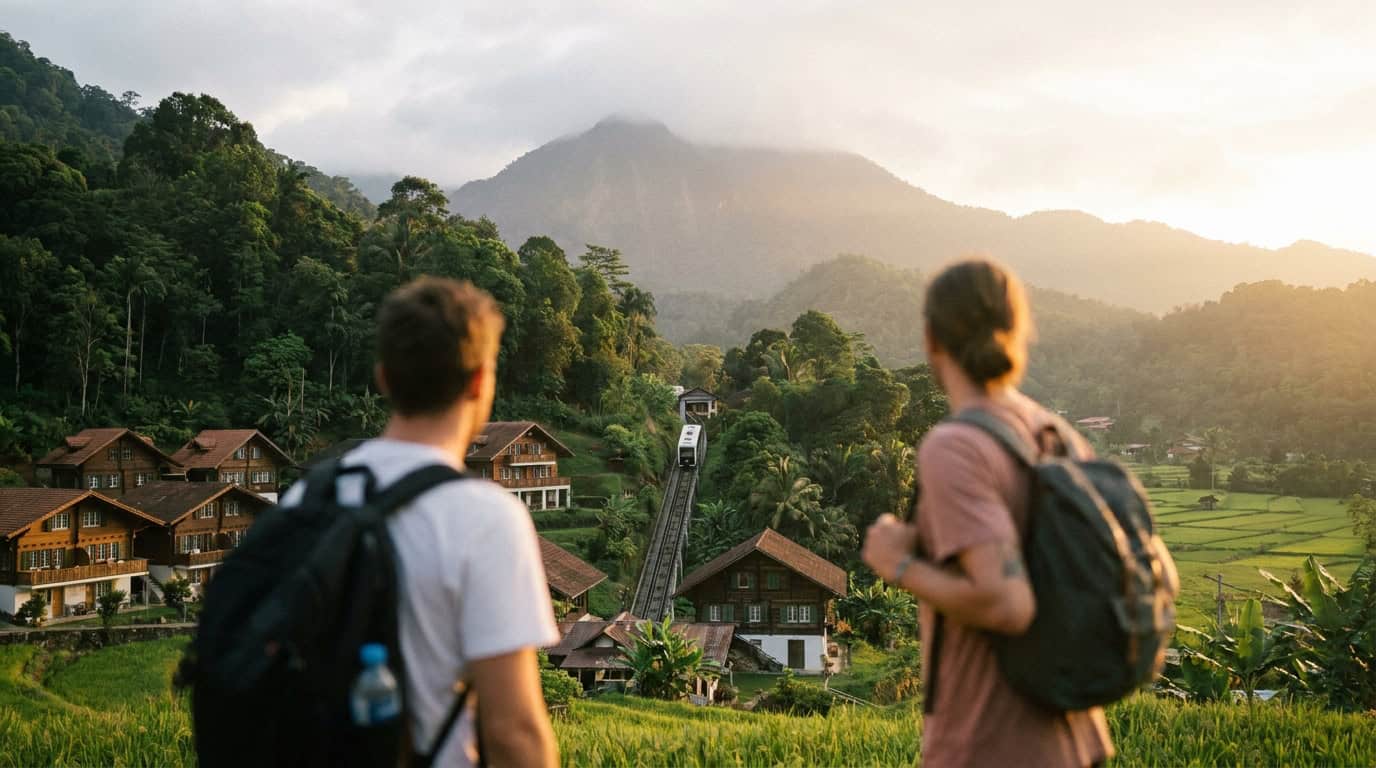
Day 1 of this interlaken itinerary is engineered for low cognitive load. You arrive jet-lagged or train-tired, settle into the rhythm of the town, walk off the travel stiffness, and end on a viewpoint that re-frames the next two days. Total walking is under 5 km on flat ground; the only altitude gain is the Harder Kulm funicular, which does the climbing for you.
Morning (8:00-12:00): Arrive at Interlaken Ost station. If coming from Zurich, the direct InterCity train (1h 53min) drops you in central Interlaken; if from Bern, it is a 53-minute ride. Activate your Swiss Travel Pass at the SBB counter or via the SBB Mobile app. Drop bags at your hotel — most properties accept early bag-drop even before 3 pm check-in. Grab a coffee and a butterzopf braid at Confiserie Schuh on Hoheweg. Budget: CHF 12 (coffee + pastry).
Afternoon (12:00-17:00): Walk the Hoheweg promenade between Interlaken Ost and West stations — it is the green corridor framed by the Jungfrau massif and grazed by paragliders touching down at the Hohematte field. Cross the Aare river bridge to the south bank and follow the Aare promenade toward Lake Brienz for 30 minutes; the water turns from glacier-grey to turquoise under sun. Lunch at Velo Cafe (CHF 22 for a sandwich + drink) or Husi Bierhaus for Swiss sausage plate (CHF 28). If you want a paid activity, book a 2-hour Interlaken paragliding tandem flight (CHF 180) — the launch is from Beatenberg, with valley views you cannot replicate on foot.
Evening (17:00-22:00): This is the Harder Kulm window. Take the Harder Kulm funicular from the station near Interlaken Ost (CHF 38 round trip without pass; free with Jungfrau Travel Pass partial coverage; included with Swiss Travel Pass at 50% off). The 8-minute funicular climbs to 1,322 m, where the Two Lakes Bridge cantilevers over the valley between Lake Thun and Lake Brienz. Time the trip for sunset — in summer that is 21:00, in spring 19:30. Dinner at the Harder Kulm Panorama Restaurant runs CHF 32-48 for raclette or fondue. Last funicular down is typically 21:30 in peak season; check the day-of schedule on jungfrau.ch.
Day 1 Total: CHF 110 (lean, hostel + picnic) — CHF 240 (mid, hotel + restaurant) — CHF 380 (luxury, paragliding + sunset dinner)
Insider tip: Buy the Harder Kulm ticket at the funicular base, not online — staff will combine it with your hotel guest card (free in Interlaken) to drop the price by 50% if you stay overnight in the region. The discount is not advertised on the website.
After dinner, head back to your hotel and set tomorrow’s alarm for 6:30 — the Day 2 Jungfraujoch run rewards an early start. If you have not booked accommodation yet, stay at one of the best Interlaken hotels near Interlaken Ost station; you will save 12 minutes of walking each morning, which compounds across three days.
For a deeper look at where to base yourself, see our best Interlaken hotels breakdown by neighborhood and price.
Day 2: Jungfraujoch — Top of Europe
This is the day that sells the trip and anchors any 3-day interlaken itinerary. Jungfraujoch sits at 3,454 m and operates the highest railway station in Europe. Trains depart Interlaken Ost from 06:35; the round-trip costs CHF 261 standard or is fully covered by the Jungfrau Travel Pass when you add the CHF 75 Jungfraujoch supplement. Plan eight hours door-to-door and dress in layers — surface temperatures up there sit around -3 C even in July (Jungfrau Railways).
Morning (8:00-12:00): Catch the 07:34 train from Interlaken Ost to Lauterbrunnen (20 min), where you change to the BOB-WAB line up to Wengen and onward to Kleine Scheidegg, or — the faster modern route — board the Eiger Express gondola from Grindelwald Terminal (15 min direct to Eigergletscher) then transfer to the cogwheel Jungfrau Railway. Total uphill journey: 2 hours via Eiger Express, 2h 30min via the classic Wengen route. Aim to arrive at the Jungfraujoch summit by 10:00 to beat the 11:30 tour-bus rush. Budget: CHF 75-261 transport (depends on pass).
Afternoon (12:00-17:00): Once at the summit, work the Sphinx Observation Terrace first (3,571 m, the highest viewpoint), then the Ice Palace tunnels carved into the Aletsch glacier, then the Alpine Sensation walkway. Lunch at the Aletsch Self-Service restaurant runs CHF 28 for a hot meal — or pack a picnic, since outside food is permitted. Most visitors stay 2.5-3 hours up top; longer flirts with altitude headaches. Begin the descent by 14:30, choosing the alternate route via Kleine Scheidegg and Wengen so you complete the loop.
Stop in Grindelwald for an hour: walk the village high street, grab a Swiss waffle (CHF 8), and shoot the Eiger north face from the small park near the BOB station. Pre-booking the Jungfraujoch tour from Interlaken saves 20 minutes of ticket-counter friction (CHF 230 with guide commentary, transport included).
Evening (17:00-22:00): Roll back into Interlaken by 17:30. You will be tired, but the calorie deficit is real — book the 2-hour evening cheese fondue cruise on Lake Brienz (CHF 95) for a low-effort restorative dinner. Boat departs Interlaken West at 19:15. Alternatively, walk to Restaurant Bebbis on Hoheweg for fondue chinoise (CHF 42), or stay in and order delivery (CHF 25). Lights out by 22:00 — Day 3 starts at 8:30.
Day 2 Total: CHF 180 (lean, picnic + base ticket with pass) — CHF 380 (mid, restaurant lunch + fondue cruise) — CHF 520 (luxury, guided tour + premium dinner)
Insider tip: Take the Eiger Express on the way up and the classic Wengen route on the way down. The new gondola is faster (saves 35 min) but the old cogwheel descent through Kleine Scheidegg-Wengen is the more scenic — you get both experiences for the price of one round-trip pass, and the descent is gentler on altitude readjustment.
The full sequence of summit highlights and seasonal closures is unpacked in our best things to do in Interlaken cluster.
Day 3: Lauterbrunnen Valley + Trummelbach Falls + Murren Cliff Walk
Day 3 closes this interlaken itinerary gently in altitude but visually richer than Day 2. Lauterbrunnen, the U-shaped valley with 72 waterfalls cascading off vertical cliffs, is the postcard you have already seen on Pinterest. Add Trummelbach Falls (a glacial torrent inside the mountain) and the Murren cliff-edge funicular for a complete day. Total ascent on foot: about 1 km of valley flat plus optional 200 m climb at Murren (Interlaken.swiss).
Morning (8:30-12:00): Train from Interlaken Ost to Lauterbrunnen (20 min, CHF 7.40 one-way without pass). Walk out of the station and you are immediately at Staubbach Falls, the 297-m ribbon waterfall that frames the village. Walk 35 minutes south along the valley road to Trummelbach Falls (admission CHF 16, family CHF 40, open April-November). Inside the cliff, ten cascades roar through tunnels lit by industrial lamps; allow 90 minutes including the funicular elevator inside the rock. Pre-book a Trummelbach Falls combo ticket with rail transfer (CHF 38) if you want one fewer queue. Budget: CHF 23-40 (entry + transport).
Afternoon (12:00-17:00): Lunch at Restaurant Hornerpub in Lauterbrunnen (CHF 24 for rosti) or grab a Migros picnic (CHF 12) and eat with the Staubbach view. Catch the postbus to Stechelberg, then take the cable car up to Murren (CHF 19 with pass partial; CHF 47 without). Murren sits at 1,638 m on a cliff shelf — car-free, with timber chalets and the unobstructed Eiger-Monch-Jungfrau line in your face. Walk the village for 90 minutes; the easy Allmendhubel cable car (CHF 14) tacks on a flower trail in summer. Photo stop at the cliff-edge Mountain View Trail before descending. Alternative if weather is poor: skip Murren, ride the cable car to Schilthorn-Piz Gloria for the indoor 360 viewing platform (CHF 108 round-trip from Stechelberg).
Evening (17:00-22:00): Return to Interlaken by 18:00. Last-night dinner: walk to Restaurant Goldener Anker for Alpenmacaroni (CHF 26) or splurge at Hotel Du Nord’s Spettacolo restaurant (CHF 65 tasting). If you are leaving early on Day 4, pack tonight; if you have a buffer day, book a 90-minute massage at Victoria Spa (CHF 145) — the Day 2 altitude has earned it. For more food picks per neighborhood, see our guide to the best food in Interlaken.
Day 3 Total: CHF 95 (lean, picnic + base entries) — CHF 240 (mid, restaurant + Murren) — CHF 360 (luxury, Schilthorn + tasting menu)
Insider tip: The Lauterbrunnen-Murren cable car operates two routes — Stechelberg-Murren (the old cliff face) and Lauterbrunnen-Grutschalp-Murren (a panoramic train segment). Take the Grutschalp route up for the slower scenic train, and the Stechelberg cable car down for the dramatic vertical drop. Same ticket covers both directions.
For a full list of cluster routes (including the Schilthorn detour and Grindelwald First option), check our best day trips from Interlaken cluster.
Rainy Day Backup Plan
A flexible interlaken itinerary plans for weather. Alpine weather flips fast — June through September averages 11 wet days per month, October-May runs higher (MySwitzerland). If your Day 1 looks soaked, here is the dry-run sequence that keeps the trip on rails without canceling activities.
- Wet Day 1 (Town): Funky Chocolate Club workshop (90 min, CHF 49 — make your own bar), Touristik-Museum der Jungfrau-Region (CHF 8), Bodelibad indoor swimming pool with sauna (CHF 14), and the Migros Bistro for raclette. Total cost: CHF 95.
- Wet Day 2 (Jungfraujoch): Postpone — visibility under 5 km kills the summit value. Instead, take the train to Thun (25 min from Interlaken West, free with pass) for the medieval castle (CHF 12) and old-town arcades, then the lake boat back if rain lifts. Save Jungfraujoch for Day 3.
- Wet Day 3 (Lauterbrunnen): Trummelbach Falls is INSIDE the mountain — perfect rain plan (CHF 16). Pair it with St Beatus Caves on Lake Thun (CHF 22) and a hot chocolate stop at Schuh. Schilthorn’s Piz Gloria 360 platform is enclosed, so the Murren-Schilthorn detour still works (CHF 108).
The clutch principle: never cancel a paid pass. The Jungfrau Travel Pass is non-refundable for weather, but it does cover the Thun and St Beatus Caves alternatives — so your sunk cost still earns mileage on rainy days.
Solo Female + Family + Fitness Variants
This interlaken itinerary is built for a healthy adult traveler, but three reader segments deserve adjustments.
Solo female travelers: Interlaken ranks among the safest mid-size towns in Europe — Switzerland’s overall crime index sits at 21.7 (Numbeo Crime Index 2026). Public buses run until 23:30; the Interlaken Guest Card (free with hotel stay) covers them at no charge. For solo hikes (e.g., the Murren cliff walk), tell your hotel front desk your route and ETA. Group activities like the cheese fondue cruise and Day 2 guided Jungfraujoch tour offer easy social entry without the awkward “table for one” friction.
Families with kids (5-12): Pace each day with a 90-minute midday break for naps or hotel pool time. Day 2 Jungfraujoch is feasible — the train cars are heated and stocked with windows — but stop the summit visit at 90 minutes before kids hit altitude fatigue. Day 3 Trummelbach Falls is a hit (kids love the wet roar), and the Murren cable car is stroller-friendly via the Grutschalp route. Skip Harder Kulm dinner; the funicular itself is the highlight (15-minute ride). Add Tropic House Frutigen on a buffer day for tropical-fish + sturgeon-caviar tour (CHF 25 adult / CHF 12 child).
Fitness levels: The base itinerary is moderate — about 7 km flat walking + 200 m optional Murren climb. Sedentary travelers can swap Trummelbach hike for the rent a car approach to drop them at the entrance. Fit hikers can replace Day 3 afternoon with the Murren-North Face Trail (5.4 km, 320 m descent, 2.5h) or the Schynige Platte panorama trail (4.6 km, easy, 2h) — both reachable by train and far less crowded than the Jungfraujoch corridor.
How Much Does 3 Days in Interlaken Cost?
Pricing this interlaken itinerary demands honesty: Switzerland is expensive, but the spread between lean and luxury is wider than most readers assume. Below is the consolidated 3-day budget across three tiers, including transport, lodging, food, and activities. Pricing reflects April 2026 rates from Booking.com, GetYourGuide, and SBB.
| Day | Lean (CHF) | Mid (CHF) | Luxury (CHF) | Notes |
|---|---|---|---|---|
| Day 1: Town + Harder Kulm | 110 | 240 | 380 | Funicular CHF 38; dinner range CHF 25-95 |
| Day 2: Jungfraujoch | 180 | 380 | 520 | Pass-covered base CHF 75 supplement; CHF 261 without pass |
| Day 3: Lauterbrunnen + Murren | 95 | 240 | 360 | Trummelbach CHF 16; cable car CHF 19-47 |
| Lodging x 3 nights | 165 | 540 | 1,080 | Hostel dorm CHF 55 / 3-star CHF 180 / 4-star CHF 360 per night |
| Total (3 days) | ~550 | ~1,400 | ~2,340 | Excluding flights/Eurail to Switzerland |
Source: Booking.com, Jungfrau Railways, SBB
The lean tier assumes a hostel bed (Backpackers Villa Sonnenhof at CHF 55), grocery-store breakfasts, picnic lunches, and one mid-range dinner. The mid tier assumes a 3-star hotel like Hotel Du Nord (CHF 180/night), restaurant lunches, and a paid evening activity. Luxury tier puts you at Victoria Jungfrau Grand or Lindner Beau Rivage with private transfers and tasting menus.
Tip: in shoulder season (April-May, late September-October), lodging drops 25-40% versus July-August peak. If your dates flex, the same room runs CHF 240 in May vs CHF 360 in August.
Swiss Travel Pass vs Jungfrau Travel Pass — Which to Buy?
This is the single highest-impact decision in your interlaken itinerary. Buy the wrong pass and you overpay CHF 50-90; buy the right one and the pass funds itself by Day 2 lunch.
| Pass | 3-Day Cost (CHF) | Includes | Break-Even Point |
|---|---|---|---|
| Jungfrau Travel Pass | 195 | All Jungfrau region trains, cable cars, Harder Kulm 50% off; Jungfraujoch supplement extra (CHF 75) | 1 day if you visit Jungfraujoch + Murren |
| Swiss Travel Pass (2nd class) | 244 | All SBB trains nationwide, boats, mountain railways at 50%, free city transit | Day 1 if arriving from Zurich (CHF 53 each way) |
| No pass (point-to-point) | 360-420 typical | Pay-as-you-go for each leg | Always loses on Jungfraujoch-focused 3-day trips |
Source: Swiss Travel System, Jungfrau Railways pass calculator
Decision rule: If you arrive directly into Interlaken (e.g., bus from Lucerne, train from Zurich already paid via Eurail), buy the Jungfrau Travel Pass and add the Jungfraujoch supplement. If you arrive from outside Switzerland or plan to ride to Lucerne/Zermatt before/after, the Swiss Travel Pass wins.
Order both passes via Trainline’s Swiss Travel Pass storefront before you leave home — the QR delivery is instant and saves the SBB-counter line on arrival day. The Jungfrau Travel Pass requires same-day activation at any participating station; the Swiss Travel Pass starts on the date you select at purchase.
Frequently Asked Questions
Is 3 days enough in Interlaken?
Yes. Three days lets you cover Interlaken town, Harder Kulm sunset, a full-day Jungfraujoch run, and the Lauterbrunnen-Murren valley — the four signature experiences. Add a fourth day only if you want a buffer for weather or extra hiking. According to Switzerland Tourism, median visitor stays 2.4 nights, so three already exceeds the norm.
Can you do Jungfraujoch in a day from Interlaken?
Absolutely — Jungfraujoch is a one-day round trip by design. Trains leave Interlaken Ost from 06:35; the journey takes 2 hours via Eiger Express or 2h 30min via Wengen, you spend 2-3 hours at the summit, and return in time for dinner. The standard ticket runs CHF 261 without pass; CHF 75 supplement with the Jungfrau Travel Pass.
How many days do you need in Interlaken?
Two days covers the town and one major day trip; three days is the sweet spot for first-timers (Jungfraujoch + Lauterbrunnen + sunset); four to five days adds Schilthorn, Schynige Platte, and lake boat tours. Solo skiers in winter can stretch to 7-10 days using Wengen as a base.
Is Interlaken safe for solo female travelers?
Very safe. Switzerland’s Numbeo crime index is 21.7 — among the lowest in Europe. Public buses run until 23:30, the town is well-lit, and the Interlaken Guest Card (free with hotel stay) covers all local transport. Stick to marked trails, share your hike route with hotel staff, and use group tours for evening cruises if you prefer company.
What if it rains during my 3 days in Interlaken?
Trummelbach Falls is indoor (CHF 16), as is the Funky Chocolate Club workshop (CHF 49) and Bodelibad swimming pool (CHF 14). Schilthorn’s Piz Gloria is enclosed. If Day 2 looks like heavy rain, swap Jungfraujoch with Day 3 Lauterbrunnen — visibility under 5 km kills the summit value but the valley still delivers.
Should I buy the Jungfrau Travel Pass or Swiss Travel Pass?
Buy the Jungfrau Travel Pass (CHF 195) if you arrive in Interlaken already (e.g., via Eurail or bus). Buy the Swiss Travel Pass (CHF 244 for 3 days, 2nd class) if you arrive from Zurich, Geneva, or Bern and want broader country coverage. Both passes save versus pay-as-you-go (~CHF 360-420 unpacked).
Can I do this 3-day Interlaken itinerary with kids?
Yes, with pacing tweaks. Add 90-minute midday hotel breaks for naps, cap Jungfraujoch summit visits at 90 minutes (altitude fatigue kicks in fast), and skip the Harder Kulm dinner in favor of the funicular ride alone. Trummelbach Falls is a kid-favorite for its dramatic indoor cascade. Tropic House Frutigen makes a great rainy-day backup.
Final Plan Summary
This interlaken itinerary balances the three flagship Alpine experiences — town walks, summit days, valley views — into a sequence that respects jet-lag, weather risk, and budget. Day 1 eases you in with Harder Kulm sunset; Day 2 delivers Jungfraujoch’s Top of Europe scale; Day 3 closes with Lauterbrunnen’s vertical valley and Murren’s cliff perspective. Total spend lands between CHF 550 lean and CHF 2,340 luxury, depending on lodging tier and whether you commit to guided tours.
The single sharpest budget call is the pass: Jungfrau Travel Pass for region-locked trips, Swiss Travel Pass for broader Switzerland circuits. Book that first, then layer in the Jungfraujoch ticket, then the Lauterbrunnen day. Lodging near Interlaken Ost station compounds time savings across all three days. Use this guide as your checklist; bring layers, charge a backup battery (cold drains phones at 3,454 m), and screenshot the train schedules in case mountain Wi-Fi flakes.
For deeper destination context, our Interlaken travel guide covers seasonality, festivals, and longer-stay options. To plan accommodations specifically, see best Interlaken hotels and to optimize meals, best food in Interlaken.