Switzerland Itinerary: 7 and 10 Days (2026)
Disclosure: Some links in this guide are affiliate links. If you book or buy through them, we may earn a small commission at no extra cost to you — it helps keep our guides free.
A 7-day Switzerland itinerary through Lucerne, Interlaken and Zermatt runs about USD 540 per person in trains and headline mountain-excursion tickets, and stretching to 10 days to add Zurich, Lugano or the Glacier Express pushes that transport total toward USD 800.
The 7-day version suits a single-week vacation built around the Bernese Oberland, and the 10-day version suits travelers who want to add Ticino’s Italian-speaking south or a full Glacier Express run without feeling rushed.
| Days | Route | Bases | Approx cost/person (USD) |
|---|---|---|---|
| 7 | Zurich to Lucerne to Interlaken to Zermatt | Lucerne, Interlaken, Zermatt | USD 540 (transport + key excursions) |
| 10 | Zurich to Lucerne to Interlaken to Zermatt to Lugano or Glacier Express to Zurich | Adds Lugano or a Glacier Express transit day | USD 650-800 (transport + key excursions) |
Figures cover trains and one headline mountain excursion per stop; lodging and food are additional and vary by season and comfort level.
7-day Switzerland itinerary: Lucerne, Interlaken and Zermatt
Seven days is enough for three bases and one mountain excursion at each stop, without a single one-night stand.
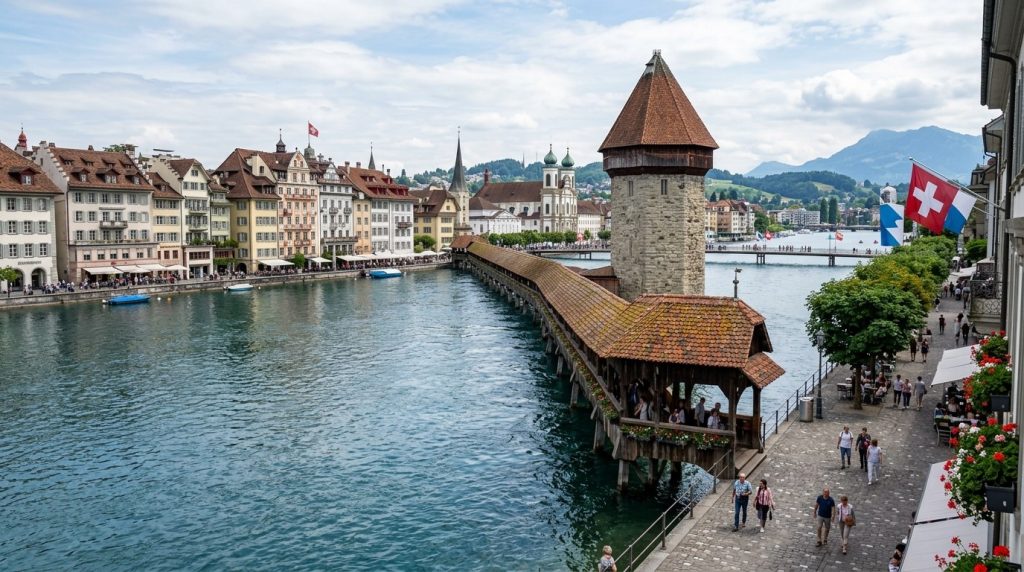
Spend days 1-2 in Lucerne, using the direct train from Zurich Airport (about 1 hour, from CHF 26 / USD 32 on a saver fare), then split the time between the old town and covered Chapel Bridge on Lake Lucerne and a day trip up Mount Pilatus, where the cable car round trip from Kriens runs CHF 84 (USD 104).
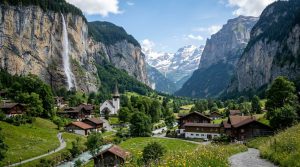
Move to Interlaken on day 3 via the GoldenPass Express (1 hour 46 minutes, CHF 32 / USD 40), then use days 4-5 for Lauterbrunnen, Grindelwald or a Jungfraujoch push, where the full round-trip fare to the summit runs about CHF 215 (USD 265), as detailed in this Lauterbrunnen travel guide.
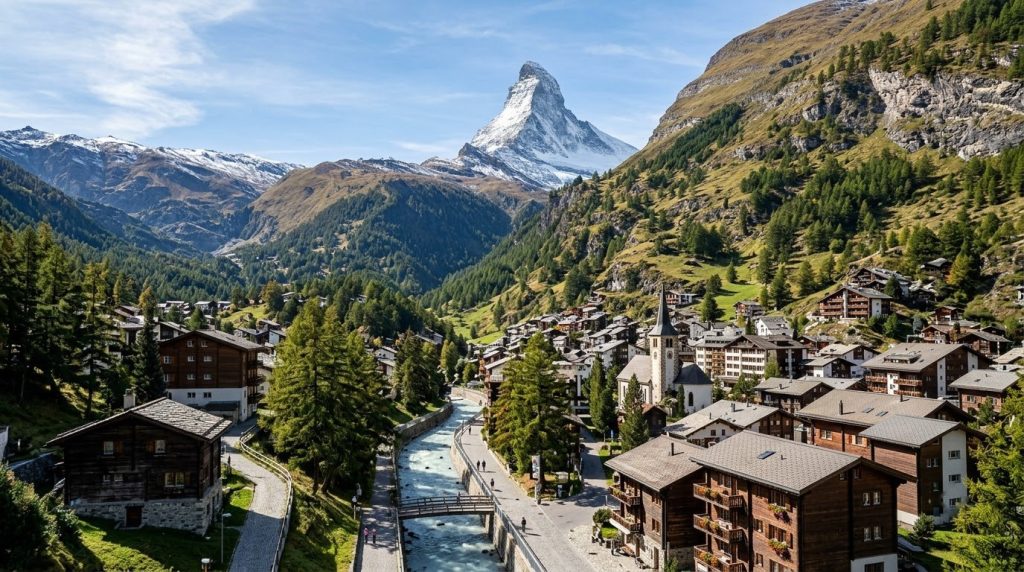
Close the loop on days 6-7 in Zermatt, reached from Interlaken Ost on the official rail ticket from CHF 86 (USD 106); the town itself is car-free, so the train drops you within walking distance of most hotels, and the Matterhorn views become the main event once you arrive, with no further passes required.
This backbone extends the same route used in a shorter 3-day Interlaken itinerary, adding Lucerne and Zermatt on either side.
See hotels in Lucerne →See hotels in Interlaken →See hotels in Zermatt →
10-day Switzerland itinerary: adding Zurich, Lugano or the Glacier Express
Ten days works best when it adds one contrasting region rather than three shallow stops.
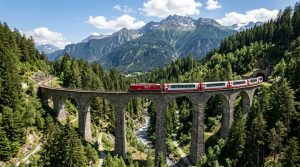
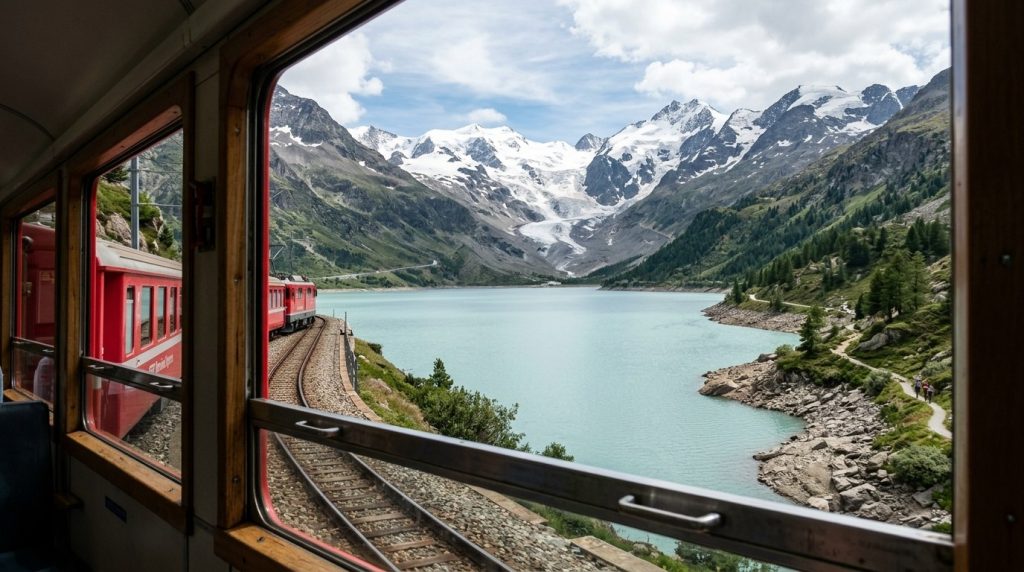
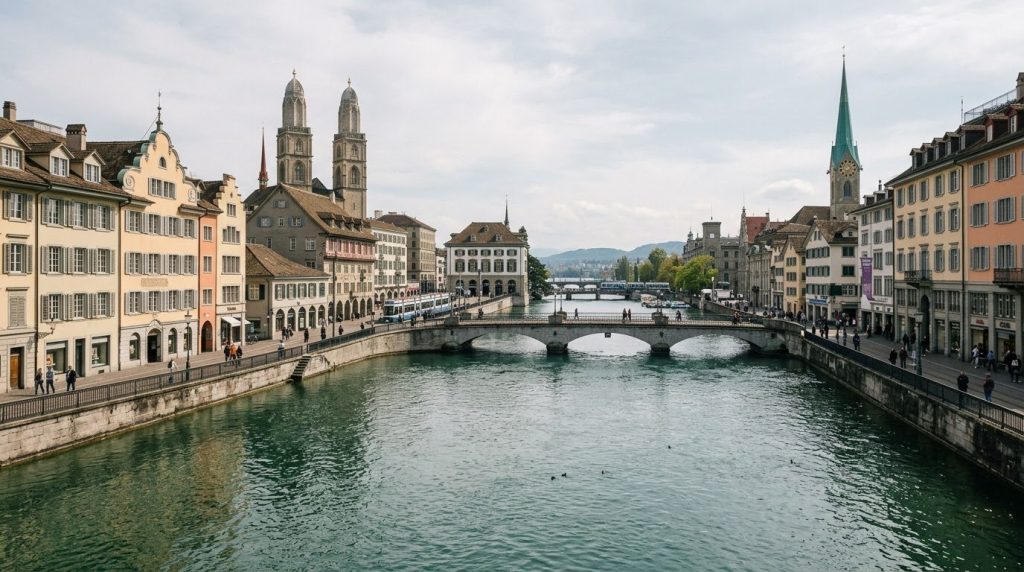
Keep the 7-day backbone above, then choose one extension: a 2-night add-on in Zurich for the lake, old town and a last-day museum stop before flying home; a 2-night detour to Lugano for palm trees, Lake Lugano and a noticeably different, Italian-speaking pace; or a full transfer on the Glacier Express between Zermatt and St. Moritz, which turns the travel day itself into the excursion.
The Glacier Express costs CHF 159 (USD 196) in second class plus a mandatory CHF 49 (USD 60) seat reservation that the Swiss Travel Pass does not cover, so budget for that surcharge regardless of which pass you carry. A plain breakdown of typical costs appears in our piece on whether Switzerland is expensive.
Whichever extension you pick, keep it to one region; stacking Zurich, Lugano and the Glacier Express into the same 10 days turns every stop into a one-night stay, which is the fastest way to spend more and see less of each place.
For broader trip planning across the Alps, this Swiss Alps travel guide covers regional passes and mountain-railway pricing in more depth.
Is the Swiss Travel Pass worth it for your route
For the 7-day Lucerne-Interlaken-Zermatt route above, paying point-to-point works out cheaper than buying a Swiss Travel Pass. Every dollar figure on this page uses the September 2026 rate of CHF 1 to USD 1.235.
The 2026 second-class Swiss Travel Pass costs CHF 254 (USD 314) for 3 days, CHF 399 (USD 493) for 6 days, and CHF 439 (USD 542) for 8 days, and it fully covers trains, buses, boats and city transit, but mountain excursions like Jungfraujoch are only partly discounted, not free.
On Jungfraujoch specifically, the pass covers the ride up to Wengen or Grindelwald at no extra cost, then gives 25% off the final cogwheel section to the summit, which brings the CHF 261 (USD 322) full-price peak-season round trip from Interlaken Ost down to CHF 177 (USD 219).
Mount Pilatus gets a flat 50% discount, cutting the CHF 84 (USD 104) ticket to roughly CHF 42 (USD 52).
Run the math on the 7-day route: the three point-to-point train legs (Zurich-Lucerne, Lucerne-Interlaken, Interlaken-Zermatt) plus full-price Pilatus and Jungfraujoch tickets total CHF 489 (USD 604) per person.
The nearest Swiss Travel Pass that covers every travel day is the 6-day pass at CHF 399 (USD 493); add the discounted Pilatus and Jungfraujoch tickets and the pass route totals CHF 618 (USD 763), about CHF 129 (USD 159) more than paying as you go.
The pass pulls ahead once an itinerary adds more travel days and more discounted excursions per day, which is exactly what the 10-day version above does with Zurich, Lugano or the Glacier Express. For a simple 3-base trip with one excursion per stop, skip the pass and buy point-to-point tickets a few days ahead instead.
When a shorter Switzerland trip is the right answer
Not every visit needs 7 days. A long weekend of 3-4 days works when the goal is one region instead of three; Interlaken alone, with Lauterbrunnen and one mountain excursion, fills 3 days without a single rushed transfer, as covered in the 3-day Interlaken itinerary. Suggested trip lengths for different travel styles are discussed in our guide on how many days in Switzerland.
A shorter trip also suits travelers connecting through Zurich or Geneva on a longer European tour, first-time visitors who want to confirm they like the pace of Swiss travel before committing to a full week, or anyone comparing bases; the Interlaken versus Lucerne comparison breaks down which base fits a shorter stay best. If you can only fly into one, our comparison of Geneva and Zurich shows Zurich has SWISS nonstops from 7 US cities, while Geneva gives hotel guests free local transport.
In every case, fewer bases with longer stays beats more bases with shorter ones, since every extra transfer eats a half-day that could otherwise go toward a hike or a lake swim. Choose the short version when time, not budget, is the real constraint.
How to decide: quick cheat sheet
– Have exactly 7 days and want the Bernese Oberland plus Zermatt: use the 7-day route above. – Have 10 days and want one more region: add Zurich, Lugano or the Glacier Express, not all three. – Taking 3 or fewer train legs with one excursion per stop: skip the Swiss Travel Pass and buy point-to-point tickets. – Taking 5 or more travel days with 2+ discounted excursions per stop: price out the Swiss Travel Pass before booking. – Riding the Glacier Express: budget the CHF 49 (USD 60) seat reservation separately, since no pass covers it. – Only have a long weekend: pick one base city instead of three.
Where to stay along the route
Lucerne, Interlaken and Zermatt each work as a base for 2-3 nights, and Zermatt’s town center is car-free, so confirm your hotel is walkable from the station before booking. Compare live rates across all three bases on the map below rather than booking each city separately.
Find your Switzerland hotel on the map
Live prices from Booking, Airbnb and more — move the map or change dates to compare stays across Switzerland.