Is Switzerland Expensive? (2026)
Disclosure: Some links in this guide are affiliate links. If you book or buy through them, we may earn a small commission at no extra cost to you — it helps keep our guides free.
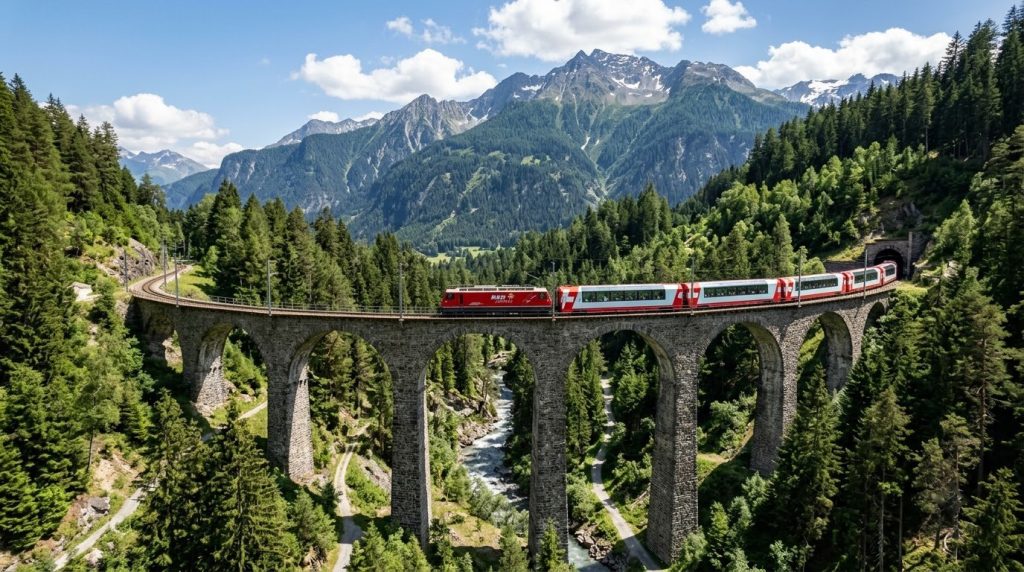
Switzerland is expensive, with a basic restaurant meal running USD 31 (CHF 25) and a single Jungfraujoch round trip costing USD 323 (CHF 261) at peak fare. But the real question isn’t whether Switzerland is expensive, it’s where the money actually goes and how a few deliberate swaps cut a real trip’s daily cost by a third or more.
| Travel style | Per day (USD) | What it covers |
|---|---|---|
| Backpacker | USD 150 (CHF 123) | Hostel dorm, supermarket meals, free hiking trails, regional transit |
| Mid-range | USD 366 (CHF 296) | Private room or 3-star hotel, one restaurant meal daily, Half Fare Card, a couple of paid attractions |
| Comfortable | USD 860 (CHF 695) | 4-star hotel, restaurant dining, Swiss Travel Pass, mountain excursions without rationing |
Where the money actually goes
Three categories drain a Switzerland budget faster than anything else: restaurant meals, mountain excursions, and hotel rooms. A meal at an inexpensive restaurant averages USD 31 (CHF 25), with a realistic range of USD 22 to 43 (CHF 18 to 35) depending on the town and whether it’s a kebab counter or a sit-down café.
A three-course dinner for two at a mid-range restaurant averages USD 124 (CHF 100), and a simple cappuccino runs USD 6 (CHF 5.09). Alcohol adds up fast too, with a 0.5-liter domestic draft beer at USD 9 (CHF 7.20) in most restaurants.
Mountain excursions are the second killer, and they’re often the single biggest line item of any given day.
The Swiss Alps rack up real money per summit: a Jungfraujoch round trip from Interlaken Ost costs USD 323 (CHF 261) at the full peak fare, and a Mount Pilatus cable car round trip from Kriens costs USD 104 (CHF 84) at full price.
Do two or three of these on one trip without a discount card, and the mountains alone can outspend food and lodging combined.
Hotels round out the trio. Swiss hotel rates sit near the top of the European range in every city center, which is why the comfortable daily band in the table above assumes a 4-star stay rather than anything more lavish, and why supermarket-and-hostel travelers can still see genuine savings by trading a central address for a valley town.
What a day actually costs
A realistic day in Switzerland falls into one of three bands, and the swing between them is almost entirely about food and mountains, not the base cost of moving around the country.
Backpackers spending USD 150 (CHF 123) a day are staying in hostel dorms, buying groceries at Coop or Migros instead of eating out, sticking to free hiking trails, and riding regional trains and buses on a pass rather than paying for cable cars.
Mid-range travelers at USD 366 (CHF 296) a day upgrade to a private room or 3-star hotel, allow themselves one restaurant meal, carry a Half Fare Card for discounted point-to-point tickets, and budget for one or two paid attractions across the trip rather than every day.
Comfortable travelers at USD 860 (CHF 695) a day are the ones who stop rationing: a 4-star hotel, restaurant meals without checking the menu prices first, a Swiss Travel Pass covering trains and many cable cars, and mountain excursions on the days the weather cooperates rather than the days the pass happens to be cheapest.
None of these bands assumes flights, so add international airfare separately when planning a Switzerland itinerary around these numbers.
The transport maths – Swiss Travel Pass versus Half Fare Card
The Swiss Travel Pass for 2026, second class, costs USD 314 (CHF 254) for 3 days, USD 493 (CHF 399) for 6 days, or USD 543 (CHF 439) for 8 days, and it covers most trains, buses, boats, and a long list of mountain railways at no extra charge.
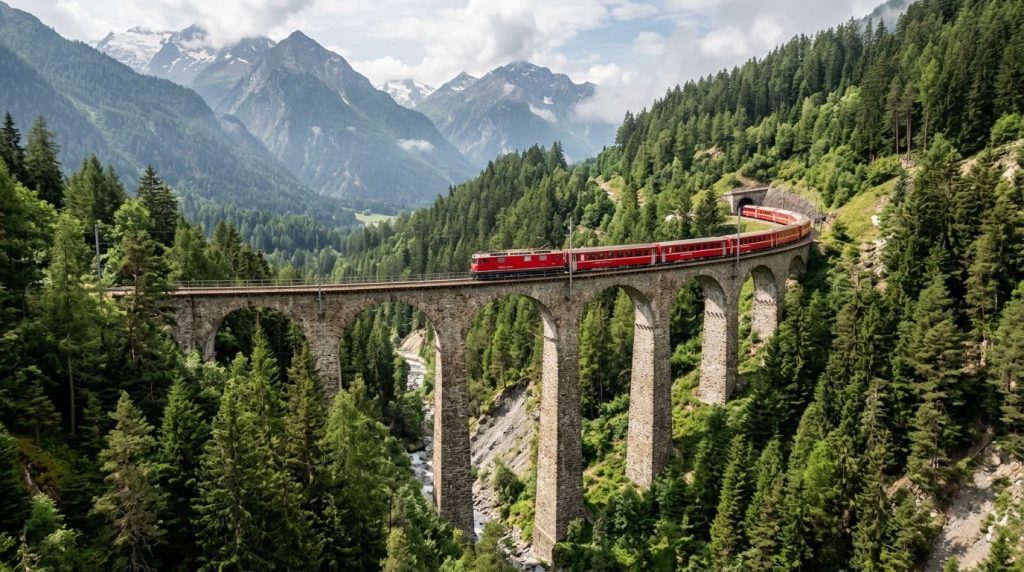
The Half Fare Travelcard costs USD 235 (CHF 190) for new adult purchases, or USD 210 (CHF 170) on renewal, and it doesn’t cover rides outright, it just halves the price of most individual tickets for a month.
The maths comes down to how many mountain excursions are on the itinerary. A Jungfraujoch round trip drops from USD 323 (CHF 261) to USD 219 (CHF 177) with the Swiss Travel Pass, a saving of USD 104 (CHF 84) on that ride alone.
A Mount Pilatus round trip drops from USD 104 (CHF 84) to USD 52 (CHF 42), another USD 52 (CHF 42) saved. Those two excursions together already claw back roughly USD 156 (CHF 126) against the 3-day pass price, before counting a single regular train ride between cities like the classic run out of Interlaken to the Jungfrau region.
Anyone doing two or more big-ticket mountain trips in a short window comes out ahead with the Swiss Travel Pass. Anyone doing one excursion or none, and mostly moving city to city, is usually better off with the cheaper Half Fare Card and paying half price as they go.
Connectivity costs – eSIM versus roaming
Staying connected is a small line item next to hotels and mountain railways, but it’s an easy one to overpay for by relying on a home carrier’s roaming rates instead of a local eSIM.
Roaming through a foreign carrier rather than switching to a local or travel eSIM can run into genuinely steep territory in Switzerland – some European carriers charge roaming customers anywhere from a few dollars to well over a hundred dollars per gigabyte once outside their home network, which turns a few days of normal phone use into one of the trip’s bigger surprises if roaming is left switched on by default.
A travel eSIM bought before departure avoids that entirely. Data-only eSIM plans for Switzerland typically price out between USD 1 (CHF 1) and USD 5 (CHF 4) per gigabyte depending on the provider and the size of the package, with larger data bundles working out cheaper per gigabyte than small top-ups.
Unlimited-data plans are priced by the day instead: short single-day passes run around USD 6 (CHF 5), while week-long and month-long unlimited passes bring the effective daily cost down to roughly USD 2.50 to 4 (CHF 2 to 3.25) a day.
For a short trip doing a handful of mountain excursions and needing maps, translation and photo uploads rather than constant streaming, a mid-size data package bought as an eSIM before arrival is normally the cheaper option over an unlimited daily pass.
For a longer multi-week trip, or one covering several countries on the same SIM, the daily unlimited plans even out and are simpler to manage than topping up a data allowance partway through.
Either option installs before departure and activates on arrival, so there’s no need to find a local SIM counter at the airport or in a Swiss train station.
Most travel eSIMs sold for Switzerland run on the Swisscom, Sunrise or Salt networks, the same three carriers Swiss residents use, so coverage in mountain valleys and on the scenic rail lines is generally as good as a local plan rather than a lower-tier roaming agreement.
Some providers also let the same eSIM share its data allowance as a personal hotspot, which is worth checking before buying if two or more people in the same group want to split one data package rather than buying separately.
How to blunt the cost
The single biggest lever is food. Buying breakfast and lunch at a Coop or Migros supermarket instead of a restaurant can cut a day’s food spend by half or more, since a full restaurant meal at USD 31 to 124 (CHF 25 to 100) compares to a few francs for bread, cheese, and fruit at the till.
Tap water in Switzerland is safe and free almost everywhere, so skipping bottled water and restaurant drinks avoids one of the quieter daily drains.
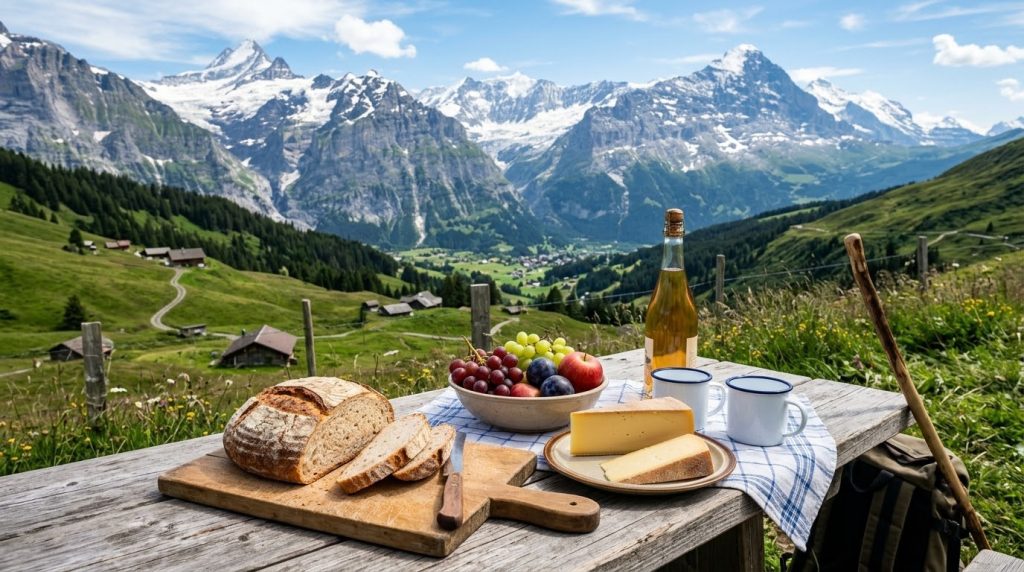
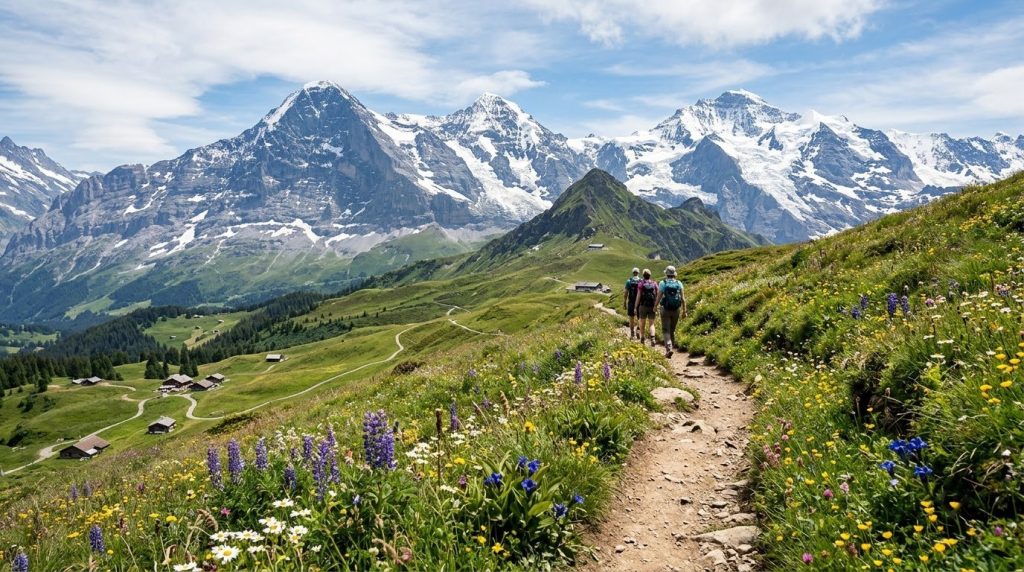
Free hiking is the mountain equivalent. Switzerland has thousands of kilometers of marked trails that cost nothing to walk, and picking one or two free hikes instead of a paid cable car up every summit removes the single largest expense category from several days of the trip. Before you set out on a free trail, our honest look at Swiss safety explains why falls and sudden storms are the bigger danger than crime.
Staying in valley towns rather than resort centers like Zermatt or Interlaken proper also trims accommodation costs meaningfully, since a room a short train ride away can run noticeably less than the same standard in the resort itself.
Traveling outside the July-to-August and Christmas-to-New-Year peaks helps across the board too, since hotel rates soften once the crowds thin; check the best time to visit Switzerland before locking in dates.
How Switzerland compares to a neighboring country for the same trip
Switzerland’s prices are not simply “European” prices turned up slightly – several comparisons against neighboring Alpine countries put Austria specifically at roughly 30 to 50% cheaper across hotels, dining and lift passes for a broadly similar mountain trip.
A mid-range Austrian hotel runs roughly USD 115 to 230 (EUR 100 to 200) a night, a mid-range restaurant dinner for one runs roughly USD 17 to 35 (EUR 15 to 30), and a daily ski lift pass runs roughly USD 52 to 75 (EUR 45 to 65) – each of those sits well under the equivalent Swiss spend described earlier in this guide.
Scaled up to a full week, one comparison of a two-person ski trip put a week in Zermatt at roughly USD 4,600 to 8,050 (EUR 4,000 to 7,000) including flights, accommodation, a six-day lift pass and meals, against roughly USD 2,875 to 5,175 (EUR 2,500 to 4,500) for a broadly equivalent week in St Anton, Austria – a gap of around USD 1,725 to 2,875 (EUR 1,500 to 2,500) for what is largely the same style of trip.
None of this means Switzerland isn’t worth the premium for travelers specifically chasing the Jungfrau region, the Matterhorn, or a Swiss-rail-pass-built itinerary – those are genuinely Swiss experiences that a neighboring country doesn’t replicate one-for-one.
But for a traveler whose priority is Alpine scenery and skiing or hiking in general rather than one specific Swiss landmark, pricing the same style of trip in Austria first is worth doing before assuming Switzerland is the only option, especially for a budget-conscious multi-country Alpine trip rather than a single Switzerland-only visit.
Germany tells a similar story on the hotel side specifically: one hospitality-industry comparison put a 4-star hotel room at roughly USD 138 to 230 (EUR 120 to 200) a night in Germany against roughly USD 230 to 460 (EUR 200 to 400) for the same hotel category in Switzerland, putting Switzerland 40 to 80% higher on comparable services generally.
That gap is wide enough that even a short Switzerland add-on tacked onto a wider Germany-and-Austria Alpine trip is worth budgeting for separately rather than assuming the daily cost holds steady once the itinerary crosses the border.
When Switzerland is not worth the money
Switzerland is a weak value pick for a backpacker trying to hold under USD 100 a day while still chasing multiple mountain summits, since a single Jungfraujoch ticket at USD 323 (CHF 261) alone can burn three days of food budget in one excursion.
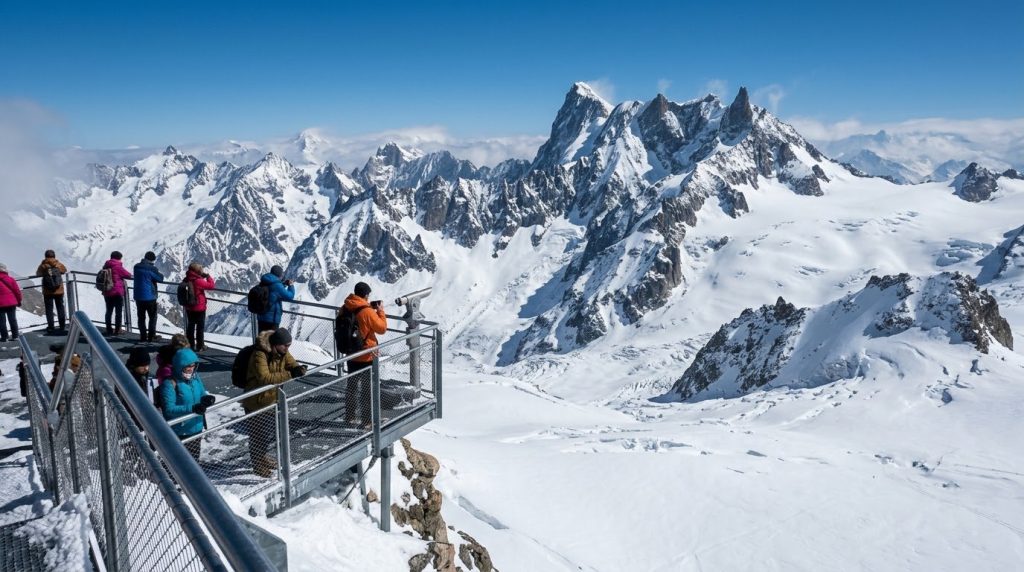
It’s also a poor fit for a short two- or three-day layover confined to Zurich or Geneva city centers, where restaurant and hotel prices sit at the top of the national range without the payoff of the Alps that justifies the spend elsewhere in the country.
Travelers buying a multi-day Swiss Travel Pass but only riding a couple of short regional trains and skipping the mountain railways are also better off with point-to-point tickets or the cheaper Half Fare Card, since the pass only pays for itself once several higher-value rides or cable cars are actually used.
Tipping: one cost that doesn’t need padding into the budget
Tipping is one place where Switzerland is actually easier on a traveler’s budget than the headline prices suggest, since Switzerland Tourism’s own guidance is that tipping is not obligatory at all.
Where it happens, the customary amount is modest – roughly 10% of the bill in a restaurant for good service, or simply rounding the total up to a round number, rather than the 15 to 20% expected as standard practice in some other countries.
There’s no need to calculate a tip into the daily food budget described earlier in this guide as a fixed extra cost; a few francs rounded up after a meal, or nothing at all, both fall within normal local practice.
The same light-touch approach applies to taxis, hotel porters and other services – a small rounding tip is appreciated but not expected, and skipping it entirely doesn’t draw the kind of reaction it might elsewhere.
For a trip already stretching to cover restaurant meals and mountain railways, not having to budget a strict percentage on top of every bill is one small way the real cost of a day in Switzerland comes in a little lower than it might look on paper.
Plan an affordable Switzerland trip
Find your Switzerland hotel on the map
Live prices from Booking, Airbnb and more — move the map or change dates to compare stays across Switzerland.