Best Time to Visit Switzerland (2026)
Disclosure: Some links in this guide are affiliate links. If you book or buy through them, we may earn a small commission at no extra cost to you — it helps keep our guides free.
- The best time to visit Switzerland is June through September, when nearly every mountain railway, cable car and hiking trail is running.
- Skiers should target December through March instead.
- April and November are the weakest months for mountain access.
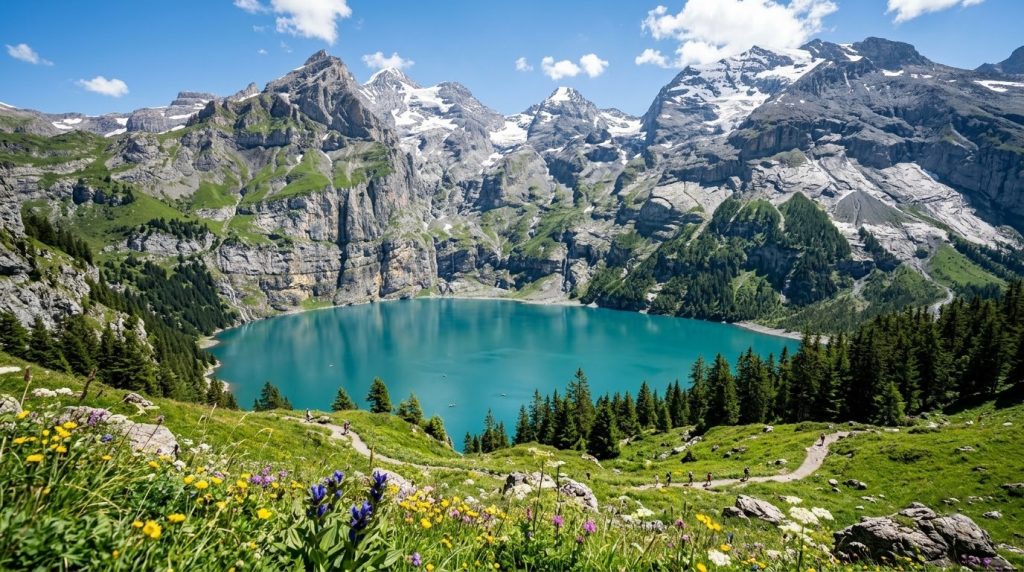
The best time to visit Switzerland is June through September, when Interlaken’s daytime temperatures average 10 to 19 degrees Celsius (50 to 66 Fahrenheit) and nearly every mountain railway, cable car and hiking trail is running.
Skiers should target December through March instead, and anyone chasing shoulder-season discounts should check individual lift schedules first, because a wide band of mountain infrastructure shuts down for maintenance in the gap between the two seasons.
| Month | Weather | Mountain access | Crowds | Verdict |
|---|---|---|---|---|
| January | Cold, snow-covered valleys and peaks | Ski lifts fully open, hiking trails buried | Moderate, busiest around New Year | Good for skiing |
| February | Cold, deepest snowpack | Ski lifts fully open | High, school holiday weeks | Prime ski season, book early |
| March | Cold to mild, snow softening | Ski lifts open, closures start late in the month | Moderate | Late-season skiing, better rates |
| April | Mild and unpredictable | Several high-altitude lifts closed for maintenance | Low | Weakest month for mountain access |
| May | Mild, warming | Lifts reopening in stages, some closures continue | Low | Improving, verify each lift |
| June | Warm, occasional rain | Nearly all lifts and trails open | Moderate, rising | Strong start to hiking season |
| July | Warm, peak summer | Fully open | High, peak holidays | Best weather, busiest month |
| August | Warm, peak summer | Fully open | High, peak holidays | Best weather, busiest month |
| September | Warm days, cooler nights | Fully open, thinner trail traffic | Moderate, dropping after mid-month | Best overall balance |
| October | Cool, clear mountain visibility early on | Lifts begin closing mid to late month | Low | Good early, weakens after mid-month |
| November | Cold | Widespread maintenance closures | Very low | Weakest month for mountain access |
| December | Cold, snow builds | Ski lifts reopen through the month | Rising toward the holidays | Good once lifts are confirmed running |
Summer (June to September) – the main window for hiking and lakes
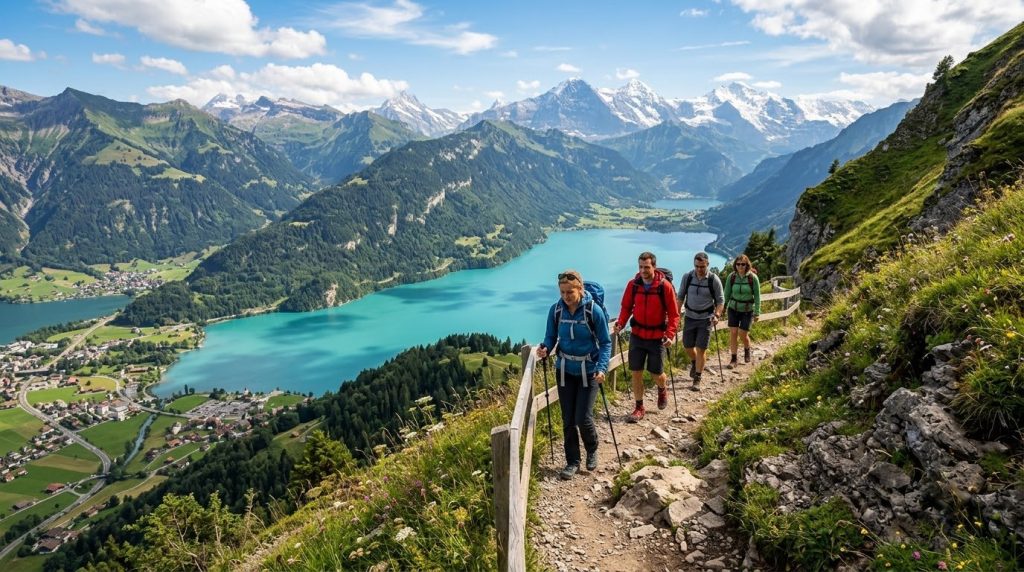
Summer is the best time to visit Switzerland for hiking, lake swimming and full mountain-railway access, because nearly every cable car and trail network is open and Interlaken’s daytime temperatures average 10 to 19 degrees Celsius (50 to 66 Fahrenheit) across the four months.
June through September also brings the highest rainfall frequency of the year, averaging around 11 wet days per month, so pack a shell jacket even when the morning looks clear.
July and August are the most crowded and most expensive weeks, overlapping with European school holidays, while September offers the strongest balance of warm days, cooler nights and thinner crowds once the first week of the month passes. A plain breakdown of typical costs appears in our piece on whether Switzerland is expensive.
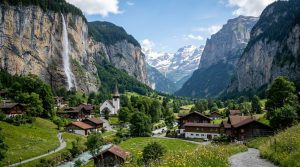
Hikers heading toward Lauterbrunnen or the Schilthorn should still check current trail conditions in early June, because snowmelt at higher elevations can keep some routes closed into the first weeks of the month even after the lifts themselves reopen. For a full route-by-route breakdown of the region’s peaks and valleys, see the Swiss Alps travel guide.
Winter (December to March) – the ski season
Winter is the best time to visit Switzerland for skiing, because resorts across the Bernese Oberland run their lift networks fully from mid-December through March, with daytime temperatures in the Interlaken area typically ranging from minus 5 to 2 degrees Celsius (23 to 36 Fahrenheit). Skiers heading higher should read whether Switzerland is safe, since avalanches and storms pose far more risk to visitors than crime does.
December opens unevenly: many lifts are still finishing autumn maintenance in the first two weeks of the month, so early December is a weak window for anyone counting on a specific route being open.
February is the most crowded and most expensive month, driven by European school holidays, while January and March combine full lift operation with comparatively lower hotel rates. Travelers building a base in the Jungfrau region should read the 3-day Interlaken itinerary for how to sequence ski days against valley-town stops. Suggested trip lengths for different travel styles are discussed in our guide on how many days in Switzerland.
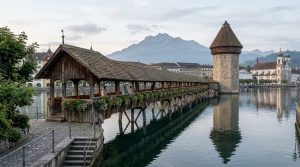
Skiers who want a lake-town base rather than a mountain resort should compare options in the where to stay in Lucerne guide, since Lucerne stays open and walkable year-round even when high-altitude routes are seasonal.
Why the shoulder months can catch you out
The shoulder months between Switzerland’s two main seasons carry the highest risk of arriving to a closed mountain, because a wide band of cable cars, mountain railways and high-altitude trails shut down for scheduled maintenance in the gap between ski season and summer season.
The Eiger Express gondola, the fastest route toward the Jungfraujoch, closes for scheduled maintenance from April 20 to April 24, 2026, squarely inside the window many travelers assume is a quiet, cheap time to visit.
Autumn brings a wider wave of shutdowns: the Grindelwald-Mannlichen and Wengen-Mannlichen cableways both close from October 26 to December 11, 2026, and the Kriens-Frakmuntegg-Pilatus cableway near Lucerne closes from October 19 to November 27, 2026.
This is exactly the trap in generic “shoulder season is cheaper” advice, because the same lower hotel rates that make late April, May and late October appealing can coincide with the specific lift or trail a trip was planned around being shut.
The fix is simple but easy to skip: check the operating calendar for the individual cable car, funicular or railway on the operator’s own site before booking flights, rather than relying on general shoulder-season advice.
Treat late April into May, and late October into November, as unpredictable stretches where some routes run and others do not, rather than as a single uniform season.
Best time for the scenic trains and mountain railways
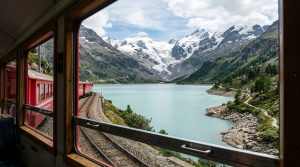
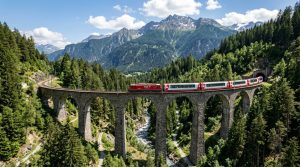
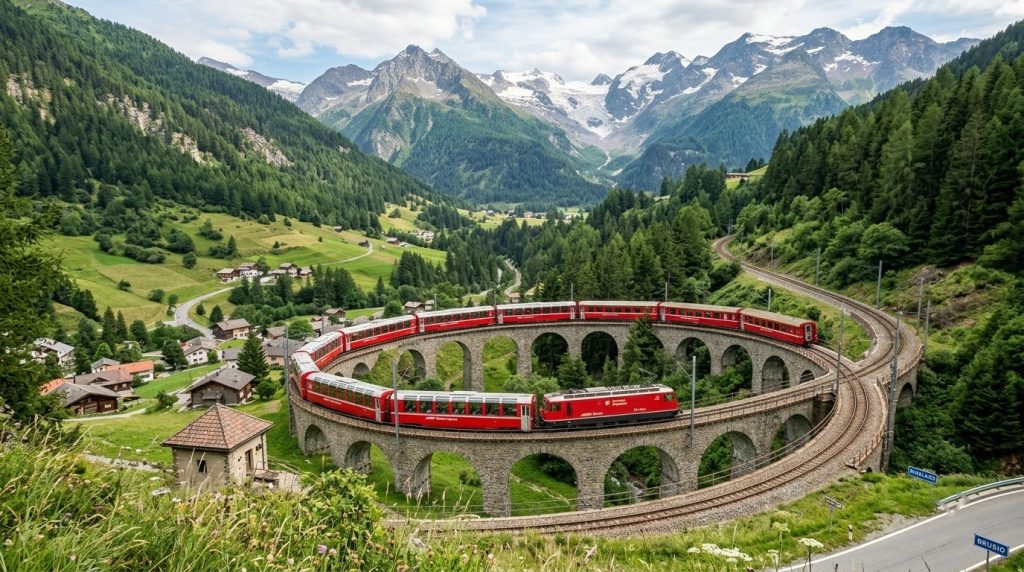
Late spring through early autumn is the best time to ride Switzerland’s scenic trains and mountain railways, because peak-season schedules and full snow-clearance mean routes like the Jungfraujoch cogwheel railway run at their most reliable.
A Jungfraujoch round trip from Interlaken Ost costs USD 322 (CHF 261) during the May-to-October peak season and drops to USD 277 (CHF 224) in the off-peak months, at the September 2026 exchange rate of roughly USD 1 to CHF 0.81.
The Schilthorn cable car above Murren, reached from Interlaken, runs a round trip for USD 133 (CHF 108), and the Harder Kulm funicular above Interlaken itself runs a shorter round trip for USD 47 (CHF 38).
Travelers planning several rides on one trip should weigh those individual fares against a three-day Swiss Travel Pass, which costs USD 314 (CHF 254) in second class for 2026 and covers most regional trains, trams and buses plus discounts on mountain excursions.
Because peak-season fares and full operating schedules overlap with July and August’s biggest crowds, September remains the strongest single month for combining reliable railway access with thinner crowds on the platforms. The Interlaken travel guide breaks down which mountain railways depart directly from town versus which require a connecting bus or cable car first.
When NOT to visit Switzerland
Early to mid-November is the weakest window on the calendar, because most high-altitude cable cars and railways are mid-closure for scheduled maintenance while winter snow has not yet arrived to open the ski season.
Late April is a similar dead zone for mountain access specifically: the ski season is winding down, routes including the Eiger Express are closed for maintenance, and hiking trails at elevation are still snow-covered, so a trip built around skiing or high-altitude hiking will disappoint.
Avoid the first two weeks of August if crowds and cost matter, since this stretches across the peak of European school holidays and hotel rates in Interlaken and Lucerne sit at their highest point of the year.
Avoid early December if a specific ski lift matters to the trip, because some resorts are still completing season-opening checks and not every run is groomed yet.
None of these windows make Switzerland unpleasant, but each one narrows what is actually open, so match the month to the activity rather than assuming any time of year delivers the full mountain experience.
Plan your Switzerland trip
Book a home base in Interlaken, Lucerne or Zurich before locking in mountain-railway tickets, since hotel availability tightens fastest in the weeks that combine good weather with full lift access. If a city base appeals more, our guide to choosing Zurich or Geneva explains why Zurich works better for 2 to 4 days and when Geneva wins instead.
Find your Switzerland hotel on the map
Live prices from Booking, Airbnb and more — move the map or change dates to compare stays across Switzerland.