Swiss Alps Travel Guide 2026: Best Villages & Scenic Train Routes
The Swiss Alps attracted 42.4 million overnight stays in 2024, making it one of the most visited mountain regions on the planet (Switzerland Tourism, 2025). That number keeps climbing. Yet most visitors cluster around the same three spots: Jungfraujoch, Interlaken, and the Matterhorn viewpoint. Stray even slightly off that script and you find villages where cows outnumber tourists, train rides where every seat is a window seat, and valleys so quiet you can hear a waterfall from two kilometers away.
This guide is built for travelers who want the postcard views without the postcard crowds. We cover which villages earn their reputation and which ones are just good marketing, four train routes that are destinations in themselves, realistic budget numbers from our own trips, and the seasonal timing that can save you 40% on accommodation.
Key Takeaways
- Five alpine villages (Lauterbrunnen, Grindelwald, Zermatt, Murren, Wengen) deliver distinct experiences within a 2-hour radius of Interlaken, each suited to different travel styles
- The Glacier Express and Bernina Express are the two most scenic rail journeys in Switzerland, with the latter being a UNESCO World Heritage route at roughly half the peak-season supplement cost
- Swiss Travel Pass (from CHF 244 for 3 days) cuts per-ride costs by 30-50% vs individual tickets and includes free museum entry, city transport, and 50% off most mountain railways (SBB, 2026)
- Budget travel is achievable at CHF 80-120/day using mountain hostels, supermarket meals, free hiking trails, and the Half-Fare Card instead of individual cable car tickets
- Shoulder season (May-June, September-October) typically delivers 30-40% lower hotel rates with hiking conditions that are often better than July-August peak
Affiliate Disclosure: Some links in this guide are affiliate links. If you book through them, we may earn a small commission at no extra cost to you. We only recommend services we have used or thoroughly researched for Swiss Alps travel. Learn more.
[INTERNAL-LINK: Planning your trip around the adventure capital? Read our full → Interlaken Travel Guide for transport hub details, hotel picks, and itinerary templates]
What Are the Best Villages in the Swiss Alps?
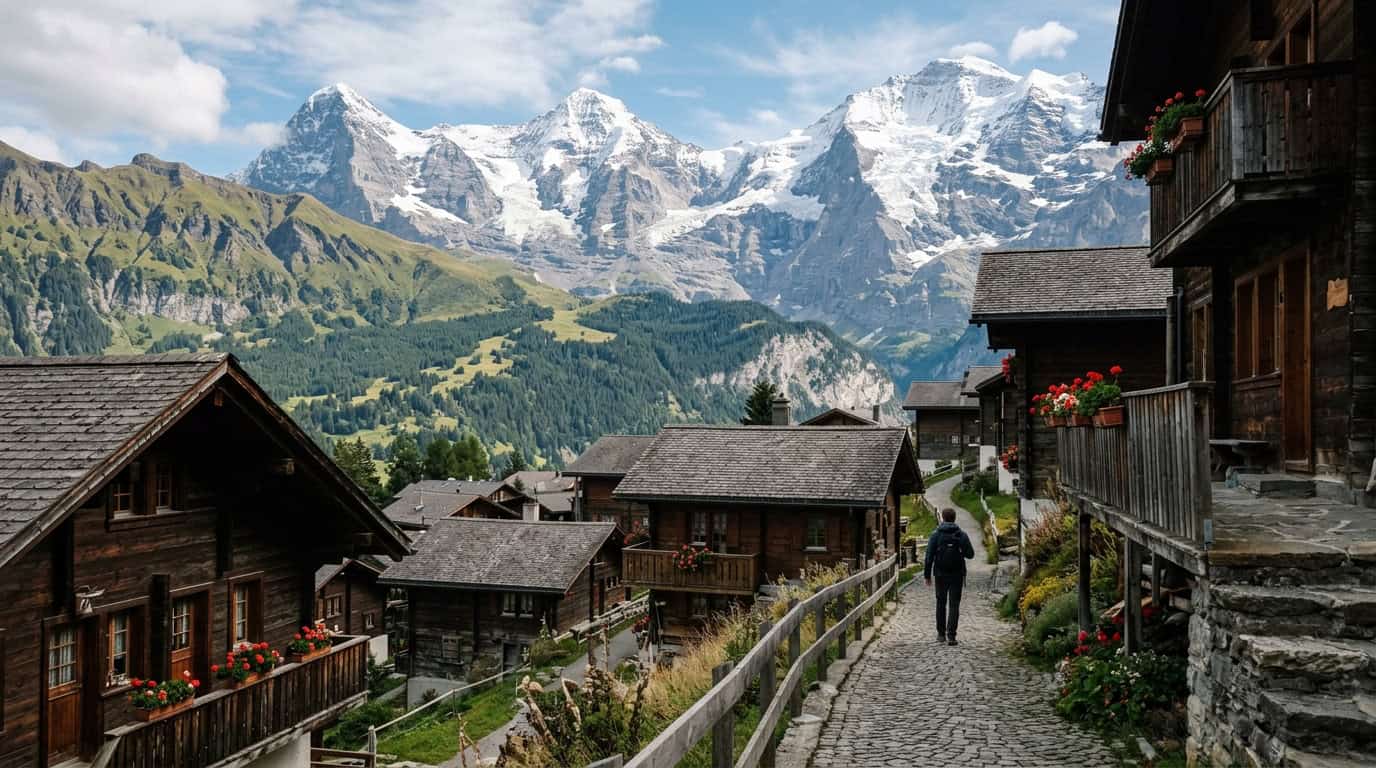
With more than 200 recognized alpine settlements scattered across Switzerland, the Switzerland Tourism board reports that just 15 villages account for roughly 60% of all international overnight stays in the Bernese Oberland region (Switzerland Tourism, 2025). The question is not whether the villages are beautiful. They all are. The question is which one fits your travel style, budget, and tolerance for crowds. After spending three weeks zigzagging between valley floors and mountain ledges, here are the five that justify the hype and then some.
Lauterbrunnen: The Valley of 72 Waterfalls
Location: Bernese Oberland | From CHF 45/night (dorm) to CHF 350/night (hotel) | Best for: nature lovers and hikers
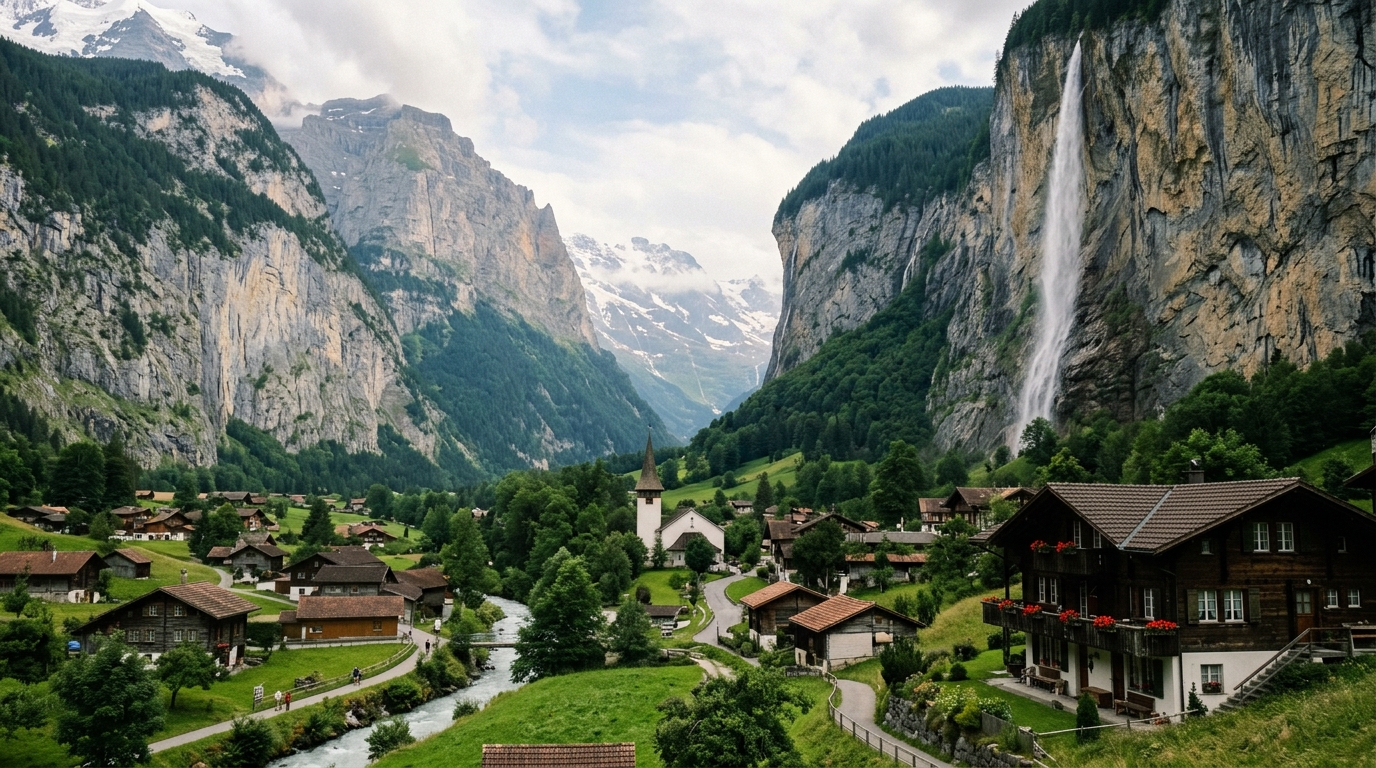
Lauterbrunnen is a U-shaped glacial valley with cliff walls rising roughly 300 meters on both sides, and waterfalls spilling off those edges like someone left the taps on across an entire mountain range. Staubbach Falls plunges 297 meters, free-falling from an overhanging rock face that is visible the moment you step off the train. The walk from the station to the falls takes less than ten minutes and costs nothing. Trummelbach Falls, a series of ten glacier-fed waterfalls thundering inside the mountain, is the only underground waterfall system in Europe accessible to the public. The entry fee is CHF 12 and it is worth every rappen.
[PERSONAL EXPERIENCE] We stayed three nights at a family-run guesthouse with a balcony facing Staubbach Falls for CHF 120/night. Waking up at 6am to watch the first sunlight hit the cascade while the valley was still silent and empty was one of those travel moments that redefines why you book the trip in the first place.
Best for: Hikers and photographers. The Lauterbrunnen-to-Stechelberg trail runs 8km flat along the valley floor with unobstructed waterfall views the entire way. Zero fitness required, maximum payoff.
[INTERNAL-LINK: Get the detailed lowdown on waterfalls, trails, and guesthouses → Lauterbrunnen Travel Guide]
Grindelwald: Adventure Hub at the Foot of the Eiger
Location: Bernese Oberland | From CHF 55/night (hostel) to CHF 500+/night (spa hotel) | Best for: adventure sports and families
Grindelwald sits directly beneath the Eiger north face, one of the most infamous walls in mountaineering history. More than 60 climbers have died attempting it since 1935. The village has turned that legacy into an outdoor playground: the First Cliff Walk, a metal catwalk bolted onto the side of a vertical rock face, comes free with any Grindelwald First gondola ticket (CHF 68 round-trip). The Eiger Trail, a 6km path tracing the literal base of that north face, is a moderate 2.5-hour walk that puts you close enough to the rock to feel the history without needing a single piece of climbing gear.
Unlike Zermatt, which can feel curated and polished, Grindelwald has a working-village energy. Dairy farms operate between the hotels. You might round a corner and find a farmer herding cows across the main road at 7am. Summer brings 300km of marked hiking trails plus trotti bike descents from First all the way back to the village.
[INTERNAL-LINK: See what else the Interlaken region offers beyond these villages → Best Things to Do in Interlaken]
Best for: Families with teens and adrenaline seekers. The gondola network makes accessing high-alpine views easy for all fitness levels, while paragliding launch sites above the village draw serious thrill-chasers.
Zermatt: Car-Free Village Under the Matterhorn
Location: Valais canton | From CHF 60/night (budget guesthouse) to CHF 800+/night (luxury chalet) | Best for: luxury travelers and serious hikers
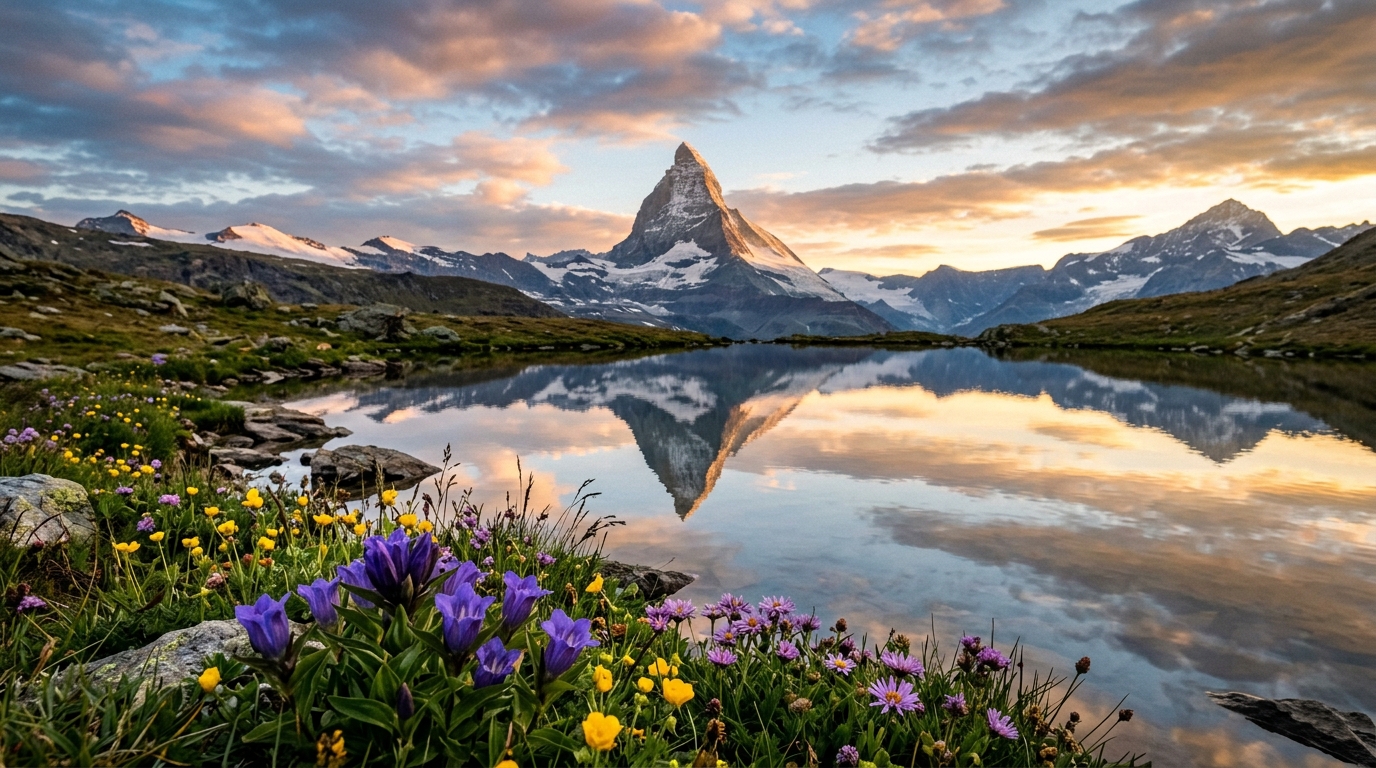
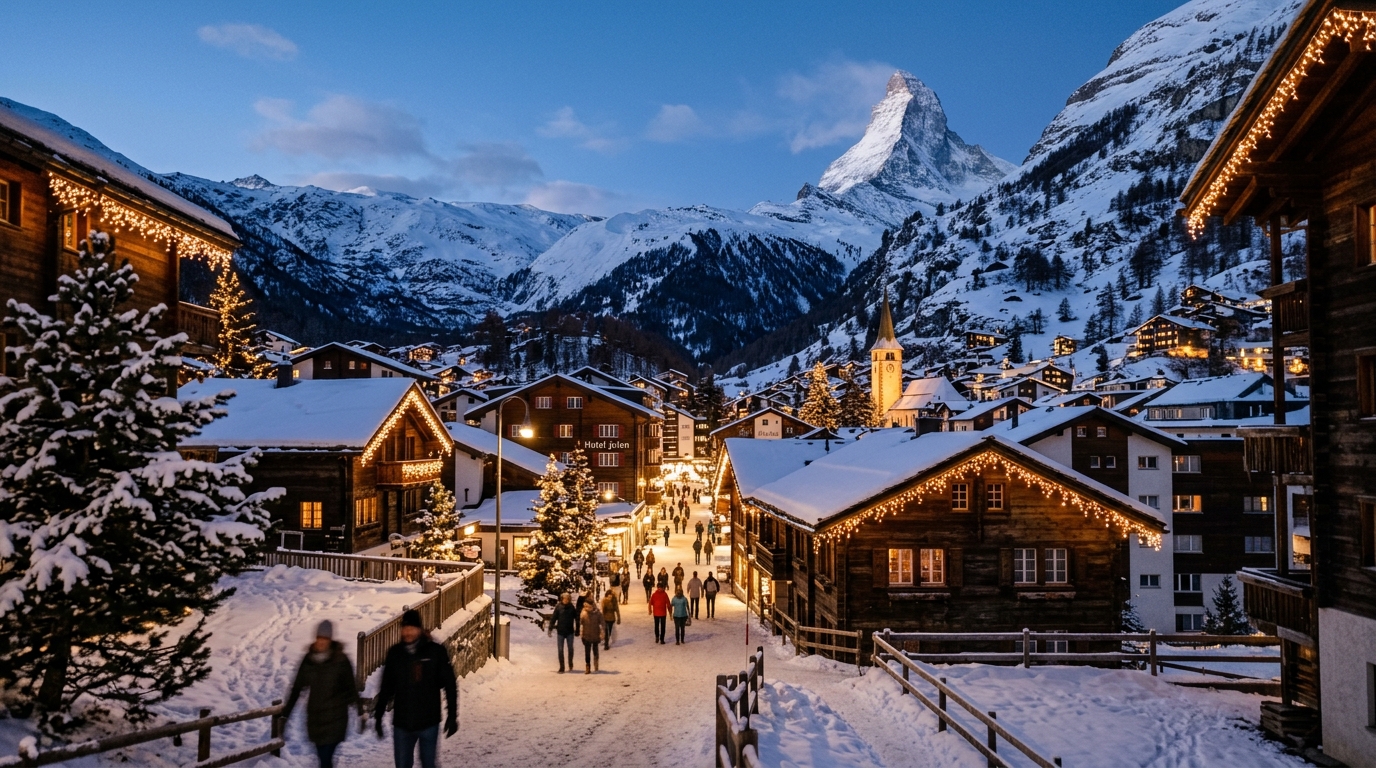
Zermatt bans combustion-engine cars entirely. You arrive by train or electric taxi, and the first thing you notice is the silence. Then you turn a corner and the Matterhorn appears, all 4,478 meters of pyramid-shaped granite, probably the most recognizable mountain silhouette on Earth. The village itself skews upscale, with Michelin-starred restaurants and designer shopping along the main street. But Zermatt also serves as the gateway to Switzerland’s most dramatic high-altitude hiking: the Europaweg to Grachen and the 5-Seenweg (Five Lakes Trail), which reflects the Matterhorn across five alpine lakes.
[UNIQUE INSIGHT] Most visitors ride the Gornergrat railway to the viewing platform (CHF 110 round-trip), snap photos, and leave. The smarter play is to ride up and hike down. The Riffelsee trail from Rotenboden station to Riffelberg takes about an hour and delivers the iconic Matterhorn-reflection-in-lake photo without jostling for tripod space at the summit viewpoint.
Best for: Honeymooners and dedicated hikers. The car-free policy creates an atmosphere that justifies Zermatt’s premium pricing.
Murren: Cliff-Edge Village Without Roads
Location: Bernese Oberland (car-free, cable car access only) | From CHF 50/night | Best for: solitude seekers and panorama lovers
Murren perches on a cliff ledge 800 meters above the Lauterbrunnen Valley. There is no road. You reach it by cable car from Stechelberg or a train-plus-cable-car combo via Grutschalp. The permanent population hovers around 380 people (Murren Tourism, 2025). If you want silence, this is where you find it.
The view from Murren faces the Eiger, Monch, and Jungfrau, the same alpine panorama that people pay CHF 210 to see from the Jungfraujoch observation deck. From Murren you see it from your hotel balcony with a morning coffee. The Schilthorn cable car from Murren climbs to Piz Gloria, the rotating restaurant featured in the 1969 James Bond film “On Her Majesty’s Secret Service,” at 2,970 meters. The round-trip ticket costs CHF 108, roughly half the Jungfraujoch price, and the 360-degree panorama of over 200 peaks arguably beats what you get from the higher-altitude railway.
Best for: Couples and photographers who want the Jungfrau panorama without Jungfraujoch crowds. The village has enough restaurants and small hotels to keep you comfortable for 2-3 nights.
Wengen: Family-Friendly Car-Free Terrace
Location: Bernese Oberland (car-free, 15-minute cogwheel train from Lauterbrunnen) | From CHF 55/night | Best for: families and older travelers
Wengen sits on a sunny terrace above the Lauterbrunnen Valley at 1,274 meters. Like Murren and Zermatt, it is car-free, but unlike Murren’s cliff-edge drama, Wengen feels gentle. Wide promenades, playgrounds with mountain views, and easy walking paths make it the most accessible alpine village for families with young kids or older travelers who want the scenery without aggressive hiking.
The Wengernalp Railway connects directly to Kleine Scheidegg at the foot of the Eiger, where you can transfer to the Jungfraujoch train if you decide to splurge on that experience. Even if you skip it, Kleine Scheidegg itself offers a stunning mountain backdrop with restaurant terraces facing the north face.
Best for: Multi-generational family trips. Grandparents can enjoy the promenade and cafes while younger family members tackle the surrounding trails.
[INTERNAL-LINK: Need a regional overview and transport logistics? Start with our → Interlaken Travel Guide]
| Village | Access | Budget/Night | Best For | Vibe |
|---|---|---|---|---|
| Lauterbrunnen | Train direct from Interlaken (20 min) | CHF 45-350 | Hikers, photographers | Peaceful valley, waterfall drama |
| Grindelwald | Train from Interlaken (35 min) | CHF 55-500 | Adventure, families | Lively, working village energy |
| Zermatt | Train from Visp/Brig (80 min) | CHF 60-800 | Luxury, serious hikers | Upscale, car-free silence |
| Murren | Cable car only (from Stechelberg) | CHF 50-300 | Solitude, panorama | Quiet cliff-edge retreat |
| Wengen | Cogwheel train (15 min from Lauterbrunnen) | CHF 55-400 | Families, older travelers | Gentle, sunny, accessible |
Source: Switzerland Tourism + Booking.com peak-season pricing, 2026
What Are the Most Scenic Train Routes in the Swiss Alps?
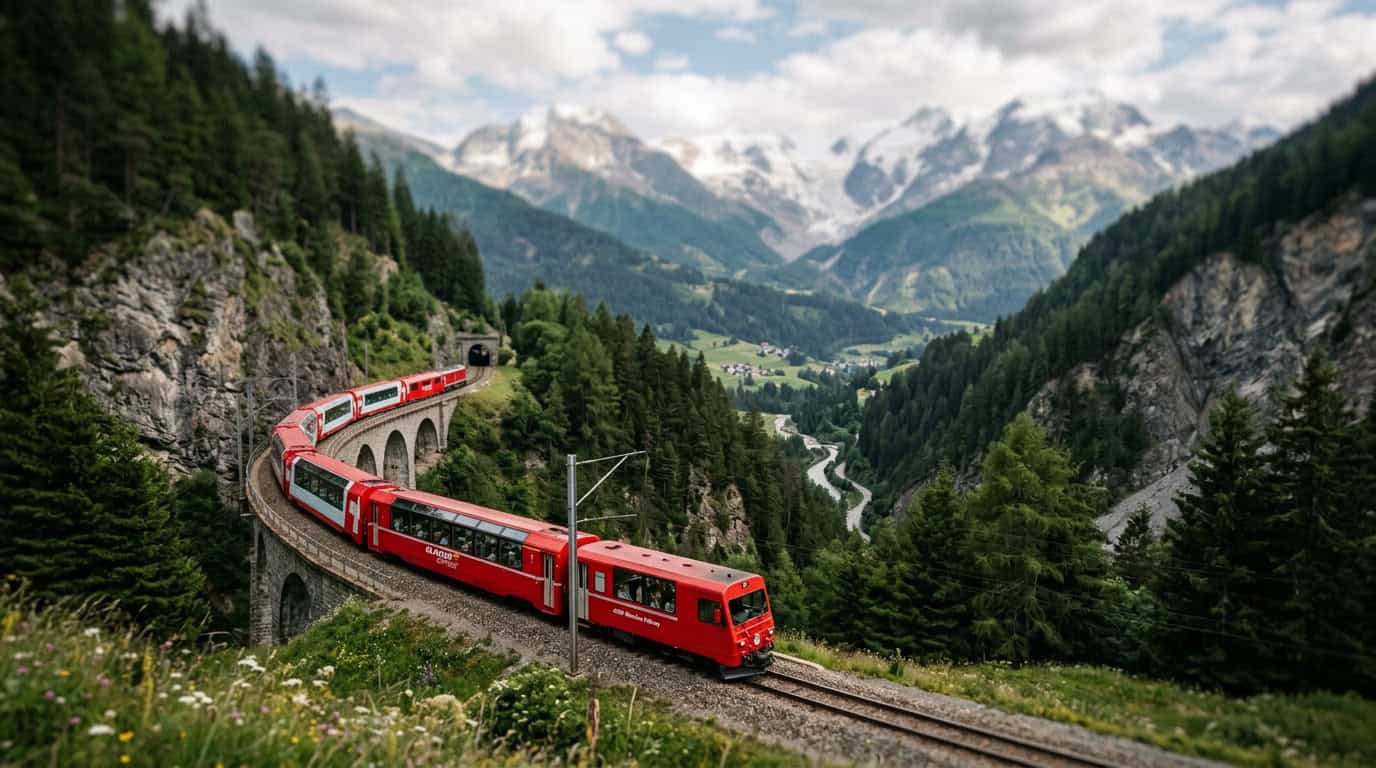
Switzerland’s rail network covers 5,317 kilometers, and Swiss Federal Railways reports punctuality of roughly 92.5%, meaning you can build an itinerary around train schedules without the buffer time other European countries demand (SBB, 2026). But these scenic routes are not just transportation. They are the main event. Four journeys stand out as genuinely world-class experiences where the ride itself is the reason to book the trip.
Glacier Express: Zermatt to St. Moritz
Duration: 8 hours | Distance: 291 km | Cost: CHF 159 (2nd class) + CHF 49 seat reservation
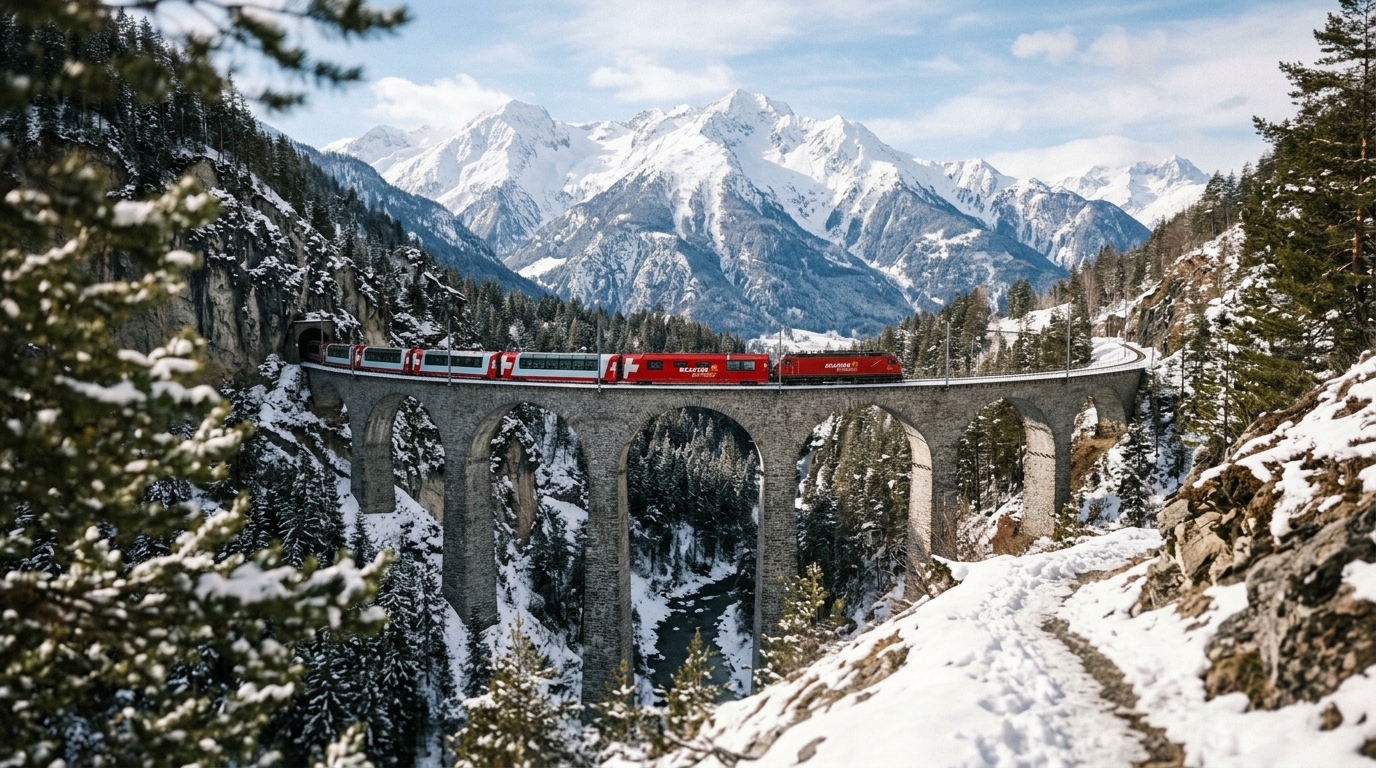
The Glacier Express calls itself the slowest express train in the world, crossing 291 bridges and passing through 91 tunnels between Zermatt and St. Moritz. The panoramic windows curve up into the ceiling, so you see the peaks even when the train climbs steep mountain grades. The journey crosses the Landwasser Viaduct, a limestone bridge that curves directly into a tunnel mouth on a cliff face, and the Oberalp Pass at 2,033 meters, the highest point on the route.
Book your seat reservation at least two weeks ahead during summer months. The train fills up. Excellence Class, a premium carriage, includes a five-course meal with wine pairings and a dedicated concierge for CHF 420. Standard class still gets you the same views through the same panoramic windows. The food in the regular dining car is solid but not spectacular. Pack sandwiches from a Coop supermarket before boarding and spend the savings on a second scenic route.
[INTERNAL-LINK: Once you finish the rail journey, read our → 3-Day Interlaken Itinerary for planning the Jungfrau region portion]
Bernina Express: Chur to Tirano
Duration: 4 hours | Distance: 122 km | Cost: CHF 63 (2nd class) + CHF 16 seat reservation
The Bernina Express runs from Chur to Tirano, Italy, crossing the Alps without using a single rack rail at the highest sections. The route climbs to 2,253 meters at Ospizio Bernina, passing glaciers, alpine lakes, and the famous Brusio Circular Viaduct, a spiral bridge the train loops around to manage the steep descent. UNESCO designated this entire route a World Heritage site in 2008.
[UNIQUE INSIGHT] The Bernina Express delivers comparable scenery to the Glacier Express at roughly half the ticket price and in half the time. If you only have budget or schedule for one iconic Swiss rail journey, this is the one to take. The views are arguably more varied because the route drops from alpine terrain into Mediterranean palm-tree landscapes as you descend toward Italy. In winter, frozen Lake Bianco looks like a scene from another planet.
GoldenPass Express: Montreux to Interlaken
Duration: 3 hours 15 minutes | Cost: CHF 75 (2nd class)
The GoldenPass Express connects Lake Geneva’s vineyards to the Bernese Oberland peaks, crossing the language barrier between French-speaking and German-speaking Switzerland in the process. The train uses a gauge-changing mechanism that switches between standard and narrow-gauge tracks without passengers changing trains. Views sweep from the terraced Lavaux vineyards (another UNESCO site) up through Gstaad’s chalet-dotted hills and into the alpine drama of the Interlaken region.
Jungfrau Railway: Kleine Scheidegg to Jungfraujoch
Duration: 35 minutes (from Kleine Scheidegg) | Cost: CHF 210.80 round-trip from Interlaken
This is not a scenic route in the leisurely sense. It is a rack railway that tunnels through the Eiger and Monch to reach Jungfraujoch at 3,454 meters, the highest railway station in Europe. The experience includes an ice palace carved into the glacier, a viewing platform overlooking the Aletsch Glacier (the largest glacier in the Alps at 23km long), and a sensory overload of tourists. Up to 5,000 visitors arrive daily in peak season (Jungfrau Railways, 2025).
Buy the Good Morning Ticket (depart before 8:30am, return by 1:15pm) for CHF 155 instead of CHF 210.80. You get the same views with fewer people and save CHF 55. Book via GetYourGuide to secure your time slot before arriving.
| Route | Duration | Cost (2nd Class) | Best Season | Reservation Required? |
|---|---|---|---|---|
| Glacier Express | 8 hrs | CHF 159 + CHF 49 | Year-round | Yes, mandatory |
| Bernina Express | 4 hrs | CHF 63 + CHF 16 | Year-round | Yes, mandatory |
| GoldenPass Express | 3.25 hrs | CHF 75 | April-October | Recommended |
| Jungfrau Railway | 35 min (from KS) | CHF 210.80 | Year-round | Not required |
Source: SBB and Jungfrau Railways pricing, 2026
Swiss Alps Travel Tips: What to Know Before Going
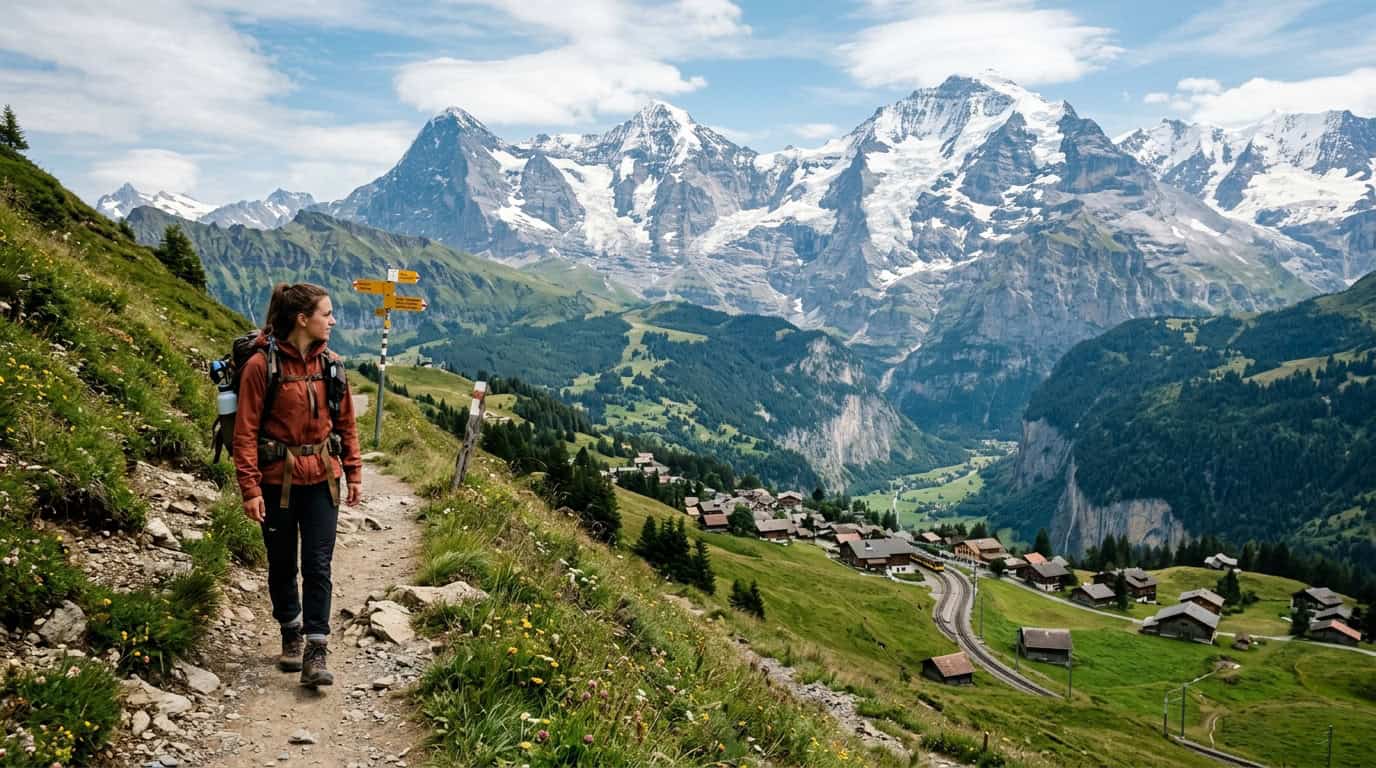
Switzerland is not in the European Union, does not use the euro, and runs on its own set of rules. With 92.5% rail punctuality and a cashless economy that extends to remote mountain huts, the country operates with an efficiency that catches first-time visitors off guard (SBB, 2026). Here are the practical things that make the difference between a smooth trip and a frustrating one.
Transport Passes: Which One Actually Saves You Money
The Swiss Travel Pass covers unlimited travel on trains, buses, and boats plus free entry to over 500 museums and 50% off most mountain railways. A 3-day consecutive pass costs CHF 244 in second class and CHF 389 in first class (SBB, 2026). A 4-day pass runs CHF 295.
The Swiss Half-Fare Card costs CHF 120 for one month and gives you 50% off nearly all train, bus, boat, and mountain railway tickets. If you are planning to take two or three expensive mountain excursions, the Half-Fare Card often beats the Travel Pass on price. Break down your planned journeys and compare. If your itinerary is mostly scenic trains, get the Travel Pass. If it is mostly mountain railways, get the Half-Fare Card.
[UNIQUE INSIGHT] We ran the numbers on a typical 5-day Bernese Oberland itinerary: Jungfraujoch, Schilthorn, First gondola, Lauterbrunnen-Murren cable car, plus local train travel. Half-Fare Card (CHF 120) plus discounted tickets came to CHF 458 total. Swiss Travel Pass (CHF 295 for 4 days) plus the non-covered mountain cable cars at 50% off came to CHF 419. The Travel Pass saved CHF 39 and included museum entries. For most first-timers combining scenic trains with mountain excursions, the Travel Pass wins.
Currency and Payment
Switzerland uses Swiss Francs (CHF), not euros, though many tourist-facing businesses accept euros at a poor exchange rate. Do not do this. Pay in CHF by card. Switzerland is aggressively cashless. Even small mountain huts and remote cable car stations accept contactless payment. Carry CHF 50-100 in cash for the handful of farm stands and alpine cheese vending machines that are card-free, but otherwise your phone or card will cover everything.
Language
Switzerland has four official languages. The alpine regions covered in this guide are primarily German-speaking, though everyone in tourism speaks English. Learning “Gruezi” (hello) and “Merci” (thank you, borrowed from French) goes further than you would think.
Food Costs and Supermarket Strategy
Restaurant meals in Swiss alpine villages average CHF 25-40 for a main course. A fondue for two runs CHF 45-60. A coffee is CHF 5-6, sometimes more. The single best budget strategy is to eat one supermarket meal per day. Coop and Migros sell fresh sandwiches (CHF 5-8), salads, pastries, and hot food bars with rotisserie chicken and pasta. A CHF 12 Coop dinner frees up budget for a CHF 35 restaurant lunch the next day.
[INTERNAL-LINK: Compare Swiss logistics with another European alpine destination → Lake Como Travel Guide]
Connectivity: Airalo eSIM for Switzerland
Swiss mobile coverage is excellent even at high altitudes. Airalo offers Switzerland-specific eSIM plans from $5 for 1 GB (7 days), which is cheaper than most international roaming packages. Install the eSIM before departure and activate it on arrival. Swisscom and Sunrise networks both cover mountain villages and most hiking trails under 2,500 meters.
How to Visit the Swiss Alps on a Budget
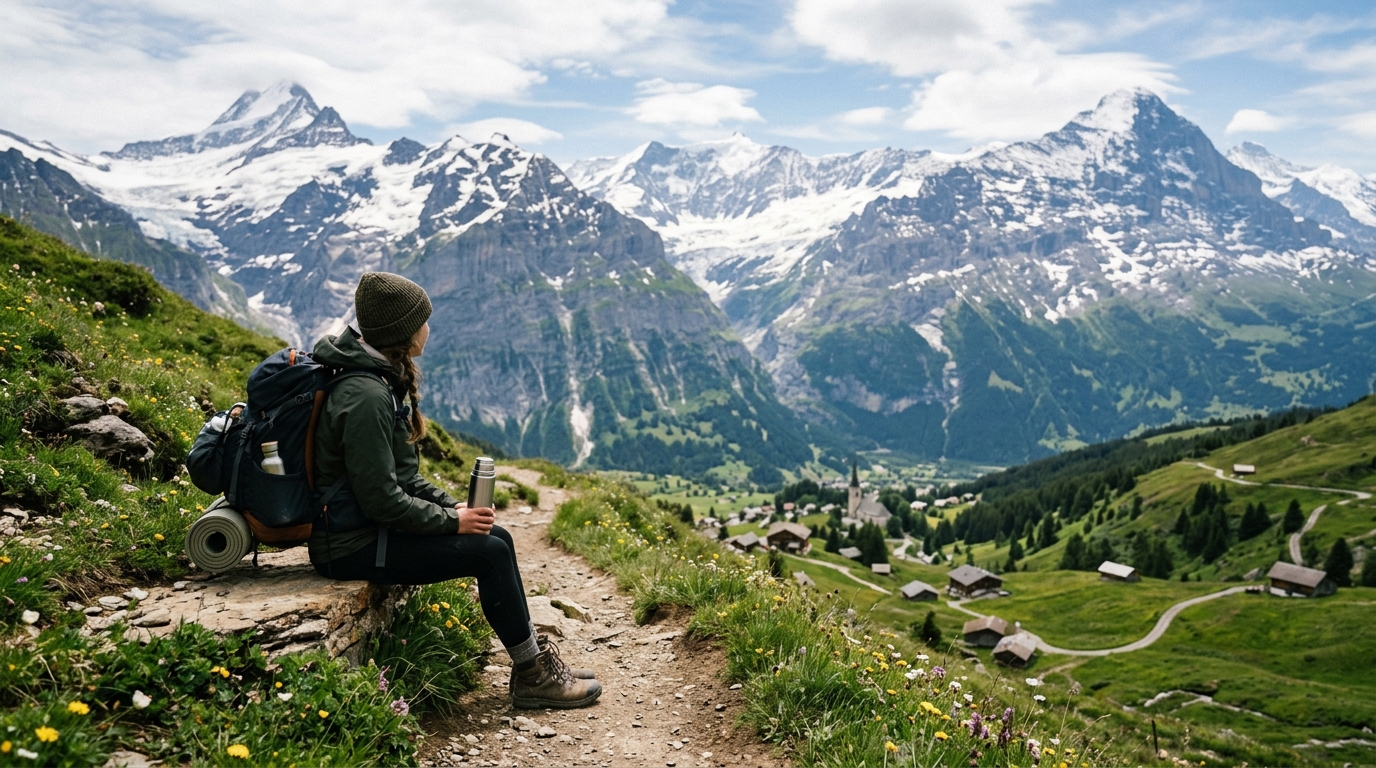
The phrase “budget Switzerland” sounds like an oxymoron, and honest travelers will tell you this is not Southeast Asia. You will not find CHF 3 meals or CHF 10 guesthouses. But the gap between what most tourists spend and what you actually need to spend is significant. Switzerland Tourism data shows that average daily visitor spend in the Bernese Oberland exceeded CHF 280 per person in 2024, yet budget travelers consistently report getting by on CHF 80-120 per day by making different choices in five key categories (Switzerland Tourism, 2025).
Accommodation: Hostels and Mountain Huts
Mountain hostels run CHF 30-50 per dorm bed. The Mountain Hostel in Grindelwald, Schutzenbach Guesthouse in Lauterbrunnen, and Zermatt Youth Hostel all deliver clean rooms with mountain views at a fraction of hotel prices. Mountain huts operated by the Swiss Alpine Club (SAC) offer dorm beds at CHF 35-55 including breakfast, often in locations no hotel could legally build, like the Gleckstein Hut above Grindelwald at 2,317 meters. Book huts at least a week ahead during July and August.
Food: Supermarket Strategy
Covered in the tips section above, but it bears repeating: one supermarket meal per day is the single most effective savings lever in Switzerland. A CHF 10 Coop lunch plus CHF 35 restaurant dinner beats spending CHF 60 across two restaurant meals, and the food quality from Swiss supermarkets is genuinely good.
Activities: Free Hiking, Skip Some Cable Cars
Switzerland has over 65,000 km of marked hiking trails, and the vast majority are free. You do not need a cable car ticket to access spectacular alpine scenery. The Lauterbrunnen valley floor walk, the Eiger Trail (accessed from Alpiglen station for CHF 12 instead of the full Eigergletscher fare), the 5-Seenweg in Zermatt (free once you are in Zermatt), and countless valley-to-alp trails cost nothing beyond your transport to get there.
[PERSONAL EXPERIENCE] On our last trip we spent CHF 0 on mountain railways for two full days of hiking by sticking to trails accessible from village centers. The views were not compromised. A meadow at 1,600 meters with the Jungfrau massif filling the horizon is not a consolation prize. It is the actual reason you came.
Transport: Half-Fare Card and Regional Passes
The Bernese Oberland Regional Pass covers all trains, buses, boats, and most cable cars in the Interlaken region for CHF 250 (3 days) or CHF 330 (4 days) in second class. If your itinerary is concentrated in this region rather than cross-country, the regional pass often beats both the Swiss Travel Pass and the Half-Fare Card on total cost. Run the numbers for your specific route.
Timing: The Shoulder Season Free Lunch
May and October deliver 30-40% lower accommodation rates versus July-August peak with hiking conditions that are often better. September, in particular, offers July-level weather (average highs of 18°C with clear skies), crowd levels at half of August, and hotel prices 20-30% below peak. The hiking trails are dry and the wildflowers in September shift to golden larch needles, a completely different color palette that photographers love.
[INTERNAL-LINK: Comparing destinations? See how Swiss costs stack up against Italy → Lake Como vs Amalfi Coast]
| Expense Category | Budget (CHF/day) | Mid-Range (CHF/day) | Luxury (CHF/day) |
|---|---|---|---|
| Accommodation | 40-60 | 150-250 | 400+ |
| Food & Drink | 20-35 | 60-90 | 150+ |
| Transport (local) | 15-25 | 40-60 | 80+ |
| Activities | 0-15 | 40-80 | 100+ |
| Daily Total | 75-135 | 290-480 | 730+ |
Source: Switzerland Tourism visitor spending data + actual Booking.com rates, summer 2026
What Is the Best Time to Visit the Swiss Alps Each Season?
The Swiss Alps operate on four distinct seasons, and each one completely changes what the same village looks like, costs, and offers. Switzerland Tourism visitor data shows that roughly 45% of all alpine overnight stays occur between June and August, 30% in the winter months (December-March), and the remaining 25% split across spring and autumn shoulder seasons (Switzerland Tourism, 2025).
Summer: June Through August
Summer is peak season for a reason. Hiking trails open fully by late June. Average temperatures in Alpine valleys range from 16-25°C during the day, dropping to 8-12°C at night (MeteoSwiss, 2025). Cable cars and mountain railways run extended schedules. Wildflowers peak in late June through mid-July, carpeting alpine meadows in colors that feel digitally enhanced.
The downside is crowds and cost. Hotel rates hit their annual maximum in July and August. Jungfraujoch sees up to 5,000 visitors daily. Popular trails like the Eiger Trail and Bachalpsee near Grindelwald feel less like wilderness and more like a busy sidewalk between 10am and 3pm. Go early. Start your hikes at 7am and you will have the trails nearly to yourself until 9:30am, even in August.
[INTERNAL-LINK: Looking for a completely different European experience? Our → Best Things to Do in Rome guide covers the Eternal City’s highlights]
Autumn: September Through October
September is the sweet spot. The crowds thin dramatically after the first week when European school holidays end. Hotel rates drop 20-30% from August peaks. The weather stays stable with daytime highs around 15-18°C in the valleys. The larch trees turn golden in late September, creating a completely different landscape from the green of summer. October brings cooler temperatures (8-14°C) and the first snow dusting on higher peaks, which makes for dramatic photos. Some cable cars and mountain railways close for maintenance in mid-October, so check schedules if traveling late in the season.
Winter: December Through March
Winter transforms these villages into ski resorts. Grindelwald and Wengen connect into the Jungfrau Ski Region with 211 km of pistes. Zermatt’s ski area is open 365 days a year and links to Cervinia in Italy. Christmas markets appear in mid-December. Hotel rates spike again for the Christmas-to-New-Year week and February school holidays. January and March offer the best combination of snow conditions and relative affordability. Non-skiers can still access viewpoints like Jungfraujoch, Schilthorn, and Gornergrat, all of which operate year-round.
Spring: April Through May
April is the awkward month. Ski lifts close. Hiking trails above 1,500 meters remain snow-covered. Cable cars shut down for annual maintenance. Many hotels close entirely for 2-4 weeks. May is the transition month: valley trails open, temperatures climb to 12-18°C, wildflowers emerge at lower elevations, and hotel rates sit at their annual minimum, often 40% below July prices. If your trip focuses on valley villages like Lauterbrunnen and Interlaken rather than high-mountain excursions, May is arguably the best-value month of the year.
| Season | Temp Range | Hotel Price vs Peak | Crowd Level | Best For |
|---|---|---|---|---|
| Summer (Jun-Aug) | 16-25°C | Peak (baseline) | High | Hiking, wildflowers, long days |
| Autumn (Sep-Oct) | 8-18°C | -20 to -30% | Low-Moderate | Golden larches, fewer crowds |
| Winter (Dec-Mar) | -5 to 2°C | -10% (Jan/Mar) to +40% (Xmas/Feb) | High (holidays) | Skiing, Christmas markets |
| Spring (Apr-May) | 8-18°C | -30 to -40% | Low | Budget, valley hiking, quiet |
Source: MeteoSwiss temperature averages + Switzerland Tourism visitor data, 2025-2026
Frequently Asked Questions
Is the Swiss Alps worth visiting in 2026?
Absolutely. The Swiss Alps attracted 42.4 million overnight stays in 2024, and the infrastructure, from trains that run with 92.5% punctuality to trails maintained to exacting standards, is unmatched by other mountain destinations (Switzerland Tourism, 2025). What you pay in higher costs you get back in reliability, cleanliness, and access. There is a reason people keep coming back.
How many days do I need in the Swiss Alps?
Minimum four days to hit two villages and one scenic train route. A week gives you time for three villages, two train journeys, and enough hiking to feel like you have actually experienced the landscape rather than just photographed it. Two weeks and you can cover both the Bernese Oberland and the Valais (Zermatt) regions at a comfortable pace.
Which travel pass is better: Swiss Travel Pass or Half-Fare Card?
The Swiss Travel Pass (CHF 244 for 3 days) works best for travelers taking multiple intercity scenic trains. The Half-Fare Card (CHF 120/month) wins for trips heavy on mountain railways and cable cars. Run the math on your planned journeys. For most first-timers splitting time between scenic trains and mountain excursions, the Travel Pass edges ahead by roughly CHF 40 on a 5-day trip.
Is Switzerland really as expensive as people say?
Yes and no. Restaurant meals and hotels are among the most expensive in Europe, with the average daily spend in the Bernese Oberland exceeding CHF 280 per person (Switzerland Tourism, 2025). But budget travelers regularly manage CHF 80-120/day by staying in hostels or mountain huts, eating one supermarket meal daily, using free hiking trails, and traveling with a rail pass instead of point-to-point tickets.
Which Swiss alpine village is best for first-timers?
Lauterbrunnen offers the best introduction. It is easy to reach (direct train from Interlaken in 20 minutes), visually spectacular from the moment you arrive, and serves as a natural base for day trips to Murren, Wengen, and the Jungfraujoch railway. The valley floor walk to Stechelberg requires no fitness and delivers some of the best scenery in the Alps.
Can I visit the Swiss Alps without speaking German?
Yes. English is widely spoken in all the villages covered in this guide, including at train stations, hotels, restaurants, and cable car counters. Learning three words (Gruezi for hello, Merci for thank you, and Adieu for goodbye) goes a long way but is not required for a smooth trip.
Ready to Experience the Swiss Alps?
The Swiss Alps are not a cheap destination, and they should not be. What you pay for is access: a rail network that deposits you at the foot of glaciers, trails signposted so well you can navigate without GPS, and villages where the view from a CHF 50 hostel dorm beats the penthouse suite in most other destinations. Pick your season based on what you care about (crowds, snow, or savings), pick your village based on your travel style (quiet vs. lively, luxury vs. budget), and let the trains handle the rest.
Start with our Interlaken Travel Guide if you are ready to plan the logistics, or browse our 3-day Interlaken itinerary for a ready-made schedule that covers Jungfraujoch, Grindelwald, and Lauterbrunnen in a tight long weekend. If you are comparing Switzerland with other European destinations, our Lake Como Travel Guide and Lake Como vs Amalfi Coast comparisons help you decide where the Alps fit into a broader European trip.
Sources: GetYourGuide, 2026; Booking.com, 2026; Airalo, 2026; local tourism data compiled July 2026.