Is Switzerland Safe? What Actually Goes Wrong for Travelers (2026)
Disclosure: Some links in this guide are affiliate links. If you book or buy through them, we may earn a small commission at no extra cost to you — it helps keep our guides free.
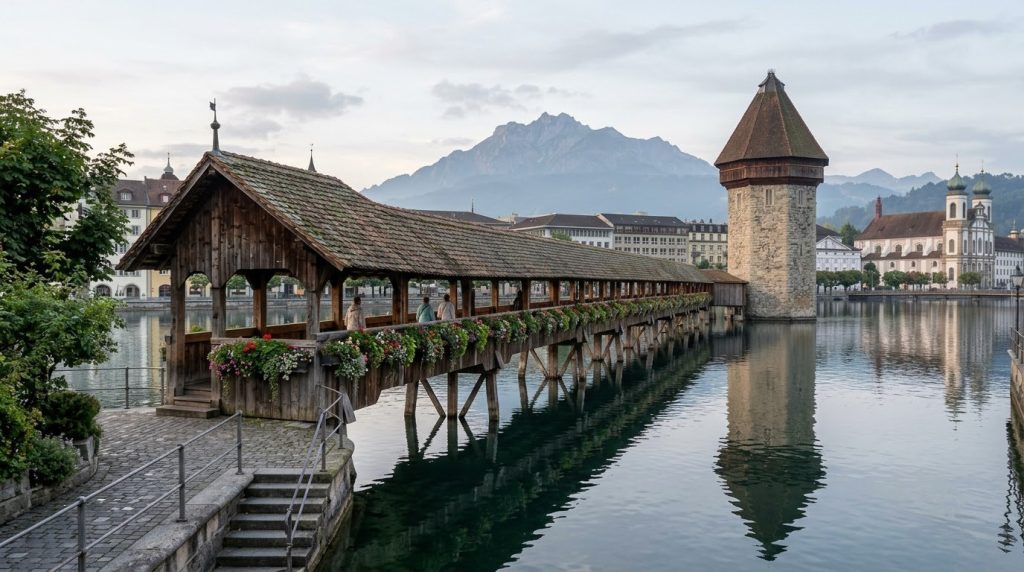
Yes, Switzerland is one of the safest countries you can visit: the US State Department rates it Level 1, the lowest of its 4 levels, and the 2026 Global Peace Index ranks it 3rd in the world. Violent crime against tourists is rare. The real risks are pickpockets at big train stations and, far more serious, the mountains.
Falls on hiking trails, sudden storms and avalanches are the bigger danger for most visitors.
| Risk | Reality | What to do |
|---|---|---|
| Pickpockets | Concentrated at Zurich HB, Geneva Cornavin and on busy trains | Zip bags, keep phones out of back pockets |
| Violent crime | Rare; 55 homicides nationwide in 2025 | Normal city precautions |
| Hiking falls | 8 in 10 mountain accidents are slips, trips and falls | Stick to trails that match your fitness, wear proper boots |
| Avalanches | About 24 deaths a year on average, mostly off-piste | Read the SLF bulletin, stay on marked runs |
| Weather | Conditions change fast, even in summer | Check MeteoSwiss before every hike |
| Rescue costs | Helicopter rescue averages CHF 4,500 | Buy insurance that covers mountain rescue |
The honest answer: crime is low, but not zero
Switzerland is not crime-free. The Federal Statistical Office recorded 554,963 criminal offences in 2025, down 1.5% on the previous year. Theft was the most common property crime at 154,041 cases, and pickpocketing fell 15.5%. You can read the official 2025 police crime statistics yourself.
The other side of the ledger: homicides rose to 55 in 2025, above the long-run average of 48, and serious violence climbed 8.1%. Most of that is domestic violence, not crime aimed at visitors.
The practical takeaway: walking home at 11 p.m. in most central areas is fine. Leaving your bag on a café chair is not.
Neighborhoods to avoid after dark (and where to sleep instead)
No Swiss city has true no-go zones, but a few areas get rowdier late at night.
Zurich: Langstrasse in District 4 is the nightlife and red-light strip, with drunk crowds after midnight. The streets around Zurich HB are the main pickpocket zone, and Niederdorf in the Old Town sees late-night theft. Seefeld and Enge, along the lake, are calmer bases.
Geneva: Pâquis, next to Cornavin station, is cheap and central, so many budget hotels sit there. It is also the red-light district, and theft and harassment rise after dark. Plainpalais can feel rough late on weekends. Eaux-Vives and the Vieille Ville (Old Town) are quieter.
Scams that actually happen in Switzerland
Swiss scams are small-scale and mostly about distraction:
– Station distraction theft. One person asks for directions or blocks a train door while a partner lifts your wallet, especially while you handle luggage. – Spilled drinks and long conversations. Canada’s official travel advice warns about people who spill something on you or keep you talking to separate you from your bags. – Fake petitions. A clipboard near tourist sights is cover for pocket checks. – ATM helpers. A stranger offers help and watches your PIN. Cover the keypad and decline.
Mountain safety: the risk most visitors underestimate
This is where Switzerland gets genuinely dangerous. According to Suva, the Swiss accident insurer, mountain hiking accidents more than doubled from just over 4,000 a year (2009–2013) to about 9,000 a year (2019–2023). In more than 8 of 10 cases, people tripped, slipped or fell.
The usual causes are poor footwear, inattention and overestimated fitness. Almost 15 hikers died between June and September 2025 alone, mostly in Bern, Valais and Ticino.
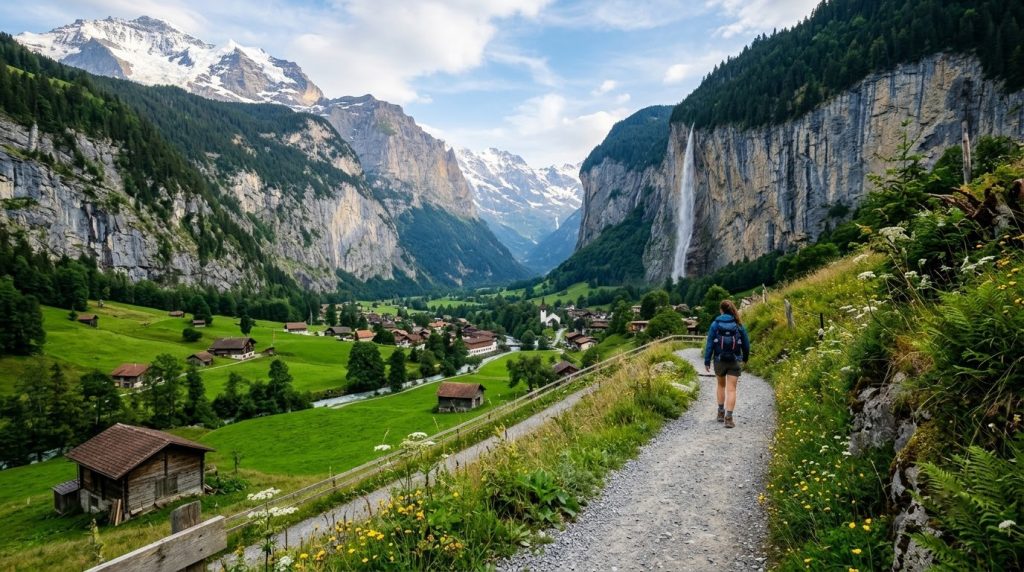
Rules that keep you out of those numbers:
– Check the weather the morning of every hike. The free MeteoSwiss app pushes thunderstorm warnings. Afternoon storms roll in fast in July and August, so start early.
Our guide to the best time to visit Switzerland covers which months have the most stable hiking weather. – In winter, read the avalanche bulletin. The SLF avalanche bulletin is the official Swiss forecast. SLF data shows an average of 24 avalanche deaths a year, and most avalanche accidents happen off-piste.
If you ski, stay on marked runs unless you hire a guide. – Build in a weather buffer. Clouds can hide the Jungfrau or Matterhorn for days. When you work out how many days in Switzerland you need, add at least one flexible day so you are not tempted onto a ridge in bad conditions.
Transport safety: trains, roads and cable cars
Swiss trains are clean, punctual and patrolled by the SBB transport police and security staff. The real problem is theft around luggage racks near the doors. Keep your bag in sight and your passport on your body.
Driving is safe but demanding. Canada’s travel advice notes winding mountain roads, mandatory winter tires in winter, a required highway vignette, and priority to the right at unmarked junctions, which surprises many American drivers.
Solo and female travelers
Switzerland is one of the easier countries in Europe for solo women. Trains run late, stations are lit and staffed, and harassment is uncommon outside nightlife zones like Langstrasse and Pâquis. There, watch your drink and take a tram or taxi home at 2 a.m.
Solo hikers face more risk than solo city walkers. Tell your hotel which trail you are taking, carry a charged phone, and download the Rega app (iRega) for emergency calls.
Who should think twice about a Switzerland trip
Inexperienced hikers chasing viral ridge photos should stick to easy trails. Off-piste skiers without avalanche training should hire a guide. And nobody should head into the mountains uninsured: a Rega helicopter mission averages CHF 4,500, or about USD 5,400 (converted at USD 1 = CHF 0.83), before specialists are added.
Switzerland is already one of Europe’s priciest destinations, as our breakdown of whether Switzerland is expensive shows, and an uninsured rescue can double your trip cost.
What to do in an emergency
Save these numbers before you land:
– 112: general emergency (works from any phone) – 117: police – 144: ambulance – 118: fire – 1414: Rega air rescue, which you can call directly for a mountain emergency (Rega emergency numbers)
If your passport is stolen, report it to the local police first; you need the police report for a replacement at the US Embassy in Bern.
Lake and river safety: Switzerland’s real swimming risk
Switzerland’s lakes and rivers look inviting, and locals genuinely do swim in them, most famously floating down the Rhine through Basel on a summer afternoon. That culture comes with real risk attached.
Around 40 to 50 people drown in Swiss waters every year, according to Swiss Lifesaving Society figures reported by Swiss public broadcaster SWI; 2025 recorded 43 drownings, with 38 of those in open water split roughly between lakes and rivers, and the society separately logs about 13,000 swimming-related accidents annually across the country.
Rivers carry the sharper risk. Cold water straight off glacier melt causes cold shock even in summer, currents and underwater suction around weirs and bridge pilings are often invisible from the surface, and a strong swimmer at home can still misjudge a river that looks calm but moves faster than it appears.
Basel’s own safety culture, built up since the 1980s, is a useful model to copy: locals use a sealed float bag such as a Wickelfisch to keep clothes and a phone dry while being carried downstream by the current rather than fighting it, and get out at marked steps rather than scrambling up a random bank.
If you want to swim in a Swiss lake or river, do what residents do: pick a spot with marked entry and exit points, check the water temperature rather than just the air temperature, never swim alone in a river, and treat any current stronger than a gentle drift as a reason to get out rather than push on.
Tourists are not immune to this risk, and visitors unfamiliar with how cold an alpine lake stays even in midsummer are often the ones caught out, since the surface can look like any inviting lake back home while the water underneath sits far colder than its appearance suggests.
If children are swimming, keep them within arm’s reach in open water rather than relying on a lifejacket alone, since Swiss lakes and rivers are rarely staffed with lifeguards outside a handful of official lido beaches.
Where to stay
Zurich (Seefeld or Enge): best for first-timers flying into Zurich and for anyone who wants an easy, low-stress city base with trains everywhere.
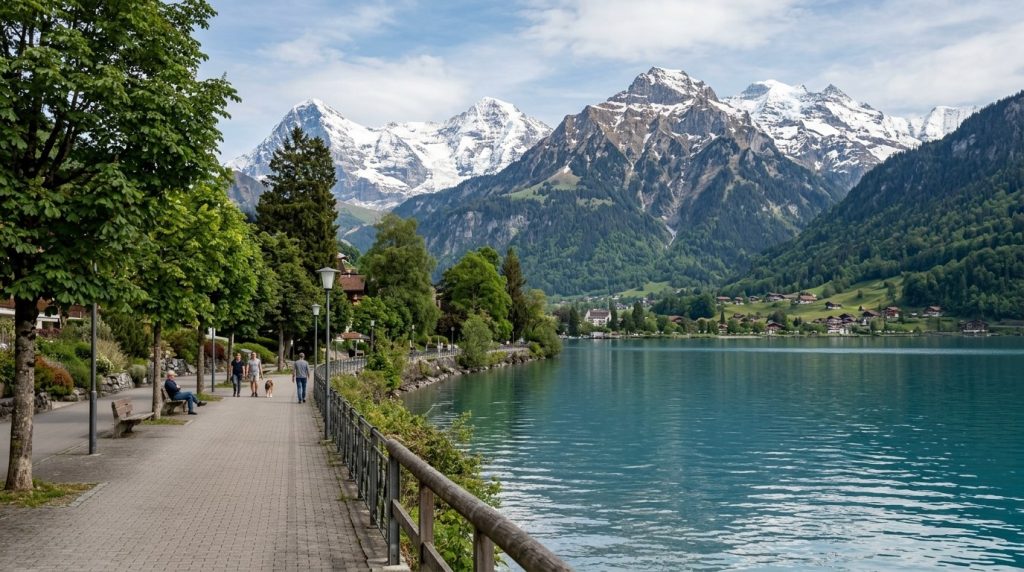
Lucerne: a compact, walkable lakeside town that suits couples and families, with day trips to Mount Pilatus and Rigi on well-maintained routes.
Interlaken or Lauterbrunnen: the right choice for hikers, with the Jungfrau region’s trails, lifts and villages on your doorstep. Pick these if you are following a Switzerland itinerary built around the Alps.
Find your Switzerland hotel on the map
Live prices from Booking, Airbnb and more — move the map or change dates to compare stays across Switzerland.
Frequently Asked Questions
Is it safe for Americans to travel to Switzerland right now?
Yes. The US State Department keeps Switzerland at Level 1, “Exercise normal precautions,” its lowest advisory level. Canada’s government gives the same advice. The main issues for Americans are pickpocketing at major train stations and mountain hazards such as falls, sudden weather changes and avalanches, not crime or terrorism targeting visitors.
Why is crime so low in Switzerland?
Crime is low, not absent: police recorded 554,963 offences in 2025, mostly theft. Violent crime against strangers is uncommon, and the 2026 Global Peace Index ranks Switzerland 3rd in the world, behind only Iceland and New Zealand. Staffed, patrolled public transport also keeps the places tourists spend time orderly.
Is hiking in Switzerland dangerous?
It can be. Mountain hiking accidents now average about 9,000 a year, and more than 8 in 10 involve slips, trips or falls. Most are preventable. Wear proper boots, choose trails that match your fitness, check the MeteoSwiss forecast, start early to avoid afternoon storms and carry the Rega app for emergencies.
What is the emergency number in Switzerland?
Dial 112 for any emergency, 117 for police, 144 for an ambulance and 118 for fire. For mountain emergencies, call Rega air rescue directly on 1414. If you are robbed, file a police report right away, because insurers and passport replacement both require one.