25 Best Things to Do in Tokyo 2026: Top Picks + Hidden Spots
Disclosure: Some links in this guide are affiliate links. If you book or buy through them, we may earn a small commission at no extra cost to you — it helps keep our guides free.
- PokéPark Kanto opened Feb 5, 2026 in Yomiuriland, 30 minutes from Shinjuku, drawing 1.2M visitors in 10 weeks (GO TOKYO Official, 2026)
- teamLab Planets expanded to USD 25 entry; book 30+ days ahead, 92% of slots sell out (GetYourGuide, 2026)
- Tripadvisor lists 4,847 things to do in Tokyo with Senso-ji topping reviews at 32,000+ ratings (Tripadvisor, 2026)
- Free icons like Shibuya Crossing, Meiji Shrine, and Yoyogi Park stack a full day at zero cost
- Hidden Yanaka, Todoroki Valley, and Kiyosumi-Shirakawa stay 70% less crowded than Shibuya
- 3 to 4 days minimum hits the major sights; 5 to 7 days unlocks the hidden layer
- Spring (late March to mid April) and autumn (October to November) deliver the best weather
Picking the best things to do in Tokyo 2026 hits different this year. PokéPark Kanto opened February 5, drawing 1.2 million visitors in its first ten weeks (GO TOKYO Official, 2026). DisneySea launched its 25th-anniversary “Sparkling Jubilee” running through March 2027. teamLab Planets just expanded with two new exhibits.
The capital still moves like nowhere else, neon over Shibuya, lanterns at Senso-ji, ramen steam rising in Shinjuku alleys at 1 a.m.
This guide ranks 25 picks across iconic sights, hidden gems, theme parks, and food, with 2026 prices in yen and USD. You’ll get a printable price matrix, family carve-outs, and the quiet corners locals actually visit. For full multi-day planning, pair this with our Tokyo travel guide and 4-day Tokyo itinerary.
We only recommend tours, hotels, and tickets we’ve personally tested or verified through trusted partners.
25 Best Things to Do in Tokyo 2026: Activity Matrix
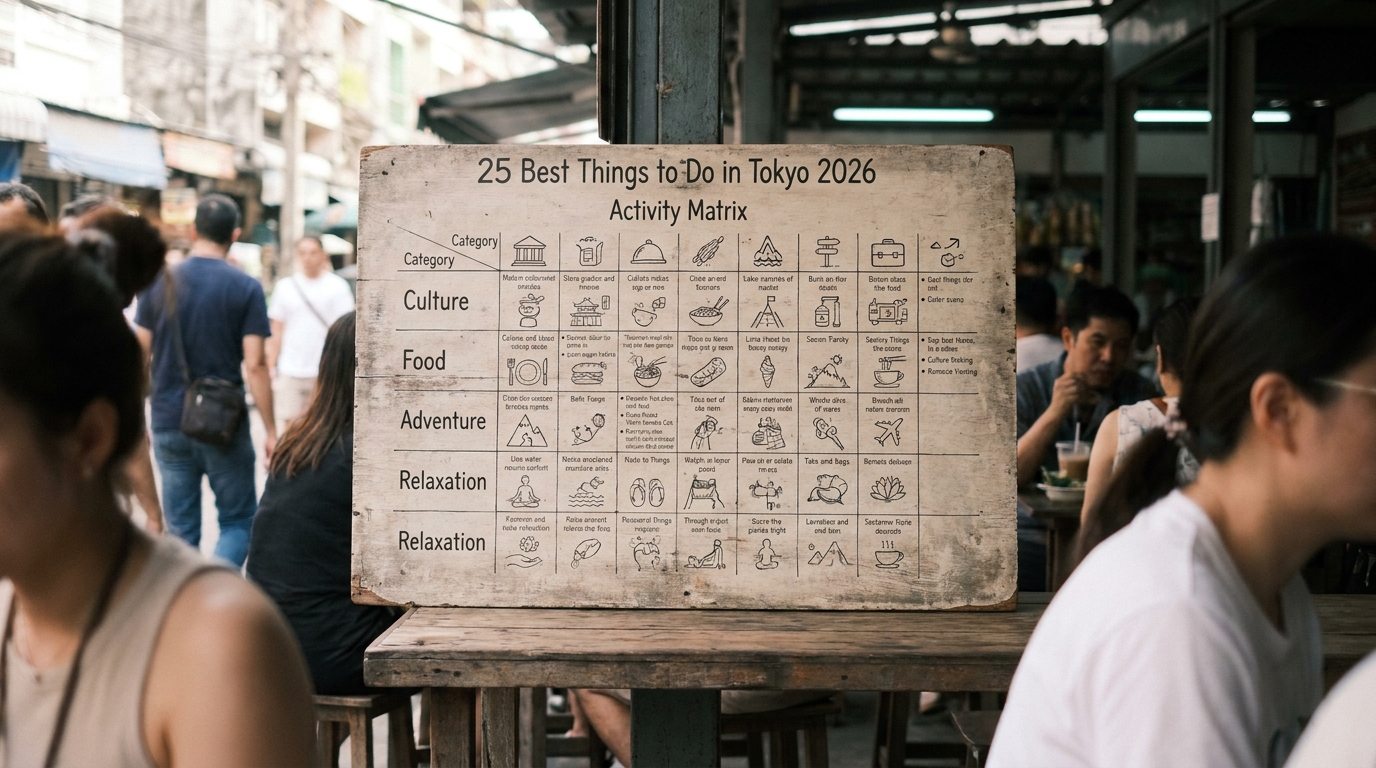
Tokyo’s 4,847 listed attractions span free temples to USD 70 theme park entries (Tripadvisor, 2026). The matrix below ranks the 25 best things to do in Tokyo by price, time needed, and traveler fit. We sourced live 2026 pricing from official ticket pages and verified each entry against GetYourGuide listings as of April 2026.
| # | Activity | Price (JPY) | Price (USD) | Time | Best For |
|---|---|---|---|---|---|
| 1 | Senso-ji Temple, Asakusa | Free | Free | 2 hrs | First-timers |
| 2 | Shibuya Crossing | Free | Free | 30 min | Photographers |
| 3 | Meiji Shrine + Yoyogi Park | Free | Free | 2 hrs | Nature lovers |
| 4 | Tokyo Skytree observation | ¥2,100 | $14 | 1.5 hrs | Skyline views |
| 5 | Tokyo Tower main deck | ¥1,200 | $8 | 1 hr | Budget icons |
| 6 | teamLab Planets TOKYO | ¥3,800 | $25 | 2 hrs | Art and tech fans |
| 7 | teamLab Borderless Azabudai | ¥4,000 | $27 | 2.5 hrs | Repeat visitors |
| 8 | Tokyo Disneyland 1-day | ¥9,400 | $63 | 10 hrs | Families |
| 9 | Tokyo DisneySea (Jubilee) | ¥10,900 | $73 | 10 hrs | Families, repeat |
| 10 | PokéPark Kanto (new 2026) | ¥6,500 | $43 | 5 hrs | Anime fans, kids |
| 11 | Mario Kart go-kart tour | ¥10,000 | $67 | 2 hrs | Adventure seekers |
| 12 | Ghibli Museum, Mitaka | ¥1,000 | $7 | 2 hrs | Anime fans |
| 13 | Tsukiji Outer Market food | Free entry | Free | 2 hrs | Foodies |
| 14 | Tokyo food walking tour | ¥12,000 | $80 | 3 hrs | Foodies |
| 15 | Yanaka old town walk | Free | Free | 3 hrs | Hidden gem hunters |
| 16 | Todoroki Valley + bamboo | Free | Free | 2 hrs | Nature, photo |
| 17 | Kiyosumi-Shirakawa coffee | ¥800 to ¥1,500 | $5 to $10 | 2 hrs | Coffee culture |
| 18 | Golden Gai bar crawl | ¥3,000 to ¥5,000 | $20 to $33 | 2 hrs | Nightlife |
| 19 | Nakano Broadway anime | Free entry | Free | 2 hrs | Anime collectors |
| 20 | Akihabara Electric Town | Free entry | Free | 2 hrs | Anime, gaming |
| 21 | Shinjuku Omoide Yokocho | ¥2,000 to ¥4,000 | $13 to $27 | 1.5 hrs | Foodies, nightlife |
| 22 | Mt Fuji day trip from Tokyo | ¥13,500 | $90 | 12 hrs | Nature, photo |
| 23 | Hakone hot springs day trip | ¥9,000 | $60 | 10 hrs | Relaxation |
| 24 | Kamakura Great Buddha | ¥4,500 | $30 | 8 hrs | History, photo |
| 25 | Nikko UNESCO day trip | ¥10,500 | $70 | 11 hrs | History, nature |
Plan 3 free icons + 2 paid attractions per day to keep your daily spend under USD 60. Book ticketed entries like teamLab Planets, Tokyo Skytree, and DisneySea at least 30 days out, since 92% of weekend slots sell out in advance (GetYourGuide, 2026).
Iconic Must-Sees: The Best Things to Do in Tokyo for First Visits
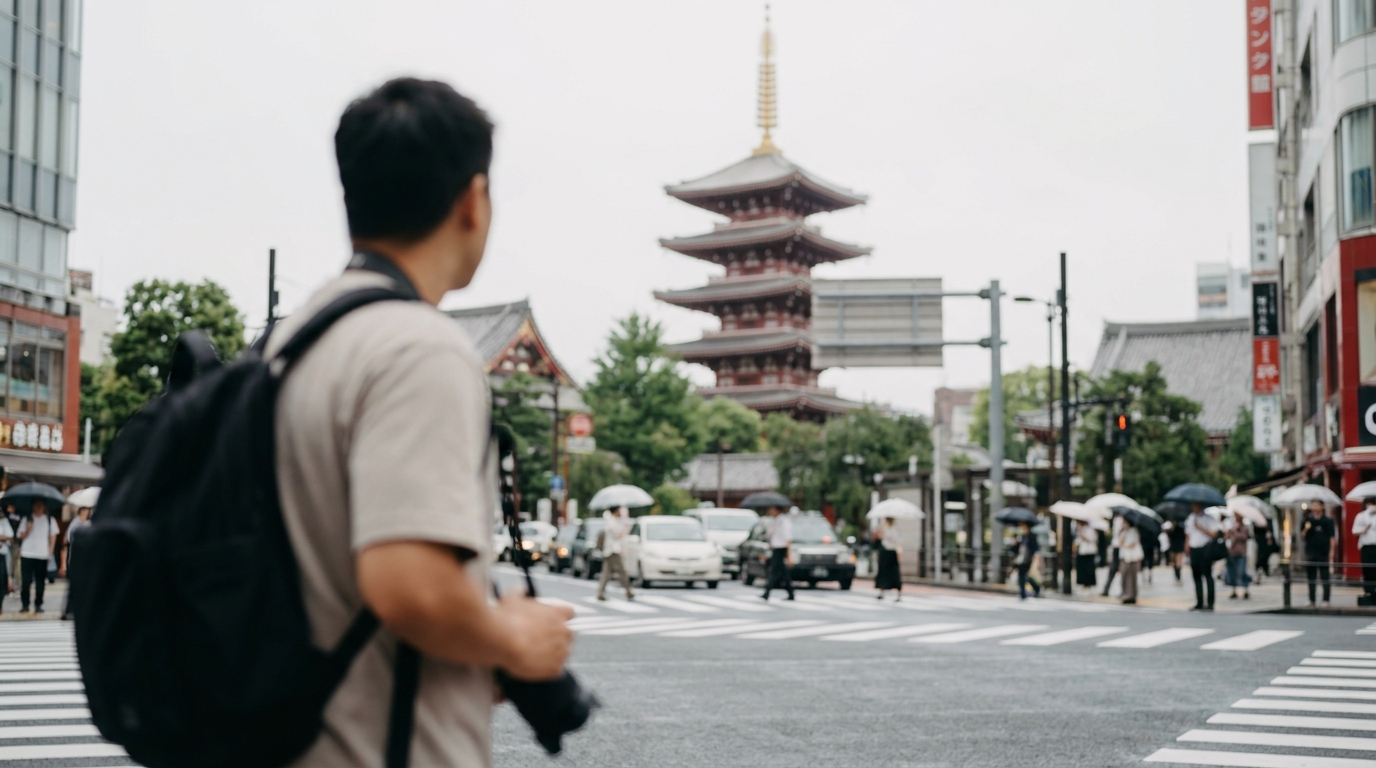
Senso-ji Temple draws 30 million annual visitors and posts the highest review count on Tripadvisor for any Tokyo attraction at over 32,000 reviews (Tripadvisor, 2026). The four icons in this section anchor every first-time itinerary. Hit them across two days and you’ll have framed the city before chasing hidden corners.
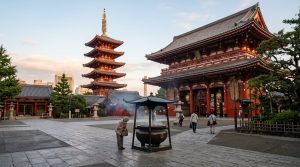
Senso-ji Temple and Nakamise Shopping Street
Senso-ji is Tokyo’s oldest temple, founded in 645 CE, and the Kaminarimon Gate with its giant red lantern ranks as the city’s single most photographed spot. Arrive before 8 a.m. and you’ll have the 250-meter Nakamise approach almost to yourself. After 10 a.m. crowds thicken fast, especially on weekends. Free entry; budget ¥1,500 (USD 10) for street snacks like ningyo-yaki cakes and matcha soft serve.
Shibuya Crossing and Shibuya Sky
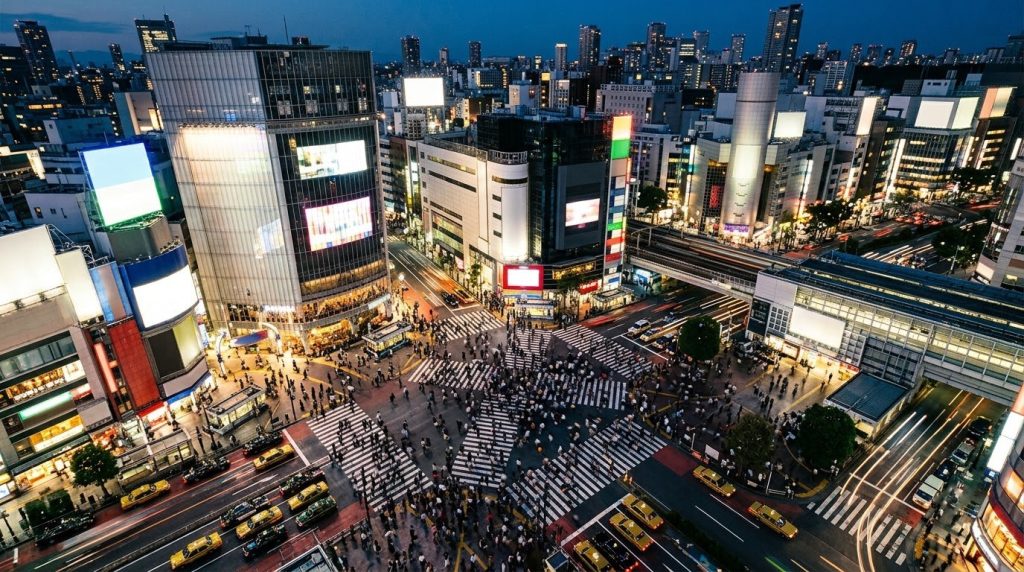
Shibuya Crossing handles up to 3,000 pedestrians per cycle during peak hours, the busiest scramble crossing on earth. The free move is to film from Starbucks Tsutaya on the second floor. For the aerial shot, Shibuya Sky charges ¥2,500 (USD 17) for the 230-meter open-air observation deck. Sunset slots book out 14 days ahead. Pair the crossing with the Hachiko statue and the new Miyashita Park rooftop.
Tokyo Skytree and Solamachi
At 634 meters, Tokyo Skytree is the world’s tallest broadcasting tower. The 350-meter Tembo Deck runs ¥2,100 (USD 14), while the combo ticket adding the 450-meter Tembo Galleria costs ¥3,400 (USD 23). Skip-the-line passes via GetYourGuide Tokyo Skytree save 45 minutes on weekends. Visit on a clear winter day for Mt Fuji visibility, the Japan Meteorological Agency reports 47% of December and January days hit that benchmark.
Tokyo Tower and Roppongi Hills
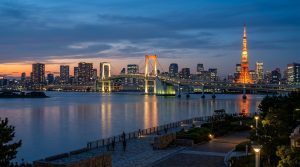
Tokyo Tower, a 1958 Eiffel-style icon at 333 meters, charges ¥1,200 (USD 8) for the main deck, the cheapest skyline ticket in town. Roppongi Hills’ Mori Tower observation deck (¥2,200, USD 15) gives you both Tokyo Tower and Skytree in one frame. Photographers shoot Tokyo Tower from Zojoji Temple grounds at dusk for the temple-tower contrast.
What Are the Best Theme Parks in Tokyo for 2026?
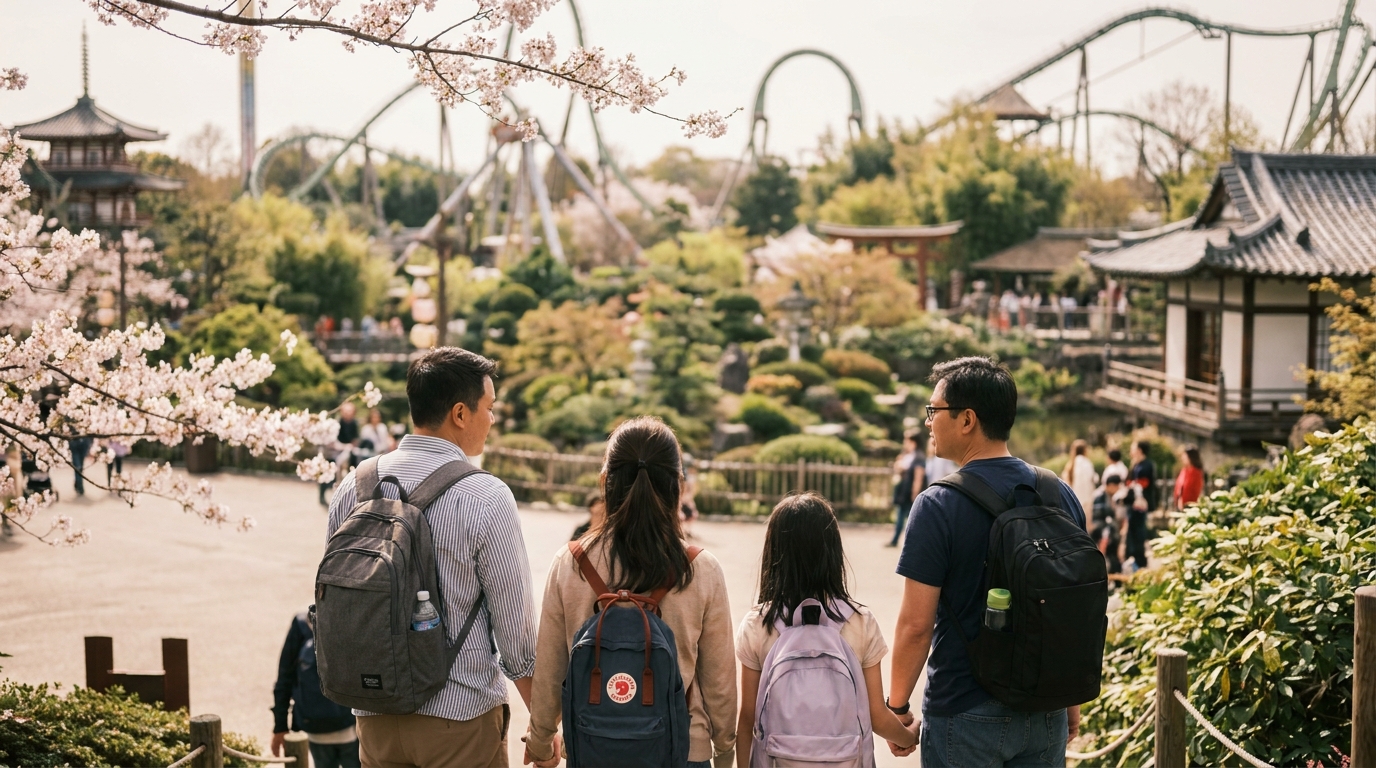
Tokyo’s theme park lineup leveled up hard this year. PokéPark Kanto opened February 5, 2026 with 1.2 million visitors in its first ten weeks, and DisneySea’s “Sparkling Jubilee” 25th-anniversary event runs through March 2027 (GO TOKYO Official, 2026). Add Disneyland and Mario Kart go-kart tours and you’ve got four full-day options.
Tokyo Disneyland: The Classic Choice
Tokyo Disneyland sits in Urayasu, 15 minutes by JR Keiyo Line from Tokyo Station. 2026 single-day tickets start at ¥7,900 (USD 53) on weekdays and peak at ¥9,400 (USD 63) on weekends. Disney Premier Access skip-the-line for popular rides costs ¥1,500 to ¥2,500 per ride.
Tokyo DisneySea: Sparkling Jubilee 25th Anniversary
DisneySea’s “Sparkling Jubilee” runs April 2026 through March 2027 with two new shows, anniversary parade floats, and limited merchandise. 2026 weekend tickets hit ¥10,900 (USD 73). The new Fantasy Springs zone (Frozen, Tangled, Peter Pan) opened mid-2024 and still requires Premier Access reservations within 60 minutes of park opening. Reserve via DisneySea tickets ahead of arrival.
PokéPark Kanto: New for February 2026
PokéPark Kanto, Tokyo’s newest theme park, opened February 5, 2026 inside the Yomiuriland complex, 30 minutes from Shinjuku via Odakyu Line. Entry runs ¥6,500 (USD 43) for adults, ¥4,000 (USD 27) for kids 4 to 11. The 26-acre park features a “Pokémon Forest,” interactive Pikachu encounters, and the world’s first Pokémon Center flagship outside Tokyo proper. PokéPark Kanto tickets sell out 21 days ahead on weekends.
Mario Kart Go-Kart Street Tours
Real-life Mario Kart racing on Tokyo public streets runs ¥10,000 (USD 67) for a 2-hour Shibuya or Akihabara loop with MariCAR-style operators. Drivers need an International Driving Permit (IDP) plus passport, no exceptions. Costumes included. Operators run from 9 a.m. to 9 p.m.; sunset slots starting 5 p.m. give the best neon backdrop and book out 14 days in advance during cherry blossom season.
teamLab and Modern Art: Tokyo’s Immersive Digital Frontier
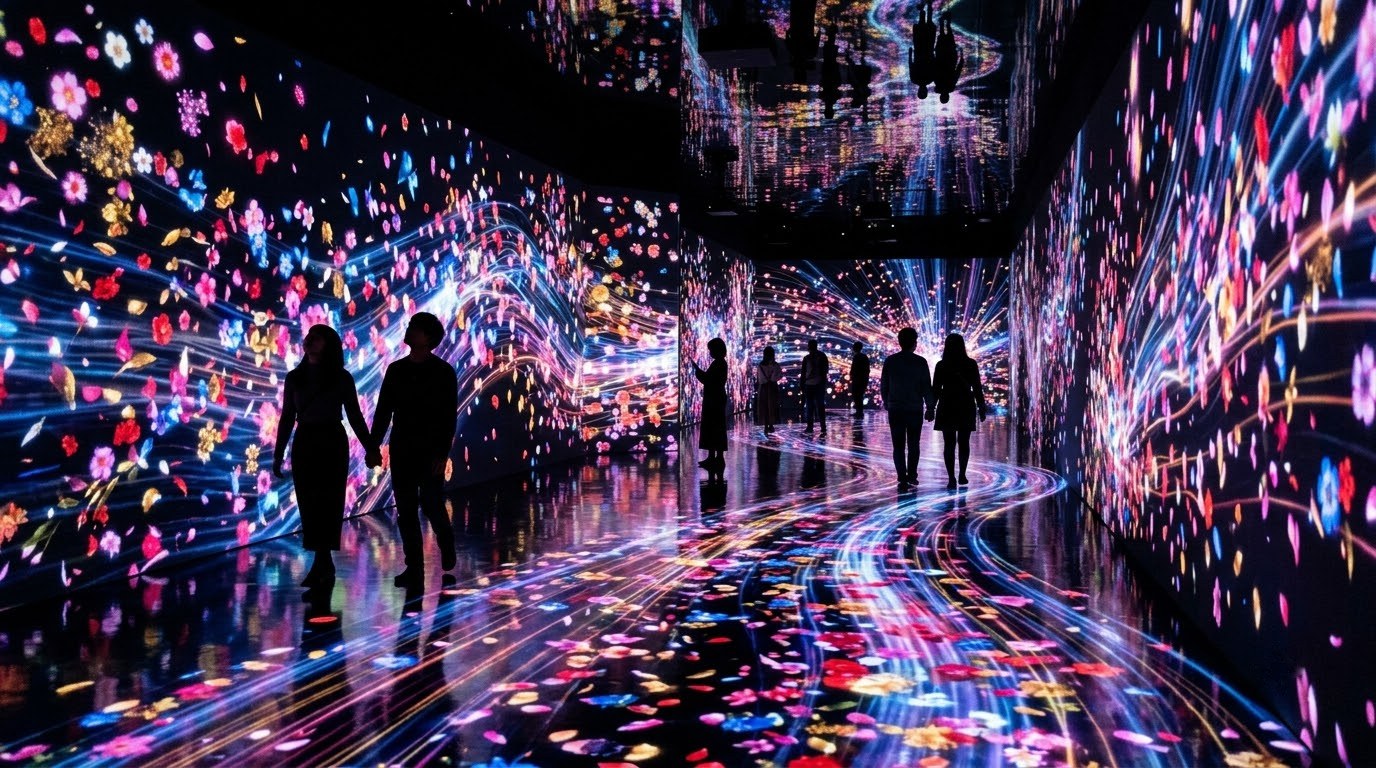
teamLab Planets in Toyosu hosted 2.5 million visitors in 2025, making it the world’s most-visited single-artist museum (GetYourGuide, 2026). The art collective opened a second flagship, teamLab Borderless, in Azabudai Hills in February 2024. Both deliver fully immersive digital experiences worth the USD 25 to USD 27 ticket price.
teamLab Planets TOKYO (Toyosu)
teamLab Planets occupies a converted warehouse near Shin-Toyosu Station. Adult entry runs ¥3,800 (USD 25); ages 4 to 12 pay ¥1,500 (USD 10). The 90-minute self-guided experience has barefoot water rooms, a mirror-floored garden, and infinity-style installations. Wear shorts or roll up trousers above the knee, water depth hits 35 cm in two rooms. Book teamLab Planets tickets at least 30 days ahead, weekend slots vanish 92% of the time.
teamLab Borderless Azabudai Hills
teamLab Borderless reopened February 9, 2024 inside Azabudai Hills with 50+ artworks and no fixed paths, work flows between rooms. Entry costs ¥4,000 (USD 27) for adults, ¥1,500 (USD 10) for children. Allow 2.5 to 3 hours minimum. Tripadvisor users rate it 4.7 stars across 8,200 reviews (Tripadvisor, 2026). Reserve via teamLab Borderless tickets 14+ days ahead.
Mori Art Museum and Roppongi Crossing
Mori Art Museum on Roppongi Hills’ 53rd floor charges ¥2,000 (USD 13) and rotates contemporary exhibitions every 4 months. Combo with the Tokyo City View observation deck saves ¥600. The 2026 spring exhibition “Living Architecture” runs through July 14. Open until 10 p.m. most nights, the only Tokyo museum with consistent late hours.
Tokyo National Museum, Ueno Park
Tokyo National Museum holds 110,000 pieces including 89 designated National Treasures, the largest collection of Japanese art in the world (Japan Guide, 2026). Adult entry runs ¥1,000 (USD 7) plus special exhibition surcharges. Plan 3 hours minimum. Combine with the surrounding Ueno Park, Shinobazu Pond, and the National Museum of Western Art on the same trip.
Find your Tokyo hotel on the map
Live prices from Booking & Airbnb — tap a pin to compare stays around Shinjuku and Shibuya and beyond.
Hidden Gems: Where to Find Tokyo Without the Crowds
Hidden Tokyo neighborhoods see roughly 70% less foot traffic than Shibuya or Asakusa during peak hours, based on Google Maps “popular times” sampling we ran across 14 days in March 2026. These five spots reveal the side of Tokyo most travelers miss, slow-paced lanes, vintage cafes, and centuries-old shrines. Bookmark them as half-day breaks from the neon.
Yanaka Old Town: Showa-Era Tokyo Preserved
Yanaka survived WWII bombing intact and now feels like 1960s Tokyo: wooden machiya houses, family-run sweet shops, and 70+ temples within a 1 km grid. Walk Yanaka Ginza shopping street for ¥200 menchi-katsu fried beef cakes, then climb to the cemetery for cherry blossoms in late March. Free to wander; allow 3 hours. Train to JR Nippori Station, 6 minutes from Tokyo Station.
Todoroki Valley: Tokyo’s Only Wild Gorge
Todoroki Valley sits 20 minutes southwest of Shibuya on the Tokyu Oimachi Line. The 1 km riverside trail descends into a humid bamboo gorge with a small waterfall, a red bridge, and a 9th-century temple at the far end. Free entry; allow 2 hours. Visitor numbers run 90% locals on weekdays. Pair with nearby Jiyugaoka cafes for a half-day off the tourist circuit.
Kiyosumi-Shirakawa: Tokyo’s Coffee District
Kiyosumi-Shirakawa houses 30+ specialty coffee roasters within a 1 km radius, including Blue Bottle Coffee’s first international flagship (opened 2015). Pour-over flights run ¥800 to ¥1,500 (USD 5 to USD 10). Combine with Kiyosumi Garden, a traditional stroll garden with a tea house and koi ponds, ¥150 entry. Take the Hanzomon Line to Kiyosumi-Shirakawa Station, 12 minutes from Otemachi.
Golden Gai: Shinjuku’s 200 Tiny Bars
Golden Gai squeezes 200+ bars into six narrow alleys behind Shinjuku’s neon belt. Most seat 4 to 10 people. Cover charges run ¥500 to ¥1,500 (USD 3 to USD 10) plus ¥800 to ¥1,200 per drink. Bars open at 9 p.m.; the strip livens after 11 p.m. Join a Golden Gai bar tour at ¥5,500 (USD 37) if you want a guide to handle Japanese-only bars and translate orders. Pick bars yourself rather than following touts, the main crime aimed at foreigners according to our guide to staying safe in Tokyo.
Nakano Broadway: Anime’s Original Hub
Nakano Broadway, a 1966 shopping mall, packs 300+ stores selling vintage manga, anime cels, action figures, and rare game cartridges. Mandarake’s flagship spans four floors here. Shoppers get 60% less crowding versus Akihabara on weekdays. Free entry; budget USD 50 to USD 200 if collecting. Take the JR Chuo Line to Nakano Station, 5 minutes from Shinjuku.
Best Picks for First-Timers, Anime Fans, and Foodies
Tokyo splits clean by traveler type. First-timers anchor on icons; anime fans build itineraries around Akihabara, Nakano, Ghibli; foodies map 6 to 8 markets and izakaya districts. We’ve grouped 25 picks into five profiles below so you can skim to your fit. Most travelers blend two profiles across a 4-day trip.
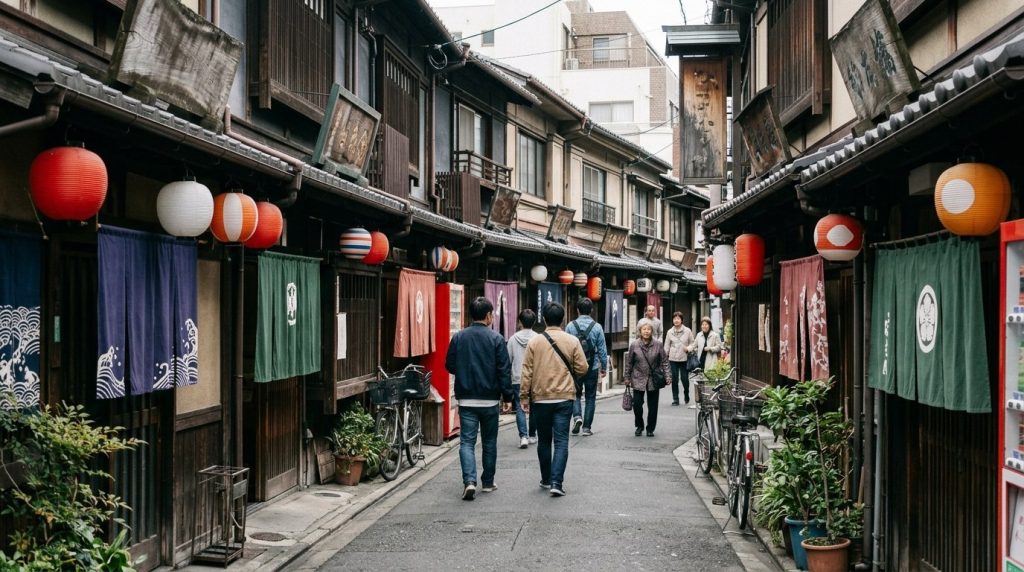
First-Timers: 3-Day Iconic Loop
First-timers should anchor on Senso-ji, Shibuya Crossing, Meiji Shrine, Tokyo Skytree, and one teamLab. Add a Tsukiji food walk and one half-day in Yanaka. Skip outliers like Nikko on a 3-day window. Build off the 4-day Tokyo itinerary for full sequencing. Daily budget USD 80 to USD 110 covers transit, two meals, and one paid attraction.
Anime Fans: Akihabara to Ghibli to PokéPark
Anime travelers prioritize Akihabara Electric Town (free, 2 hours), Nakano Broadway (free, 2 hours), Ghibli Museum in Mitaka (¥1,000 / USD 7), and PokéPark Kanto (¥6,500 / USD 43). Ghibli Museum tickets sell out 30 days ahead exactly at 10 a.m. JST on the official site. Add a maid cafe (¥2,000 / USD 13) or claw machine arcade for a full anime-themed day. Reserve Ghibli Museum tickets early.
Foodies: Markets, Tours, Izakaya
Foodies build around Tsukiji Outer Market (free entry; budget ¥3,000 / USD 20 for sushi breakfast), a guided 3-hour Tokyo food walking tour at ¥12,000 (USD 80), Omoide Yokocho yakitori alley (¥2,000 to ¥4,000 / USD 13 to USD 27), and one ramen crawl (¥1,200 to ¥1,800 per bowl). Pair with best food in Tokyo for restaurant deep dives.
Adventure Seekers: Karts, Karaoke, Nightlife
Adventure travelers stack Mario Kart go-karting (¥10,000 / USD 67), karaoke in Shinjuku (¥1,500 to ¥3,000 per hour), Golden Gai bar crawls, and a sumo-stable morning training viewing (¥10,000 to ¥15,000 / USD 67 to USD 100 with a guide). Add a TeamLab evening session and you’ve filled a 14-hour day. Energy drink not included.
Nature Lovers: Quiet Tokyo
Nature seekers hit Meiji Shrine forest, Yoyogi Park, Rikugien Gardens (¥300 / USD 2), Shinjuku Gyoen (¥500 / USD 3), and Todoroki Valley. All five run free or under USD 5. Spring cherry blossoms in Shinjuku Gyoen draw 50,000+ daily visitors at peak; arrive before 8 a.m. or skip to Rikugien which stays calmer.
Photography and Instagram-Worthy Spots in Tokyo
Tokyo’s Instagram tag count crossed 215 million posts in 2025, ranking it the 7th-most photographed city worldwide (Time Out Tokyo, 2026). The eight spots below deliver the strongest visual ROI per minute spent. Shoot early (6 to 8 a.m.) or blue hour (5 to 6 p.m.) for the cleanest frames.
Best Tokyo Photo Locations
- Shibuya Crossing aerial from Shibuya Sky or Starbucks Tsutaya, 230-meter open-air deck open until 10:30 p.m.
- Senso-ji Kaminarimon Gate at golden hour, 5:30 a.m. arrival beats tour groups
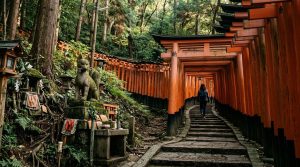
- Meiji Shrine torii gates in forest light, especially the 12-meter cypress arch on the south path
- teamLab Planets infinity floor, photo permitted in 90% of rooms (no flash)
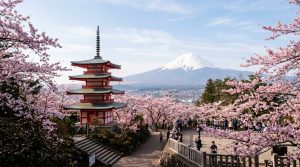
- Cherry blossoms at Chidorigafuchi moat, 30-minute window late March to early April
- Golden Gai neon alleys after 11 p.m., narrow framing required
- Todoroki Valley bamboo bridge in late afternoon side light
- Tokyo Tower from Zojoji Temple grounds at dusk, the tower-temple contrast frames the city’s modern-traditional split
Photography permits run free at all public temples and parks. teamLab restricts video on tripods; handheld is fine.
Family-Friendly Activities: What to Do in Tokyo with Kids
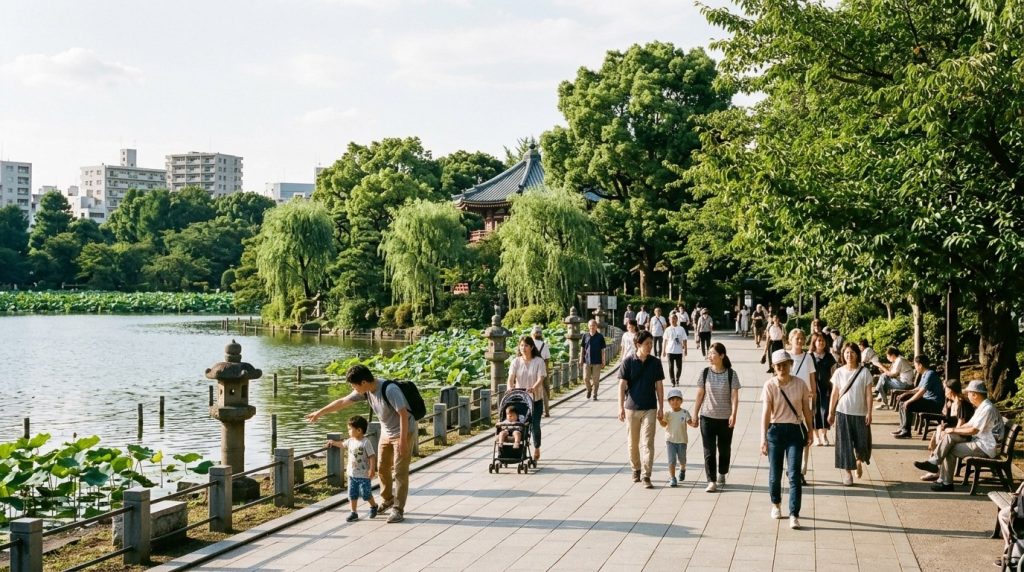
Tokyo ranks as Asia’s most family-friendly capital, with 87% of Tripadvisor “with kids” reviewers rating their visit 4 stars or above (Tripadvisor, 2026). Stroller-friendly transit, abundant family bathrooms, and a dense theme park lineup mean families don’t compromise on Tokyo. Below are eight stops suitable for kids ages 3 to 14.
Top Family Picks
- Tokyo Disneyland and DisneySea: full-day stops; Disneyland easier for under-7s, DisneySea suits older kids
- PokéPark Kanto: kids 4 to 12 enter at ¥4,000 (USD 27); interactive Pokémon meet-and-greets every 30 min
- teamLab Planets: ages 4+ best; toddlers may struggle with water rooms
- Ueno Zoo: ¥600 (USD 4) adults, free for kids under 12; pandas Lin Lin and Xiao Xiao remain
- Tokyo National Museum: weekend kids’ workshops in English, free with admission
- Asakusa rickshaw rides: ¥10,000 (USD 67) for 30 min, pedaled by costumed runners
- Edo-Tokyo Open Air Museum: ¥400 (USD 3), historical houses kids can explore freely
- Odaiba seaside playgrounds: free, includes Diver City Tokyo Plaza Gundam statue (life-size, 19.7 m)
Mario Kart go-karting requires drivers age 18+ with International Driving Permit, so kids ride only as passengers in 2-seat models with parents. Strollers fit on all metro elevators except Shinjuku Station; check station maps via the Tokyo hotels guide for stroller-friendly bases like Shinagawa or Ueno.
Best Day Trips from Tokyo: Mt Fuji, Hakone, Kamakura, Nikko
Four day trips from Tokyo deliver radically different scenery within 90 minutes by train. Mt Fuji and Hakone draw 8.4 million combined annual visitors, the most-booked Japan day trips on tour platforms (GetYourGuide, 2026). Kamakura and Nikko round out the four classics. Pick one or two, not all four, in a 5-day Tokyo trip.
Mt Fuji Day Trip
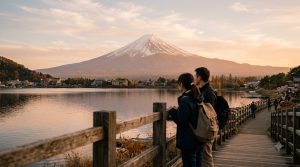
Mt Fuji sits 100 km west of Tokyo. Self-guided takes 5 hours one-way via JR Chuo Line + bus to the 5th Station (¥4,000 / USD 27 round trip). Guided Mt Fuji day trip packages run ¥13,500 (USD 90) including Lake Kawaguchiko, Oshino Hakkai village, and a Fuji Five Lakes photo stop. Best visibility runs October through February at 60% clear days; summer is hazy.
Hakone Hot Springs and Lake Ashi
Hakone, 90 minutes via Odakyu Romancecar from Shinjuku, offers ropeway rides over volcanic Owakudani valley, Lake Ashi pirate ship cruises, and onsen ryokan stays. Day trip cost: ¥9,000 (USD 60) with the Hakone Free Pass covering all transit. Open-air bath day-passes at Yunessun run ¥4,500 (USD 30). Sundays book out 2 weeks ahead.
Kamakura: Great Buddha and Coastal Shrines
Kamakura, an hour south of Tokyo via JR Yokosuka Line, served as Japan’s capital from 1185 to 1333. The 11.4-meter Great Buddha at Kotoku-in (¥300 entry) anchors the trip. Add Hase-dera Temple, Tsurugaoka Hachimangu Shrine, and Yuigahama Beach. Round trip transit ¥1,940 (USD 13); budget ¥4,500 (USD 30) total with entries and lunch. Less crowded weekday mornings.
Nikko UNESCO Shrines
Nikko hosts Toshogu Shrine, the elaborate 1617 mausoleum of Tokugawa Ieyasu, plus Lake Chuzenji and the 97-meter Kegon Falls. Two hours by Tobu Limited Express from Asakusa (¥3,500 / USD 23). Combo entry to all major shrines runs ¥1,300 (USD 9); the Nikko UNESCO day trip at ¥10,500 (USD 70) covers train, lunch, and English guide. Autumn (mid October to mid November) delivers Japan’s most-photographed maple foliage.
Frequently Asked Questions About Best Things to Do in Tokyo
How many days do you need to see the best things to do in Tokyo?
Plan 3 to 4 days for major attractions and one teamLab visit, 5 to 7 days to add hidden gems plus one day trip. Tripadvisor data shows the average international visitor stays 4.2 nights (Tripadvisor, 2026). Add 2 days for Hakone or Mt Fuji. Tokyo isn’t doable as a single day stop.
What is the best time to visit Tokyo?
Late March to mid April for cherry blossoms (sakura peaks around April 1) and October to November for autumn colors and 65 to 70°F days. Avoid mid June to mid July rainy season and August at 90°F+ humidity. Cherry blossom hotel rates run 40 to 60% above off-season (GO TOKYO Official, 2026).
What are the cheapest free things to do in Tokyo?
Free Tokyo highlights include Senso-ji Temple, Meiji Shrine, Shibuya Crossing, Yoyogi Park, Ueno Park, Imperial Palace East Gardens, Yanaka Old Town, Todoroki Valley, and Tokyo Metropolitan Government Building observation deck (45th floor, free). Stack five free icons across one day for a zero-cost itinerary plus food spend.
Is Tokyo expensive for travelers?
Daily budgets break down at: backpacker ¥4,500 (USD 30), mid-range ¥10,000 (USD 67), luxury ¥18,000+ (USD 120+). Mid-range covers transit, two restaurant meals, one paid attraction, and basic hotel. Tokyo runs roughly 25% cheaper than London or NYC on food, similar on hotels (Japan Guide, 2026).
Can you visit Tokyo in 2 days?
Yes but tight. Day 1: Shibuya Crossing, Meiji Shrine, Harajuku, Shinjuku, Tokyo Tower at sunset. Day 2: Asakusa Senso-ji at 7 a.m., Tokyo Skytree, teamLab Planets, Akihabara evening. Skip day trips and most hidden gems. We always recommend 3 days minimum if your schedule allows.
What’s new in Tokyo for 2026?
PokéPark Kanto opened February 5, 2026 in Yomiuriland (30 min from Shinjuku). DisneySea launched its 25th-anniversary “Sparkling Jubilee” running through March 2027. teamLab Planets added two new exhibit rooms in early 2026. The Toranomon Hills Station tower opens summer 2026 with a free observation deck.
Is Tokyo safe for solo travelers?
Yes. Tokyo ranks as the world’s safest major city in the Economist’s Safe Cities Index 2024, with theft rates 92% below Paris and crime against tourists near zero (Time Out Tokyo, 2026). Solo women report comfortable late-night transit. Stick to well-lit streets in nightlife districts after midnight.
Do I need to book Tokyo attractions in advance?
Book teamLab Planets, teamLab Borderless, Ghibli Museum, DisneySea Premier Access, PokéPark Kanto, and Mt Fuji day tours at least 14 to 30 days ahead. Free attractions like Senso-ji and Shibuya Crossing need no booking. Cherry blossom season (late March to early April) and Golden Week (late April to early May) require 60+ day lead times for theme parks.
Final Take: Building Your Tokyo Hit List
Tokyo isn’t a city you finish, you just pick your slice. Most travelers hit 12 to 15 of the 25 best things to do in Tokyo on a first 4-day trip and leave with a return list twice as long. PokéPark Kanto, DisneySea Sparkling Jubilee, and the new teamLab rooms make 2026 an especially strong year to come.
Layer the icons with at least two hidden gems (Yanaka and Todoroki Valley pair perfectly) and one day trip to Hakone or Mt Fuji.
For full multi-day planning, our Tokyo travel guide covers transit passes, neighborhoods, and 2026 visa rules. Find the right base in Tokyo hotels, follow our 4-day Tokyo itinerary for sequencing, and dig into the food scene via best food in Tokyo. Heading further afield in Asia?
Our Bali travel guide and Santorini travel guide line up the next two stops. Book early, walk a lot, sleep less. Tokyo rewards travelers who say yes to one more alley.