Knowing how to get around Tokyo makes the difference between a smooth trip and a stressful one. Tokyo’s transit network is among the world’s most efficient, carrying over 8 million Metro passengers every single day (Japan National Tourism Organization (JNTO), 2025). Get a Suica IC card on arrival, learn three core line types, and this city becomes genuinely easy to navigate from day one.
A Suica IC card (¥500 deposit) covers every train, most buses, and many taxis in Tokyo
Tokyo Metro 24h day passes cost ¥600 across 9 lines and ~180 stations
From Narita: N’EX train to Shinjuku is ¥3,070, ~1h15min — most predictable option
From Haneda: Keikyu Line to Shinagawa costs ¥360 and takes ~12 minutes
Skip taxis for sightseeing — ¥730 base fare climbs fast; reserve them for late-night travel
Affiliate Disclosure: This article contains affiliate links. If you book through our links, we may earn a small commission at no extra cost to you. We only recommend services we trust.
How to Get Around Tokyo: Quick Decision Guide
The single most useful rule for Tokyo transport: your IC card (Suica or Pasmo) works on virtually every line, bus route, and many taxi meters in the city. According to Tokyo Metro’s official network, the integrated system covers 9 Metro lines, all JR urban lines, Toei subway, most city buses, convenience stores, and vending machines. The table below maps each situation to its best transport choice.
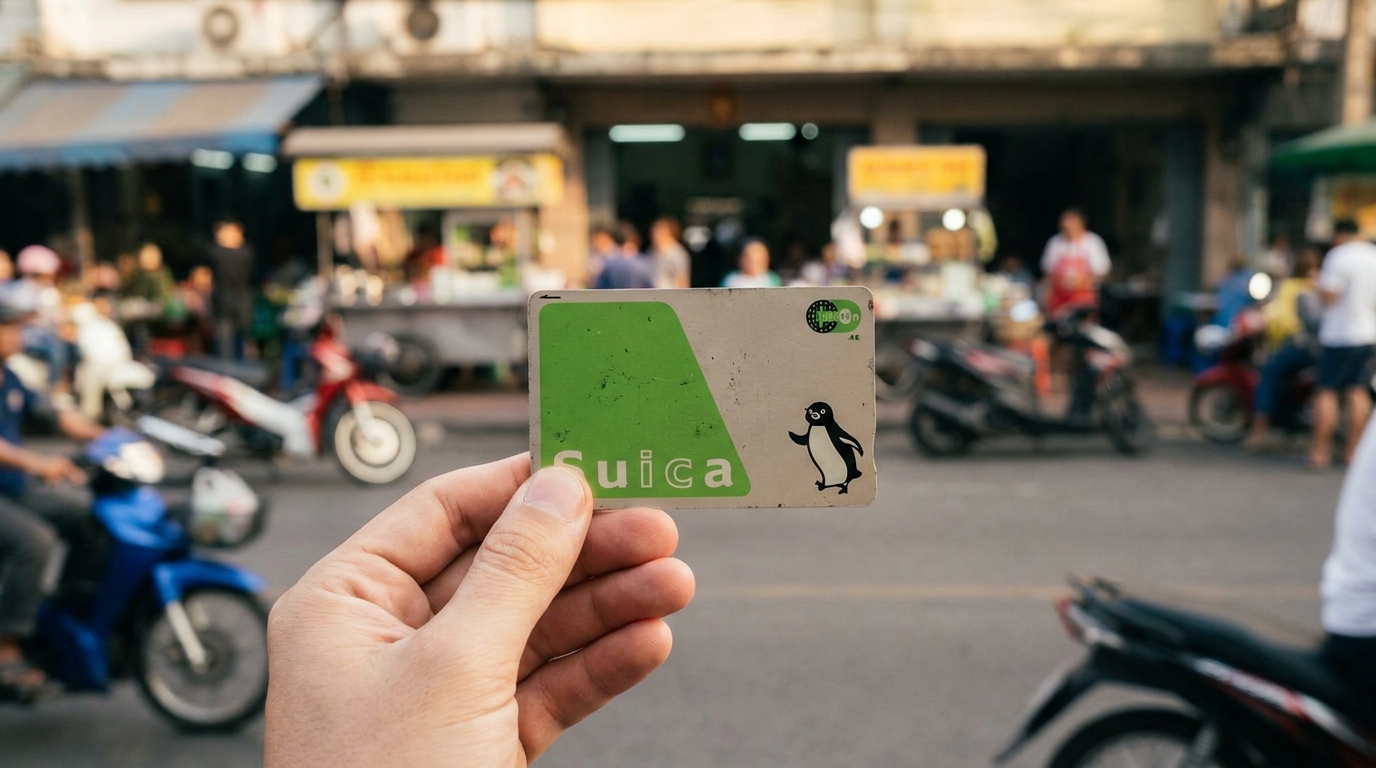
A Suica card is a rechargeable IC smart card that handles virtually all of Tokyo’s transport in one tap. You buy it at any JR station machine for ¥500 (refundable deposit on departure), load credit, then tap in and out at every gate. It covers Tokyo Metro, JR lines, Toei subway, most city buses, some taxis, convenience stores, and vending machines across Japan (JR East official website, 2026).
Pasmo is functionally identical to Suica. Either card works everywhere in Tokyo — pick whichever machine you reach first at the airport.
Welcome Suica: The Tourist Version
The “Welcome Suica” is sold at Narita and Haneda airports with no deposit required. It expires 28 days from first use. It’s convenient for short stays, but if you’re visiting for longer than three weeks — or plan to return to Japan — a standard Suica is better. You recover the ¥500 deposit when you return it at any JR Green Window.
How and Where to Top Up
Top up at any station ticket machine (tap “Charge” on the screen). Most machines accept cash and international Visa/Mastercard. You can also link Suica to Apple Pay or Google Pay, which lets you reload digitally without finding a machine mid-journey.
One underrated benefit: a loaded Suica eliminates the need for coins entirely. Keep ¥3,000-5,000 on the card and you can pay at 7-Eleven, Lawson, FamilyMart, and most vending machines without cash. Many visitors end up treating it as a contactless wallet rather than just a train card — which is exactly how Tokyo residents use it daily.
Tokyo Metro: 9 Lines Explained
Tokyo Metro runs 9 color-coded subway lines with approximately 180 stations across central Tokyo (Tokyo Metro official website, 2026). Single-ride fares range from ¥170 to ¥310 based on distance traveled. Tourists doing four or more rides in a day almost always come out ahead by buying a day pass.
The 24h pass breaks even after just three or four rides. Buy at any Metro station machine or at Narita and Haneda airports on arrival. Note: these passes cover Tokyo Metro lines only — JR Yamanote and Toei subway rides cost extra.
Key Metro Lines for Tourists
The Ginza Line (orange) connects Shibuya to Ueno via Aoyama and Ginza — a natural sightseeing spine for central Tokyo. The Hibiya Line (grey) runs through Roppongi and Akihabara. The Fukutoshin Line (brown) links Shinjuku and Shibuya directly and continues south to Yokohama. For most first-timers, Google Maps with transit mode set to “fewest transfers” selects the right combination automatically.
JR Lines: The Yamanote Loop and Beyond
The JR Yamanote Line is the circular backbone of central Tokyo, linking 29 major stations in one seamless loop. Key stops include Shinjuku, Shibuya, Harajuku, Ebisu, Shinagawa, Tokyo Station, Akihabara, Ueno, and Nippori — essentially every major tourist district in the city (JR East official website, 2026). Most station-to-station fares are ¥140-200, paid automatically by Suica tap-in, tap-out.
The Yamanote is JR, not Tokyo Metro. Metro day passes don’t cover JR rides. On days mixing heavy Metro sightseeing with Yamanote hops between neighborhoods, loading Suica credit is often simpler than managing a Metro pass alongside separate JR fares.
Other JR Lines Worth Knowing
The JR Chuo/Sobu Line runs east-west from Shinjuku through Ochanomizu to Akihabara and further east. The JR Keihin-Tohoku Line parallels the Yamanote’s eastern arc and continues south to Yokohama. The JR Shonan-Shinjuku Line heads south toward Kamakura, making it useful for day trips.
Shinjuku Station has over 200 exits. Arriving at the wrong exit can mean 10 minutes of underground corridor walking before you find daylight. Before tapping out, check Google Maps for the specific exit number. The app always lists the exit nearest your destination in the final navigation step — this one habit prevents a frustration that catches most first-timers at least once.
JR Pass: Is It Worth It for Tokyo?
The 7-day JR Pass costs ¥50,000 (approximately $330 USD) until October 1, 2026, when it increases to ¥53,000 (JR East official website, 2026). It covers unlimited JR trains nationwide, including most Shinkansen services, with the Nozomi and Mizuho fastest services excluded.
For a Tokyo-only itinerary, the JR Pass almost never makes financial sense. Even frequent Yamanote users spend under ¥2,000 per day on JR fares. The pass only justifies its price when your itinerary includes at least two long-distance Shinkansen journeys within seven days.
When the JR Pass Actually Pays Off
Tokyo to Kyoto by Hikari Shinkansen costs ¥14,000-14,870 one way (2h15min-2h45min depending on stops). A round trip alone reaches ¥28,000-29,740 — well past the pass cost when combined with other JR travel. Two Shinkansen round trips, or a Tokyo-Kyoto-Hiroshima itinerary, comfortably exceed the ¥50,000 threshold. Purchase online before arriving in Japan; airport prices are identical but queues can be long.
Narita Airport sits roughly 60km east of central Tokyo, making the airport transfer a substantial journey worth planning carefully. The Narita Express (N’EX) is the most reliable option for most travelers: ¥3,070 to Shinjuku, approximately 1 hour 15 minutes, with reserved seats and no traffic variable (Narita Airport official website, 2026). Trains depart every 30 minutes from Terminal 1 and Terminal 2/3 stations.
The Limousine Bus costs ¥3,200 to Shinjuku and takes 1h30min-2h depending on traffic. It drops passengers at major hotels en route — a genuine convenience if your accommodation is on the route. Avoid it during peak traffic hours; expressway congestion can extend the journey by 30-40 minutes unpredictably.
Recommendation: N’EX for most travelers heading to Shinjuku, Shibuya, or Yokohama. Keisei Skyliner if you’re based near Ueno or Asakusa — it’s faster and cheaper to that part of the city.
Getting from Haneda Airport to Tokyo
Haneda Airport sits just 20km south of central Tokyo, making transfers fast and inexpensive. The Keikyu Line from Haneda Terminal 3 International to Shinagawa costs ¥360 and arrives in approximately 12 minutes (Tokyo Metro official website, 2026). From Shinagawa, the Yamanote Line loops to every major district within 10-25 minutes.
The Tokyo Monorail runs from all Haneda terminals to Hamamatsucho for ¥500, taking about 19 minutes. From Hamamatsucho you transfer to the Yamanote Line. It’s scenic and reliable but slightly slower and pricier than Keikyu for most central Tokyo destinations.
A taxi from Haneda to central Tokyo runs ¥5,000-7,000 — far more manageable than the Narita equivalent, but still unnecessary when the Keikyu Line is this fast and affordable for most travelers.
Buses, Taxis and Late-Night Options
City buses in Tokyo charge a flat fare of ¥210 across most routes, payable by Suica or cash (Japan National Tourism Organization (JNTO), 2025). Buses are slower than trains and less intuitive to navigate, but they serve areas trains miss — particularly western residential neighborhoods and spots near temples without nearby stations. Google Maps transit mode now shows Tokyo bus routes reliably with real-time arrivals.
Tokyo trains stop around midnight. After that, taxis are the primary option. The base fare is ¥730, rising ¥90 per 280 meters. A 5km night ride typically costs ¥1,500-2,000. The Go app (Japan’s dominant ride-hailing platform) shows upfront fare estimates and accepts cashless payment — much smoother than hailing a street cab. Uber also operates in Tokyo but tends to price higher than Go for similar routes.
Traditional ride-share pooling is not permitted under Japanese law. All taxis are licensed, metered vehicles. Budget for full taxi fares after midnight rather than expecting to split with strangers.
The Shinkansen connects Tokyo to Japan’s major cities with speed and near-perfect punctuality. Tokyo to Kyoto costs ¥14,000-14,870 one way by Hikari service, taking 2h15min-2h45min depending on stops (JR East official website, 2026). Trains depart from Tokyo Station and Shinagawa Station. JR Pass holders board at either without issue.
For shorter day trips, standard limited express trains reach Nikko, Kamakura, and Hakone for ¥1,000-2,500 each way. The Fuji Five Lakes area requires JR to Otsuki then Fujikyu Railway — your Suica covers JR segments but not the Fujikyu surcharge. Check the full fare on Hyperdia or Google Maps before boarding.
Where you stay in Tokyo affects your Shinkansen convenience daily. Travelers near Shinjuku board at Shinagawa (one Yamanote stop south). Those near Ueno or Asakusa walk directly to Tokyo Station. Picking accommodation close to your primary departing hub saves 20-30 minutes per travel day across a week.
Most navigation errors in Tokyo come from a predictable set of avoidable choices. Knowing them before arrival saves real time and money.
Mistake 1: Buying single tickets instead of using a Suica. Station fare maps are confusing across multiple languages. A Suica tap-in, tap-out removes all that complexity — the right fare deducts automatically every time.
Mistake 2: Assuming one day pass covers all lines. A Metro 24h pass (¥600) covers 9 Metro lines only. JR Yamanote and Toei subway rides cost extra on top. On days mixing both networks, Suica credit is simpler than juggling multiple pass types.
Mistake 3: Renting a car for city sightseeing. Parking in central Tokyo costs ¥200-500 per 30 minutes, expressway tolls add up quickly, and rush-hour traffic is severe. Cars make sense for self-drive Fuji or rural Nikko trips — inside the city, they are slower and more expensive than any train option.
Mistake 4: Tapping out at the wrong station gate. Large stations — Shinjuku, Shibuya, Ikebukuro — have dozens of exits and multiple connected systems. Exiting through the wrong gate, realizing the error, and re-entering costs another ¥170 and several wasted minutes. Check Google Maps for your exact exit number before leaving the platform. The final step in transit directions always shows the exit code (e.g., “Exit B1,” “West Gate”).
Mistake 5: Letting your Suica run low on a busy day. Topping up at a crowded station during morning rush wastes time in queue. Load ¥3,000-5,000 the night before at a convenience store terminal or a quieter station machine. Running low mid-journey forces you to queue at a fare adjustment machine — an entirely avoidable delay.
Plan your travel destination trip: book tours and tickets through Klook, and stay online with an Airalo eSIM from the moment you land.
Frequently Asked Questions
What is the best way to get around Tokyo as a tourist?
A Suica IC card combined with Tokyo Metro and the JR Yamanote Line covers the vast majority of tourist movement in the city. Buy the card at any station for a ¥500 deposit, load ¥3,000-5,000 credit, and tap in and out at every gate. Add a 24h Metro pass (¥600) on heavy sightseeing days for extra savings (Tokyo Metro official website, 2026).
Is the JR Pass worth buying for a Tokyo trip?
For Tokyo-only travel, no. The JR Pass costs ¥50,000 for 7 days — far above the ¥2,000 or less you’d spend daily on JR Yamanote rides (JR East official website, 2026). It pays off only when your itinerary includes at least two long-distance Shinkansen journeys, such as Tokyo-Kyoto return or Tokyo-Osaka-Hiroshima.
How do I get from Narita Airport to central Tokyo cheaply?
The Keisei Limited Express costs about ¥1,290 to Ueno and takes 75 minutes — the most budget-friendly fast option. If you value speed and convenience, the N’EX costs ¥3,070 (~1h15min to Shinjuku). Avoid taxis from Narita; the fare typically exceeds ¥20,000 (Narita Airport official website, 2026).
Do Tokyo taxis accept credit cards?
Most Tokyo taxis now accept major credit cards and Suica IC card tap payment, but carrying some cash as backup is still wise. The Go app enables cashless booking with upfront fare estimates. The base fare is ¥730, rising ¥90 per 280 meters after that (Japan National Tourism Organization (JNTO), 2025).
Can I use Google Maps to navigate Tokyo transit?
Yes, Google Maps is highly accurate for Tokyo transit. Set the mode to “Train” or “Transit” and it shows real-time departures, platform positions, and specific exit codes at each station. Combined with a Suica card, it removes nearly all navigation uncertainty even on your first day in the city.
Final Thoughts
Getting around Tokyo is far more approachable than its reputation suggests. The core formula is simple: one Suica card handles everything, the Metro and Yamanote Line cover nearly all tourist destinations, and Google Maps fills in the decision-making in real time. Pick up the card at the airport, load enough credit for a few days, and the city opens up immediately.
For airport transfers, take the N’EX from Narita or the Keikyu Line from Haneda rather than paying for a taxi. If your itinerary extends to Kyoto or beyond, calculate whether the JR Pass math works for your specific journey combination — it usually pays off on classic multi-city trips, rarely on Tokyo alone.
Tokyo rewards travelers who lean into the transit system. The trains are clean, punctual, clearly signed in English, and cheaper than almost any equivalent city. After your first two Suica taps, the whole system feels natural.