
Best Food in Tokyo 2026: 20 Must-Try Dishes + Top Restaurants
The best food in Tokyo isn’t a single dish, it’s an entire eating culture squeezed into one city. Tokyo holds 170 Michelin stars in 2026, more than any other city on Earth (MICHELIN Guide Tokyo, 2026). Yet some of the most memorable meals cost under USD 10. You can slurp tonkotsu ramen for USD 7, sit at a 12-seat sushi counter for USD 200, or buy a pristine bento at a depachika basement food hall for USD 15.
This guide ranks 20 must-try dishes, names the restaurants worth your reservation, and breaks pricing down by tier. We’ll cover Tsukiji versus Toyosu, izakaya etiquette, ramen broth styles, and the cooking classes that turn a vacation into a skill. Pair this with our Tokyo travel guide and 4-day Tokyo itinerary to plan around meal slots. Hungry yet?
Key Takeaways
– Tokyo holds 170 Michelin stars in 2026, the world’s most starred city (MICHELIN Guide Tokyo, 2026)
– Sushi ranges from USD 8 conveyor belt to USD 500 omakase, ramen averages USD 7-12, omakase kaiseki USD 100-500
– Toyosu Market replaced Tsukiji’s inner wholesale auction in 2018, but Tsukiji Outer Market still serves Tokyo’s best street breakfast
– Book Michelin-starred restaurants 2-4 weeks ahead via TableCheck, Pocket Concierge, or Omakase platforms
– GetYourGuide and Klook food tours start at USD 50-120 and convert dish discovery into hands-on experience
Affiliate Disclosure: This guide contains affiliate links to GetYourGuide, Klook, Booking.com, and other booking platforms. If you book through them, we earn a small commission at no extra cost to you. We only recommend tours, classes, and restaurants we’d send a friend to. All pricing reflects 2026 rates verified before publication.
What Makes the Best Food in Tokyo Different
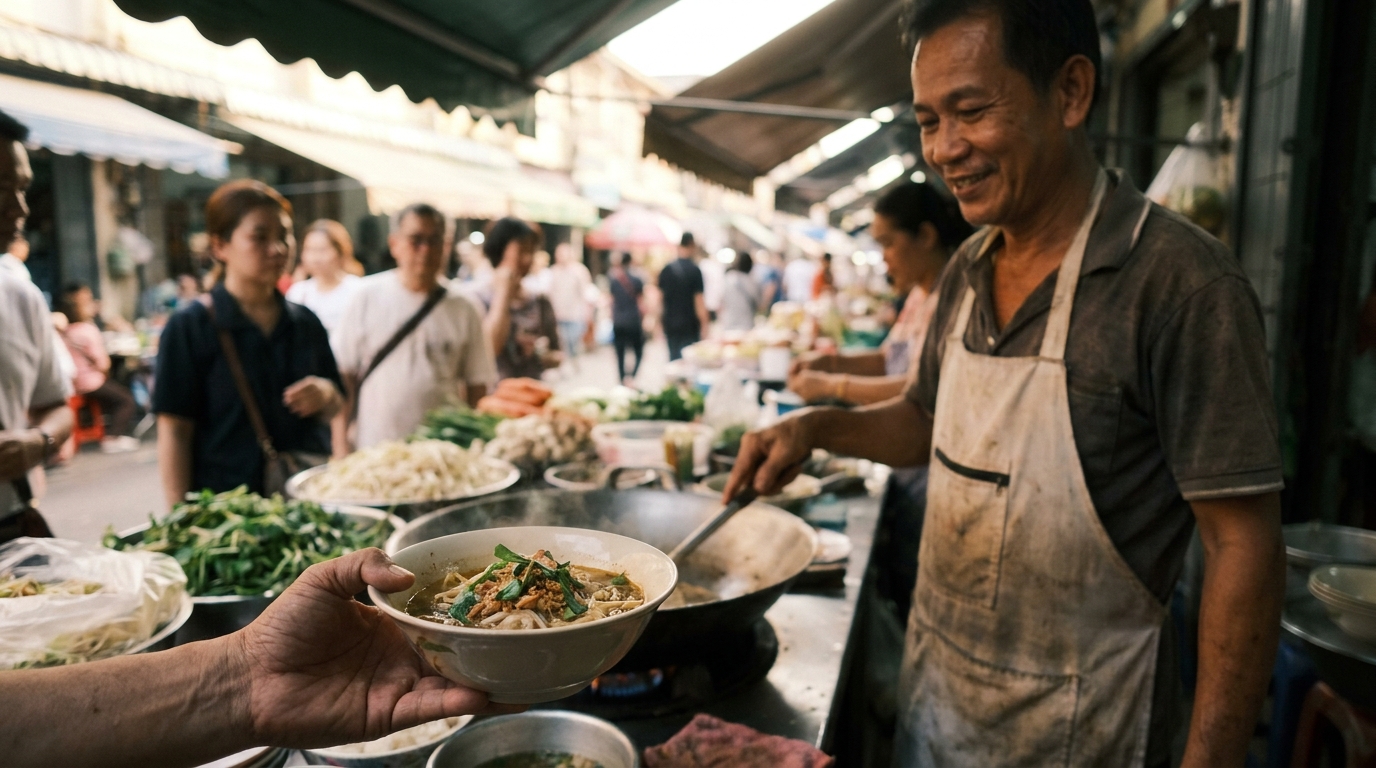
Tokyo’s food scene runs on three forces that don’t exist together anywhere else: Michelin density, hyper-regional Japanese cuisine, and obsessive technique. The 2026 Michelin Guide awards 170 stars across the Tokyo region, including 12 three-star houses (MICHELIN Guide Tokyo, 2026). Even neighborhood ramen shops train 5-10 years before opening.
Quality lives at every price tier. A USD 8 standing-bar tonkotsu can be life-changing. A USD 500 kaiseki tasting feels like theater. The shokunin (craftsman) ethos means even chain restaurants source seriously: Ichiran flies tonkotsu broth daily, depachika fishmongers reject below-grade sashimi.
On our last trip we ate 14 meals across 4 days and the cheapest, a USD 6 katsu sando from a Shibuya basement, beat two of the pricier tasting menus. Tokyo rewards curiosity over budget. Learn three rules of izakaya etiquette and you’ll eat better than 90% of tourists.
20 Must-Try Dishes for the Best Food in Tokyo
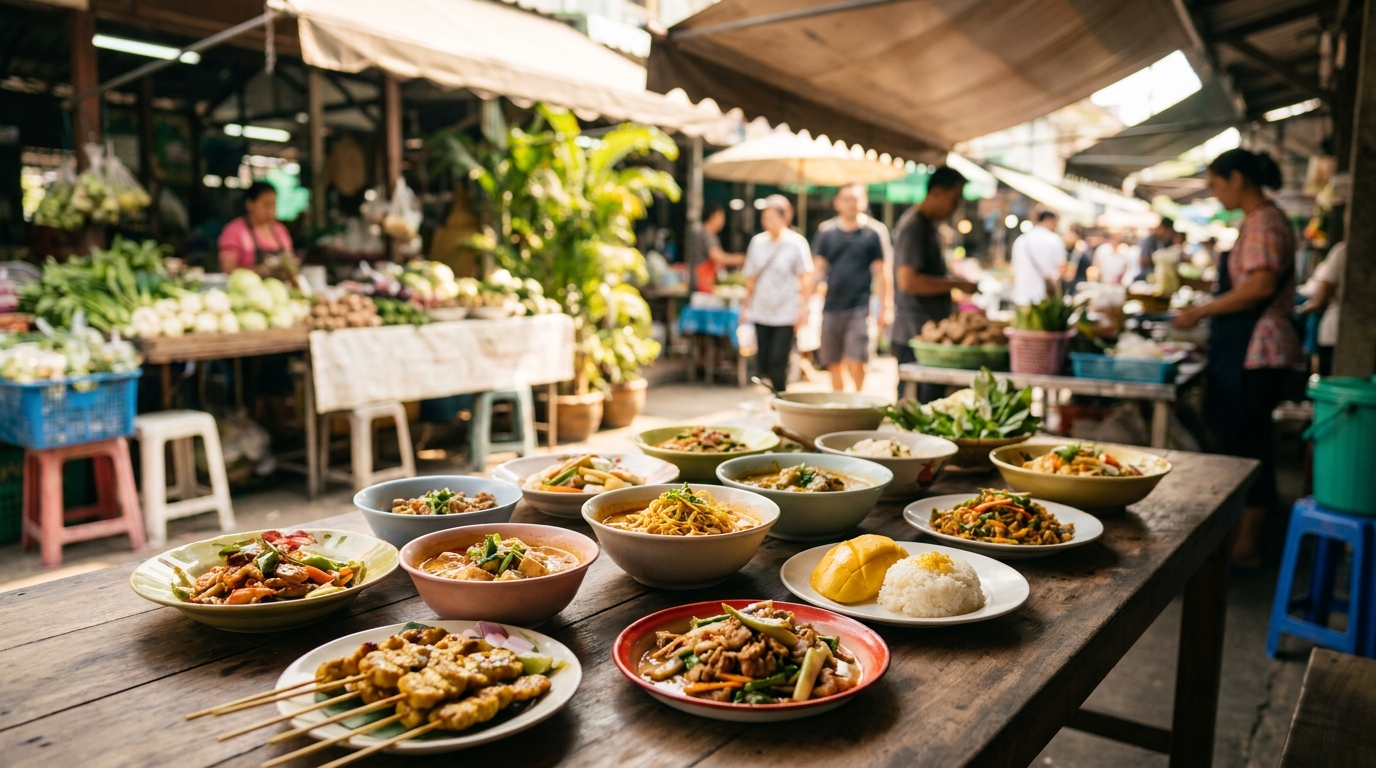
Tokyo’s must-try list spans USD 3 street snacks to USD 500 tasting menus. Japan welcomed 36.8 million visitors in 2024, with food cited as the top motivator by 71% of inbound travelers (Japan National Tourism Organization, 2025). Below are 20 dishes that define the best food in Tokyo, organized from raw to sweet.
Raw and rice-based
- Sushi (nigiri) – vinegared rice topped with raw fish; conveyor belt USD 1-3 per plate, counter USD 30-80, omakase USD 100-500.
- Sashimi – sliced raw fish without rice; tuna otoro melts at body temperature, expect USD 15-40 per portion.
- Chirashi – sashimi scattered over sushi rice in a bowl; lunchtime steal at USD 15-25 in Tsukiji Outer Market.
- Donburi – rice bowl topped with proteins; gyudon (beef) chains charge USD 5-7, kaisendon (seafood) USD 12-25.
Noodles
- Ramen – Tokyo’s competitive sport; expect USD 7-15 for tonkotsu, shoyu, miso, or shio styles.
- Tsukemen – dipping noodles invented in Tokyo in the 1950s; thick chewy noodles plus concentrated broth, USD 10-16.
- Soba – buckwheat noodles served hot or cold; mori soba (cold, dipped) at a counter shop runs USD 6-10.
- Udon – thick wheat noodles; a Sanuki-style hot bowl with tempura toppings sits around USD 8-14.
Fried and grilled
- Tempura – lightly battered seafood and vegetables; counter omakase USD 60-150, lunch sets USD 15-25.
- Tonkatsu – panko-breaded pork cutlet; a Maisen or Butagumi set runs USD 18-30 with rice and miso soup.
- Yakitori – charcoal-grilled chicken skewers; izakaya prices USD 2-5 per skewer, omakase yakitori USD 80-200.
- Takoyaki – octopus balls drizzled with brown sauce and bonito flakes; street snack for USD 5-8.
Hot pots and griddle
- Sukiyaki – thinly sliced beef simmered in sweet soy at the table; expect USD 60-200 at specialty houses.
- Shabu-shabu – swish-cooked beef in dashi broth; mid-tier dinner USD 50-100, premium wagyu USD 150+.
- Okonomiyaki – savory cabbage pancake cooked on a griddle; Osaka or Hiroshima style USD 12-20.
- Monjayaki – Tokyo’s runnier cousin of okonomiyaki, scraped from the griddle in small bites; USD 15-22 in Tsukishima.
Tasting menus and sweets
- Kaiseki – multi-course seasonal tasting; mid-tier ryotei USD 80-150, Michelin kaiseki USD 200-500.
- Omakase – chef’s-choice tasting at sushi or yakitori counters; USD 100-500 depending on stars.
- Wagashi – traditional sweets with matcha; daifuku, dorayaki, and taiyaki run USD 2-5 each.
- Depachika sweets – basement-hall French pastries, mochi, and limited-edition seasonal cakes USD 4-12.
Best Sushi in Tokyo: Counter, Conveyor, and Omakase
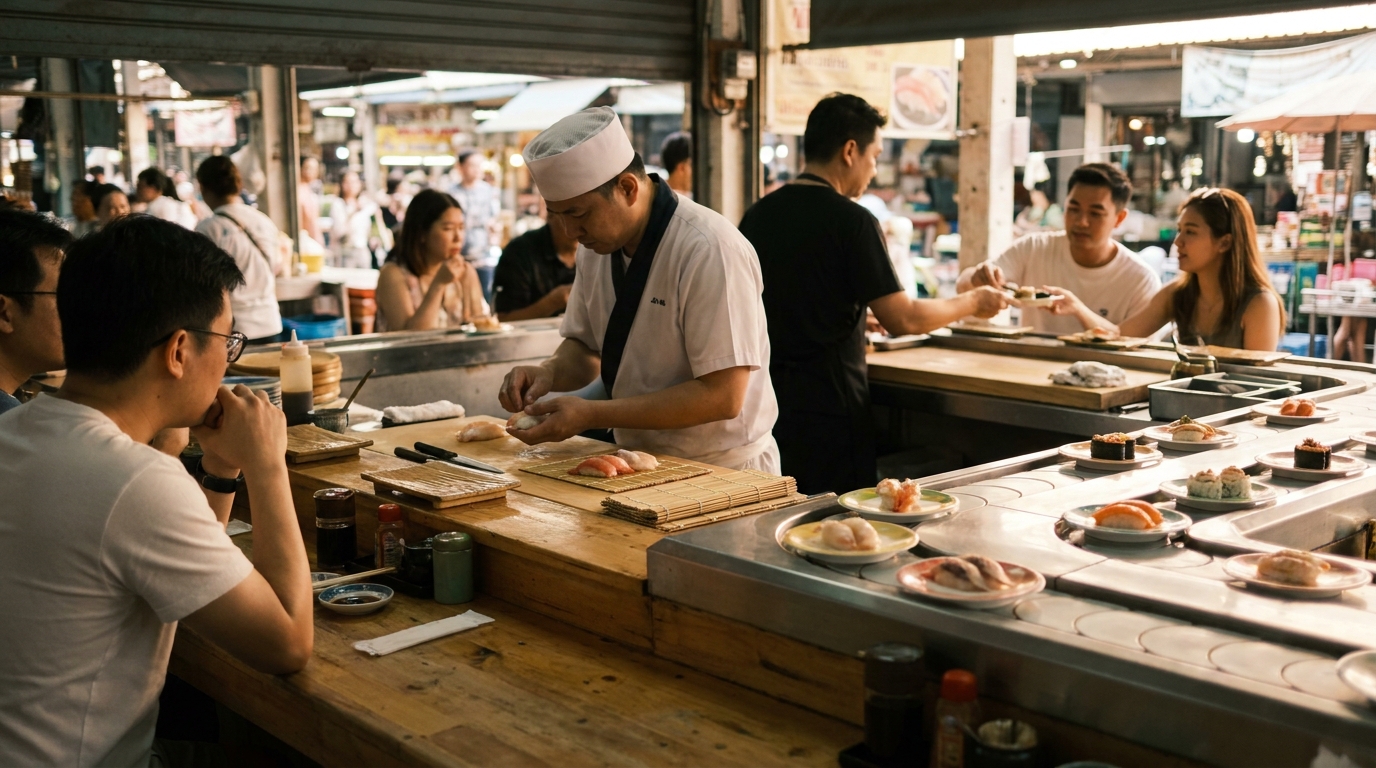
Sushi in Tokyo sits on three tiers, and the price gap is enormous but justified. A 2024 industry report counted over 4,200 sushi-ya in greater Tokyo, with conveyor-belt chains driving 60% of volume and counter omakase pulling the highest per-cover spend (Tokyo Cheapo, 2024). Pick one from each tier for a complete picture.
Conveyor belt (USD 5-30)
Uobei Genki Sushi Shibuya orders via touchscreen and shoots plates down a conveyor track at sci-fi speed. Plates start at USD 1.20. Sushiro and Kura Sushi run nationwide and feel reliable, hyper-fresh, and fun for groups.
Mid-counter (USD 30-80)
Manten Sushi Marunouchi serves a 10-piece lunch omakase for around USD 40, walkable from Tokyo Station. Sushi Tokyo Ten in the Shinjuku NEWoMan tower is approachable, clean, and books on TableCheck without weeks of wait.
Top-tier omakase (USD 100-500)
Sushi Saito holds three Michelin stars but is essentially impossible to book without a hotel concierge. Sushi Yoshitake (3 stars) and Kyubey Ginza (1 star, since 1935) take 1-2 month bookings on platforms like Pocket Concierge. Pair sushi training with a sushi making class to understand what you’re tasting.
Best Ramen in Tokyo: Tonkotsu, Shoyu, Miso, Shio, Tsukemen
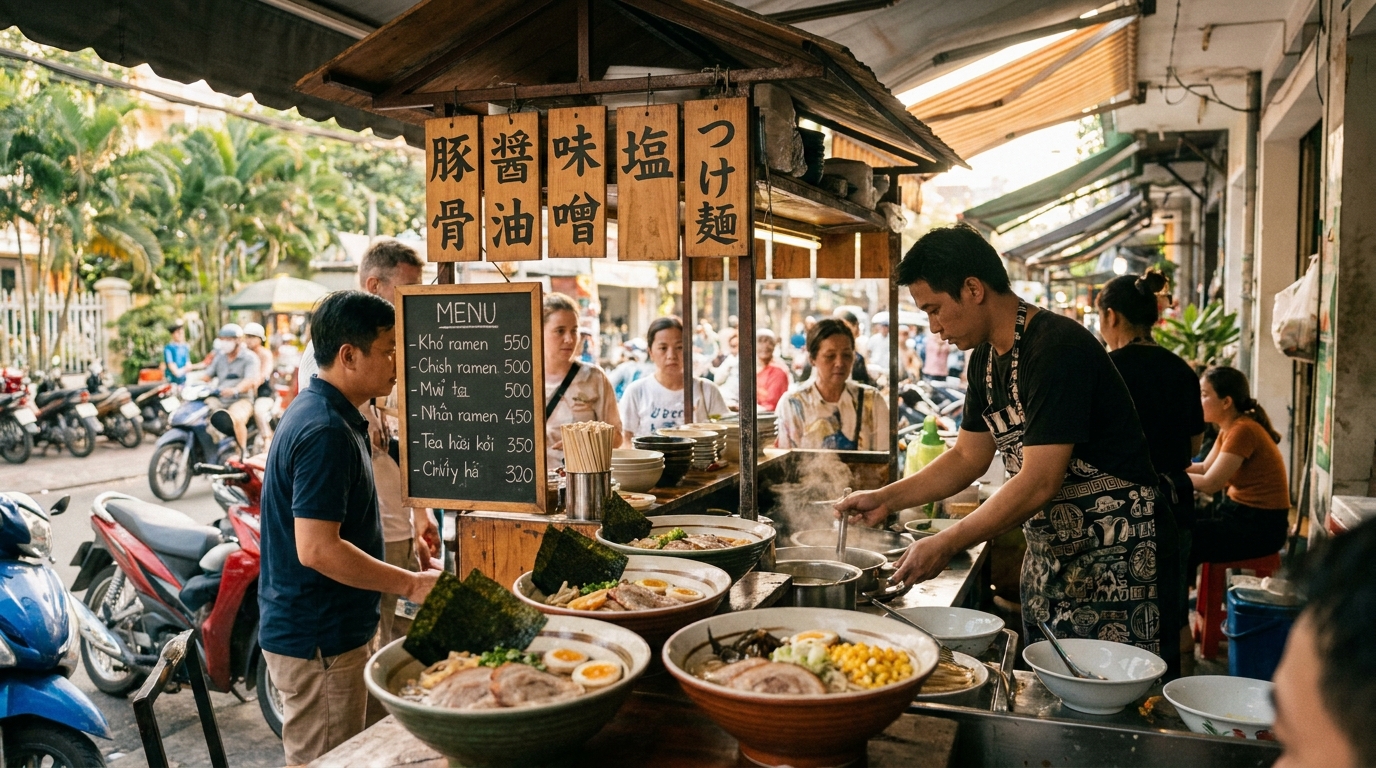
Tokyo runs around 5,000 ramen shops and the average bowl now costs USD 9 after 2024 broth-cost inflation pushed prices up 12% (Tokyo Cheapo, 2024). Knowing the broth styles is half the battle. The other half is queueing.
The five broth styles
- Tonkotsu – pork-bone, milky, rich; iconic at Ichiran (private booths, USD 9 base bowl) and Ippudo Roppongi.
- Shoyu – clear soy-dashi, the original Tokyo style; try Tokyo Style Ramen Tsuta (one Michelin star, USD 15-22).
- Miso – fermented bean paste, hearty; Kanaeru Sapporo Ramen in Shinjuku nails the Hokkaido version.
- Shio – light salt broth, heritage-driven; Afuri Ebisu adds yuzu citrus oil, USD 11.
- Tsukemen – dipping style invented in Tokyo; Rokurinsha at Tokyo Station Ramen Street pulls 90-minute lunch lines.
For a guided slurp tour with translation help, book a Klook ramen tour covering 3-4 shops in one evening.
Best Izakaya and Yakitori for Local Drinking Food
Izakaya are Japan’s pub-meets-tapas concept, and they deliver the best food in Tokyo for under USD 30 per person. The 2026 Michelin Guide added 18 new bib gourmands across casual izakaya and yakitori categories (MICHELIN Guide Tokyo, 2026). Order 4-6 small plates plus a highball.
Top picks
- Omoide Yokocho (Memory Lane), Shinjuku – 60+ tiny yakitori stalls under the train tracks; USD 2-4 per skewer, smoky atmosphere.
- Toriki Meguro – the 1-star yakitori counter; reservation-only omakase USD 80, every part of the chicken.
- Andy’s Shin Hinomoto, Yurakucho – British-run izakaya under JR tracks since 1949, fresh sashimi from Tsukiji daily.
- Buri Ebisu – standing bar, 50+ types of one-cup sake, snack plates USD 4-8.
The locals’ rule: order the day’s hand-written specials (often only in Japanese), not the laminated menu. Use Google Lens or just point at the chalkboard. The owner always knows what’s freshest. Layer this with an izakaya pub crawl on night one to learn the room before going solo on night two.
Best Fine Dining and Omakase in Tokyo
Tokyo’s three-star roster expanded to 12 restaurants in 2026, holding the world’s largest cluster of triple-starred dining (MICHELIN Guide Tokyo, 2026). Reservations open 1-2 months ahead and vanish within hours. Build dinners into your calendar before flights.
Worth the splurge
- Sukiyabashi Jiro Roppongi – the easier-to-book Jiro outpost; 20-piece omakase USD 350, sons of the original.
- Quintessence (3 stars) – chef Shuzo Kishida’s Bordeaux-trained French; tasting menu USD 320 plus pairing.
- Den (3 stars) – chef Zaiyu Hasegawa’s playful kaiseki; “Dentucky Fried Chicken” is now legendary, USD 280.
- Ryugin (3 stars) – Roppongi tower views, modernist kaiseki; expect USD 350-500 with sake pairing.
- Florilege (3 stars) – vegetable-forward French; lunch tasting USD 180, an under-the-radar steal.
For late-night Tokyo views and post-dinner cocktails, sleep near Ginza or Roppongi; check current rates on Tokyo hotels before booking peak weekends.
Best Cheap Eats in Tokyo Under USD 15
Some of the best food in Tokyo costs less than a Manhattan coffee. A 2024 budget-travel survey found the average daily food spend in Tokyo at USD 38, well under Paris (USD 71) and London (USD 64) (Nomadic Matt, 2024). Knowing where to look is the trick.
Cheap-eat playbook
- Tsukiji Outer Market street stalls – tamagoyaki skewers USD 2, uni-on-rice cups USD 8, A5 wagyu skewers USD 6.
- Omoide Yokocho yakitori – 5 skewers plus a highball under USD 15.
- Vending-machine ramen shops like Ichiran and Tenkaippin charge USD 8-11 with no tipping or service fee.
- Depachika basement food halls at Isetan Shinjuku, Mitsukoshi Ginza, and Takashimaya Nihombashi sell USD 8-15 bento at half-price after 7pm.
- Konbini (7-Eleven, FamilyMart, Lawson) – egg sando USD 2.50, oden simmered snacks USD 1-3, beat most airport meals.
- Standing soba shops near JR stations – tachigui style, USD 4-7, eaten in 6 minutes.
We tracked 24 cheap-eats stops on our Day 5 retrospective and the average bill came to USD 9.30 per meal across breakfast, lunch, and snacks. Daily food spend stayed under USD 30 even with two convenience-store coffees. Tokyo budget travel works if you skip Western chains.
Tsukiji Outer Market vs Toyosu Market
The wholesale tuna auction moved from Tsukiji to Toyosu in October 2018, but the original Tsukiji Outer Market still draws around 42,000 visitors daily for street food (Japan National Tourism Organization, 2025). Most travelers should visit Tsukiji, not Toyosu, unless they’re auction nerds.
Quick comparison
| Feature | Tsukiji Outer Market | Toyosu Market |
|---|---|---|
| Best for | Street food, casual sushi breakfast | Tuna auction, wholesale spectacle |
| Open hours | 5am-2pm (closed Sundays + Wed) | 5am-5pm (auction 5:30-6:30am) |
| Vibe | Crowded, smoky, photo-friendly | Sterile, glass-walled, observation deck |
| Sushi pricing | USD 15-40 set lunches | USD 40-80 omakase at Sushi Dai |
| Reach via | Tsukijishijo Station (Oedo Line) | Shijo-mae Station (Yurikamome Line) |
Best Tsukiji bites include Sushi Zanmai Honten (24-hour, USD 18 chirashi), Maruyoshi Shokudo (uni rice bowl USD 14), Yamacho tamagoyaki sticks (USD 1.50), and Aji-no-Hamato wagyu skewers (USD 5). Hit a Tokyo food tour Tsukiji for guided 6am tasting and translation.
Best Tokyo Cooking Classes and Food Tours
Tokyo cooking classes and food tours start at USD 50 and convert better than any souvenir. GetYourGuide reports the Tokyo food category grew 38% year-over-year through 2025, driven by post-pandemic experiential travel (GetYourGuide, 2025). Pick one tour plus one class for a balanced food itinerary.
Top bookable experiences
- Tokyo food tour Tsukiji – 3-hour guided breakfast walk, 7 tastings, USD 95.
- Tokyo cooking class – market shop plus home kitchen with a pro chef, 4 hours, USD 110.
- Sushi making class – 2-hour hands-on session in Asakusa or Shinjuku, USD 75.
- Klook ramen tour – 3 ramen shops in one night, broth tastings, USD 65.
- Izakaya pub crawl – 4 spots in Shinjuku Golden Gai, USD 90 with all drinks.
- Mt Fuji food and wine tour – day trip pairing Yamanashi wine with hoto noodles, USD 185.
For travel beyond Tokyo, our Bali travel guide and Santorini travel guide cover food scenes that contrast Japanese precision with relaxed island flavor.
Tokyo Restaurant Reservation Strategy in 2026
Reservations make or break Tokyo dining. TableCheck handled over 14 million covers across Japan in 2024, and Tokyo restaurants now use English platforms in roughly 65% of fine-dining establishments (TableCheck, 2025). Most Michelin spots open booking 1-2 months ahead and fill within hours.
Booking platforms compared
- TableCheck – free, English UI, no concierge fee; widest mid- to high-tier coverage.
- Pocket Concierge – English concierge service, JPY 0-3,000 fee; great for 3-star and impossible-table bookings.
- Omakase – sushi-and-omakase-only platform; transparent deposits, prepaid cancellation rules.
- Tabelog – Japan’s Yelp; reviews in Japanese mostly, casual booking only.
- Direct phone – some legendary shops still phone-only; ask your hotel concierge to call.
Practical tips
Book the moment you have flight dates, not after. Mark your phone for midnight or 10am JST drops. Always provide a credit card; cancellations under 24 hours typically charge 50-100% of the menu price. Vegetarian and vegan diners should email the restaurant 7 days ahead with allergy and preference details (most accommodate sushi vegetarian sets, kaiseki swap-ins, and tofu-based courses).
Frequently Asked Questions About the Best Food in Tokyo
What is the must-try best food in Tokyo for first-time visitors?
Sushi at a counter shop, a bowl of tonkotsu or shoyu ramen, and tempura omakase form the must-try trio. The 2026 Michelin Guide lists 170 starred restaurants citywide, but a USD 9 bowl of Ichiran ramen still ranks as one of Tokyo’s defining experiences (MICHELIN Guide Tokyo, 2026). Add monjayaki for Tokyo regional flavor.
How much should I budget per day for food in Tokyo?
Plan USD 30-50 for budget eaters using konbini, depachika, and ramen shops. Mid-tier travelers spend USD 60-120 daily across counter sushi, izakaya dinners, and bakeries. Splurge travelers booking one Michelin meal per stay should set aside USD 200-500 for that single dinner alone (Nomadic Matt, 2024).
Do I need reservations for the best food in Tokyo?
Yes for Michelin-starred sushi, omakase counters, and famous kaiseki, where seats vanish 1-2 months out. Casual ramen, tonkatsu, and izakaya rarely take bookings; expect 30-90 minute queues at top spots. TableCheck and Pocket Concierge handle most English bookings, with cancellation fees charged after 24-48 hours.
Is Tokyo food expensive compared to other major cities?
No, Tokyo is surprisingly affordable. The 2024 cost-of-eating index ranked Tokyo’s daily food spend at USD 38, below Paris (USD 71), London (USD 64), and New York (USD 82) (Nomadic Matt, 2024). Quality at the low end is exceptional, depachika bento and standing soba beat most Western mid-tier restaurants.
What’s the best Tokyo food tour for first-timers?
A morning Tsukiji Outer Market food tour wins for first-timers. GetYourGuide and Klook both run 3-hour tours covering 6-8 tastings (tamagoyaki, uni, wagyu skewers, sushi breakfast) with English guides for USD 75-110. Booking ahead is mandatory, top tours sell out 5-7 days in advance during cherry blossom and autumn leaf seasons.
Can vegans and vegetarians eat well in Tokyo?
Yes, but plan ahead. Specialist spots like T’s TanTan (vegan ramen at Tokyo Station, USD 12), Ain Soph Ginza (vegan kaiseki USD 45), and AIN SOPH Ripple (vegan burgers USD 14) lead the scene. Email kaiseki and sushi restaurants 7 days before reservation to arrange shojin (Buddhist temple) or vegetable-forward courses.
When is the best season to eat in Tokyo?
Every season delivers different signature foods. Spring brings sakura mochi and bamboo shoots, summer adds unagi and chilled soba, autumn peaks with matsutake mushrooms and chestnuts, and winter showcases fugu, oden, and otoro tuna at peak fattiness (Time Out Tokyo, 2024). Aim for autumn or winter if you want the strongest tasting menus.
Is tipping expected at Tokyo restaurants?
No, tipping is not customary in Japan and can confuse staff. Premium kaiseki and omakase restaurants build a 10% service charge into the bill; casual shops simply expect the listed price. Hand cash with both hands or place it on the small tray at the register; never wave or shout for the check.
Plan Your Tokyo Food Trip
The best food in Tokyo rewards travelers who plan two things in advance: reservations for Michelin counters and at least one food tour or cooking class. Pair this guide with our Tokyo travel guide, best things to do in Tokyo, Tokyo hotels, and 4-day Tokyo itinerary to slot meals around sightseeing.
Save reservations for the moments that matter. Eat ramen, izakaya, and depachika the rest of the time. Tokyo’s eating culture rewards curiosity at every price point, and the next great meal often hides in a basement or under an raised train track. Book your first food experience now, and let the dishes pull you through the city.