
Disclosure: Some links in this guide are affiliate links. If you book or buy through them, we may earn a small commission at no extra cost to you — it helps keep our guides free.
Best Food in Seoul 2026: What & Where to Eat, With Prices
The best food in Seoul splits into two worlds: sit-down feasts like Korean BBQ and bibimbap, and the cheap, fast street snacks you eat standing up at a market stall. You can eat extremely well in this city on almost any budget. A street-food lunch runs 3,000 to 6,000 won ($2 to $4), while a proper Korean BBQ dinner with drinks sits closer to 30,000 to 50,000 won per person. Seoul welcomed 17.5 million international visitors in 2024, and food is one of the main reasons they come back (Korea Tourism Organization, 2025).
This guide covers what to eat and where to find it: Korean BBQ, bibimbap, tteokbokki, the street-food alleys at Gwangjang Market and Myeongdong, and the fried-chicken-and-beer ritual Koreans call chimaek. Every price below reflects 2026 rates and is quoted in Korean won (KRW). For the wider city, start with our Seoul travel guide, then plan the rest of your trip around the meals.
Key Takeaways
– Korean BBQ (samgyeopsal) costs 15,000 to 25,000 won per person at a neighborhood grill, rising to 50,000 to 100,000 won for premium hanwoo beef.
– Bibimbap runs 8,000 to 15,000 won at a sit-down restaurant, one of the best-value hot meals in the city.
– Tteokbokki at a market stall is 3,000 to 5,000 won, and most single street-food snacks start at just 1,000 to 4,000 won.
– Chimaek (fried chicken and beer) is 18,000 to 25,000 won for a whole chicken plus a beer, the classic evening in Hongdae or by the Han River.
– Gwangjang Market has over 200 food stalls and opens around 9am, best visited before noon before the crowds arrive.[PERSONAL EXPERIENCE] We ate our way across Seoul over five days and the pattern that stuck was simple: eat street food at markets for lunch, save the grill restaurants for dinner. Our best single meal was a 4,000-won plate of freshly griddled bindaetteok at Gwangjang eaten on a plastic stool, elbow to elbow with office workers on their lunch break.
What Is the Best Food to Eat in Seoul?
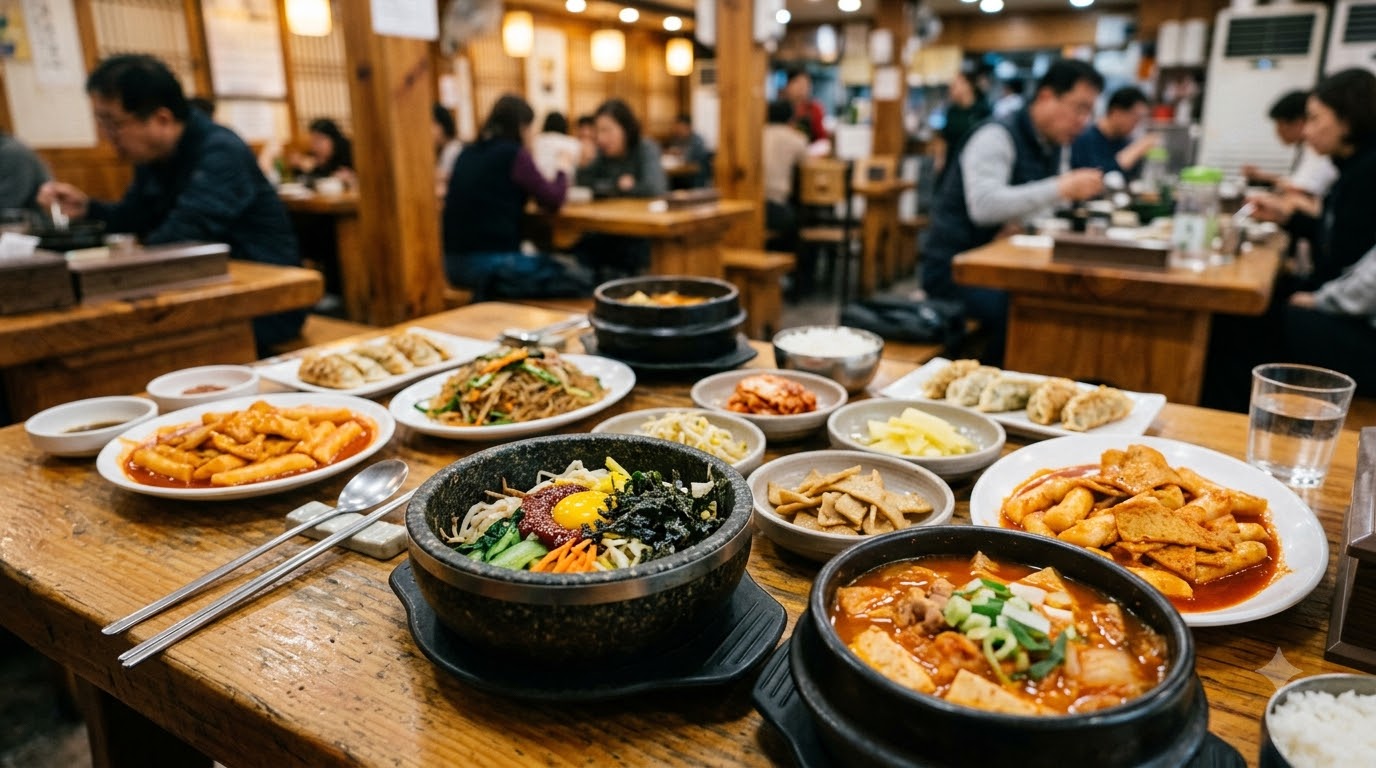
The single most iconic meal in Seoul is Korean BBQ, but the “best” food depends on your budget and appetite. For a first-timer, the essential list is Korean BBQ, bibimbap, tteokbokki, Korean fried chicken, and a market street-food crawl. Each represents a different side of the cuisine: grilled meat and social dining, balanced rice bowls, spicy street snacks, and late-night comfort food.
Prices in Seoul are lower than Tokyo or Singapore for equivalent meals, and portions are generous once you factor in the free banchan (side dishes) that come with almost every sit-down meal. A casual restaurant lunch of rice, soup, and several banchan typically costs 8,000 to 12,000 won (Namane Card, 2026). Once you have eaten, it is an easy walk from most restaurants to the sights covered in our list of the best things to do in Seoul.
The 4-Day Seoul Itinerary
The plan we use ourselves — sent straight to your inbox.
- Day-by-day route
- Where to stay
- Real 2026 costs
Free · No spam · Unsubscribe anytime
Korean BBQ: Samgyeopsal and Galbi
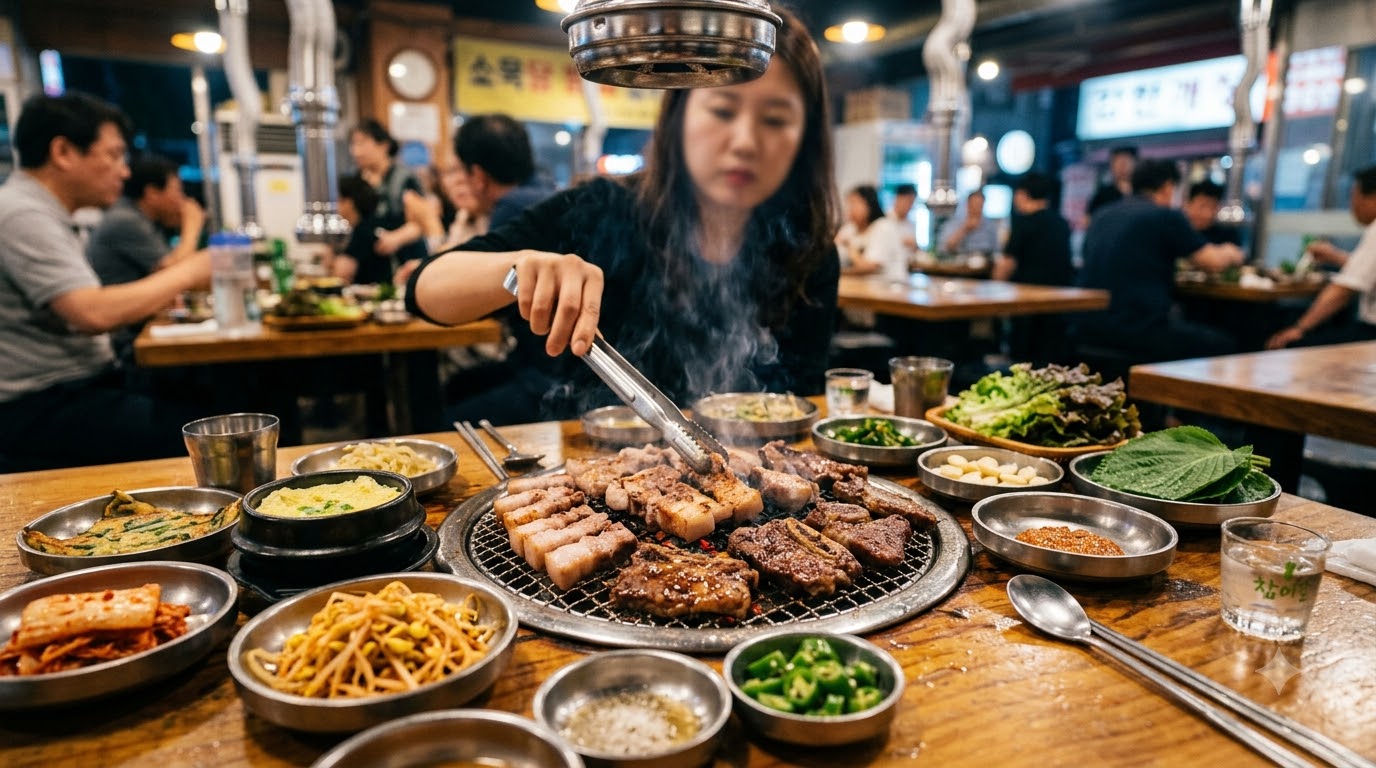
Korean BBQ is the meal to build one dinner around, and a neighborhood grill costs 15,000 to 25,000 won per person including meat, banchan, and a drink or two. You cook the meat yourself over a charcoal or gas grill set into the table, wrapping each bite in lettuce with garlic, ssamjang paste, and kimchi.
The most popular cut is samgyeopsal, thick-sliced pork belly, which starts around 12,000 to 16,000 won per 150g to 180g serving. Most people eat one and a half to two servings, so a full, satisfying pork BBQ dinner lands at roughly 30,000 to 50,000 won per person once you add drinks (Namane Card, 2026). Beef galbi (marinated short rib) costs more. For premium hanwoo, Korea’s prized native beef, a dedicated restaurant runs 50,000 to 100,000 won per person.
Where to go for Korean BBQ:
- Hongdae and Konkuk University areas: the cheapest student-friendly grills.
- Mapo-dong: famous for its pork BBQ streets.
- Chain restaurants like Hanam Pig House: 15,000 to 25,000 won per person, reliable and beginner-friendly.
- Samgyeopsal (pork belly): 12,000 to 16,000 won per 150-180g serving; most people eat one and a half to two servings.
Korean BBQ Price by Tier
| Tier | Typical cut | Price per person (2026) |
|---|---|---|
| Budget / neighborhood | Samgyeopsal, pork neck | 15,000 to 25,000 won |
| Mid-range | Galbi, bulgogi, table service | 25,000 to 50,000 won |
| Premium hanwoo | Native Korean beef | 50,000 to 100,000 won |
Source: Namane Card, 2026
Find your Seoul hotel on the map
Live prices from Booking & Airbnb — tap a pin to compare stays around Myeongdong and Hongdae and beyond.
Bibimbap and Rice Bowls
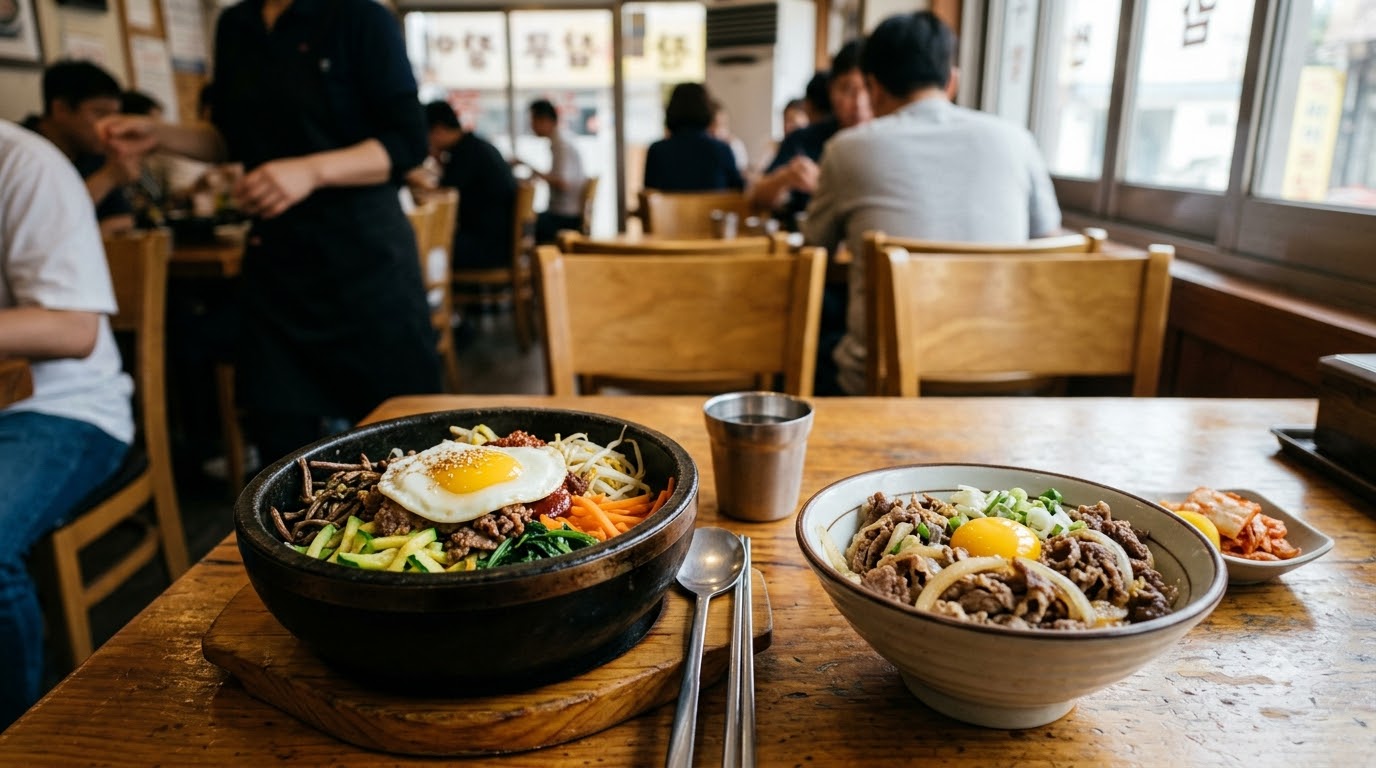
Bibimbap is the best-value hot meal in Seoul, costing 8,000 to 15,000 won at a sit-down restaurant. The dish is a bowl of warm rice topped with seasoned vegetables, a fried or raw egg, gochujang chili paste, and often thin slices of beef. You mix everything together yourself before eating.
Bibimbap prices and styles:
- Local restaurant version: 8,000 to 12,000 won.
- Tourist-area or dolsot (hot stone bowl) bibimbap: 10,000 to 15,000 won.
- Dolsot version keeps sizzling at your table and crisps the rice at the bottom into a crust worth digging for.
- Jeonju-style bibimbap, the benchmark, is served at specialist restaurants across Insadong and Jongno.
- Pair it with doenjang jjigae (soybean paste stew) for a complete, filling lunch well under 15,000 won.
The 4-Day Seoul Itinerary
Hour-by-hour plan, where to stay and what it really costs — free PDF.
Free · No spam · Unsubscribe anytime
Tteokbokki and Spicy Comfort Food
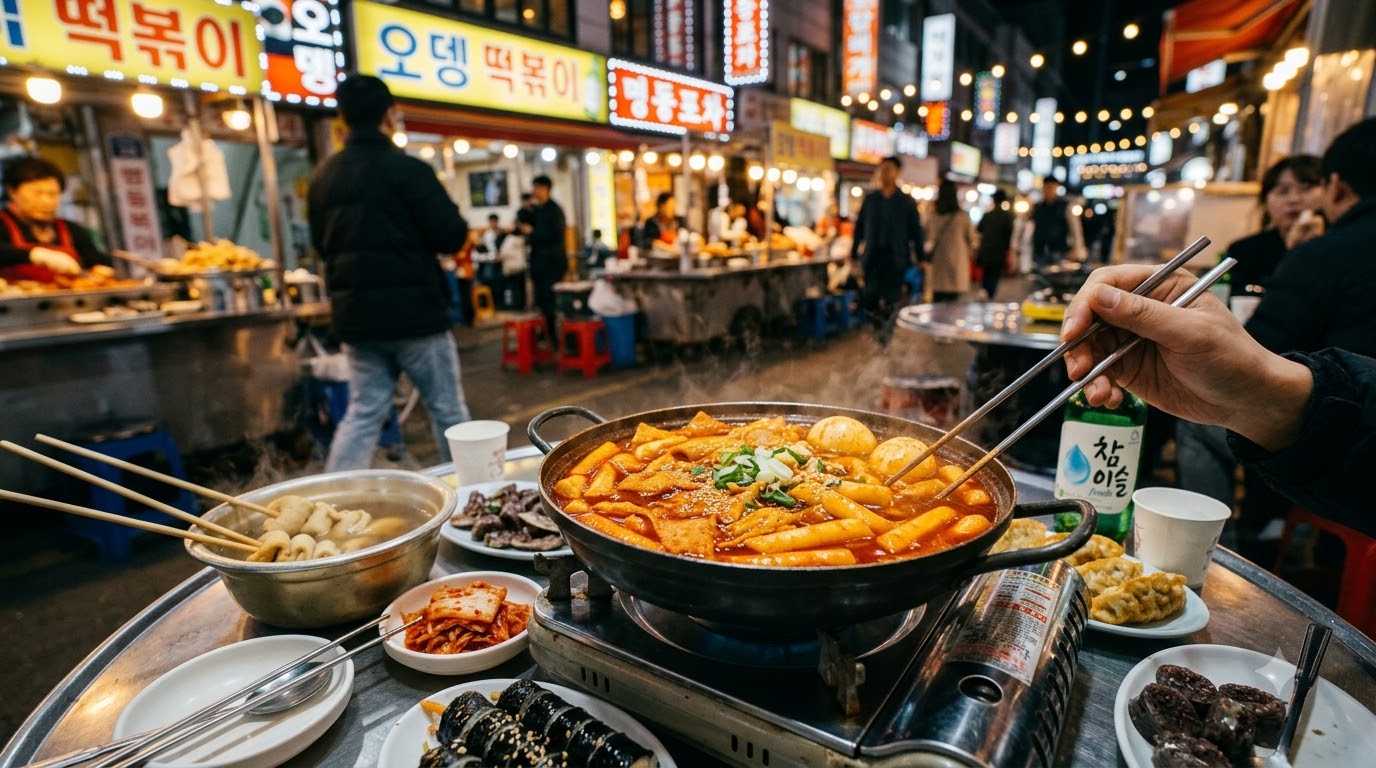
Tteokbokki is Seoul’s defining street snack: chewy cylindrical rice cakes simmered in a sweet-spicy gochujang sauce, and a portion costs just 3,000 to 5,000 won. You will find it at almost every market stall and in dedicated snack shops known as bunsik joints.
The classic move is to order tteokbokki alongside a few odeng (fish cake skewers, from 1,000 won each) and a serving of twigim (assorted fried snacks). Many stalls let you dip your rice cakes in the free fish-cake broth. For a sit-down version, snack chains serve rabokki, tteokbokki with instant ramen noodles added, for around 6,000 to 8,000 won. It is filling, cheap, and everywhere, which makes it the ideal fuel between sightseeing stops on a packed 4-day Seoul itinerary.
Street Food at Gwangjang Market
Gwangjang Market is the best place in Seoul to eat street food, with over 200 food stalls and a history going back to 1905 (Korea Tourism Organization, 2025). The ground-floor food alley is the draw, and most dishes cost between 3,000 and 6,000 won.
What to order at Gwangjang Market:
- Bindaetteok (mung-bean pancake, fried to order): around 4,000 won.
- Mayak gimbap (bite-sized seaweed rice rolls with a mustard-soy dip): about 3,000 won a plate.
- Kalguksu (freshly made knife-cut noodle soup): a filling, cheap counter meal.
- Timing: go at 10:30am for fresh stalls and a seat; by noon the alley is shoulder to shoulder.
- Bring cash, since many stalls do not take cards, and point at what you want rather than order in English.
Myeongdong Night Market Street Food
Myeongdong is Seoul’s most famous night-market street-food scene, where the stalls open in the late afternoon and run until around 10pm. Prices sit a little higher than at Gwangjang because of the location, but most snacks still fall in the 3,000 to 6,000 won range.
This is grab-and-go territory built for walking and eating. What to look for at Myeongdong’s night stalls:
- Hotteok (sweet syrup-filled pancakes): around 2,000 won.
- Gyeranppang (egg bread) and mandu dumplings: about 4,000 won a portion.
- Tornado potatoes on a stick and grilled lobster tail with cheese: signature walk-and-eat snacks.
- Hours: stalls open in the late afternoon and run until around 10pm.
- Easiest for first-timers: many vendors post English signs and photos. It sits within walking distance of several central hotels, which is one reason it tops many lists of where to stay in Seoul.
Korean Fried Chicken and Beer (Chimaek)
Chimaek, the pairing of Korean fried chicken with cold beer, is the essential Seoul night out, and a whole chicken with a beer costs 18,000 to 25,000 won. The word is a mash-up of “chicken” and “maekju” (beer), and the ritual is as much about the social hours as the food (Visit Seoul, 2026).
Korean fried chicken is double-fried for an unusually thin, glass-crisp coating. On one warm evening we split a half-and-half order with a couple of beers on the grass at Yeouido Hangang Park for well under 25,000 won each, which is exactly how young Seoulites spend a summer night. The chimaek basics:
- Whole chicken plus a beer: 18,000 to 25,000 won at a neighborhood pub.
- Premium brand chains: 22,000 to 28,000 won for a whole chicken before drinks.
- Two staple styles: huraideu (plain fried) and yangnyeom (sweet-spicy red sauce); order half-and-half to try both.
- Best setting: outdoors at a Han River park such as Yeouido or Nodeul Island.
- Hongdae is the other prime chimaek district, packed with pubs open past midnight.
Seoul Food Prices at a Glance
Seoul is one of Asia’s better-value food cities, and the table below shows what the headline dishes cost in 2026. As a rule, market street food is the cheapest, casual sit-down restaurants are mid-range, and grill or specialty restaurants are where a meal climbs past 30,000 won per person.
| Dish | Where | Price (2026, KRW) |
|---|---|---|
| Tteokbokki | Market stall | 3,000 to 5,000 won |
| Bindaetteok | Gwangjang Market | around 4,000 won |
| Mayak gimbap | Gwangjang Market | around 3,000 won |
| Bibimbap | Sit-down restaurant | 8,000 to 15,000 won |
| Casual meal (rice + banchan) | Local restaurant | 8,000 to 12,000 won |
| Korean fried chicken + beer | Pub | 18,000 to 25,000 won |
| Korean BBQ (samgyeopsal) | Neighborhood grill | 15,000 to 25,000 won per person |
| Premium hanwoo BBQ | Specialty restaurant | 50,000 to 100,000 won per person |
Sources: Namane Card, 2026; Visit Seoul, 2026
A practical tip: carry some cash. Cards work at restaurants and chains, but many of the best market stalls are cash-only, and a T-money transit card will not help you there. Pull 50,000 to 100,000 won from an ATM at the start of a market day.
Frequently Asked Questions
What food is Seoul most famous for?
Seoul is most famous for Korean BBQ (grilled samgyeopsal pork belly and galbi beef), bibimbap, tteokbokki, kimchi, and Korean fried chicken. Street food at markets like Gwangjang is a signature experience in its own right, and chimaek (fried chicken and beer) is the classic night out.
How much does food cost per day in Seoul?
Budget travelers who eat street food and casual meals can eat well on 20,000 to 30,000 won per day (roughly $15 to $22). A mid-range day with a sit-down lunch and a Korean BBQ dinner runs closer to 50,000 to 80,000 won per person. Street snacks start at 1,000 to 4,000 won each, which keeps costs low between bigger meals.
Where is the best street food in Seoul?
Gwangjang Market is the top pick for traditional street food, with over 200 stalls and dishes from 3,000 to 6,000 won. Myeongdong is the best-known night market and the easiest for first-timers, while Namdaemun and Tongin markets are strong lower-key alternatives. Go to Gwangjang before noon to beat the crowds.
Is street food in Seoul safe to eat?
Yes. Seoul’s markets are busy and stalls turn over ingredients quickly, so food is cooked fresh and to order. Choose stalls with a steady line of local customers, watch that hot food is served hot, and carry hand sanitizer since you often eat standing up. Tap water is drinkable, and most stalls provide free barley tea or fish-cake broth.
Do I need to speak Korean to order food in Seoul?
No. Tourist areas like Myeongdong post English signs and photo menus, and many restaurants have picture menus or tablet ordering. At traditional markets, pointing works fine. Learning “juseyo” (please give me) and the names of a few dishes goes a long way and is appreciated by vendors.
Final Thoughts
Seoul rewards eaters who mix it up. Spend your afternoons grazing through a market for a few thousand won a plate, then sit down at night for a grill dinner or a chicken-and-beer session that stretches for hours. The prices above give you a working budget, but the real pleasure is how easy it is to eat well here without planning much at all. Point at what looks good, pull up a plastic stool, and let the banchan keep coming. For everything beyond the table, our Seoul travel guide ties the neighborhoods, transport, and timing together.