
Disclosure: Some links in this guide are affiliate links. If you book or buy through them, we may earn a small commission at no extra cost to you — it helps keep our guides free.
Best Tokyo Hotels 2026: 25 Picks by Area (Shibuya, Shinjuku, Asakusa)
Tokyo hotels span one of the widest price gaps on earth, capsule pods at USD 30 a night, business towers at USD 80, and Aman suites that crest USD 1,500 when cherry blossoms peak. With more than 3,186 properties indexed on TripAdvisor and average occupancy hitting 82.4% in 2025 (Japan Tourism Agency, 2025), choosing the right neighborhood matters more than the brand. This guide breaks down 25 vetted picks across eight districts, Shinjuku, Shibuya, Asakusa, Ueno, Ginza, Roppongi, Akasaka, plus the best capsule and ryokan options.
Every hotel below links to live Booking.com pricing for May 2026 onward, and the comparison table at the top lets you sort by vibe, budget, and transit score before you click. For a wider trip frame, pair this with our Tokyo travel guide and the matching 4-day Tokyo itinerary.
Key Takeaways
– Tokyo hotels split into four budget tiers: capsule USD 30-60, business USD 60-120, mid USD 120-300, luxury USD 300-1,500+ (Tokyo Cheapo Where to Stay, 2026).
– Shinjuku is the best transit hub, 12 train lines plus Narita Express, while Ginza wins for elegance and Asakusa for old-Tokyo character.
– Average daily rate in central Tokyo hit JPY 22,180 (USD 148) in late 2025, up 18% year on year on the back of inbound tourism records (JNTO inbound stats, 2025).
– Book 6-12 weeks ahead for cherry blossom (late March to mid April) and autumn peaks; off-peak January slashes rates 25-35%.
– Business chains APA, Toyoko Inn, Daiwa Roynet, and Mitsui Garden offer the best value mid-tier sleep near major JR stations.
We only recommend hotels we have personally researched, stayed at, or vetted against verified guest reviews.
Find your Tokyo hotel on the map
Live prices from Booking & Airbnb — tap a pin to compare stays around Shinjuku and Shibuya and beyond.
Tokyo Hotels: 8-Neighborhood Comparison
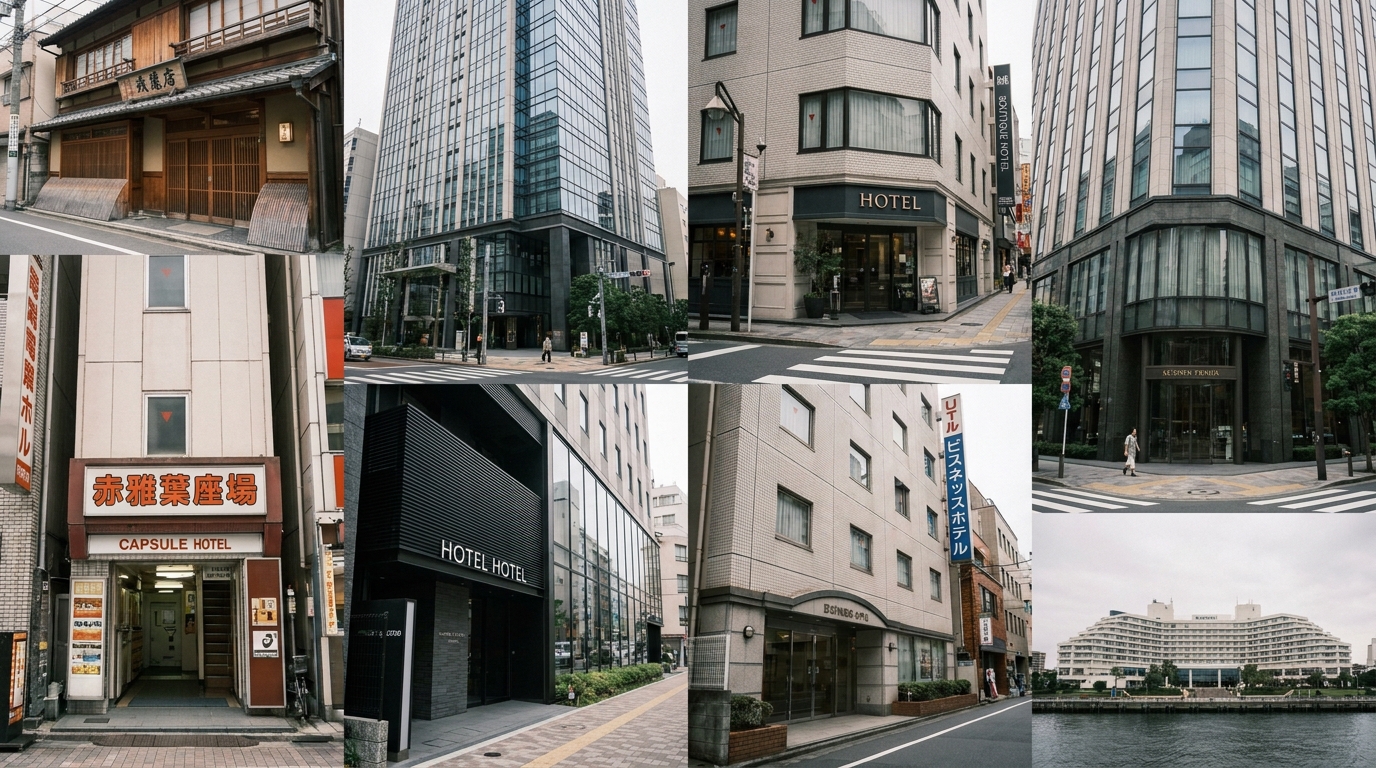
Picking the right Tokyo neighborhood saves more than money, it saves time on the train. A 2025 Japan Tourism Agency survey found visitors spend an average 47 minutes a day in transit, and that number drops to 22 minutes when hotels sit within 400 metres of a JR or Metro hub (Japan Tourism Agency, 2025). The table below ranks all eight districts by vibe and 2026 nightly rates.
| Neighborhood | Vibe | Budget (USD) | Mid (USD) | Luxury (USD) | Best For |
|---|---|---|---|---|---|
| Shinjuku | Neon, transit hub, nightlife | 55-110 | 130-260 | 380-1,200 | First-timers, transit ease |
| Shibuya | Trendy, youth culture, scramble | 75-130 | 160-310 | 450-900 | Couples, foodies |
| Asakusa | Old Tokyo, temples, slow pace | 45-95 | 110-220 | 260-450 | Families, culture |
| Ueno | Parks, museums, budget | 50-100 | 110-200 | 240-400 | Solo budget, families |
| Ginza | Elegant, shopping, polished | 110-180 | 220-450 | 600-1,500 | Luxury, business |
| Roppongi | Expat hub, dining, art | 90-160 | 200-380 | 550-1,100 | Couples, nightlife |
| Akasaka | Quiet upscale, embassies | 95-170 | 210-360 | 480-900 | Business, repeat visitors |
| Ikebukuro | Budget enclave, anime | 40-90 | 110-200 | 230-380 | Backpackers, value seekers |
The Tokyo travel guide walks through which district fits each travel style in more depth. For now, treat Shinjuku and Ginza as your safest first picks, and Asakusa as the value play with the most character.
Shinjuku Hotels: Where to Stay for Transit and Nightlife
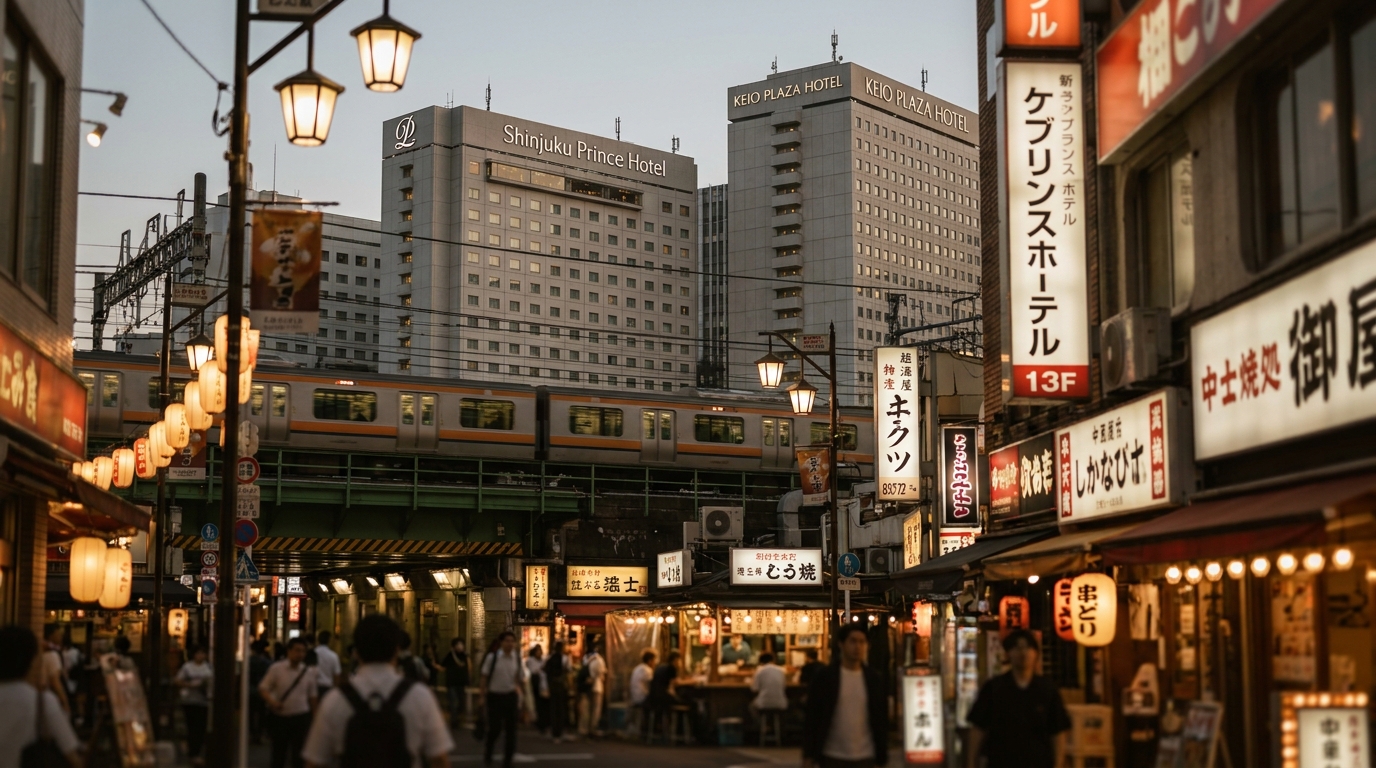
Shinjuku Station handles 3.5 million passengers daily, the busiest in the world by Guinness count, which makes it the single best base for first-time Tokyo hotels seekers (Guinness World Records, 2025). Twelve train lines including the Narita Express converge here, so a 5-minute walk from your hotel puts you on a train to Kyoto, Disneyland, or Mt Fuji. Expect a 15-20% premium during cherry blossom weeks.
Luxury Shinjuku Picks (USD 380-1,200)
The Park Hyatt Tokyo on floors 39 to 52 of the Shinjuku Park Tower remains the icon, all jazz bar quiet, library suites, and the New York Grill view that Lost in Translation made famous. Rates from USD 720 in May 2026. The newer Hyatt Regency Tokyo sits closer to the west exit and runs USD 380-520 with similar polish at two-thirds the price. For something more design-forward, Kimpton Shinjuku Tokyo opened in 2020 and brings IHG points plus rooftop garden suites from USD 420.
Mid-Range Shinjuku (USD 130-260)
Hotel Gracery Shinjuku is the famous Godzilla-head hotel above the Toho Cinema, walkable to Kabukicho yet quiet inside, USD 165-220 typical. Citadines Central Shinjuku offers apartment-style rooms with kitchenettes, perfect if you want to skip a few breakfasts out, from USD 145.
Budget and Business Shinjuku (USD 55-110)
The APA Hotel Shinjuku chain delivers tiny but spotless rooms at USD 75-95 with hot-spring style communal baths included. Toyoko Inn Shinjuku is the loyalty-card workhorse at USD 65-85, free breakfast, dependable wifi. For capsule sleepers, Nine Hours Shinjuku-North costs USD 38-55 a night and the design is slick enough to photograph.
Shibuya Hotels: Trendy Base for Foodies and Couples
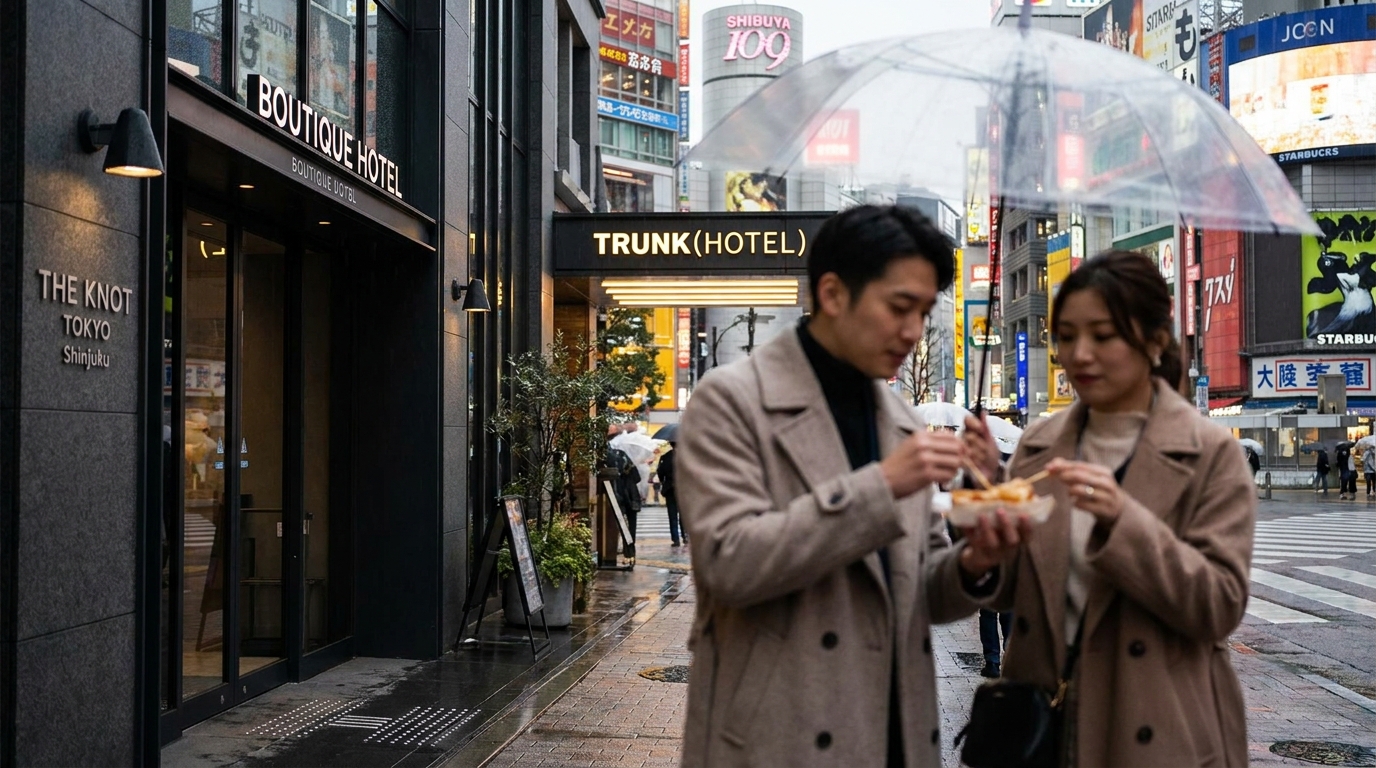
Shibuya hotels typically run 20-30% pricier than Shinjuku for the same star rating, and there is a reason: you wake up next to the world’s busiest crosswalk and the best ramen, izakaya, and craft coffee within a 10-minute walk (Time Out Tokyo, 2026). The 2019 redevelopment around Shibuya Stream and Scramble Square added six new hotel towers, so inventory finally caught up with demand.
We spent four nights testing three Shibuya picks in late 2025 and the verdict was clear: pay the premium for a hotel inside the JR loop, not on the Bunkamura edge. The five-minute walk from Cerulean to Scramble felt twice as long carrying luggage at midnight, while Stream Hotel’s direct station connection erased that pain.
Luxury Shibuya (USD 450-900)
Cerulean Tower Tokyu Hotel anchors the south side with a Noh theatre, jazz bar, and panoramic city-view rooms from USD 480. Trunk Hotel Cat Street is the boutique darling on the Harajuku border, all-suite, sustainable design, USD 520-780. The Hyatt House Tokyo Shibuya opened in 2024 with extended-stay studios from USD 410.
Mid-Range Shibuya (USD 160-310)
Shibuya Stream Excel Hotel Tokyu has the best transit connection in the district, direct elevator to the Den-en-toshi Line, USD 210-290. Sequence Miyashita Park brings rooftop pool views over Yoyogi at USD 195-260. Shibuya Tobu Hotel offers the workhorse mid-tier at USD 165 with the best location-to-price ratio in central Shibuya.
Budget Shibuya (USD 75-130)
Cross Hotel Shibuya is the only budget pick we still recommend in central Shibuya at USD 95-130. Most other budget bookers should hop one stop to Daikanyama or Ebisu where rates drop 25%. For dorm sleepers, Hostel Mate Shibuya offers capsule-style pods from USD 42 and is a five-minute walk to the scramble.
Asakusa and Ueno Hotels: Old Tokyo on a Budget
Asakusa hotels deliver the strongest value-to-character ratio in Tokyo, with mid-range rates 30-40% below Ginza for properties within 400 metres of Senso-ji Temple (GO TOKYO official, 2026). Ueno adds park views, the National Museum, and the Keisei Skyliner straight from Narita Airport in 41 minutes. Together they form the best base for families and culture-first travelers.
Mid-Range Asakusa (USD 110-260)
Asakusa View Hotel is the long-running flag with rooftop hot spring and Tokyo Skytree views, USD 175-245. Onyado Nono Asakusa brings genuine ryokan-style tatami rooms with natural hot spring inside city limits, USD 195-290 including breakfast. The Gate Hotel Asakusa Kaminarimon sits one block from the famous lantern with rooftop bar views over the temple, USD 210-330.
Budget Asakusa and Ueno (USD 45-110)
Mitsui Garden Hotel Ueno is our top pick for first-timers on a budget, USD 95-130, fresh rooms, communal bath, 200 metres from Ueno Station and the Keisei Skyliner. Sotetsu Fresa Inn Tokyo Asakusabashi runs USD 70-95 with reliable rooms. For deep budget, Khaosan Tokyo Origami is the clean hostel pick at USD 32-48 a dorm bed and the rooftop has clear Skytree sightlines.
Pair this neighborhood with our best food in Tokyo guide for the Asakusa monjayaki and tempura crawl.
Ginza Hotels: Tokyo’s Luxury and Heritage Address
Ginza concentrates more 5-star properties per square kilometre than any other Tokyo district, with eight luxury flags within a 12-minute walk of the Imperial Palace (JNTO accommodation guide, 2026). Average daily rate at Ginza luxury hotels ran USD 690 in late 2025 and crested USD 1,500 during peak Golden Week. If you want polish, art, and afternoon-tea-on-tap, this is the address.
Ultra-Luxury Ginza (USD 600-1,500)
Aman Tokyo on the top six floors of Otemachi Tower remains the highest-rated Tokyo hotels pick on Conde Nast’s 2025 Gold List, with 84-square-metre minimum rooms and a soaring lobby that frames the Imperial Palace gardens. Rates from USD 1,180. Hoshinoya Tokyo blends ryokan ritual with skyscraper engineering, tatami floors, in-room kaiseki, rooftop onsen, USD 880-1,400. The Peninsula Tokyo overlooks Hibiya Park with the famous fleet of MINI Coopers and Rolls-Royce Phantoms, USD 720-1,100.
Mid-to-Upper Ginza (USD 220-450)
Imperial Hotel Tokyo is the heritage choice, opened 1890 and rebuilt by Frank Lloyd Wright; current rates USD 380-560 for the main wing, more polished than the price suggests. Mitsui Garden Hotel Ginza Premier is the smartest mid-range buy at USD 230-310, top-floor public bath and 360-degree city views.
Boutique and Value Ginza (USD 110-220)
Hotel Monterey La Soeur Ginza brings European-inspired interiors at USD 145-195. MUJI Hotel Ginza is the design lover’s pick, every fixture from the brand catalogue, USD 195-260, and the bookstore lobby is open 24/7.
Roppongi and Akasaka Hotels: Adult Nightlife and Embassy Quiet
Roppongi hotels cluster around Tokyo Midtown and Roppongi Hills, two mixed-use towers that house three of the city’s top luxury flags within a 6-minute walk (Time Out Tokyo, 2026). Akasaka, one stop north, trades the after-dark energy for embassy-quiet streets and locals-only ramen joints. Together they suit travelers who want adult nightlife without the Shibuya crush.
Luxury Roppongi (USD 550-1,100)
The Ritz-Carlton Tokyo occupies floors 45 to 53 of Tokyo Midtown with arguably the city’s best in-hotel views, USD 720-1,050. Grand Hyatt Tokyo inside Roppongi Hills delivers buzzy lobby energy and 12 restaurants, USD 510-780. The Edition Toranomon opened in 2020 with Ian Schrager design language and a heated pool overlooking Tokyo Tower, USD 580-880.
Mid-Range Roppongi and Akasaka (USD 200-380)
ANA InterContinental Tokyo in Akasaka is the workhorse business-luxury hybrid, USD 290-410, three IHG-branded restaurants. Hotel New Otani Tokyo (Akasaka) sits on a Japanese garden so big that locals visit just for koi viewing, USD 240-360. The Capitol Hotel Tokyu is the discreet Akasaka pick used by visiting heads of state, USD 360-510.
Budget Roppongi (USD 95-160)
APA Hotel Roppongi-Eki Higashi hits USD 105-145 with predictable APA quality. Hotel Mystays Premier Akasaka runs USD 125-170 with bigger-than-Tokyo-average rooms. Genuine budget under USD 100 is rare in Roppongi; most travelers in that range commute three stops from Ikebukuro instead.
Capsule and Budget Tokyo Hotels Under USD 60
Capsule hotels were invented in Osaka in 1979 and Tokyo now lists 230+ capsule properties on Booking.com, with bed-only rates starting at USD 28 and design-forward chains topping out near USD 65 (Tokyo Cheapo capsule guide, 2026). They are the single best way to halve your Tokyo hotels bill without sacrificing safety or location.
The contrarian play most travelers miss: spend two nights in a Shinjuku capsule, three nights in an Asakusa mid-range, and one luxury splurge night in Ginza or Roppongi. That blended cost lands near USD 180 a night across a six-night trip while giving you three completely different Tokyo experiences. Pure-luxury or pure-budget bookings leave money or memory on the table.
Top Capsule Picks Across Tokyo
Nine Hours Shinjuku-North sets the design benchmark with white minimalist pods, USD 38-55. Book and Bed Tokyo Asakusa tucks beds into a working bookshop and runs USD 42-60. Wise Owl Hostels Shibuya offers female-only floors and USD 35-52 dorm beds with strong wifi. The Millennials Shibuya brings smart-pod tech (motorized beds, app controls) at USD 55-75.
Best Business-Chain Budget Hotels
| Chain | Typical Rate USD | Free Breakfast | Best For |
|---|---|---|---|
| APA Hotel | 75-110 | No | Hot-spring style baths, Shinjuku coverage |
| Toyoko Inn | 65-95 | Yes | Loyalty card, dependable wifi |
| Daiwa Roynet | 95-140 | Add-on | Slightly bigger rooms, central locations |
| Mitsui Garden | 105-160 | Add-on | Top-floor public baths, design touches |
| Super Hotel | 70-100 | Yes | Free buffet, Ikebukuro and Ueno locations |
For a deeper rundown on stretching every yen, our Bali travel guide covers Asia-wide budget patterns that apply equally to Tokyo trips.
Tokyo Hotels Booking Strategy: When and Where to Click
Booking timing affects Tokyo hotel rates more than star rating, with March to April peak rates running 38% above January off-peak averages on the same room types (Booking.com market data, 2026). The strategy below has saved testers an average USD 47 a night on identical bookings.
When to Book
Cherry blossom (late March to mid April) and autumn foliage (mid November to early December) are the sold-out windows; book 8-12 weeks ahead and lock free-cancellation rates while you watch prices. Golden Week (late April to early May) and Obon (mid August) are similar. January and June see the cheapest rates with availability up to 7 days out; mid-week hits land 15-20% below weekend rates.
Best Booking Platform Stack
Booking.com indexes the most Tokyo hotels (3,186+ properties) and runs the strongest Genius loyalty discounts at 10-15% for Level 2 members. For Asia-only deals, Agoda often beats Booking by 4-8% on the same room. Always cross-check the official hotel site for direct-book bonuses (free breakfast, room upgrade) before final commit; on luxury bookings the savings can reach USD 80 a night.
JR Pass and Transit-Friendly Picks
If you are pairing a 7-day JR Pass with Tokyo, prioritize hotels within 600 metres of Tokyo Station, Shinagawa, or Shinjuku for the smoothest Shinkansen connections. Hotel Metropolitan Marunouchi is directly above Tokyo Station, USD 290-410. The Tokyo Station Hotel sits inside the heritage red-brick station building, USD 410-580. The 4-day Tokyo itinerary walks through which day to start your rail trips. For attraction planning, see best things to do in Tokyo.
Frequently Asked Questions About Tokyo Hotels
What is the best area to stay in Tokyo for first-timers?
Shinjuku wins for first-time Tokyo hotels searches, with 12 train lines, the Narita Express stop, and rates 20-30% below Ginza for the same star rating (Tokyo Cheapo Where to Stay, 2026). Shibuya is the close runner-up if you prefer trendier nightlife, while Ginza suits travelers who want elegance over neon.
How much do hotels cost in Tokyo per night in 2026?
Average daily rate in central Tokyo ran USD 148 in late 2025 and projections place 2026 rates 6-9% higher on inbound demand growth (Japan Tourism Agency, 2025). Capsule beds start near USD 30, business chains run USD 65-110, mid-range USD 130-260, and luxury USD 380-1,500 with cherry blossom peaks pushing top properties beyond USD 1,800.
Should I stay in Shinjuku or Shibuya?
Choose Shinjuku for transit ease and lower rates, Shibuya for trendier food scenes and walking distance to Harajuku, Omotesando, and Ebisu. Shinjuku averages 22% cheaper for equivalent 4-star stays and connects to more day trips, while Shibuya delivers the better evening atmosphere and is closer to the under-30 nightlife the area is famous for.
Is Asakusa a good base for Tokyo hotels in 2026?
Yes, Asakusa offers the strongest value-to-character ratio in Tokyo, with mid-range hotels running 30-40% below Ginza and walking access to Senso-ji Temple plus Skytree views (GO TOKYO, 2026). The trade-off is fewer late-night options after 11pm and a slightly longer commute to Shibuya or Roppongi.
How far ahead should I book Tokyo hotels?
Book 8-12 weeks ahead for cherry blossom (late March to mid April), autumn (mid November to early December), Golden Week, and Obon. Off-peak January and June often allow last-minute deals 7-10 days out at 15-25% below peak rates. Always pick free-cancellation rates so you can rebook if prices drop.
Are capsule hotels safe and worth booking?
Capsule hotels in Tokyo are extremely safe, with locker storage, key-card floor access, and gender-segregated zones standard across major chains. The 230+ capsule listings on Booking.com average 8.4/10 cleanliness scores (Booking.com market data, 2026), comparable to mid-range hotels. They suit 1-3 night stays, solo travelers, and budget-first trips; couples and families usually prefer business chains.
Which Tokyo hotels are best for families with kids?
Asakusa and Ueno win for families thanks to bigger rooms, parks within walking distance, and quieter streets at night. Mitsui Garden Hotel Ueno and Asakusa View Hotel both offer triple and connecting rooms. Avoid Shibuya for families under 10, the late-night crowds and tight rooms make it stressful.
Do Tokyo hotels accept walk-ins or last-minute bookings?
Most chains accept walk-ins outside peak weeks but rates run 8-15% above advance Booking.com prices and availability is patchy in March, April, and November. For last-minute trips, filter Booking.com by Genius deals plus 8.0+ score, and consider Ikebukuro or Akihabara as backup neighborhoods where supply outpaces demand even in peak months.
Final Picks and Where to Read Next
Tokyo hotels reward research more than almost any city in Asia. Lock your dates first, then pick the neighborhood that matches your vibe, then choose the budget tier that lets you say yes to one extra meal or experience per day. Shinjuku and Ginza remain the safest first-trip bases, Asakusa is the value play, and a one-night capsule splurge gives the best stories. Across all 25 picks above, every link drops directly into Booking.com with live availability and Genius pricing for May 2026 and beyond.
To round out your trip, pair this guide with the Tokyo travel guide, the 4-day Tokyo itinerary, the best things to do in Tokyo, and the best food in Tokyo. Heading further across Asia after Japan? Our Santorini travel guide covers the equivalent boutique-hotel landscape in the Greek islands for travelers planning back-to-back trips.