How Many Days in San Francisco Do You Really Need? (2026)
Disclosure: Some links in this guide are affiliate links. If you book or buy through them, we may earn a small commission at no extra cost to you — it helps keep our guides free.
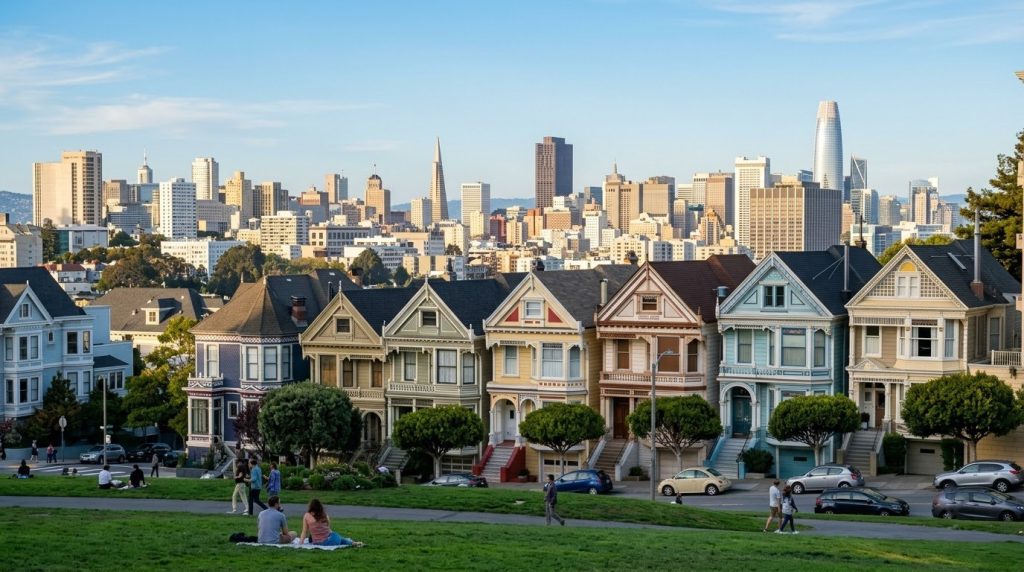
Plan 3 full days in San Francisco for a first visit, or 4 to 5 days if you also want Muir Woods, Sausalito or wine country without rushing. Three days covers the Golden Gate Bridge, Alcatraz, Chinatown, North Beach, a cable car ride and one neighborhood afternoon in the Mission or Haight. Fewer than that and you trade neighborhoods for checklists.
More than 5 days only pays off if you rent a car or fold the city into a longer California road trip.
| Trip length | What it covers | Who it suits |
|---|---|---|
| 1 day | Fisherman’s Wharf, cable car, Chinatown, a Golden Gate Bridge viewpoint | Road trippers passing through, layovers |
| 2 days | The above plus Alcatraz and North Beach | Weekenders, business add-ons |
| 3 days | Core sights plus Golden Gate Park and the Mission or Haight | Most first-timers |
| 4–5 days | City plus 1–2 day trips (Muir Woods, Sausalito, Napa or Sonoma) | Couples, families, return visitors |
| 6+ days | Slow neighborhood days, longer trips out of the city | Remote workers, Bay Area road trips |
Why 3 days is the sweet spot for most first-timers
San Francisco is compact on a map, but it is hilly, fog shifts hour to hour and the big sights sit at opposite edges of the city.
Alcatraz alone eats half a day once you count the ferry from Pier 33 and the time on the island; the National Park Service says to plan on “at least a few hours” out there. The Golden Gate Bridge is best walked or biked, not just photographed from a bus.
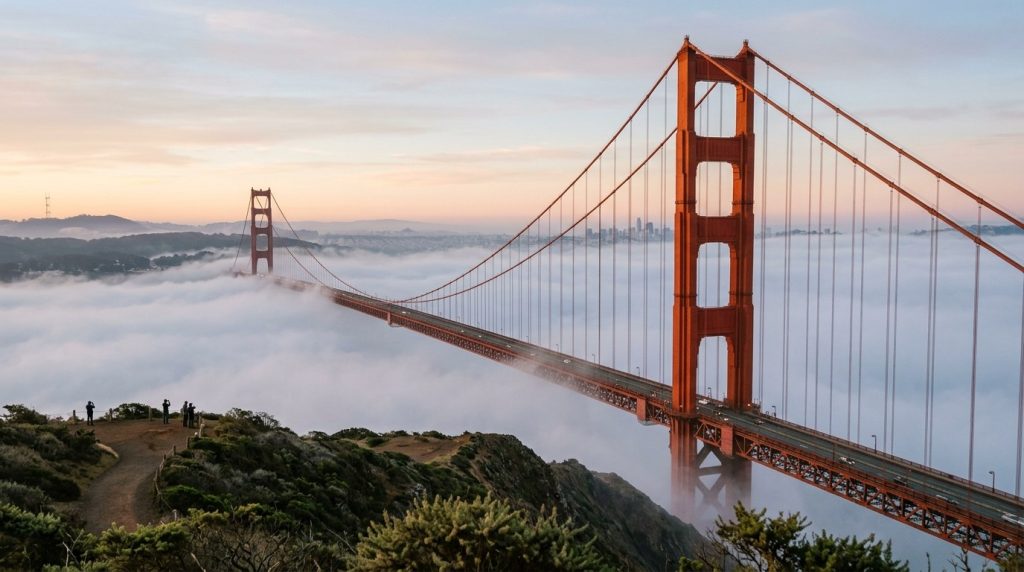
A realistic 3-day split looks like this: day one on the waterfront, Alcatraz and North Beach; day two at the Presidio, the bridge and Golden Gate Park; day three in Chinatown, the Mission murals and Dolores Park, with a cable car ride slotted in early before the lines build.
Our list of the best things to do in San Francisco helps you choose which of the big-name sights deserve a slot and which you can skip.
What 1 or 2 days actually gets you
One day is enough to say you have been, not enough to know the place, and a real share of it goes to transit. Two days works if you book Alcatraz ahead and accept that Golden Gate Park, the Mission and Haight-Ashbury get a quick pass or nothing. It fits a conference add-on or the start of a Highway 1 drive.
What days 4 and 5 add
Days 4 and 5 are where the region becomes the draw: Muir Woods, Sausalito by ferry, the Marin Headlands, Point Reyes, and Napa or Sonoma are all realistic out-and-back trips. Our guide to the best day trips from San Francisco compares them by travel time and planning needed.
With 5 days, do not reinvent the schedule. Our 5-day San Francisco itinerary lays it out day by day, grouped by neighborhood so you are not crossing town twice. Trim the last day if you only have 4.
Getting to and around San Francisco
BART trains run directly from SFO to downtown stations such as Powell Street and Montgomery roughly every 10 to 20 minutes, and the ride takes about half an hour.
Fares from the airport carry an added premium on top of the normal per-mile charge, so expect to pay roughly USD 9 to 13 one-way with a Clipper card rather than the shorter in-city fares; load the card at any station kiosk before you tap through the gates.
Inside the city, walking covers flat stretches like the Embarcadero and Chinatown easily, but the hills are real: a short-looking walk from Union Square to Nob Hill gains more elevation than it looks on a map. Rideshare apps such as Uber and Lyft are the easiest fix for steep or late-night trips.
If you drive, downtown parking garages such as Union Square or Sutter-Stockton charge roughly USD 30 to 46 for a full day, which usually beats hunting for street parking with its short meter limits and tow-away street-cleaning signs.
If you head north over the Golden Gate Bridge toward Marin, the toll works only one way: driving south back into the city costs roughly USD 10.25 to 11.25 depending on how your plate is billed, charged automatically since there are no toll booths; driving out to Sausalito or Muir Woods costs nothing.
For the bay itself, ferries from the Ferry Building and Pier 41 run to Sausalito, Tiburon and Angel Island, a scenic and often less crowded alternative to bridge traffic.
One underrated option is the F-line’s vintage streetcars, which run along Market Street and the Embarcadero on the same Muni fare as any bus, so riding one to Fisherman’s Wharf doubles as sightseeing instead of a plain commute.
Bike and scooter shares are parked on nearly every other corner, but the hills make them a mixed bag for anyone not used to cycling uphill; they work best on flat routes like the Embarcadero or the paved paths through Golden Gate Park.
From the airport, a metered taxi or a prearranged black car is the simplest option if you land late or are traveling with a group and a lot of luggage, though it costs noticeably more than BART; shared airport vans are a middle option that stop at multiple hotels on the way, so they take longer but split the cost.
Book these before you lock in your dates
Two things decide whether your plan works, and both sell out.
– Alcatraz. Only one company, Alcatraz City Cruises, is authorized to dock at the island. Tickets go on sale up to 90 days ahead, and the National Park Service fee page lists the adult Day Tour at USD 47.95 and the Night Tour at USD 59.65. Cruises sold as “Alcatraz views” do not land on the island.
Book the official site first, then build the trip around that slot. – Muir Woods. Parking reservations are required for every car (USD 10 for a standard vehicle) on top of the USD 15 per-adult entry. The park warns that slots often sell out on weekends, and there is no cell service once you arrive, so download your confirmation beforehand.
All prices in this guide are in US dollars, so there is no conversion to worry about.
Who should skip the extra days and stick to 2 or 3
Not everyone needs 5 days. Cut the trip shorter if:
– You hate cities in cool, gray weather. Summer fog can sit over the western half of town for days, and a fifth day of 60-degree drizzle at Ocean Beach is not a vacation. – Hotel prices make each extra night painful. On a tight budget, spend the extra nights in Sonoma or Monterey instead. – You do not care about day trips. The core city fits in 3 well-planned days; days 4 and 5 are mostly about getting out of town.
How the season changes your day count
Summer brings crowds and fog; early fall is usually the clearest stretch, and our best time to visit San Francisco guide breaks it down month by month. In fall, 3 days stretches further because bridge views are more reliable. On a foggy June trip, a buffer day gives you a second shot at the Golden Gate.
Money-saving tips for your trip
If you plan to hit several paid attractions, San Francisco CityPASS currently runs USD 89.95 for adults, valid across 9 consecutive days from first use, and lets you pick 4 attractions from a list of 8 that includes the California Academy of Sciences, the Exploratorium, SFMOMA and a Blue & Gold Fleet bay cruise. It does not cover Alcatraz, so budget for that separately.
Several of the best views and experiences cost nothing. Crissy Field and Fort Point give you Golden Gate Bridge views without paying for anything beyond getting there, the Ferry Building is free to wander and graze if you skip buying anything, Dolores Park is the city’s favorite free people-watching spot, and the hike up to Twin Peaks rewards you with the skyline view postcards use, no ticket required.
The nonprofit group SF City Guides runs free, donation-based walking tours of neighborhoods such as the Mission murals, North Beach and Chinatown, led by local volunteers.
On food, lunch specials and prix-fixe menus in the Financial District and Chinatown routinely undercut dinner prices at the same restaurants, and the taquerias of the Mission serve a full meal for a fraction of a sit-down dinner near Fisherman’s Wharf, which is priced for one-time visitors.
For transit, the SFMTA Visitor Passport mentioned below pays off fastest if you are riding more than 3 or 4 times in a day; on a lighter day, single Muni fares work out cheaper than the pass.
What each extra night costs
Hotels are the biggest variable. CoStar’s August 2026 data put the San Francisco average daily rate at USD 216.77, up 8.7% year on year and the biggest gain among the top 25 US markets. KAYAK’s listings show double rooms averaging USD 303–312 a night, with December the cheapest month and March the priciest on its data.
Transport is cheaper. The SFMTA Visitor Passport costs USD 15 for 1 day, USD 35 for 3 days and USD 47 for 7 days, covering Muni, streetcars and cable cars. A single cable car ride is USD 9, so the 3-day pass pays off after 4 rides. For food, tours and transport costs, see our San Francisco travel budget.
Neighborhoods to know before you pick a base
San Francisco reads more like a patchwork of small towns than one downtown, and knowing a few by reputation helps you choose where to spend an afternoon, not just where to sleep.
The Mission is the city’s food engine: taquerias, the mural-lined Clarion Alley and Balmy Alley, and Dolores Park for an afternoon in the sun. Haight-Ashbury trades on 1960s counterculture history, with vintage shops and Golden Gate Park’s eastern entrance a short walk away.
The Castro is the historic center of LGBTQ+ San Francisco, with rainbow crosswalks, the Castro Theatre marquee and a lively bar scene after dark. Chinatown, reached on foot from Union Square, is the oldest Chinatown in North America, with dim sum houses and the narrow, lantern-strung Waverly Place.
The Marina and Cow Hollow are flatter, younger-professional neighborhoods close to the Palace of Fine Arts and Crissy Field, good for a morning walk with a bridge view. SoMa, south of Market, mixes convention hotels, Oracle Park on game days and the Yerba Buena museum cluster.
For food beyond the hotel breakfast, North Beach is the place for red-sauce Italian and espresso at century-old cafes, the Mission and the Outer Richmond’s Clement Street corridor both do cheap, excellent Asian food away from tourist prices, and the Ferry Building’s Saturday farmers market is worth timing a morning around if you are in town on a weekend.
Fisherman’s Wharf food is priced for one-time visitors and is rarely the best meal in the city, even if clam chowder in a sourdough bowl is worth doing once. Keep these neighborhood personalities in mind when you compare the three bases below.
A few recurring events are worth checking against your dates, since they change crowds and hotel prices: Pride in late June fills the Castro and the Civic Center with a parade and parties, Fleet Week in October brings Blue Angels flyovers to the bay that are easily watched for free from Crissy Field or the Marina Green, and Outside Lands in August turns part of Golden Gate Park into a ticketed, multi-day music festival that is worth avoiding if you just want a quiet walk through the park that weekend.
Where to stay
– Union Square: The most central base, with cable cars, BART and Muni steps away; best for 2–3 day trips.
It borders the Tenderloin, so check your hotel’s exact block; our guide to whether San Francisco is safe covers the streets to avoid at night. – North Beach and Fisherman’s Wharf: Walkable to Pier 33 for Alcatraz, Chinatown and the waterfront.
The Wharf suits families; North Beach suits couples who want Italian dinners and bars nearby. – Nob Hill: Quieter, classic and right on the cable car routes. KAYAK’s average here runs much higher than the city average, so it is a splurge rather than a default.
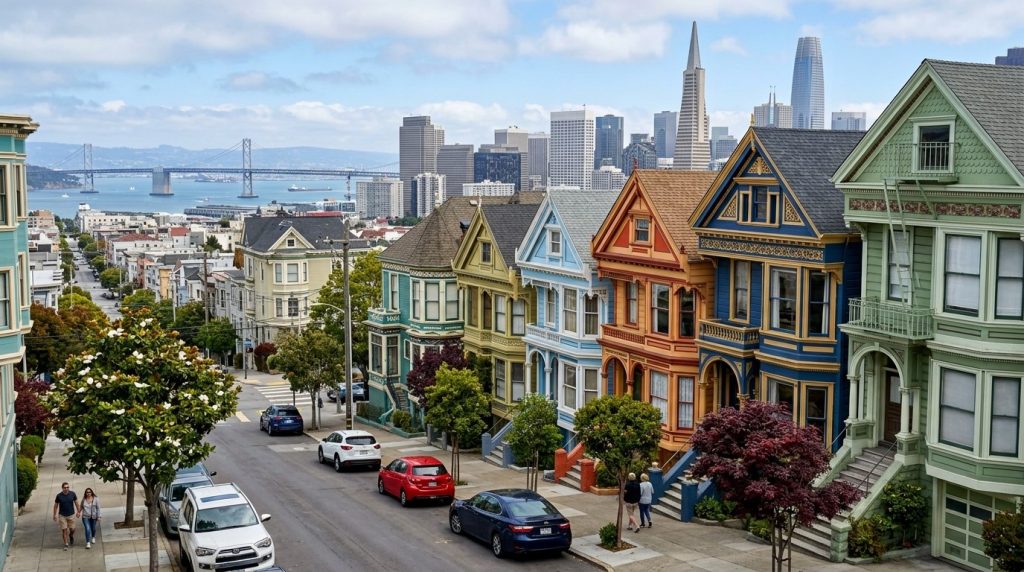
Find your San Francisco hotel on the map
Live prices from Booking, Airbnb and more — move the map or change dates to compare stays across San Francisco.
Frequently Asked Questions
Is 3 days enough time in San Francisco?
Yes. Three full days is enough for a first visit if you book Alcatraz in advance and group sights by neighborhood: the waterfront and North Beach, the Presidio and Golden Gate Bridge, then Golden Gate Park and the Mission. You will not have time for day trips like Muir Woods or Napa.
Is 5 days too long in San Francisco?
Not if you use 1 or 2 of those days to get out of the city for Muir Woods, Sausalito or wine country. Staying inside the city for all 5 can drag, especially in foggy summer weather, and the hotel bill climbs quickly.
How far in advance should I book Alcatraz?
As early as your dates are fixed. Alcatraz City Cruises, the only ferry operator allowed to dock at the island, releases tickets up to 90 days ahead, and the National Park Service strongly recommends reserving. Popular summer and weekend departures, and the Night Tour, are the first to go.
Can you see San Francisco in 1 day?
You can see the highlights, but only at a fast pace. Ride a cable car, walk Chinatown and North Beach, follow the Embarcadero to Fisherman’s Wharf and finish at Crissy Field for a Golden Gate Bridge view. Alcatraz is possible only if you already hold a ticket for an early departure.
Do I need a car in San Francisco?
Not inside the city. Muni, cable cars and BART cover the main sights, and parking is expensive and scarce. A car helps on days 4 and 5 for Muir Woods, Point Reyes or wine country, so rent one only for those days.