
Disclosure: Some links in this guide are affiliate links. If you book or buy through them, we may earn a small commission at no extra cost to you — it helps keep our guides free.
Where to Stay in San Francisco 2026: Best Areas & Hotels
For most first-time visitors, Union Square is the best place to stay in San Francisco because it’s central, walkable, and sits on every cable car and Muni line. We’ve slept across the city’s neighborhoods, and below we’ll match each area to your budget, trip style, and how much hill-climbing you can stomach.
Key Takeaways
– San Francisco drew over 23 million visitors in 2024, and tourism rebounded past pre-pandemic spend (San Francisco Travel Association, 2025).
– Average daily hotel rates run roughly $230-$280 in 2026, among the priciest in the US (STR/CoStar, 2025).
– Union Square and the Embarcadero are the most transit-connected bases, with cable cars, BART, and Muni within a few blocks.
– The city is just 7×7 miles, so you can stay central and reach most sights in under 30 minutes.
Find your San Francisco hotel on the map
Live prices from Booking & Airbnb — tap a pin to compare stays around Union Square and Fisherman’s Wharf and beyond.
Which Neighborhood Is Best for First-Timers?
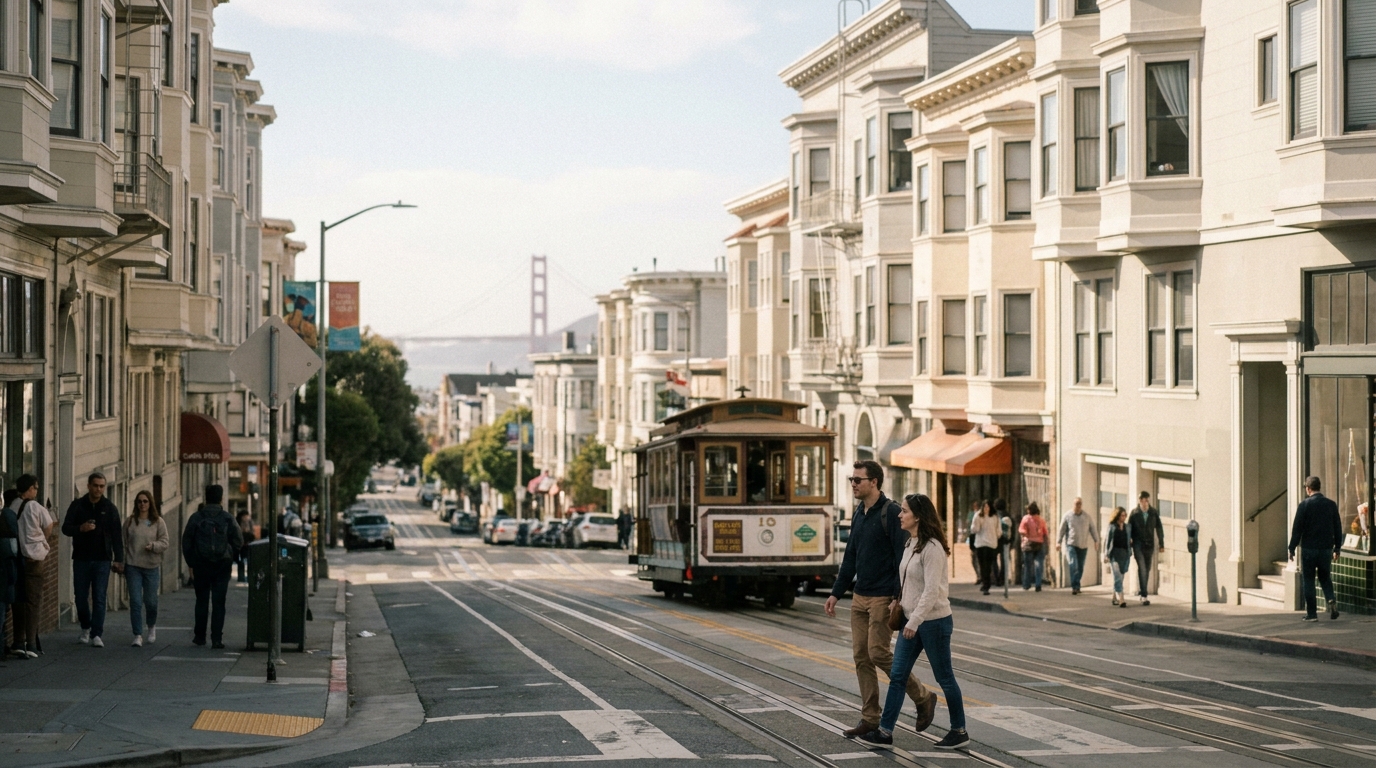
Union Square wins for first-timers. It’s the retail and theater heart of the city, sits on the Powell-Hyde and Powell-Mason cable car lines, and puts you within walking distance of Chinatown, the Financial District, and the Ferry Building. You’ll trade some charm for convenience, but you won’t waste hours in transit.
Hotels here span every budget. Expect $180-$260 a night for solid 3-star rooms and $350+ for landmark properties like the Westin St. Francis. We like Union Square because you can drop your bags, grab a cable car, and be at Fisherman’s Wharf in 20 minutes. Compare live rates on Booking.com before you lock anything in.
Where Should Couples and Honeymooners Stay?
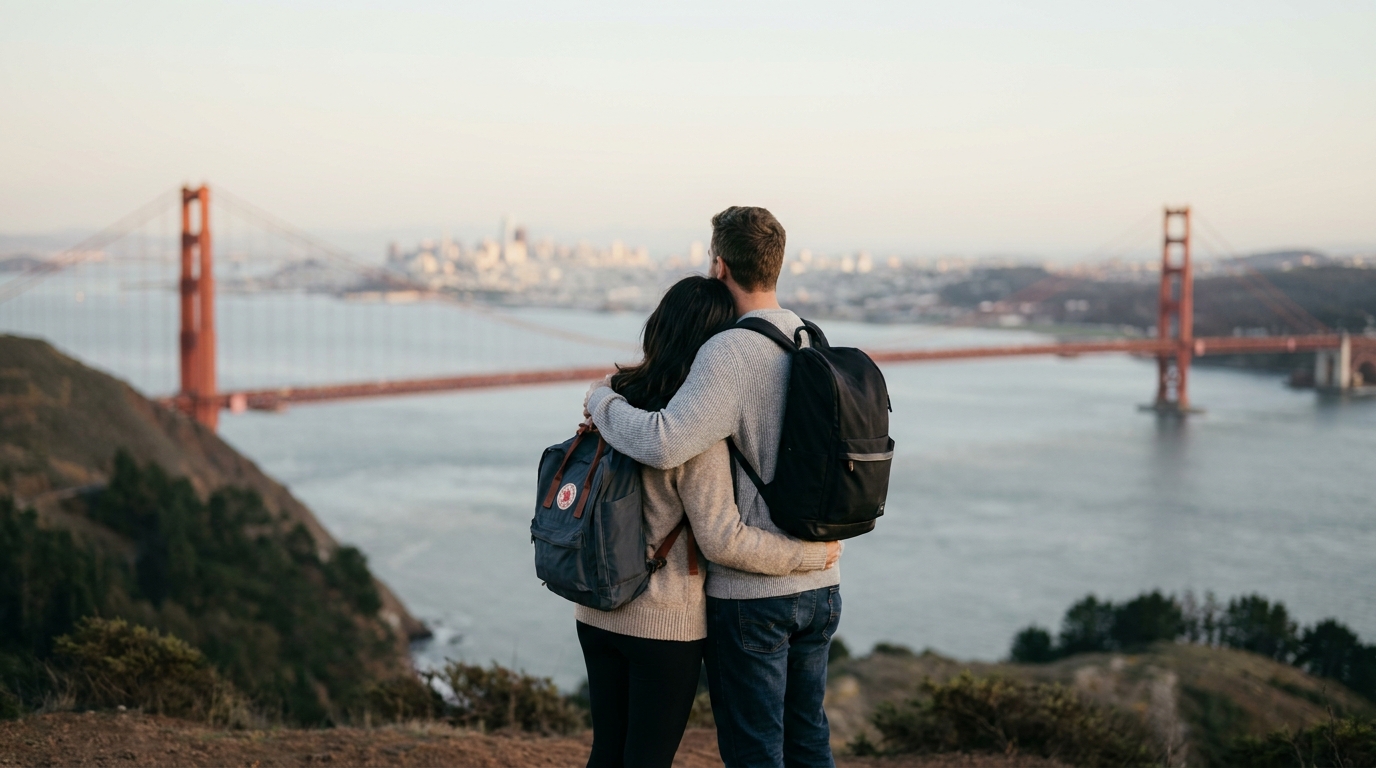
Couples should look at Nob Hill or the Marina District. Nob Hill delivers old-money glamour, quiet streets, and skyline views from the top of the cable car line. The Marina trades grandeur for a relaxed, low-rise vibe near the bay, with easy strolls to the Palace of Fine Arts and Crissy Field.
Nob Hill’s grand dames — the Fairmont and the Mark Hopkins — run $400-$700 a night in peak season, but boutique options nearby start near $250. The Marina skews to smaller inns and motor lodges at $200-$320. For a romantic walk-everywhere base, we’d pick the Marina; for a special-occasion splurge, Nob Hill. See our full San Francisco itinerary to pair your stay with day plans.
What’s the Best Area for Families?
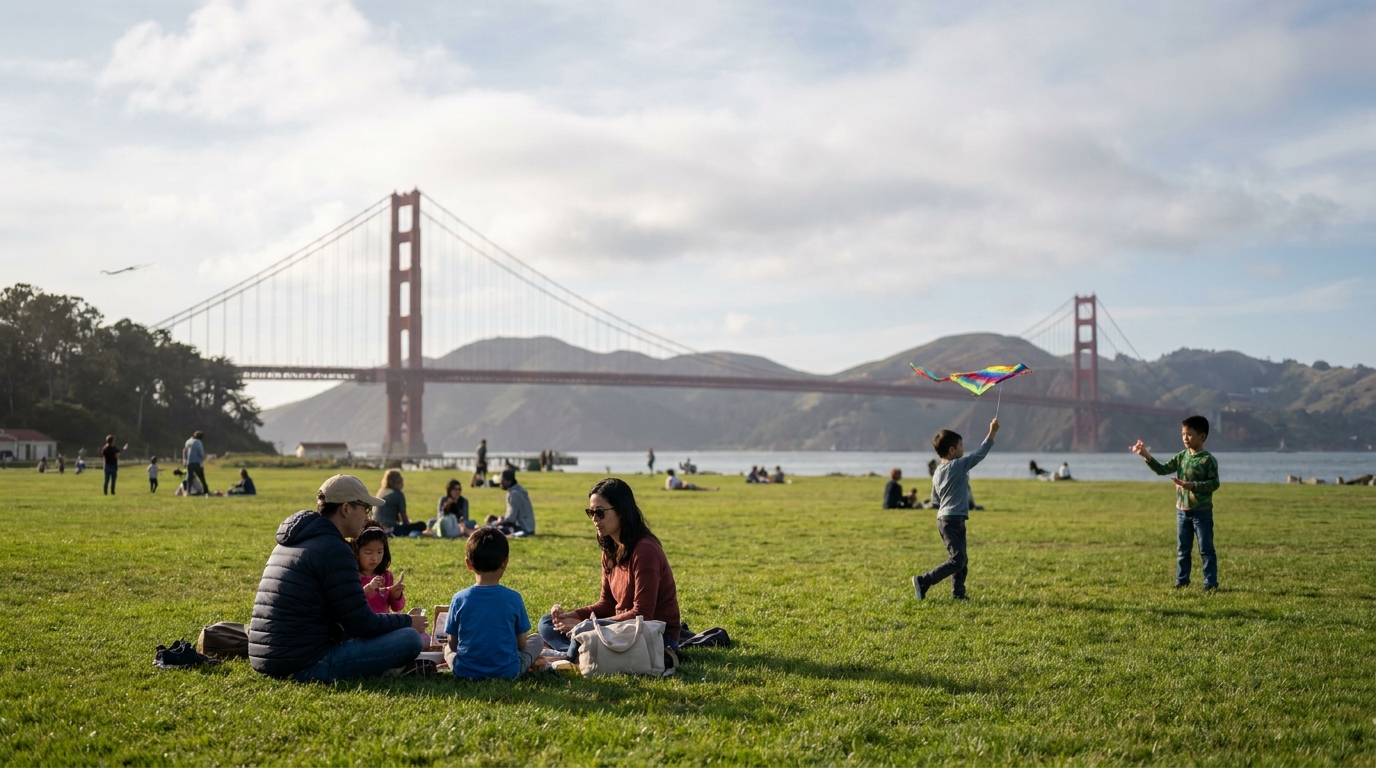
Fisherman’s Wharf is the easiest base for families. It’s flat (a rarity here), packed with kid-friendly attractions, and steps from PIER 39, the sea lions, and the Aquarium of the Bay. You’ll skip the steepest hills and stay near the Ghirardelli Square ice cream that buys you parental goodwill.
| Area | Best For | Avg Nightly Rate (2026) | Walkability |
|---|---|---|---|
| Union Square | First-timers | $200-$280 | Excellent |
| Fisherman’s Wharf | Families | $220-$330 | Very good (flat) |
| Nob Hill | Couples / luxury | $300-$700 | Good (steep) |
| The Mission | Foodies / budget | $150-$240 | Very good |
| SoMa | Business / nightlife | $180-$300 | Good |
Family rooms at the Wharf run $220-$330. Book a place with parking included — overnight garage fees here can top $60. We always reserve family-friendly hotels months ahead for summer, since the Wharf sells out fast.
Where Should Budget Travelers Stay?
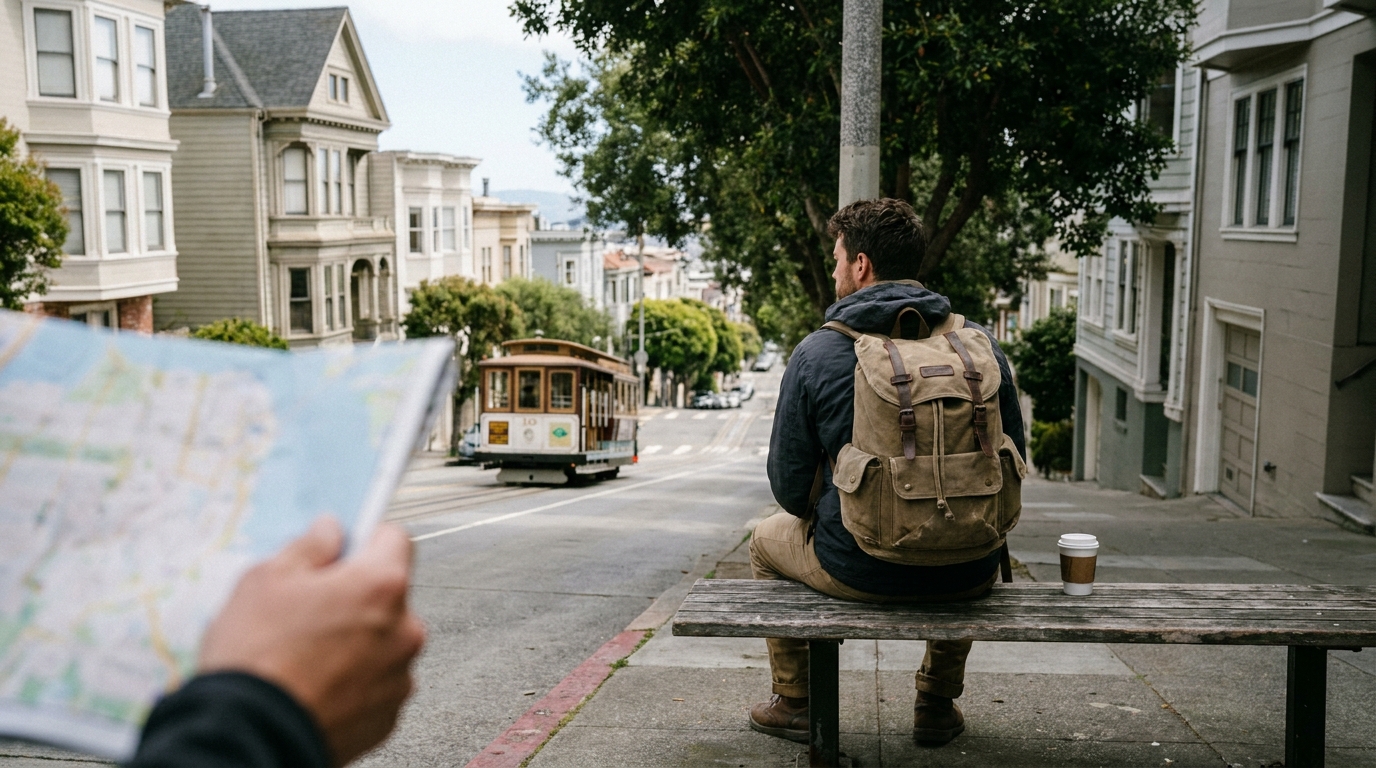
The Mission District offers the best value without stranding you far from the action. It’s sunnier than the foggy west side, loaded with cheap taquerias and coffee shops, and well-served by two BART stations. Hostels and budget inns here start around $45 for dorm beds and $150 for private rooms.
The Mission won’t give you postcard views, but it’ll give you the city’s best burritos and a real neighborhood feel. SoMa is another budget-friendly option midweek, when business hotels drop rates. If you want walkable nightlife and food on a tight budget, the Mission is our pick. Browse budget stays in San Francisco to see current deals.
Is Fisherman’s Wharf or Union Square Better?
It depends on your priorities. Union Square wins for transit, shopping, and central access; Fisherman’s Wharf wins for flat terrain, waterfront views, and family attractions. Union Square sits roughly two miles south of the Wharf, and the cable car links them in about 20 minutes.
We recommend Union Square for transit-dependent travelers and the Wharf for families or anyone who hates hills. Both are tourist-heavy and pricier than residential neighborhoods, so weigh whether you want convenience or a quieter local base. Either way, you’re never far from the bay.
How Do I Get Around From My Hotel?
San Francisco’s transit makes a central hotel pay off. Muni buses and the Metro cover most neighborhoods, BART links you to the airport and the East Bay, and the historic cable cars connect Union Square to the Wharf. A single Muni ride is about $2.75, and a Clipper card or the MuniMobile app saves you fumbling for coins.
SFO sits 13 miles south; BART reaches downtown in about 30 minutes for roughly $11. If you’re road-tripping the coast afterward, reserve a vehicle early through Discover Cars — downtown rental rates spike in summer.
Which Areas Should I Avoid?
The Tenderloin and parts of mid-Market see the most visible street issues and petty crime, so we’d skip booking there despite the low rates. Pockets of SoMa near 6th Street can feel rough after dark too. Stick to Union Square, Nob Hill, the Marina, the Wharf, or the Mission’s commercial corridors and you’ll be fine.
San Francisco is generally safe for tourists in the areas above, but car break-ins are a real, well-documented problem citywide. Never leave anything visible in a parked car. Use hotel parking or garages, and you’ll dodge the most common headache. Our San Francisco safety guide covers the details.
When Should I Book for the Best Rates?
Book 2-3 months ahead for summer and major conventions, when rates and occupancy peak. San Francisco’s hotel occupancy regularly tops 75% in high season, and big tech conferences at Moscone Center can swallow downtown inventory overnight (San Francisco Travel Association, 2025).
Shoulder months — April-May and October-November — bring lower rates and the city’s clearest weather, since summer fog can blanket the coast. We’ve found midweek stays in SoMa drop sharply when conventions aren’t in town. Set a price alert on Booking.com and pounce when free-cancellation rates dip.
Frequently Asked Questions
What is the safest area to stay in San Francisco?
Nob Hill, the Marina District, and Pacific Heights are among the safest, quietest areas for visitors. They’re residential, well-lit, and low on street issues. Union Square is also fine and far more central, though busier. Avoid booking in the Tenderloin or near mid-Market.
Is Union Square a good area to stay in?
Yes. Union Square is the most convenient base in the city, sitting on cable car, Muni, and BART lines within a few blocks. You can walk to Chinatown, the Ferry Building, and shopping. It’s tourist-heavy and pricier, but it saves you serious transit time.
How much does a hotel in San Francisco cost in 2026?
Average daily rates run roughly $230-$280 in 2026, among the highest in the US (STR/CoStar, 2025). Budget rooms in the Mission start near $150, while landmark hotels on Nob Hill can exceed $500 a night in peak summer season.
Do I need a car in San Francisco?
No. The city is just 7×7 miles with strong Muni, BART, and cable car coverage, plus easy rideshares. Parking is expensive and car break-ins are common. We only recommend renting a car if you’re heading to wine country or down the coast afterward.
Is Fisherman’s Wharf too touristy to stay in?
It’s touristy, but it’s also flat, scenic, and ideal for families. You’ll pay a premium and dodge crowds in peak hours, yet you’re steps from PIER 39, the bay, and ferry departures. For a quieter, more local feel, choose the Marina or Nob Hill instead.
How many days do I need in San Francisco?
Three to four days covers the headline sights — Golden Gate Bridge, Alcatraz, the Wharf, and a neighborhood or two. A central hotel lets you see more with less transit. Add a day if you want a wine country or Muir Woods day trip.
When is the cheapest time to visit San Francisco?
January through March and the fall shoulder season bring the lowest rates outside major conventions. Summer is peak demand and peak fog. April-May and October offer the best mix of clear weather and softer hotel prices.
Final Thoughts
There’s no single best place to stay in San Francisco — it depends on whether you want central transit (Union Square), family-friendly flats (Fisherman’s Wharf), romance (Nob Hill or the Marina), or value (the Mission). Pick your priority, stay central, and the 7×7 city opens up fast.
Ready to lock in your base? Compare live, free-cancellation rates on Booking.com now, then build out your trip with our San Francisco itinerary. Book early for summer — the best rooms go first.