Best Time to Visit Japan (2026)
Disclosure: Some links in this guide are affiliate links. If you book or buy through them, we may earn a small commission at no extra cost to you — it helps keep our guides free.
- The best time to visit Japan is spring (March to May) or autumn (October to November).
- Japan stretches nearly 3,000 kilometers, so the best month shifts by region rather than one national calendar.
- Winter suits skiing in the north and beaches in the south.
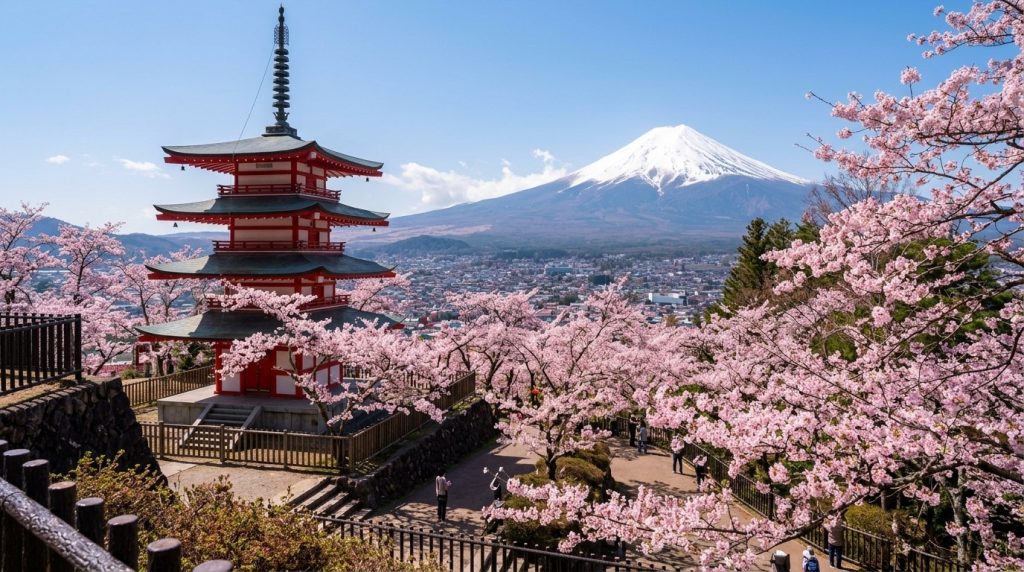
The best time to visit Japan is spring (March to May) or autumn (October to November), when Honshu’s cities average highs near 64°F (18°C) under mostly dry skies and Tokyo’s cherry blossoms reach full bloom around March 26. But Japan stretches nearly 3,000 kilometers from subtropical Okinawa to snow-bound Hokkaido, so the single best month shifts by region rather than following one national calendar.
| Season | Honshu (Tokyo/Kyoto) | Hokkaido (north) | Okinawa (south) | Best for |
|---|---|---|---|---|
| Spring (Mar-May) | Cherry blossoms late March to early April | Cherry blossoms late April to early May | Cherry blossoms already faded by February | Sakura viewing, mild days |
| Summer (Jun-Aug) | Humid rainy season (tsuyu) into a hot August | No real rainy season, cool evenings | Beach season, rising typhoon risk | Escaping the rain in Hokkaido |
| Autumn (Oct-Nov) | Foliage peaks mid-to-late November | Foliage starts mid-September | Still swimmable through October | Foliage color, thinner crowds |
| Winter (Dec-Feb) | Cold, dry, occasional Tokyo snow | Deep powder snow, ski season | Mild beach weather, near 68-70°F | Skiing north, beach south |
Spring (March to May)
Spring is Japan’s most photographed season because the cherry blossom line moves roughly 1,500 km north over about six weeks rather than blooming on one date. Okinawa’s early-flowering cherry trees, a different species from the mainland’s someiyoshino, bloomed from late January into early February, well before most travelers even book flights.
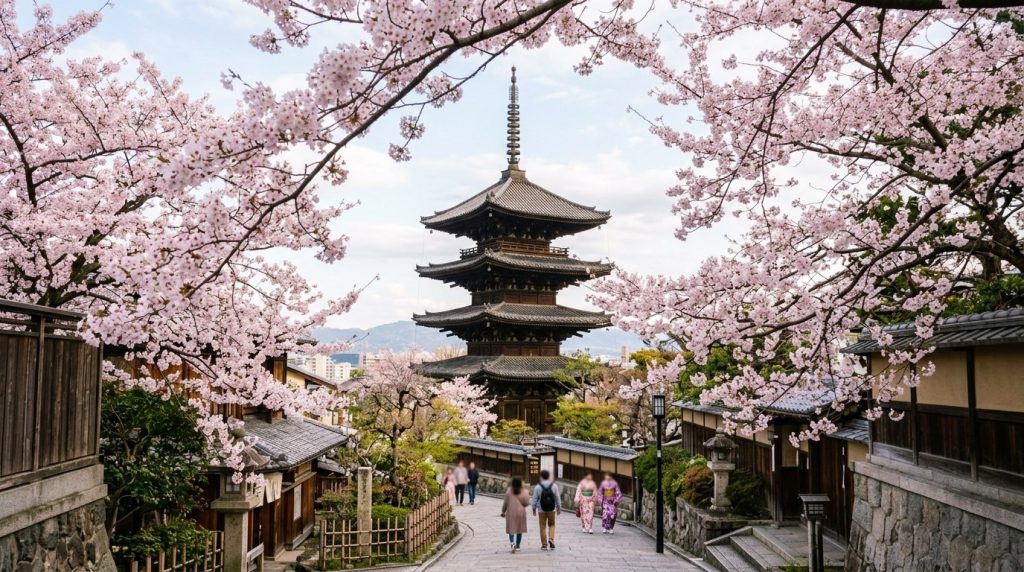
Tokyo and Kyoto follow far later, with Tokyo’s 2026 forecast showing flowering around March 19 and full bloom around March 26, while Kyoto trails a few days behind at full bloom around March 31. Hokkaido comes last of all: Sapporo’s blossoms are not expected to open until around April 27, peaking near May 1, a full five weeks after Tokyo.
For a spring trip built around sakura, plan the visit using Tokyo’s blossom timeline or Kyoto’s temple gardens in bloom for late March, then treat Hokkaido as a separate, later trip rather than trying to catch both regions on one visit.
Autumn (October to November)
Autumn is the better-value alternative to spring, delivering similar color and comfort at lower hotel rates and with smaller crowds. Tokyo’s average high sits near 63°F (17°C) in November, close to April’s numbers, and the air is typically drier than the humid stretch that opens summer.
Foliage follows the same south-to-north pattern as cherry blossoms but in reverse: Hokkaido’s Daisetsuzan National Park shows its first red leaves around mid-September, the earliest color anywhere in the country, while Osaka and the wider Kansai region do not peak until mid-to-late November.
That six-to-eight week spread means a traveler chasing foliage should move north to south across the season, starting in Hokkaido in late September and finishing on Honshu in November, the opposite direction of a spring cherry blossom trip.
Summer
Summer across most of Japan means a wet start followed by a humid finish, so travelers who want to avoid both should look north.
In 2026, the rainy season (tsuyu) reached Tokyo, Kyoto, Osaka, and Nagoya around June 6-7 and lifted around July 19, while southern Kyushu entered tsuyu earlier, near June 1, and Okinawa entered earliest of all, in early May.
Hokkaido breaks the pattern entirely: Japan’s northernmost main island does not experience a meaningful rainy season, so Sapporo and the surrounding countryside stay comparatively dry and cool while the rest of the country deals with humidity and sudden downpours.
Once tsuyu lifts in late July, Honshu turns hot and sticky through August, which is exactly when many domestic travelers shift toward Hokkaido’s cooler air or Okinawa’s beaches instead of Tokyo and Kyoto. That summer heat is a genuine hazard, and our honest answer on Japan safety covers it alongside earthquakes and typhoons, risks that matter more than crime.
Winter
Winter splits Japan into two opposite trips rather than one shared experience. Hokkaido gets consistent, dry powder snow that has built an international ski industry around resorts like Niseko, with the season running from December through February. If the mild south appeals, our verdict on an Okinawa trip weighs its coral beaches and Ryukyu history against the 2.5-hour flight from Tokyo. Travelers who pick the snow and base in Sapporo can add an onsen town like Noboribetsu, about 75 minutes away, using our Hokkaido day trip guide.
Okinawa sits at the other extreme, with Naha’s daytime highs averaging near 70°F (21°C) in January and overnight lows around 63°F (17°C), mild enough for a beach walk even in the coldest month.
Honshu falls in between, with Tokyo and Kyoto turning cold and dry with only occasional snow, so a winter trip works best when a traveler commits to one end of the country, snow in the north or mild air in the south, rather than expecting one winter experience nationwide.
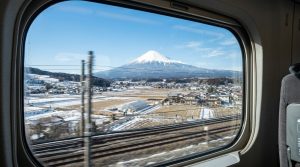
Mount Fuji’s climbing season, if that’s part of the plan
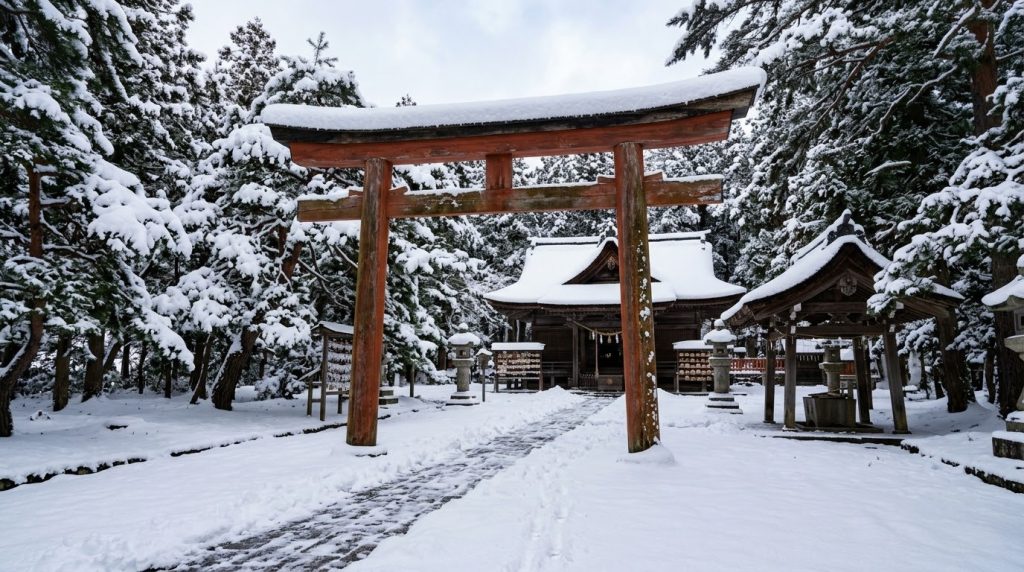
Mount Fuji’s official climbing season is far shorter than the trip-planning seasons covered above, typically running from July 1 to early September.
Outside that window, the mountain huts along the main trails close, public buses to the trailheads stop running, and the climb itself becomes a genuinely different, more dangerous undertaking that most travelers should not attempt without serious mountaineering experience and gear.
In 2026 the Fujinomiya route and the other main trails closed for the season on September 10, in line with the typical early-September cutoff.
That narrow window overlaps with the hottest, most humid stretch of the Honshu summer covered above, which is the trade-off for anyone planning a climb: the mountain is open, but the weather at lower elevations is at its least comfortable for everything else on a Japan itinerary.
Travelers building a trip specifically around climbing Fuji should treat the July-to-early-September window as fixed and work the rest of the itinerary around it, rather than trying to fit a climb into a spring or autumn trip when the trails are simply closed.
The dates that spike prices nationwide
Three windows push hotel and flight prices up across every region, regardless of season. Golden Week 2026 spans April 29 to May 6, though April 30 and May 1 fall on regular weekdays; the continuous holiday stretch runs five days, from May 2 to May 6, and that is when transport and hotels sell out fastest.
Obon, Japan’s mid-August homecoming holiday, centers on August 13-15 in 2026, with the heaviest outbound travel on August 8 and August 11-13 and the busiest return trains on August 15-16; Tokyo and parts of the north actually observe an earlier, July 13-16 version of Obon on the old solar calendar, while Okinawa follows the lunar calendar and celebrates closer to August 26-28.
New Year, roughly December 28 to January 3, adds a third nationwide spike as domestic travelers head home and both trains and flights sell out early. Booking inside any of these three windows without reserving well ahead usually means paying peak rates for whatever inventory is left.
Best time to visit Japan on a budget
Outside the three price-spike windows above, two stretches consistently run cheaper than the rest of the calendar.
Mid-January through late February, once the New Year holiday clears, sees hotel and flight prices drop across most of Honshu, since the window sits after New Year demand and before spring cherry blossom bookings start pushing rates back up; it is also one of the few stretches with short lines at major attractions in Tokyo and Kyoto.
June, once Golden Week has passed and before the Obon rush builds, is the other reliable low-price window, with the trade-off being the tsuyu rainy season covered above.
Both windows require accepting a weather compromise, cold in January and February or wet in June, in exchange for lower rates and thinner crowds. Travelers who can work around either compromise typically find Tokyo and Kyoto hotel rates noticeably lower than the same rooms cost during the March-to-May or October-to-November peak windows, making either stretch worth considering for anyone prioritizing budget over ideal weather. Honest trade-offs and highlights are weighed in our piece on whether Kanazawa is worth visiting.
Flight prices tend to follow the same demand pattern as hotel rates, since international carriers price seats into Tokyo and Osaka in response to the same swings in travel demand that drive hotel pricing.
A traveler with flexible dates gets more value from searching across an entire low-demand month rather than fixing on one travel week, since fares and room rates both move with demand throughout the month rather than staying flat.
Combining a flexible-date flight search with the January-February or June windows above is a reasonable way to approach a budget-focused Japan trip without giving up on comfort entirely, since neither window asks a traveler to accept anything close to the crowding of the three spike periods.
When NOT to visit Japan
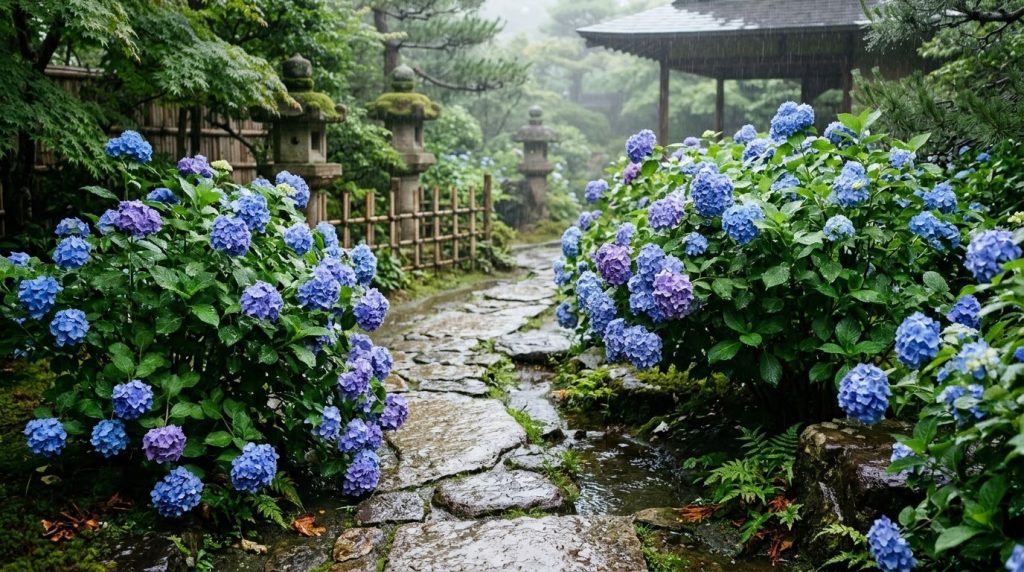
Skip late June through mid-July almost anywhere on Honshu or Kyushu unless rain-soaked hydrangeas are part of the plan, since that window is the core of the 2026 tsuyu rainy season across Tokyo, Kyoto, Osaka, and Nagoya.
Avoid the first week of May unless Golden Week’s crowds and elevated prices are already built into the budget, since transport and hotels book out nationwide during that stretch. Late August through September carries the highest typhoon risk, particularly for Okinawa and southern Kyushu, so travelers without flexible dates should build buffer days around any flight booked then.
Mid-August around Obon should also be avoided by anyone trying to book last-minute, since domestic demand for trains and hotels peaks at the same time international visitors are touring.
Plan your Japan trip
Find your Japan hotel on the map
Live prices from Booking, Airbnb and more — move the map or change dates to compare stays across Japan.
A 2026 Japan itinerary works best when the season decision comes first and the route second. A first-time visitor centered on Tokyo can pair the spring or autumn window above with a 4-day Tokyo itinerary to fill the days around peak bloom or foliage, then use the season-by-region table to decide whether Hokkaido or Okinawa fits as an add-on.
This week’s verified rate puts USD 1 at JPY 153.5, so a hotel room listed at JPY 8,600 comes out to about USD 56 (JPY 8,600) a night, a useful benchmark for budgeting regardless of which season or region ends up on the itinerary.