Is Japan Expensive? (2026)
Disclosure: Some links in this guide are affiliate links. If you book or buy through them, we may earn a small commission at no extra cost to you — it helps keep our guides free.
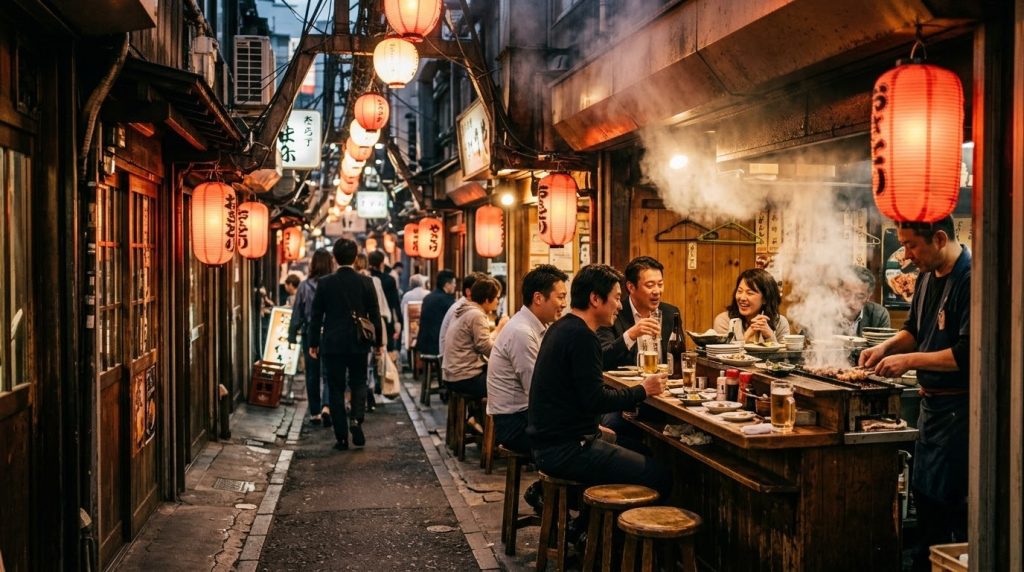
Japan is expensive in a few specific spots and remarkably cheap in most others, with a bowl of ramen running as low as USD 4.55 (JPY 700) while the JR Pass’s 7-day price has climbed to USD 326 (JPY 50,000) since its 2023 hike.
The weak yen has turned Japan into a relative bargain for Western visitors compared with a decade ago, but the real cost story is lumpy rather than uniform, cheap on food and local transport, sharp on long-distance trains, taxis and gift-grade fruit.
| Travel style | Per day (USD) | What it covers |
|---|---|---|
| Budget | 65-95 | Hostel dorm, convenience-store and ramen meals, subway or local trains, free temples and parks |
| Mid-range | 160-240 | Business hotel, teishoku lunch sets plus izakaya dinner, regional trains, 1-2 paid attractions |
| Comfortable | 320-500 | Private hotel or ryokan, restaurant dining, Shinkansen travel, multiple paid attractions |
All prices below convert at today’s verified rate of USD 1 to JPY 153.5.
Where Japan is genuinely cheap
Food, local transport and business hotels are the three categories where Japan undercuts its expensive reputation by the widest margin.
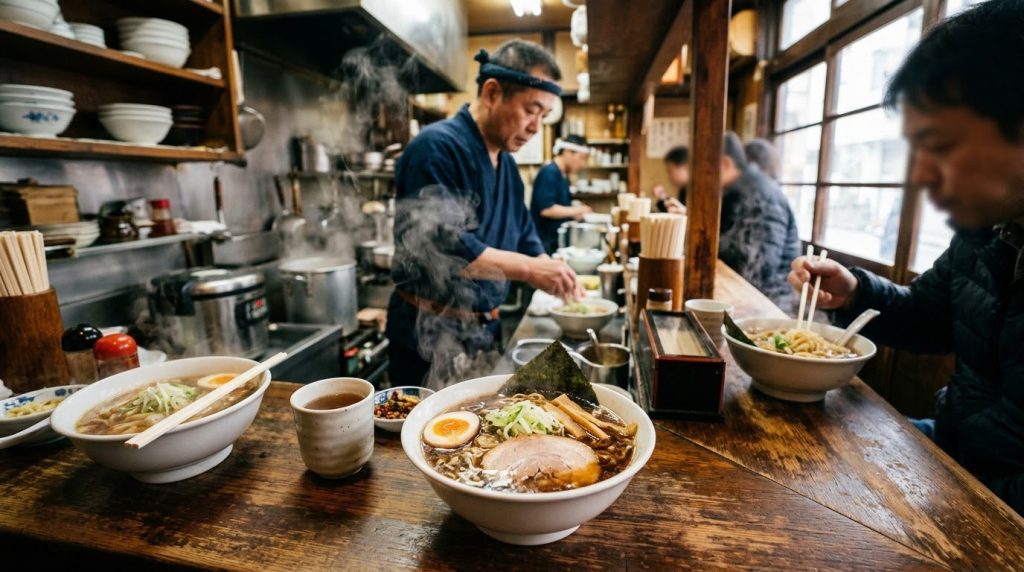
A bowl of ramen costs USD 4.55-7.80 (JPY 700-1,200) and a full convenience-store meal runs USD 3.25-5.20 (JPY 500-800), prices that beat most Western cities for the same quality; Tokyo’s full category-by-category cost breakdown covers the rest of the food and drink range in detail.
A single subway ride costs USD 1.10-2.00 (JPY 170-310) in Tokyo, and most other Japanese cities run similarly priced networks. Business hotel chains such as Toyoko Inn, Dormy Inn and APA charge USD 52-130 (JPY 8,000-20,000) a night for a clean, small private room, undercutting equivalent hotels in London or Sydney.
Capsule hotels push the accommodation savings further still, and convenience-store beer or highball cans that cost USD 2-3 keep a casual evening drink well below bar prices in most Western cities. Stacking these categories gets most of a trip covered well under Japan’s old-fashioned reputation for being unaffordable.
Where it stings
Long-distance trains, taxis and gift-grade fruit are where Japan’s costs jump sharply above what daily spending suggests. The JR Pass itself now costs USD 326 (JPY 50,000) for 7 days, and that price rises to USD 345 (JPY 53,000) for passes bought through overseas agents starting October 1, 2026.
A single reserved Nozomi ticket from Tokyo to Kyoto costs USD 92 (JPY 14,170) one-way, and the JR Pass does not even cover Nozomi or Mizuho services, forcing pass holders onto the slower Hikari and Kodama trains instead.
Tokyo taxis charge a base fare of USD 3.25 (JPY 500) for the first kilometer and roughly USD 0.65 (JPY 100) for every 232 meters after that under the fare structure revised April 20, 2026, so a short 3-4 km hop easily runs USD 9-12 (JPY 1,400-1,800), several times the cost of the same trip by subway.
Gift-grade melons sold in department stores commonly cost USD 98 (JPY 15,000) or more, though that is display fruit meant for formal gift-giving, not what fills a typical supermarket basket.
Green Car seats, the Shinkansen’s first-class option, add a further premium on top of already expensive long-distance fares, and travelers chasing extra legroom should expect to pay noticeably more than the reserved ordinary-car price quoted above.
What a day actually costs
A budget day in Japan runs USD 65-95 and covers a hostel dorm bed, two convenience-store meals plus one ramen lunch, a day of subway or local-train rides, and free sights such as a temple or a public park. Cheap does not mean risky here, and our look at how safe Japan is for travelers notes that violent crime against tourists is rare, even late at night.
A mid-range day runs USD 160-240, covering a business hotel room, a teishoku lunch set, an izakaya dinner, regional train fares, and one or two paid attractions like an observation deck or a museum.
A comfortable day runs USD 320-500, covering a private hotel or ryokan room, restaurant dining at both lunch and dinner, Shinkansen travel between cities, and several paid attractions without much rationing.
Solo travelers should budget toward the higher end of every band, since traveling solo through Japan means covering a hotel room’s full nightly rate alone instead of splitting it between two people.
A couple or family splitting a room narrows the gap between the budget and mid-range bands considerably, since accommodation is the single largest line item in every tier above.
Activities and Attractions
Theme parks sit outside the daily-cost bands above and add one of the sharpest single-day costs on a Japan trip. Universal Studios Japan in Osaka prices its 1-day Studio Pass at USD 53-75 (JPY 8,400-11,900), with weekends and the late-September Halloween dates landing at the top of that range.
Tokyo Disneyland and Tokyo DisneySea charge USD 56-79 (JPY 8,900-12,400) for a 1-day Passport, with quiet weekdays at the bottom and Saturdays in October 2026 pushing toward the top. Both resorts also sell paid line-skipping add-ons on top of admission.
Universal Express Pass starts around USD 87 (JPY 13,800) per person, and Disney Premier Access runs USD 9-16 (JPY 1,500-2,500) per attraction, so a family buying either product for one park day can add several hundred dollars to that single day of the trip.
Shrine grounds across Japan are free to enter, and most temple grounds charge nothing beyond a specific inner hall, treasure house or garden, which keeps a culture-focused day in Kyoto, Nara or Kamakura inexpensive even without a theme park on the itinerary.
Museums, castle keeps and observation decks sit well under theme-park pricing, typically charging a modest entry fee payable in cash or by IC card, though the exact figure varies by site, floor access and season, so checking the specific attraction’s own page before budgeting a multi-stop day is worth the extra step.
City-run gardens and parks are free in almost every city, which gives budget-conscious travelers a full free day of sightseeing whenever a theme park day is not on the plan.
Several museums also waive their entry fee on specific days each month, a detail that is always worth checking on the individual museum’s own page before building a day around it.
The practical takeaway is that attractions do not spread evenly across a trip the way food and transport do.
A traveler who books one theme park day and otherwise sticks to shrines, gardens and free city walks keeps attraction spending concentrated in that single splurge, rather than assuming the “one or two paid attractions” line in the daily-cost table above repeats at theme-park prices every day.
Anyone planning more than one park day, or stacking Universal Express Pass with Disney Premier Access across a multi-park trip, should budget for those specific days separately from the daily bands covered earlier, since a single park day with line-skipping add-ons can cost as much as two or three ordinary sightseeing days combined.
Travelers mixing a theme park into an otherwise frugal itinerary should treat that one day as its own line item rather than folding it into a daily average.
The JR Pass math, since the 2023 hike
The JR Pass stopped being an automatic purchase for most itineraries once its 7-day price jumped from JPY 29,650 to JPY 50,000 in October 2023, a 69% increase in one move.
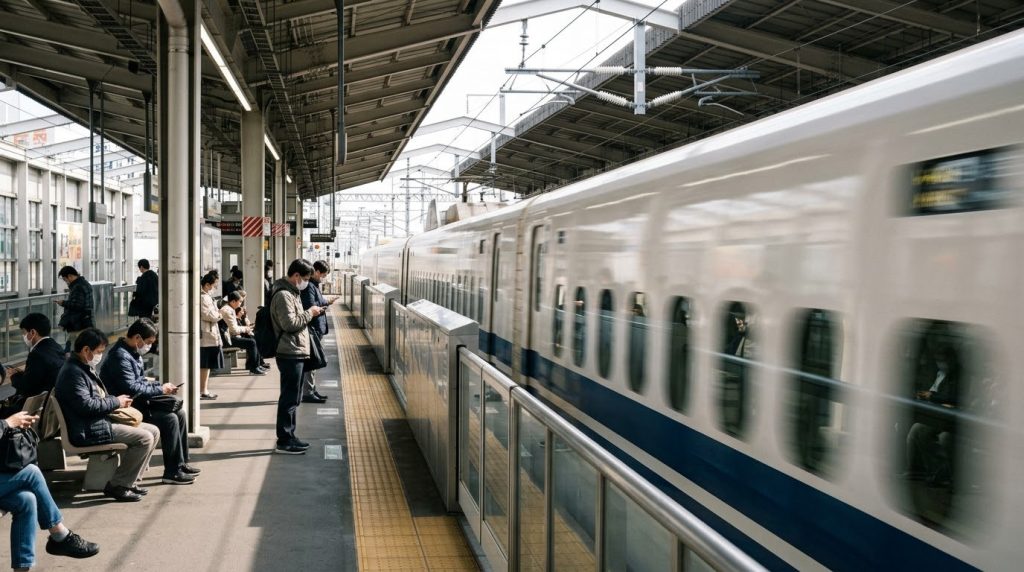
A round trip between Tokyo and Kyoto in point-to-point reserved tickets costs about USD 185 (JPY 28,340), well under the pass price, so a single round trip to one city does not justify buying it.
The pass starts winning once an itinerary adds a third long-distance leg, such as Tokyo to Kyoto to Hiroshima and back, where point-to-point ticket totals climb past USD 326-345 (JPY 50,000-53,000) and the pass becomes the cheaper choice.
The practical rule is to price out every planned long-distance leg individually first, then buy the pass only if that combined total beats JPY 50,000 for a 7-day span.
Regional passes, such as a Kansai-area pass covering only Kyoto, Osaka and Nara, are worth checking too, since a narrower geographic pass frequently beats both the national JR Pass and full point-to-point pricing for itineraries that never leave one region.
eSIMs, connectivity and other overlooked costs
Staying connected is a cost nearly every visitor pays and few first-time budgets include. Travel eSIM providers such as Airalo and Ubigi price a short-trip Japan plan from around USD 4.50-5 for 7 days and 1 GB, with larger data allowances for longer or heavier-use trips costing proportionally more.
Travelers who rely on maps, translation apps and ride-hailing throughout the day should budget for a multi-gigabyte plan rather than the smallest starter size, since 1 GB runs out quickly once navigation is running most of the day.
Both providers install directly through a phone’s eSIM settings before departure, so there is no airport counter to visit or physical SIM card to swap on arrival.
Travelers covering a multi-city itinerary over two or three weeks typically need a plan well above the smallest 1 GB starter tier, since heavy map and translation use across that many days adds up fast, and buying a second short top-up plan mid-trip is simple if the first one runs low before the return flight.
Luggage storage is the next overlooked line item, mainly on travel days between cities. Coin lockers in Tokyo run roughly USD 2-3 (JPY 300-400) a day for a small compartment, USD 3-4 (JPY 400-600) for a medium one, and USD 4-6 (JPY 600-900) for a large suitcase-sized locker, with Tokyo sitting toward the higher end of the national range.
Same-day baggage-forwarding counters, such as the Sagawa Express counter at Tokyo Station, charge a flat rate of about USD 5 (JPY 800) per bag per day and can arrange same-day delivery to a hotel if the bag is dropped off before late morning, a useful option for sightseeing unencumbered on an arrival or departure day instead of hauling luggage between trains.
Comparable counters and station lockers exist in Osaka and Kyoto as well, so a traveler moving between all three cities can use the same pattern of locker-then-walk or forward-then-sightsee at every stop rather than treating it as a Tokyo-only trick.
Laundry is a small but recurring cost on any trip longer than about a week. Standalone coin laundromats charge roughly USD 1-3 (JPY 200-400) per wash cycle plus about USD 0.65 (JPY 100) per 10 minutes of drying time, and most business hotel chains also run a coin-operated laundry room on one floor rather than offering free in-room laundry.
Budgeting a few dollars every few days for a laundromat run is cheaper than packing enough clothing to avoid washing anything, and it keeps a backpack lighter for train travel between cities.
When Japan is not worth the money
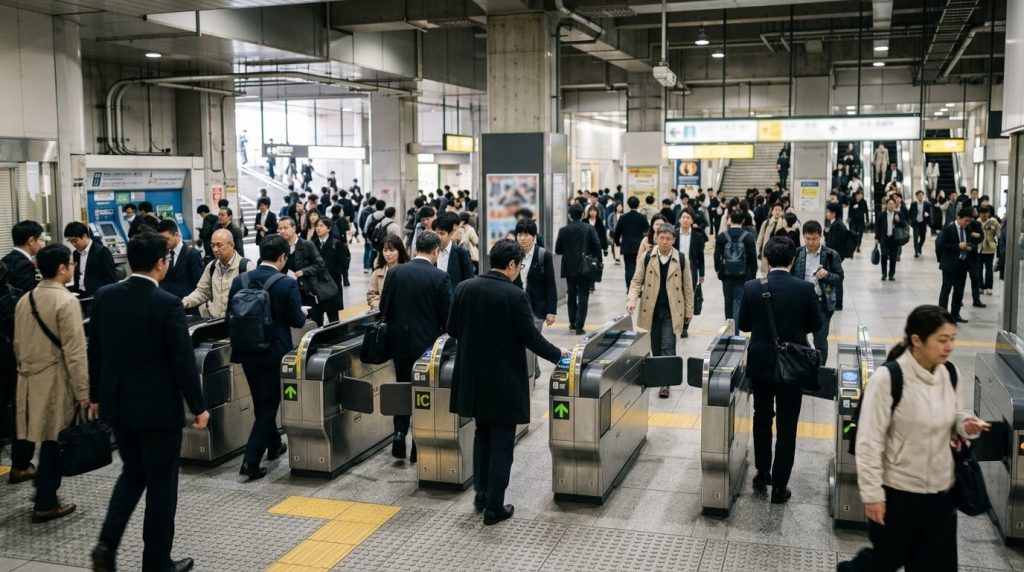
Japan is not worth the money for a traveler who buys the JR Pass for a Tokyo-only trip, since Tokyo’s subway network barely overlaps with JR long-distance lines and a Suica IC card covers the same ground for a fraction of the cost.
It is also not worth the money to arrive during Golden Week or Obon without booking hotels and trains months ahead, since picking the best time to visit Japan around those two windows can mean paying two to three times normal rates for whatever inventory is left.
Ordering Western-style dining at a hotel restaurant is a third trap, since the same quality meal costs far less at a standing ramen counter or a neighborhood teishoku lunch spot.
A daily taxi habit is the fourth trap, since Tokyo’s per-kilometer fare structure turns a week of casual cab rides into a bigger expense than most first-time visitors expect going in.
Chasing every regional specialty on a tight schedule is a fifth trap, since cramming three or four cities into one short trip multiplies the long-distance train and Green Car costs covered above far faster than it multiplies the enjoyment of any single stop.
Shopping and the tax-free system
Japan’s consumption tax sits at 10%, and visitors on a tourist visa can get that amount refunded on qualifying purchases, which matters most for anyone planning to buy electronics, cosmetics or souvenirs in any quantity. The minimum purchase threshold for tax-free eligibility is JPY 5,000 (about USD 32) in total purchases at one store on one day, before tax.
Hitting that threshold in a single shopping stop, rather than spreading small purchases across several stores, is the simplest way to qualify.
Department stores and large electronics chains run dedicated tax-free counters on-site, which handle the paperwork at the point of purchase under the current system and will continue to issue the documentation needed for the new airport-based refund once it takes effect.
The process itself is changing. Starting November 1, 2026, the point-of-sale exemption that let shoppers skip the tax at checkout is being replaced by a refund-at-departure model.
Visitors pay the full tax-inclusive price at the register, then complete the refund procedure at a tax-free terminal in the international departure area before checking baggage, presenting a passport and purchase records so customs can confirm the goods are being exported.
Several major airports also let travelers complete the initial step online through Visit Japan Web ahead of arriving at the airport, which can shorten the in-person queue.
Purchases must stay within 90 days of the purchase date for the refund to remain valid, and credit card refunds typically take one to two weeks to post, while bank transfer refunds take two to four weeks, so travelers chasing cash back before a connecting flight should expect the credit or transfer to land only after they are already home.
Building in time for the departure-terminal queue matters more under the new system than it did under the old point-of-sale exemption, since every tax-free purchase from the entire trip now gets processed at once rather than being settled store by store as the shopping happens.
None of this changes what things cost on the shelf, only when and how the tax comes back, so shoppers should still compare sticker prices rather than assuming tax-free status alone makes an item cheap.
Big electronics purchases, where the refund is a meaningful share of a four- or five-figure yen price, benefit most from clearing the JPY 5,000 threshold deliberately; small souvenir shopping spread across many different stores often never clears it at all.
Plan an affordable Japan trip
Find your Japan hotel on the map
Live prices from Booking, Airbnb and more — move the map or change dates to compare stays across Japan.
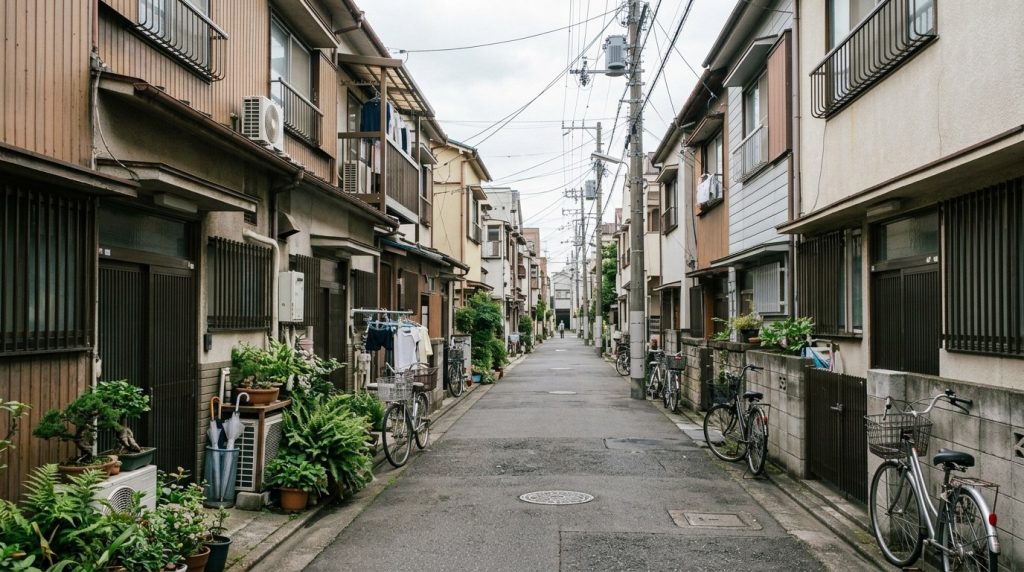
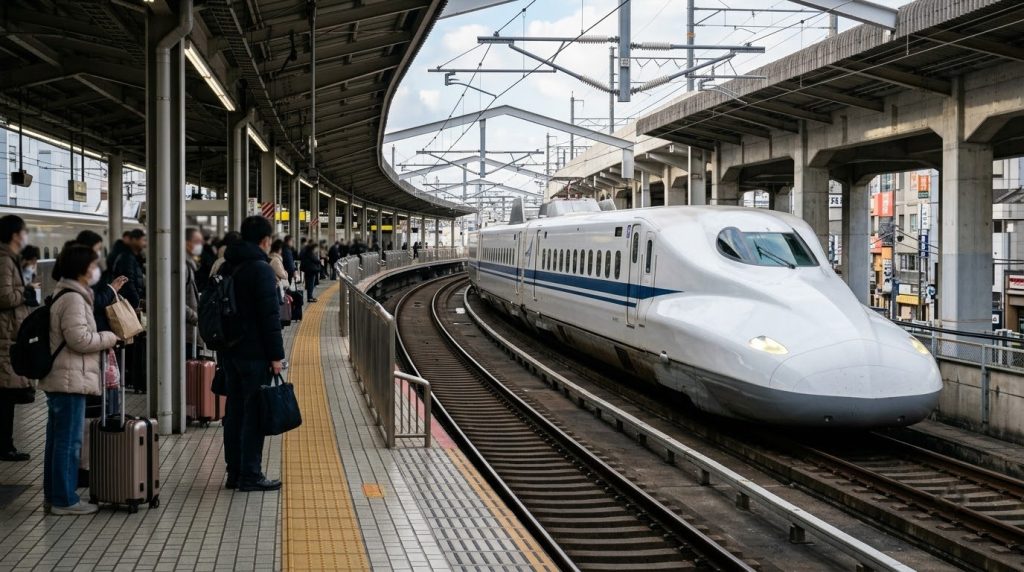
A realistic Japan budget starts with the daily-band table above, then adjusts for the specific legs of the trip; a 4-day Tokyo itinerary built around these cost categories shows how a mid-range day plays out city by city.
Price out the JR Pass against point-to-point tickets before booking anything, since that single decision moves the budget more than any other choice on this page.
Lean into the cheap categories, food, local transport and business hotels, budget consciously for the ones that sting, long trains, taxis and gift fruit, and a well-planned Japan trip in 2026 lands closer to the cost of a European capital than its old reputation suggests.