Is Okinawa Worth Visiting? An Honest Answer for US Travelers (2026)
Disclosure: Some links in this guide are affiliate links. If you book or buy through them, we may earn a small commission at no extra cost to you — it helps keep our guides free.
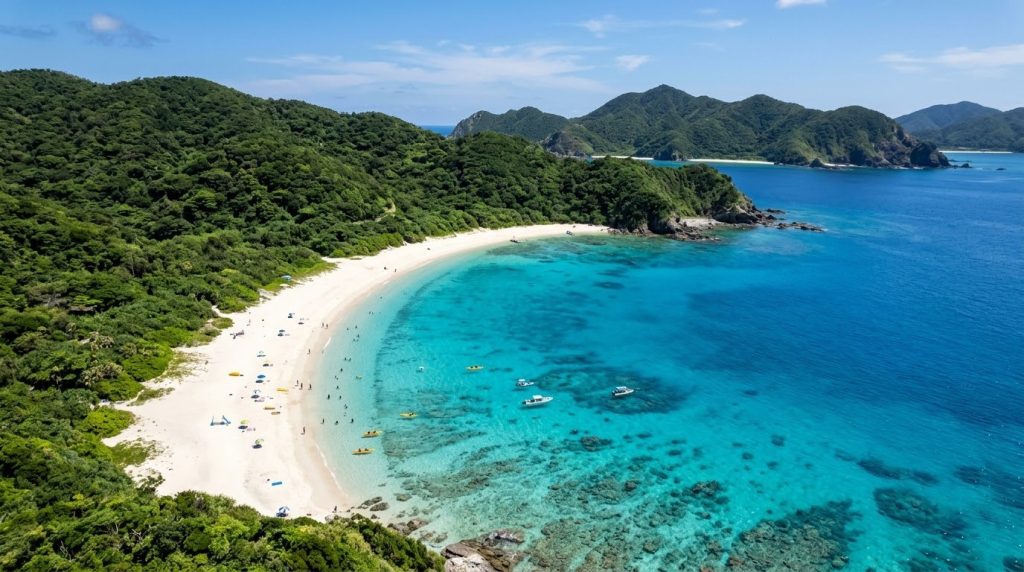
Yes, Okinawa is worth visiting if you can give it 4 to 5 days and rent a car: it is a 2.5-hour flight from Tokyo, the sea runs from about 21°C in February to nearly 30°C in August, and it adds coral beaches, Ryukyu history and World War II sites that mainland Japan cannot match.
It is not worth it as a 1-night detour, and it disappoints travelers who expect Hawaii-style resort polish or Kyoto-level temples.
| Factor | Reality | Verdict |
|---|---|---|
| Getting there | No nonstop US flights; connect via Tokyo, about 2.5 hours | Worth it on a 2-week Japan trip |
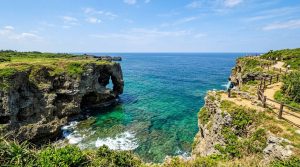
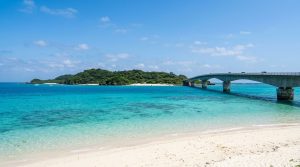
| Beaches | Clear water, snorkeling in the Kerama Islands | Strongest reason to go |
| Culture | Ryukyu kingdom, Shuri Castle, war memorials | Different from the mainland |
| Getting around | One monorail line; most sights need a car | Rent a car or skip the north |
| Weather risk | Rainy season mid-May to late June; typhoons June to September | Book flexible rates |
| Cost | Aquarium USD 14, compact car about USD 47 a day | Cheaper than Hawaii |
The honest answer: who gets the most out of Okinawa
Okinawa pays off most for beach people who want snorkeling without leaving Japan, history travelers, and families who want a slower pace after Tokyo. If you have already done Tokyo, Kyoto and Osaka, Okinawa feels like a different country: the food (goya, taco rice, Orion beer), the architecture and the pace all change.
The catch is logistics. Transit outside Naha is limited, and the best water is on smaller islands reached by ferry. Travelers who stay only in Naha without a car often leave asking what the fuss was about.
What actually makes the trip worth it
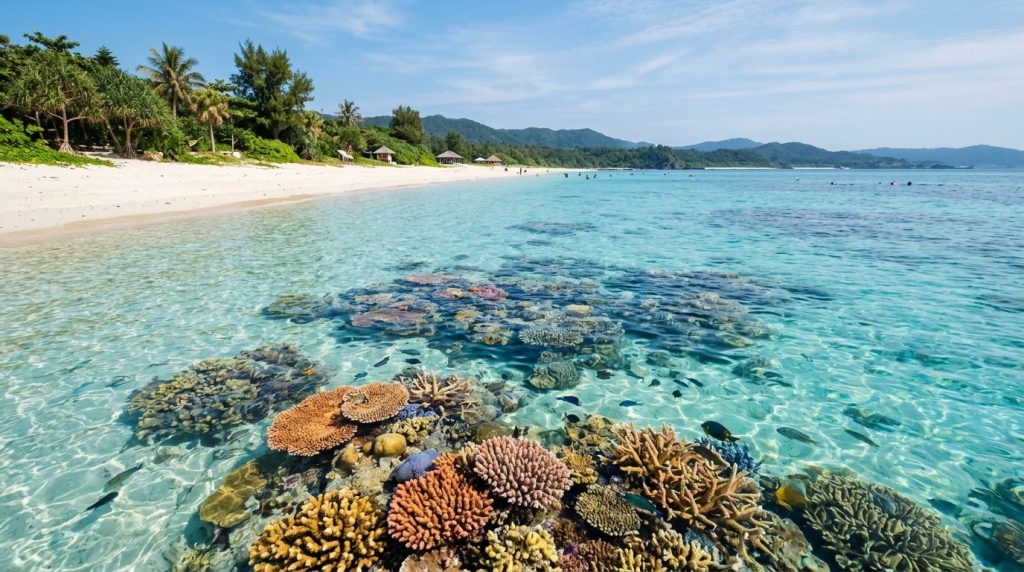
The water. The Kerama Islands are the headline. From Naha’s Tomari Wharf, the express ferry reaches Tokashiki in about 40 minutes and Zamami in 50 minutes to 1 hour 10 minutes, according to the official Visit Okinawa ferry page. That puts a real reef snorkeling day within reach of a city hotel. Book summer ferries early.
Churaumi Aquarium. One of Japan’s best-known aquariums sits in Ocean Expo Park on the Motobu Peninsula. Adult admission is USD 14 (JPY 2,180) on the official Churaumi fee page. It opens at 8:30 a.m. with last entry at 5:30 p.m., and you should plan 1 to 2 hours inside.
Shuri Castle’s comeback. The castle’s main hall burned in October 2019. After about seven years of rebuilding, the interior reopens to the public on November 23, 2026, with timed reservations in 30-minute slots and adult tickets at USD 6 (JPY 1,000), according to the Okinawa tourism notice on the reopening. Visit from late November and you will be among the first to see it.
War history. The Battle of Okinawa (April to June 1945) killed roughly 200,000 people. The Peace Memorial Museum (USD 2, JPY 300), the Himeyuri Monument (USD 3, JPY 450) and the Former Navy Underground Headquarters (USD 4, JPY 600) are sobering; the Cornerstone of Peace lists American names alongside Japanese ones.
How many days, and how it fits a Japan trip
Four to five days on the main island covers Naha, one Kerama day trip, the aquarium and the south’s war sites. Add 2 to 3 days if you want a second island or pure beach time. A day-by-day plan is in our Okinawa itinerary for first-timers.
Fitting it into a wider trip is easy by air. Haneda has about 30 daily departures to Naha, and the flight takes about 2.5 hours, per MATCHA. Low-cost carriers from Narita sell one-way seats for around USD 51–76 (JPY 8,000–12,000) outside peak season, while JAL and ANA fares from Haneda typically run USD 95–222 (JPY 15,000–35,000).
Prices in this post are converted at USD 1 = JPY 158. Most Americans slot Okinawa at the end of a two-week Japan itinerary so the beach days come after the city days. US passport holders need no visa for tourist stays of 90 days or less, per JNTO’s visa page.
Getting around: rent a car or lower your expectations
Naha’s Yui Rail runs 19 stations from Naha Airport to Tedako-Uranishi, and a 24-hour pass costs USD 6 (JPY 1,000). It covers the city and Shuri Castle, and nothing beyond.
For everything else, rent a car. Japan-guide lists compact rentals at around USD 47 (JPY 7,500) per 24 hours. The drive from Naha to the aquarium takes about two hours on the Okinawa Expressway, with a USD 7 (JPY 1,040) toll.
The bus costs USD 12–18 (JPY 1,900–2,880) and takes a little over two hours. US drivers: Japan drives on the left, and you need an International Driving Permit (issued by AAA) before you leave home.
Who should skip Okinawa or think twice
– First-timers with under 10 days in Japan. Tokyo and Kyoto deserve the time more; Okinawa is a second-trip upgrade. – Travelers who will not drive. Without a car, you lose the north, the aquarium, and most of the good beaches. – Anyone locked into early summer or typhoon dates. The rainy season runs mid-May to late June and typhoons are possible June through September, per Visit Okinawa.
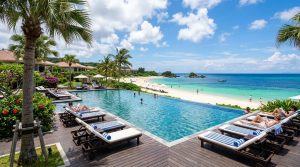
A typhoon can cancel ferries and flights for a day or two. Check our guide to the best time to visit Okinawa before you book. – Luxury seekers comparing it to Maui. Resorts feel practical rather than glamorous. – Travelers bothered by the military presence. Okinawa is 0.6% of Japan’s land yet hosts 70.3% of US military facilities in Japan, according to a DIIS policy brief. You will see bases along Route 58, and some locals feel strongly about them.
Safety is not a reason to skip. The US State Department rates Japan at Level 1, Exercise Normal Precautions (updated May 15, 2025).
What Okinawan food actually tastes like
Mainland Japanese food dominates most first-time itineraries, but Okinawa eats differently, and the dishes are worth building a meal or two around. Goya champuru is the dish locals mention first: a stir-fry of bitter melon, tofu, egg and pork or Spam that is the clearest introduction to the island’s taste for bitterness balanced against salt and fat.
Okinawa soba looks like a mainland noodle dish but runs on a pork-bone broth with thick, flat wheat noodles and a slab of stewed pork belly on top; it is sold everywhere from roadside diners to the airport.
Rafute, pork belly slow-braised in awamori (Okinawa’s distilled rice spirit), soy and brown sugar until it falls apart, shows up as a side dish or its own small plate.
Taco rice, Okinawa’s own invention from the postwar US base years, swaps a tortilla for a bowl of rice under taco-seasoned meat, cheese and salsa, and works as a quick, cheap lunch. For something unusual, try umibudo (sea grapes), a salty, popping seaweed served raw with vinegar, or jimami tofu, a softer, nuttier tofu made from peanuts instead of soybeans.
Wash any of it down with Orion, the local beer, or a small glass of awamori on ice for the stronger local spirit.
None of this needs a reservation: diners and market stalls around Kokusai-dori serve all of it at everyday prices, and most izakaya-style restaurants there post English menus with photos, so ordering something unfamiliar is low-risk even on a first night.
A welfare note: dolphin shows and captive whale sharks
One thing worth knowing before you book: Churaumi Aquarium keeps whale sharks in captivity and has spent years trying to breed them there, something no aquarium has ever achieved, according to the aquarium’s own site and Wikipedia’s summary of the program.
Supporters point to decades of research and public education; critics argue that no tank, however large, can replicate the open-ocean range these animals naturally cover, and marine biologists have raised similar concerns about aquarium-held whale sharks more broadly. Dolphin and other marine-mammal shows appear at several Okinawa attractions outside Churaumi too, and welfare standards vary by operator.
If this matters to you, the simplest workaround is to prioritise Okinawa’s wild-encounter options instead: a Kerama Islands snorkelling or diving day puts you in the actual reef rather than a tank, and seasonal whale-watching boat trips run off the main island and from Zamami.
None of this is a reason to skip Churaumi altogether, since the aquarium funds genuine research and the main tank is one of the largest in the world, but it is worth factoring in if captive-animal displays are something you would rather avoid.
Okinawa’s castle ruins and Ryukyu heritage beyond Shuri
Shuri Castle gets most of the attention, but it is only one of nine sites making up the Gusuku Sites and Related Properties of the Kingdom of Ryukyu, a group UNESCO listed together in 2000 covering five castle ruins, two stone monuments and two sacred sites across the main island.
Nakijin Castle, in the north near the aquarium, is worth combining with a Churaumi visit: its stone walls curve along a ridge with sea views, and unlike Shuri it survived largely intact, so the ruins themselves, rather than a rebuild, are what you are looking at.
Zakimi Castle, in Yomitan, is one of the easiest to visit on a self-driven loop, sitting inside a regular city park with its own parking and no separate ticket needed afterward.
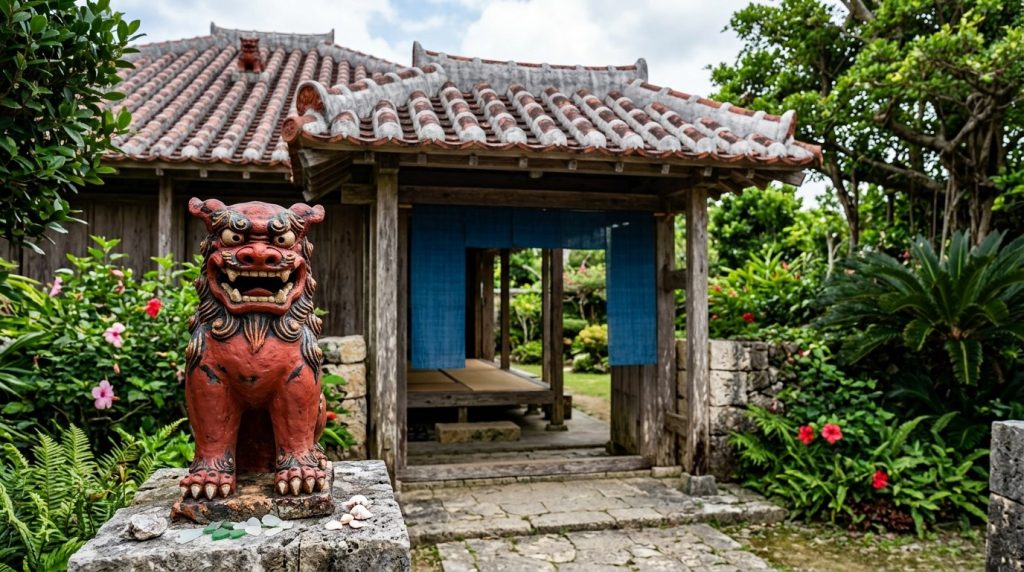
Beyond the castles, Ryukyu culture persists in ways you will notice even on a short trip: Uchinaguchi, the Okinawan language, is still spoken by older generations and appears on local signage alongside Japanese, Eisa drum-and-dance performances turn up at summer festivals and some hotel evenings, and the islands’ reputation for longevity has its own small industry of shops selling the diet and lifestyle behind it.
Driving between two or three gusuku sites on a quieter day, away from the beaches and the aquarium queue, is a reasonable way to see a different side of Okinawa than the one on most postcards.
What to pack for Okinawa
Okinawa’s packing list differs a little from a mainland Japan itinerary, mostly because of the water and the rental car. Reef-safe sunscreen matters more here than almost anywhere else in Japan: the Kerama Islands’ coral is a big part of why people come, and regular sunscreen washing off in the water adds up over a season of snorkellers.
Pack reef shoes or sturdy sandals too, since several of the better snorkel spots have a rocky or coral entry rather than open sand. If you are driving, bring your International Driving Permit from home; Japan does not issue one on arrival, and without it the rental counter will turn you away regardless of your home licence.
A light rain shell earns its place even outside the official rainy season, since Okinawa’s weather shifts faster than the mainland’s. Swimwear you can wear under regular clothes saves a change between the beach and lunch, and a dry bag protects a phone on any boat transfer to the Kerama Islands or Zamami.
Bring a portable charger for a full day out at Ocean Expo Park, where queues make an aquarium visit longer than planned. Modest layers are worth having for Shuri Castle and the war memorials in the south, both of which draw a mix of casual tourists and visiting mourners.
Pack any motion-sickness tablets you might need before the Kerama ferry rather than hoping to buy them on the day. Lastly, leave room in your bag for the trip home: Kokusai-dori’s shops sell everything from awamori bottles to shisa figurines, and checked-bag space fills up faster than most visitors expect once souvenirs and beach gear are both in the mix.
Where to stay
– Naha (Kokusai-dori and around). Best for short trips, travelers without a car and anyone heading to the Kerama ferries from Tomari Wharf.
Kokusai-dori is about 1.6 km of shops and restaurants that stay open late. – Onna and the west coast. The resort strip in the middle of the island suits couples and families who want a beach on the doorstep and a car for day trips both ways. – Motobu Peninsula. Quieter, closest to Churaumi Aquarium, and a good base for the north. It works only if you drive.
For specific picks by budget, see our list of the best hotels in Okinawa.
Find your Okinawa hotel on the map
Live prices from Booking, Airbnb and more — move the map or change dates to compare stays across Okinawa.
Frequently Asked Questions
How many days in Okinawa is enough?
Four to five days on the main island is enough for Naha, Shuri Castle, Churaumi Aquarium, the southern war memorials and one Kerama Islands day trip. If you want a second island such as Zamami overnight, or simply more beach time, plan 6 to 7 days. Fewer than 3 days usually means more time in transit than in the water.
Which is better, Osaka or Okinawa?
Osaka is a food and nightlife city that pairs easily with Kyoto by train. Okinawa is a beach and history destination that requires a flight and ideally a rental car. On a first Japan trip, choose Osaka. On a second trip, or if you want beach days, choose Okinawa.
Is Okinawa better than Hawaii?
For Americans, Hawaii is closer, with nonstop flights and more polished resorts. Okinawa wins on cost, Kerama snorkeling, Ryukyu culture and food. Already in Japan? Okinawa is the smarter add-on. Flying from the US just for beaches, Hawaii is simpler.
When should you not visit Okinawa?
Think twice about mid-May to late June, when the rainy season brings humidity and frequent showers, and about June through September, when typhoons can cancel ferries and flights. Winter is cool and windy for swimming. Spring and late autumn offer the best balance of sea temperature, stable weather and fewer disruptions.
Do you need a car in Okinawa?
For Naha alone, no: the Yui Rail and taxis cover the city. For anything else, yes. The aquarium is about two hours from Naha by car, buses to the north are slow, and many beaches have no transit. US drivers need an International Driving Permit from AAA before leaving home.