Is Kanazawa Worth Visiting? (2026)
Disclosure: Some links in this guide are affiliate links. If you book or buy through them, we may earn a small commission at no extra cost to you — it helps keep our guides free.
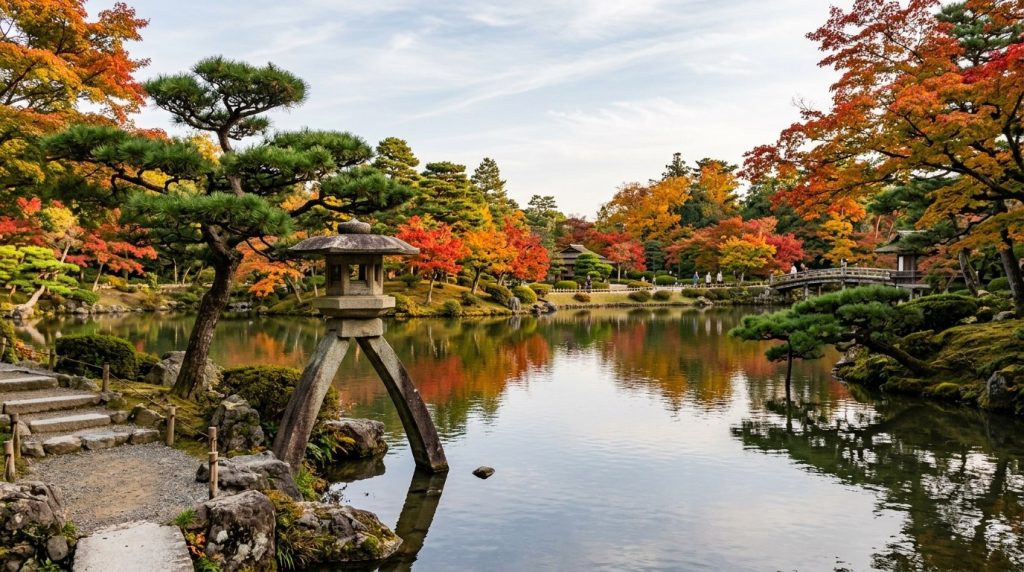
Kanazawa is worth visiting for the 2 hour 28 minute bullet train ride from Tokyo, because Kenrokuen Garden’s USD 2 (JPY 320) entry buys access to one of Japan’s three great gardens and an old-town atmosphere close to Kyoto’s, minus Kyoto’s crowds.
It is not worth visiting if you have seven days or fewer in Japan and have not yet covered Tokyo and Kyoto’s essentials, because the detour eats a travel day you do not have.
| Traveller type | Worth it? | Nights to give it | Why |
|---|---|---|---|
| First Japan trip, 10+ days | Yes | 1-2 | Enough slack to add a detour without cutting Tokyo or Kyoto short |
| First Japan trip, 7 days or fewer | No | 0 | The Golden Route alone fills every day you have |
| Repeat visitors who have already done Kyoto | Yes | 2 | New territory instead of a third temple day |
| Garden, craft and architecture fans | Yes | 2 | Kenrokuen, gold-leaf workshops and preserved samurai houses reward slow time |
| Families with young children | Maybe | 1 | Omicho Market and the castle park work; little else is built for kids |
| Travellers doing Kyoto and Osaka only | No | 0 | Kanazawa sits off that axis; a Kyoto day trip covers the gap instead |
What Kanazawa has that the Golden Route does not
Kanazawa has one attraction that neither Tokyo nor Kyoto can match: Kenrokuen Garden, ranked among Japan’s three great gardens alongside Kairakuen in Mito and Korakuen in Okayama. Adult entry costs JPY 320, about USD 2 at today’s rate of roughly 153 yen to the dollar, and visitors 65 and over get in free with ID.
Arrive before the official opening time through the Mayumizaka or Katsurazaka gates and entry is free year-round, which is not an option at any comparable Kyoto garden.
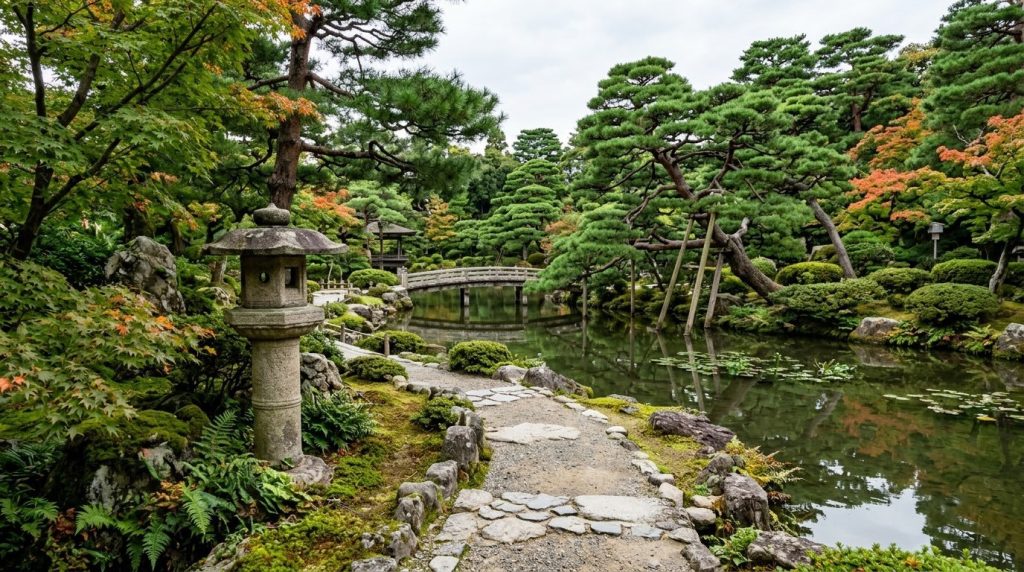
The city also produces 99% of Japan’s gold leaf, a fact that shows up everywhere from temple restoration work to the gold-flecked soft-serve sold near Higashi Chaya.
Kanazawa turns that industry into a real activity: workshops around town let you apply gold leaf to chopsticks or small boxes yourself, a hands-on craft experience that Tokyo and Kyoto do not offer at the same scale or price.
Pair that with Omicho Market, a working seafood market that has fed the city for centuries and still opens before dawn for the wholesale trade, and Kanazawa earns its own reason to visit rather than functioning as a smaller copy of Kyoto.
Snow crab in winter and fresh sea urchin bowls year-round are the two dishes locals point visitors toward first, and both are priced closer to a regional market than a tourist strip.
The old-Japan experience without Kyoto’s crowds
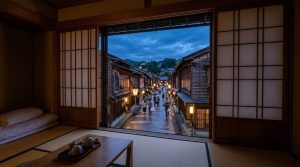
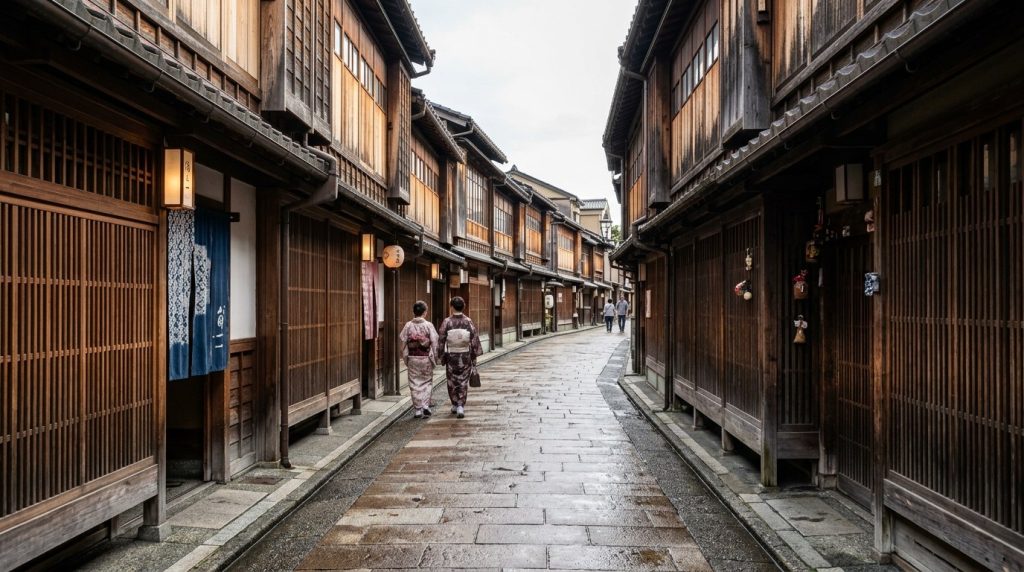
Kanazawa delivers a Kyoto-level dose of preserved old Japan with none of the queue management Kyoto now requires. Higashi Chaya is a geisha district of wooden teahouses where some buildings still operate as active ochaya, and you can walk its main lane without the shoulder-to-shoulder crowds that define Kyoto’s Gion on any afternoon.
A few minutes away, the Nagamachi samurai district preserves earthen walls and canal-fed lanes from the merchant and warrior era, giving a walkable historic quarter with room to actually look around.
This is the closest comparison to what a first-time visitor gets from a 3-day Kyoto itinerary, minus the 8am starts that Kyoto now demands at Fushimi Inari and Arashiyama just to beat the tour groups. Kanazawa’s equivalent sites do not require that kind of scheduling discipline, because the crowds simply are not there yet at the same scale.
You can walk Higashi Chaya’s main street at 10am on a Saturday and still get a clear photo down the lane, something that has not been possible in central Gion for years. The same applies to Kenrokuen itself outside the spring cherry blossom weeks, when the garden’s paths stay walkable rather than queued.
The detour, honestly
Kanazawa is a real detour, not a quick add-on, and the honest case starts with the train times. From Tokyo, the Kagayaki Shinkansen runs direct on the Hokuriku Shinkansen line and covers the distance in 2 hours 28 minutes, longer than the 2 hour 15 minute Tokyo-Kyoto Shinkansen run.
A reserved seat one way runs roughly JPY 14,200, about USD 93 at today’s rate, close enough to the Tokyo-Kyoto fare that cost is not the deciding factor.
Time is the real constraint, since a round trip from Tokyo alone costs the better part of five hours on trains, which only makes sense as an overnight stop, not a day trip.
From Kyoto, the journey used to be a single Thunderbird limited express train. Since the Hokuriku Shinkansen line extended to Tsuruga in March 2024, that direct service ended: travellers now ride the Thunderbird from Kyoto to Tsuruga in about 45 minutes, transfer across the platform, then take the Hokuriku Shinkansen from Tsuruga to Kanazawa in about an hour.
Total journey time still lands around 2 hours, but it is now two legs and a transfer instead of one seat the whole way, which is a real change from what older guides describe.
Budget an extra 15 to 20 minutes at Tsuruga if you are travelling with luggage, since the transfer is a same-platform change but the Hokuriku Shinkansen departures run on a fixed schedule rather than waiting for a delayed Thunderbird.
Where Kanazawa underwhelms
Kanazawa underwhelms travellers who come expecting Kyoto’s density of sights within walking distance of each other. Kanazawa Castle Park is worth an hour, but most of its turrets and storehouses are modern reconstructions rebuilt with traditional carpentry since the late 1990s rather than original Edo-period buildings, and the palace grounds behind them are still an active restoration project.
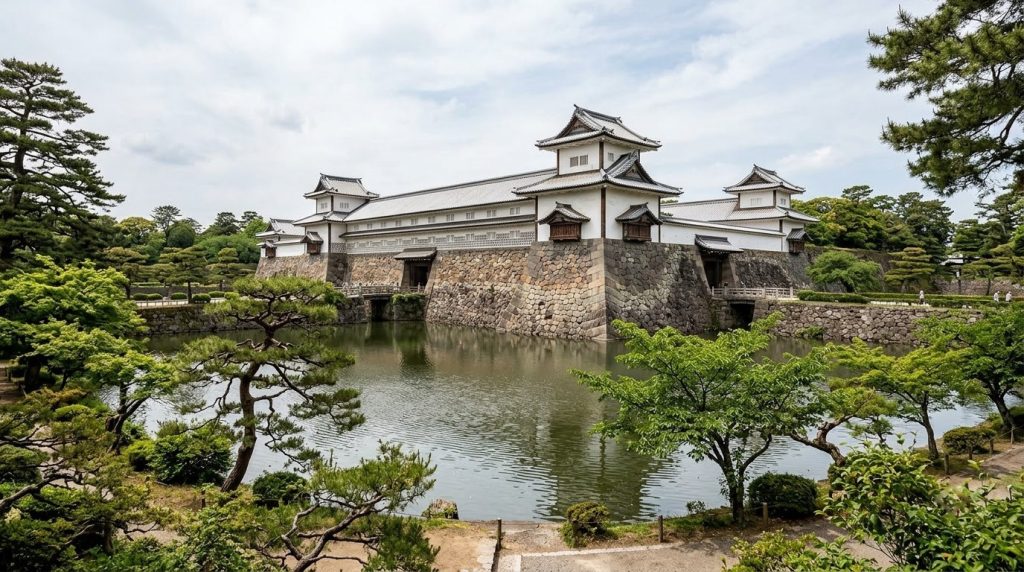
Outside Kenrokuen, Higashi Chaya and Nagamachi, the city’s sight list runs thin fast, and evenings are quiet compared to Kyoto’s Pontocho or Tokyo’s neighborhoods after dark.
The 21st Century Museum of Contemporary Art draws crowds for its glass-floor swimming pool installation, but it is a single stop, not a cluster of things to do. Travellers who want a full day of back-to-back sights every day of their trip will find Kanazawa’s pace slower than they expect, and that pace is either the appeal or the letdown depending on what you came for.
Who should skip Kanazawa
Skip Kanazawa if this is your first trip to Japan and you have seven days or fewer, because Tokyo and Kyoto alone need every one of those days to see properly.
Adding a 2 hour 28 minute detour to a trip that is already tight forces you to cut either Tokyo or Kyoto short, and neither city deserves that trade for a first visit.
Families travelling with children under six should also skip it: outside Omicho Market and the castle park’s open lawns, Kanazawa has little built for young kids, and the Kyoto day trip options to Nara or Osaka offer more for that age group in less travel time.
Travellers on a Kansai-only itinerary covering just Kyoto and Osaka should skip it too, since Kanazawa sits off that axis and the added transfer at Tsuruga makes it a poor fit for a trip that is not already headed toward Tokyo or the Hokuriku coast.
Kanazawa also makes little sense as a standalone city break unless you are already committed to slow travel; there is not enough here to fill more than two full days even for enthusiastic sightseers, and a third day tends to feel padded rather than earned.
What a day in Kanazawa actually costs
Beyond Kenrokuen’s USD 2 (JPY 320) entry covered above, the other sights that make Kanazawa worth the detour stay similarly inexpensive. A gold leaf chopstick or small-box workshop, the hands-on craft experience that sets Kanazawa apart from Tokyo and Kyoto, typically runs USD 4-10 (JPY 600-1,500) depending on the item chosen, and takes about an hour.
The 21st Century Museum of Contemporary Art charges roughly USD 6.50 (JPY 1,000) for its standard collection, rising to USD 13-15 (JPY 2,000-2,300) for special exhibitions, though some of its outdoor installations and public zones cost nothing to walk through. Higashi Chaya and Nagamachi, the two historic districts covered earlier, are free to wander on foot.
Food is where the budget actually moves. A kaisendon seafood rice bowl at Omicho Market, built on the same snow crab and sea urchin the market is known for, runs roughly USD 10-23 (JPY 1,500-3,500) depending on how much premium seafood goes on top, noticeably more than a standard donburi elsewhere in Japan but priced in line with the quality of the catch.
Pairing one paid attraction, a market lunch and the gold leaf workshop in a single day lands most travelers around USD 25-40 (JPY 3,800-6,100) per person before accommodation, a reasonable add to whatever a Tokyo or Kyoto leg of the trip already costs.
Accommodation is the one line item that moves most with the season. A standard hotel room averages roughly USD 80-110 a night, climbing toward the top of that range in winter when snow-season and crab-season travelers overlap, while simpler ryokan stays with a kaiseki dinner included start from around USD 80 a night at the budget end of that category.
Either way, lodging in Kanazawa does not run noticeably cheaper or more expensive than a mid-range Tokyo or Kyoto hotel, so the detour’s cost case rests on the sightseeing and food above rather than a lodging discount.
Where to stay if you decide to go
Base yourself near Kanazawa Station or the Katamachi entertainment district for the easiest access to Kenrokuen, Higashi Chaya and Omicho Market on foot or by short bus ride. See the full best hotels in Kanazawa breakdown for area-by-area picks, or compare live availability below.
Find your Kanazawa hotel on the map
Live prices from Booking, Airbnb and more — move the map or change dates to compare stays across Kanazawa.