15 Best Things to Do in Prague in 2026: Local Guide
Disclosure: Some links in this guide are affiliate links. If you book or buy through them, we may earn a small commission at no extra cost to you — it helps keep our guides free.
- Prague Castle grounds and courtyards are free and open daily 06:00–22:00; interior circuit tickets start at CZK 250 (about EUR 10), with the standard combined ticket around CZK 450 (Prague Castle, 2026).
- The Astronomical Clock’s Apostles procession runs hourly, 09:00–23:00, and is free to watch from Old Town Square; the sequence lasts roughly 45 seconds.
- A 90-minute public transport ticket costs CZK 50 (CZK 46 in the PID Litacka app) and covers trams, metro, and buses across the center (PID, 2026).
- Half a litre of Czech draught beer runs CZK 55–80 in ordinary pubs, still among the cheapest of any European capital.
- The Jewish Quarter combined ticket is CZK 550 and stays valid for three consecutive days across five historic sites.
At a glance
| Attraction | Entry | Hours | Time needed |
|---|---|---|---|
| Prague Castle | from CZK 250 (grounds free) | Grounds 06:00–22:00 | |
| Astronomical Clock tower | CZK 350 | Tuesday–Sunday 09:00–20:00, Monday 11:00–20:00 | |
| Jewish Quarter (Josefov) | CZK 550 combined ticket | Sunday–Friday | two hours minimum |
Where you sleep decides your mornings
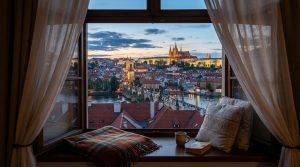
The best things to do in Prague in 2026 sit within a 30-minute walk of each other: Prague Castle, Charles Bridge, the Astronomical Clock on Old Town Square, the Jewish Quarter, and the beer halls of the Old Town. The compact medieval core is the whole appeal, and it means you can see the headline sights in two or three days without ever needing a taxi. That compactness is why our Prague or Budapest verdict picks Prague for a first 3-day trip and saves Budapest for 4 days or more.
That popularity is the one thing that shapes a good trip here: the same landmarks that are magical at 7 a.m. are shoulder-to-shoulder by noon.
This guide covers what to see, the real 2026 prices, and the timing tricks that keep the crowds off your photos.
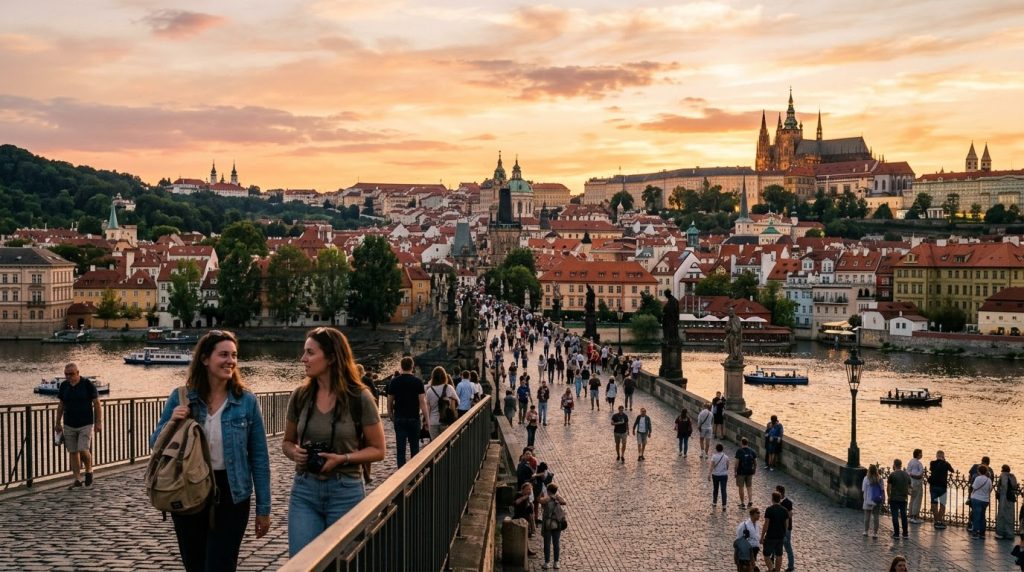
Split each morning between one major sight and one long walk. Crossing Charles Bridge at 6:40 a.m., when it is nearly empty, then watching the same bridge fill solid by 10, teaches more about visiting Prague than any opening-hours page.
The Best Things to Do in Prague at a Glance
If you only have a short stay, these are the sights we would not skip, ordered roughly by how central they are:
- Prague Castle — the largest ancient castle complex in the world; free grounds, ticketed interiors from CZK 250.
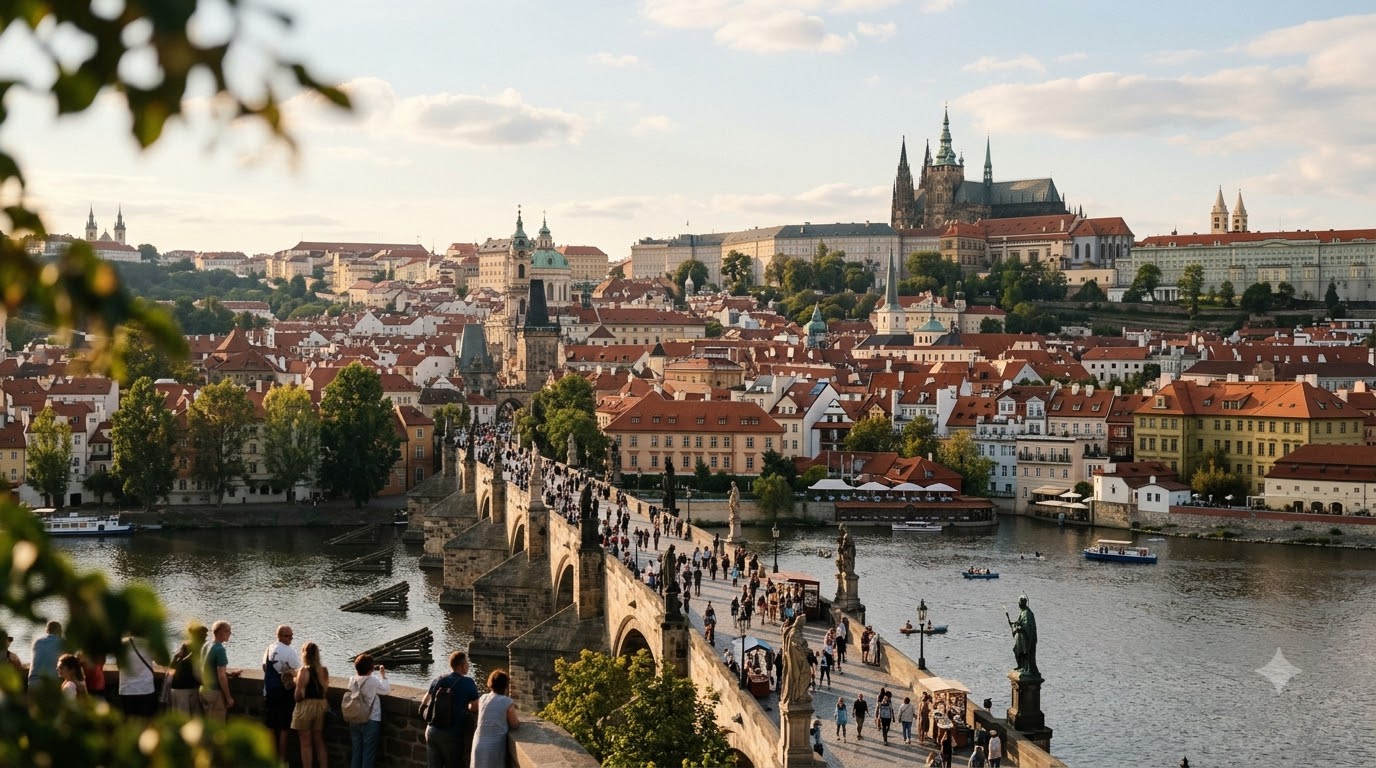
- Charles Bridge — the 14th-century pedestrian bridge lined with 30 baroque statues; free, best at dawn.
- Old Town Square and the Astronomical Clock — the medieval heart, with the hourly clock show; free to stand and watch.
- Jewish Quarter (Josefov) — six synagogues and the Old Jewish Cemetery; combined ticket CZK 550.
- Petrin Hill and Lookout Tower — the city’s best panorama; tower tickets from CZK 250.
- Old Town beer halls — U Fleku (since 1499) and Lokal for fresh Pilsner Urquell.
Everything above except the beer halls is walkable in a single loop. We map the full route in our Prague travel guide, and squeeze it into a tight schedule in the 3-day Prague itinerary.
Explore Prague Castle, the World’s Largest Castle Complex
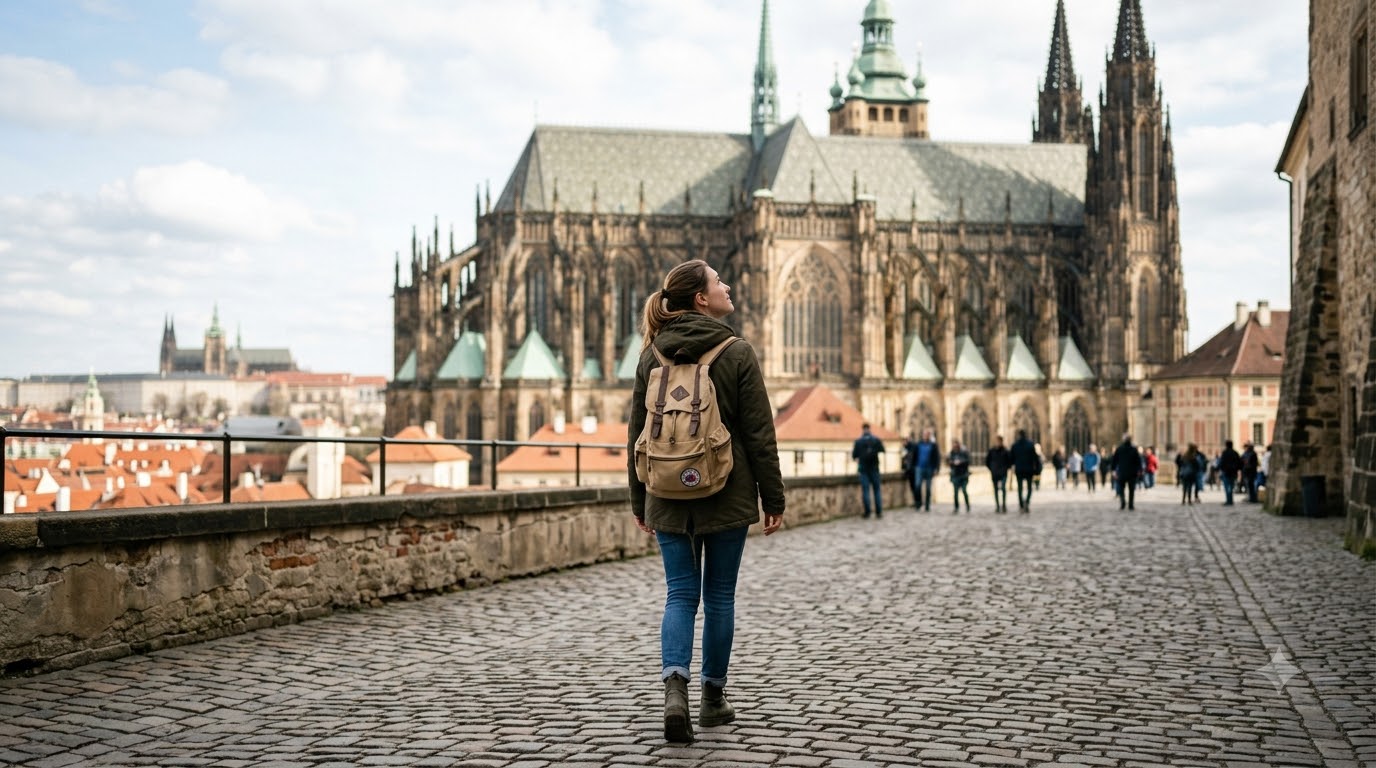
Prague Castle is the single must-see, and the grounds are free. The complex has been the seat of Czech power since the 9th century and, by area, is the largest coherent castle complex on earth. The gates, courtyards, and South Gardens are open daily 06:00–22:00 at no charge, so you can walk in, photograph St. Vitus Cathedral’s exterior, and leave without paying a crown. If one castle is not enough, our Prague day trips ranked by travel time puts Karlstejn Castle just 40 minutes away by train.
You only pay to go inside the historic buildings, and there are a few ticket levels:
- Circuit ticket (short): from CZK 250, covering St. Vitus Cathedral, the Old Royal Palace, St. George’s Basilica, and Golden Lane.
- Standard combined ticket: around CZK 450 for the full set of interiors.
- Interior hours: 09:00–17:00 in summer, 09:00–16:00 in winter; the castle closes only on December 24.
Plan to be through the security check by 09:05. Arriving early lets you see St. Vitus nearly empty before the first tour groups arrive. Come up via the Malostranska tram stop and climb the Old Castle Stairs, or take tram 22 to Prazsky Hrad if you would rather arrive at the top.
For where to base yourself relative to the castle, see where to stay in Prague.
Cross Charles Bridge at Dawn
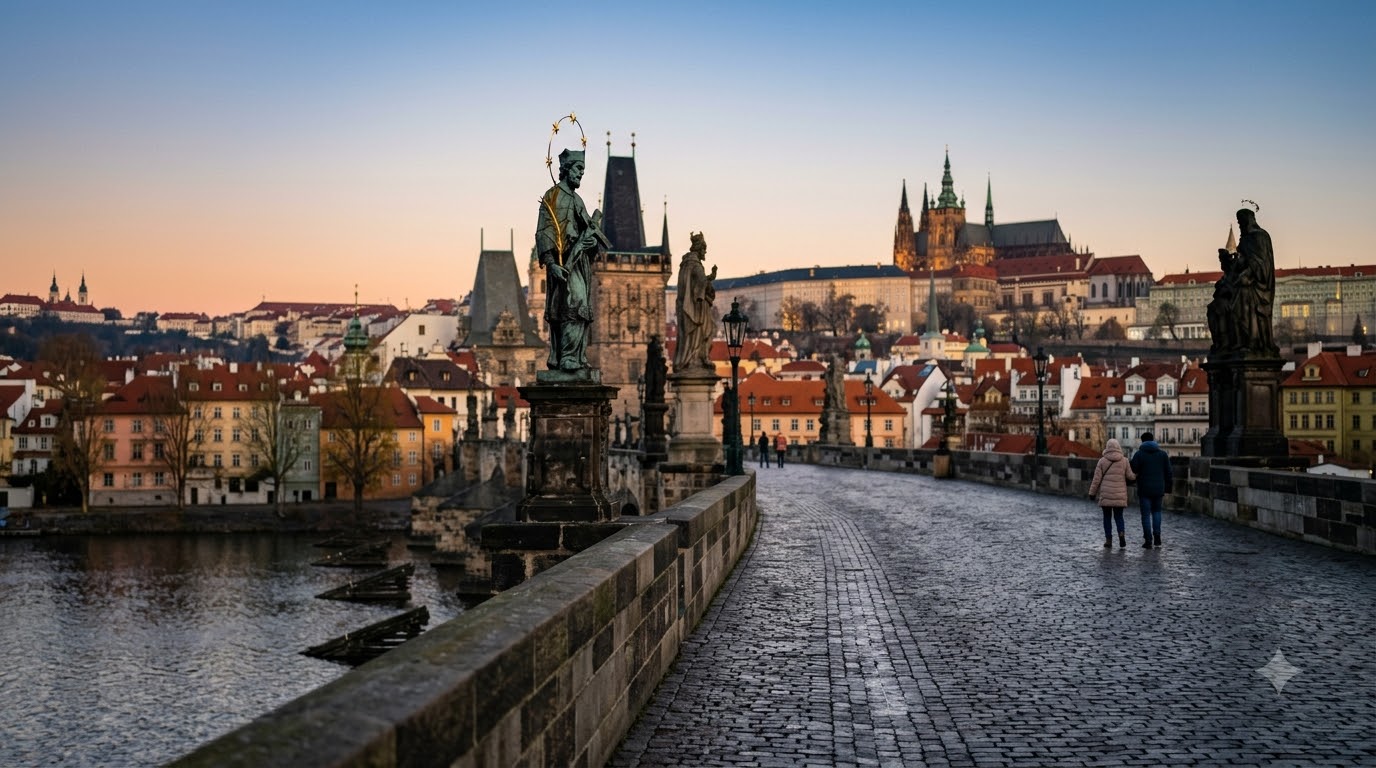
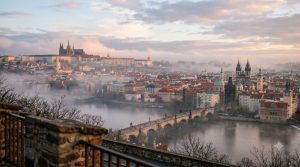
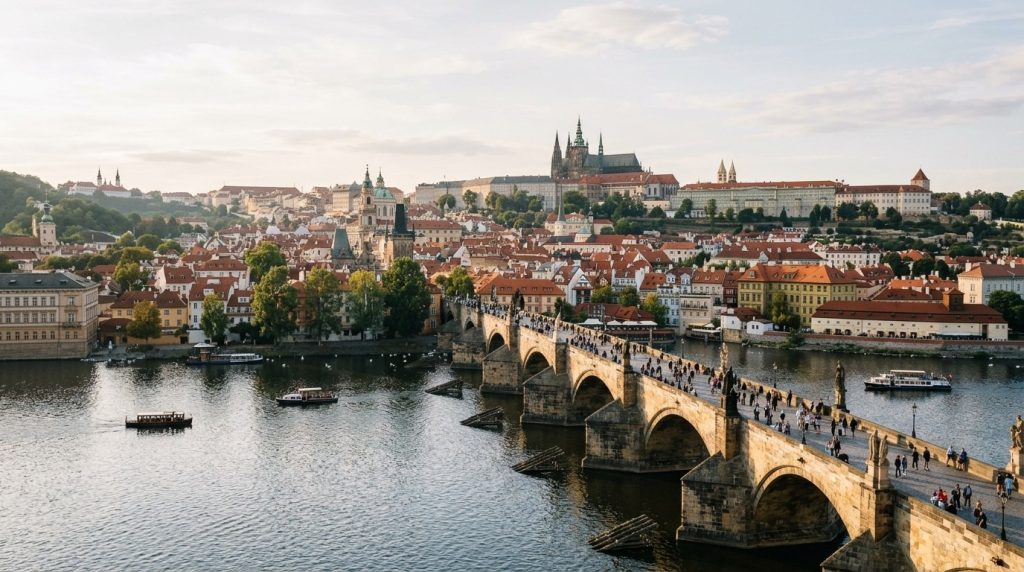
Charles Bridge is free, and dawn is the only time it feels the way the photographs promise. Commissioned by Emperor Charles IV in 1357, the stone bridge stretches roughly 515 metres across the Vltava, connecting the Old Town to the castle side, and it is lined with 30 baroque statues added mostly in the early 1700s.
Touching the plaque of St. John of Nepomuk is the traditional wish-for-luck stop, which is why that one bronze relief is polished gold.
By mid-morning the bridge is a slow-moving crowd of caricature artists, buskers, and selfie sticks. The difference between arriving at 6:45 a.m. and 10:00 a.m. is night and day. If you want the postcard shot of the castle framed by the bridge towers, be on the eastern (Old Town) end before sunrise.
The Old Town Bridge Tower can be climbed for a small fee for an elevated view back along the span.
Find your Prague hotel on the map
Live prices from Booking & Airbnb — tap a pin to compare stays around the Old Town and beyond.
Watch the Astronomical Clock in Old Town Square
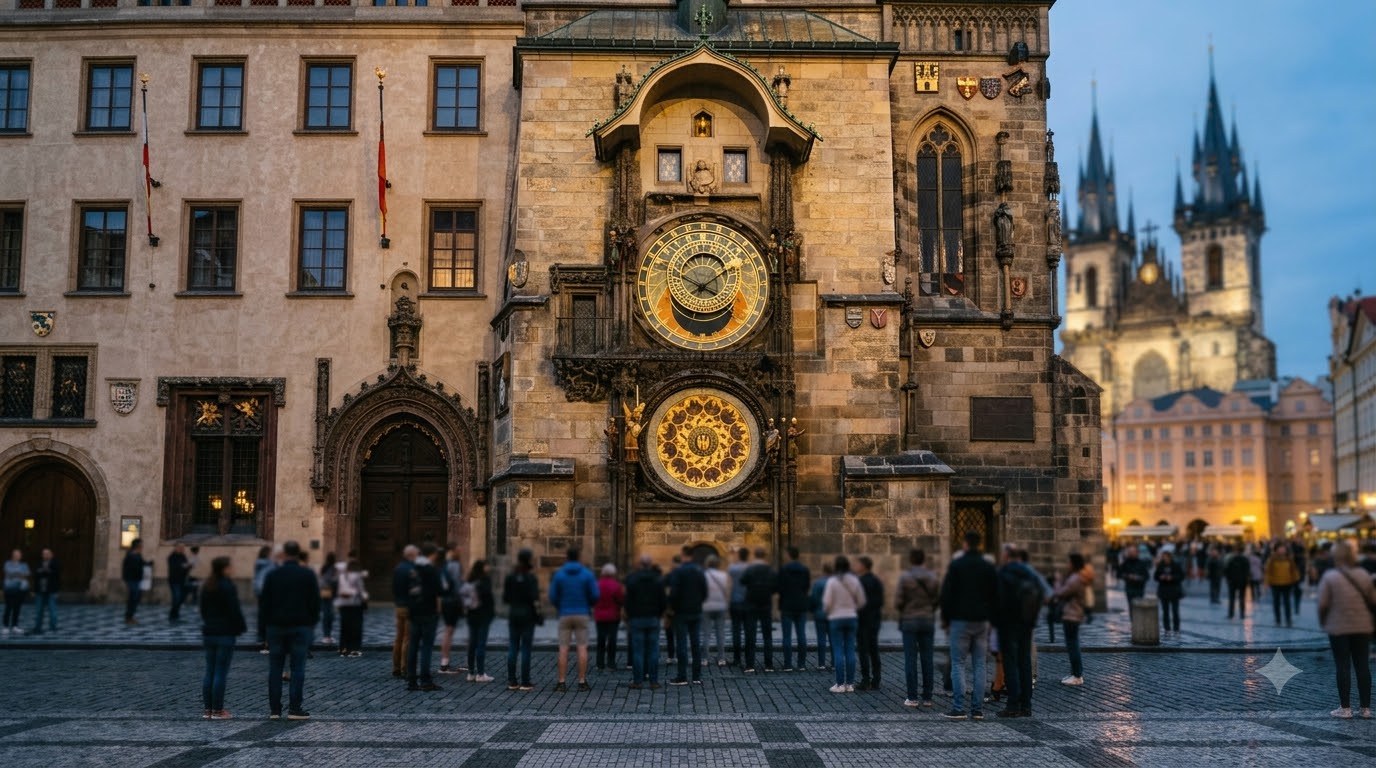
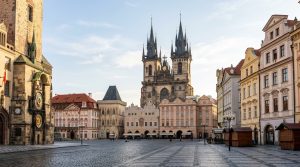
The Astronomical Clock (the Orloj) puts on a free show every hour, and it is the easiest highlight to build a plan around. Mounted on the Old Town Hall in 1410, it is the third-oldest astronomical clock in the world still running.
On the hour from 09:00 to 23:00, the “Walk of the Apostles” begins: two windows open, twelve carved figures rotate past, a skeleton representing Death tolls a bell, and the whole thing wraps in about 45 seconds. It is short, a little anticlimactic, and completely worth seeing once.
For a better return on your time, buy the Old Town Hall tower ticket:
- Tower and interior ticket: CZK 350 for adults.
- Early-bird discount: 175 CZK at the box office during the first hour of opening each day.
- Tower hours: Tuesday–Sunday 09:00–20:00, Monday 11:00–20:00.
The tower gives you a rooftop view straight down onto the twin spires of the Tyn Church and the pastel facades ringing the square. Old Town Square itself is free and open around the clock, and it is where the Christmas and Easter markets set up.
The far corner by the Kinsky Palace is the least crowded spot to watch the clock strike.
| Attraction | 2026 Entry (Adult) | Approx. EUR | Free Option |
|---|---|---|---|
| Prague Castle interiors | CZK 250–450 | EUR 10–18 | Grounds and courtyards free |
| Astronomical Clock tower | CZK 350 | EUR 14 | Hourly show free from square |
| Charles Bridge | Free | Free | Whole bridge free to cross |
| Jewish Quarter (5 sites) | CZK 550 | EUR 22 | Exterior streets free |
| Petrin Lookout Tower | from CZK 250 | from EUR 10 | Hill and gardens free |
Wander the Jewish Quarter (Josefov)
Josefov holds the most concentrated set of Jewish heritage sites in Europe, and one combined ticket covers most of it. The CZK 550 ticket (about EUR 22) admits you to five monuments of the Jewish Museum in Prague: the Maisel Synagogue, Pinkas Synagogue, Spanish Synagogue, the Ceremonial Hall, and the Old Jewish Cemetery. It stays valid for three consecutive days, which is generous if you would rather split the visit.
A few practical notes for a morning there:
- Old Jewish Cemetery: roughly 12,000 gravestones are packed above an estimated 100,000 burials layered over centuries; it is the emotional core of the quarter.
- Old-New Synagogue: Europe’s oldest active synagogue is a separate CZK 200 supplement on top of the combined ticket.
- Opening days: the museum sites run Sunday–Friday and close on Saturdays and Jewish holidays, so plan around that.
- Time needed: budget two hours minimum, three if you add the Old-New Synagogue.
The Spanish Synagogue, with its gilded Moorish interior, was the one that stopped us in our tracks. Pinkas Synagogue, where the names of nearly 80,000 Czech and Moravian Holocaust victims are written on the walls, is a quiet, difficult, essential room.
Walk the Ramparts at Vysehrad
Vysehrad is the quieter second fortress on the opposite bank from the castle, and it is where many Prague residents go for a weekend walk. The hilltop site sits above the Vltava south of the New Town, and its ramparts open onto views of the river and the castle across the water that tour groups rarely see.
The grounds are an open public park, so wandering the walls, lawns, and viewpoints costs nothing. Separate tickets apply only to specific interiors such as the basilica and the underground casemates. Opening times and ticket prices for those change by season, and sources disagree, so check the official Vysehrad site before you plan around a particular interior.
What to include
- The ramparts and viewing terraces, best in the late afternoon when the light turns golden on the river.
- The twin-spired neo-Gothic basilica of Saints Peter and Paul, which is visible across much of the city skyline.
- The Vysehrad cemetery, the resting place of many Czech composers, writers, and artists, and a calm contrast to the Old Town crowds.
Reach it by metro to Vysehrad station on line C, or walk along the riverbank from the New Town. Plan about two hours, and pair it with a pub meal in the neighborhood, where prices run below those near Old Town Square.
Climb Petrin Hill for the Best View in Prague
Petrin Hill gives you the widest view over Prague, and the hill itself is a free public park. Rising about 130 metres above the river on the castle side, Petrin is laced with orchards, rose gardens, and quiet paths that almost nobody in the day-tour crowd bothers with.
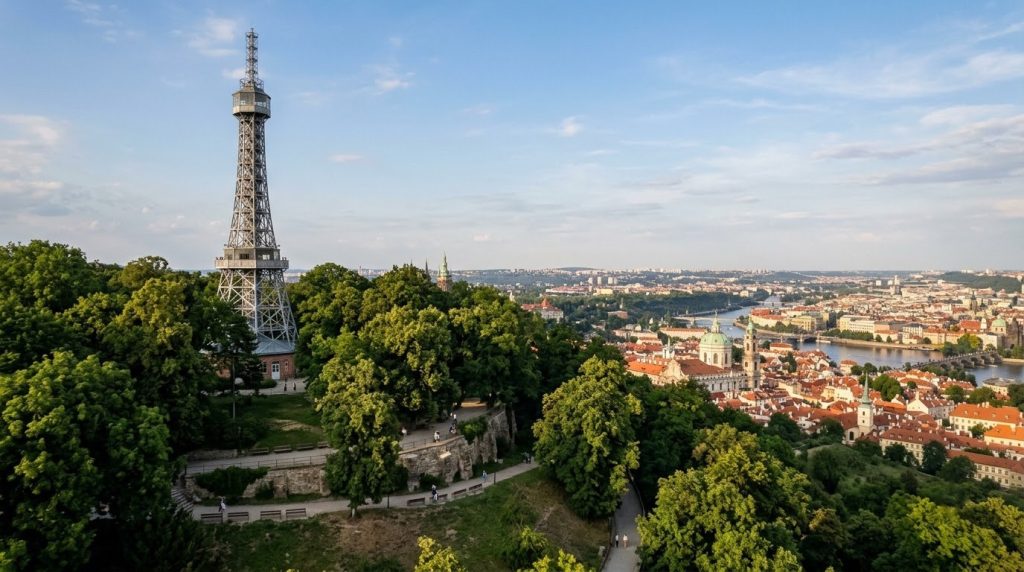
At the top stands the Petrin Lookout Tower, a 63.5-metre steel structure built in 1891 and modelled on the Eiffel Tower after Czech visitors saw the original in Paris.
- Lookout Tower tickets: from CZK 250; there is an extra charge to take the lift rather than climb the 299 steps.
- Funicular: the hillside funicular reopens around September 1, 2026 after reconstruction, with the single fare rising to CZK 100 (CZK 90 via the Litacka app).
- Free alternative: the walk up from the Ujezd tram stop takes 20–25 minutes through the gardens.
Climb the tower steps late in the afternoon and the castle, the river bends, and the whole red-roofed sprawl are laid out in the low sun. It beats the castle’s own terraces for a full-city panorama. Petrin is also the smart pick if you visit in shoulder season, which we break down in the best time to visit Prague.
Drink in Prague’s Historic Beer Halls
Drinking Czech beer in a proper hall is a genuine thing to do in Prague, not just a way to end the day. The Czech Republic drinks more beer per head than any other country, and Prague stays one of the cheapest capitals in Europe for it: a half-litre of draught runs CZK 55–80 in ordinary pubs, and CZK 45–70 in no-frills local spots away from the square. That price gap is one reason Prague beats Vienna for most first-timers: a pint in Vienna runs roughly USD 4.50 to 8.
Where we would send a first-timer:
- U Fleku — a brewing hall operating since 1499, pouring its own dark lager; CZK 70–100 per glass, touristy but historic.
- Lokal — fresh, unpasteurised Pilsner Urquell tanked daily; CZK 40–70 and a favourite of locals.
- Tourist-trap warning: bars right on Old Town Square and Charles Bridge charge CZK 90–120 or more for the same beer.
A practical tip: in a traditional pub, a fresh beer keeps arriving until you put the coaster on top of your glass. Order the tank Pilsner where you can find it, and skip the imported lagers entirely.
Take a Day Trip to Kutna Hora
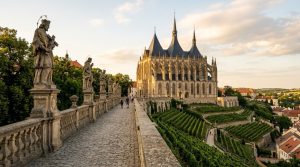
If the castle and Old Town loop is done, Kutna Hora is the strongest half-day or full-day addition. The medieval silver-mining town east of Prague is best known for the Sedlec Ossuary, a small chapel decorated with arrangements made from human bones, and for its Gothic cathedral nearby.
The ossuary’s own website lists adult admission at CZK 180 and showed 9 am to 4 pm opening on the day checked in the winter season. Longer hours generally apply in summer, so confirm for your date. Buy tickets online or at the information center where possible, because queues form at midday.
How to plan the trip
- Take a regional train from Prague and check the Czech Railways timetable for the day you travel, since departures vary by weekday.
- Go early. The ossuary is small, and a quiet visit is far easier in the first hour.
- Combine Sedlec with the town’s cathedral and historic center rather than only the ossuary, to make the trip worth the transit time.
- Return before the evening commuter rush if you hold dinner reservations in Prague.
Guided tours from Prague bundle transport and entry, but a DIY trip by train is straightforward and lets you pace the day yourself. Karlstejn Castle is the other classic option, and its official site shows that visits run as timed tours that you reserve in advance, so book before you travel in peak season.
The Klementinum: Baroque Library and Astronomical Tower
The Klementinum is a former Jesuit complex near Charles Bridge, and its guided tour is one of the most rewarding indoor stops in the Old Town. The tour covers the Baroque Library and the Astronomical Tower, and it runs about 45 minutes, closer to 50 to 60 minutes if you climb the tower.
Hours and tickets
The official Prague tourism site lists the 2026 schedule as daily from 8 AM to 9 PM, with shorter hours on December 24, 25, and 31. Visits are guided only, so you join a timed slot. On December 25 and January 1, the early-bird 50% discount does not apply.
Prices vary by source. The Prague Visitor Pass page lists a regular adult ticket at CZK 380 (about EUR 16), which is free with the pass, while a reseller lists a wide range. Check the official price list before you go.
Why it fits a plan
Book a slot in the first hour of the day or late afternoon, after the Old Town Square crowds. It is a strong rainy-day choice because the tour is entirely indoors, apart from the short tower climb.
Is the Prague Visitor Pass Worth It?
The Prague Visitor Pass is the official city pass. It combines unlimited public transport, including airport transfers, with entry to many monuments and attractions. It comes in 48-, 72-, and 120-hour versions, activates on first use, and there is no 24-hour version.
| Pass length | Adult price reported |
|---|---|
| 48 hours | CZK 2,700 (about EUR 112) |
| 72 hours | CZK 3,300 (about EUR 137) |
| 120 hours | CZK 3,900 (about EUR 162) |
One guide confirmed those figures as of August 2026. Another source lists a 72-hour price of CZK 3,200, and euro prices on a third site do not match, so confirm the live price on the official Prague City Tourism site.
Do the math before buying
One comparison priced a 72-hour trip with seven attractions plus a 72-hour transport ticket at CZK 3,680, against CZK 3,300 for the pass, which saves about CZK 380. Savings disappear if you visit only a few paid sights.
This guide’s best sights are largely free, including the castle grounds, Charles Bridge, and the clock show. The pass pays off only if you add the Klementinum, the Jewish Quarter, towers, and museums.
Scams and Tourist Traps to Avoid in Prague
Prague is generally safe, and the usual problems are financial rather than violent. News outlets and travel guides repeatedly flag the same handful of tricks around the busiest squares.
Money changers
Street money changers near Charles Bridge and Old Town Square are the classic trap. Exchange offices with large-print rates may apply those rates only to big sums, so ask for the exact amount you will receive before handing over cash. A bank or an ATM is usually the safer choice, even with a fee.
Card terminals
If a terminal offers to charge you in your home currency, decline and pay in Czech crowns. This dynamic currency conversion tends to add a poor exchange rate.
Taxis
- Avoid unmarked cabs hailed at the curb near the main sights, since drivers there sometimes quote flat fares or skip the meter.
- Use a taxi rank, a hotel-arranged car, or a ride-hailing app such as Uber, Bolt, or Liftago.
- Confirm the fare or meter before you set off.
Restaurants and plainclothes officers
- Check the menu for cover charges and the bill for items you did not order, especially at square-front restaurants.
- Treat anyone in plain clothes who asks to inspect your wallet or passport as a red flag, and ask to go to a police station.
Keep bags zipped on crowded trams and on Charles Bridge, where pickpockets work the slow-moving crowds.
Money, ATMs, and Airport Transfers in Prague
Small money mistakes cost more in Prague than any attraction ticket. A few reported figures help you avoid them.
ATMs and exchange
- Fee-free ATMs: A travel wiki names Fio banka and KB as fee-free options.
- Other ATMs: Fees of CZK 99 to 150 and sometimes 6% to 15% are reported. Avoid standalone machines in tourist squares.
- Exchange offices: Keep your receipt. By law you have 3 hours to reverse a transaction.
From the airport
- Airport Express bus: CZK 200 (about EUR 8).
- Airport taxi to the center: About CZK 700 (about EUR 29). The city council sets a maximum rate of CZK 28 per km.
- Bus 119 plus metro: The cheapest option, using a standard 90-minute ticket.
Fines to know
Jaywalking can be fined at CZK 1,000. An unstamped or double-stamped transit ticket can draw a fine of up to CZK 2,000 according to the wiki, so stamp once when you first board and keep the ticket.
Standard tickets are not valid on the Petrin funicular, which has its own fare of CZK 100.
Getting Around and Practical Tips for Prague
You will barely need public transport in the historic core, but when you do it is cheap and simple. Trams, the metro, and buses all share the same time-based tickets, and validity depends only on the clock, not the number of transfers.
- 90-minute ticket: CZK 50 (CZK 46 in the PID Litacka app, CZK 55 by SMS).
- 30-minute ticket: CZK 39 (CZK 36 in the app).
- Validation: stamp the ticket once when you board; re-stamping on a transfer voids it and risks a CZK 1,500 fine.
- Airport: bus 119 connects to the Nadrazi Veleslavin metro on a standard 90-minute ticket, far cheaper than a taxi.
- Currency: Prague uses the Czech koruna (CZK), not the euro; in 2026 roughly CZK 24 buys EUR 1, so carry koruna for pubs and markets.
Tram 22 is the sightseeing line worth knowing, running from the New Town up past the castle. For deciding which neighbourhood puts you closest to the sights, our where to stay in Prague guide compares Old Town, Mala Strana, and Vinohrady.
A Sample Two-Day Plan and Mistakes to Avoid
Because the headline sights sit close together, a sequence by area keeps walking short and avoids backtracking across the river.
Day 1: Castle side and Old Town
- 6:30 am: Charles Bridge before the crowds, then walk up to Prague Castle for the gates and security check.
- Late morning: St. Vitus Cathedral and the interior circuit, then lunch in Mala Strana.
- Afternoon: Old Town Square, with the Astronomical Clock on the hour.
- Evening: a pub dinner one street back from the tourist spine.
Day 2: Jewish Quarter and the hills
- Morning: Josefov with the combined ticket, remembering the Saturday closure.
- Afternoon: Petrin Hill by funicular or on foot, then the lookout tower.
- Evening: a Vysehrad sunset walk, or a beer hall visit.
With a third day, add Kutna Hora or Karlstejn.
Mistakes that waste time and money
- Visiting the Jewish Quarter on a Saturday, when the museum sites are closed.
- Reaching the castle gates after the midday tour-bus wave.
- Eating at square-front restaurants when a street back costs less.
- Paying in euros at shops that accept only koruna, or using dynamic currency conversion on cards.
- Re-stamping a transit ticket on a transfer, which can void it.
Build in one unscheduled hour per day. Some of Prague’s best moments come from wrong turns into quiet side streets.
Rainy-Day and Winter Plan: Indoor Prague
Prague’s cold months and rainy spells need an indoor backup. These stops are already in this guide or cheap to add, and most work in any weather.
- Klementinum tour: Guided, about 45 minutes, open daily.
- Jewish Quarter sites: The combined ticket covers indoor synagogues and exhibitions, open Sunday to Friday.
- Beer halls: U Fleku and Lokal are warm, covered spaces for an afternoon stop.
- National Gallery: A two-day single-person ticket to the Old Art exhibitions is reported at CZK 240, against CZK 450 if bought separately. A one-year gift ticket is listed at CZK 650 for one person.
How to pace a wet day
Do one indoor tour in the morning when queues are shortest, take a long pub lunch, then walk the Old Town between showers. Pair the Klementinum with Old Town Square, since they are a few minutes apart.
For visitors in December, remember the Christmas markets pack the square, so book the indoor tours early in the day.
Information desks
The tourist information office at the Old Town Hall is open 9 AM to 6 PM in January and February and 9 AM to 7 PM from March through December. It is a useful stop for maps and questions during a rain delay.
Free and Cheap Prague: Gardens, Walls, and Museum Free Hours
Prague rewards travelers who mix paid highlights with free ones. Several of the best low-cost stops sit outside the main tourist loop.
- Letna Park: A large park with a beer garden that locals use after work, with benches and Old Town views. One guide says the beer garden operates from May to September. You cannot bring outside food or drink into it, so bring cash.
- Wallenstein Garden: Free to enter, with an unusual grotto wall.
- Lennon Wall: The graffiti wall dates to the communist era, when young Czechs began writing grievances against the regime on it in 1988, according to one guide. Rules are getting stricter, so read the signs before you write anything.
- National Gallery: Reported free on the first Wednesday of the month from 3 PM to 8 PM. Confirm before planning around it.
Strahov Monastery
Strahov Monastery sits above the castle district. The library and the art gallery share opening hours of 9 AM to 5 PM, according to the monastery’s site, and the monastery brewery is a separate stop. Admission prices are listed in the online ticket section, so check there before you go.
It pairs well with Petrin Hill, since both sit on the same side of the river.
What to Eat in Prague Beyond Beer
Czech food is hearty, and a few dishes are worth ordering by name. Prices differ widely between tourist restaurants and local pubs.
- Svickova: Several guides call it the dish most associated with Prague. It is a beef dish with cream sauce and dumplings, historically a Sunday lunch. One listing puts it at CZK 180 to 260 (about EUR 7.50 to 11).
- Goulash: Not originally Czech. It comes from Hungary, but Prague adopted it. Czech versions tend to have more meat and fewer vegetables.
- Roast pork with dumplings and sauerkraut: Called the national dish by one source.
- Kulajda and bramboraky: A creamy potato and mushroom soup with dill, and potato pancakes.
Trdelnik is not an old Prague tradition
Sold as a traditional Czech pastry on the main streets, trdelnik has disputed origins. One source traces it to Hungary or Slovakia and another describes it as a 21st-century Prague phenomenon. Treat it as a snack, not a meal, and expect to find it at street stalls rather than traditional restaurants.
Lunch menus
Many Czech restaurants offer a fixed daily lunch menu, usually two or three courses, with drinks not included. Ask for the daily menu before you order from the main list.
When to Go and What to Budget
The best months to visit Prague are the shoulder seasons of April–May and September–October, when the weather is mild and the crowds thin against the summer peak.
| Season | Months | Weather | Crowds | Notes |
|---|---|---|---|---|
| Spring | Apr–May | 12–20 C, mild | Moderate | Gardens bloom; best all-round value |
| Summer | Jun–Aug | 20–26 C, warm | Heaviest | Long days, busiest bridges |
| Autumn | Sep–Oct | 10–18 C, crisp | Moderate | Golden light, fewer tour groups |
| Winter | Nov–Mar | -2–5 C, cold | Light except markets | Christmas markets pack December |
A daily budget of EUR 70–110 covers a mid-range trip in 2026: a couple of paid attractions, tram tickets, and meals with beer in local pubs rather than square-front restaurants. Eating lunch at pubs one street back from the tourist spine can bring the daily cost closer to EUR 80.
Frequently Asked Questions
What are the top things to do in Prague?
The top things to do in Prague are visiting Prague Castle, crossing Charles Bridge, watching the Astronomical Clock strike on Old Town Square, exploring the Jewish Quarter, and climbing Petrin Lookout Tower. All five sit within a compact, walkable historic core, and the castle grounds, the clock show, and Charles Bridge are all free.
How many days do you need in Prague?
Two to three days is enough to see the major sights in Prague comfortably. Two days covers the castle, Charles Bridge, Old Town Square, and the Jewish Quarter at a steady pace; a third day adds Petrin Hill, the Vysehrad fortress, and time to sit in a beer hall without rushing.
Is Prague expensive to visit in 2026?
Prague is one of the more affordable European capitals in 2026. A half-litre of draught beer costs CZK 55–80, a 90-minute transport ticket is CZK 50, and many headline sights, including Charles Bridge and the Astronomical Clock show, are free. A mid-range daily budget of EUR 70–110 is realistic. If you are heading on to another capital, our Budapest vs Vienna comparison puts a 24-hour transit pass at USD 8.40 in Budapest against USD 11.50 in Vienna.
Is Prague Castle free to enter?
The grounds, courtyards, and gardens of Prague Castle are free and open daily 06:00–22:00. You only pay to enter the historic buildings such as St. Vitus Cathedral, the Old Royal Palace, and Golden Lane, with circuit tickets from CZK 250 and a standard combined ticket around CZK 450.
When is the best time to visit Prague?
The best time to visit Prague is spring (April–May) or autumn (September–October), when temperatures are mild and the crowds are lighter than the June–August peak. December is busy but atmospheric thanks to the Christmas markets on Old Town Square and Wenceslas Square.
Final Word
Prague rewards early risers and slow walkers. The sights are close enough that a good day here is less about ticking a list and more about looping the same medieval streets at different hours until you find them at their quietest.
Start at dawn on Charles Bridge, save the beer halls for the evening, and you will have seen the best of the city on its own terms. Plan the wider trip with our Prague travel guide and 3-day itinerary.