Prague Itinerary: The Perfect 3 Days in 2026
Disclosure: Some links in this guide are affiliate links. If you book or buy through them, we may earn a small commission at no extra cost to you — it helps keep our guides free.
- Day 1 stays on foot: Old Town Square, the Astronomical Clock, and the Jewish Quarter sit within a 15-minute walk of each other, so you need zero transport.
- Prague Castle Main Circuit costs 450 CZK (about €18) for adults in 2026 and the ticket is valid across two consecutive days (Prague Castle Administration, 2026).
- A 90-minute transit ticket is 46 CZK in the app and 50 CZK on paper, valid on trams, metro, and buses (PID, 2026).
- The Jewish Quarter combined ticket is 550 CZK for five sites and the whole quarter is closed on Saturdays and Jewish holidays.
- Kutna Hora is the easiest day trip: hourly direct trains take 55 to 70 minutes and cost 104 CZK each way.
Where to sleep for this Prague trip
Three days is the right amount of time for a first Prague itinerary: enough to walk the Old Town, tour Prague Castle, and still keep one day for Vysehrad or a day trip, without rushing.
This plan groups sights by neighborhood so you barely touch public transport on days one and two, then uses trams and a single train on day three.
Prague drew 8,271,962 visitors in 2025, a 3% rise on the year before, and the average stay was 2.3 nights (Prague City Tourism, 2026), so a full three days already puts you ahead of the typical trip.
Below you get an hour-by-hour route for each day, verified 2026 ticket prices, a realistic cost breakdown, and the tram tips that save the most time. Everything is walkable in comfortable shoes, and every paid attraction here is one we would send a friend to. For broader planning, pair this with our full Prague travel guide.
Staying near Wenceslas Square puts both walking days about five minutes from the door. The single change we would make: buy a 24-hour transit pass on day two, not single tickets, because we underestimated how often we hopped the 22 tram to and from Mala Strana.
How should you structure 3 days in Prague?
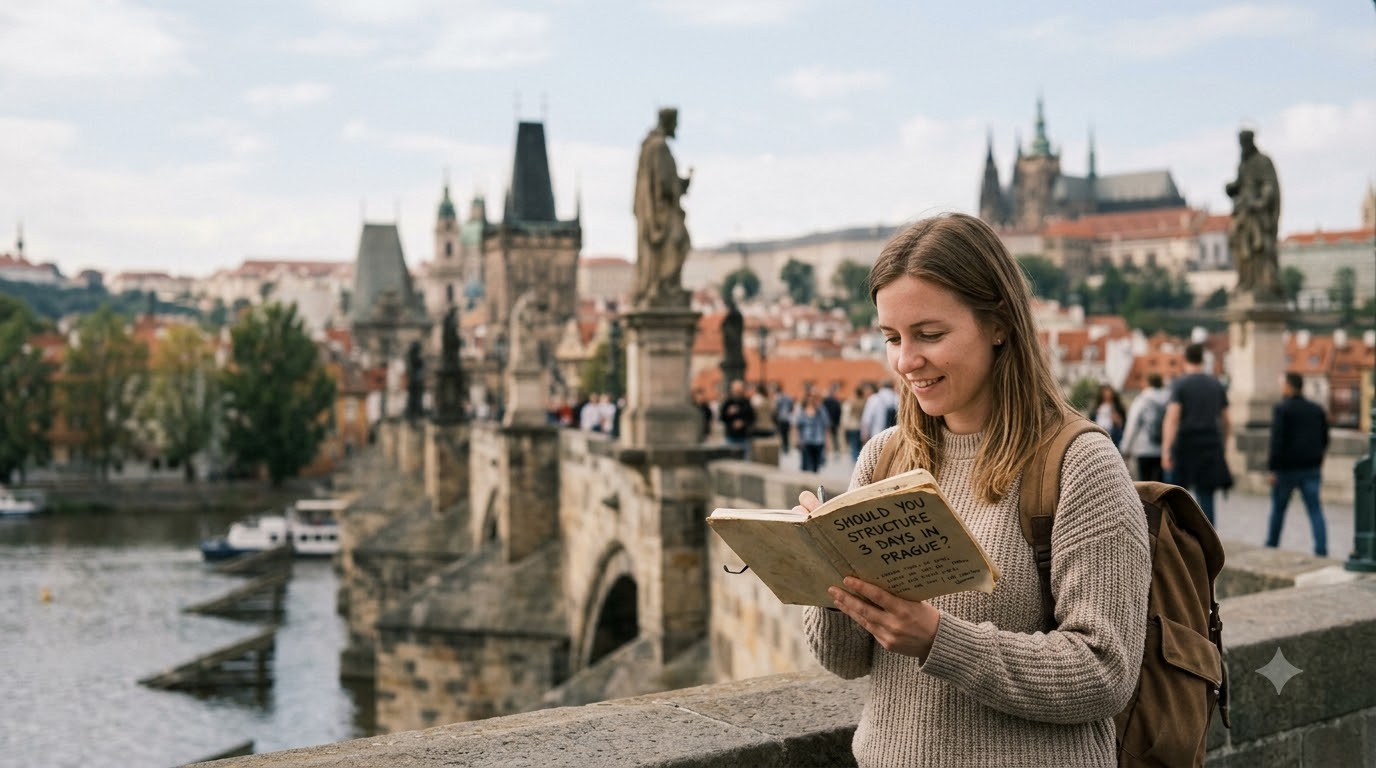
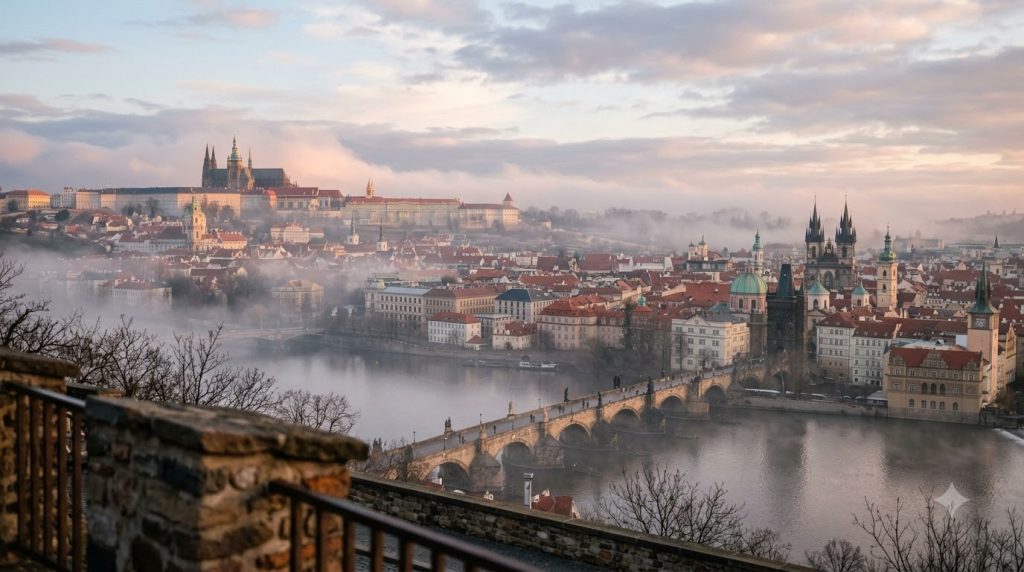
Structure your three days by geography, not by ticking off a wish list. Prague’s core sits on two banks of the Vltava, and crossing back and forth wastes an hour every time. Keep day one entirely on the right bank (Old Town and Josefov), give day two to the left bank (Castle and Mala Strana), and use day three for something slower.
Here is the shape of the plan at a glance:
- Day 1 — Old Town and Jewish Quarter: Old Town Square, Astronomical Clock, Josefov synagogues, Charles Bridge at dusk. All on foot.
- Day 2 — Prague Castle and Mala Strana: Tram 22 up to the Castle, then walk downhill through Mala Strana to the Charles Bridge.
- Day 3 — Vysehrad or a day trip: Either the quiet Vysehrad fortress and its river views, or a train to Kutna Hora.
- Base yourself central: Staying in Old Town, New Town, or Mala Strana keeps every morning within a short walk of the action, which our where to stay in Prague breakdown covers by budget.
If you only read one section before you go, make it the transport one near the end, because a valid ticket is the single thing tourists get wrong.
Day 1: Old Town and the Jewish Quarter
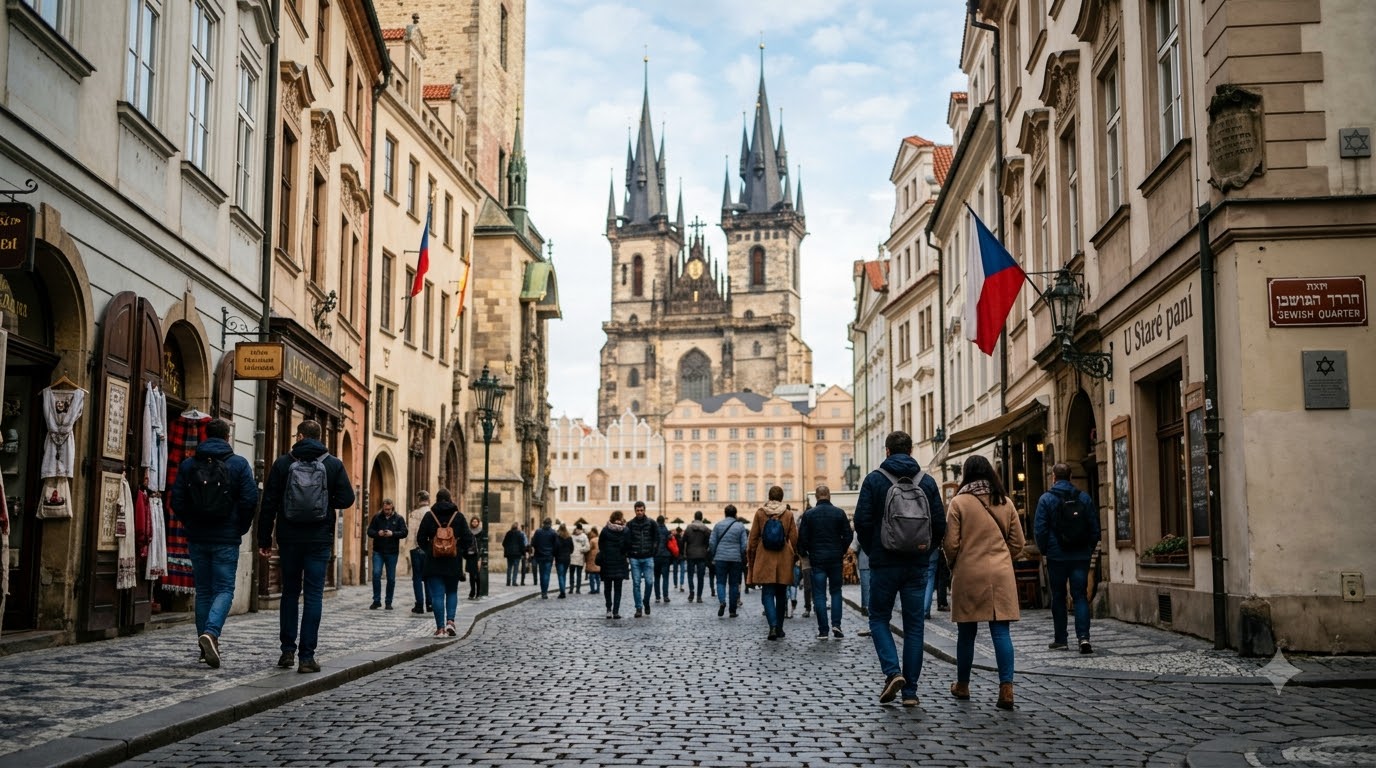
Spend day one entirely on foot in the right-bank core, where the medieval streets, the Astronomical Clock, and Josefov’s synagogues cluster within a 15-minute radius. Arrive at Old Town Square before 9am to have it almost to yourself; that never happens after 10am in summer.
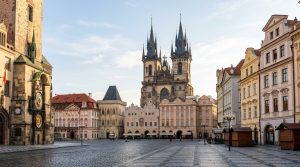
Start at Old Town Square, watch the Astronomical Clock strike on the hour (the walk of the Apostles runs every hour from 9am to 11pm), then climb the Old Town Hall Tower for the best rooftop view of the square. From there it is a five-minute walk north into Josefov, the former Jewish Quarter and one of the best-preserved in Europe.
A practical morning-to-evening sequence:
- 08:30 — Old Town Square: arrive early, photograph the Tyn Church and clock without crowds.
- 10:00 — Jewish Quarter (Josefov): the combined ticket covers the Pinkas, Maisel, and Spanish Synagogues, the Ceremonial Hall, and the Old Jewish Cemetery.
- 13:00 — Lunch off the square: walk two streets away from the clock for fair prices; a main dish runs 220 to 350 CZK in a sit-down spot.
- 15:00 — Municipal House and Powder Tower: Art Nouveau interiors and a medieval gate on the edge of the Old Town.
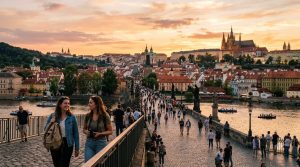
- 19:00 — Charles Bridge at dusk: cross toward Mala Strana as the light drops and the tour groups thin out.
The Jewish Quarter has strict hours and closures worth planning around.
| Josefov (Jewish Quarter) 2026 | Detail |
|---|---|
| Combined ticket (5 sites) | 550 CZK (~€22) |
| Old-New Synagogue supplement | +200 CZK |
| Children under 6 | Free |
| Open Apr-Oct | 9:00-18:00 |
| Open Nov-Mar | 9:00-16:30 |
| Closed | Saturdays and Jewish holidays |
Source: Prague Jewish Museum, 2026. If Josefov is closed on your Saturday, swap day one and day three so the quarter falls on an open day. For more right-bank ideas, our best things to do in Prague list has the museums and viewpoints that fit around this route.
Find your Prague hotel on the map
Live prices from Booking & Airbnb — tap a pin to compare stays around the Old Town and beyond.
Day 2: Prague Castle and Mala Strana
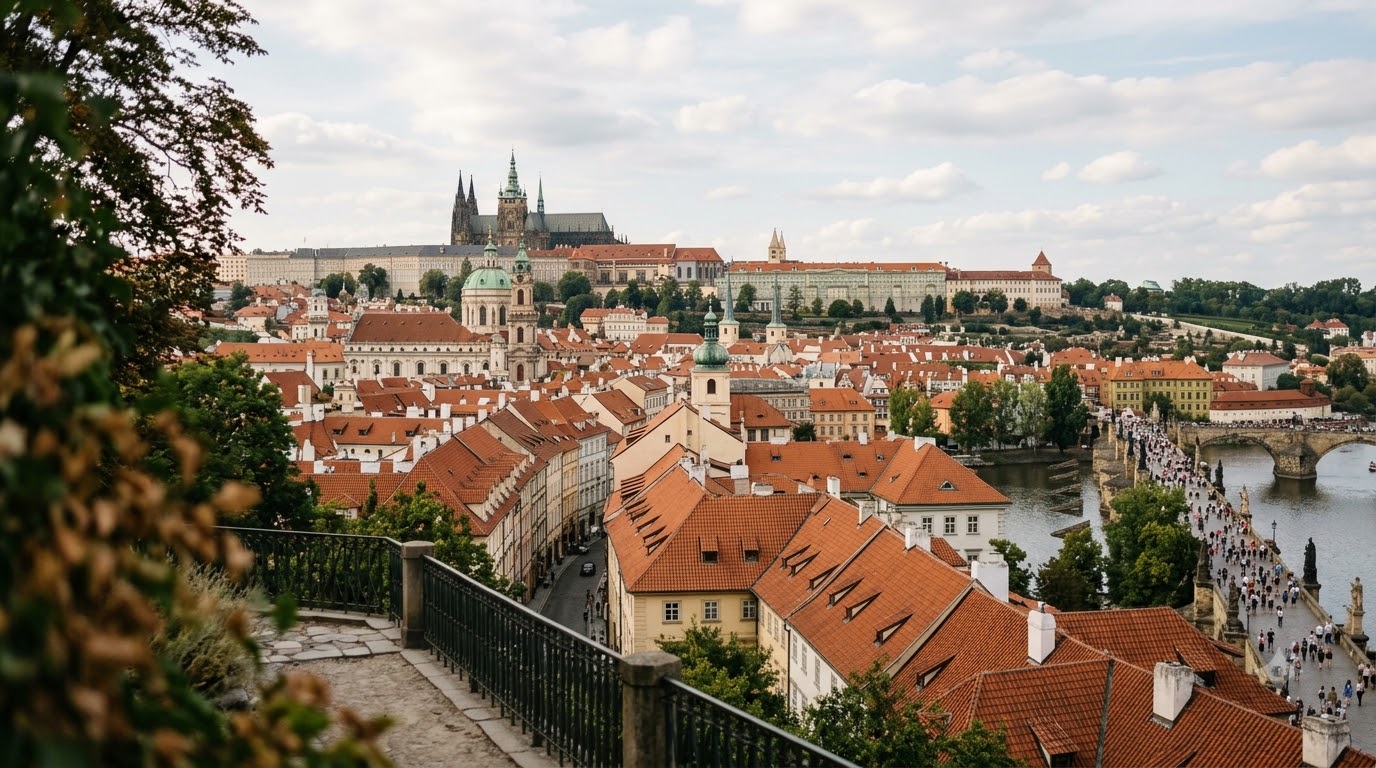
Give the whole second day to the left bank, starting high at Prague Castle and walking downhill through Mala Strana so gravity is on your side. The Castle is the largest ancient castle complex in the world by area, and the grounds are free to walk from 06:00 to 22:00, so an early arrival costs nothing and beats the queues.
Take tram 22 to the Pražský hrad stop, or the metro to Malostranská and climb the Old Castle Stairs. Inside the walls, the Main Circuit ticket is the one most visitors want: it covers St. Vitus Cathedral, the Old Royal Palace, St. George’s Basilica, and Golden Lane.
Prague Castle circuits and 2026 prices:
- Main Circuit (adult): 450 CZK — St. Vitus, Old Royal Palace, St. George’s Basilica, Golden Lane.
- Main Circuit (reduced, ages 6-16 and students to 26): 300 CZK.
- Family ticket (2 adults + 1-5 children under 16): 950 CZK.
- Historical buildings open: 09:00-17:00 (Apr-Oct), 09:00-16:00 (Nov-Mar).
- Ticket validity: two consecutive days, each interior entered once.
| Prague Castle ticket 2026 | Adult | Reduced |
|---|---|---|
| Main Circuit (4 sites) | 450 CZK | 300 CZK |
| Circuit B | 350 CZK | 175 CZK |
| Circuit C | 250 CZK | 125 CZK |
| Grounds and courtyards | Free (06:00-22:00) | Free |
Source: Prague Castle Administration, 2026. For summer 2026 the Castle is adding time-slot reservations during peak periods, so book a slot if you visit in July or August.
After the Castle, walk down through Mala Strana. Stop at the Wallenstein Garden (free), the Lennon Wall, and Kampa Island before ending at Charles Bridge. An afternoon here works well on foot, with no need to board a tram until dinner. If you want the postcard shot of the Castle from across the river, walk the Mala Strana bank at sunset.
Day 3: Vysehrad or a day trip to Kutna Hora
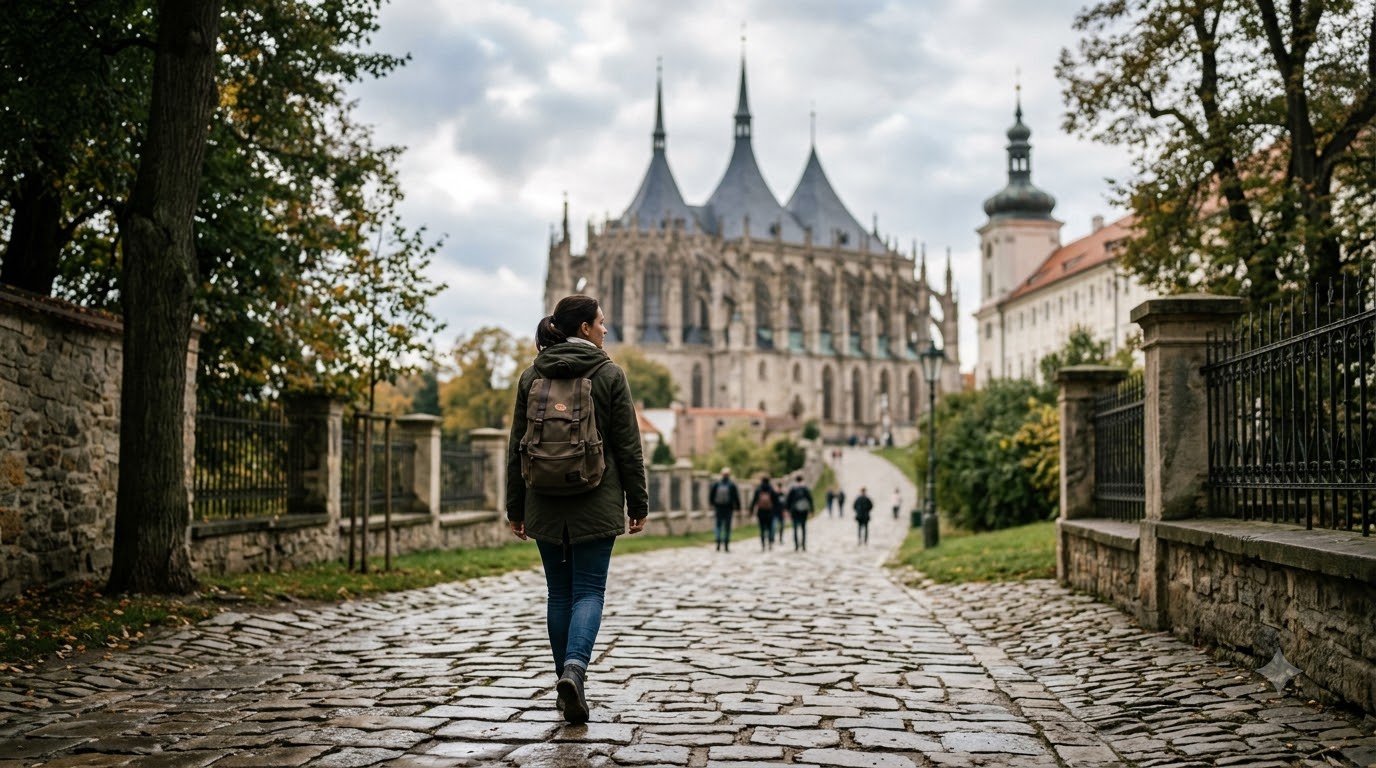
Use day three for a slower pace: either the quiet Vysehrad fortress south of the center, or a train day trip to the UNESCO town of Kutna Hora. Both work; pick by mood. If you lean toward leaving town, our ranking of Prague day trips also explains why Cesky Krumlov works better as an overnight than a day trip.
Choose Vysehrad if you want a relaxed half-day with the best free views in Prague. The fortress grounds, walls, and national cemetery are free and open at all hours, and the Basilica of St. Peter and St. Paul interior costs about 150 CZK. Take metro line C to Vyšehrad station, then walk five minutes to the ramparts. On a weekday there are almost no crowds until 11am.
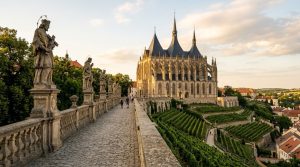
Choose Kutna Hora if you want a full day and one more UNESCO site. Direct trains leave Prague’s main station (Praha hlavní nádraží) roughly hourly and take 55 to 70 minutes for 104 CZK each way. The famous Sedlec Ossuary (the Bone Church) and St. Barbara’s Cathedral share a combined 330 CZK ticket.
| Day 3 option | Getting there | Key cost |
|---|---|---|
| Vysehrad | Metro C to Vyšehrad, 10 min | Grounds free; Basilica ~150 CZK |
| Kutna Hora | Direct train, 55-70 min | 104 CZK each way; sights 330 CZK |
Source: České dráhy and site operators, 2026. A full Kutna Hora day (train both ways, both sights, lunch) runs roughly 650 to 900 CZK per person. Book the Bone Church slot in advance, since summer queues reach 45 minutes, and arrive before 10am to beat the tour buses.
Getting around: Prague trams, metro, and tickets
Prague runs one integrated ticket across trams, metro, and buses, and the same ticket works on all three until it expires. This is where tourists lose money and time, so learn it once. Tickets are timed, not per-ride: validate once and ride freely until the clock runs out, transfers included. The other easy way to overpay is a street-hailed taxi, which is why our Prague scams and safety rundown says to book every ride through an app.
A 90-minute ticket is almost always the right buy for a sightseeing hop, and a 24-hour pass pays for itself after four or five rides. Buy the cheaper fare in the PID Lítačka app; paper tickets from yellow machines cost a little more.
| PID transit ticket (2026) | App price | Paper price |
|---|---|---|
| 30-minute | 36 CZK | 39 CZK |
| 90-minute | 46 CZK | 50 CZK |
Source: Pražská integrovaná doprava (PID), new tariff from 1 January 2026. The tips that matter most on the ground:
- Validate before you ride: stamp paper tickets in the yellow box on the tram or at the metro entrance, or activate the app ticket before boarding.
- Tram 22 is the tourist line: it links the Castle, Mala Strana, and the New Town in one route.
- The metro has three lines (A green, B yellow, C red) and runs until midnight.
- Fines are steep: riding without a validated ticket triggers an on-the-spot penalty, and inspectors are common on tram 22.
- Skip taxis from the airport: bus 119 plus the metro reaches the center on a single transit ticket.
Prague’s core is compact enough that you will walk far more than you ride. We covered days one and two almost entirely on foot and used transit only for the Castle climb and airport runs.
What does this 3-day Prague itinerary cost?
Budget roughly 1,600 to 2,000 CZK per person in attraction and transport costs for these three days, before food and lodging. That covers the three headline tickets, local transit, and one day-trip train. Food adds 500 to 900 CZK a day depending on where you sit down, and a mid-range central hotel typically runs higher in summer, which our where to stay in Prague guide breaks down by area. If you are pricing a second capital too, see whether Prague or Vienna wins; Vienna’s 24-hour transit pass costs roughly twice what Prague’s does.
| Cost item (per person, 2026) | Amount |
|---|---|
| Jewish Quarter combined ticket | 550 CZK |
| Prague Castle Main Circuit | 450 CZK |
| Kutna Hora sights (day 3 option) | 330 CZK |
| 24-hour transit + single fares | ~200 CZK |
| Kutna Hora train (round trip) | 208 CZK |
| Sightseeing subtotal | ~1,738 CZK |
Source: author estimate from operator prices, 2026. Choosing Vysehrad over Kutna Hora on day three drops the total by roughly 400 CZK, since the fortress grounds are free. The single biggest saving lever is validating a 24-hour pass instead of buying single tickets on a busy day.
When is the best time to do this itinerary?
Late spring and early autumn suit this plan best, because the daylight is long and the crowds are thinner than the July-August peak. May, June, and September give you comfortable walking weather without the summer heat spikes. August is the hottest month, with daytime highs of 25 to 28°C and occasional heat waves above 33°C, plus frequent late-afternoon thunderstorms.
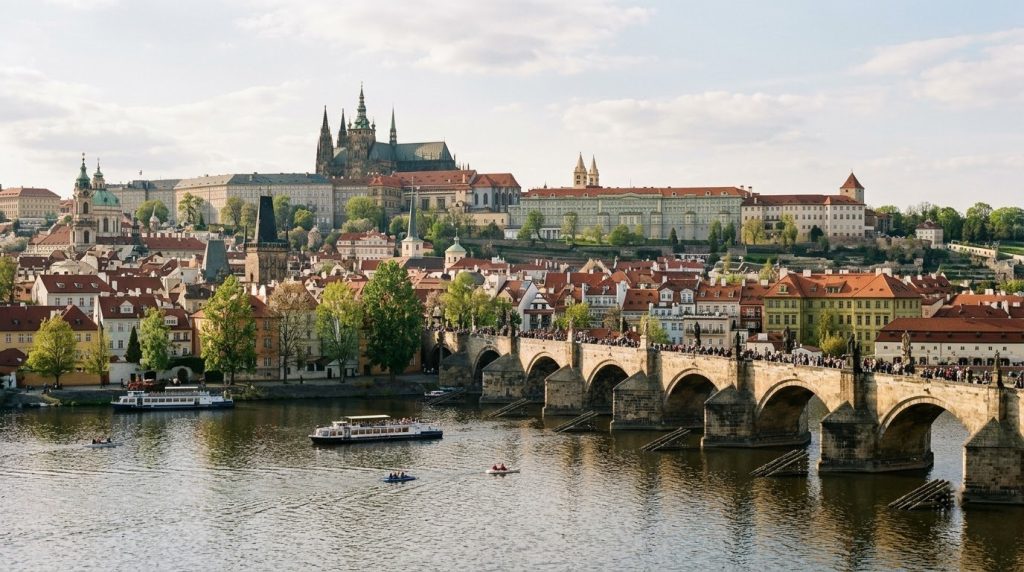
If you travel in high summer, shift the rhythm rather than the plan:
- Sightsee before 11am, when the streets and squares are cool and quiet.
- Retreat indoors at midday to museums, synagogues, or a long lunch.
- Re-emerge after 5pm for the Castle views and Charles Bridge at golden hour.
For a month-by-month look at weather, festivals, and crowds, see our guide to the best time to visit Prague, which lines up neatly with the seasons in this itinerary.
Frequently Asked Questions
Is 3 days enough for Prague?
Yes, three days is enough to see Prague’s essentials without rushing. It covers the Old Town and Jewish Quarter on foot, a full day at Prague Castle and Mala Strana, and a third day for Vysehrad or a day trip. The average visitor stays only 2.3 nights, so three full days already gives you more time than most (Prague City Tourism, 2026).
How much does a 3-day trip to Prague cost?
Attraction and transport costs run roughly 1,600 to 2,000 CZK per person over three days, before food and lodging. The three main tickets (Jewish Quarter 550 CZK, Prague Castle 450 CZK, and a day-trip or Vysehrad) make up most of it. Food adds 500 to 900 CZK per day depending on where you eat.
Do I need to buy Prague Castle tickets in advance?
For summer 2026 you should, because the Castle is introducing time-slot reservations during peak periods. The Main Circuit ticket is 450 CZK for adults and stays valid for two consecutive days. Outside peak months you can usually buy at the gate, but arriving before 10am avoids the longest lines.
What is the best way to get around Prague?
Walking plus the integrated tram, metro, and bus network. A 90-minute ticket is 46 CZK in the PID Lítačka app, and a 24-hour pass is worth it once you make four or five rides. Tram 22 connects the Castle, Mala Strana, and the New Town, and the three metro lines run until midnight.
Which day trip from Prague is best for a short stay?
Kutna Hora is the easiest for a 3-day trip because direct trains take just 55 to 70 minutes each way for 104 CZK. You get the Sedlec Ossuary (the Bone Church) and St. Barbara’s Cathedral in a single day, with a combined 330 CZK ticket. If you prefer to stay in the city, Vysehrad delivers free river views instead.
Final thoughts
This 3-day Prague itinerary works because it respects the river: one bank per day, then a slower third day of your choosing. Stick to the neighborhood grouping, buy the right transit ticket, and check the Saturday closures in Josefov, and you will see the city’s headline sights on foot with time to spare.
Whichever season you pick, start each morning early, and Prague will feel like yours before the crowds arrive.