How Many Days in Prague (2026)
Disclosure: Some links in this guide are affiliate links. If you book or buy through them, we may earn a small commission at no extra cost to you — it helps keep our guides free.
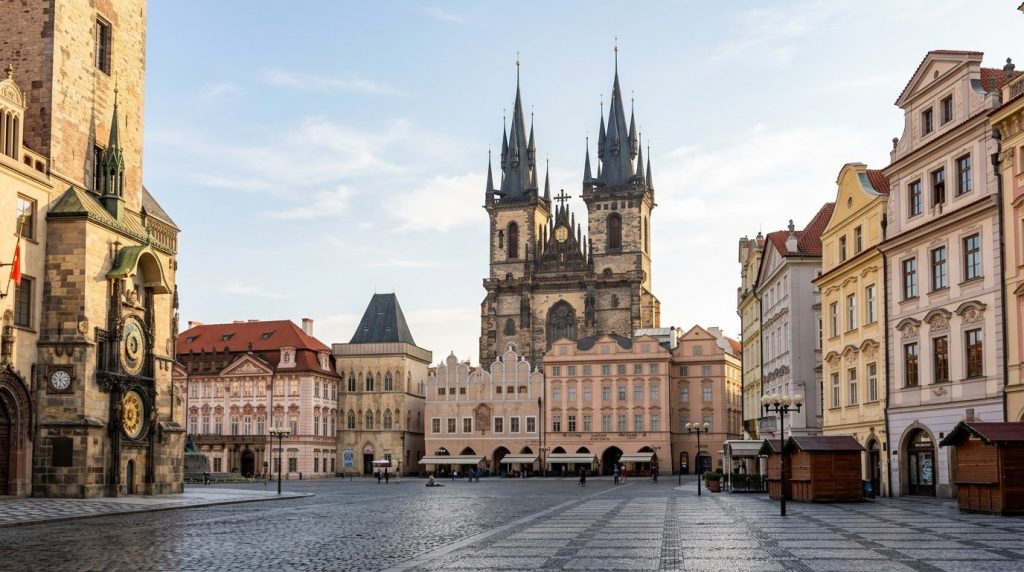
The right answer to how many days in Prague is 3 full days for most first-time visitors, or 2 days if you accept seeing only one bank of the Vltava River properly. Add a 4th day only if Prague Castle’s queues, a day trip, or a slower pace matter more to you than moving fast.
| Days | What you fit in | Castle time | Approx sight-ticket cost/person (USD) | Best for |
|---|---|---|---|---|
| 2 | Old Town, Charles Bridge, Castle Circuit B only | 2.5-3 hours | USD 38 (CZK 800) | Layovers, repeat visitors, tight budgets |
| 3 | Both riverbanks, Castle, Astronomical Clock tower, Jewish Quarter | 2.5-3 hours | USD 65 (CZK 1,350) | First-time visitors wanting the full core |
| 4+ | Castle Circuit A, Petřín Tower, one day trip beyond the centre | 3.5-4.5 hours | USD 81 (CZK 1,700) | Slow travel, repeat trips, pairing with a day trip |
Ticket costs above cover core sight admission only, at today’s rate of roughly USD 1 to CZK 20.8, and exclude food, transit, and lodging.
2 days – the minimum that works
Every dollar figure on this page uses the September 2026 rate of USD 1 to CZK 20.9. Two days in Prague works if you commit to one side of the Vltava River and treat the other as a highlights-only pass. Day one covers Old Town Square, the Astronomical Clock, and Charles Bridge on foot, all within a compact, walkable core.
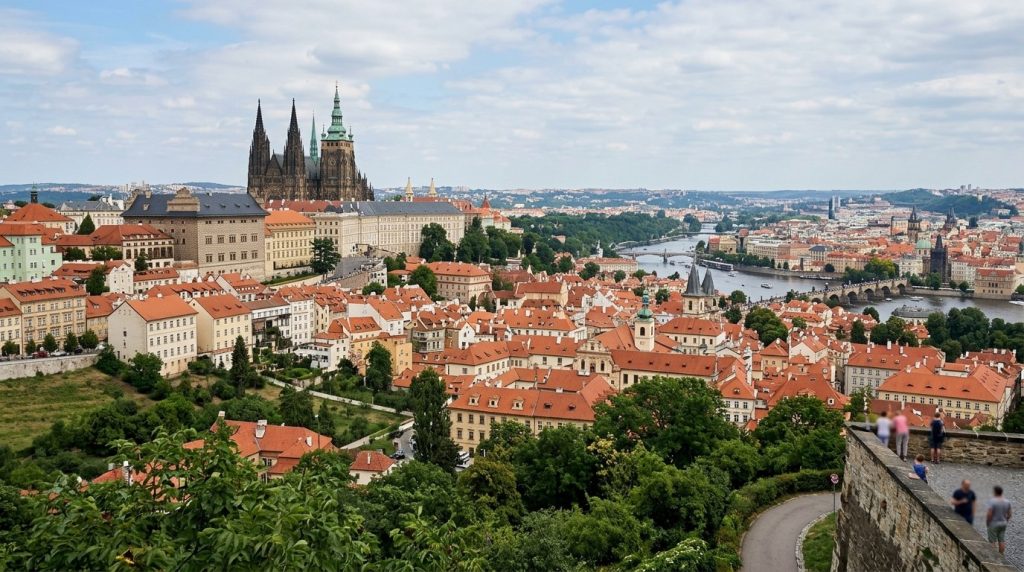
Day two crosses the river once for Prague Castle, using Circuit B, which covers St Vitus Cathedral, the Old Royal Palace, St George’s Basilica, and Golden Lane for USD 22 (CZK 450). That circuit takes 2.5 to 3 hours at a normal pace, leaving the rest of the afternoon for Malá Strana’s streets below the castle walls.
Two days means skipping the Jewish Quarter and any day trip entirely, so it suits a layover, a repeat visit, or a tight budget more than a first trip meant to cover the city properly.
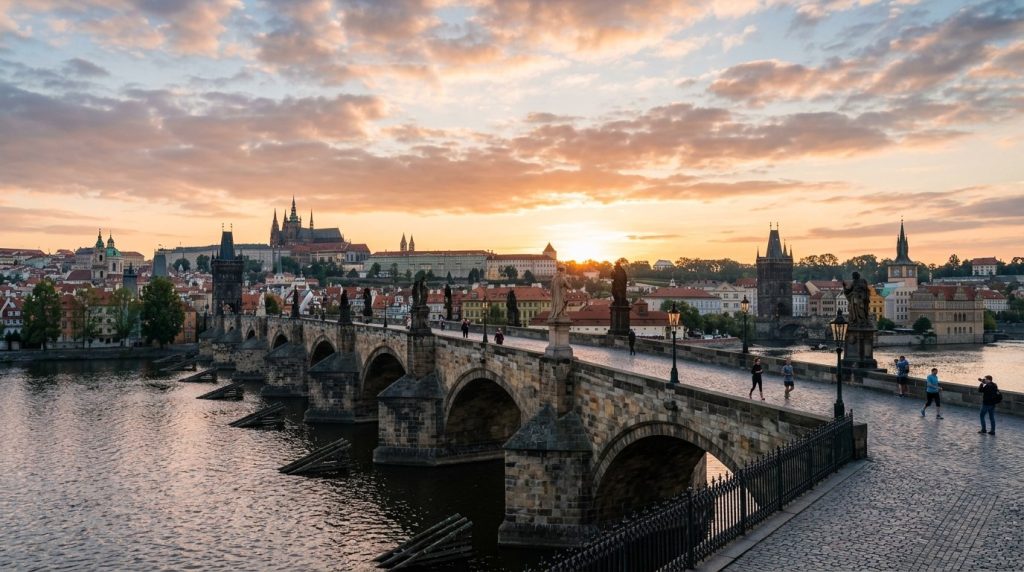
It also means picking one photo window over the other, since a single Castle-side afternoon rarely leaves time to return to Charles Bridge for the quieter early-morning crossing described below.
3 days – the standard answer, and why
Three full days is the standard answer because it is the shortest stay that lets you cross the Vltava River twice without rushing either bank.
Day one and day two follow the same Old Town and Castle split as the 2-day version, but the third day adds the Jewish Quarter’s five-site combined ticket for USD 26 (CZK 550), plus the Astronomical Clock tower climb for USD 17 (CZK 350).
That third day is also where a Vysehrad walk or a Kutná Hora side trip typically lands, depending on pace. For the exact order of stops across all three days, the 3-day Prague itinerary lays out each stop in sequence. Three days is the length most competing guides converge on.
The ticket math above explains why, since 3 days is the minimum stay that fits every major paid sight without doubling back across the river.
4 days or more – when the extra days pay off
A 4th day pays off when you upgrade from Castle Circuit B to Circuit A, add a day trip, or simply refuse to rush the Castle grounds. Circuit A adds the Treasury and roughly 45 to 60 more minutes on top of Circuit B, for USD 17 (CZK 350), bringing total Castle time to 3.5 to 4.5 hours.
The extra day also buys time for sights that a 3-day pass has no room for, from Petřín Hill’s lookout tower to the beer hall crawl through Žižkov, all covered in the best things to do in Prague list.
A 5th day is rarely worth it inside the city itself; it is better spent on a full day trip to Český Krumlov or Kutná Hora, since Prague’s walkable core runs out of new ground well before a 5th day would.
The extra nights also change the accommodation math, since a longer stay makes a slightly further neighbourhood worth the trade for lower rates, which is covered in the stay section below.
Why Prague Castle decides your trip length
Prague Castle decides your trip length because visiting it properly consumes half a day on its own, and skipping it defeats the point of coming to Prague.
Circuit B, the standard ticket covering the Cathedral, Old Royal Palace, St George’s Basilica, and Golden Lane, costs USD 22 (CZK 450), and takes 2.5 to 3 hours to walk through at a normal pace. Circuit A adds the Treasury for USD 17 (CZK 350), and 45 to 60 extra minutes.
Walk-up queues at the Castle reach 45 to 60 minutes during summer peak hours, but pre-booked tickets cut that wait to roughly 5 to 10 minutes, which is the single biggest lever on how much of a day the Castle actually costs you.
Reaching the Castle also means crossing the Vltava River, and Charles Bridge itself carries no timed entry or managed access in 2026, so its estimated 30,000 daily summer visitors concentrate at midday with no ticket system to thin them out.
Crossing at sunrise, before the crowds build, is still the only reliable way to see the bridge without a wall of people in every photo.
Every extra day in Prague is really an extra chance to schedule that early crossing on a morning when the rest of the plan does not force a late start, which is why trip length and Castle logistics end up tied together more than most guides admit.
When fewer days in Prague is the better trip
Two days beats three when Prague is one stop on a wider Central Europe route rather than the main destination.
A traveller stacking Prague onto a Vienna or Berlin trip gets more value from 2 focused days than from a diluted third day spent on sights that matter less to them, especially outside the crowd-friendly windows covered in best time to visit Prague.
Repeat visitors who have already done Prague Castle and the Jewish Quarter also do better with 2 days, since a return trip can skip straight to neighbourhoods like Vinohrady or Žižkov without repaying for sights already seen.
A third scenario is the December Christmas market visit, when short, cold-weather days naturally cap how much walking is comfortable anyway, so a longer stay does not add proportional value.
A fourth scenario is the tight-budget trip, where a third day of paid entries adds up faster than a third day of free walking would, so cutting straight to 2 days keeps the ticket total closer to USD 38 than USD 65.
In each case, the constraint is not the city’s size but what the traveller has already used their time and budget on.
Practical tips for visiting Prague
Prague’s public transport runs on a single ticket system covering the metro, trams and buses, which matters because several of the Castle approaches and Jewish Quarter stops covered above are faster by tram than on foot.
A 90-minute ticket costs around USD 2 (CZK 40), a 24-hour ticket runs about USD 6 (CZK 120), and a 3-day ticket costs roughly USD 16 (CZK 330), so a 2-day trip concentrated in Old Town and the Castle district often costs less on single or 24-hour tickets than a multi-day pass, while a 4-day-or-longer stay crossing the city repeatedly tends to make the longer pass worth it.
Tickets must be validated at a yellow machine when boarding, since Prague’s system runs on an honour basis with spot checks rather than turnstiles, and fines for an unvalidated ticket apply to tourists the same as locals.
Tipping in Prague restaurants generally runs 10 percent for good service, often rounded up to the nearest note rather than calculated precisely, and it is rarely included automatically on the bill the way it might be elsewhere, so checking before adding a second tip on top of a service charge is worth a glance at the printed total.
Card payment is near-universal in restaurants, hotels and major sights, though smaller stalls, some bakeries and a handful of older trdelnik stands around the tourist core remain cash-preferred.
Pickpocketing, more than any violent crime risk, is the main practical safety issue around Charles Bridge, Old Town Square and the crowded trams connecting them, particularly during the peak midday hours covered in the Castle logistics section above. A crossbody bag worn to the front and a hand on a phone in a back pocket cover most of the risk, since Prague’s pickpocketing is opportunistic rather than aggressive.
Airport transfers add a practical wrinkle worth planning around the day count above. The dedicated airport bus into the centre takes roughly 45 to 55 minutes and connects to the tram and metro network partway through, while a taxi or pre-booked transfer runs faster but at a noticeably higher price, a trade-off worth weighing against how tightly the first day’s plan is scheduled.
How many days in Prague FAQs
Is Prague walkable, or do I need public transport? Old Town, Charles Bridge and the base of the Castle hill are all walkable from a Stare Mesto hotel, but reaching the Castle grounds, the Jewish Quarter from a Vinohrady base, or a day trip departure point usually works faster by tram or metro than on foot.
What’s the best day to visit Prague Castle to avoid crowds? Weekday mornings right at opening tend to run quieter than weekend midday hours, and the pre-booked ticket advantage covered above matters most during the exact peak windows a weekday-morning visit avoids.
Do I need cash in Prague, or does everyone take cards? Cards cover the large majority of transactions, including most market stalls in the main tourist areas, but carrying some Czech koruna in cash is worth it for public toilets, smaller cafes, and the odd stall that runs cash-only.
Is Prague worth visiting in winter, given the shorter days? Yes, particularly for the Christmas market period referenced above, though the shorter daylight hours mean a 3-day winter trip covers less ground per day than the same length in summer, worth factoring into the day-count decision if visiting between December and February.
Can I see Prague as a day trip from Vienna or Berlin? It’s possible but not advisable given the city’s depth; a rushed single day covers only a fraction of what even the 2-day plan above includes, so an overnight stay is a better use of the travel time already spent getting there.
Do I need to speak Czech to get by in Prague? No. English is widely spoken in hotels, restaurants and shops across the tourist core covered in this guide, though a few basic Czech phrases are appreciated outside the main sights.
Is the Prague CoolPass or a similar sightseeing card worth it? It depends on the day count chosen above: a 2-day trip hitting most of the paid sights in the ticket-cost table can come close to breaking even on a pass, while a slower 3 or 4-day trip with fewer paid entries per day usually comes out cheaper paying for each sight individually.
Where to stay for each trip length
Where you stay should track your day count, because the wrong base can turn a 2-day trip into more walking than sightseeing. A 2-day trip does best based in Old Town, since every major sight on a tight schedule sits within a 15-minute walk of a Staré Město hotel.
A 3-day trip can split nights between Old Town and Malá Strana, cutting the number of bridge crossings needed on the Castle day. A 4-day-or-longer trip is where Vinohrady earns its keep, trading a slightly longer walk into the centre for lower nightly rates and a more residential feel once the core sights are checked off.
Full pricing and area-by-area detail for each option live in where to stay in Prague.
Find your Prague hotel on the map
Live prices from Booking, Airbnb and more — move the map or change dates to compare stays across Prague.