Prague or Vienna: Which City Wins for Your Trip? (2026)
Disclosure: Some links in this guide are affiliate links. If you book or buy through them, we may earn a small commission at no extra cost to you — it helps keep our guides free.
You are a first-time visitor or watching your costs closely.
See hotels in Prague →Classical music, imperial palaces and big art museums are why you are going.
See hotels in Vienna →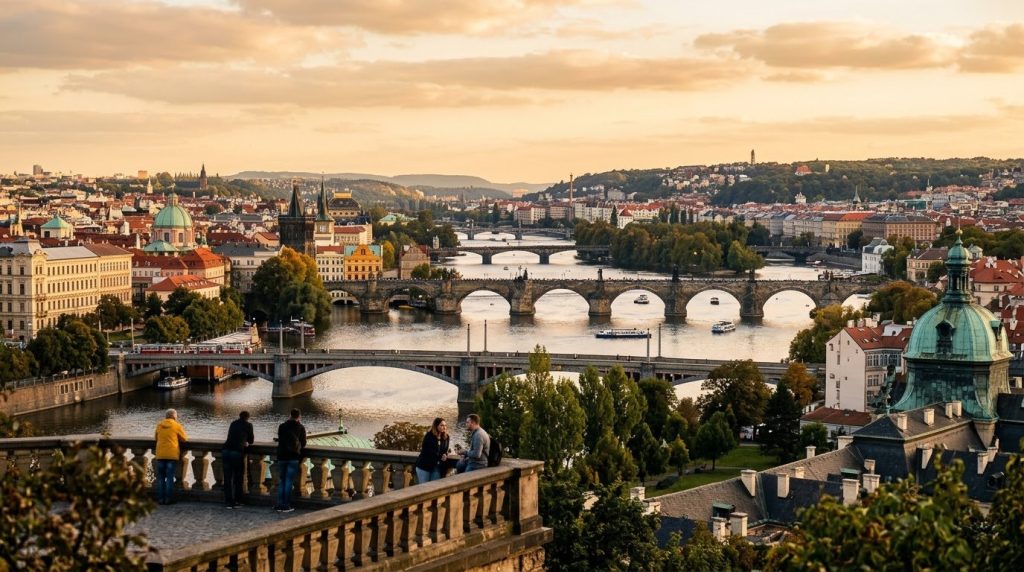
Prague wins for most first-time visitors and anyone watching costs, because a pint runs about USD 2.30–3.50 there versus USD 4.50–8 in Vienna and a 24-hour transit pass is roughly half the price. Vienna wins if classical music, imperial palaces and big art museums are why you are flying to Europe.
The real answer for most Americans is both: the direct train takes about 4 hours, and both cities sit inside the Schengen zone, so there is no passport check between them.
| Factor | Prague | Vienna |
|---|---|---|
| Overall feel | Medieval, compact, walkable | Imperial, grand, polished |
| Half-liter beer in a pub | USD 2.30–3.50 (CZK 50–75) | USD 4.50–8 (EUR 4–7) |
| 24-hour transit pass | USD 6.50 (CZK 140, app) | USD 11 (EUR 9.70, digital) |
| Headline sight | Prague Castle, USD 21 (CZK 450) | Schönbrunn Grand Tour, USD 47 (EUR 42) |
| Cheapest classical music | Varies by venue | State Opera standing room, USD 15–20 (EUR 13–18) |
| Nonstop flights from the US | Seasonal only (JFK, Philadelphia) | Year-round (JFK, Newark, Chicago, Boston, Washington) |
| Best for | First-timers, budget, nightlife | Music lovers, art, couples, coffee culture |
Prices below are converted at USD 1 = EUR 0.89 = CZK 21.6 (European Central Bank reference rates, October 1, 2026).
The Prague to Vienna Train: 4 Hours, From About USD 17
The rail link is the reason this is rarely an either-or choice. According to Seat61’s route guide, Czech Railways and Austria’s ÖBB run 9 direct Railjet and Comfortjet trains a day from Praha hlavní nádraží to Wien Hauptbahnhof, with private operator RegioJet adding up to 4 more. The trip is about 4 hours over roughly 400 km of track.
Advance fares on both operators start around EUR 14.90 (about USD 17). ÖBB charges an optional seat reservation fee, while RegioJet includes the seat. Book early for summer and Christmas market season, when the cheapest fares go first. Skip the short flight: once you add airport transfers and security, the train is faster door to door.
Getting There From the US: Vienna Has the Edge
Austrian Airlines flies nonstop to Vienna year-round from New York JFK, Newark, Chicago O’Hare, Boston and Washington Dulles, plus a seasonal Los Angeles route. Prague only has seasonal nonstops, from Delta at JFK and American at Philadelphia, according to the airport listings on Wikipedia.
The practical move: book an open-jaw ticket into Prague and home from Vienna, with the train in between, so you skip backtracking and often a connection on the way home.
Music and Culture: Vienna’s Strongest Card
If you want one night of world-class classical music, Vienna is the clear pick. The Vienna State Opera sells 435 standing-room places on the day of each performance from 10 a.m., according to the Wiener Staatsoper ticket page. Tickets cost EUR 13–18 (USD 15–20) and include a personal subtitle screen. Arrive about 90 minutes early at the standing-room box office for a normal night.
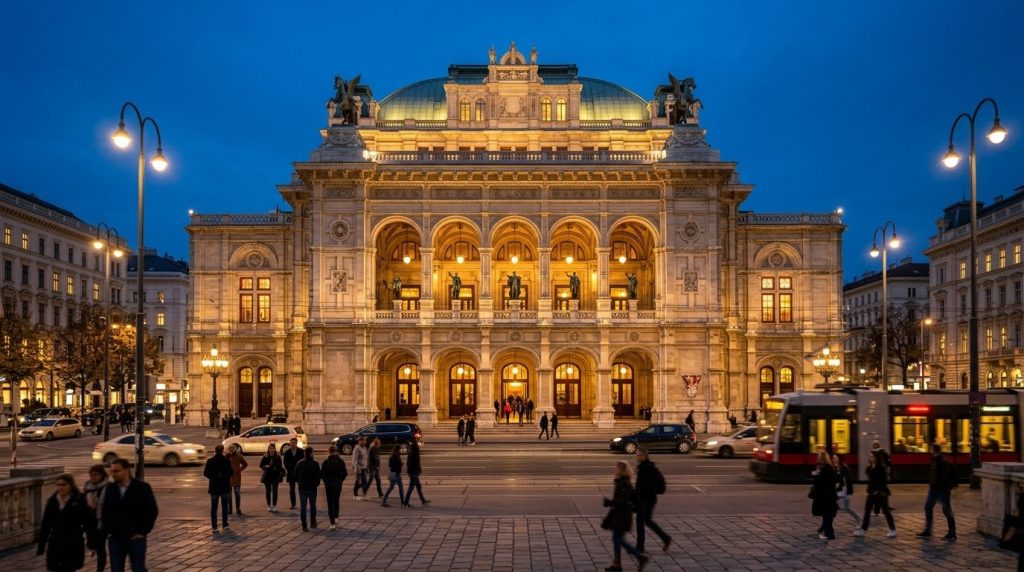
Add the Musikverein, the Belvedere and the Kunsthistorisches Museum, and Vienna simply has more top-tier culture per block. The Schönbrunn Grand Tour costs EUR 42 (USD 47), sold only online through the official imperialtickets.com shop.
Prague is no lightweight: Mozart conducted the world premiere of Don Giovanni at its Estates Theatre on October 29, 1787, and the house still stages opera. Prague does music well; Vienna does it at a global level.
Cost Comparison: Prague Is Noticeably Cheaper
Prague still costs less for nearly everything you buy every day. Local guides put a half-liter of beer at CZK 50–75 in a Prague pub versus EUR 4–7 in Vienna, and a mid-range central hotel at roughly EUR 60–220 a night in Prague against EUR 100–320 in Vienna, depending on season and how central you go.
Transit follows the same pattern. Prague’s 24-hour pass is CZK 140 in the PID Lítačka app (CZK 150 on paper), and a 72-hour pass is CZK 340, about USD 16. Vienna’s 24-hour ticket is EUR 9.70 digital or EUR 10.20 printed.
Entry to the Prague Castle complex grounds is free from 6 a.m. to 10 p.m., and the main interiors ticket is CZK 450, valid for two days. Our Prague on a budget guide covers the rest of the savings.
Which City for Which Traveler
First-timers in Central Europe: Prague. It is compact, its historic core is easy to cover on foot, and it looks unlike anywhere you have been. A 3-day Prague itinerary covers the essentials without rushing.
Couples: Vienna, narrowly. Opera standing room, coffee-house afternoons and wine taverns make a slower, more romantic trip.
Families: Vienna. Wide sidewalks, the Prater, the Schönbrunn zoo and easy transit make it calmer with kids. Prague’s cobblestones and steep castle hill are tough with strollers.
Budget travelers: Prague, clearly. Food, beer, hotels and transit all cost less, and you can still day-trip to Vienna by rail.
Nightlife: Prague. Cheaper drinks and a bigger bar scene. Vienna’s evenings lean toward concerts and late dinners.
How to Split a Week Between Them
If you have 7 nights, give Prague 4 and Vienna 3. Prague rewards slow wandering, and our list of the best things to do in Prague runs well past the castle and Charles Bridge. Vienna’s highlights are more concentrated around the Ringstrasse and a day at Schönbrunn.
With only 4 or 5 nights, still do both, two nights minimum each. If you are still unsure whether Prague belongs on the list at all, read our honest take on whether Prague is worth visiting.
Timing applies to both cities: summer brings the biggest crowds, December brings Christmas markets, and spring and early fall are the sweet spot. Our guide to the best time to visit Prague breaks it down month by month.
What to eat and drink in each city
Prague’s national dish is svíčková: braised beef sirloin in a creamy root-vegetable sauce, served with bread dumplings and usually a dollop of cranberry sauce and whipped cream on the side.
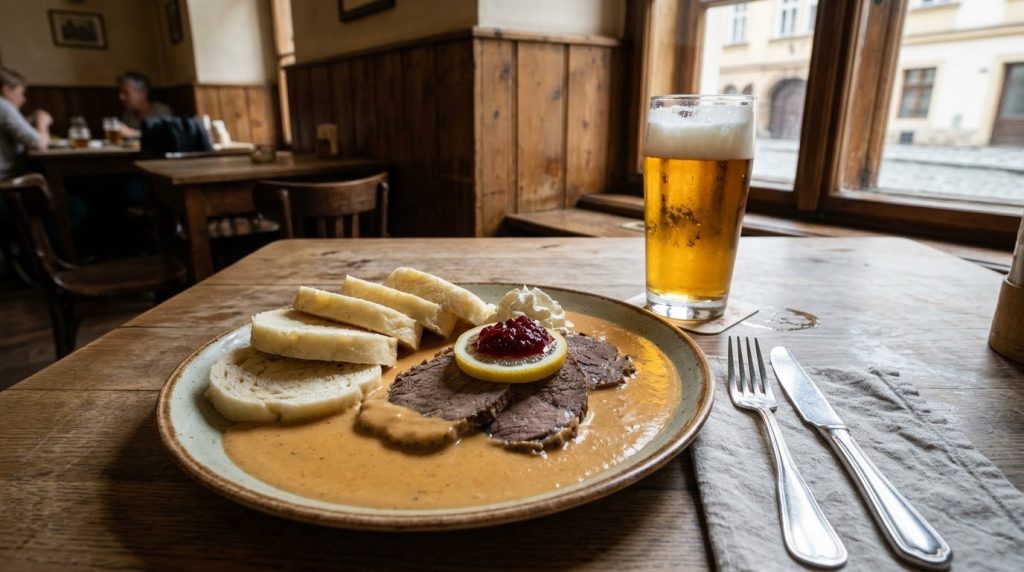
It is a better order than the trdelník (chimney cake) sold on nearly every corner near the Old Town, which several Czech food writers and locals point out is not actually a traditional Czech food at all, more a modern tourist-market import that most residents rarely eat.
Beer culture runs deeper in Prague than in most cities you will visit this year.
The Czech Republic has recorded the highest beer consumption per capita in the world for decades, according to Guinness World Records and multiple industry trackers, even as the figure has declined gradually, down to around 121 liters per person in 2025 from well over 160 liters in the early 2000s.
A half-liter in an ordinary pub still runs CZK 50 to 75 (USD 2.30 to 3.50), as noted earlier in this guide, which keeps the tradition affordable for visitors too.
Vienna’s food culture centers on the coffeehouse rather than the beer hall. Viennese coffee house culture has held UNESCO Intangible Cultural Heritage status since 2011, recognized for its marble-topped tables, Thonet chairs and newspaper racks as much as for the coffee itself.
Order a Wiener Melange, a cappuccino-like coffee with steamed milk, and expect to sit for an hour without anyone clearing the table, since lingering is the entire point of the ritual. Pair it with a slice of Sachertorte, the dense chocolate cake with apricot jam that Vienna’s pastry shops still argue over who invented first.
Between the two, food and drink reinforce the broader split covered throughout this guide: Prague rewards a cheap pub crawl and a hearty plate of dumplings, while Vienna rewards slowing down over a single coffee and cake for the better part of an afternoon.
Where to Stay
Spend the longer half of the trip in Prague, then switch hotels for Vienna rather than commuting.
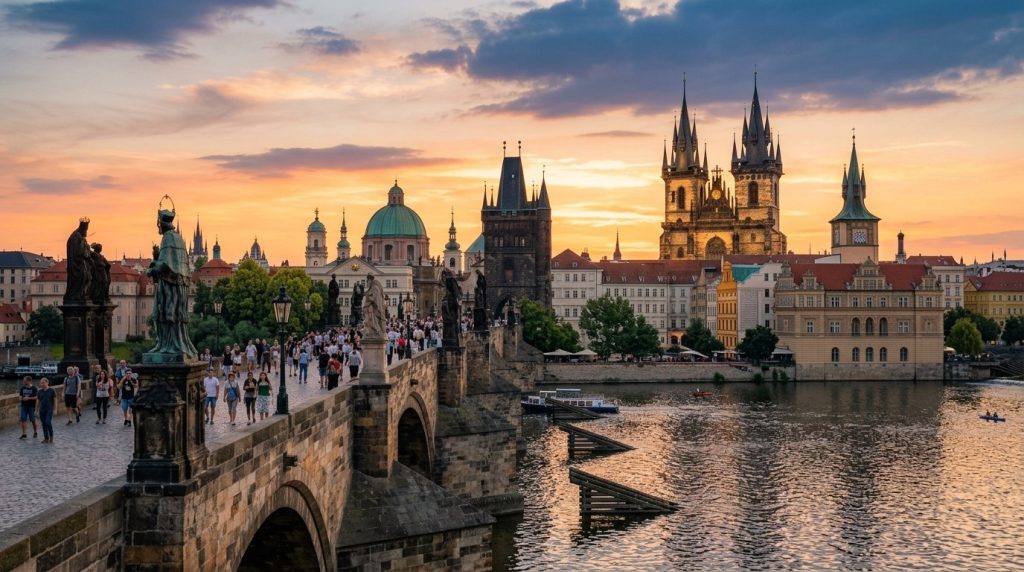
– Old Town (Staré Město): the shortest walk to the main sights, best for first-timers on a short stay, but the most crowded and priciest area. – Malá Strana: quieter cobbled lanes below the castle, good for couples who want atmosphere after the day-trippers leave. – Vinohrady: a residential neighborhood with cafés, better-value hotels and fast tram and metro links, a good fit for budget travelers and longer stays.
In Vienna, the Innere Stadt is the classic first-timer base, while Neubau suits travelers who want cafés and shops at lower prices. Our full guide on where to stay in Prague compares neighborhoods in more detail.
Find your Prague hotel on the map
Live prices from Booking, Airbnb and more — move the map or change dates to compare stays across Prague.
Frequently Asked Questions
Is Prague or Vienna better for a first trip to Europe?
Prague is the better first stop for most travelers. Its historic center is compact and walkable, everyday costs are lower, and the medieval look feels distinct from Western European capitals. Vienna suits first-timers who already know they want classical music, palaces and major art museums.
How do you get from Prague to Vienna?
Take the direct train from Praha hlavní nádraží to Wien Hauptbahnhof. Czech Railways and ÖBB run 9 trains a day and RegioJet runs up to 4 more, with a journey time of about 4 hours. Advance fares start around EUR 14.90 (about USD 17). Flying is not faster once airport transfers and security are counted.
Is Vienna more expensive than Prague?
Yes. Beer in a Vienna pub typically costs EUR 4–7 versus CZK 50–75 in Prague, mid-range hotels run higher, and a 24-hour transit pass is EUR 9.70 in Vienna against CZK 140 in Prague. Expect noticeably higher daily spending in Vienna, especially on food and hotels.
How many days do you need in Prague and Vienna?
Plan at least 2 nights in each city, and ideally 3 to 4 in Prague and 3 in Vienna. That covers Prague Castle, the Old Town and a neighborhood or two, plus Schönbrunn, the Ringstrasse museums and a night of music in Vienna.
Do Americans need a visa for Prague and Vienna?
No visa is needed for short tourist trips. Czechia and Austria are both in the Schengen area, where short stays are limited to 90 days within any 180-day period, and there are no routine passport checks between the two countries. Check the current status of the EU’s ETIAS travel authorization before you book, since its rollout timing has shifted.