
Barcelona Travel Guide 2026: Gaudi Architecture & Hidden Plazas
Barcelona does not wait for you to catch up. It throws Gaudí’s twisted spires, Gothic alleyways, and Mediterranean light at you all at once, and expects you to keep walking. Over 27 million visitors packed into this Catalan capital in 2025 (Barcelona Turisme, 2026), and the crush around Sagrada Familia and Las Ramblas proves it.
But Barcelona rewards the traveler who steps two streets away from the crowd. The best tapas bar is never on the main square. The quietest plaza with the most beautiful tiled bench sits hidden in Gràcia, where old Catalan ladies hang laundry from wrought-iron balconies. This Barcelona travel guide covers the Gaudi hits you cannot skip, the neighborhoods most tourists miss, what to eat and where, and the practical tips that save you money and time.
Key Takeaways
– Sagrada Familia tickets sell out weeks ahead. Book online at sagradafamilia.org. The 9:00 AM slot gives you the best light through the stained glass windows. Entry costs 26 EUR.
– Park Guell monumental zone requires a timed ticket (10 EUR). The free-access area covers 95% of the park. Go at 8:00 AM before the ticket zone opens to have the mosaic benches almost alone.
– Skip Las Ramblas for food. Walk parallel into El Born or Raval for tapas at half the price and triple the quality. Carrer de Blai in Poble-sec serves pintxos for 2-3 EUR each.
– Gracia neighborhood feels like a village inside the city. Its plazas fill with locals at vermouth hour (1:00 PM on weekends), not tourists. Plaza del Sol and Plaza de la Vila are the best spots.
– Barcelona is one of Europe’s most pickpocketed cities (UK Foreign Office, 2026). Keep your phone in your front pocket on Las Ramblas and the metro. No bag on the back of your chair at outdoor cafes.Affiliate Disclosure: Some links in this guide are affiliate links. If you book through them, we earn a small commission at no extra cost to you. We only recommend services we genuinely trust. Learn more.
Must-See Gaudi Masterpieces
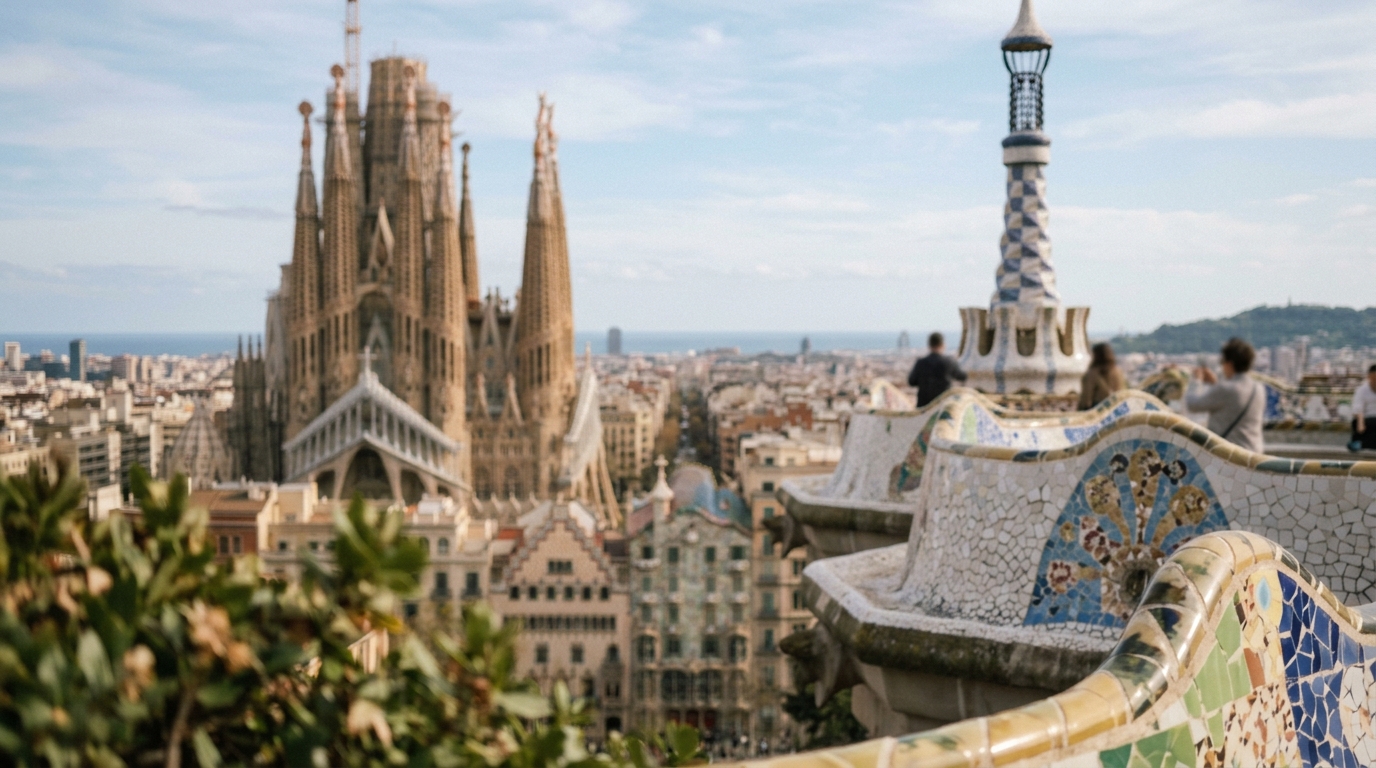
Antoni Gaudí left his fingerprints on every corner of Barcelona. Seven of his works are UNESCO World Heritage sites. These are the four that justify the hype.
Sagrada Familia
The Sagrada Familia has been under construction since 1882 and is finally scheduled for completion in 2026, timed to the centenary of Gaudí’s death. The Nativity Facade, the only one Gaudí lived to see finished, drips with stone vines, turtles, and biblical figures. The Passion Facade on the opposite side is stark, angular, and deliberately brutal. The contrast is the point.
Inside, the columns branch like stone trees into a canopy 45 meters overhead. The stained glass windows flood the nave with color. Morning light (9:00-11:00 AM) streams through the blue and green glass on the east side. Afternoon light (3:00-5:00 PM) blazes through red and orange on the west.
Book tickets at sagradafamilia.org. The basic entry costs 26 EUR. Add the Nativity Tower elevator for 36 EUR total. The tower elevator brings you up 65 meters then releases you onto a narrow stone bridge between the spires. The view stretches to the Mediterranean on clear days.
[PERSONAL EXPERIENCE] Minh booked the 9:00 AM Nativity Tower ticket on a Tuesday in October. The elevator door opened to an empty platform at 9:25 AM with the morning sun hitting the Mediterranean side. By 10:30 AM, the tower walkway felt like a queue at Disneyland. Book early or skip the tower.
Park Guell
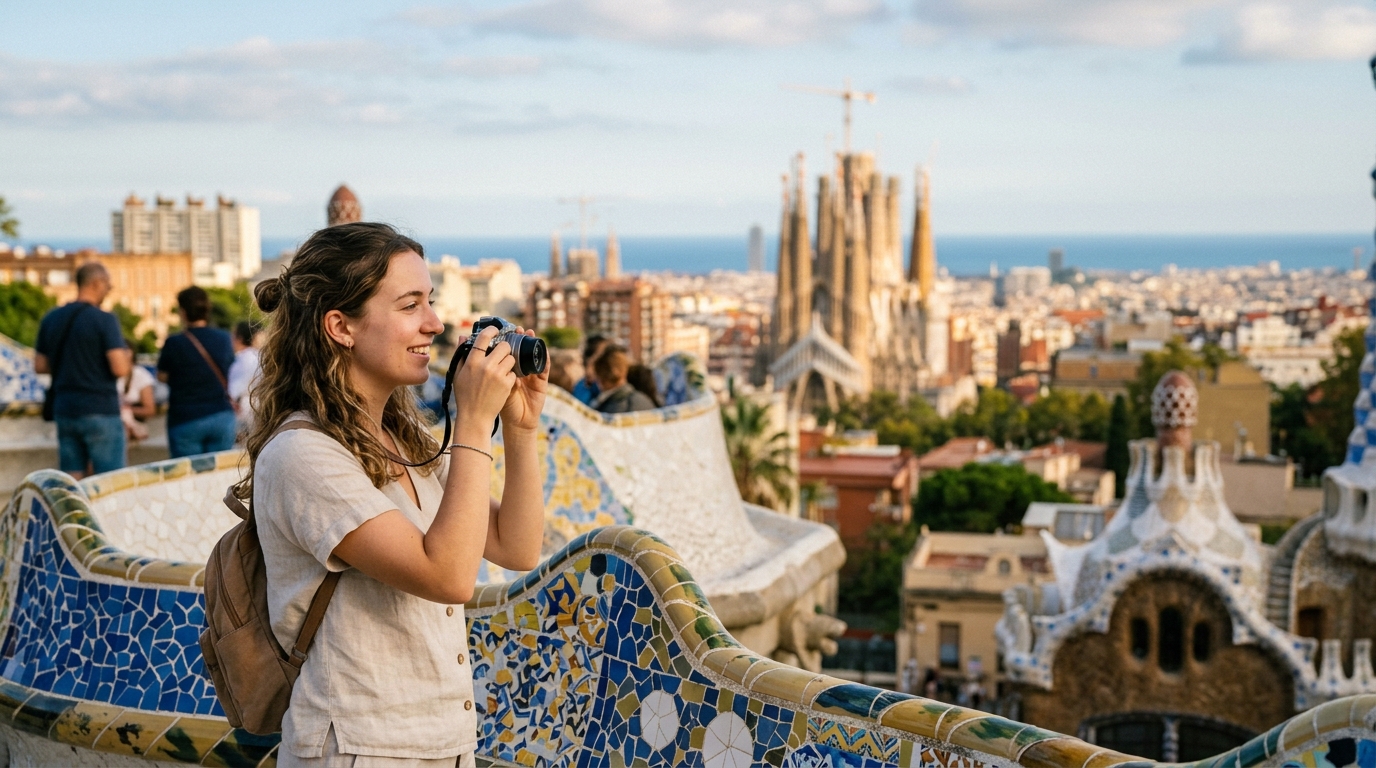
Gaudí designed Park Guell as a luxury housing estate in 1900. The housing part flopped. The public park part became one of the most visited spaces in Spain. The iconic mosaic salamander at the entrance and the serpentine bench wrapping the main terrace are the images you see on every Barcelona postcard.
Entry to the monumental zone (where the salamander and bench live) costs 10 EUR and requires a timed ticket. The rest of the park, 12 hectares of pathways and gardens, remains free. If you do not care about the salamander selfie, skip the monumental zone entirely and walk the free trails above it. The view of the city and the sea from the hilltop is the real reward.
Casa Batllo and La Pedrera (Casa Mila)
These two Gaudí apartment buildings sit 300 meters apart on Passeig de Gracia. Casa Batllo (35 EUR entry) is the more theatrical of the two, with a dragon-scale roof and skull-shaped balconies. La Pedrera (28 EUR) has the more impressive rooftop, with surreal chimney warriors and a 360-degree city view.
If you only have time for one, pick La Pedrera. The attic museum explains Gaudí’s engineering genius with hanging chain models that make you understand why his buildings never fall down. The rooftop at sunset is genuinely unforgettable.
Book both on GetYourGuide for skip-the-line access: a combined Gaudí pass with Sagrada Familia + Park Guell + La Pedrera runs about 75 EUR, saving roughly 20 EUR versus buying separately.
Hidden Plazas & Secret Spots
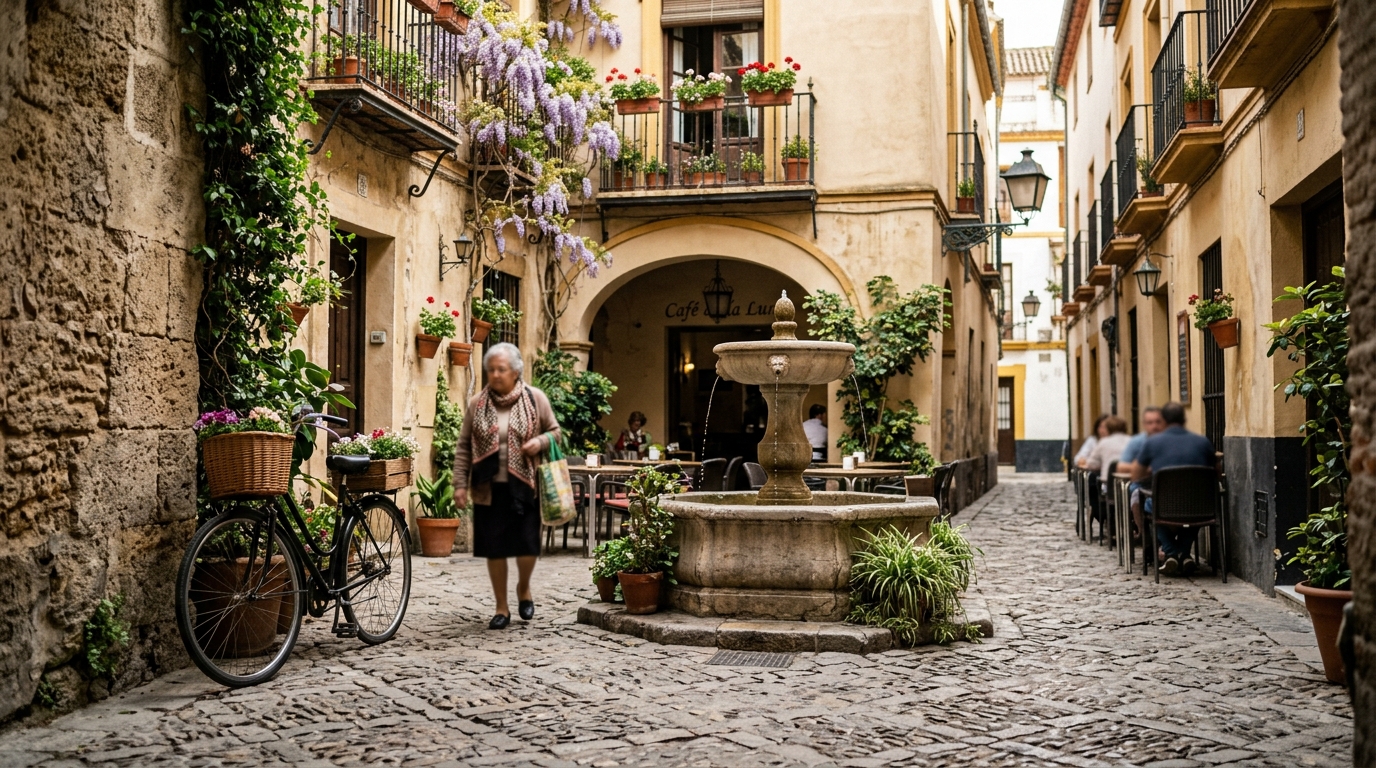
Barcelona’s postcard squares (Plaza Real, Plaza de España) are beautiful and packed. These are the plazas where Barcelonins actually spend their afternoons.
Gracia Neighborhood Plazas
Gracia was an independent village until Barcelona swallowed it in 1897, and it still feels that way. The neighborhood revolves around its plazas, each with a distinct personality. Plaza del Sol is the liveliest, with terrace bars filling up by noon. Plaza de la Vila is the most beautiful, with a clock tower in the center and modernist buildings framing the edges.
Plaza de la Virreina is the quietest, shaded by plane trees, with a single café serving vermouth and olives. On a weekday morning, you might share the plaza with three old men playing dominoes and a dog sleeping in the sun.
[UNIQUE INSIGHT] Sunday morning in Gracia is the city’s best-kept secret. Shops are closed, tourists are still at their hotel breakfast buffets, and the plazas belong entirely to locals. Grab a croissant and a cafe con leche at a bakery on Carrer de Verdi, then claim a bench at Plaza de la Virreina. You will hear more Catalan than English.
El Born’s Hidden Passages
El Born sits between the Gothic Quarter and the Parc de la Ciutadella, and its narrow streets hide passageways that even many locals have not explored. Carrer de Montcada is the main artery, lined with medieval palaces housing the Picasso Museum. But duck into the alley at Carrer dels Sombrerers and you emerge at the Plaça de Sant Felip Neri, a tiny square with a baroque church whose walls still bear shrapnel scars from the Spanish Civil War.
The Born Cultural Center (entry 5 EUR, free on Sundays after 3:00 PM) houses excavated medieval streets beneath a glass floor. You walk above the 14th-century city, destroyed in 1714, frozen in time.
Bunkers del Carmel
The best free viewpoint in Barcelona sits at the top of Turó de la Rovira, a hill in the Carmel neighborhood. Anti-aircraft bunkers from the Spanish Civil War crown the summit, now covered in graffiti and surrounded by 360-degree views from the sea to the mountains. Bring a beer, arrive an hour before sunset, and claim a spot on the concrete ledge.
The walk up is steep. Bus 22 from Plaza Catalunya drops you at the base, then it is a 15-minute climb. Do not leave valuables visible; the bunkers are popular and opportunistic theft happens.
Best Things to Do Beyond Sagrada Familia
Most visitors follow an L-shaped route: Sagrada Familia to Park Guell to La Rambla. That covers three of Barcelona’s greatest hits and misses 80 percent of what makes the city special.
Gothic Quarter Morning Walk
Start at the Barcelona Cathedral (free entry before 1:00 PM, 3 EUR donation after), then lose yourself in the labyrinth. The Gothic Quarter was designed to confuse invaders, and 600 years later, it still works. Google Maps will fail you. Embrace it.
Find Plaça de Sant Just, a tiny square with one of Barcelona’s oldest fountains. Walk through Plaça del Rei, where Columbus was received by King Ferdinand after his first voyage. End at the Roman Walls near the Port, where you can touch stone laid in the 1st century BC.
Montjuic Hill
Montjuic packs more attractions onto one hill than some cities manage in their entire downtown. The Montjuic Castle (5 EUR) offers harbor views and a grim history as a political prison. The Joan Miro Foundation (14 EUR) houses the artist’s most colorful, playful works. The Magic Fountain light show runs Thursday through Saturday evenings from 9:30 PM, free.
The best way up is the Teleferic de Montjuic cable car (15 EUR round-trip). The best way down is walking through the Jardins de Mossen Costa i Llobera, a cactus garden with over 800 species, completely free and almost always empty.
Read our guide to the best things to do in Barcelona for more detail on Montjuic, the Olympic Park, and beach recommendations.
Barceloneta Beach Reality Check
Barceloneta Beach is crowded, the sand is imported from Egypt, and the restaurants on the boardwalk charge 15 EUR for a mediocre paella. Go once to say you went, then head north to Bogatell Beach or Nova Icaria, where the sand is cleaner and the crowd is 80% locals playing volleyball. In summer, all city beaches fill by 11:00 AM. Arrive before 10:00 or go after 4:00 PM.
First Time in Barcelona? What to Know
Getting Around
Buy an Hola Barcelona Travel Card at the airport. 48-hour unlimited metro, bus, and tram access costs 17 EUR. The metro runs until midnight Sunday through Thursday and all night on Friday and Saturday. The Aerobus from the airport to Plaza Catalunya runs every 5 minutes for 6.75 EUR one-way. Faster than a taxi and half the price.
Walking is the best transport in the Gothic Quarter, El Born, and Gracia. The metro fills in the gaps between neighborhoods. Taxis are affordable (10-15 EUR for most cross-city trips) and honest. Use the Free Now app to hail one without flagging.
Language
Barcelona speaks two languages: Catalan and Spanish. Most signs appear in Catalan first. Saying “bon dia” (good morning) instead of “buenos dias” earns visible appreciation from shopkeepers. English is widely spoken in tourist areas but not in neighborhood bakeries and markets. Learn the numbers for ordering at tapas bars.
Meal Times
Breakfast happens at 10:00 AM. Lunch at 2:00 PM. Dinner not before 9:00 PM, and 10:00 PM is normal. Restaurants that serve dinner at 7:00 PM cater exclusively to tourists. A proper Spanish tortilla de patatas at midnight, sitting at a bar with a canya (small beer, 1.50-2 EUR), is one of Barcelona’s essential experiences.
Safety
Pickpocketing on Las Ramblas and the metro is a genuine problem. Keep your phone in your front pocket. Never hang your bag on the back of a chair. If someone bumps into you on the metro, check your pockets immediately. The UK Foreign Office consistently ranks Barcelona as one of Europe’s highest-risk cities for petty theft. But violent crime is rare. Basic vigilance eliminates 99% of risk.
Stay connected: Airalo Spain eSIM starts at $6 for 3GB over 30 days. Coverage is excellent across the city. For more European travel tips, check our Rome travel guide and Venice guide.
Where Locals Actually Eat
Barcelona’s food scene divides sharply: the tourist strip along Las Ramblas serves overpriced paella, and the neighborhoods serve some of the best food on the planet. Here is where to find the latter.
Tapas by Neighborhood
El Born: Euskal Etxea on Placeta de Montcada pours cider from overhead barrels and serves pintxos for 2.50 EUR each. The cod-stuffed peppers are the move. Bar del Pla on Carrer de Montcada does traditional Catalan tapas with a modern edge. The mushroom croquettes (8 EUR for 6) are life-changing.
Gracia: La Pepita on Carrer de Verdi serves creative tapas in a tiled, sunlit space. The patatas bravas come with three sauces, and the ceviche changes daily based on what the fish market had that morning.
Poble-sec: Carrer de Blai is Barcelona’s pintxo street. Roughly 20 bars line the pedestrian strip, each specializing in 2-3 pintxos. Bar hop from one to the next, paying 2-3 EUR per plate. La Tasqueta de Blai has the best selection.
[PERSONAL EXPERIENCE] Minh spent an entire evening on Carrer de Blai with 15 EUR and left full. Start at one end, order one pintxo and a canya at each bar, then move to the next. By bar five, you have eaten 5 plates and spent 20 EUR including the drinks.
La Boqueria: Worth It or Skip?
La Boqueria market on Las Ramblas is genuinely beautiful and genuinely packed. The fresh juice stalls charging 1.50 EUR are a good deal. The seafood bars in the back (El Quim, Bar Central) serve excellent food at tourist-adjacent prices (20-30 EUR for a plate). Go at 8:00 AM when the stalls are setting up and the tour groups have not arrived. At 1:00 PM, you cannot move.
Breakfast and Coffee
Skip hotel breakfasts. Find the nearest Granja (old-school cafe) and order a cafe con leche and a croissant for 3 EUR total. Satan’s Coffee Corner in the Gothic Quarter serves the best flat white in the city. Nomad Coffee in El Born roasts its own beans and serves pour-overs to a mostly local crowd.
Where to Stay in Barcelona
Hotel Neri — Luxury Gothic Quarter
Location: Gothic Quarter, near Placa Sant Felip Neri | From 280 EUR ($300 USD) | Rating 4.7/5
Set in a restored 12th-century palace, Hotel Neri sits on one of the quietest plazas in the old city. The rooftop terrace has views of the cathedral spires. The restaurant serves Catalan fine dining under a fig tree.
Best for: Couples who want luxury with history. The plaza outside is so quiet you forget you are in a city of 1.6 million people.
Hotel Brummell — Boutique Poble-sec
Location: Poble-sec, near Montjuic | From 140 EUR ($150 USD) | Rating 4.6/5
Twenty rooms in a converted apartment building near the foot of Montjuic. Each room is individually designed. The rooftop pool is small but has an unobstructed view of the mountain. Free yoga classes on Saturday mornings.
Best for: Design-conscious travelers who prefer Poble-sec’s tapas scene to the Gothic Quarter crowds.
Yeah Barcelona Hostel — Budget Eixample
Location: Eixample | From 28 EUR ($30 USD) dorm, 75 EUR private | Rating 4.5/5
One of Europe’s consistently top-rated hostels. Modern pod-style dorms with privacy curtains. The rooftop terrace hosts nightly social events. Communal dinners cost 5 EUR.
Best for: Solo travelers and anyone under 35. The location in Eixample puts you between the old city and Gracia.
Book all properties: Booking.com has the widest Barcelona selection with free cancellation.
Frequently Asked Questions
Is Barcelona safe for tourists?
Barcelona is safe for tourists who exercise normal caution. Pickpocketing on Las Ramblas and the metro is the main risk. Over 200,000 petty theft incidents were reported in 2024 (Barcelona City Council). Keep your phone in a front pocket and do not leave bags unattended. Violent crime affecting tourists is rare.
How many days do I need in Barcelona?
Budget four days minimum. Two days for the Gaudi hits and the Gothic Quarter. One day for Montjuic and the beach. One day for Gracia and the food scene. Five days allows a day trip to Montserrat or Sitges. Three days feels rushed.
What is the best month to visit Barcelona?
May and October are ideal. Temperatures range from 16-24 degrees C (60-75 F), hotel prices sit roughly 30% below the July peak, and crowds are manageable. July and August bring 28-34 degree C (82-93 F) heat and cruise-ship crowds that choke Las Ramblas. Many small restaurants close for August holidays.
Do I need to speak Spanish or Catalan?
Basic phrases earn goodwill. “Hola” (hello), “gracias” (thank you), and “la cuenta, por favor” (the bill, please) cover most situations. “Bon dia” (good morning in Catalan) particularly impresses. English is widely spoken at tourist sites but less so in neighborhood cafes and markets.
Is Barcelona expensive compared to other Spanish cities?
Barcelona is roughly 30-40% more expensive than Madrid for accommodation but comparable for food and transport. Budget 100-150 EUR ($105-160 USD) per day per person including a mid-range hotel, three meals, and attraction tickets. Backpackers can manage 50-60 EUR/day staying in hostels and eating at pintxo bars.
Time to Explore Barcelona
Barcelona does not reveal itself in a day or two. The Gaudí buildings wow immediately, but the city beneath them — the Gràcia plazas, the Poble-sec pintxo streets, the Born passageways, the Bunkers sunset — takes time to surface.
Book your Sagrada Familia ticket before you fly. Stay in a neighborhood, not on Las Ramblas. Eat dinner at 10:00 PM. And when in doubt, walk two streets away from the crowd.
Now, go find that vermouth bar in Gràcia. And when you are ready for the rest of Europe, our Rome travel guide and Venice travel guide are next.
For more European city guides, browse our Istanbul travel guide, Amalfi Coast guide, and Lake Como guide.