The Amalfi Coast is one of those rare places that actually looks better in person than it does in photos, and the photos are already ridiculous. Over 5 million visitors descend on this 50-kilometer stretch of southern Italian coastline every year (visititaly.eu, 2024), and for good reason. Pastel towns cling to cliffs like they were glued there. Lemon groves scent the air from late spring through early autumn. The SS163 coastal road delivers a new heart-stopping view roughly every 45 seconds.
But a trip here can also go sideways fast if you wing it. The wrong town, the wrong month, the wrong transport choice, and suddenly you are stuck in traffic breathing diesel fumes on a road barely wider than a minibus. This guide is built from multiple trips across different seasons, and it answers the five questions that actually matter: which town to pick, how to drive the coast without losing your mind, where the best photo spots hide, how the ferries and buses actually work, and what a realistic budget looks like in 2026.
Best towns: Positano for glamour, Amalfi town for history and transport links, Ravello for quiet culture, Praiano for budget-friendly sunsets
The SS163 coastal road is 50 km of hairpin turns best driven in spring or autumn — July and August bring gridlock
Ferries cost €9-15 between towns and are faster, more scenic, and far less stressful than driving between May and October
Amalfi Coast on a budget is possible: hostels from €30/night, bus rides at €2.60, and beach clubs start at €15 for a sunbed if you skip Positano
Photo windows matter: the best light hits Positano at sunrise, Ravello at golden hour, and Fiordo di Furore at midday when the sun fills the gorge
[UNIQUE INSIGHT] Skip the obvious tourist path. Locals know this city differently. Talk to a shopkeeper, take a side street, and let the destination surprise you.
Affiliate Disclosure: Some links in this guide are affiliate links. If you book through them, we earn a small commission at no extra cost to you. We only recommend services we genuinely trust. Learn more.
Best Towns Along the Amalfi Coast
The Amalfi Coast stretches across 13 towns, but most first-time visitors only hear about three. That is a mistake. The right town for your trip depends on whether you prioritize photo opportunities, transport convenience, food culture, or peace and quiet. Research from ISTAT shows the Amalfi Coast’s 13 municipalities host roughly 60,000 permanent residents but absorb over 5 million tourists annually, meaning town choice determines whether you experience crowds or character.
Positano — The Postcard Star
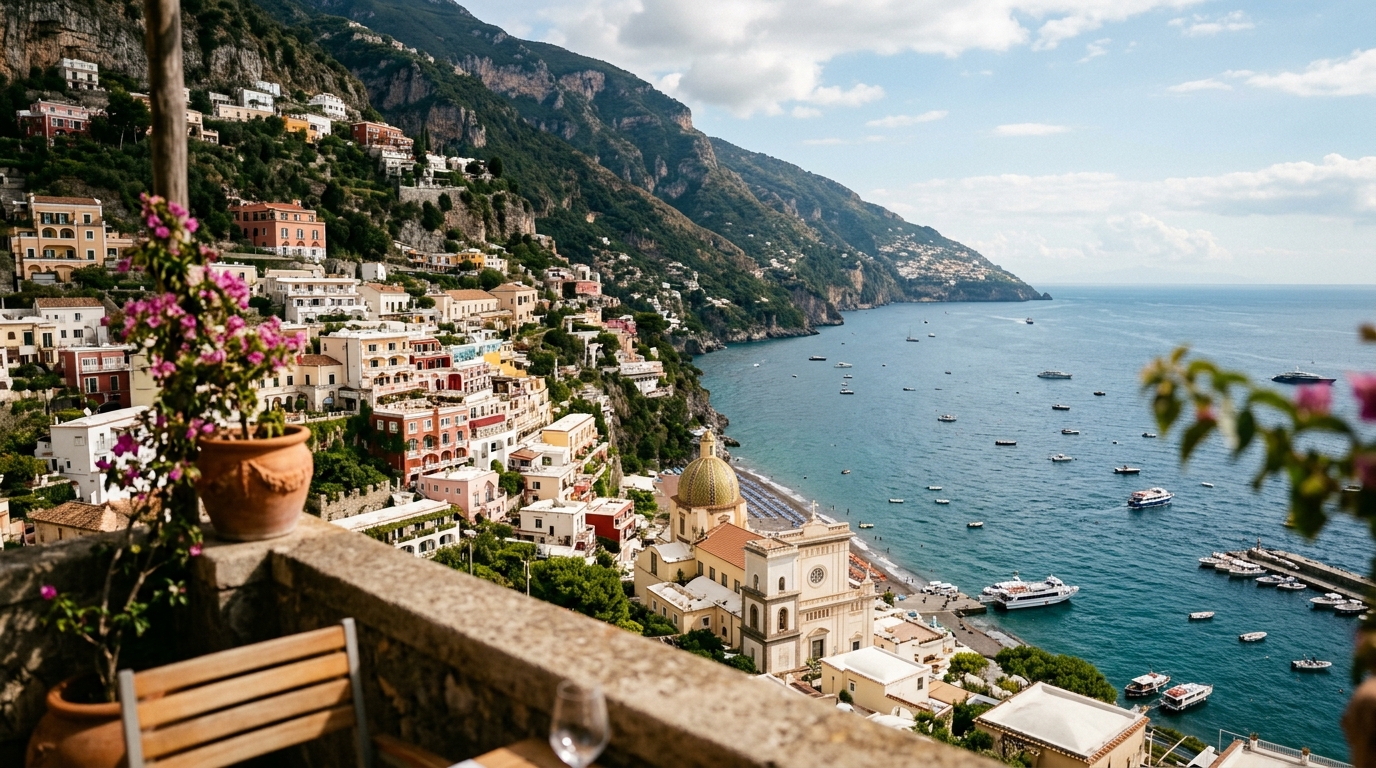
Positano is the town you already know even if you have never been. Pastel buildings cascade down a near-vertical cliff to a crescent beach, and the view from the ferry approach is genuinely one of the best coastal arrivals in Europe. Prices reflect the fame. Budget hotels average €183 per night, and five-star properties hit €3,152 per night (budgetyourtrip.com, 2025). The downside is equally dramatic: up to 15,000 day-trippers pack the town on peak summer days (visititaly.eu, 2024), turning its famously narrow staircases into human traffic jams.
[PERSONAL EXPERIENCE: I stayed in Positano for three nights in early June a couple of years ago. The town at 7:30am, before the ferries start arriving, is magical. The same street at 1pm is a different universe. If you stay overnight, get up early, enjoy the quiet hours, then escape to the beach or a boat tour when the crowds hit.]
Who should pick Positano: Couples, honeymooners, photographers, and anyone willing to trade budget and breathing room for genuine beauty. Skip it if stairs or crowds ruin your travel experience.
Amalfi town was once a maritime republic that rivaled Venice and Genoa, and the 9th-century Duomo di Sant’Andrea, with its dramatic staircase and Arab-Norman facade, still dominates the main piazza. Unlike Positano, Amalfi is built on relatively flat ground at sea level, which means fewer stairs and a more walkable layout. Accommodation runs 15-25% cheaper than Positano for comparable quality. The ferry hub here serves more destinations than anywhere else on the coast, making it the smartest logistical base for multi-town exploration.
Who should pick Amalfi: History buffs, ferry-hoppers, families with strollers, and travelers who want a central base without Positano’s price tag. The evening passeggiata in the main square has a genuinely local feel that is harder to find in Positano after 6pm.
Ravello — The Hilltop Escape
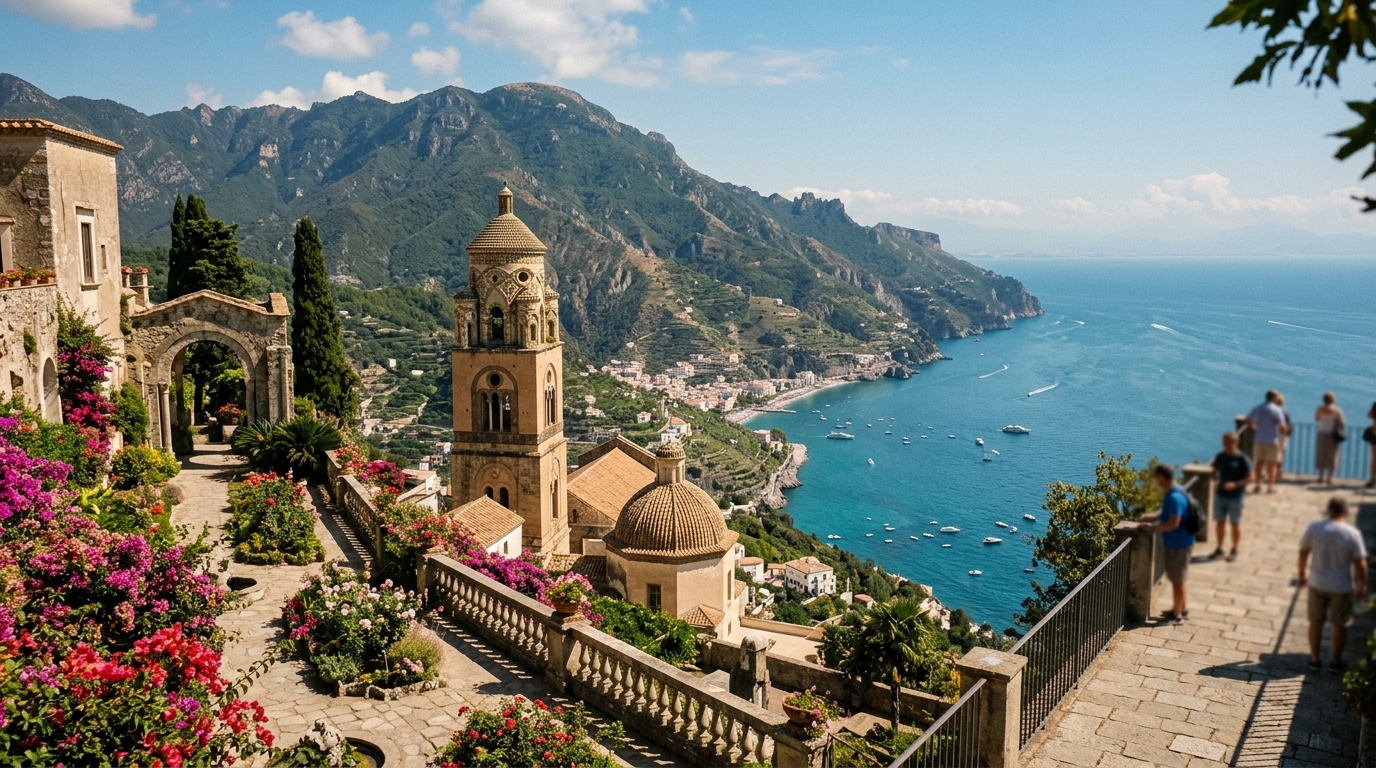
Ravello sits 365 meters above the sea, which means no beach access but panoramic views that have inspired artists and composers for centuries. The gardens at Villa Rufolo and Villa Cimbrone offer two of the most photographed viewpoints on the entire coast. The Terrace of Infinity at Villa Cimbrone, a balcony lined with marble busts overlooking an endless blue horizon, is widely considered the single best view on the Amalfi Coast. Ravello also hosts a summer classical music festival that draws world-class performers between June and September. Hotels here are not cheap, but they feel more secluded and private than anything at sea level.
Who should pick Ravello: Culture travelers, garden lovers, couples seeking romance over beach life, and anyone who prefers a quiet terrace to a crowded shoreline. Not ideal if beach access is a priority.
Praiano — The Budget-Friendly Underdog
Praiano sits between Positano and Amalfi, often overlooked because it lacks an iconic monument. That is exactly its advantage. Sunsets here are widely considered the best on the coast because the town faces west, unlike Positano which loses light behind the cliff early. Accommodation runs meaningfully cheaper, and the town’s small size makes it feel more like a village than a destination. The beach at Marina di Praia is a tiny, tucked-away cove that never gets the crush of Positano’s Spiaggia Grande.
[UNIQUE INSIGHT: Most itineraries skip Praiano entirely, which is the point. You get 80% of the Amalfi Coast experience – sea views, lemon groves, excellent restaurants – at roughly 60% of Positano’s price, with sunset light that Positano physically cannot deliver because of its east-facing orientation.]
Who should pick Praiano: Budget-conscious travelers, sunset photographers, couples wanting romance without the Positano markup, and anyone who prefers a quiet aperitivo over a crowded bar scene.
[CHART: HTML table – Town Comparison Matrix – source: various]
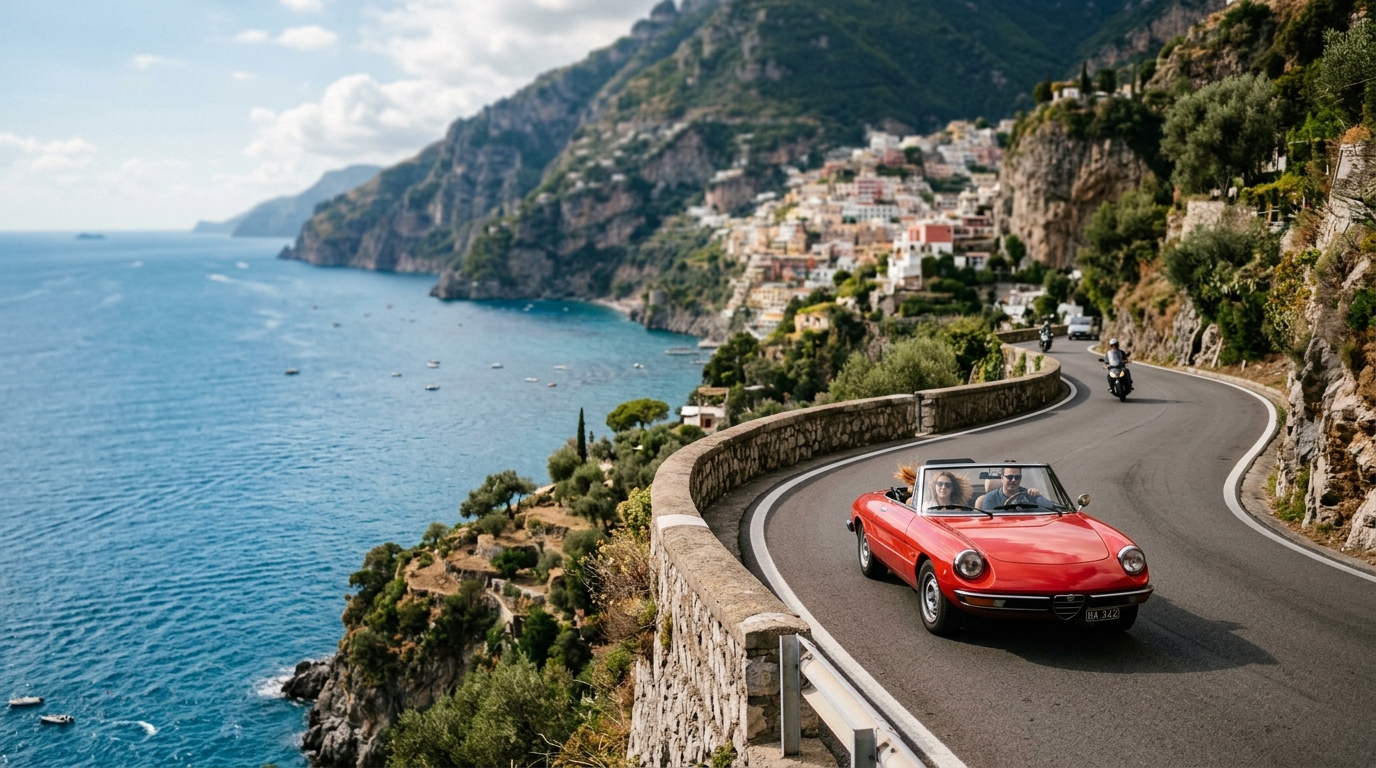
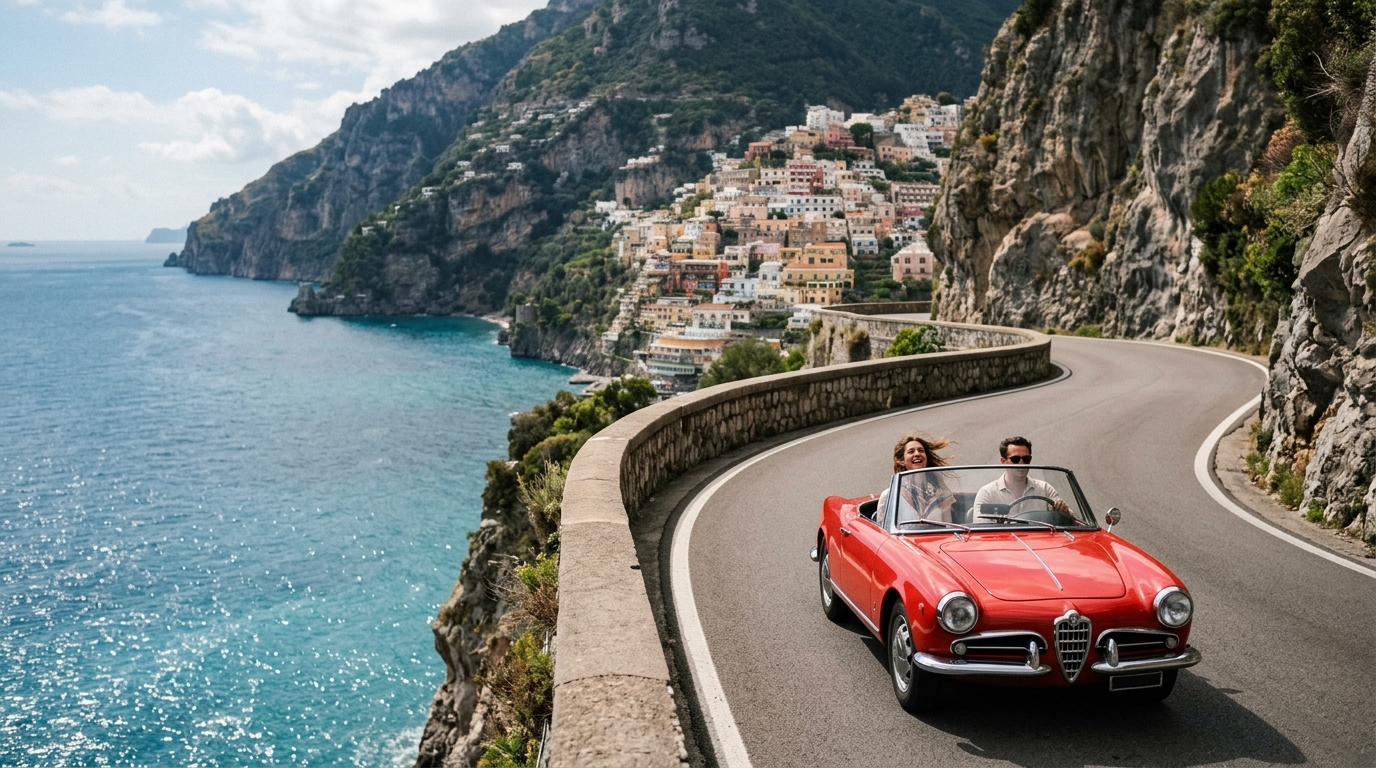
The SS163, known locally as the Amalfi Drive, runs 50 kilometers from Sorrento to Salerno with roughly 350 hairpin turns, and it is simultaneously one of Europe’s greatest driving roads and one of its most stressful. The road opened in 1853, carved directly into limestone cliffs with sections so narrow that two buses passing each other requires mirrors-in-tight negotiation. More than 2.3 million overnight stays were logged along the Amalfi Coast in 2024 (Italia Oggi, 2025), and a significant share of those visitors attempt this road by car. Most of them regret it between June and September.
[PERSONAL EXPERIENCE: I drove the full SS163 in late September, starting from Salerno at 6:30am heading west toward Positano. The morning light hitting the cliffs with almost no traffic was jaw-dropping. I did the same drive in August two years earlier and spent 40 minutes stuck behind a delivery truck near Amalfi town. Month matters more than route.]
The Route: Sorrento to Salerno (West to East)
The most satisfying direction is west to east, starting from Sorrento and ending in Salerno. You stay on the sea-facing lane for most of the drive, and the light improves as the day progresses. The full route takes 2-3 hours without stops but you will stop constantly because every third turn demands a photo.
The essential stops, in order:
Marina del Cantone (Nerano): A detour, not on the SS163 itself, but the beach club here and the famous spaghetti alla Nerano make it worth the 15-minute detour. Arrive before noon for parking.
Fiordo di Furore: A narrow fjord-like inlet with a stone arch bridge 30 meters above the water. Pull into the designated parking area and walk down to the beach. Midday is best because sunlight hits the water directly through the gorge.
Positano: Do not attempt to drive into Positano unless your hotel has guaranteed parking. Park at the top or, better yet, park in Praiano and take the bus down. In-town parking can cost €35-50 per day.
Amalfi: The largest parking area is the Luna Rossa garage (€3-5 per hour, walk to the center in 5 minutes). This is the logical lunch stop.
Ravello: The road up from Amalfi adds 7 kilometers of tight switchbacks. The views at the top justify every turn. Park near the main square (€4 per hour).
Vietri sul Mare: The eastern gateway town, famous for ceramics. The coast flattens out here and you know the dramatic part is done. Good spot for a final espresso before joining the A3 motorway at Salerno.
When to Drive (And When to Skip the Car Entirely)
Drive between October and April. The road is manageable, parking exists, and the experience is genuinely sublime. Between June and September, park the car in Sorrento or Salerno and use ferries and buses. The traffic during peak summer turns a 3-hour scenic drive into a 5-hour ordeal, and finding parking in any of the main towns becomes a competitive sport with a €35 daily price tag.
If you do drive in summer: Start before 7am, park by 9am, and do not move the car until after 6pm. Alternate license plate systems (targhe alterne) have been tested along this coast during peak weeks, with even-numbered plates allowed on even dates, to manage congestion (Italian Tourism Board, 2025).
Rent the smallest car you can tolerate. A Fiat 500 or Panda is ideal. Anything larger than a compact sedan becomes a liability on sections where the road narrows to 3.8 meters. Discover Cars and local agencies in Naples and Sorrento are the best options, and automatic transmission cars book out weeks in advance during summer, so reserve early.
Affiliate Pick — Discover Cars: We recommend booking through Discover Cars for Amalfi Coast rentals. Compact cars from €30/day, full insurance options, and free cancellation up to 48 hours before pickup. The 60% commission share and 365-day cookie means we earn a small commission at no extra cost to you, but we recommend them because their Naples pickup locations are reliable and the cancellation flexibility matters on a trip where plans change.
Car Size
Best For
Daily Rate
Parking Ease
Fiat 500 / Panda
1-2 people
€30-50
Easy (any spot)
Compact (Golf class)
2-3 people + luggage
€45-70
Manageable
Sedan / SUV
Families
€70-120
Difficult (garage only)
Motorbike / Scooter
Solo, brave drivers
€25-40
Effortless
Source: Local rental aggregator data, June 2026
Most Instagrammable Views and Photo Spots
The Amalfi Coast generates approximately 12 million Instagram posts tagged with its towns and landmarks, with Positano alone accounting for over 4.8 million (Instagram data via socialblade estimate, 2024). The coast photographs differently at every hour, and showing up at the wrong time means harsh shadows, blown-out highlights, or a sea of heads blocking your frame. Here is where to go, when to be there, and how to get the shot.
Positano — The Classic Money Shot
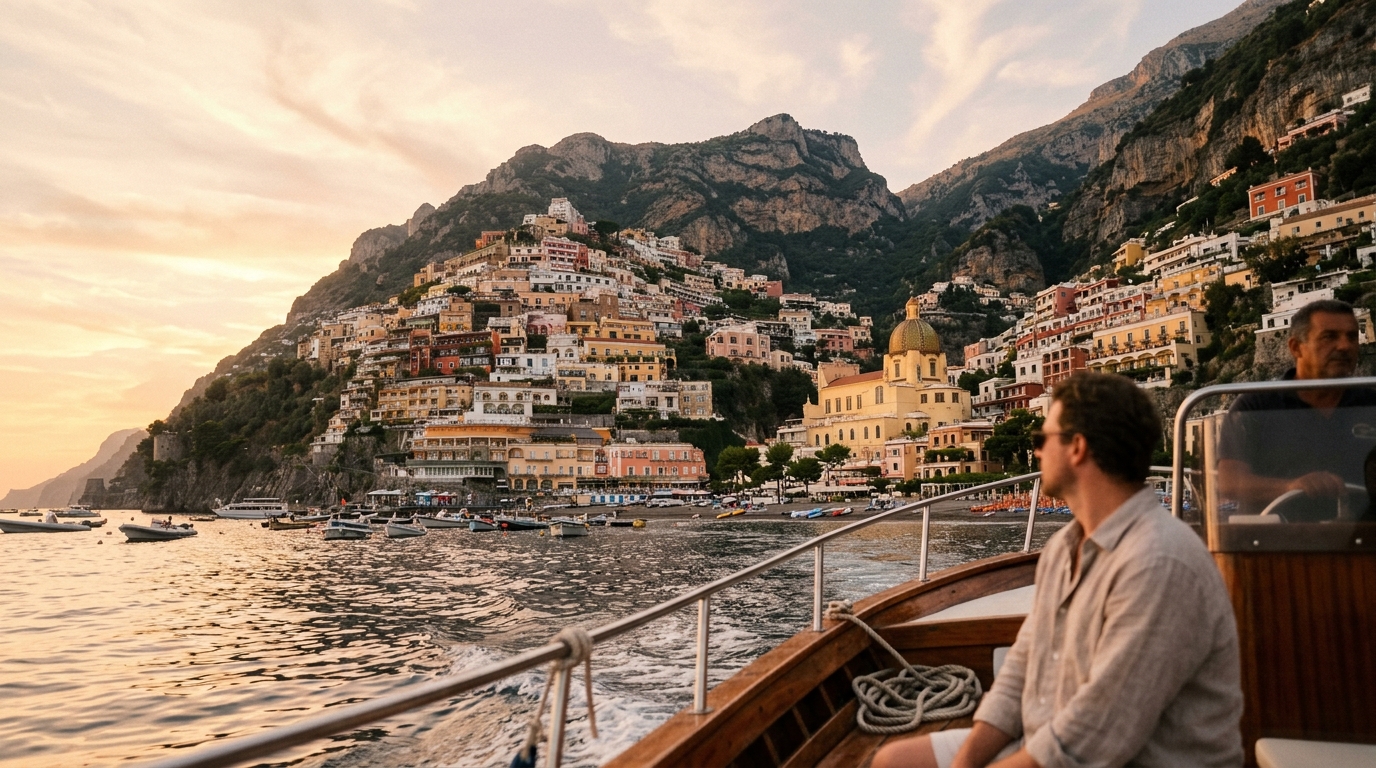
Location: The view everyone wants comes from the water. Take the 9am ferry out of Positano toward Amalfi, sit on the right-hand side, and shoot back toward town. This angle captures the full sweep of pastel buildings and the dome of Santa Maria Assunta. Budget-friendly option: walk to Spiaggia Grande at sunrise and shoot from the eastern end of the beach. The light hits the buildings around 7:15am in summer.
[UNIQUE INSIGHT: Most Instagram photos of Positano are shot from the same three angles because they are the only angles that work. The town faces southeast, which means the facade stays in shadow until mid-morning and goes into silhouette after 4pm. Morning ferry shots work. Sunrise beach shots work. Sunset shots do not.]
Ravello — Villa Rufolo and Villa Cimbrone
Villa Rufolo gardens frame the coastline through pine trees and flowering terraces. Entry costs €7, and the best time is the last hour before sunset (around 6:30pm in summer). The contrast between the dark cypress trees and the golden sea creates a natural frame that requires zero editing.
Villa Cimbrone’s Terrace of Infinity charges €10 and delivers the coast’s single most dramatic viewpoint. The row of marble busts along a railing with nothing but blue horizon behind them is worth every euro. Go at opening time (9am) or late afternoon. Midday sun washes out the depth and the line for photos can exceed 20 minutes during peak hours.
Fiordo di Furore — The Hidden Fjord
This narrow inlet with a 30-meter stone bridge spanning the gorge is the most unique photo location on the coast. Park at the designated pull-off on the SS163 and walk down the steps to the beach platform. The best shot is from the bridge itself, looking straight down into the turquoise water. Come between 11am and 2pm when the sun penetrates the narrow opening directly. The beach is tiny, about 25 meters across, and fills up with perhaps 20 people before it feels crowded.
Path of the Gods — Panoramic Ridge Views
The 7.6-kilometer trail from Bomerano (Agerola) to Nocelle delivers uninterrupted coastal panoramas at 650 meters above sea level (AllTrails, 2026). The photo highlight is roughly 40 minutes in, where the path rounds a ridge and the entire coastline from Punta Campanella to the Cilento mountains opens up. A wide-angle lens helps, but honestly, a phone camera handles this view just fine because the scale does all the heavy lifting.
Praiano — Sunset Terrace Views
Because Praiano faces west, it catches the full sunset that Positano misses entirely. The viewpoint at Torre a Mare, a medieval watchtower converted into a cocktail bar, offers drinks with a front-row sunset. Marina di Praia beach also catches gorgeous golden light in the final hour before sunset. These views are less iconic on social media but more rewarding in person, and far less crowded than anything in Positano.
Photo Spot
Best Time
Cost
Crowd Level
Positano from water
9-10am ferry
€9 (ferry ticket)
Medium
Villa Rufolo gardens
5:30-7pm
€7
Medium
Terrace of Infinity
9am or 5pm
€10
High at midday
Fiordo di Furore
11am-2pm
Free
Low to medium
Path of the Gods
7-10am
Free
Low early, medium by 10am
Praiano sunset
6:30-8pm
Free / cocktail €12
Low
Source: First-hand visit timings and local tourist office opening hours, 2026
Getting Around: Ferries, Buses, and Scooters
The Amalfi Coast’s geography is both its greatest asset and its biggest logistical headache. The SS163 is the only road connecting the towns, and on peak summer days it handles roughly 40,000 vehicle movements on a two-lane road built for a fraction of that volume (ANAS road authority, 2025). Understanding the transport options before you arrive is the single most important planning decision you will make.
Ferries: The Smartest Way to Move
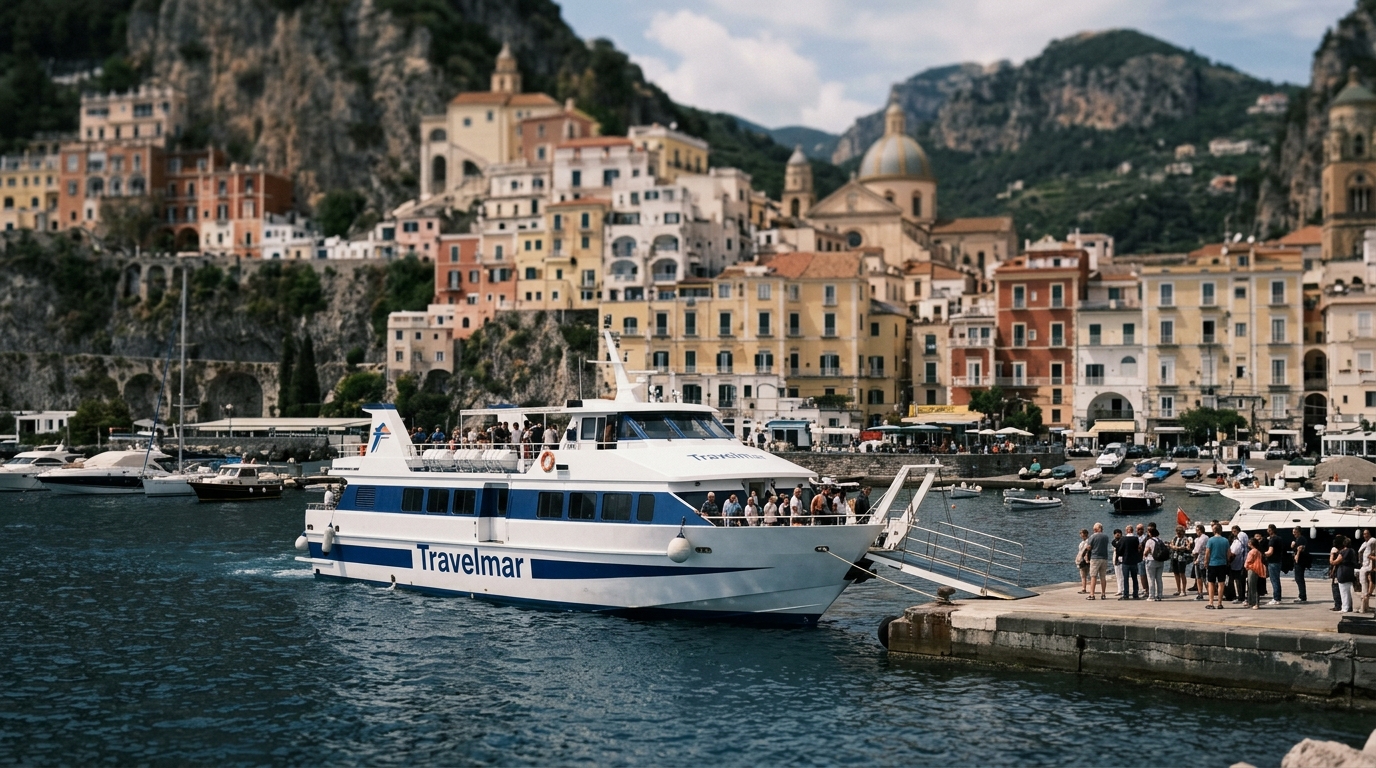
Ferries are the best transport on the Amalfi Coast and it is not even close. They are faster than driving, dramatically more scenic, and completely immune to road traffic. Travelmar and NLG (Navigazione Libera del Golfo) operate the main routes between Salerno, Amalfi, Positano, and Sorrento from April through October. A single trip costs €9-15 depending on distance. A day pass covering multiple towns runs roughly €25.
The ferry between Positano and Amalfi takes 25 minutes door-to-door, compared to 40-60 minutes by bus or car during peak season. Sit on the upper deck, face the coast, and the ride doubles as a sightseeing tour. The only downside: ferries do not serve Ravello (bus from Amalfi is the only option) and they stop running entirely from November through March.
[PERSONAL EXPERIENCE: I always tell people to budget for at least three ferry rides during their stay. Even on a tight budget, the €9 view from the water changes how you see the coast. One trip I took the ferry from Amalfi to Positano at 8:30am with espresso in hand and had the entire upper deck to myself. That 25 minutes was the highlight of the day.]
SITA Buses: Cheap but Unpredictable
The blue SITA Sud buses run the full length of the SS163, connecting Sorrento to Amalfi and Amalfi to Salerno. Tickets cost €2.60 per ride and must be purchased at tabacchi shops or kiosks before boarding (drivers do not sell tickets). The problem is reliability. Buses fill up during peak hours and drivers will skip stops if they are at capacity. Queue management at bus stops in Positano and Amalfi can be chaotic, with no formal lines and 40-minute waits during midday summer hours.
Bus survival tips: Board at the terminus (Sorrento or Amalfi) to guarantee a seat. Avoid buses between 10am and 2pm when day-tripper volume peaks. Validate your ticket in the machine onboard, because fines for unvalidated tickets run €40-60.
Scooters: The Local Hack
Renting a 125cc scooter for €35-50 per day is the closest thing to a cheat code on the Amalfi Coast. Scooters slip past traffic, park almost anywhere, and turn the SS163 from a stressful driving experience into an exhilarating one. You need a valid motorcycle license (a standard car license works for 125cc in Italy). Helmet laws are enforced, and the road is genuinely dangerous, so this is not the place for a first-time rider.
Sources: Travelmar and NLG ferry schedules, SITA Sud bus timetables, local rental agencies, 2026
Visiting the Amalfi Coast on a Budget
The Amalfi Coast has a reputation for being wildly expensive, and in Positano during August that reputation is earned. But the budget reality is more nuanced. The average daily spend across all towns on the Amalfi Coast falls around €132 per person for mid-range travel (BudgetYourTrip, 2025). A backpacker who stays in the right town, eats where locals eat, and uses buses and ferries intelligently can get by on €60-80 per day. Here is exactly how.
Pick the Right Base Town
Town choice is the single biggest budget lever. Praiano and Minori cost 30-40% less than Positano for comparable accommodation. A guesthouse in Praiano averages €80-110 per night versus €160-220 for a similar room in Positano. Amalfi town sits in the middle at roughly €120-140. If you are truly counting euros, Vietri sul Mare at the eastern end of the coast offers hotels from €60 and easy train access to Salerno for day trips.
Eat Like a Local, Not a Tourist
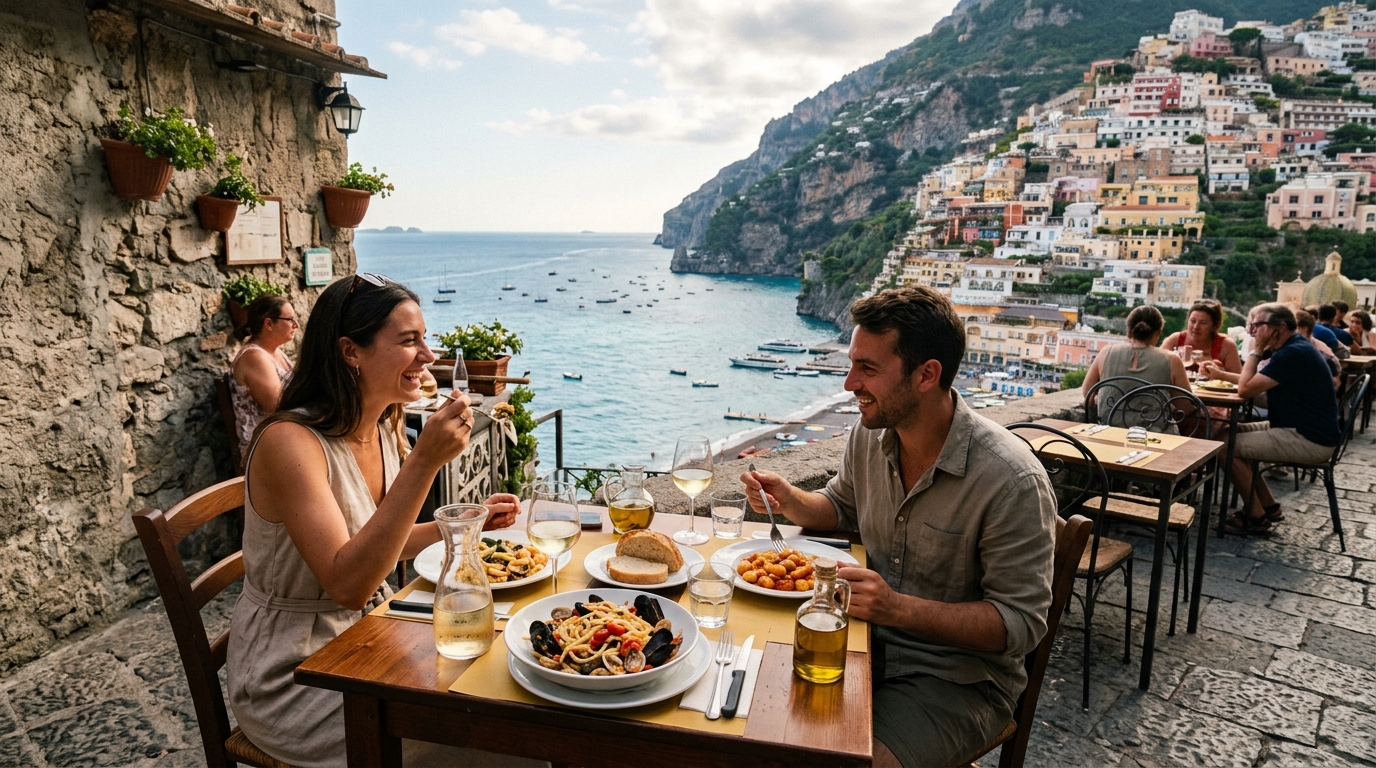
Pasta dishes at a mid-range restaurant with a sea view cost €15-22. The same pasta at a family-run trattoria one street back from the waterfront costs €8-12 and usually tastes better. Lunch strategies make a dramatic difference, too. A panino from a salumeria and a drink from a supermarket costs €5-7. A sit-down lunch with wine at a restaurant runs €25-35. Over a 5-day trip, lunch choices alone can swing your budget by €100-150.
Aperitivo culture helps with dinner costs. Many bars offer a free buffet of small plates with a €10-12 cocktail between 5pm and 8pm. In Amalfi and Salerno this can effectively replace a full dinner if you time it right and the spread is generous.
Smart Timing and Transport
May and October deliver near-perfect weather at 20-30% lower accommodation prices than June through September. Ferry and bus prices stay the same, but hotels and Airbnbs drop noticeably. Avoid August at all costs on a budget, because prices peak and availability shrinks to near zero.
Use the SITA bus at €2.60 per ride for day trips and save the €9-15 ferry for one or two scenic rides. Walk between towns when possible: the path from Praiano to Positano takes about an hour and costs nothing. The Path of the Gods is free and delivers €50-worth of views for exactly zero euros.
Booking.com Pick — Budget-Friendly Stays: A guesthouse in Praiano with sea-view terraces typically runs €80-110/night in shoulder season. We have found consistently better value one town away from Positano in either direction. Filter for properties with kitchenettes to save another €15-25 per day on meals.
Source: BudgetYourTrip, 2025; first-hand price checks, June 2026
Frequently Asked Questions
Is the Amalfi Coast worth visiting in 2026?
Yes, absolutely, but only if you plan around the crowds. Over 5 million annual visitors pass through a coastline with only 60,000 permanent residents (visititaly.eu, 2024; ISTAT). Visit in May, late September, or October and the experience is vastly different from July or August. Pick your town carefully based on what you actually want from the trip.
What is the best time to visit the Amalfi Coast?
The sweet spots are May through early June and late September through October. Temperatures sit comfortably at 22-27 degrees Celsius (72-81 degrees Fahrenheit), hotel prices run 20-30% lower than peak summer, and ferry services run at full schedule. July and August bring extreme heat, maximum crowds, and the highest prices of the year.
How many days do you need for the Amalfi Coast?
Three full days covers the essentials: one day for Positano and the Path of the Gods, one for Amalfi town and Ravello, and one for a boat day or a drive along the full SS163. Five days lets you add Praiano, a beach day, and a cooking class or wine tour. Day-tripping from Sorrento or Salerno works but only gives you a surface-level experience.
Do I need a car on the Amalfi Coast?
No, and between June and September a car is actively a liability. Ferries connect the main towns faster than driving, and parking costs €25-50 per day. If you stay in Amalfi or Sorrento, ferries and buses cover everything. A car makes sense only if you plan day trips to inland destinations like Pompeii or Paestum, or if you are visiting between November and March when ferries do not run.
Is the Amalfi Coast expensive compared to other Italian destinations?
At €132 per day for mid-range travel, the Amalfi Coast runs slightly more expensive than Lake Como (€127/day) but less than parts of the Italian Riviera in peak season (BudgetYourTrip, 2025). Budget travelers can manage €60-80 per day by staying in Vietri sul Mare, Praiano, or Minori, eating at trattorias, and skipping Positano hotels.
How do I get from Rome or Naples to the Amalfi Coast?
From Naples, take the Circumvesuviana train to Sorrento (€4.50, 65 minutes) then a SITA bus or ferry onward. From Rome, the high-speed train to Naples takes 70 minutes (from €19.90 on Italo or Trenitalia), then connect via Sorrento. Total travel time from Rome to Positano runs roughly 4 hours. A private transfer from Naples airport to Positano costs €120-150 with advance booking.
The Amalfi Coast is not a destination you figure out after arrival. The towns are too spread out, the transport too limited, and the peak-season demand too high. But the planning pays off. Every euro you spend on a carefully chosen town, a well-timed ferry, and a shoulder-season date comes back to you in the form of quieter streets, better light, and a version of the coast that the 15,000 daily day-trippers in Positano never see.
Pick your base town first. That single decision determines your budget, your daily logistics, and the character of your trip. Book accommodation 3-6 months ahead for June through September. Reserve any rental car before you book your flight because the smallest cars disappear fastest. Plan one splurge experience: a sunset boat tour, a dinner at a cliffside restaurant, or a night in a room with a view that makes you want to cancel the rest of your trip.
The Amalfi Coast delivers more beauty per kilometer than almost any coastline in Europe. The only question is whether you are going to fight the crowds or outsmart them. Now you know how.