Disclosure: Some links in this guide are affiliate links. If you book or buy through them, we may earn a small commission at no extra cost to you — it helps keep our guides free.
Positano Travel Guide 2026: Everything You Need to Know
Positano is the Amalfi Coast town everyone has on their list.
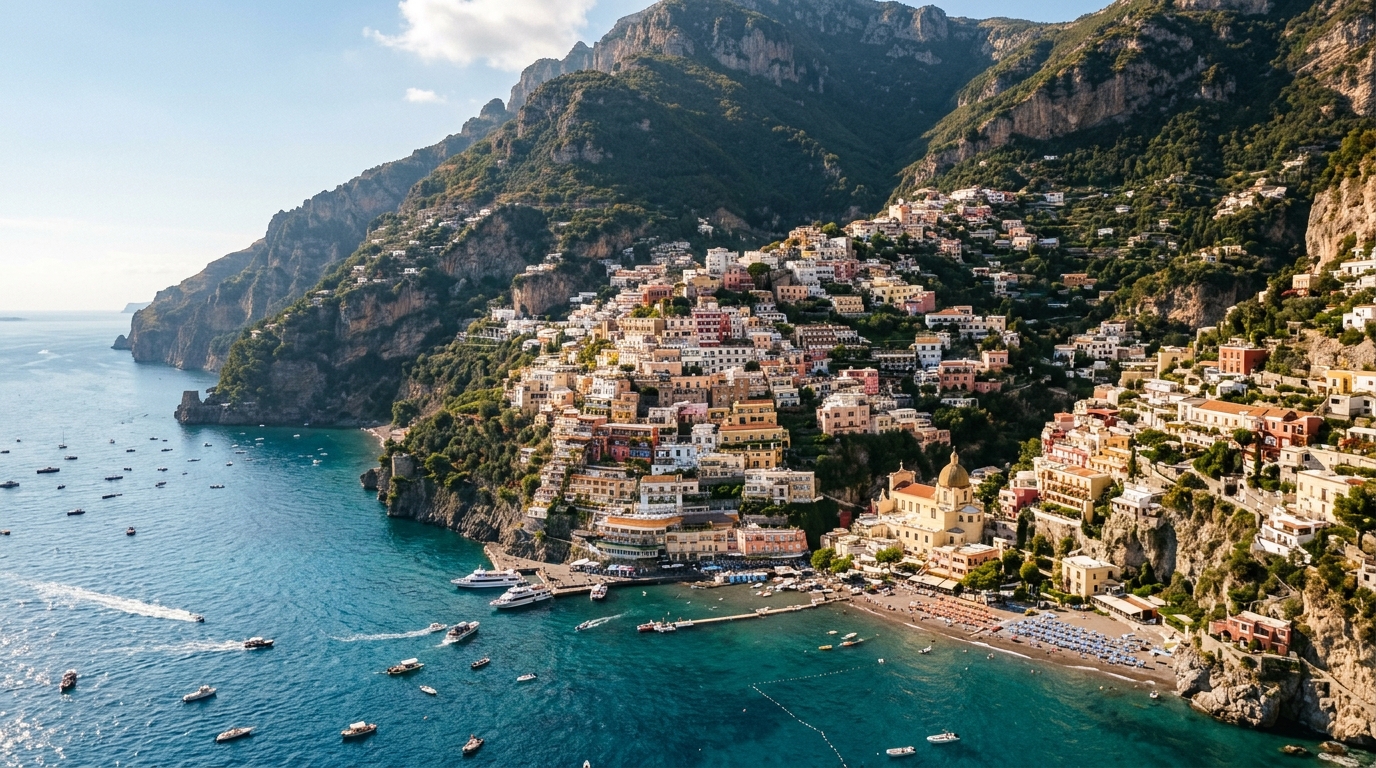
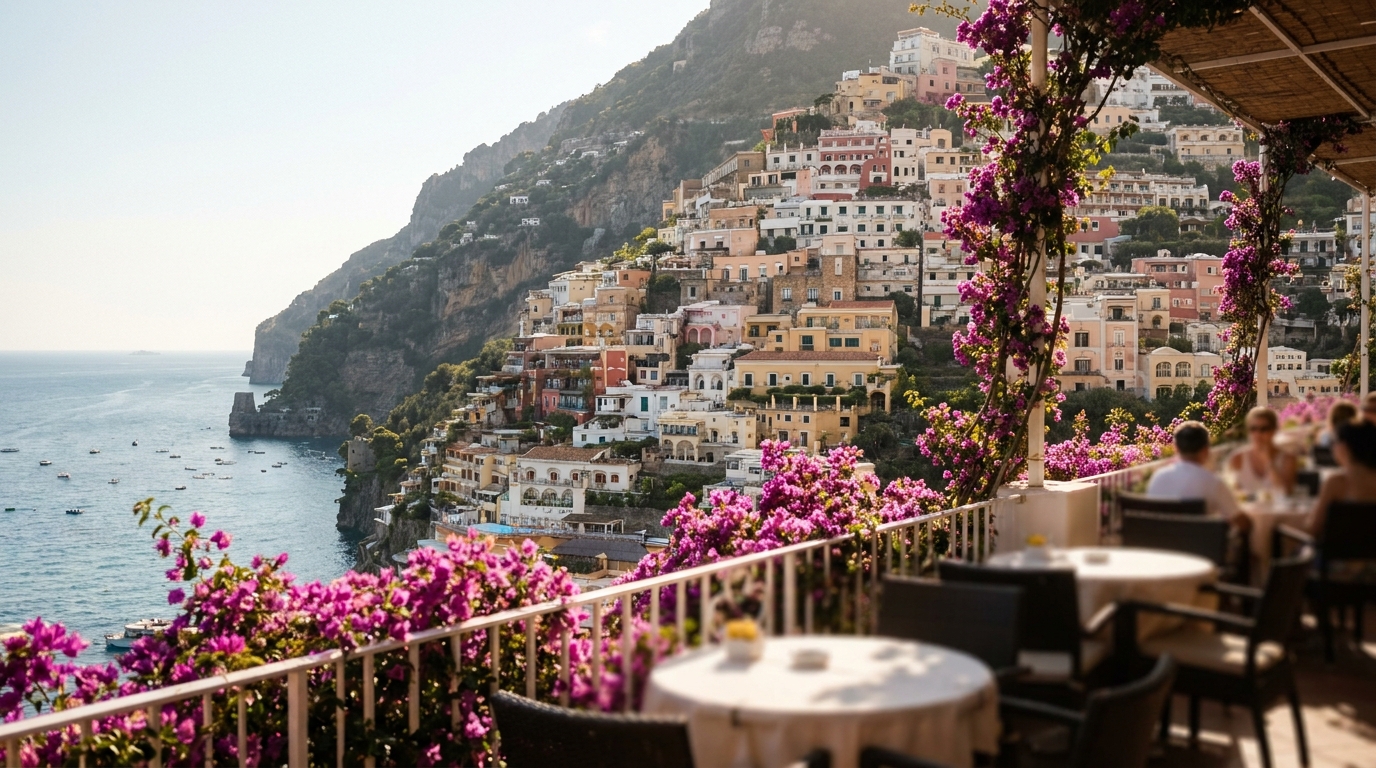
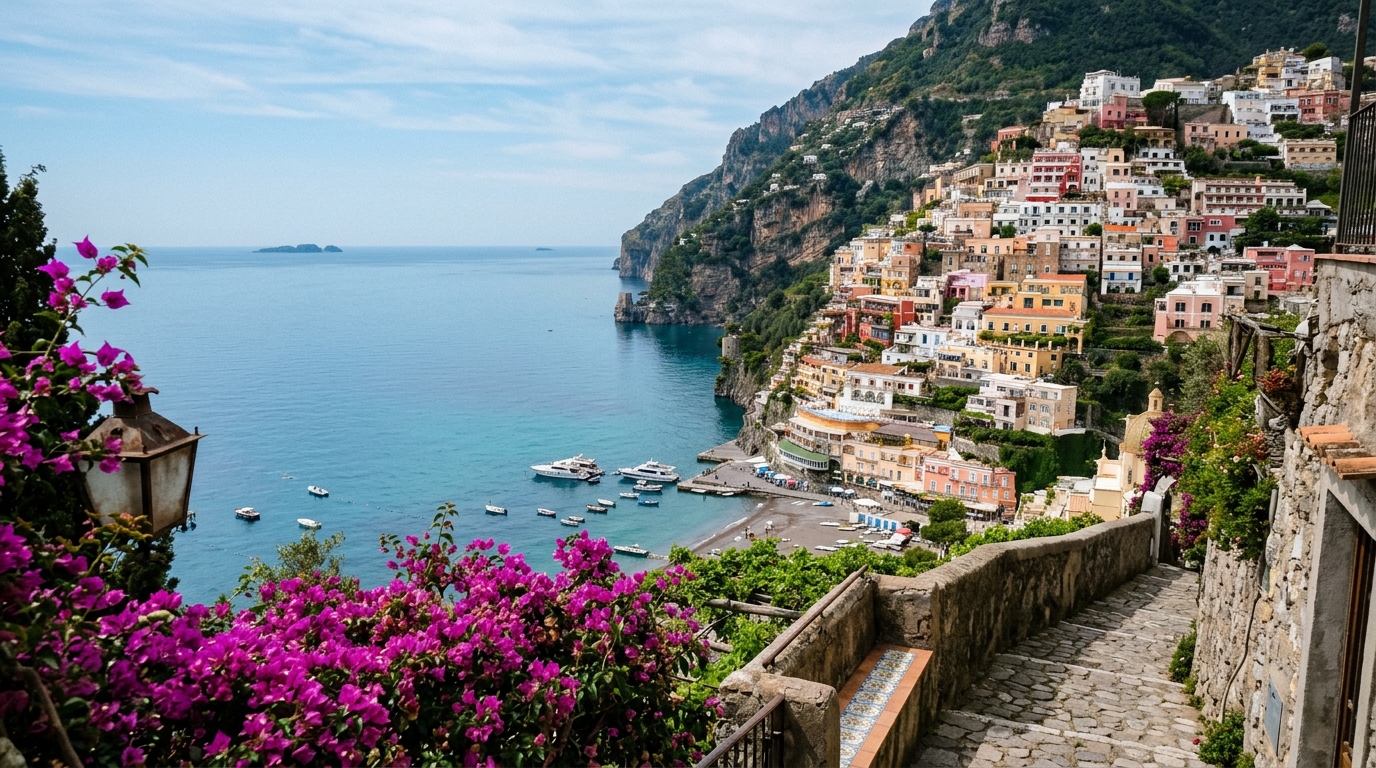
Pastel houses stacked up a near-vertical cliffside, a tiny black-sand beach, bougainvillea spilling over whitewashed walls, and the kind of views that make your phone storage disappear. It is genuinely beautiful. But it is also one of the most crowded, most expensive, and most physically demanding villages on the Italian coast, and most travel guides quietly skip those parts. Looking beyond Positano itself, we compare properties along the whole shore in the best hotels on the Amalfi Coast.
This 2026 Positano travel guide gives you the full picture: honest crowd counts (up to 15,000 day-trippers pack the beaches on summer days, according to visititaly.eu), real transport prices from every direction, the Path of the Gods hike broken down step by step, where to eat for €4 and where to spend €45 at a fixed-menu trattoria, and a clear framework for deciding whether a day trip or overnight stay makes more sense for your trip. The island further south has its own regional split, set out in the best hotels in Sicily.
Positano is worth it. But only if you plan smart. Here is how to do exactly that.
Positano itinerary → /positano itinerary/ Stay connected: grab a travel eSIM from Airalo before you go so you have data the moment you land.
Key Takeaways
Crowds are real: Up to 15,000 visitors/day hit Positano’s beaches in peak summer (visititaly.eu, 2024) — arrive before 9am or after 4pm
Cheapest transport: SITA bus from Sorrento costs €2.60 each way (positano.com, 2026)
Path of the Gods: 7.6 km, 2.5-4 hours, 1,700+ steps into town — the best free experience on the coast (AllTrails, 2026)
Best time to visit: May-June and September for fewer crowds, lower prices, and swimmable water
Hotel reality: Budget options average €183/night; 5-star properties average €3,152/night (budgetyourtrip.com, 2025)
We only recommend services we genuinely trust. Learn more.
What Is Positano? (And Is It Actually Worth Visiting?)
Positano is a clifftop village of 3,678 residents on Italy’s Amalfi Coast, a UNESCO World Heritage Site since 1997 (Wikipedia, 2025). John Steinbeck wrote in 1953 that it “bites deep” into the people who visit it, and that reputation has driven tourist numbers far beyond what the village’s vertical geography was built to handle. The honest answer is yes, it is worth visiting, with two important caveats.
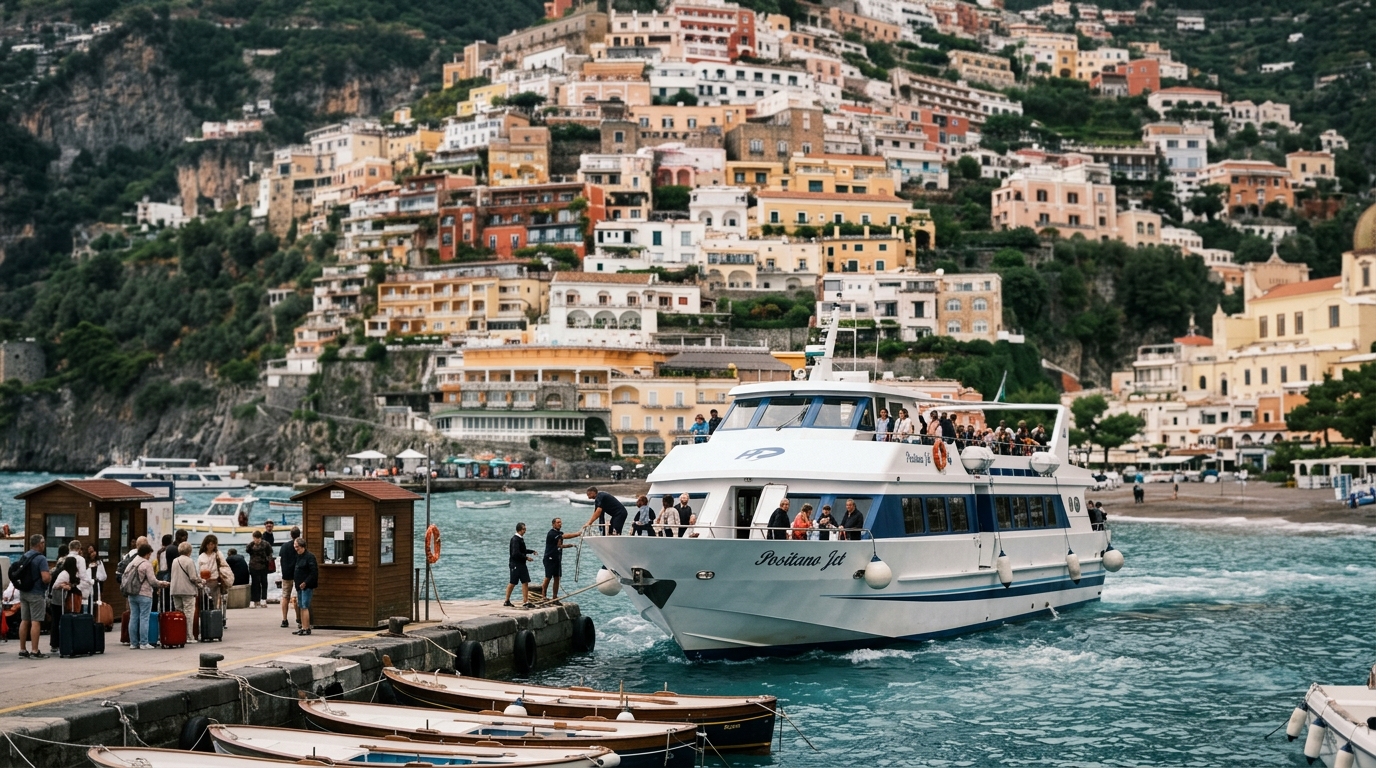
The case for going: The approach by ferry is one of the most dramatic coastal arrivals in Europe. The Church of Santa Maria Assunta with its majolica dome is genuinely beautiful. The Path of the Gods hike ends in Positano and is among the finest coastal walks on the continent. Even a few hours here creates memories that last.
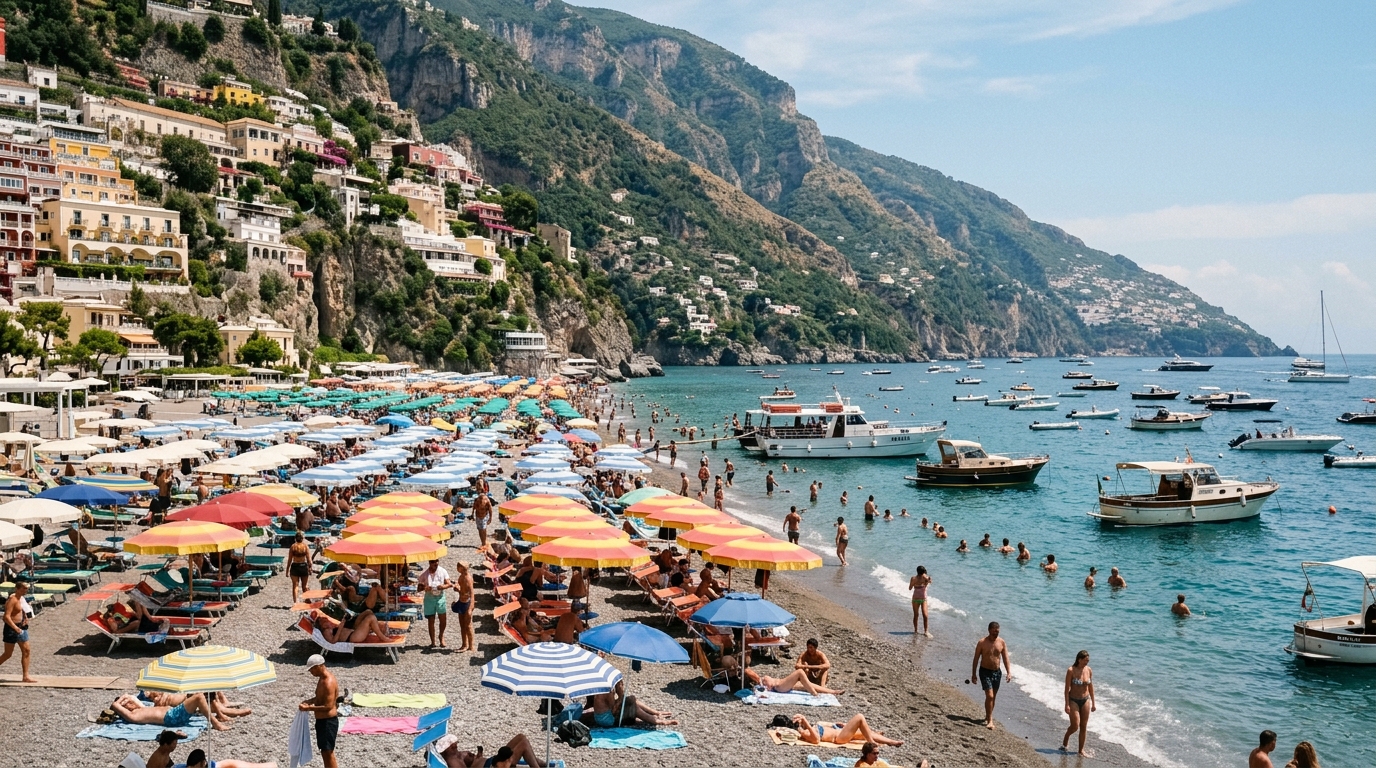
The honest reality check: The Amalfi Coast draws 5 million visitors per year (visititaly.eu, 2024), and a disproportionate share funnel through Positano. On peak summer days, 15,000 visitors crowd onto beaches designed for a fraction of that number. Spiaggia Grande beach chairs rent for €30-35 per day. The entire town is built on steps, so anyone with mobility challenges should reconsider. August heat in a south-facing cliff town with no shade on the path down is genuinely brutal.
Day trip vs. overnight: the framework. If you have limited time or a tight budget, a day trip via SITA bus (€2.60 each way from Sorrento) gives you the full visual experience, the beach, and a meal for under €60. If you want to experience Positano without the day-tripper crowds, stay two nights, arrive Sunday or Monday, and be on the beach by 8:30am. That version of Positano, quiet stairways, fishermen, the smell of lemon groves, is a completely different place.
Worth it for: Anyone visiting the Amalfi Coast, hikers who want to walk the Path of the Gods, couples, honeymooners, photographers, and first-timers to southern Italy. Consider skipping if: You have mobility issues, you need affordable beach accommodation, or you are visiting in August expecting any sense of tranquility.
[PERSONAL EXPERIENCE] In our experience, the single best decision is arriving by the first morning ferry from Sorrento, which docks around 8:45am. The village is still quiet. The fishermen are on the dock. The beach clubs have not filled yet. By 10:30am, the first tour boats arrive and the scene changes entirely.
Best Time to Visit Positano (Season-by-Season Guide)
May, June, and September offer the best combination of weather, manageable crowds, and ferry access, making them the recommended months for most first-time visitors. (positano.com, 2026).
April-May: Sweet Spot for Hikers and Budget Travelers
April is the opening of ferry season and the most affordable month to visit. Temperatures sit around 15-19°C, the Path of the Gods is fully open with lush green hillsides, and hotel rates run 30-40% below peak. The sea is cool (16-17°C), so swimming is limited to the brave. May brings warmer days (20-24°C), the first ferry departures ramp up to full schedule, and beaches fill by mid-morning but remain manageable. This is the best month for the Path of the Gods hike.
June-August: Peak Season (Plan Accordingly)
June is busy but still bearable, with long evenings and sea temperatures reaching 22-23°C. July and August are peak season in every sense. Hotels book out 6-12 months ahead at peak prices. The beach is shoulder-to-shoulder by 10am. Restaurants fill without reservations. Crowds on the main stairway to the beach make it feel like a one-way street at rush hour. If you must visit in August, book everything months ahead, stay at least two nights, and structure your days around early mornings and late evenings.
September-October: Best Overall Value
September is the favourite month of most repeat visitors to Positano. Water temperatures peak (around 25-26°C), crowds thin after the first week, prices drop 20-30%, and ferry services remain at full schedule through September. October brings cooler days and the risk of occasional rain, but hotels offer significant discounts and the town returns to something approaching its natural pace. The Path of the Gods is excellent in October light.
November-March: Off-Season (Proceed with Caution)
Many hotels and restaurants close from November through March. Ferry services reduce dramatically or suspend entirely. The town is peaceful and photogenic in winter rain, and the few remaining locals are genuinely welcoming. But if you visit off-season, verify that your specific hotel, restaurant, and ferry route is actually operating before you book.
Ferry from Sorrento is the most scenic and practical option for most visitors, taking roughly 40 minutes and costing €9-10 from Amalfi, while the Naples direct ferry runs 90 minutes at €19.50-€32 (positano.com, 2026).
There is no train to Positano, and driving the Amalfi Coast road requires nerves of steel, significant skill, and the willingness to pay premium for a car park. Most visitors arrive via one of four routes below.
Route
From
Price (2026)
Duration
Notes
Ferry (Naples)
Molo Beverello
€19.50-€32
~90 min
7 daily departures high season; most scenic option
Ferry (Sorrento)
Sorrento Port
~€12-15
~40 min
Most convenient if coming from Rome via train
Ferry (Amalfi)
Amalfi Port
€9-€10
~25 min
Cheapest ferry option; good for coastal hopping
SITA Bus
Sorrento / Amalfi
€2.60 each way
45-75 min
Cheapest overall; scenic but narrow road; can be crowded
Private Transfer
Naples airport
€120-€180
~2 hrs
Door-to-door; best for groups or luggage-heavy trips
Rental Car
Naples
€40-80/day + parking
~2 hrs
Not recommended; Amalfi road is narrow + parking scarce
Rome to Positano has no direct route. The standard option is the Frecciarossa high-speed train from Roma Termini to Napoli Centrale (70 minutes, from €20), then connect to the Circumvesuviana train to Sorrento (65 minutes, ~€3.60), then ferry or SITA bus to Positano. Total journey: 3.5-4.5 hours depending on connections.
Coming from Naples
The direct ferry from Naples Molo Beverello is the most dramatic option. Seven daily departures run in high season, with the first typically at 8:00am. Book via Ferryhopper to compare carriers and secure tickets in advance during peak season.
Coming from Sorrento
Sorrento is the most popular gateway. The SITA bus (€2.60) leaves from outside Sorrento station roughly every 30-60 minutes during summer and follows the winding Amalfi Coast road. It is cheap, it is scenic, and it requires zero booking. The ferry from Sorrento port (around €12-15, 40 minutes) is faster and more comfortable, especially with luggage.
Pro tip: Book ferry tickets in advance via Ferryhopper during June-September. Walk-up seats do sell out on busy mornings.
Getting Around Positano (The Vertical Town Reality)
Positano has no flat roads. The town runs up approximately 1,500 steps between the beach and the upper village, and the local orange minibus (Costierasita) covers the main road on a 24-hour pass for €10 (positano.com, 2026).
This is one fact most guides underplay, and it matters for your experience.
The orange minibus (Costierasita): A small orange bus runs along the main road (Via Positanesi d’America) connecting the upper town (Transita/Chiesa Nuova) with the beach area. A single ride costs €2.50; the 24-hour pass is €10. The bus is tiny, fills fast in summer, and does not reach the actual beach. You will still need to walk steps at both ends.
Water taxis: Small boats run between Spiaggia Grande and Fornillo beach (€5 one way) and to other coves. Useful for avoiding the main road entirely.
On foot: Most visitors walk everywhere. The main path from the upper road down to the beach takes about 15-20 minutes and involves a steep descent. Coming back up is the workout. Sturdy, flat-soled shoes are not optional.
Driving in Positano: You cannot drive into the historic centre. There are two paid car parks near the top of town (€5-7/hour), and you still walk or take the bus from there. Arrive before 9am if you are driving; spaces fill completely by mid-morning in summer.
Accessibility reality: Positano is genuinely difficult for visitors with mobility limitations, pushchairs, or heavy luggage. The steps are steep, the surfaces are uneven, and there is no accessible alternative on most routes. Plan accordingly.
Top Things to Do in Positano
The Church of Santa Maria Assunta, Spiaggia Grande beach, and a boat tour of the sea caves are the three unmissable experiences, but Positano rewards visitors who look beyond the obvious postcard shots. Here is the full best things to do in Positano breakdown, tiered by priority.
Must-Do
Visit the Church of Santa Maria Assunta. The church’s 12th-century Byzantine Madonna Nera (Black Madonna) is the spiritual heart of Positano, kept behind the altar in a building constructed between 1777 and 1782 (chiesapositano.it, 2024). Entry is free and the church is open daily. The majolica-tiled dome is the most photographed exterior in town. Go early morning or late afternoon for fewer people inside.
Spend a morning on Spiaggia Grande. Positano’s main beach is covered in dark grey volcanic pebbles, not sand, but the setting, cliff houses rising directly behind the shoreline, is unlike any other beach in Europe. Renting a sun lounger and umbrella costs €30-35/day at the beach clubs (danaberez.com, March 2026); the free public area at the far left of the beach gets crowded fast. Arrive before 9am to claim a spot in the free zone.
Take a boat tour of the sea caves. The Grotta dello Smeraldo (Emerald Cave) and the sea arches visible from land can only be reached by boat. Half-day tours typically include the caves, a swim stop, and the Faraglioni rock stacks of Capri visible in the distance.
Should-Do
Fornillo Beach. A 10-minute walk west of Spiaggia Grande along a coastal path, Fornillo is quieter, slightly cheaper (beach chairs €20-25/day) (danaberez.com, March 2026), and has a more local atmosphere. The walk itself is one of the prettiest in town.
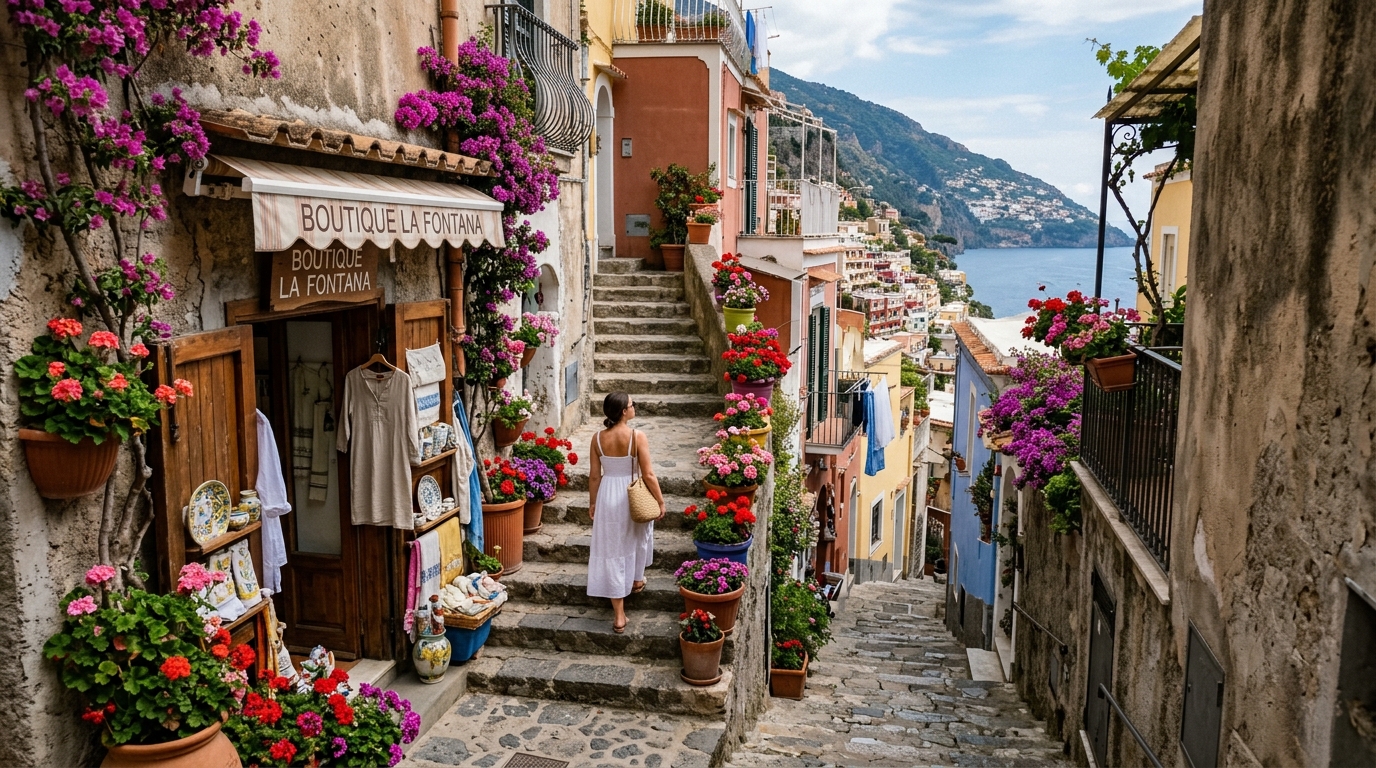
Explore the boutiques on Via dei Mulini. Positano is famous for its handmade leather sandals, linen clothing, and ceramic shops. Prices are tourist-level, but quality is genuine. The custom sandal shops (you choose your own design) are a real local craft tradition.
Catch sunset from the upper village. The view back down over Positano from the road above the Church of the New is arguably better than any view from the beach. Free, zero crowds, and the light hits the pastel facades perfectly at 6-7pm in summer.
Worth Doing (If Time Allows)
Day trip to Capri by ferry. Regular ferry connections from Positano to Capri take about 50 minutes. See our best day trips from Positano for full logistics.
Kayak along the coast. Kayak rentals are available from the beach for €15-20/hour, and the sea caves near the northern headland are accessible on calm days.
Hiking the Path of the Gods: Complete Guide
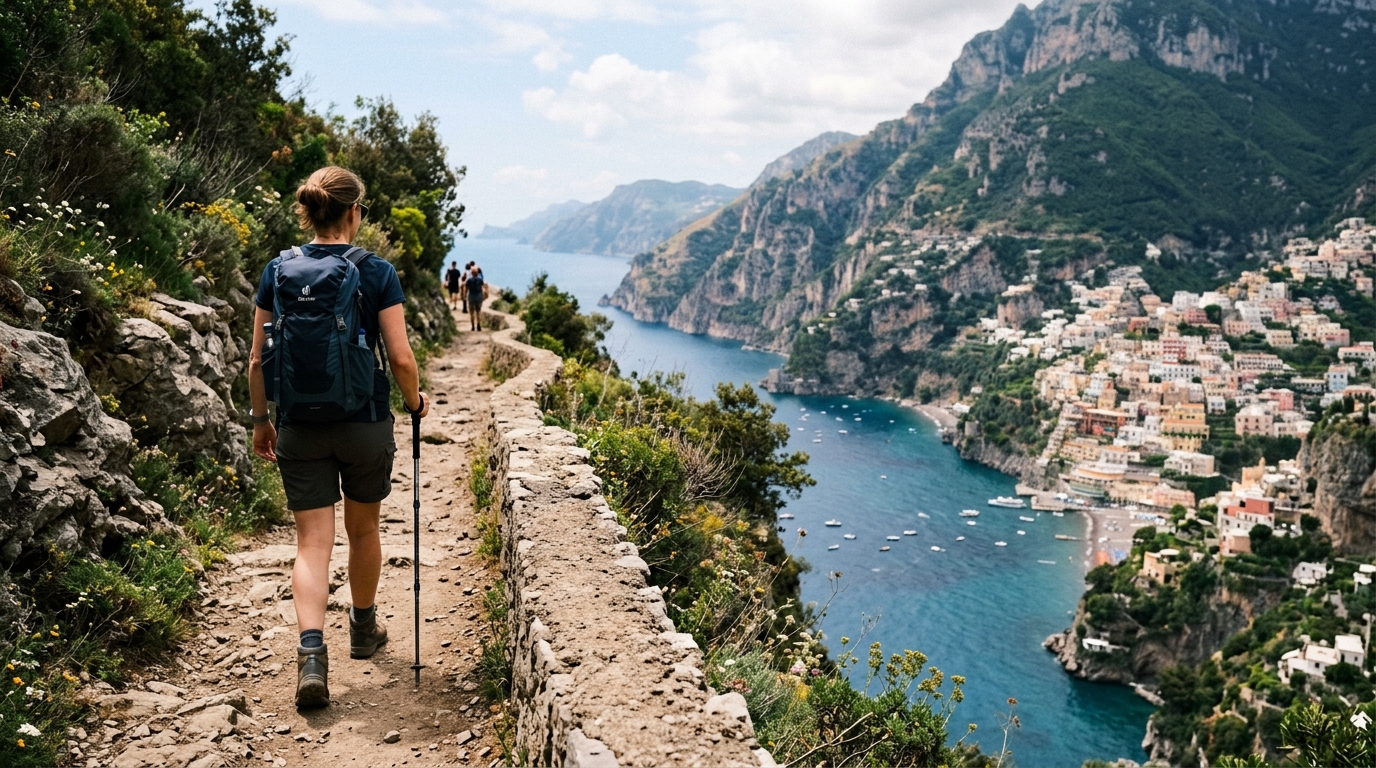
The Path of the Gods (Sentiero degli Dei) is 7.6 km long, rated easy-moderate, and takes 2.5-4 hours one way, finishing with 1,700+ steps descending directly into Positano (earthtrekkers.com and AllTrails, 2026). It is the best free experience on the Amalfi Coast, full stop.
Route Overview
The classic direction runs from Bomerano (near Agerola) to Nocelle, just above Positano. From Nocelle, you descend approximately 1,700 steps into Positano itself, a descent that takes 30-45 minutes and requires good knees. The trail follows the clifftops 600m above the sea, with open views of Positano, Capri, and on clear days, even the faint outline of the Calabrian coast.
Trail stats:
– Distance: 7.6 km (one way, Bomerano to Nocelle)
– Elevation gain: ~200m up, ~600m descent into Positano
– Difficulty: Easy-moderate (some rocky sections, significant descent at end)
– Duration: 2.5-4 hours depending on pace + stops
– AllTrails rating: 4.8/5 from 2,000+ reviews
Getting to the Trailhead (Bomerano)
Getting to Bomerano is the part most guides skip, and it is the main logistical challenge.
Option A: SITA Bus from Amalfi. Take the SITA bus from Amalfi to Agerola/Bomerano (~45 minutes, €2.60). The first bus leaves Amalfi around 6:30am. This is the cheapest option but requires an early start.
Option B: Organised hiking transfer. Several operators run shuttle services from Positano or Sorrento to Bomerano in the morning, then you walk down to your accommodation. GetYourGuide lists guided Path of the Gods tours (with return transfer) from around €35-50 per person, which removes all the logistics.
Option C: Taxi from Positano. A taxi to Bomerano runs approximately €60-80 one way. Groups of 4 split this to a reasonable per-person cost.
What to Bring
The trail has no water sources, no shade for long stretches in summer, and limited mobile coverage on parts of the route. Pack 2 litres of water per person, sunscreen, a hat, and shoes with grip. Flip-flops are not appropriate for the rocky sections or the 1,700-step descent. Start the hike no later than 7:30am in July and August to avoid hiking in the worst heat.
The Descent Into Positano
From Nocelle, the 1,700+ steps drop steeply down to the western edge of Positano near the Fornillo beach area. The descent takes most people 30-45 minutes. It is paved but narrow, and loose stones appear after rain. At the bottom, you emerge a short walk from the beach, and every cold drink earned after this walk tastes extraordinary.
Insider tip: Walk the trail on a weekday. Weekends from May to October see queues at the Bomerano trailhead and shoulder-to-shoulder hikers on the viewpoint sections. A Tuesday or Wednesday morning in May is an entirely different experience.
Best things to do in Positano → /best things to do in positano/
Find your Positano hotel on the map
Live prices from Booking & Airbnb — tap a pin to compare stays around Positano centre and beyond.
Where to Stay in Positano (All Budgets)
Hotel prices in Positano are among the highest in Italy: budget hotels average €183/night, 3-star properties average €456/night, and 5-star hotels average €3,152/night (budgetyourtrip.com and KAYAK, 2025). Book 6-12 months ahead for peak summer dates.
See our full best hotels in Positano guide for detailed reviews across all tiers. Below is the orientation framework.
Budget (€80-200/night)
True budget accommodation in Positano is limited. Most “budget” options are small B&Bs or pensiones in the upper village, a short bus ride or long walk from the beach. Hostel dormitories do exist in Praiano (10 minutes by bus) for around €35-50/night, which is a realistic base for budget travelers who want to visit Positano by day.
Mid-Range (€200-500/night)
Mid-range properties in Positano typically mean a private room with sea-view terrace, air conditioning, and breakfast included. The upper village around Via Cristoforo Colombo has the best mid-range concentration. Properties in this tier often have small pools or roof terraces with coast views. Book the best hotels in Positano at this tier at least 3-4 months ahead for shoulder season, 6+ months for summer.
What to look for: Check that the property lists its exact distance from the beach in steps or walking minutes. Some hotels describe themselves as “near the beach” when they are a 20-minute steep walk away. Floor-level rooms are cheaper but often have obstructed views; upper floors command significant premiums.
Luxury (€500-1,500/night)
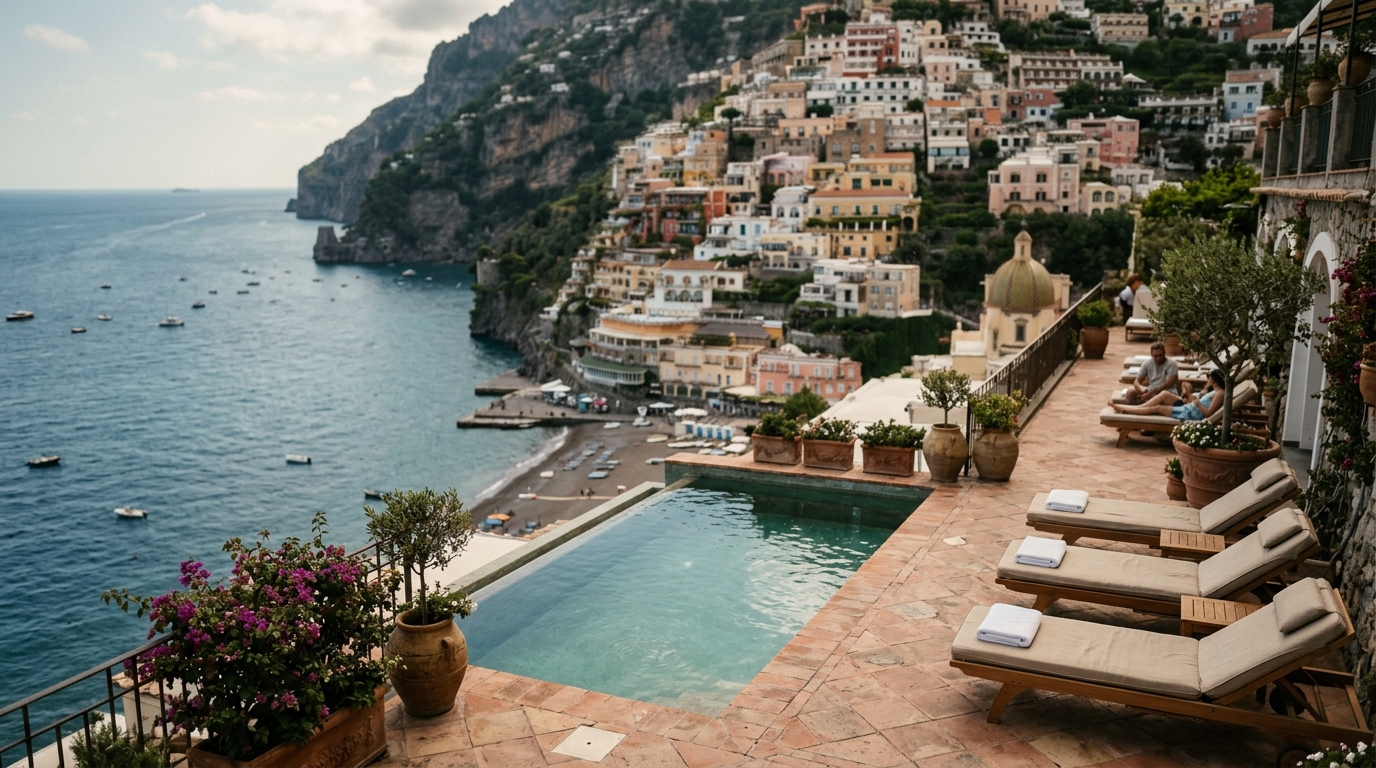
Positano’s luxury tier features hotels with private infinity pools, multiple restaurant outlets, and direct beach access. Le Sirenuse is the legendary flagship property, occupying a 1952 palazzo above the main beach. Borgo Santandrea, carved into the clifftop north of town, offers villa-style luxury. These properties require booking 9-12 months out for July and August dates.
5-Star / Ultra-Luxury (€1,500-3,000+/night)
The absolute top of the market in Positano sits around the €3,152/night average for 5-star properties. These are boutique hotels with suite-only configurations, butler service, private boat transfers, and Michelin-adjacent dining. If you are in this tier, your hotel concierge handles everything in this guide.
Search and book hotels in Positano via Booking.com — free cancellation on most properties.
Best hotels in Positano → /positano hotels/
Where to Eat and Drink in Positano
A sfogliatella pastry from a bar costs €4; a four-course dinner for two at a clifftop restaurant costs €120-150. Positano’s food scene covers both extremes, and the quality at every price point is genuinely high (travelforbliss.com, 2021).
Bar Internazionale. The best quick-stop in town for pastries, granita, and espresso. A sfogliatella (ricotta-filled pastry) and coffee runs €4-5. Locals eat here; that alone is the recommendation.
Lo Guarracino. A step above a bar but genuinely affordable by Positano standards. Lunch plates of pasta or grilled fish run €12-18. The terrace view justifies the slight premium.
Grocery hack. The small alimentari (grocery shops) on the upper road sell fresh mozzarella, local salami, bread, and wine for a fraction of restaurant prices. Pack a picnic and eat on the beach. This is how locals and smart visitors keep costs under control.
Mid-Range (€20-45/person)
La Tagliata. This family-run trattoria sits above Positano in the hills at Montepertuso, a short taxi ride from town. The fixed menu (approximately €45/person) covers antipasto, pasta, secondi, dessert, and house wine in seemingly endless courses (travelforbliss.com, 2021). Dinner for two runs €80-100 with wine. Booking is essential; many guests consider it the single best meal of their Amalfi Coast trip.
Next2. A waterfront spot on Spiaggia Grande serving fresh seafood in the €25-35 per main course range. The spaghetti alle vongole (clam pasta) is the order. Reserve for lunch; dinner reservations fill weeks ahead in peak season.
Splurge (€60+/person)
Buca di Bacco. A Positano institution since 1916, with a terrace directly above the beach. The fish crudo and grilled branzino are the anchors of a meal. Budget €60-80 per person with wine.
Il Tridente (Le Sirenuse). The flagship restaurant of Le Sirenuse hotel serves southern Italian cuisine at the highest level. Set menus start around €90 per person. Non-guests can reserve, but availability is limited.
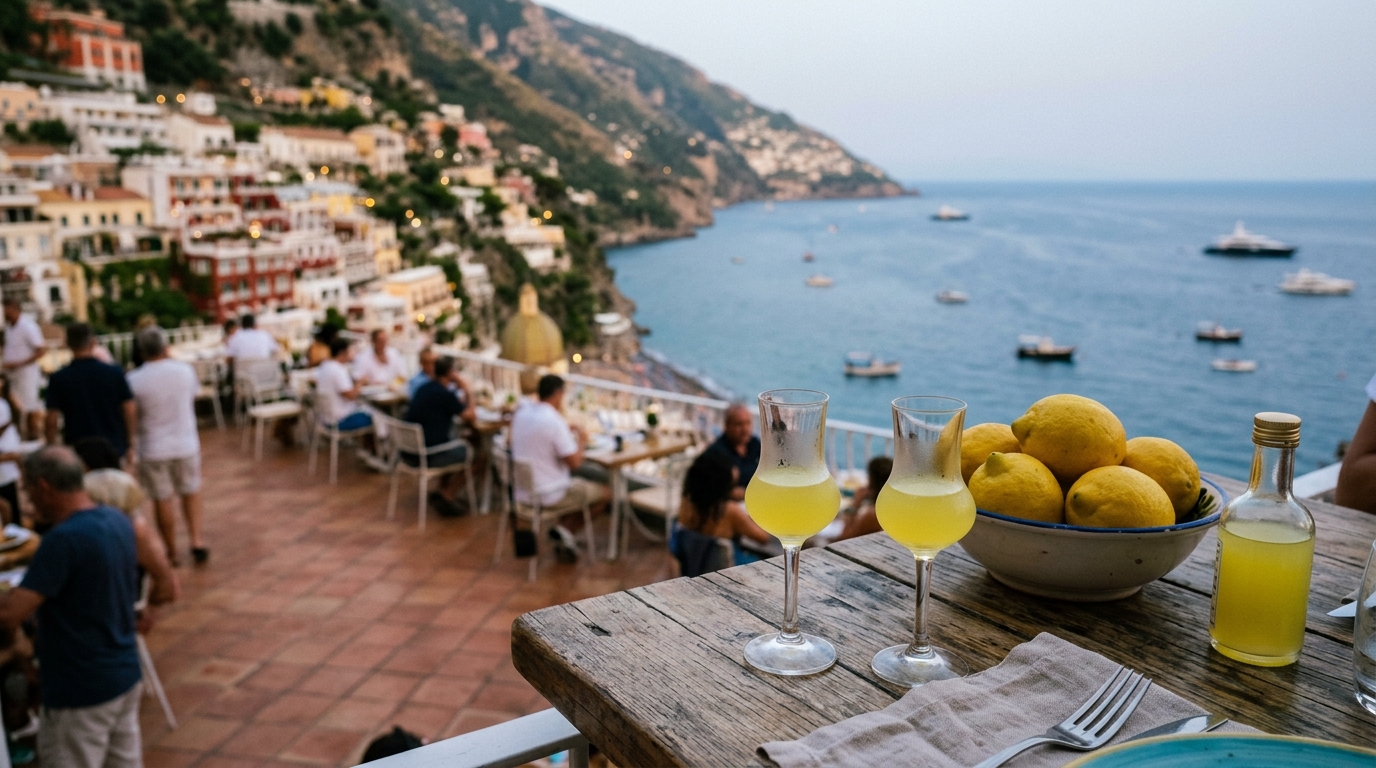
Drinks tip: Limoncello is the local digestif. Most bars sell it by the glass for €4-6. Avoid the tourist-trap bars near the main beach steps; walk two minutes in any direction and prices drop noticeably.
Best restaurants in Positano → /best food in positano/
Frequently Asked Questions
Is Positano worth visiting?
Yes, Positano is worth visiting, but go in May, June, or September to avoid peak crowds. The town genuinely delivers on its reputation: the clifftop views, the colour of the houses, the boat arrival, and the Path of the Gods hike are all exceptional. In August, with 15,000 visitors/day on the beaches (visititaly.eu, 2024), the experience is significantly diminished unless you arrive very early and plan your days carefully.
How many days do you need in Positano?
Two nights (three days) is the recommended minimum for first-time visitors. One day is enough to see the main sights but too rushed to enjoy the pace. Two nights lets you do the Path of the Gods hike on one day, explore the beaches and town on the second, and arrive/depart without feeling rushed. Budget travelers often base themselves in nearby Praiano or Sorrento and day-trip in to save on accommodation costs.
What is the best time to visit Positano?
May and September are the best months to visit Positano. Both offer warm temperatures (20-25°C), swimmable sea, full ferry service, and significantly lower crowds than peak season. Hotel prices in September run 20-30% below July-August rates. April is excellent for hikers. October is peaceful but some services start to close.
How do you get to Positano from Naples?
Take the direct ferry from Naples Molo Beverello (€19.50-€32, approximately 90 minutes, 7 departures daily in high season) (positano.com, 2026). Alternatively, take the Circumvesuviana train from Naples to Sorrento (~65 minutes, ~€3.60) and then a ferry or SITA bus from Sorrento to Positano. Total travel time via Sorrento is 2-2.5 hours but often cheaper overall.
How do you get from Sorrento to Positano?
Two options: ferry (approximately 40 minutes, €12-15, most comfortable) or SITA bus (€2.60 each way, 45-60 minutes on the coastal road). The ferry is better if you have luggage. The bus is the budget option and drops you at the upper town rather than the waterfront, requiring a walk or minibus connection. Ferries from Sorrento operate from approximately April to October.
Is Positano expensive?
Positano is one of the most expensive villages in Italy. Beach chair rentals at Spiaggia Grande cost €30-35/day (danaberez.com, March 2026). A pasta lunch runs €18-25 at a mid-range restaurant. Accommodation averages €183/night at budget properties and €456/night at 3-star hotels (budgetyourtrip.com, 2025). Budget travelers can cut costs by taking the SITA bus (€2.60), eating at bars and alimentari, and day-tripping from Sorrento rather than staying overnight.
What is Positano known for?
Positano is known for its dramatically stacked pastel houses on a near-vertical cliff above the Tyrrhenian Sea, its role as the most iconic town on the Amalfi Coast UNESCO World Heritage Site (designated 1997), the Path of the Gods hiking trail, handmade leather sandals and linen fashion, and a glamorous history as a 1950s-1960s retreat for artists, writers, and celebrities including John Steinbeck and Franco Zeffirelli.
Can you drive to Positano?
You can drive to the outskirts, but not into the historic centre, where vehicle access is restricted. Two paid car parks near the upper town charge €5-7/hour and fill completely by mid-morning in summer. The Amalfi Coast road (SS163) is extremely narrow with sharp bends and oncoming traffic, requiring confident driving. Most visitors find it far easier and less stressful to arrive by ferry or bus. Driving is only practical if you are staying in the upper town with luggage that makes public transport impractical.
Plan Your Positano Trip
Positano rewards visitors who arrive early, book ahead, and look beyond the main beach. The practical checklist:
Book accommodation 3-6 months ahead for shoulder season, 6-12 months for July and August
Reserve ferry tickets in advance for June-September via Ferryhopper
Plan the Path of the Gods on a weekday, start before 8am in summer, bring 2L water per person
Budget realistically – even a moderate 2-night stay costs €500-700 for accommodation alone
Arrive off-peak within peak season: first ferry of the day or Sunday-Monday when day-tripper volumes are lowest
Positano is one of those rare places that actually lives up to its photographs. Plan it right, and you will understand exactly what Steinbeck meant in 1953.
Positano itinerary → /positano itinerary/
Best day trips from Positano → /best day trips from positano/
Schema
{

 "@context": "https://schema.org",

 "@graph": [

 {

 "@type": "BlogPosting",

 "headline": "Positano Travel Guide 2026: Everything You Need to Know",

 "description": "Plan your Positano trip: ferry prices (from €9), best hotels, Path of Gods hike tips, beaches, and when to visit for fewer crowds on the Amalfi Coast.",

 "datePublished": "2026-05-08",

 "dateModified": "2026-05-08",

 "author": {

 "@type": "Organization",

 "name": "TTN Editorial"

 },

 "publisher": {

 "@type": "Organization",

 "name": "TravelTipNow",

 "url": "https://traveltipnow.com"

 },

 "mainEntityOfPage": {

 "@type": "WebPage",

 "@id": "https://traveltipnow.com/positano-travel-guide/"

 },

 "image": "https://images.unsplash.com/photo-1558618666-fcd25c85cd64?w=1200&h=630&fit=crop&q=80",

 "keywords": ["positano travel guide", "amalfi coast", "positano italy", "path of the gods", "positano hotels", "positano ferry"]

 },

 {

 "@type": "FAQPage",

 "mainEntity": [

 {

 "@type": "Question",

 "name": "Is Positano worth visiting?",

 "acceptedAnswer": {

 "@type": "Answer",

 "text": "Yes, Positano is worth visiting, but go in May, June, or September to avoid peak crowds.
The town genuinely delivers on its reputation: the clifftop views, the colour of the houses, the boat arrival, and the Path of the Gods hike are all exceptional. In August, with 15,000 visitors/day on the beaches, the experience is significantly diminished unless you arrive very early and plan your days carefully."
}
},
{
"@type": "Question",
"name": "How many days do you need in Positano?",
"acceptedAnswer": {
"@type": "Answer",
"text": "Two nights (three days) is the recommended minimum for first-time visitors.
One day is enough to see the main sights but too rushed to enjoy the pace. Two nights lets you do the Path of the Gods hike on one day, explore the beaches and town on the second, and arrive/depart without feeling rushed. Budget travelers often base themselves in Sorrento and day-trip in to save on accommodation costs."
}
},
{
"@type": "Question",
"name": "What is the best time to visit Positano?",
"acceptedAnswer": {
"@type": "Answer",
"text": "May and September are the best months to visit Positano.
Both offer warm temperatures (20-25°C), swimmable sea, full ferry service, and significantly lower crowds than peak season. Hotel prices in September run 20-30% below July-August rates. April is excellent for hikers. October is peaceful but some services start to close."
}
},
{
"@type": "Question",
"name": "How do you get to Positano from Naples?",
"acceptedAnswer": {
"@type": "Answer",
"text": "Take the direct ferry from Naples Molo Beverello (€19.50-€32, approximately 90 minutes, 7 departures daily in high season).
Alternatively, take the Circumvesuviana train from Naples to Sorrento and then a ferry or SITA bus from Sorrento to Positano. Total travel time via Sorrento is 2-2.5 hours but often cheaper overall."
}
},
{
"@type": "Question",
"name": "How do you get from Sorrento to Positano?",
"acceptedAnswer": {
"@type": "Answer",
"text": "Two options: ferry (approximately 40 minutes, €12-15, most comfortable) or SITA bus (€2.60 each way, 45-60 minutes). The ferry is better if you have luggage.
The bus drops you at the upper town rather than the waterfront, requiring a walk or minibus connection down. Ferries from Sorrento operate approximately April to October."
}
},
{
"@type": "Question",
"name": "Is Positano expensive?",
"acceptedAnswer": {
"@type": "Answer",
"text": "Yes, Positano is one of the most expensive villages in Italy. Beach chair rentals at Spiaggia Grande cost €30-35/day. A pasta lunch runs €18-25 at a mid-range restaurant. Accommodation averages €183/night at budget properties and €456/night at 3-star hotels.
Budget travelers can cut costs by taking the SITA bus (€2.60), eating at bars and alimentari, and day-tripping from Sorrento rather than staying overnight."
}
},
{
"@type": "Question",
"name": "What is Positano known for?",
"acceptedAnswer": {
"@type": "Answer",
"text": "Positano is known for its dramatically stacked pastel houses on a near-vertical cliff above the Tyrrhenian Sea, its role as the most iconic town on the Amalfi Coast UNESCO World Heritage Site (designated 1997), the Path of the Gods hiking trail, handmade leather sandals and linen fashion, and a glamorous history as a 1950s-1960s retreat for artists and writers including John Steinbeck."
}
},
{
"@type": "Question",
"name": "Can you drive to Positano?",
"acceptedAnswer": {
"@type": "Answer",
"text": "You can drive to the outskirts but not into the historic centre, where vehicle access is restricted.
Two paid car parks near the upper town charge €5-7/hour and fill completely by mid-morning in summer. The Amalfi Coast road is extremely narrow with sharp bends and oncoming traffic. Most visitors find it far easier and less stressful to arrive by ferry or bus."
}
}
]
},
{
"@type": "BreadcrumbList",
"itemListElement": [
{
"@type": "ListItem",
"position": 1,
"name": "Home",
"item": "https://traveltipnow.com/"
},
{
"@type": "ListItem",
"position": 2,
"name": "Europe",
"item": "https://traveltipnow.com/europe/"
},
{
"@type": "ListItem",
"position": 3,
"name": "Positano",
"item": "https://traveltipnow.com/positano/"
},
{
"@type": "ListItem",
"position": 4,
"name": "Positano Travel Guide 2026",
"item": "https://traveltipnow.com/positano-travel-guide/"
}
]
},
{
"@type": "ItemList",
"name": "Top Things to Do in Positano",
"itemListElement": [
{
"@type": "ListItem",
"position": 1,
"name": "Visit the Church of Santa Maria Assunta",
"description": "12th-century Byzantine Madonna Nera; free entry; the majolica dome is the most photographed exterior in Positano."
},
{
"@type": "ListItem",
"position": 2,
"name": "Spend a morning on Spiaggia Grande",
"description": "Positano's main beach with volcanic pebble shore; beach clubs charge €30-35/day for sun lounger and umbrella."
},
{
"@type": "ListItem",
"position": 3,
"name": "Take a boat tour of the sea caves",
"description": "Half-day tours include Grotta dello Smeraldo, swim stops, and Capri views; book via GetYourGuide from €35-45/person."
},
{
"@type": "ListItem",
"position": 4,
"name": "Hike the Path of the Gods",
"description": "7.6 km trail from Bomerano to Nocelle with 1,700+ steps into Positano; 2.5-4 hours; rated 4.8/5 on AllTrails."
},
{
"@type": "ListItem",
"position": 5,
"name": "Visit Fornillo Beach",
"description": "Quieter alternative to Spiaggia Grande, 10 minutes walk west; beach chairs €20-25/day."
},
{
"@type": "ListItem",
"position": 6,
"name": "Explore the boutiques on Via dei Mulini",
"description": "Handmade leather sandals, linen clothing, and ceramics; custom sandal workshops are a genuine local craft tradition."
},
{
"@type": "ListItem",
"position": 7,
"name": "Day trip to Capri",
"description": "Regular ferry connections from Positano to Capri take approximately 50 minutes; ideal day trip from the Amalfi Coast."
}
]
}
]
}