How Many Days on the Amalfi Coast? (2026)
Disclosure: Some links in this guide are affiliate links. If you book or buy through them, we may earn a small commission at no extra cost to you — it helps keep our guides free.
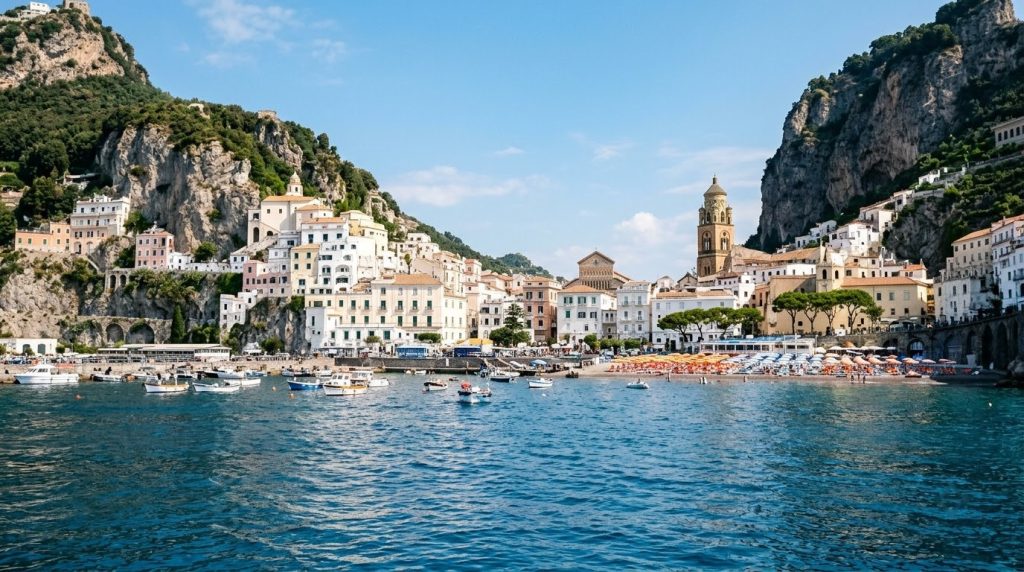
The direct answer to how many days on the Amalfi Coast you need is 3 days for a first visit and 5 days if you want to add Ravello and a boat trip without rushing.
Two days works as a coastal add-on to a Naples or Rome trip, and a week or more suits travellers who want slow mornings, the Path of the Gods hike, and day trips to Capri or Paestum.
| Trip length | Towns you fit in | Who it suits | Approx cost/person (USD) |
|---|---|---|---|
| 2 days | Positano | Coastal add-on to Naples or Rome | USD 465 (EUR 400) |
| 3 days | Positano, Amalfi | First-time visitors, most travellers | USD 700 (EUR 600) |
| 5 days | Positano, Amalfi, Ravello | Travellers who want a hike and a boat day | USD 1,160 (EUR 1,000) |
| 7+ days | Full coast, plus Capri or Paestum | Slow travellers, repeat visitors | USD 1,630 (EUR 1,400) |
“Days” in this guide means calendar days on the ground, arrival day included. “3 days” therefore usually means 2 nights in a hotel, and “5 days” usually means 4 nights.
This distinction matters here more than on a flat itinerary, because one of those calendar days is partly lost to the transfer in and out, a point covered in detail further down this page. All costs above are converted at 1 USD to 0.86 EUR, the rate on 6 September 2026.
The Amalfi Coast in 2 days
Two days covers one town well, not the whole coast. Base in Positano for both nights, since it has the most restaurants, beach clubs and onward transport links. Spend the first afternoon walking down to Spiaggia Grande and back up through the boutiques near Chiesa di Santa Maria Assunta.
Use the second day for a half-day trip to Amalfi town by SITA bus, which costs EUR 2.60 each way and takes 45 to 60 minutes. Skip Ravello and Capri on a 2-day trip, since neither leaves enough time to enjoy them without a rushed return transfer.
Pack light rather than renting a car, since Positano’s lanes are steep, stepped, and largely closed to private vehicles near the centre. See the Positano itinerary for an hour-by-hour plan of this length.
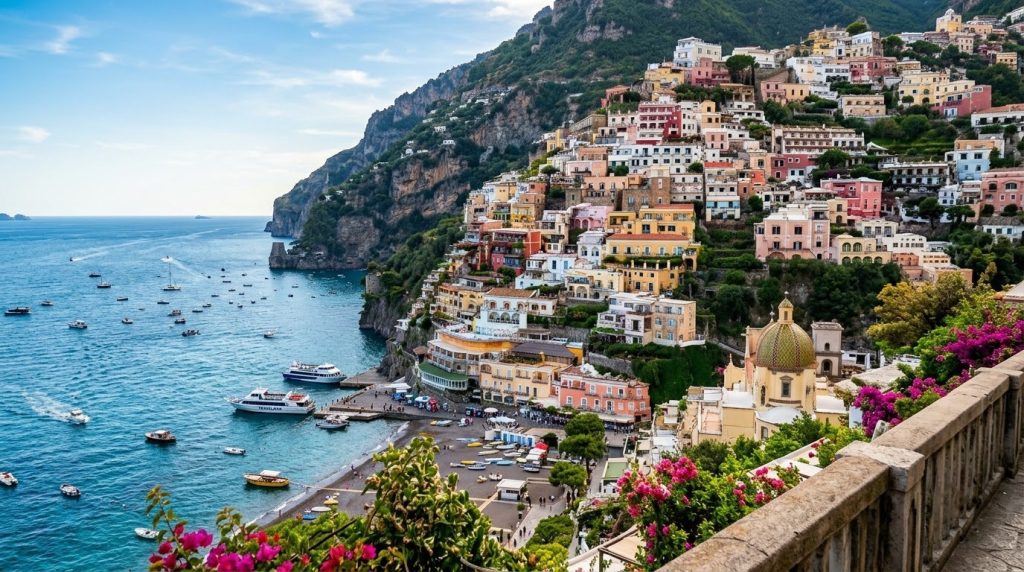
The Amalfi Coast in 3 days – the length most visitors should pick
Three days is the length most first-time visitors should pick, because it covers Positano and Amalfi without a rushed transfer day.
Stay two nights in Positano and use the middle day for Amalfi town, reached by SITA bus in 45 to 60 minutes or by ferry in about 40 minutes when the seasonal Sorrento-Positano-Amalfi route is running, typically from mid-May to October.
This length also leaves one evening free for a sunset walk along Via Positanesi d’America, the coastal path linking Positano to Fornillo beach. The Amalfi Coast travel guide breaks down where to split time between the two towns.
The Amalfi Coast in 5 days
Five days adds Ravello and one full boat day without feeling rushed. Spend two nights in Positano, one night or a day trip in Amalfi, and reserve a half-day for Ravello, reached from Amalfi by bus in about 30 minutes.
Use the extra day for a boat tour along the coast or a day trip to Capri, a 30-minute ferry crossing from Positano. A workable split is Positano on days 1 to 2, Amalfi and Ravello on day 3, Capri on day 4, and a final slow morning in Positano before the afternoon transfer out on day 5.
Five days also gives enough slack to swap a beach afternoon for bad weather, which the shorter lengths do not.
A week or more on the Amalfi Coast
A week or more suits travellers who want to slow down, not see more towns. The extra days go toward the Path of the Gods hike, a 7.8-kilometre trail between Bomerano and Nocelle that takes about 3 hours, plus a day trip to the Greek temples at Paestum and a second, unhurried day in Capri.
Most visitors who book a week are repeat visitors, or are pairing the trip with the kind of Positano hotels that only make sense over a longer stay, such as villas with private pools.
Resist the urge to change hotels every one or two nights at this length, since each move costs a half-day to luggage and check-in logistics on roads that are slow even without traffic. Anything past 8 or 9 days usually means adding Naples or the Cilento coast rather than more time in Positano and Amalfi themselves.
Getting around once you’re there
Once on the coast, the SITA SUD bus is the backbone of getting between towns, and a 24-hour Costiera SITA pass costs USD 12 (EUR 10) for unlimited rides across the network, covering Sorrento, Positano, Praiano, Amalfi, Ravello, Minori, Maiori, Cetara, Vietri sul Mare and Salerno, among other stops; a slightly pricier USD 14 (EUR 12) version adds Positano’s local town buses on top.
Buying the day pass almost always beats paying per ride for anyone making more than two or three trips in a day, and tickets need validating on board, with name and date of birth filled in on the ticket itself.
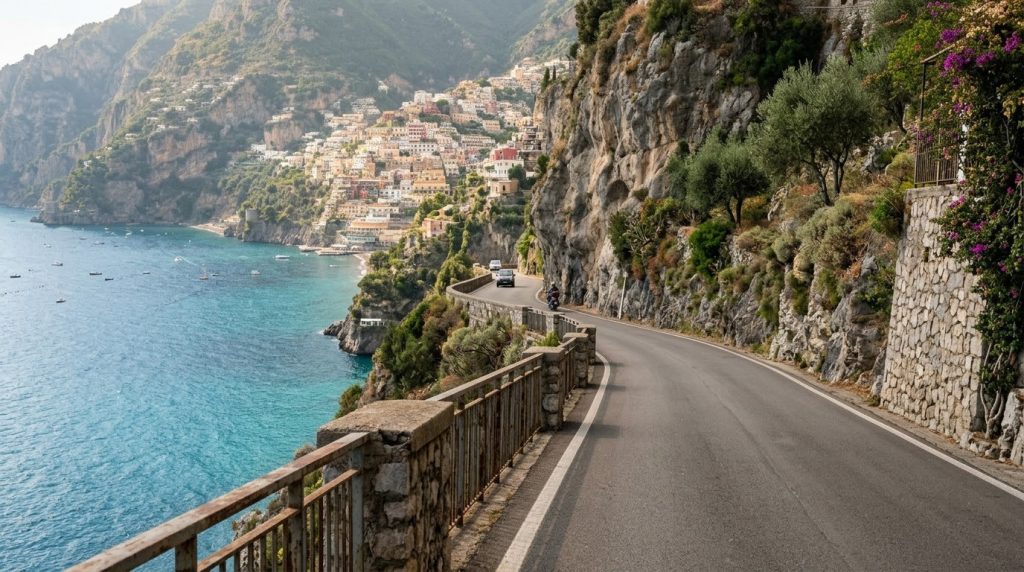
Driving the coast road yourself is the other option, and nearly every source that covers it gives the same warning: the SS163 is narrow, cliff-edge, and shared with tour buses, scooters and oncoming traffic on blind curves, which makes it a genuinely stressful drive for anyone not used to similar roads.
Travelers who do rent a car are generally advised to drive counterclockwise, from Sorrento toward Positano and Amalfi, which keeps the car on the inside lane and further from the cliff edge through most of the tight turns.
Parking is scarce and expensive in every town center, so a rental car often ends up parked for most of a stay rather than used daily.
For most itineraries covered above, skipping the rental car altogether is the simpler choice: the bus network reaches every town worth visiting, and seasonal ferries connecting Positano, Amalfi and Salerno, running roughly April to October, fill in the coastal gaps and move faster than the bus for that stretch, though they cost more per trip and do not run late into the evening.
A private driver is the middle option, costing more than the bus but removing the stress of driving without the schedule constraints of a timetable, and is worth considering for a group splitting the cost, or for the transfer day in and out when luggage makes the bus less practical.
Travelers staying a week or more, covered above, benefit most from the day pass, since a Path of the Gods hike, a Paestum day trip or a Capri crossing already add up to several separate legs in a single day without a car.
Why arrival and departure days barely count
Your arrival day rarely delivers a full day on the coast, because the transfer from Naples eats most of it. Driving from Naples Airport to Positano on the SS163 coast road takes 75 to 90 minutes in normal traffic, but the single-lane stretch between Meta and Positano can push that past 2 hours on summer weekends.
Public transport is slower still, since the train from Naples to Sorrento takes 65 minutes and the onward SITA bus or ferry to Positano adds another 40 to 75 minutes, so door-to-door journeys can run close to 4 hours.
Direct ferries from Naples to Positano run mainly in July and August, about 7 times a day, taking roughly 90 minutes; outside those two months, most travellers connect through Sorrento instead. Because of this, treat your first and last calendar days as half-days at best, and start counting the towns-and-activities column above from day 2.
Best time of year for an Amalfi Coast trip
The Amalfi Coast’s most comfortable window runs roughly April to June and again September to October, when temperatures sit in a pleasant range for walking the coastal paths and the water is warm enough to swim without the peak-season crowds of July and August.
These shoulder months also come with lower hotel rates than high summer, which matters more here than on a flat itinerary, since the coast’s narrow roads and limited parking mean peak-season traffic alone can eat into sightseeing time that a quieter month would not cost.
July and August bring the warmest, driest weather and the heaviest crowds, with the SS163 coast road backing up for long stretches on summer weekends. This is also the main window when the direct Naples-to-Positano ferry runs its fullest daily schedule, so travelers prioritizing that specific route over road or rail transfers are somewhat tied to these two months regardless of crowding.
Winter, November through March, is the coast’s quiet season, and quiet here means more than just thinner crowds: a number of smaller, family-run hotels and restaurants in Positano and Amalfi reduce hours or close for some of these weeks, so travelers visiting outside the April-to-October stretch should confirm a property is actually open before booking rather than assuming year-round operation.
Ferries also reduce or suspend service in winter, leaving the SITA bus as the main way to move between towns.
Rain is possible in any month, including the shoulder season, so a trip of 3 days or longer, as outlined above, absorbs a rained-out morning better than a tight 2-day visit.
Travelers choosing between this coast and other Italian regions in the same trip should note that the Amalfi Coast’s shoulder season tends to run slightly later into autumn than inland Italy, since the Mediterranean coastline holds its warmth longer into October.
When fewer days is the right answer
Fewer days is the right call when Naples or Sorrento is already your base. Day-trippers from Naples in July or August can take the direct hydrofoil to Positano, but with a 90-minute crossing each way, that leaves only a few hours on shore before the return sailing.
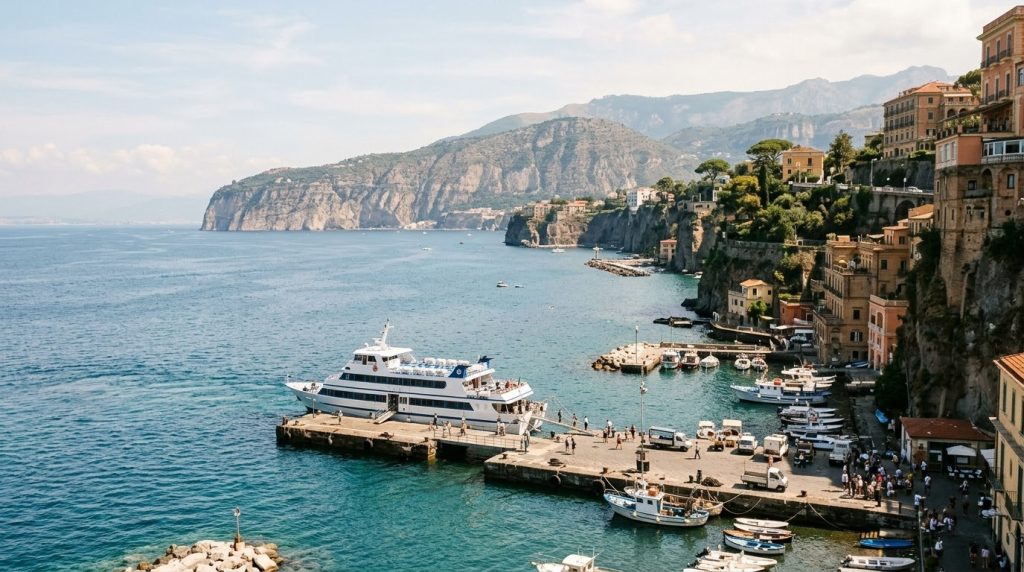
Travellers based in Sorrento have an easier trip, since the ferry to Positano takes about 40 minutes and runs from April to October, or the SITA bus takes 45 to 60 minutes and runs year-round.
From either base, pick one town, either Positano or Amalfi, rather than trying to see both on a single day trip, since the coast road between them adds up faster than a map suggests. A cruise-ship call at Naples or Salerno falls into the same category: treat the coast as a single, tightly timed excursion rather than an overnight stay.
Anyone on a tight Italy itinerary with only one day free is usually better served by Sorrento or Capri, both of which need less transfer time.
How to decide – quick cheat sheet
Most trip-length questions come down to one of these six situations.
– First visit, no rental car: pick 3 days – Want Ravello and a boat day: pick 5 days – Slow trip with Capri or Paestum: pick 7 or more days – Already staying in Naples or Sorrento: day trip, not an overnight stay – Visiting in July or August: add one buffer day for ferry and road traffic – Budget under USD 700 per person total: 2 to 3 days at the mid-range tier
What to pack for the coast
The Amalfi Coast’s biggest packing mistake is choosing the wrong shoes. Every town on the coast is built on steps, not flat streets, and Positano in particular is a near-vertical walk between the main road and the beach, so flat, closed or sturdy sandals with real grip matter more here than they would on a typical Italian city trip; the smooth stone paving gets slick quickly in any rain.
Modest dress is worth packing for church visits, since the Duomo in Amalfi and smaller village churches along the coast expect shoulders and knees covered, similar to the rest of Italy, and a light scarf or wrap takes up little space in a day bag.
Swimwear is useful even outside the main towns, since a number of beach clubs and rocky swimming spots dot the coast between Positano and Amalfi, and many visitors underestimate how much of a 3-day-or-longer stay ends up centered on the water once the itinerary settles in.
Sun protection deserves more attention than on a typical city break, since much of the coast’s best scenery, the cliffside paths, the Path of the Gods hike, and boat trips between towns, offers very little shade.
A hat, reef-safe sunscreen and a reusable water bottle cover most of that risk, and the bottle doubles as a way to refill at the public fountains found in most town centers rather than buying bottled water constantly.
A portable phone charger is worth adding too, since photo-taking along the coast’s scenic stretches runs down a phone battery faster than a typical city day, and charging points are not always available on a crowded SITA bus or ferry.
A compact day bag matters more than a large one, particularly for travelers relying on the SITA bus network, since buses can be crowded in peak season and aisle space is limited.
Anyone planning the Path of the Gods hike, covered elsewhere on this page for the week-or-more itinerary, should also pack proper hiking shoes rather than sandals, since the trail covers uneven, sometimes narrow terrain rather than paved town streets.
Where to stay for a short trip
Positano works as a base for any trip length up to 5 days, since it has the most onward ferry and bus connections. For 7 or more days, splitting the stay between Positano and Amalfi cuts down on daily transfer time. Compare live rates on the map below before booking.
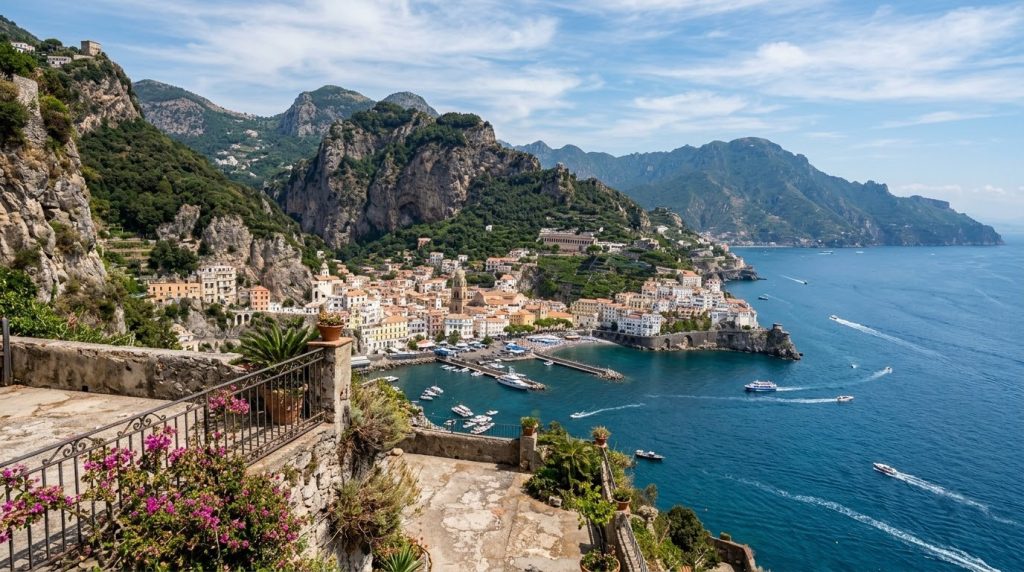
Find your Amalfi Coast hotel on the map
Live prices from Booking, Airbnb and more — move the map or change dates to compare stays along the Amalfi Coast.