Is Venice Expensive? Real Prices and How to Save (2026)
Disclosure: Some links in this guide are affiliate links. If you book or buy through them, we may earn a small commission at no extra cost to you — it helps keep our guides free.
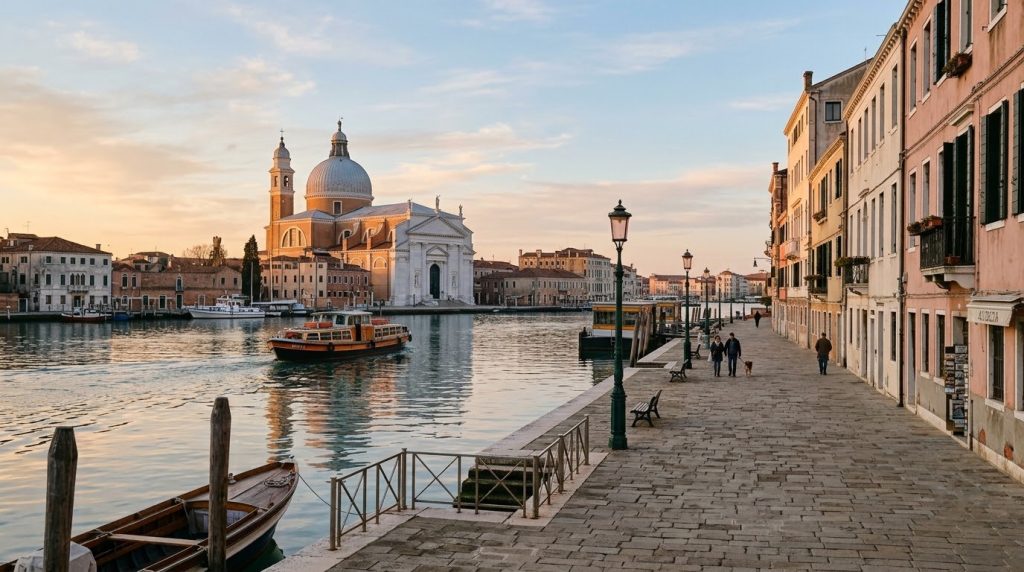
Yes, Venice is expensive by Italian standards: a single 75-minute vaporetto ride costs USD 11 (EUR 9.50) and a 3-star hotel in the historic center often runs USD 169–281 a night in high season. The good news is that the costs that hurt most, hotels, boats and sit-down dinners, are also the easiest to cut.
Sleep off the main drag, buy a transit pass and eat standing at the bar. All prices below are converted at USD 1 = EUR 0.89.
| Item | Typical price | How to save |
|---|---|---|
| Vaporetto single (75 min) | USD 11 (EUR 9.50) | 24-hour pass is USD 28 (EUR 25) |
| 3-star hotel, high season | USD 169–281 per night | Stay in Cannaregio, or come in low season |
| City tax (hotel) | USD 4–6 per person per night | Charged for 5 nights max |
| Gondola, whole boat | USD 101 day / USD 124 evening | Split it, or take a USD 2 traghetto |
| Doge’s Palace | USD 39 (EUR 35) | Book online 30+ days ahead: USD 34 |
| Spritz | USD 3–9 (EUR 3–8) | Order at a bacaro, not on St. Mark’s Square |
The honest answer: expensive to sleep, cheap to wander
What makes Venice pricey is logistics, not sightseeing. Everything arrives by boat and every bag of trash leaves by boat, so hotels and restaurants carry a premium. One 2025 cost guide puts budget 1–2 star rooms at USD 101–180 in high season and 4–5 star hotels at USD 337–899, with San Marco running 30–50% above the city average.
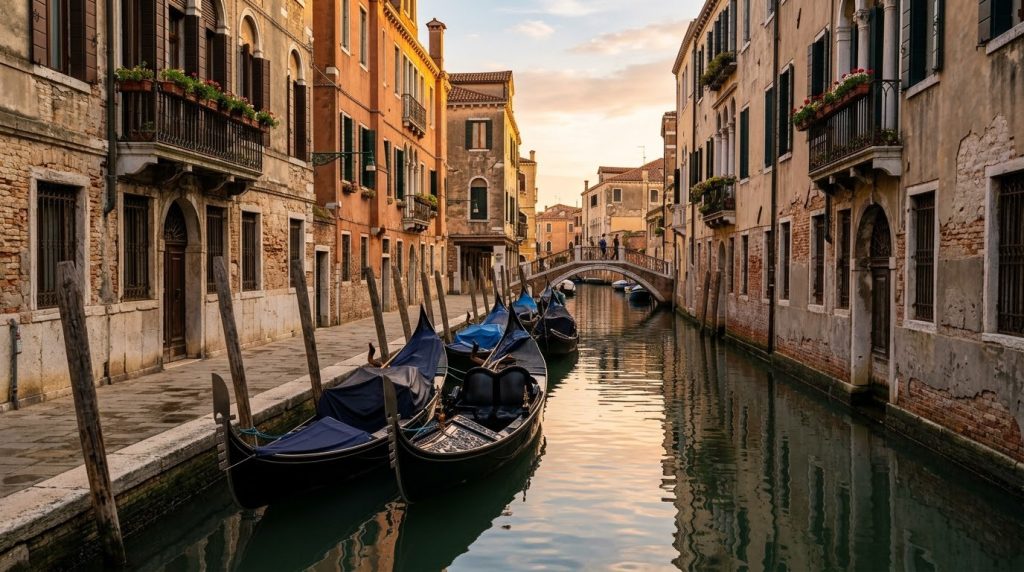
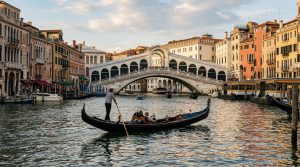
The flip side: the best of Venice is free. Wandering Cannaregio’s backstreets, crossing the Rialto Bridge and watching the light on the Grand Canal cost nothing, and most of the best things to do in Venice are walks, churches and views. Mid-range travelers typically spend USD 163–202 per person per day; careful budget travelers get by on USD 67–90.
What Venice actually costs in 2026
Transport. ACTV fares are USD 11 (EUR 9.50) for a 75-minute ride, USD 28 (EUR 25) for 24 hours, USD 39 (EUR 35) for 48 hours and USD 51 (EUR 45) for 72 hours, per ACTV’s official fare page. Three single rides cost more than a day pass.
Sights. The Doge’s Palace ticket is USD 39 (EUR 35), or USD 34 (EUR 30) bought online at least 30 days ahead, and includes Museo Correr and two other museums (official Doge’s Palace site). St. Mark’s Basilica charges USD 11 (EUR 10) for basic entry; the bell tower is USD 17 (EUR 15).
Food and drink. An espresso at the counter is USD 1–2. Cicchetti run USD 2–3 each, a trattoria dinner USD 17–28 and a mid-range dinner USD 34–56 per person. Sit-down restaurants add a coperto (cover charge) of roughly USD 2–7 per person. It is legal, not a scam, and should be on the menu. Tipping beyond rounding up is not expected.
The two fees Americans mix up
The city tax goes on your hotel bill. In the historic center it is USD 6 (EUR 5) per person per night at 5-star hotels, USD 5 (EUR 4.50) at 4-star and USD 4 (EUR 3.50) at 3-star; island hotels get 20% off and mainland hotels 30% off.
It stops after 5 consecutive nights, under-10s are exempt and ages 10–16 pay half. A couple spending 5 nights in a 4-star pays EUR 45, about USD 51.
The access fee only hits day-trippers. In 2026 it applied on 60 days between April 3 and July 26, 8:30 a.m. to 4 p.m.: USD 6 (EUR 5) if registered 4+ days ahead, USD 11 (EUR 10) later. Overnight guests and children under 14 did not pay. The official access fee site confirms the 2026 trial ended, with no fee from July 27, so fall visitors can ignore it.
Where Venice is not worth the money
– Cafes on St. Mark’s Square. You pay for the view. Drink your espresso standing at a bar two streets back. – Single boat tickets. If you will ride more than twice, buy the pass up front. – The gondola, if you are solo. The fixed fare is USD 101 (EUR 90) by day and USD 124 (EUR 110) in the evening for the whole boat, not per person.
Split four ways it is a fair splurge. Alone, take a traghetto: the gondola ferry across the Grand Canal costs about USD 2. – Picture-menu restaurants near Rialto. Walk 10 minutes into Cannaregio or Dorsoduro and prices drop.
How to do Venice for less
Timing is the biggest lever. Hotel rates in one 2025 guide fall from USD 169–281 to USD 112–202 for a 3-star room in low season; our guide to the best time to visit Venice covers the tradeoffs of fog, acqua alta and short days.
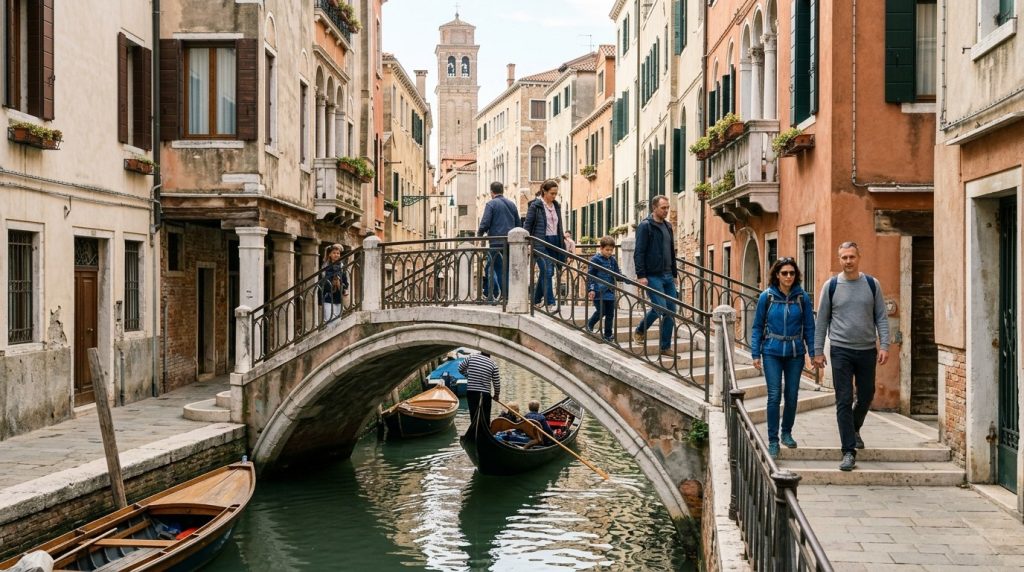
1. Stay at least one night. You see the city after day-trippers leave, which is when Venice is at its best. 2.
Buy a multi-day pass. The 48-hour pass covers island hops to Murano and Burano. Travelers aged 6 to 29 can buy a Rolling Venice card for USD 7 (EUR 6), cutting the 72-hour pass to USD 30 (EUR 27). 3.
Eat the bacaro way. Two or three cicchetti and a glass of wine at the counter make a cheap, very Venetian dinner. 4. Pick one big ticket. Choose the Doge’s Palace or the basilica, not both, if money is tight.
This 2-day Venice itinerary fits the main sights around one 48-hour boat pass.
Who should think twice about Venice
Venice is a poor fit if your budget is mostly bed nights. A week in one base stacks up city tax, high room rates and boat fares faster than in most Italian cities. It is also hard for travelers with mobility issues, since stepped bridges are everywhere and water taxis are a luxury.
If you are on the fence, our take on whether Venice is worth visiting covers who loves it and who leaves disappointed. Nonstop flights from New York take about 8.5 hours, so Venice works well as the first or last stop of a longer Italy trip.
Where to stay
– Cannaregio suits budget travelers and families: near the train station, quieter at night, full of bacari and cheaper than San Marco. – Dorsoduro suits couples and art lovers, with the Accademia and the Zattere waterfront. – Mestre (mainland) suits travelers watching every dollar: cheaper rooms and a 30% lower city tax, but a daily commute.
See where to stay in Venice for more detail.
Find your Venice hotel on the map
Live prices from Booking, Airbnb and more — move the map or change dates to compare stays across Venice.
Frequently Asked Questions
Is food and drink expensive in Venice?
Not if you eat like a local. An espresso at the counter is USD 1–2 and cicchetti cost about USD 2–3 each, normal for Italy. Prices jump at tables on St. Mark’s Square and near Rialto, and most sit-down restaurants add a coperto of roughly USD 2–7 per person. Bacaro bars keep food costs reasonable.
How much is the Venice day-tripper fee?
In 2026 the access fee was USD 6 (EUR 5) if booked at least 4 days ahead, or USD 11 (EUR 10) if booked later. It applied on 60 days between April 3 and July 26, from 8:30 a.m. to 4 p.m. The trial ended on July 27, so it does not affect fall visits.
How much is the tourist tax per night in Venice?
Historic-center hotel guests pay USD 4 (EUR 3.50) at 3-star, USD 5 (EUR 4.50) at 4-star and USD 6 (EUR 5) at 5-star hotels, per person per night, for a maximum of 5 nights. Children under 10 are exempt, ages 10–16 pay half, and mainland hotels charge 30% less.
Is a gondola ride worth the money?
For a group, often yes. The fare is USD 101 (EUR 90) by day and USD 124 (EUR 110) in the evening for the whole boat, so four people pay about USD 25–31 each. Solo travelers on a budget can get a short taste of the gondola on a traghetto crossing of the Grand Canal for about USD 2.