
Disclosure: Some links in this guide are affiliate links. If you book or buy through them, we may earn a small commission at no extra cost to you — it helps keep our guides free.
Best Time to Visit Venice: Month-by-Month Guide 2026
The best time to visit Venice is mid-April to early June and again from mid-September to late October, when daytime highs sit around 17-24°C, rainfall is moderate, and the summer crush has not yet arrived. Venice is small: the historic center covers barely 5 square kilometers, so timing matters more here than in almost any other European city. Get the month right and you walk quiet campi at dawn. Get it wrong and you shuffle across the Rialto behind a wall of day-trippers in 30°C heat. Those same months move room rates, which we break down across tiers in the best hotels in Venice.
This guide breaks Venice down month by month: temperature, rain, crowd levels, and the two calendar events that swing a trip the most in 2026. The first is Carnival, running 31 January to 17 February 2026 (official Carnevale di Venezia dates). The second is acqua alta, the seasonal high-water flooding that peaks in November and December. We also flag the 60 paid “access fee” days the city has scheduled between April and July 2026, because they change how a day trip feels and what it costs.
Key Takeaways
– Shoulder season wins: Mid-April to early June and mid-September to late October give highs of 17-24°C, thinner crowds, and lower hotel rates than July-August.
– Summer is hot, packed, and smells: July highs average 28.9°C; still, humid days over the canals bring the low-tide odor locals call the price of August.
– Carnival runs 31 Jan-17 Feb 2026: Two-plus weeks of masked events spike winter hotel prices to summer levels despite cold 7-9°C days.
– Acqua alta peaks Nov-Dec: High-water events cluster from late October to January; the MOSE barrier system (operational since 2020) now blocks tides forecast above 110 cm.
– Access fee hits 60 days in 2026: Day-trippers 14+ pay 5 EUR (or 10 EUR last-minute) between 08:30 and 16:00 on selected dates from 3 April to 26 July.[PERSONAL EXPERIENCE] We have timed Venice trips in four different seasons, and the contrast is stark. On a late-October visit we crossed an empty Piazza San Marco at 7:30 a.m. with the cafe chairs still stacked; on an early-August return we waited eleven minutes just to funnel onto the Rialto Bridge. The season you pick is not a detail here. It is the trip.
What is the overall best time to visit Venice?
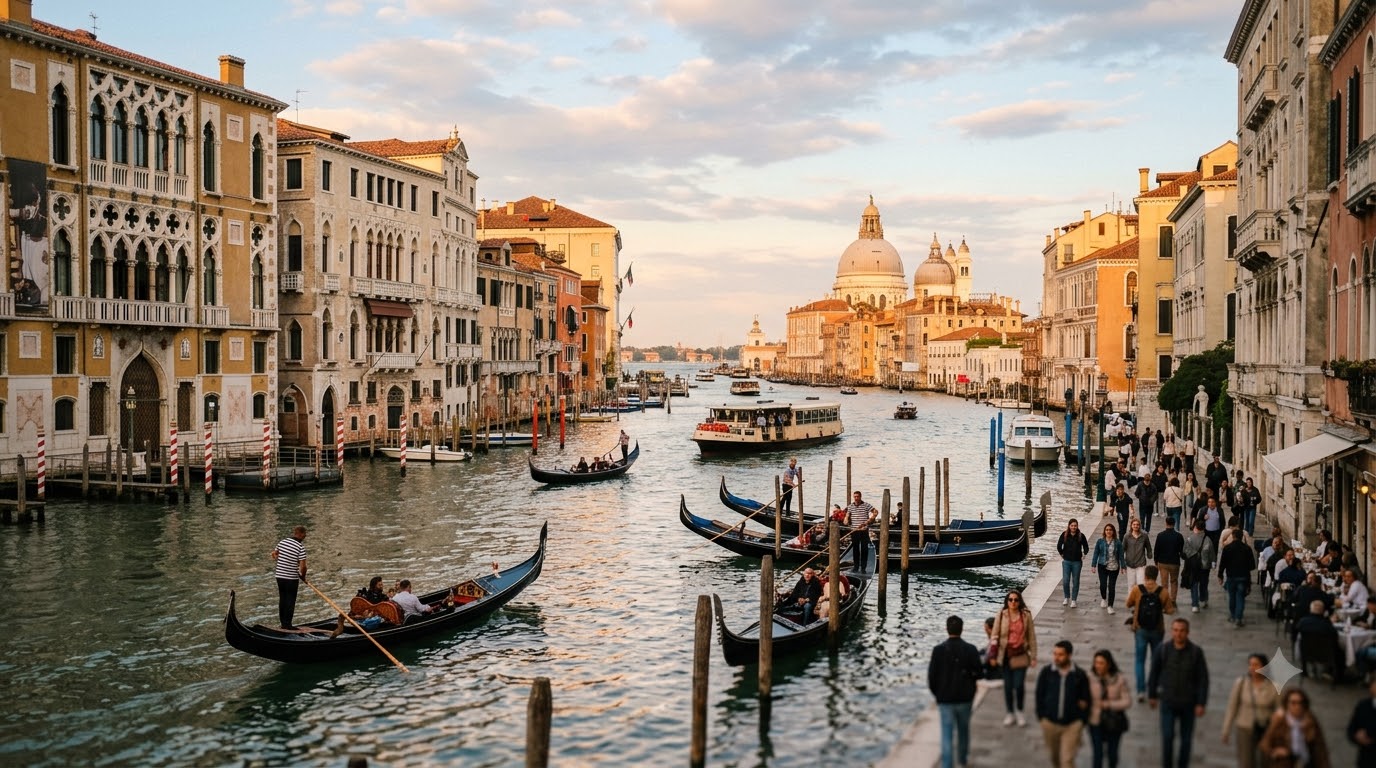
The single best window is the second half of April through the first week of June. Days are long and mild, the canals do not carry the summer smell, and you can still find a table at a bacaro without a reservation. Autumn from mid-September to late October is a close second, with warm water lingering in the lagoon and fewer school-holiday families.
Here is how the seasons stack up for a typical traveler:
- Spring (Apr-Jun): Best all-around balance. Highs 17-26°C, gardens in bloom, moderate crowds until June.
- Autumn (mid-Sep-Oct): Warm, atmospheric, golden light for photos. Watch the first acqua alta risk from late October.
- Summer (Jul-Aug): Warmest and busiest. Highs near 29°C, peak cruise traffic, highest prices, canal odor on hot low-tide days.
- Winter (Nov-Mar): Coldest and quietest outside Carnival and Christmas. Cheapest rooms, highest flood risk, many foggy mornings.
If you want the city closest to how Venetians live in it, come in late April or early October. If you want spectacle over comfort, come for Carnival and accept the crowds and the cold. For a first-timer building an itinerary, our Venice travel guide walks through neighborhoods and logistics that pair with any of these windows.
The 2-Day Venice Itinerary
The plan we use ourselves — sent straight to your inbox.
- Day-by-day route
- Where to stay
- Real 2026 costs
Free · No spam · Unsubscribe anytime
Venice weather and crowds by month
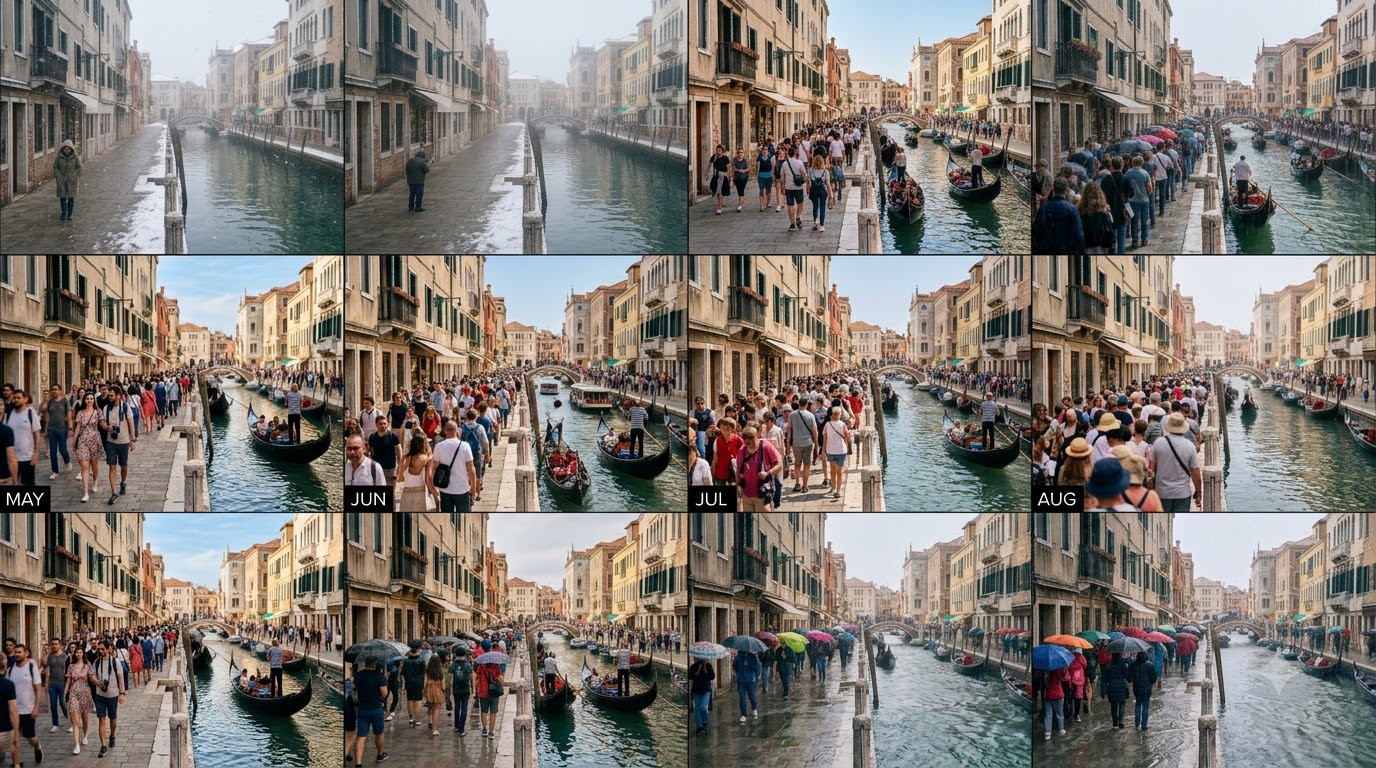
Venice sits at the top of the Adriatic, so it runs colder in winter and more humid in summer than travelers expect from “Italy.” Annual rainfall totals roughly 750 mm, spread fairly evenly, with October the wettest single month. The table below combines the long-term climate averages with the crowd and event notes that actually shape a visit.
| Month | Avg High / Low (°C) | Rain | Crowds | What to know for 2026 |
|---|---|---|---|---|
| January | 7.6 / 0.4 | Low | Low (spikes at Carnival) | Coldest month; Carnival opens 31 Jan |
| February | 9.3 / 1.0 | Low (driest, ~50 mm) | High | Carnival runs through 17 Feb; book early |
| March | 13.4 / 4.6 | Low | Moderate | Mild, quiet, good value shoulder start |
| April | 17.6 / 8.8 | Moderate | Rising | Access-fee days begin 3 Apr; blooming gardens |
| May | 22.3 / 13.6 | Moderate | High | Prime weather; peak spring demand |
| June | 26.3 / 17.5 | Moderate | High | Warm, busy, long daylight |
| July | 28.9 / 19.3 | Moderate | Very high | Hottest; access fee ends 26 Jul |
| August | 28.8 / 19.0 | Moderate | Very high | Hot, humid, canal odor on low tides |
| September | 24.1 / 14.9 | Higher | High early, easing late | Warm lagoon (~25°C), film festival early Sep |
| October | 18.7 / 10.6 | Highest (~75 mm) | Moderate | Golden light; first acqua alta risk late month |
| November | 13.1 / 5.9 | High | Low | Peak acqua alta; foggy, atmospheric |
| December | 8.4 / 1.2 | Low (~50 mm) | Moderate (Christmas) | Cold, festive; flood risk remains |
Temperature and rainfall figures are long-term monthly averages (Climates to Travel, Venice station). Actual 2026 conditions will vary.
Two patterns matter most. First, the driest months (February, March, December) are also the coldest, so “less rain” does not mean “warm.” Second, September and October carry the year’s heaviest rain, which overlaps the start of flood season. We have been caught in a sunny 24°C afternoon in late September and a knee-high acqua alta three weeks later in the same city.
Find your Venice hotel on the map
Live prices from Booking & Airbnb — tap a pin to compare stays around San Marco and Cannaregio and beyond.
When is Venice Carnival, and is it worth timing a trip around?
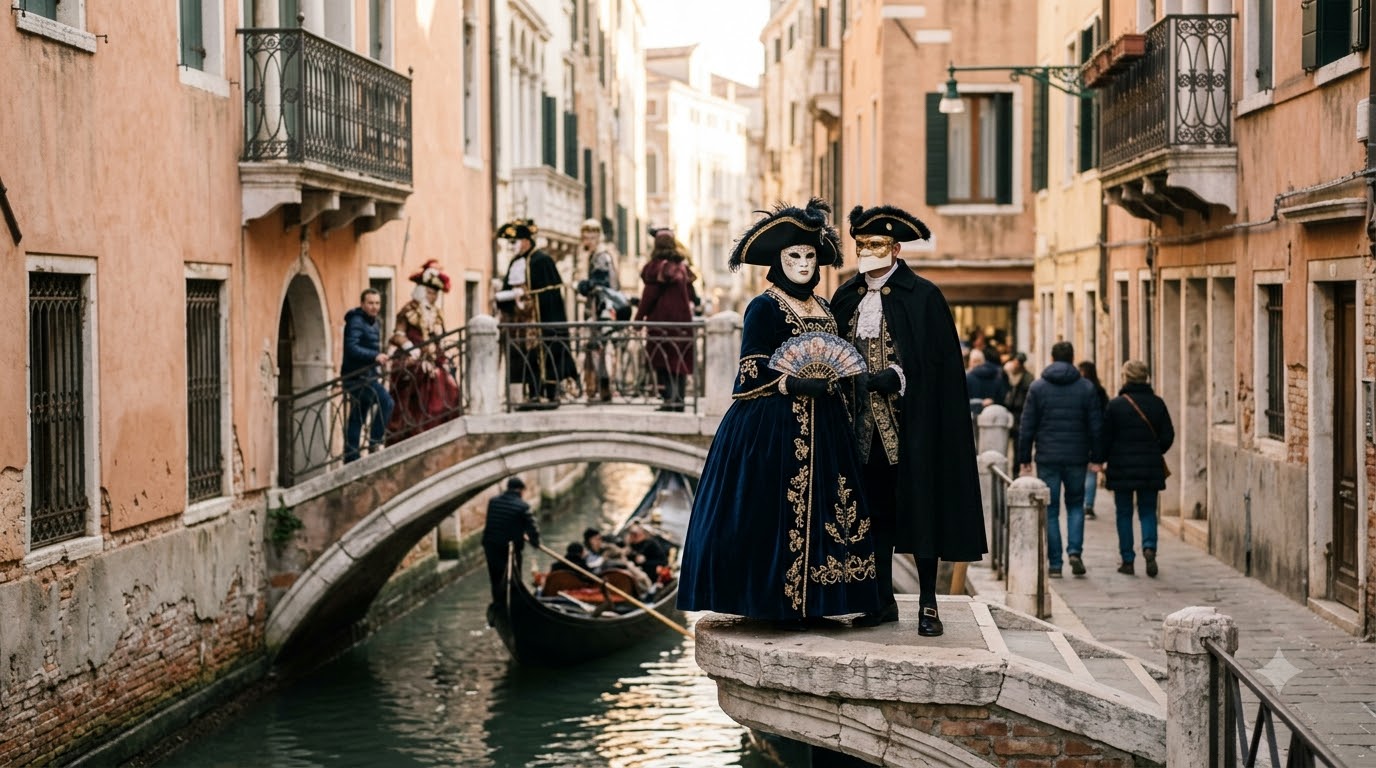
Venice Carnival 2026 runs from 31 January to 17 February, with the densest program of masked balls, water parades, and the Volo dell’Angelo concentrated in the second week (roughly 7-17 February). The 2026 edition is themed around the Milano Cortina Winter Olympics, tying the celebration to the Olympic year.
Carnival is spectacular, but it is a deliberate trade-off:
- Prices jump: Hotel rates in Carnival week climb toward summer peaks, despite January-February being otherwise the cheapest season.
- Crowds concentrate: San Marco and the Rialto get packed for the headline events, though back-sestieri like Cannaregio and Castello stay calmer.
- Weather is cold: Expect highs of 7-9°C and a real chance of fog or drizzle; dress for a northern-Italian winter, not a Mediterranean one.
- Costumes are a commitment: Full period costume rental runs into the hundreds of euros; a simple mask from a workshop off Calle Larga costs far less.
Come for Carnival if the pageantry is the point. Skip it if you want quiet canals and low prices. For non-Carnival winter travelers, the same cold weeks are among the best value in where to stay in Venice, with off-season rooms in central sestieri that would cost double in May.
The 2-Day Venice Itinerary
Hour-by-hour plan, where to stay and what it really costs — free PDF.
Free · No spam · Unsubscribe anytime
What is acqua alta, and which months flood?
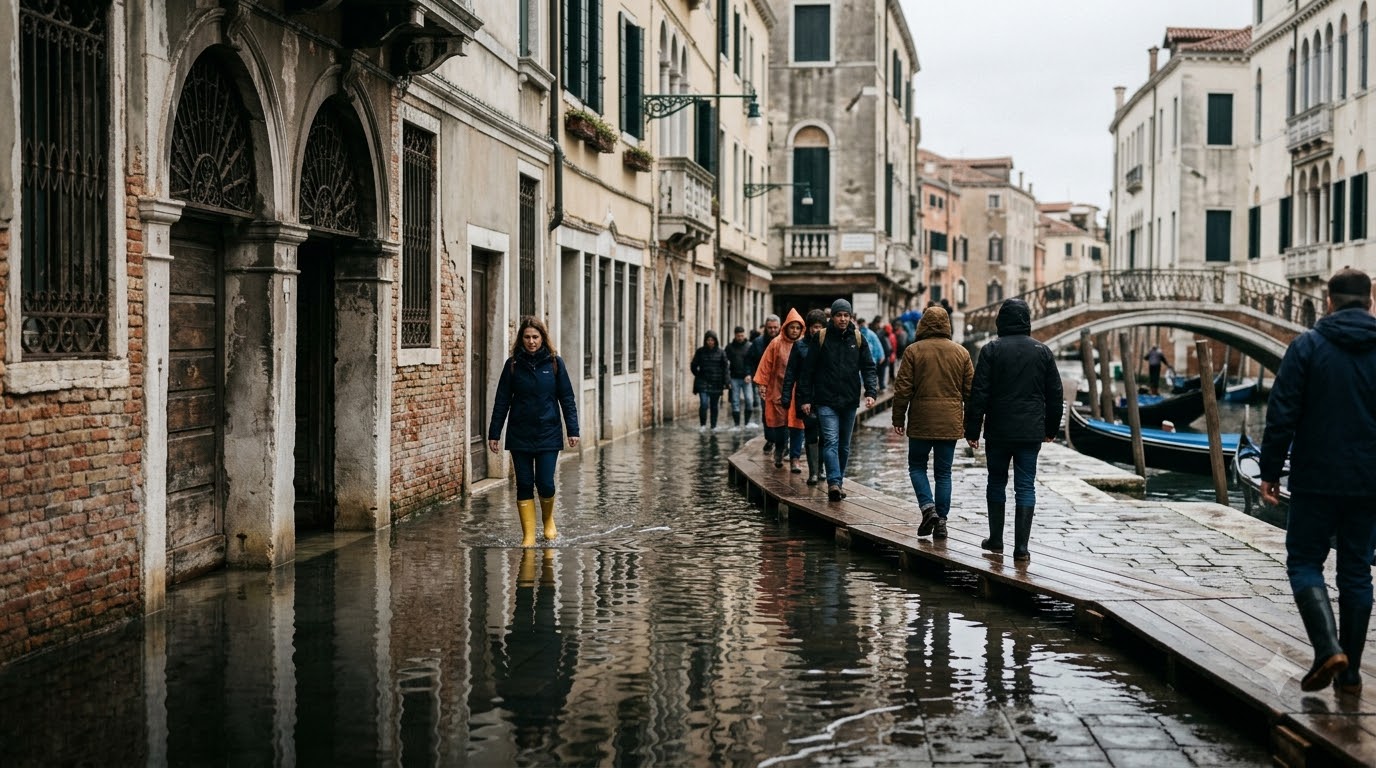
Acqua alta is the seasonal high water that pushes up through Venice’s drains and across low-lying squares when astronomical tides, low pressure, and the southern scirocco wind line up. It is not a disaster in most cases; it is a recurring inconvenience that peaks in a predictable window. High-water events cluster from late October to January, with November and December the worst months.
Since 2020, Venice has operated the MOSE system: 78 mobile floodgates at the three lagoon inlets (Lido, Malamocco, Chioggia) that rise from the seabed when a tide above roughly 110 cm is forecast, sealing the lagoon from the Adriatic. It has been raised dozens of times and has blocked several major surges that would once have flooded the city.
If you travel between October and January, plan around it:
- Check the tide forecast each morning; the city publishes hourly predictions and sounds warning tones before a significant event.
- Pack waterproof footwear; rubber boots beat the flimsy plastic overshoes sold to tourists at marked-up prices.
- Follow the raised walkways (passerelle) that appear across San Marco and other low points during high water.
- Expect events to be brief; most acqua alta peaks last only a few hours around high tide, then drain away.
On a mid-November trip we watched San Marco go ankle-deep by 9 a.m. and walk-dry again before lunch. Flooding rarely cancels a day, but it can reroute one.
When is the cheapest time to visit Venice?
The cheapest time to visit Venice is the winter low season outside Carnival and Christmas: think mid-January (after Carnival’s start it climbs), late February into early March, and again mid-November after the Biennale crowds thin. Room rates in these weeks can run roughly half of the May and September peaks.
Rough seasonal price posture for a mid-range central hotel:
- Lowest: Non-Carnival winter weeks (late Nov, early Dec before Christmas, Jan-early Feb, and late Feb-March).
- Moderate: March shoulder, late October, early November.
- Highest: May, June, September, plus Carnival week and the days around New Year.
Budget travelers who can tolerate cold and flood risk get the most city for the least money in winter. If your dates are fixed in high season, our 2-day Venice itinerary is built to cover the essentials before the midday cruise crowds land.
How does the 2026 Venice access fee affect timing?
Venice runs a day-tripper “access fee” (contributo di accesso) on selected peak days, and for 2026 the city scheduled 60 chargeable dates between 3 April and 26 July. It applies to day visitors aged 14 and over who enter the historic center between 08:30 and 16:00 on those days without an overnight booking in the municipality.
Key mechanics for planning:
- Cost: 5 EUR if you register up to the fourth-last day before your visit, or 10 EUR closer in.
- Window: The fee only applies from 08:30 to 16:00; arrive after 16:00 and it does not apply.
- Exemptions: Overnight guests (you get a code from your hotel), children under 14, residents, students, and workers are exempt but must be able to prove it.
- Where to book: Registration is handled through the city’s official portal; you carry a QR code for spot checks near the main entry points.
- After 26 July: The 2026 scheme ends 26 July, so late-summer and autumn day trips fall outside it.
The practical takeaway: if you are day-tripping in from Verona, Padua, or a cruise ship on a spring or early-summer date, check the calendar and register in advance, or simply arrive after 4 p.m. If you sleep in Venice even one night, the fee never touches you, another quiet argument for staying over rather than rushing through. Once you have your dates set, our roundup of the best things to do in Venice helps you build the hours around them.
Best time for photography, food, and fewer crowds
The best conditions overlap more than you would think. For photography, the low autumn sun from late September through October and the winter fog of November and December give Venice its most cinematic light; early mornings before 8 a.m. clear the bridges of people in any season. For food, autumn brings the lagoon’s cicchetti and seafood season into its own, and bacari are less mobbed than in high summer.
Quick picks by priority:
- Fewest crowds: Weekday mornings in mid-November, late January (pre-Carnival), and early March.
- Best light: October afternoons and misty mornings in November-December.
- Best food season: September-November for seafood, artichokes, and radicchio from the lagoon islands.
- Warmest water: July-August, when the Adriatic reaches 25-26°C for Lido beach days.
- Longest daylight: June, with light past 9 p.m. for late evening strolls.
We have found the sweet spot for a first trip is the first ten days of October: warm enough for outdoor dinners, quiet enough to photograph the Rialto empty at dawn, and early enough to dodge the heaviest flood risk.
Frequently Asked Questions
What is the actual best month to visit Venice?
May and October are the two strongest single months. May delivers warm 22°C highs and blooming gardens before the summer heat; October offers golden light, warm lagoon water, and thinner crowds, with only a small flood risk late in the month. Both beat July-August on comfort and crowds.
Is it worth visiting Venice in winter?
Yes, if you accept cold and possible high water. Winter (excluding Carnival and Christmas) is the cheapest, quietest time, with room rates often half of spring peaks and fog that makes the canals feel private. Pack warm layers and waterproof shoes, and check the acqua alta forecast each morning.
When does Venice flood, and will it ruin my trip?
Acqua alta peaks in November and December, with risk running from late October to January. Since 2020 the MOSE barrier system has blocked major tides forecast above 110 cm, and most high-water events last only a few hours around peak tide. It rarely ruins a trip, but it can reroute a morning, so plan flexible indoor options.
Do I have to pay the Venice access fee in 2026?
Only if you are a day-tripper aged 14 or over entering the historic center between 08:30 and 16:00 on one of the 60 scheduled dates from 3 April to 26 July 2026. The fee is 5 EUR in advance or 10 EUR last minute. If you stay overnight in Venice, or arrive after 16:00, you are exempt.
How many days do you need in Venice?
Two full days cover the main sights: San Marco, the Rialto, a Grand Canal vaporetto ride, and one lagoon island like Murano or Burano. A third day lets you slow down into Cannaregio and Castello, where the crowds thin and daily Venetian life is easiest to see.
The right time to visit Venice depends on what you are trading off. Chase mild weather and manageable crowds and you land in spring or fall. Chase spectacle and you come for Carnival in the cold. Chase the lowest prices and you take winter with its fog and flood risk. Whichever you choose, check the 2026 access-fee calendar and the tide forecast before you go, and consider staying at least one night inside the city, where Venice quietly becomes a different place after the last day boat pulls away.