The Best Day Trips from Venice by Train and Boat (2026)
Disclosure: Some links in this guide are affiliate links. If you book or buy through them, we may earn a small commission at no extra cost to you — it helps keep our guides free.
Where to base yourself in Venice
The 5 best day trips from Venice are the lagoon islands of Murano and Burano, Padua, Verona, Treviso and Vicenza, and every one is 14 to 90 minutes away by train or vaporetto for under USD 35 each way. Base yourself in Venice, take the train out in the morning and be back for dinner.
Prices below are converted at USD 1 = EUR 0.86. Skip anything that needs more than two hours each way: you lose the day to the rails.
| Day trip | Getting there from Venice | One-way fare | Best for |
|---|---|---|---|
| Murano, Burano, Torcello | Vaporetto Line 12 from Fondamente Nove, about 40 min to Burano | USD 11 (EUR 9.50), or a USD 29 (EUR 25) 24-hour pass | First-timers, photographers |
| Padua | Train, 14–15 min fast, 26–38 min regional | USD 6–12 (EUR 5–10) | Art lovers, rainy days |
| Verona | Train, 1 h 10 min Frecciarossa, about 1.5 h regional | From USD 12, usually USD 18–35 | Couples, opera fans |
| Treviso | Regional train, 30–40 min | USD 5–7 (EUR 4–6) | Food lovers, repeat visitors |
| Vicenza | Train, about 45 min | USD 8 (EUR 6.50) regional, USD 24 (EUR 21) high-speed | Architecture buffs |
| Prosecco Hills | Organized tour, about 1 h | From USD 174 (EUR 150) | Wine drinkers |
Murano, Burano and Torcello: the easy lagoon day
If you only do one day trip, make it the northern lagoon. Vaporetto Line 12 leaves Fondamente Nove every 30 minutes and calls at Murano, Mazzorbo, Torcello and Burano. Burano is roughly 40 minutes out. A single ride costs USD 11 (EUR 9.50) for 75 minutes, so the USD 29 (EUR 25) 24-hour pass pays for itself by your third boat.
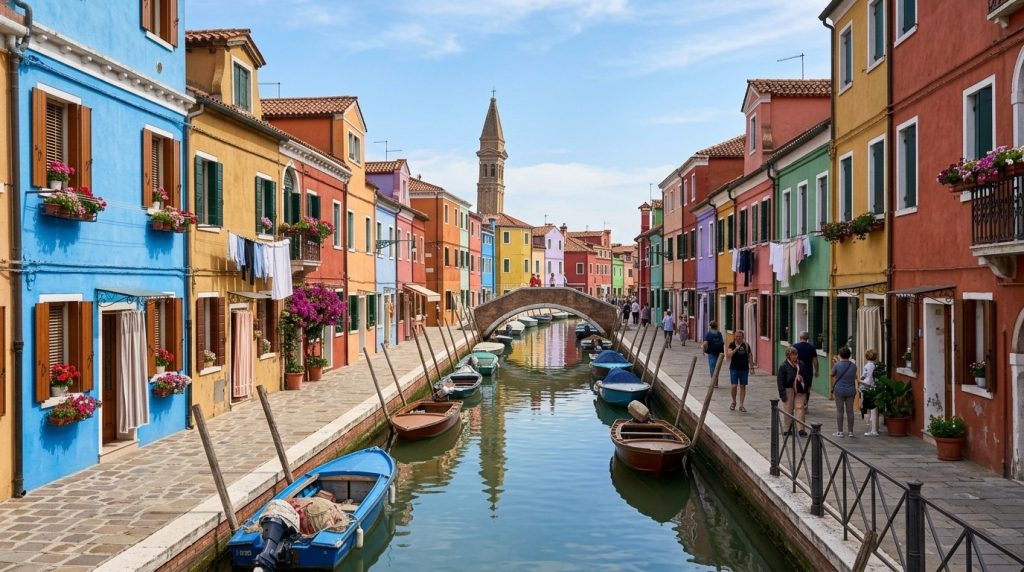
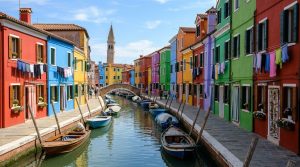
– Murano: glass furnaces and the Glass Museum. Watch a demonstration, but don’t buy the first chandelier a salesman pushes. – Burano: striped fishermen’s houses, the Lace Museum and the leaning tower of San Martino. – Torcello: the first settled island in the lagoon, with a Byzantine cathedral and far fewer visitors.
Go early, before the tour groups. The islands sit outside the access-fee zone. Save your other days for the best things to do in Venice, since the islands eat a full morning.
Padua: Giotto 15 minutes down the line
Padua is the closest real city to Venice, with 82 trains a day and the fastest taking about 14 minutes. Regional trains take 26–38 minutes and cost USD 6–12 (EUR 5–10).
The reason to go is the Scrovegni Chapel, Giotto’s fresco cycle from the early 1300s. Entry is by timed slot only. The official Scrovegni Chapel site says you cannot book for the same day, so reserve at least a day ahead.
It is open Tuesday to Sunday, 9 am to 7:45 pm. Add the Basilica of Saint Anthony, the UNESCO-listed Botanical Garden and the market squares around Palazzo della Ragione. Most of it is indoors, so Padua is the best rainy-day pick.
Verona: worth the early train
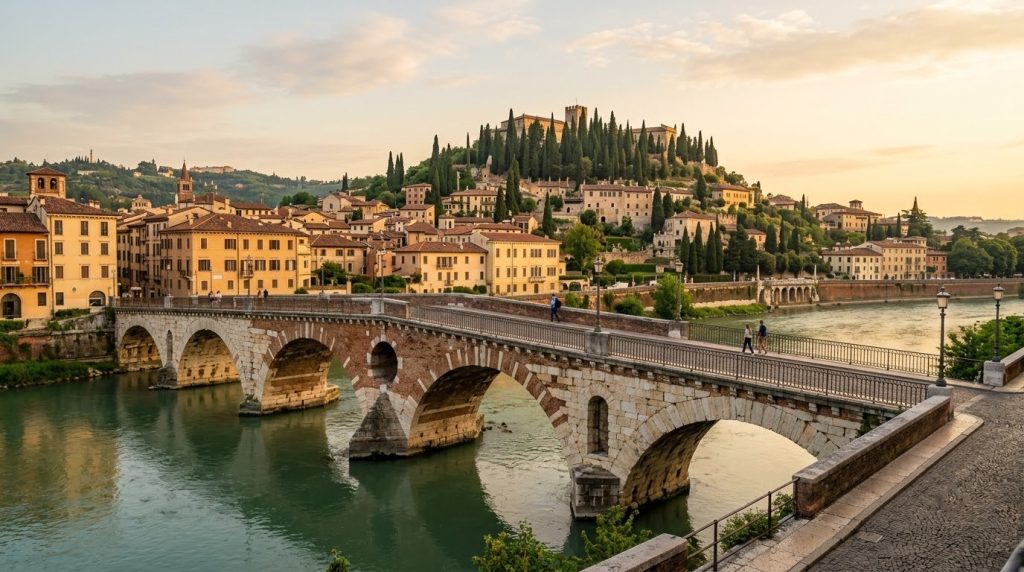
Verona is the most rewarding day trip from Venice and the longest of the easy ones: about 1 hour 10 minutes on the Frecciarossa, or 1 hour 27 minutes on the cheaper Regionale Veloce. Fares start around USD 12, and most run USD 18–35.
See the Roman Arena on Piazza Bra, Piazza delle Erbe, the Lamberti Tower and Castelvecchio. Juliet’s balcony is a crowded courtyard you can skip. From June 12 to September 12, 2026, the Arena di Verona opera festival runs at night. If you want to see it, stay over in Verona rather than racing back for the last train.
Treviso and Vicenza: quieter half-days
Treviso is 30–40 minutes away on a regional train that costs USD 5–7 (EUR 4–6). You get canals without the crowds, Piazza dei Signori and the island fish market, plus a claim to inventing tiramisu. It suits repeat visitors who have already done Murano.
Vicenza is Palladio’s city: the Basilica Palladiana, the Teatro Olimpico and Villa La Rotonda just outside town. It’s about 45 minutes each way, and the Regionale Veloce costs USD 8 (EUR 6.50) against USD 24 (EUR 21) on the Frecciarossa for nearly the same time. Buy the regional ticket.
Prosecco Hills and the Dolomites: book a tour
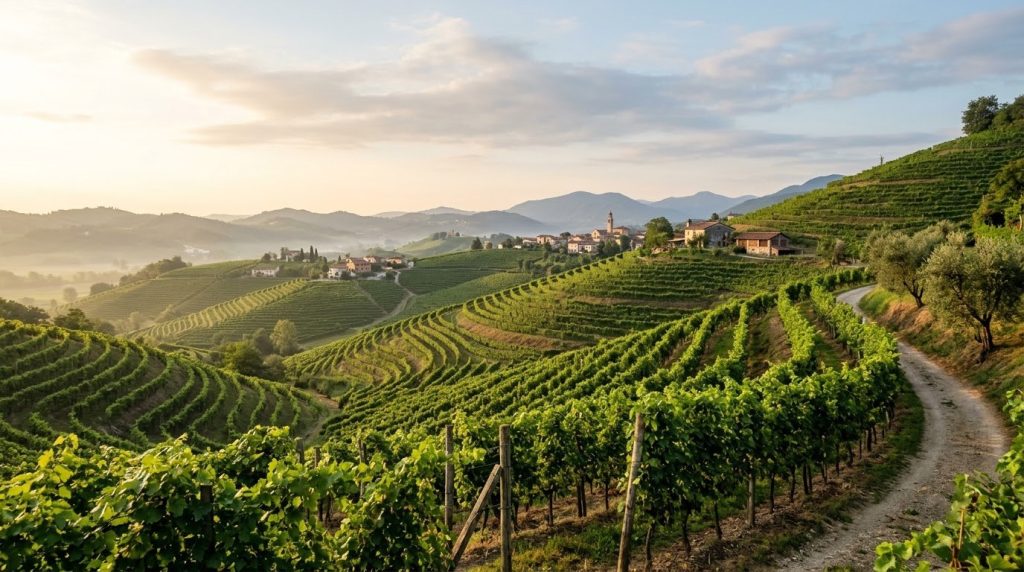
Neither works well by public transport. The UNESCO-listed Prosecco Hills between Conegliano and Valdobbiadene are about an hour away. Tours with two tastings and lunch start around USD 174 (EUR 150) per person, and you won’t be driving after the wine.
The Dolomites are 2-plus hours each way. Go only on an organized tour between June and September, from about USD 192 (EUR 165), and expect more van time than trail time.
Bologna: Italy’s food capital, and still underrated
Bologna is the longest day trip on this list, but it rewards travelers who care more about eating well than ticking off landmarks. The fastest Frecciarossa and Frecciabianca trains cover the distance in about 1 hour 15 minutes; a slower regional connection runs closer to 1 hour 45 minutes, usually with one change.
Fares range from about USD 21 to USD 47 (EUR 18-40) depending on how far ahead you book and which class you choose, with the cheapest seats going to travelers who buy a Frecce ticket weeks in advance rather than on the day.
Regional tickets are the fallback if the fast trains are sold out, at the cost of extra time.
Once there, the historic center is compact enough to cover on foot in a single visit. Piazza Maggiore and the Basilica of San Petronio sit at the center, with the leaning Due Torri towers a short walk away.
The Quadrilatero market streets behind Piazza Maggiore are where Bologna earns its food-capital reputation: stalls and small shops around the covered Mercato di Mezzo sell mortadella, tortellini and fresh tagliatelle, and several run short tasting counters if you don’t have time for a sit-down meal.
A plate of tagliatelle al ragu (the Bolognese sauce, rarely served with spaghetti locally) is worth building lunch around, and a slice of lasagna alla bolognese makes an easy second stop.
Trains back to Venice run roughly every 30 minutes until just before 10 pm, so you have more flexibility than Verona’s day-trip window, but it is still a long day: plan on 2.5 to 3.5 hours of travel round trip.
Bologna also sits on the main line toward Florence and Rome, so it works well as a stopover if you are connecting onward rather than doubling back to Venice. Save it for a day when you have already covered the closer lagoon and Padua trips, or when food is the main reason you are in Italy at all.
Lake Garda and Sirmione: a lakeside escape, if you’re visiting in summer
The “day trips to skip” list above rules out Lake Garda outside summer, when Sirmione is flat and the connection relies on a bus transfer. Between June and September, though, it becomes one of the few day trips from Venice that gets you swimming rather than just sightseeing.
Getting there from Venice means a Trenitalia train to Desenzano del Garda-Sirmione station, typically 1 hour 30 minutes to 1 hour 45 minutes depending on the service, followed by a local bus for the final stretch into central Sirmione (about 20-30 minutes).
Door to door, budget roughly 2 hours 40 minutes to 3 hours each way, with combined train-and-bus fares around USD 28 to USD 53 (EUR 24-46). A taxi from the station covers the same stretch faster but costs more.
Sirmione’s old town sits on a narrow peninsula, guarded by the moated Scaliger Castle at its entrance. Beyond the castle, narrow lanes open onto lake views on both sides, and several public access points let you swim in Lake Garda itself in the warmer months.
The town also has a thermal spa complex if you want to turn the day into something closer to a wellness break, and lakefront gelato stands and restaurants line the waterfront for an easy lunch between sights.
From Sirmione, local boats also run up the lake toward Desenzano and Garda town if you want to see more of the shoreline before heading back.
Because the round trip eats close to six hours of travel, this one works best as a single-destination day rather than paired with anything else, and it is not a good choice on a short Venice stay.
The Dolomites and Cortina: worth it, with real caveats
The Dolomites paragraph above covers the tour option, but it is worth being specific about why this is the epic day trip with caveats rather than an easy add-on.
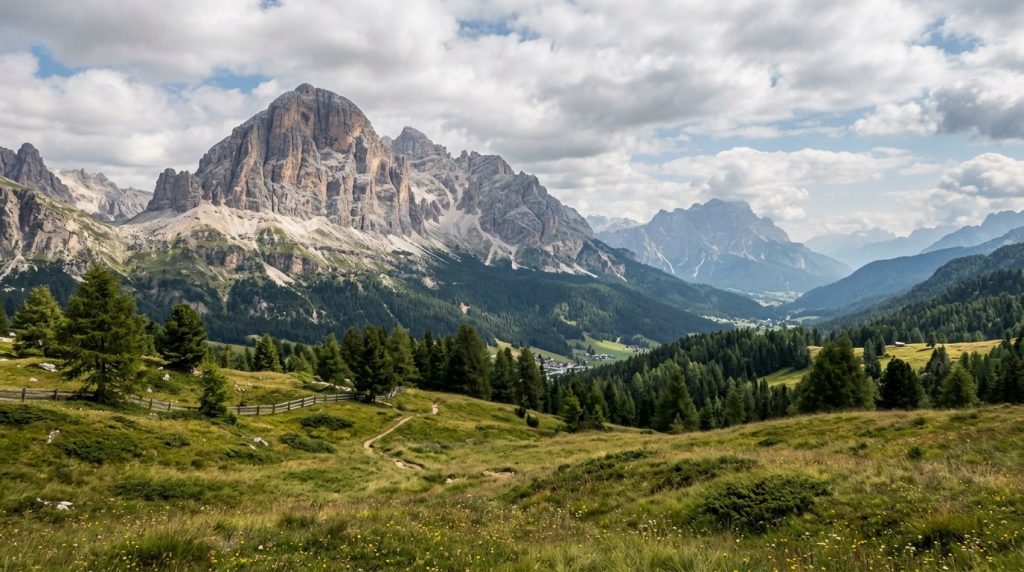
Weather at altitude changes fast: a clear morning in Cortina d’Ampezzo can turn to cloud and rain by early afternoon, and the van ride itself eats most of the day regardless of conditions. Treat any Dolomites day trip as weather-dependent and keep a backup plan, such as Padua or the lagoon, ready in case the forecast turns.
A public coach (Cortina Express) does run directly from Venice’s Mestre station and Marco Polo Airport to Cortina d’Ampezzo, in around 2 hours 30 minutes, which is why some travelers ask about skipping the tour altogether.
In practice it is not really a shortcut for a single day: the coach drops you in Cortina town itself, not at trailheads like Tre Cime di Lavaredo, so you would still need a local shuttle bus once you arrive, and in peak summer those shuttles can be the only way in since private cars are restricted on some approach roads.
That extra layer of logistics is the main reason an organized tour, with transport and timing already handled, stays the simpler choice for a single day.
Given the travel time either way, the Dolomites work better as an overnight than a single-day return: staying one night in Cortina turns a rushed there-and-back into an actual hiking day, while keeping the rest of your trip based in Venice.
If a day trip is your only option, go on a clear-weather day between June and September and accept you will see less trail and more scenery from the road than a dedicated Dolomites trip would give you.
Day trips to skip from Venice
Some popular suggestions cost more day than they give back:
– Florence: about 2 hours 15 minutes each way on high-speed trains. It deserves at least two nights, not a rushed loop. – Ravenna: the mosaics are superb, but the trip takes 2.5–3 hours each way with a change, at USD 17–29 (EUR 15–25). – Lake Garda outside summer: Sirmione needs a train to Desenzano plus a bus, and it’s flat in winter.
Still deciding between more Venice nights or more day trips? Read our honest take on whether Venice is worth visiting first.
How to plan a day trip from Venice
– Regional tickets: fixed fares, buy on the day, valid 4 hours once validated. Stamp paper tickets at the platform machine or risk a fine. – High-speed tickets: assigned seats, no validation.
Book early on Trenitalia for lower fares. – The access fee: on 60 dates between April 3 and July 26, 2026, day visitors pay USD 6 (EUR 5) booked 4 days ahead or USD 12 (EUR 10) later.
Hotel guests are exempt but must register for a free QR code. – Season: spring and fall suit lagoon and Verona days best. Check the best time to visit Venice before you lock in dates.
On a short stay, keep it to one day trip. Our 2-day Venice itinerary shows how to fit Burano into a weekend without dropping St. Mark’s or the Rialto.
Booking trains and tours from Venice
Most of the trains above run on Trenitalia, and buying through its official app or website is normally cheaper than a reseller for Frecce (high-speed) fares, since discounted tickets are released weeks ahead and sell out first.
Regional tickets, the ones to Padua, Treviso and Vicenza, are fixed-price and only go on sale a short time before departure, so there is no early-booking saving to chase: book them the day of or the day before.
A private operator, Italo, also runs high-speed trains on some of these corridors and is worth comparing on price and timing before defaulting to Trenitalia.
If you would rather book in English through a single interface, aggregators such as Trainline or Omio sell the same Trenitalia and Italo seats with a small service fee added. They are useful for comparing operators at once, less useful if you are only chasing the lowest fare.
Whichever you use, keep a downloaded or screenshotted copy of the ticket, since station wifi is not guaranteed and platform numbers at Mestre and Santa Lucia can change close to departure.
For the Prosecco Hills and Dolomites trips, which run as organized tours rather than public transport, book directly with the tour operator or through a marketplace such as GetYourGuide or Viator, and check the cancellation window before paying in full, since weather can cancel a Dolomites day with little notice. Confirm the pickup point: most tours leave from Piazzale Roma, not the train station.
If you are catching an early train, Venice’s Santa Lucia station has a staffed luggage storage counter: about USD 7 (EUR 6) for the first five hours, then roughly USD 1 (EUR 1) per additional hour. It is worth using if you want to explore Venice itself before or after a day trip without dragging a suitcase along.
Prefer a guided option? Compare guided day trips from Venice on GetYourGuide, with reviews and free cancellation on most tours.
Where to stay
Sleep in Venice and you get the city at night, after the day-trippers leave.
– Cannaregio: near both Santa Lucia station and the Line 12 boats at Fondamente Nove. It suits budget travelers and couples. – San Polo: central and close to the Rialto. It suits first-timers who want to walk everywhere. – Mestre: cheaper, and closer to the mainland rail lines. It suits families on a budget who don’t mind a short train ride into Venice.
Compare neighborhoods in our guide to where to stay in Venice.
Find your Venice hotel on the map
Live prices from Booking, Airbnb and more — move the map or change dates to compare stays across Venice.
Frequently Asked Questions
What is the easiest day trip from Venice?
Padua is the easiest day trip from Venice. Trains leave Santa Lucia all day, the fastest takes about 14 minutes, and a regional ticket costs USD 6–12 (EUR 5–10). Just book the Scrovegni Chapel at least a day ahead, because same-day reservations are not possible.
Can you do Verona as a day trip from Venice?
Yes. High-speed trains reach Verona in about 1 hour 10 minutes and regional trains in roughly 1.5 hours, so an early start gives you a full day for the Arena, Piazza delle Erbe and Castelvecchio. For a night at the summer opera in the Arena, stay over instead.
Do I need a vaporetto pass for Murano and Burano?
It usually pays off. A single vaporetto ride costs USD 11 (EUR 9.50) and lasts 75 minutes, while a 24-hour pass is USD 29 (EUR 25). Venice to Murano, then Burano, then Torcello and back is at least 3 rides, so the pass costs less and lets you hop freely.
Do I pay the Venice access fee if I’m staying overnight?
No. Hotel guests in Venice are exempt from the 2026 access fee, but you must register online for a free QR code. Day-trippers pay USD 6 (EUR 5) when booked 4 days ahead or USD 12 (EUR 10) closer to the date. Visitors going straight to Murano or Burano are not charged.