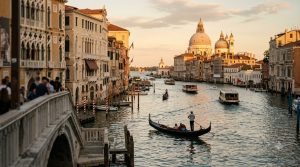
How Many Days in Venice? (2026)
Disclosure: Some links in this guide are affiliate links. If you book or buy through them, we may earn a small commission at no extra cost to you — it helps keep our guides free.
- 2 days for the essential sights, or 3 days for Venice plus the lagoon islands.
- 2 days suits a first Italy trip built around several cities.
- 3 to 4 days suits travelers who want Murano, Burano, and a slower pace.
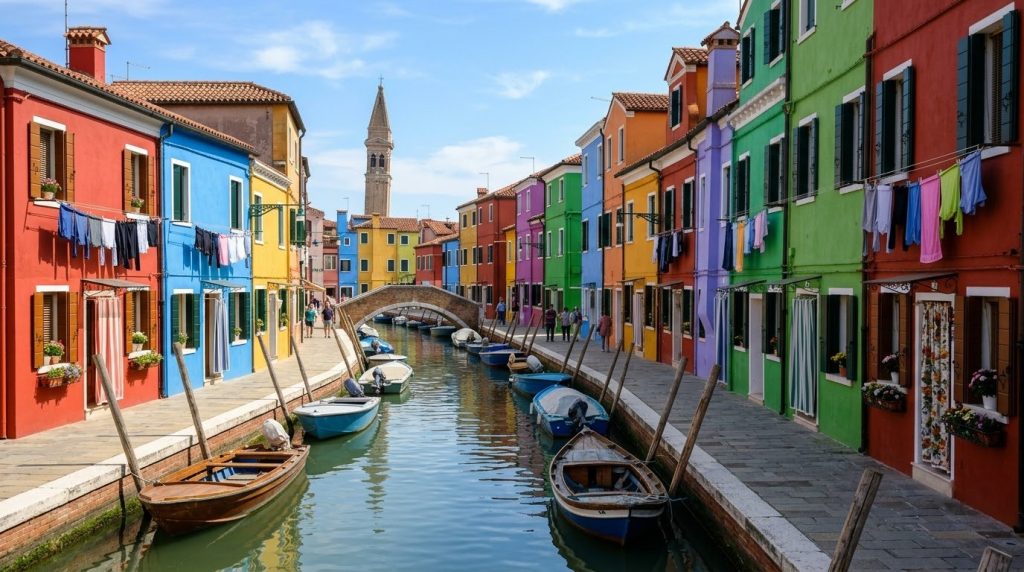
The answer to how many days in Venice is 2 days for the essential sights, or 3 days for Venice plus the lagoon islands. Two days suits a first Italy trip built around several cities, while three to four days suits travelers who want Murano, Burano, and a slower pace with no single morning feeling packed.
| Trip length | What you fit in | Who it suits | Approx cost/person (USD) |
|---|---|---|---|
| 1 day | Piazza San Marco, Doge’s Palace, Rialto Bridge | Day-trippers from Milan or Florence, cruise passengers | USD 92 (EUR 79) |
| 2 days | Above, plus Accademia or Peggy Guggenheim, Dorsoduro, a cicchetti crawl | First-timers combining Venice with other Italian cities | USD 465 (EUR 400) |
| 3 days | Above, plus Murano and Burano | Travelers who want the islands without rushing | USD 698 (EUR 600) |
| 4+ days | Above, plus Torcello, Lido, or a Padua side trip | Slow travelers, repeat visitors, off-peak explorers | USD 930 (EUR 800) |
USD 1 equals roughly EUR 0.86 as of September 2026, so the figures above convert directly.
Venice in 1 day
One day is enough for the postcard version of Venice, not for the lagoon islands. A single day realistically covers Piazza San Marco, St Mark’s Basilica, Doge’s Palace, and a walk over the Rialto Bridge, with the entrance fee for the Doge’s Palace running USD 15 (EUR 13) and the Basilica’s museum section adding USD 6-8 (EUR 5-7).
This length works for cruise passengers on a shore excursion, for anyone slotting Venice into a longer Milan-Florence-Rome trip, and for budget travelers who want to see the highlights and move on. The tradeoff is real: a one-day visit skips Dorsoduro, the Accademia, and every lagoon island, and it leaves no buffer for a closed attraction or a long lunch.
For the fullest single-day route, the detailed 2-day Venice itinerary breaks the highlights into a workable order that also compresses to one day if needed.
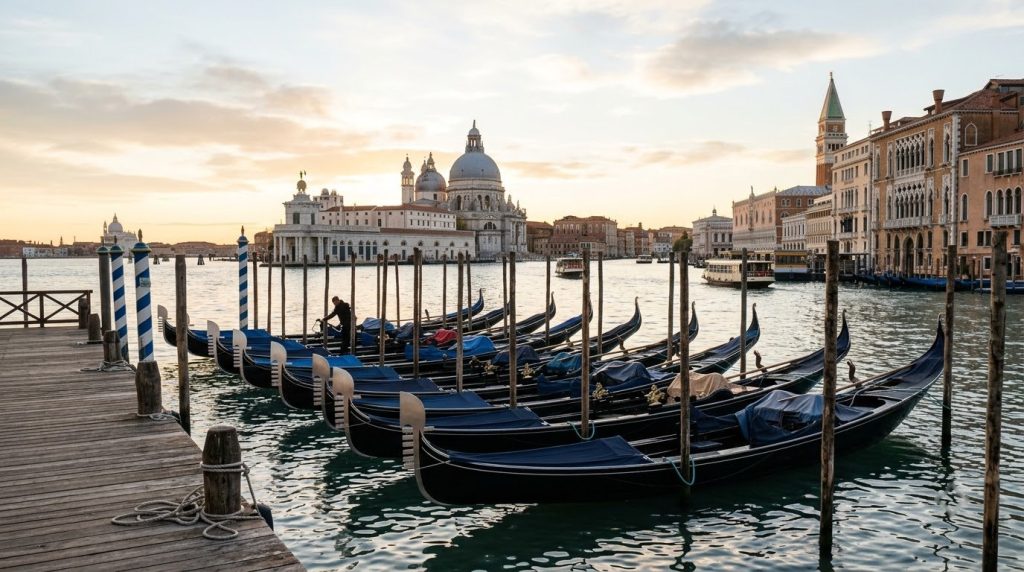
Venice in 2 days – the length most visitors should pick
Two days is the sweet spot for most first-time visitors to Venice. It adds a full second day for Dorsoduro, the Gallerie dell’Accademia at USD 14 (EUR 12) or the Peggy Guggenheim Collection at USD 19 (EUR 16), plus an evening cicchetti crawl through Venetian tapas bars, which typically runs USD 12-17 (EUR 10-15) for a full round.
A vaporetto day pass costs USD 29 (EUR 25) and covers unlimited rides between San Marco, the Rialto, and Dorsoduro. This length suits travelers building a broader Italy itinerary who still want an unhurried pace rather than a checklist sprint. What two days does not fit well is Murano and Burano, since the round trip alone eats several hours. Anyone set on the islands should read on before locking in a two-night stay.
Venice in 3 days
Three days is the first length that comfortably includes the lagoon islands alongside the main sights.
Day one and two cover San Marco, the Rialto, Dorsoduro, and a museum or two from this list of best things to do in Venice; day three is built around a vaporetto run to Murano, known for glassblowing, and Burano, known for lace and its brightly painted houses.
Murano’s glass museum costs USD 12 (EUR 10) and Burano’s lace museum costs USD 6 (EUR 5). Three days also leaves room for a slower dinner pace and one rainy-day buffer, which matters in a city with no cars and few indoor backup plans.
Travelers who want both the city and the islands without checking a watch all afternoon should plan on three days rather than two.
Venice in 4 days or more
Four days or more turns Venice from a highlights trip into a proper stay. The extra time covers Torcello, the quietest and most historic of the lagoon islands, plus the Lido beach area, a cooking class, or a half-day rail trip to Padua, where a train ticket runs about USD 4 (EUR 3.60) and the Scrovegni Chapel costs USD 17 (EUR 15).
This length suits repeat visitors, slow travelers, and anyone visiting during the best time to visit Venice for lower hotel rates and walkable squares instead of shoulder-to-shoulder crowds. It is not the right choice for a first Italy trip with limited vacation days, since four-plus days in one city means cutting Rome, Florence, or the Amalfi Coast from the itinerary.
Why the islands change the answer
The lagoon islands are the main reason a 2-day Venice trip often becomes a 3-day trip. From the Fondamente Nove vaporetto stop, the ride to Murano takes roughly 10-15 minutes, the ride to Burano takes about 45 minutes, and the ride to Torcello takes around 70 minutes.
Visiting all three in one day means several hours on the water alone, before any time spent walking around each island. Murano and Burano together fit into a single long day, but adding Torcello usually pushes the trip into a third day or means skipping one of the other two.
This is the single biggest reason the “how many days in Venice” answer shifts from 2 to 3: the city center is compact enough to rush, but the lagoon is not.
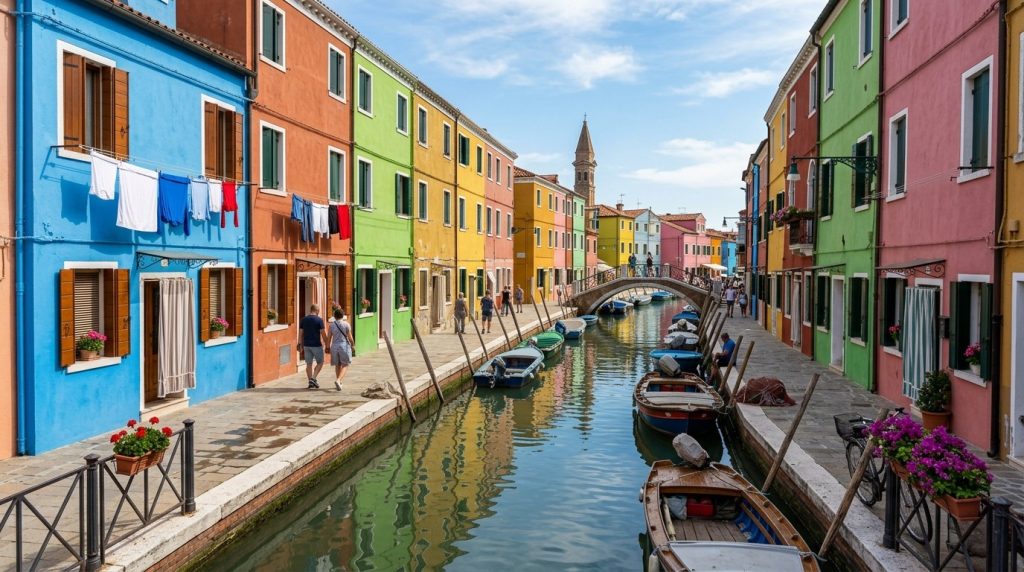
The Day-Visitor Access Fee: Who Pays and Where It Applies
The 2026 access fee affects trip length mainly for people who sleep outside the historic center. It applies to non-resident day visitors over 14 who enter the historic center, meaning the six sestieri and the island of Giudecca, between 8:30 a.m. and 4:00 p.m. on designated days. Evening arrivals are exempt.
The amount is EUR 5 (USD 6) if booked 4 or more days before arrival and EUR 10 (USD 12) if booked within 3 days. There were 60 chargeable days between April 3 and July 26, 2026, including Friday-through-Sunday stretches from April 10, according to Europe for Visitors. The amounts could change in later years, so confirm on the official Venice access fee site.
Exemptions and traps
- Lido, Murano, Burano, and other outer islands are exempt.
- Staying inside the municipality, including Mestre, Marghera, and the Lido, does not avoid the fee on peak days, but it does require registration and a free QR code.
- Passing through the railway station, Piazzale Roma, or cruise-terminal areas does not require payment.
- Unregistered visitors can pay at Piazzale Roma, Venezia Santa Lucia station, or the tourist-boat piers on Riva degli Schiavoni.
Keep the QR code ready, since inspectors can ask for it and fines are steep. Travelers on a cheaper mainland hotel should factor the registration step into a 2-day plan.
When fewer days is the right answer
A single day, or even a half day, is the right call for a narrow group of travelers, and pretending otherwise wastes money. Venice now charges a day-tripper access fee of USD 6-12 (EUR 5-10) on roughly 60 dates between April and July, from 8:30 a.m. to 4:00 p.m., and only visitors without an overnight booking pay it.
Anyone doing a cruise stopover, a business layover, or a quick add-on to a Milan or Verona trip should treat Venice as a focused half-day of San Marco and the Rialto rather than force an overnight stay the schedule cannot support.
Forcing extra nights into a trip that cannot use them usually means expensive hotel nights spent on repeat ground already covered on day one.
Plan Doge’s Palace Around Its Hours
Opening hours at the Doge’s Palace shape how a short visit fits together. From April 1 to October 31 it opens 9:00 a.m. to 7:00 p.m., with last admission at 6:00 p.m. From November 1 to March 31 it closes at 6:00 p.m., with last admission at 5:00 p.m. Closing procedures begin 30 minutes before closing time.
That makes the palace a morning job for a 1-day or 2-day trip. Entering at opening gives time to finish before the afternoon crowd, then leaves the rest of the day for the Basilica, the Rialto, and Dorsoduro.
Check for changes
The palace site asks visitors to check its announcements for extraordinary changes in opening hours. Its call center operates Monday to Friday 9:00 a.m. to 4:00 p.m. and on weekends from 9:00 a.m. to 1:00 p.m. Italian time. If the plan is a single day, confirm the hours the week before.
On a 3-day trip, put the palace on day one and keep day three, the lagoon day, flexible. Island boats are the item most likely to shift with weather, and a spare half day absorbs that without cutting a museum.
How to decide – quick cheat sheet
– Pick 1 day if you are on a cruise stop, a day trip from Milan or Florence, or have a hard travel-day constraint. – Pick 2 days if this is a first Italy trip and Venice is one stop among several. – Pick 3 days if Murano and Burano are must-sees and you want zero rushed mornings. – Pick 4+ days if you want Torcello too, prefer a slower pace, or are visiting outside peak summer. – Skip the overnight entirely if your total available time in Venice is under 6 hours; pay the day-tripper fee if your visit falls on a fee date and go straight to the highlights.
Where to stay for a short Venice trip
For a 1-2 day trip, staying inside the historic center rather than in nearby Mestre saves the daily vaporetto or bus commute, even though it costs more. Budget hotels on the main islands run roughly USD 70-93 (EUR 60-80) a night, while a mid-range three-star room typically runs USD 116-174 (EUR 100-150).
Neighborhoods like Cannaregio and San Polo sit within walking distance of the Rialto Bridge and cost less than rooms directly on Piazza San Marco. The full where-to-stay-in-Venice guide breaks down each neighborhood by trip length and budget in more detail. The map below shows live rates for hotels and apartments around the city center for whatever dates a trip needs.
Find your Venice hotel on the map
Live prices from Booking, Airbnb and more — move the map or change dates to compare stays around Venice.
Planning the whole trip? Start with our Venice travel guide for the overview, then use this page for the details.