Where to Stay in Venice: Best Areas by Budget (2026)
Disclosure: Some links in this guide are affiliate links. If you book or buy through them, we may earn a small commission at no extra cost to you — it helps keep our guides free.
- San Marco is the most central and the most expensive: mid-range island rooms run €150–€250 a night, with Grand Canal luxury properties at €300–€600+ (hotel listings, 2026).
- Mestre on the mainland is the budget play: rooms from €53–€100, sitting 15 minutes from Venice by a €1.50 regional train or an €8 ACTV bus (Tripadvisor, 2026).
- Overnight guests skip the day-tripper access fee entirely: the €5–€10 charge on ~60 dates (April 3–July 26, 2026) applies only to same-day visitors, not people who book a bed in the municipality.
- The city overnight tax is separate and unavoidable: €3.50 (3-star), €4.50 (4-star), €5 (5-star) per person per night, capped at 5 consecutive nights (Venice tourist tax rules, 2026).
- A single vaporetto ride is €9.50 for 75 minutes, so a central island base that lets you walk everywhere quietly beats paying water-bus fares from the edge.
Pick your area
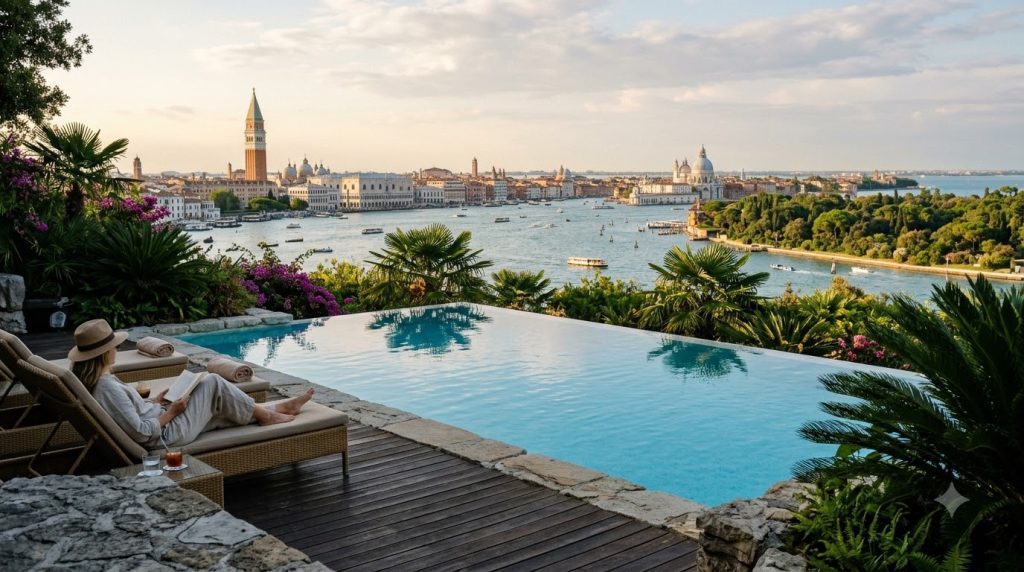
The short answer on where to stay in Venice in 2026: pick San Marco for a first visit and central sights, Dorsoduro for the best balance of atmosphere and quiet, Cannaregio for budget and food near the train station, Castello for calm evenings and lagoon views, and mainland Mestre only if you want to cut the nightly bill by €50–€150 (Tripadvisor and hotel listings, 2026).
Every one of those island districts sits within a 20-minute walk of the Grand Canal, so your choice is really about price, noise, and how far you want to haul luggage over bridges.
Quick answer: Pick San Marco for a first visit, Dorsoduro for the best mix of atmosphere and quiet, Cannaregio for budget and food, Castello for calm evenings, and Mestre only to cut the nightly bill.
This guide breaks down all six options by budget, walks through the day-tripper access fee you skip entirely by booking a hotel, and lays out real 2026 nightly prices, the per-night city tax by hotel class, and the transport costs from Santa Lucia station.
Comparing Cannaregio and Dorsoduro, the difference in evenings is sharp. In Cannaregio, cicchetti along Fondamenta della Misericordia cost a fraction of San Marco prices; in Dorsoduro, the Accademia bridge is quiet in the morning before tour groups arrive. The fewer bridges between Santa Lucia station and your door, the happier your arrival.
Find your Venice hotel on the map
Live prices from Booking & Airbnb — tap a pin to compare stays around San Marco and Cannaregio and beyond.
Which Venice neighborhood should you stay in?
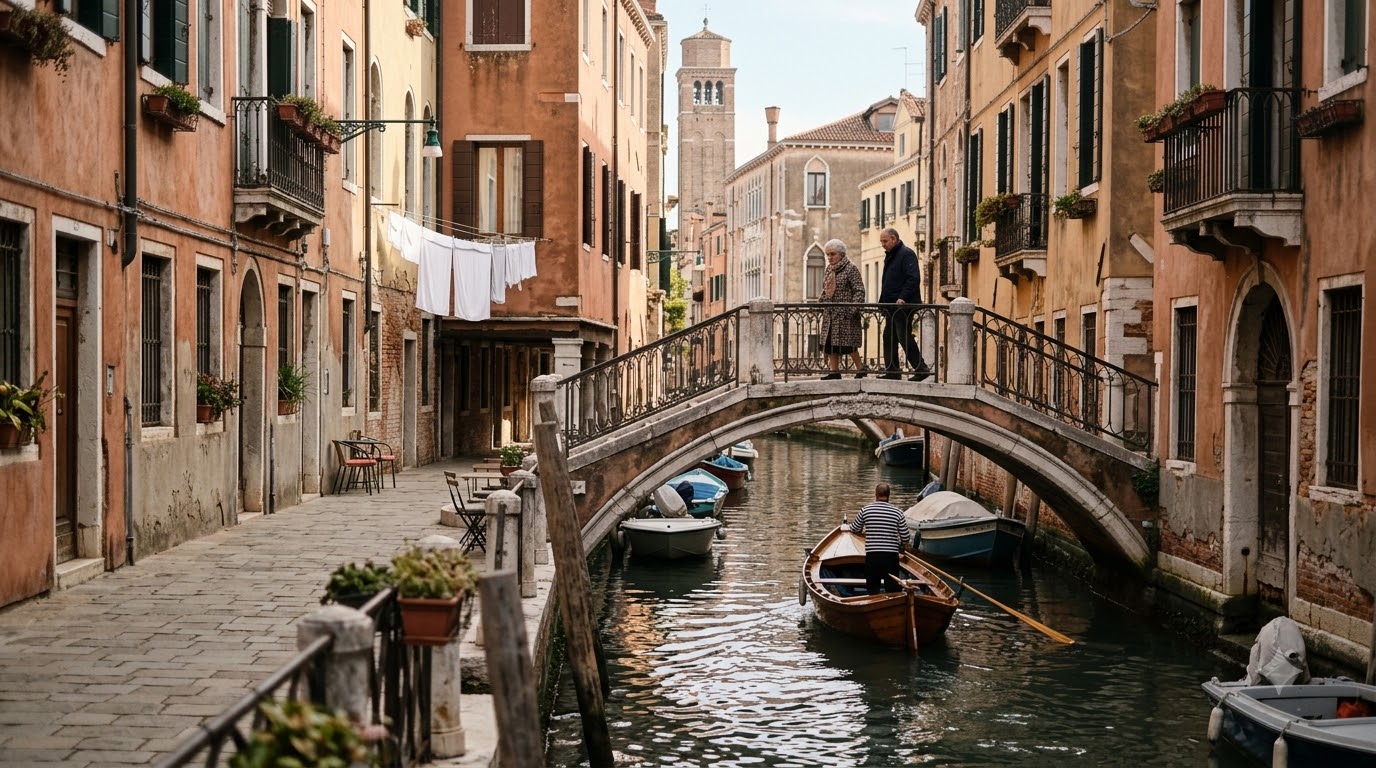
Choose your Venice neighborhood by matching your priority to the district, because each of the six areas trades off price, crowds, and convenience differently. San Marco puts you next to the headline sights but charges the most and empties of locals after dark. Cannaregio and Castello keep prices lower and evenings quieter. Dorsoduro sits in the middle on both. Mestre wins purely on cost.
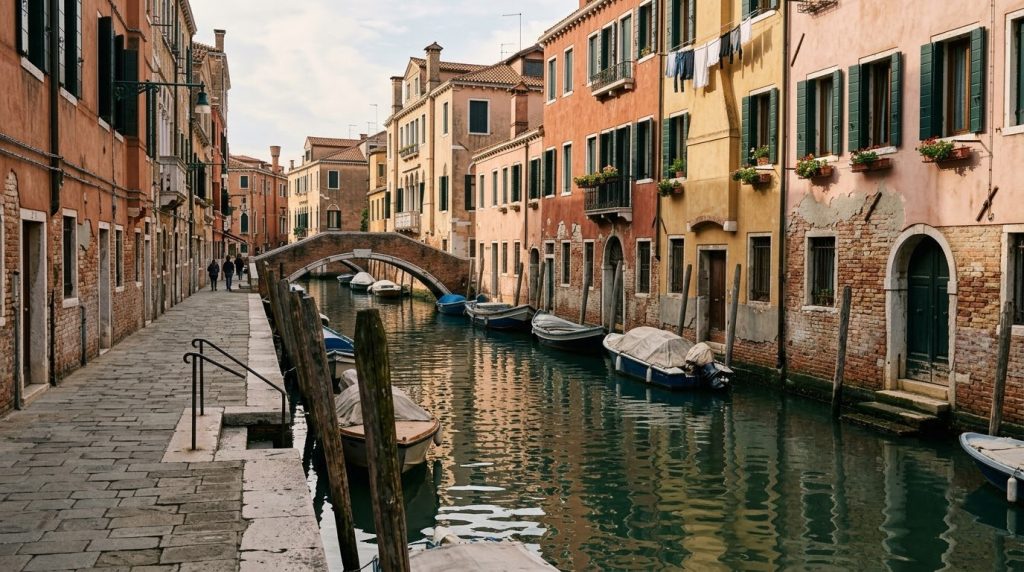
Here is how the areas sort by traveler type:
- First-time visitor, short stay: San Marco or Dorsoduro, for walking access to St. Mark’s Basilica, the Rialto, and the Accademia without a vaporetto.
- Budget traveler who wants to stay on the island: Cannaregio, the best range of hotel prices plus cheap cicchetti bars near the Jewish Ghetto.
- Food-focused stay: Cannaregio again, widely rated the strongest neighborhood for restaurants and bacari (cicchetti bars).
- Quiet evenings and repeat visitors: Castello east of the Arsenale, the lowest tourist footfall on the main island after dark.
- Best all-round balance: Dorsoduro, home to the Peggy Guggenheim Collection, the Accademia Gallery, and the Zattere waterfront promenade.
- Lowest possible price: Mestre on the mainland, 15 minutes out by regional train.
For the full lay of the land before you book, our Venice travel guide maps the six sestieri and the lagoon islands, and if you are fitting a stay into two nights, the 2-day Venice itinerary shows which base saves the most walking.
Where to stay in Venice: area comparison table
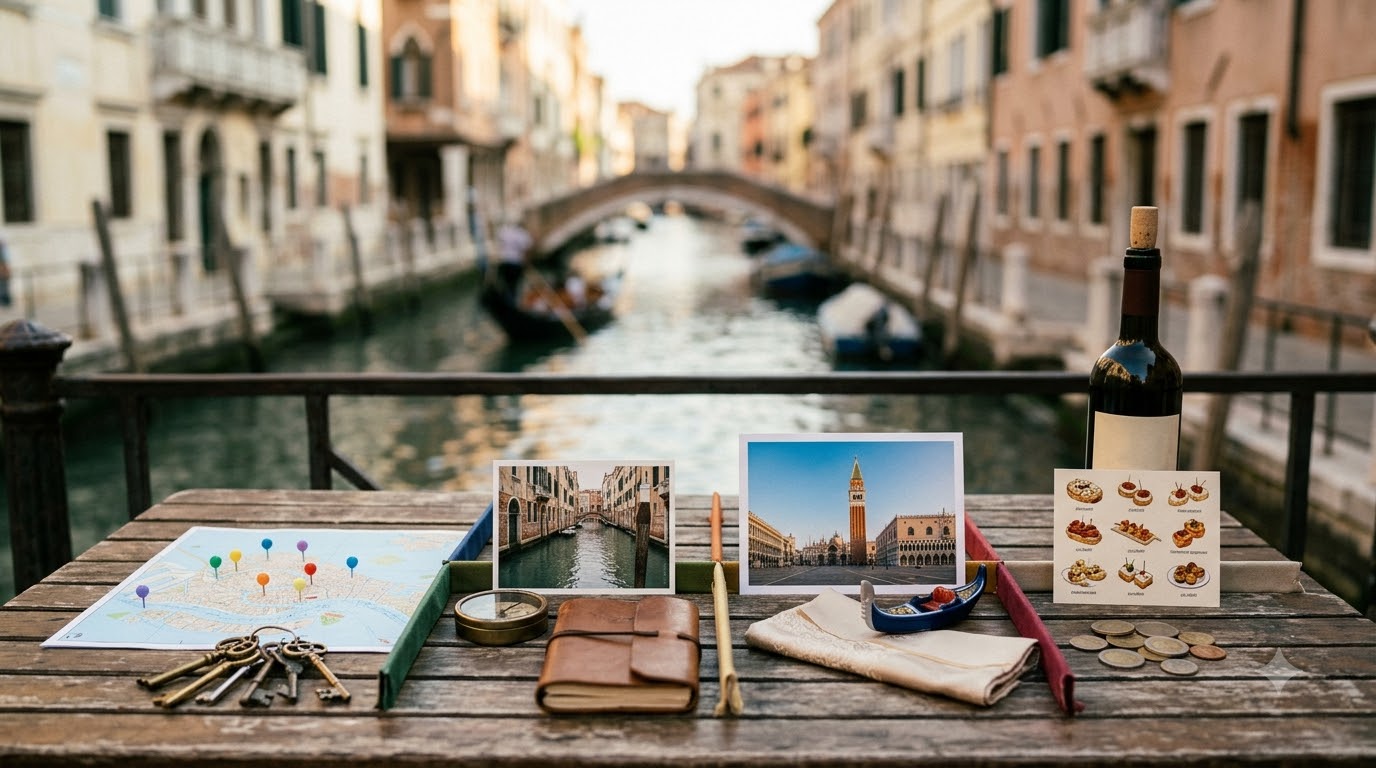
The fastest way to decide where to stay in Venice is to read price against vibe in one row. Central island districts cost more and put sights on foot; the mainland costs least and adds a short train ride.
| Area | Best for | Typical mid-range night (2026) | Walk to St. Mark’s | Vibe after dark |
|---|---|---|---|---|
| San Marco | First-timers, central sights | €150–€250 (luxury €300–€600+) | On-site | Touristy, quiet late |
| Dorsoduro | Best all-round balance | €140–€230 | 10–15 min | Relaxed, students, galleries |
| Cannaregio | Budget + food, station access | €100–€180 | 20 min | Lively local bars |
| Castello (east) | Quiet, lagoon views, Biennale | €110–€200 | 10–20 min | Calmest on the island |
| Near Santa Lucia station | Easy arrival, day trips | €110–€190 | 25 min or one vaporetto | Busy by day, mixed |
| Mestre (mainland) | Lowest price | €53–€100 | 15 min train + walk | Ordinary town, off-island |
Prices reflect 2026 hotel and Tripadvisor listings and move with season; expect the top of each range from April through July and around Carnival.
San Marco: central, iconic, and the priciest base
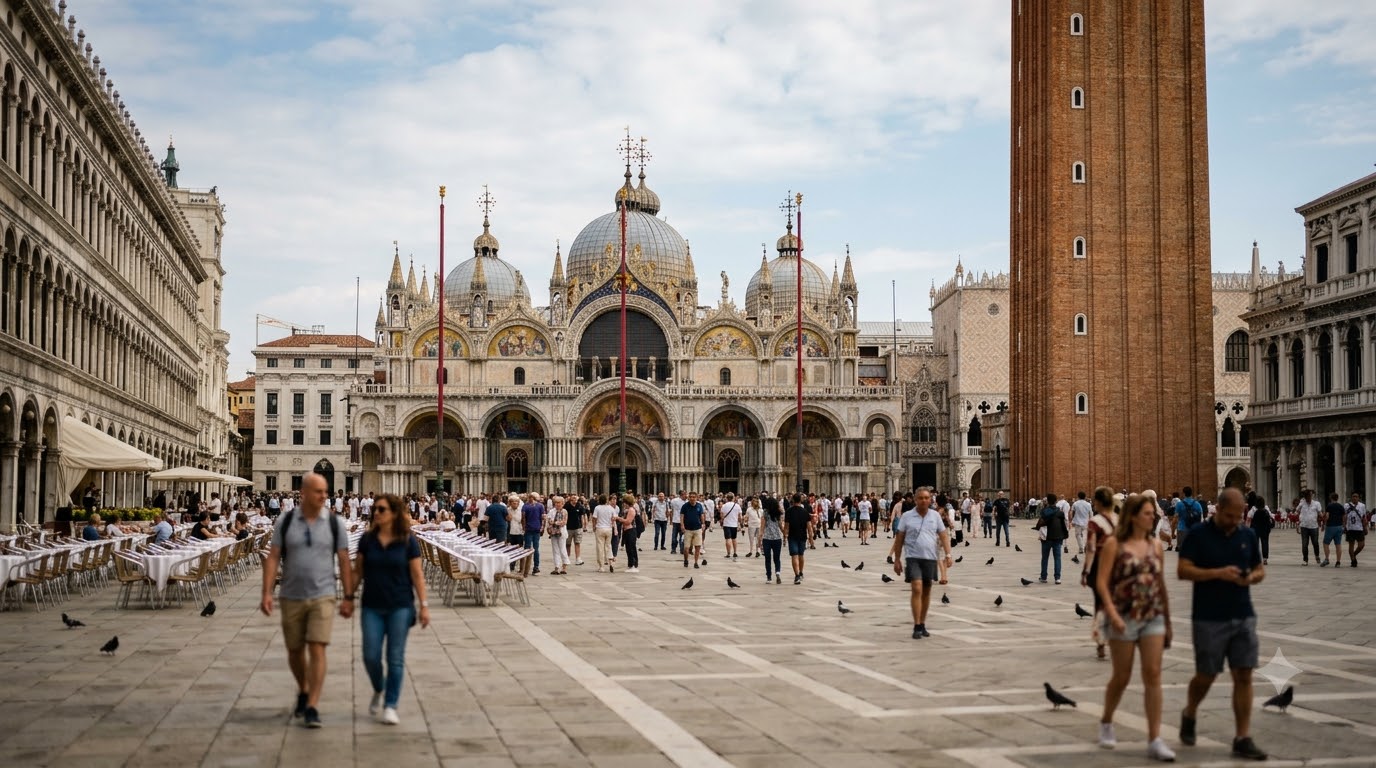
Stay in San Marco if it is your first Venice trip and you want the major sights on your doorstep. This is the historic core around Piazza San Marco, and it delivers the postcard: the Basilica, the Doge’s Palace, the Rialto within a short walk, and the Grand Canal at the edge.
The trade-off is money and crowds, since San Marco is both the most touristy and the most expensive sestiere.
What you get and pay in San Marco:
- Mid-range rooms: €150–€250 a night, with converted-palazzo doubles at the upper end in high season.
- Grand Canal luxury: €300–€600+, the priciest beds in the city.
- Zero vaporetto needed for headline sights, which offsets the room premium if you plan to walk everywhere.
- After-dark quiet, because day-trippers leave and few residents remain, so evenings feel emptier than the daytime crush suggests.
San Marco works best as a splurge for one or two nights rather than a week; the €9.50 vaporetto trips out to quieter islands are a good break from the crowds. For what fills the days here, see our roundup of the best things to do in Venice.
Dorsoduro: the best balance of atmosphere and access
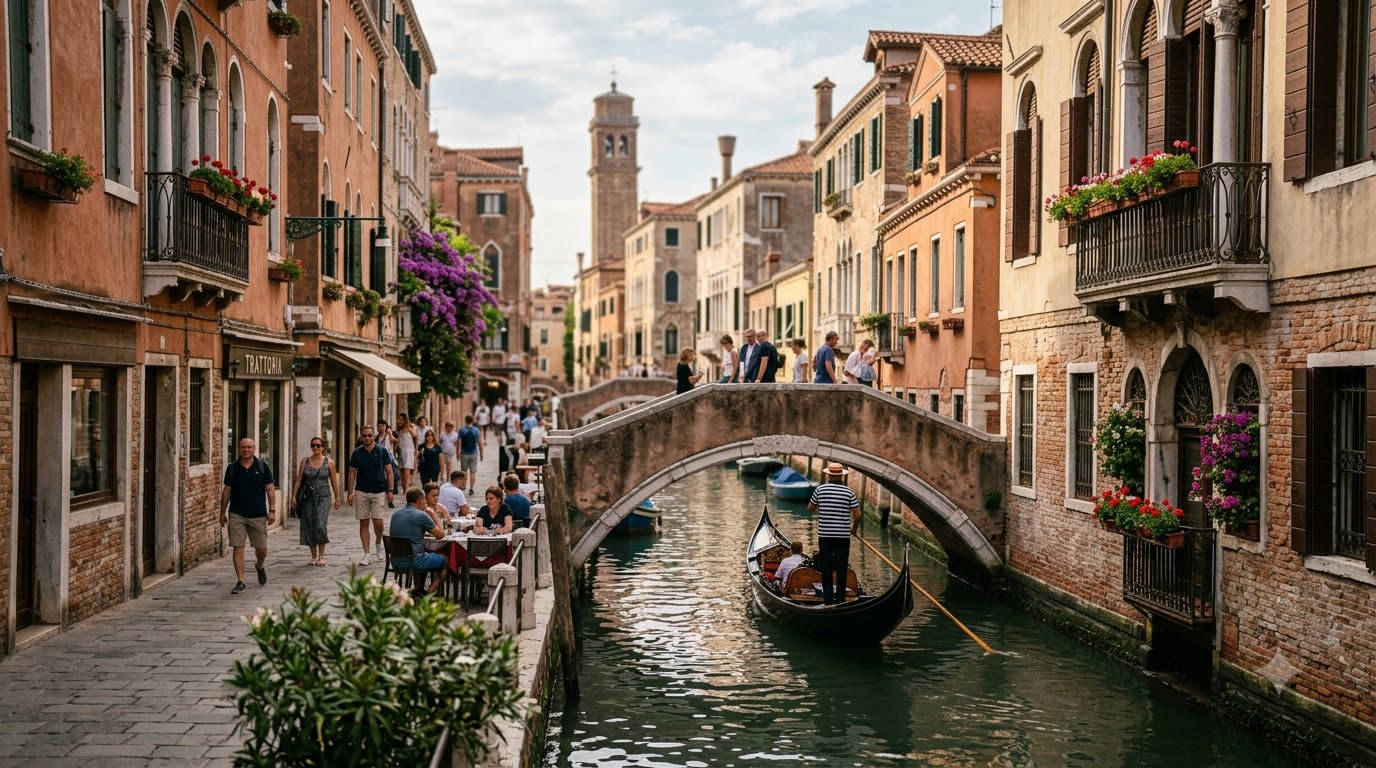
Choose Dorsoduro for the strongest all-round mix of price, quiet, and walkability. It sits across the Grand Canal from San Marco, a short stroll over the Accademia bridge, and it carries Venice’s art weight: the Peggy Guggenheim Collection, the Gallerie dell’Accademia, and the long Zattere promenade facing the Giudecca Canal. A student population around Ca’ Foscari university keeps the bars and cafes livelier and cheaper than San Marco.
Reasons Dorsoduro works for most travelers:
- Mid-range nights around €140–€230, generally under San Marco for comparable rooms.
- Two of the city’s top museums on foot, plus the Zattere for evening walks with real water views.
- Campo Santa Margherita as a cheap, local-leaning hub for aperitivo and casual dinners.
- 10–15 minutes on foot to St. Mark’s, so you keep central access without central prices.
Basing here lets you cross to the sights each morning before the groups; the Zattere at sunset, with a spritz and no crowd, is the quiet highlight. To slot the museums into your days, see the best things to do in Venice.
Cannaregio: budget beds, cicchetti, and the station on your side
Pick Cannaregio if you want the lowest island prices and the best food, especially arriving by train. This is the northern sestiere running from Santa Lucia station toward the Fondamente Nove, and it holds the historic Jewish Ghetto, the Madonna dell’Orto church, and the Gothic Ca’ d’Oro. Locals still outnumber tourists on many of its long, canal-lined fondamenta.
Why budget and food travelers land here:
- The widest hotel price range on the island, with mid-range rooms roughly €100–€180 and cheaper guesthouses below that.
- The strongest cicchetti scene, with bacari along Fondamenta della Misericordia serving small plates and ombre (small wines) for a few euros each.
- Walking distance from Santa Lucia station, which spares you a vaporetto fare and a luggage transfer on arrival.
- A calmer, residential feel the further you get from the Strada Nova shopping spine.
You can wheel your bags here from the station in under 15 minutes and skip the water bus for the whole stay; for a short trip that alone can save €40 or more in vaporetto tickets.
Castello: the quietest corner and lagoon light
Stay in Castello, specifically its eastern half, if you want the calmest nights on the main island. Castello is central Venice’s largest sestiere, stretching east of San Marco past the Arsenale to the Giardini. The far end near the Arsenale and the public gardens has the lowest tourist footfall of any district on the main island after dark, and it hosts the Biennale in its Giardini and Arsenale venues.
Castello suits these travelers:
- Biennale visitors, since the main pavilions sit in the eastern gardens.
- Repeat visitors who already know the sights and want lagoon views over shopping streets.
- Anyone wanting San Marco proximity without its noise, with the western edge a 10-minute walk from the piazza.
- Value seekers on the island, with mid-range rooms around €110–€200, generally below San Marco.
Via Garibaldi in the east feels genuinely residential at night, with greengrocers and neighborhood bars rather than mask shops.
Near Santa Lucia station: easiest arrival and day trips
Base yourself near Santa Lucia station if you value a frictionless arrival and plan day trips to Verona, Padua, or the lagoon islands. The station area straddles Cannaregio and the Santa Croce district, and it puts regional and high-speed trains at your door, along with the Piazzale Roma bus and car terminal a short walk over the Calatrava bridge.
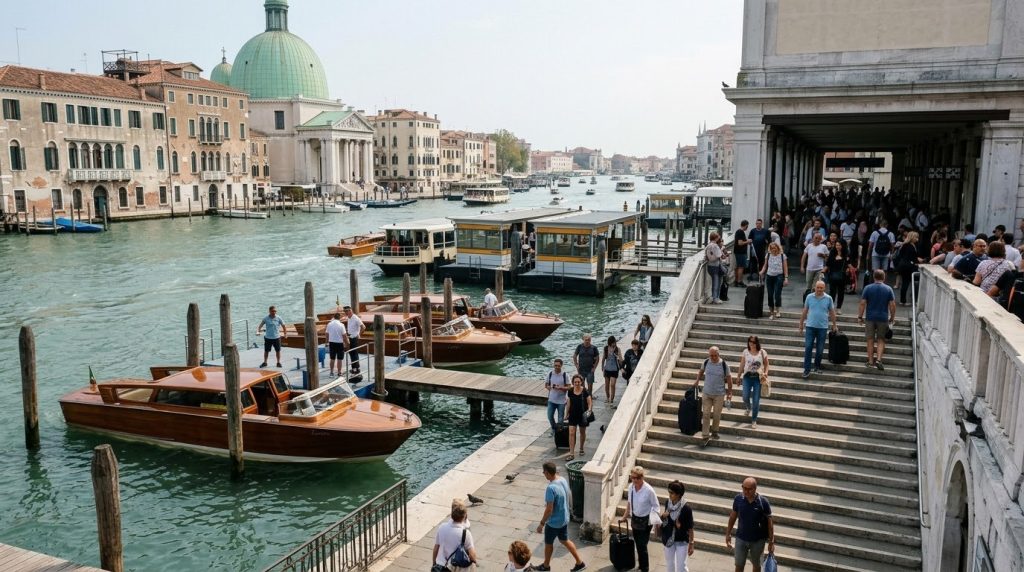
Practical notes for a station-side stay:
- Mid-range rooms roughly €110–€190, similar to Cannaregio proper.
- Vaporetto line 1 and 2 stops at Ferrovia, so you reach the Rialto or San Marco by water in one ride (€9.50, valid 75 minutes).
- Fastest exit for day trips, since you skip crossing the city to catch a train, which pairs well with a tight 2-day Venice itinerary.
- Busier and less atmospheric by day, as the whole city funnels through here, so pick a side street rather than the station frontage.
Check hotels near Santa Lucia station →
Mestre and the mainland: when the budget rules
Stay in Mestre on the mainland only if cutting cost outweighs sleeping among the canals. Mestre is part of the same municipality as historic Venice, so an overnight there still exempts you from the day-tripper access fee, and it sits about 15 minutes from Venice by a €1.50 regional train or an €8 ACTV bus. The saving is real but so is the trade-off in atmosphere.
| Factor | Mainland Mestre | Venice island (mid-range) |
|---|---|---|
| Typical night (2026) | €53–€100 | €150–€250 |
| Nightly saving | Baseline | +€50–€150 more |
| Transfer to Venice | 15 min, €1.50 train / €8 bus | Walk / vaporetto |
| Evening atmosphere | Ordinary town | Canals, campi, water |
| Best for | Tight budgets, drivers, families | The classic Venice experience |
The honest verdict from our own comparison: Mestre makes sense for a tight budget, a car you need to park, or a family needing space, but the magic of stepping out of your door onto a canal is the whole reason people come. If you can afford one or two island nights, we would trade Mestre’s savings for them.
Check hotels in Mestre and the mainland →
The day-tripper access fee you avoid by staying overnight
Book any accommodation inside the Venice municipality and you are exempt from the day-tripper access fee, full stop. Venice charges an access fee to same-day “excursionists” on roughly 60 designated dates in 2026, and overnight guests are specifically excluded because they already pay the separate city tax.
The 2026 access fee facts:
- Cost: €5 if you reserve and pay in advance, €10 for last-minute or on-the-spot buyers.
- Dates: around 60 days from April 3 to July 26, 2026, mostly weekends and holidays, checked in from 08:30 to 16:00.
- Who pays: same-day visitors such as cruise passengers and those based elsewhere in the Veneto or nearby Europe.
- Who is exempt: overnight guests booked anywhere in the municipality, including the historic center, Murano, Burano, Lido, and mainland Mestre and Marghera.
In plain terms, the hotel you book already buys your way past the turnstile, and timing your visit around the best time to visit Venice helps you dodge the busiest fee days regardless.
The overnight city tax, and what it adds to your bill
Every overnight guest pays a separate city tax on top of the room rate, so budget for it per person per night. This is not the day-tripper fee; it is the standard accommodation tax, collected by your hotel, and it scales with the property’s star rating.
| Accommodation | City tax per person, per night (2026) |
|---|---|
| 3-star hotel | €3.50 |
| 4-star hotel | €4.50 |
| 5-star hotel | €5.00 |
| Lower categories / low season | from €0.50 |
Key rules to budget correctly:
- The tax is charged per person, per night, so two people in a 4-star room pay €9.00 a night combined.
- It caps at 5 consecutive nights at the same accommodation, after which further nights are free of the tax.
- Central island stays sit at the higher end of the range, while mainland Mestre can fall lower.
- It is usually paid at check-out in cash or card, separate from the room bill you prepaid online.
For a couple in a 4-star San Marco hotel for three nights, that is €27 in city tax on top of the room, worth folding into your comparison before you decide where to stay in Venice.
Frequently Asked Questions
Where should I stay in Venice for the first time?
Stay in San Marco or Dorsoduro for a first visit. San Marco puts the Basilica, Doge’s Palace, and Rialto on foot but costs the most, with mid-range rooms €150–€250 a night. Dorsoduro sits a short walk across the Accademia bridge, keeps prices slightly lower, and adds top museums and the quiet Zattere waterfront, which is why we rate it the best all-round first-timer base.
Is it cheaper to stay in Mestre than Venice?
Yes. Mestre rooms run €53–€100 a night versus €150–€250 for mid-range island hotels, saving €50–€150 nightly (Tripadvisor and hotel listings, 2026). Mestre sits 15 minutes from Venice by a €1.50 regional train or an €8 ACTV bus, and because it is part of the Venice municipality, an overnight there still exempts you from the day-tripper access fee.
The trade-off is that you sleep in an ordinary mainland town rather than among the canals.
Do I have to pay the Venice access fee if I stay overnight?
No. The €5–€10 day-tripper access fee applies only to same-day visitors on about 60 dates between April 3 and July 26, 2026. Anyone booked into accommodation within the municipality, including the historic center, the lagoon islands, and mainland Mestre, is exempt. You will instead pay the separate overnight city tax, which runs €3.50–€5 per person per night by hotel class.
Which Venice neighborhood is best for food and nightlife?
Cannaregio is the strongest neighborhood for food and casual evenings. Its bacari along Fondamenta della Misericordia serve cicchetti (small plates) and ombre (small glasses of wine) for a few euros each, and locals still fill them. Dorsoduro’s Campo Santa Margherita is the other lively hub, popular with students from the nearby Ca’ Foscari university and cheaper than San Marco for aperitivo.
How much is a vaporetto ticket in Venice in 2026?
A single vaporetto (water bus) ride costs €9.50 and is valid for 75 minutes with changes allowed within the city center. Because single fares add up fast, a central island base where you can walk to most sights often works out cheaper than a cut-price room on the edge that needs a water bus each way.
Multi-day ACTV passes are better value if you plan to ride often or reach the outer islands.
Final thoughts
Where to stay in Venice comes down to a simple trade between price and place. Dorsoduro gives most travelers the best balance, San Marco buys central convenience at a premium, Cannaregio and Castello keep the island magic at lower prices and quieter nights, and Mestre wins only when the budget is the whole story.
Whichever you pick, one overnight inside the municipality frees you from the day-tripper fee and leaves you paying just the modest per-night city tax, so book a bed on the island if you possibly can and let the canals be the first thing you see each morning.
Sources: Untold Italy — Venice tourist tax, Untold Italy — Where to stay in Venice, Nomad Lawyer — Venice access fee 2026, Machu Picchu — Venice budget guide 2026, Vaporetto Pass — 2026 prices.