Is Venice Safe? What Travelers Actually Face (2026)
Disclosure: Some links in this guide are affiliate links. If you book or buy through them, we may earn a small commission at no extra cost to you — it helps keep our guides free.
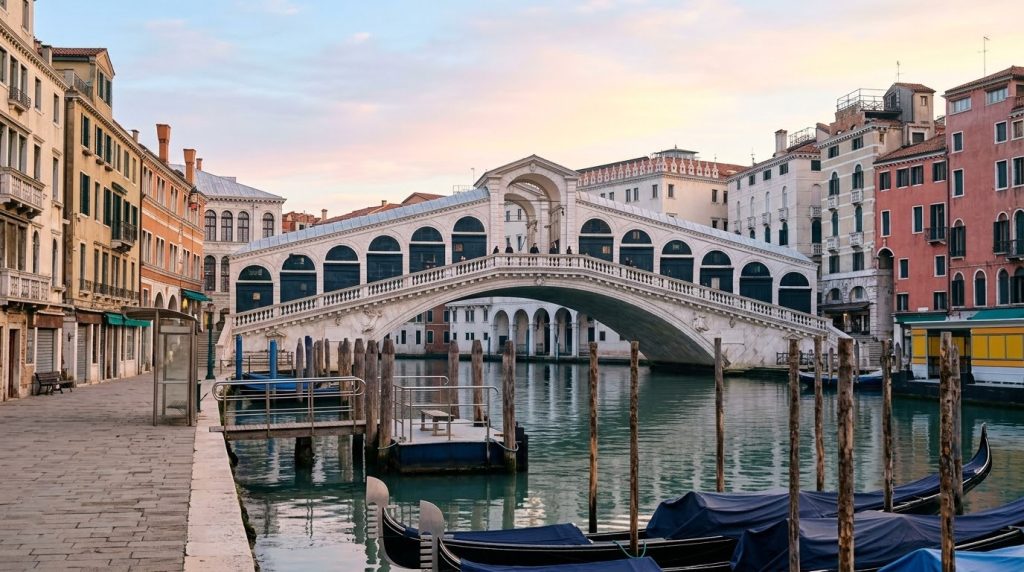
Yes, Venice is safe for most visitors: the US State Department rates Italy at Level 2, “Exercise Increased Caution,” last updated 23 May 2025, and Venice’s real risks are pickpockets, overpriced gondolas and floods, not violent crime. There are no cars, the center is small and lanes stay busy late.
Your job is guarding your bag on crowded water buses, checking tide alerts in fall and winter, and watching your footing on wet bridges after dark.
| Risk | Reality | What to do |
|---|---|---|
| Pickpockets | Opportunistic, at vaporetto stops, Rialto, St Mark’s lines | Zipped bag worn in front |
| Acqua alta | St Mark’s Square floods from about 80 cm | Check the official tide forecast |
| Night falls | Serious incidents are mostly drunken falls into canals | Lit routes, offline map |
| Mestre station | Scruffy after dark, forum complaints about Via Piave | Stay in the historic center |
| Fines | USD 28–562 (EUR 25–500) for banned behavior | No picnics on bridges or steps |
The honest answer: safe, but not trouble-free
Level 2 is a country-wide rating for Italy, not a Venice warning; check the official State Department advisory before you fly. The UK FCDO’s Italy advice agrees: crime is “generally low,” but pickpocketing and bag-snatching are higher in city centers and at major attractions.
In practice, Venice is far more likely to cost you money than to hurt you. If you are still on the fence about crowds and prices, read our take on whether Venice is worth visiting. US passport holders enter Italy visa-free for short stays, and the EU’s ETIAS authorization is not yet operating. Nonstop flights from New York JFK take roughly 8 to 8.5 hours.
Pickpockets and the scams that actually happen
Thieves work the crush getting on and off a vaporetto, the line outside St Mark’s Basilica and the Rialto Bridge at peak hour. If you plan to hit the best things to do in Venice, treat each headline sight as a pickpocket zone.
Scams here are mostly about overpaying:
– Gondolas. The city-set private rate is widely reported as USD 101 (EUR 90) for 30 minutes by day and USD 124 (EUR 110) for 35 minutes after 7 pm, per boat.
Agree price and time first. – Water taxis. Legitimately pricey; agree the fare before boarding and use official stands, not touts. – Street sellers. Buying from unlicensed traders is illegal in Italy and the buyer can be fined. – Restaurant bills. Check the menu for cover and service charges before sitting down.
Prices here are converted at USD 1 = EUR 0.89.
Acqua alta, the MOSE barrier and tide alerts
High water is a nuisance, not a threat. According to the city’s MOSE visitor page, St Mark’s Square starts taking water at around 80 cm. The MOSE barriers were first raised on 3 October 2020; the official trigger is 110 cm, but in practice operators have raised them for forecasts above 130 cm, so the lowest squares can still flood on moderate tide days.
– Check the city Tide Forecast Center (website, electronic displays, some water-bus stops) or the official Hi!tide Venice app. – Sirens sound one attention tone, then a sequence whose number rises with the expected level. – Raised walkways sit at 120 cm and stay dry in most floods.
To dodge both crowds and flood season, see the best time to visit Venice.
Transport safety: vaporetti, trains and wet bridges
The vaporetto is safe but packed. A 75-minute ticket costs USD 11 (EUR 9.50) and a 24-hour pass USD 28 (EUR 25), per AVM/ACTV fares. Validate before boarding and step off carefully: pontoons rock and get slick.
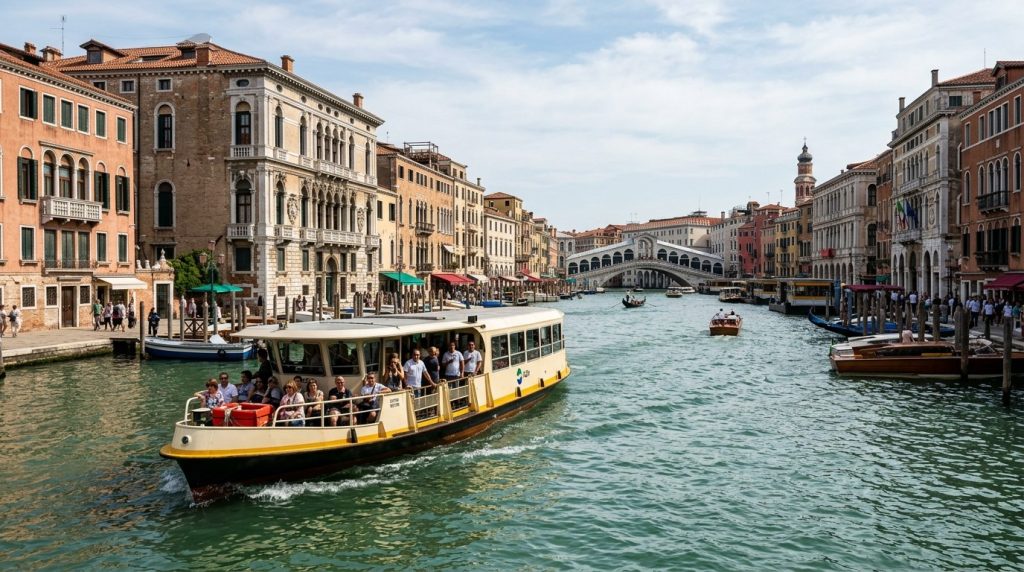
At night the bigger risk is your footing. Stone bridges get slippery when wet, many canal edges have no railings, and some lanes are dark. Phone signal drops between tall buildings, so download an offline map. Trains between Santa Lucia and Mestre run frequently until about midnight and take around 10 minutes.
Neighborhoods to avoid after dark
No district of the historic center is genuinely dangerous; quiet corners of Castello or Cannaregio feel lonely late at night but are not crime hotspots.
The area travelers consistently flag is on the mainland: the streets around Mestre train station, especially the south end of Via Piave and Via Cappuccina. Locals describe it as unpleasant rather than dangerous. If you book in Mestre to save money, pick a hotel near the tram line rather than beside the station.
Solo and female travelers
Venice is one of Italy’s easier cities for solo travel: no traffic, short distances and restaurants busy into the evening. Watch your drink in bars, decline strangers offering to carry bags over bridges, and share your live location when walking back late. Staying inside the historic center beats a late commute from Mestre.
Who should think twice about Venice
– Travelers with limited mobility in flood season. Bridges, steps and high water make winter trips hard work. – Crowd-averse day-trippers. The Rialto–San Marco route is shoulder-to-shoulder on summer weekends. Our 2-day Venice itinerary uses early mornings and quieter districts instead. – Rule-breakers. Eating on steps or bridges, or swimming in canals, draws fines of USD 28–562 (EUR 25–500).
On access-fee days, day-trippers must register online. In 2026 the fee was USD 6 (EUR 5) booked more than four days ahead or USD 11 (EUR 10) later; the trial ended on 27 July, and overnight guests were exempt but still registered.
What to do in an emergency
Dial 112, the European emergency number, now fully operational across the Veneto region. File a police report (denuncia) for any theft, since your travel insurer will ask for it, and contact the US Embassy or nearest consulate for a lost passport.
Where to stay
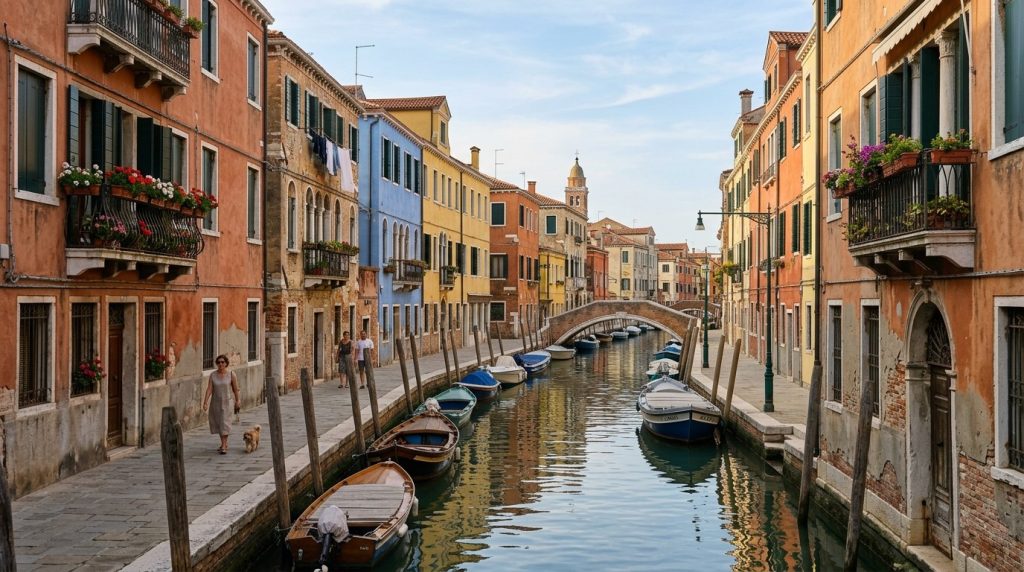
– San Marco and Rialto: first-timers who want to walk everywhere; highest prices, busiest lanes. – Dorsoduro: couples and repeat visitors; calmer, good evening restaurants. – Cannaregio: budget travelers and late train arrivals; local feel near the station.
More detail in our guide on where to stay in Venice.
Find your Venice hotel on the map
Live prices from Booking, Airbnb and more — move the map or change dates to compare stays across Venice.
Frequently Asked Questions
Is it safe to walk around Venice at night?
Yes. The historic center is generally safe at night, and violent crime against visitors is rare. The real hazards are physical: wet bridges and steps get slippery, many canal edges have no railings, and some lanes are dark. Use an offline map, stay on lit routes, and go easy on alcohol, which features in most serious falls into canals.
Is Mestre safe to stay in?
Mostly, yes. Mestre is an ordinary mainland town and its residential areas are unremarkable. The streets right around the train station, especially the south end of Via Piave, are what travelers flag after dark. Choose a hotel near the tram line rather than beside the station; trains to Venice run frequently until about midnight.
What is the US travel advisory level for Italy?
The US State Department rates Italy at Level 2, “Exercise Increased Caution,” last updated 23 May 2025. The rating covers the whole country and is not specific to Venice. Check the official advisory page shortly before departure, since levels can change, and make sure your travel insurance covers theft and medical care abroad.
Does acqua alta make Venice dangerous?
Not usually. High water is mainly an inconvenience. St Mark’s Square starts flooding at around 80 cm, and the MOSE barriers are raised only for higher forecast tides. Raised walkways at 120 cm stay dry in most floods. Check the Hi!tide app or the city tide forecast, and pack waterproof boots for fall and winter trips.
Planning the whole trip? Start with our Venice travel guide for the overview, then use this page for the details.