Best Time to Visit Sicily (2026)
Disclosure: Some links in this guide are affiliate links. If you book or buy through them, we may earn a small commission at no extra cost to you — it helps keep our guides free.
- The best time to visit Sicily is April through June or September and October.
- Summer heat becomes a genuine health risk rather than simple discomfort.
- In July and August the coast is fine but the interior is punishing, with the highest prices.
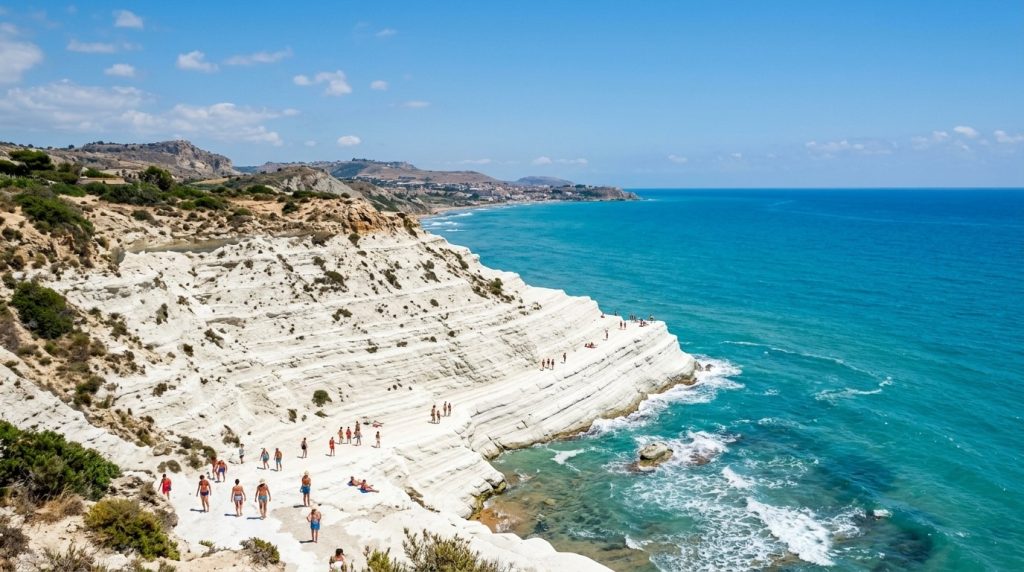
The best time to visit Sicily is April through June or September and October, when daytime temperatures hold between 21°C and 28°C (70-82°F) and the sea warms to a swimmable 22-26°C (72-79°F).
That window opens earlier on the coast and stays open longer inland than it does anywhere on mainland Italy, because Sicily sits far enough south of Rome that its summer heat becomes a genuine health risk rather than simple discomfort.
| Month | Temp | Sea temp | Crowds and prices | Verdict |
|---|---|---|---|---|
| January | 13°C/8°C (55°F/46°F) | 15°C (59°F) | Lowest prices, many coastal hotels closed | Skip unless you want quiet cities |
| February | 13°C/8°C (55°F/46°F) | 14°C (57°F) | Almond blossom season in the southeast, thin crowds | Niche appeal only |
| March | 15°C/9°C (59°F/48°F) | 14°C (57°F) | Low season reopens, low prices | Touring good, sea too cold |
| April | 18°C/11°C (64°F/52°F) | 15°C (59°F) | Easter brings a short crowd spike, otherwise light | Strong for sightseeing, sea still cold |
| May | 21°C/14°C (70°F/57°F) | 18°C (64°F) | Prices rising, crowds moderate | The window opens |
| June | 25°C/18°C (77°F/64°F) | 22°C (72°F) | Peak-season prices begin | Best balance of heat and sea |
| July | 28°C/21°C (82°F/70°F) coast, near 34°C (93°F) inland | 26°C (79°F) | Highest prices, heaviest crowds | Coast fine, interior punishing |
| August | 28°C/21°C (82°F/70°F) coast, near 35°C (95°F) inland | 27°C (81°F) | Peak prices, national Ferragosto crowds | Hottest month, book far ahead |
| September | 26°C/19°C (79°F/66°F) | 25°C (77°F) | Prices ease, crowds thin after the first week | Strongest shoulder month |
| October | 22°C/16°C (72°F/61°F) | 23°C (73°F) | Low season returns, some closures late in month | Warm sea, comfortable touring |
| November | 18°C/13°C (64°F/55°F) | 20°C (68°F) | Rain increases, prices drop | Too wet for most trip plans |
| December | 14°C/10°C (57°F/50°F) | 17°C (63°F) | Christmas markets, mild but rainy | City breaks only |
April to June – the strongest window
April through June is Sicily’s strongest window, because temperatures climb from a mild 18°C (64°F) in April to a comfortably hot 25°C (77°F) in June without tipping into the extremes that arrive in July.
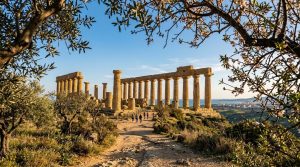
Easter creates a short, sharp crowd spike, so the last two weeks of April and all of May are the calmest stretch for touring the Valley of the Temples or Taormina without a heat penalty.
The sea lags the air, sitting at just 15°C (59°F) in April and warming to a genuinely swimmable 22°C (72°F) by June, so beach-focused trips are better placed toward the end of this window than the start. Hotel rates in April and May sit well below the August peak, since demand has not yet caught up with the weather.
For hotel picks that stay bookable through this window, see our guide to where to stay in Sicily.
September and October – warm sea, thinner crowds
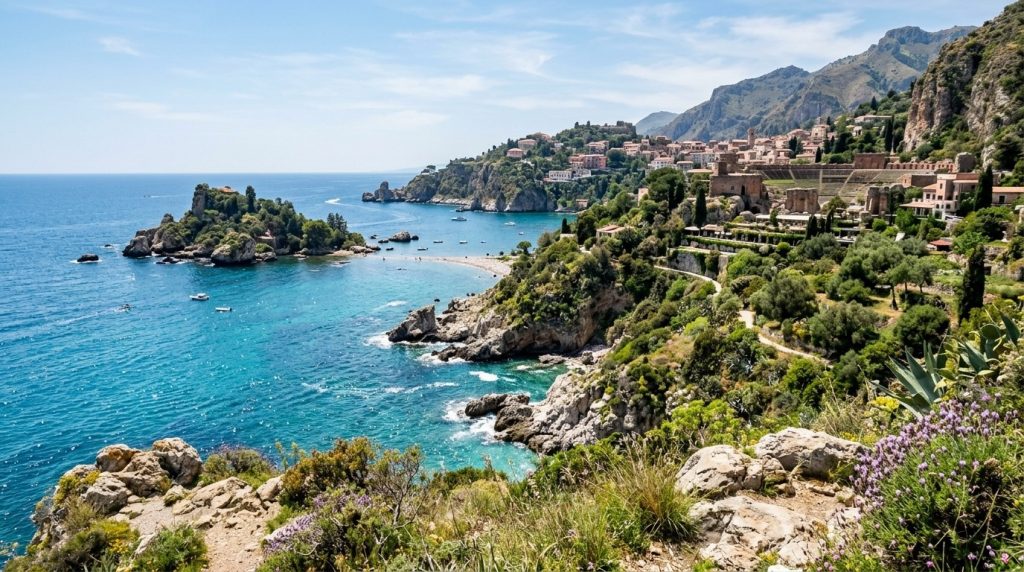
September and October offer the same warm sea as midsummer with a fraction of the crowds, because the Mediterranean holds its heat for weeks after air temperatures start easing. The sea reaches 25°C (77°F) in September, warmer than June’s 22°C (72°F) despite similar air temperatures, which is why late-season swimming in Sicily often surprises first-time visitors. If beach time matters more than towns, our Sicily vs Sardinia comparison explains when Sardinia’s coastline beats Sicily’s culture-and-food trip.
Crowds thin noticeably once European school terms resume in early September, and by October the 22°C (72°F) daytime highs suit walking tours of Palermo or Syracuse without the midday heat breaks that July and August demand. This is also the easier season for covering multiple towns in one trip, which is exactly what our full Sicily itinerary is built around.
Prices ease from the August peak through both months, though late October brings the first wave of seasonal closures on the smaller islands.
July and August – why the interior is the problem, not the coast
July and August are the hardest months to plan around because the coast stays tolerable while the interior turns dangerous, and Sicily’s position south of Tunis makes that gap wider than it is anywhere on mainland Italy. Coastal highs average 28°C (82°F) with a sea temperature of 26-27°C (79-81°F), which is a comfortable, classic Mediterranean beach summer.
Inland, the plain around Catania averages closer to 34°C (93°F) in July, and scirocco wind episodes blowing up from North Africa push temperatures well beyond that; continental Europe’s highest recorded temperature, 48.8°C (119.8°F), was measured at Floridia in Syracuse province in August 2021.
That gap is why midday sightseeing at inland sites such as Piazza Armerina or Enna becomes genuinely risky rather than just uncomfortable in high summer, and why a siesta break is a practical necessity rather than a cultural nicety.
The Amalfi Coast runs a milder Mediterranean summer by comparison, simply because it sits far enough north to avoid Sicily’s interior heat spikes.
Climbing Etna, and why the season is not the only limit
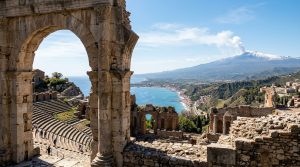
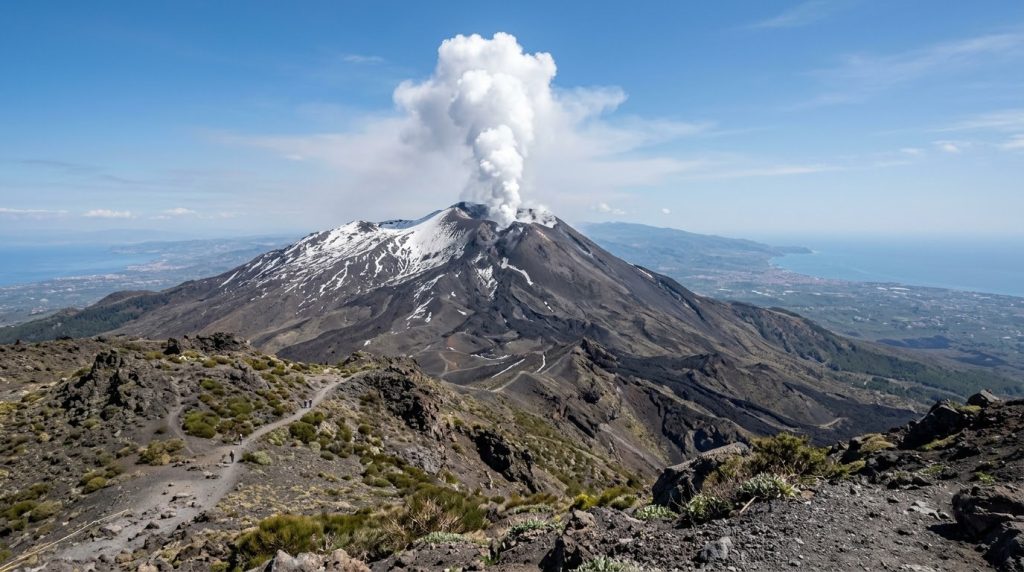
Climbing to Mount Etna’s summit craters depends on current volcanic activity as much as on the season, so a clear August sky does not guarantee summit access the way it would on an ordinary mountain trail. Etna was emitting ash again in late September 2026, so our honest answer on Sicily safety is worth checking before you book a summit tour.
Since 2013, access above 2,900 meters has required a certified volcanological guide at any time of year, and that rule applies regardless of how good the weather looks.
Eruptive activity that began on 24 December 2025 and continued into January 2026 pushed the access ceiling down to roughly 2,850 meters on both sides of the volcano, effectively closing the true summit craters, and that ceiling is reassessed on an ongoing basis by Italy’s national volcanology institute.
Standard safety rules stay in force independent of the calendar: a 200-meter exclusion zone around any active lava flow, a maximum of 10 people per guided group, and a requirement that all excursions end by dusk.
At orange or red volcanic alert levels, Civil Protection can restrict or reroute tours with no notice, so the reliable plan is to check current access status close to your travel dates rather than assuming any particular month guarantees the crater rim.
When NOT to visit Sicily
Skip Sicily in January and February if beach time or dependable sunshine matters, and skip peak August if crowds and prices matter more to you than guaranteed heat. January and February bring highs of just 13°C (55°F), a sea temperature of 14-15°C (57-59°F), and enough rain that many coastal hotels and restaurants close for the season entirely.
For a milder, busier shoulder season with sights that never depend on beach weather, Rome’s spring shoulder season starts earlier and offers more that stays open. August, at the other extreme, combines the highest prices of the year with the scirocco heat risk described above, plus the crowds of Ferragosto, Italy’s mid-August national holiday, which fills coastal towns nationwide.
November is also worth avoiding for most itineraries, since rain increases sharply while the sea, still a mild 20°C (68°F), is rarely the point of a November trip. For the rest of the year, our breakdown of what Sicily really costs per day puts mid-range travel at around USD 169 and shows where Taormina pushes prices up.
Plan your Sicily trip
Once you have picked a window, the next steps are locking in where to stay and how the days connect. Use the map below to compare live prices across Sicily’s coast and interior towns before you commit to a base.
Find your Sicily hotel on the map
Live prices from Booking, Airbnb and more — move the map or change dates to compare stays across Sicily.
Planning the whole trip? Start with our Sicily travel guide for the overview, then use this page for the details.