Is Sicily Expensive? Real Prices and Daily Budgets (2026)
Disclosure: Some links in this guide are affiliate links. If you book or buy through them, we may earn a small commission at no extra cost to you — it helps keep our guides free.
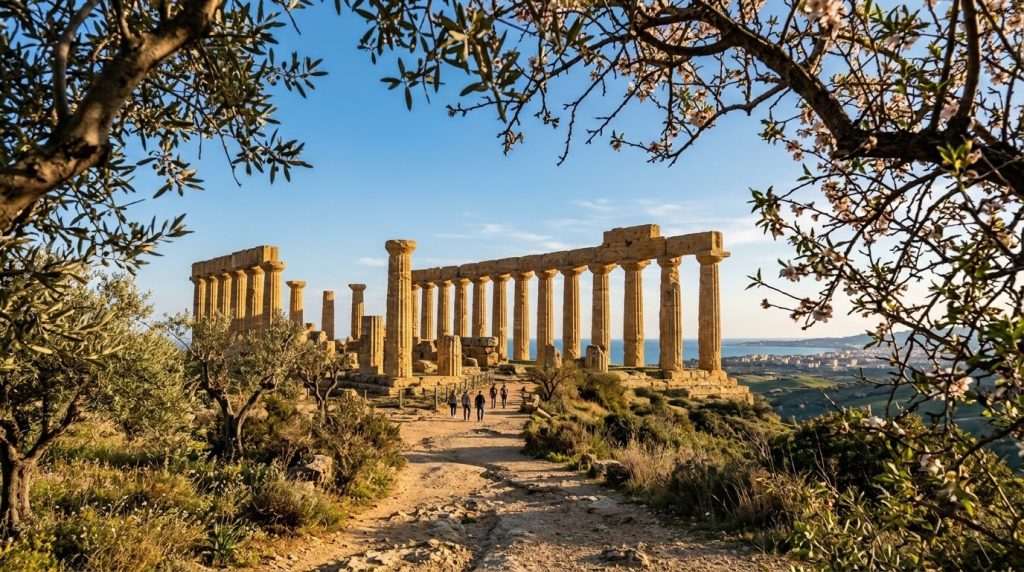
No, Sicily is not expensive by Italian standards: an independent traveler spends around USD 169 (EUR 150) a day in mid-range comfort, and a full ticket to the island’s biggest site, Agrigento’s Valley of the Temples, costs USD 16 (EUR 14). Street food, trains and off-season car rental are cheap.
Costs climb fast in Taormina, on the Aeolian Islands and at beach clubs in high summer. All prices are converted at USD 1 = EUR 0.89.
| Item | Typical price | How to save |
|---|---|---|
| Mid-range double room | USD 79–202 (EUR 70–180) | Travel May–June or September–October |
| Hostel bed | USD 34–56 (EUR 30–50) | Book Palermo and Catania early for summer |
| Granita and brioche | USD 4.50–5.60 (EUR 4–5) | Eat it standing at the bar |
| Plate of pasta | USD 9–13.50 (EUR 8–12) | Lunch at a trattoria, not a piazza terrace |
| Small rental car | USD 27 a day average | Pick up in January–April, avoid August |
| Valley of the Temples | USD 16 (EUR 14) | First Sunday of the month is free |
| Etna cable car | USD 61 (EUR 54) | Hike the lower craters for free instead |
Daily budgets: three realistic tiers
Lonely Planet puts an independent mid-range trip at around EUR 150 (USD 169) a day per person, with mid-range hotels and a mix of restaurants, street food and market snacks. Tourlane’s 2026 cost guide lands in the same zone and adds the edges:
– Budget: about USD 60 (EUR 53) a day with a 1–2 star hotel or hostel, street food and public transport. – Mid-range: USD 169–190 (EUR 150–169) a day with a 3-star hotel or B&B, one sit-down meal and a site ticket. – Luxury: USD 330 (EUR 294) a day and up, before you touch Taormina’s clifftop five-stars.
Tourlane’s mid-range week comes to around USD 1,350 per person, excluding flights. Economy fares from the East Coast typically start around USD 700–900 round trip. Still weighing the trip? Our honest look at whether Sicily is worth visiting covers the trade-offs beyond price.
Food: where Sicily is genuinely cheap
In Palermo’s historic center, an arancina or a panelle sandwich runs EUR 3–4.50 (USD 3.40–5.10), and the classic breakfast of granita with brioche costs EUR 4–5 (USD 4.50–5.60). A single espresso is about EUR 1 (USD 1.10), and a lunchtime margherita pizza runs EUR 6–10 (USD 6.75–11.25).
At a sit-down trattoria, expect EUR 8–12 (USD 9–13.50) for a plate of pasta, plus a coperto (cover charge) of EUR 1–2 per person. A glass of house wine is EUR 3–5 (USD 3.40–5.60). Tipping is not expected the way it is in the US; rounding up or leaving a couple of euros for good service is plenty.
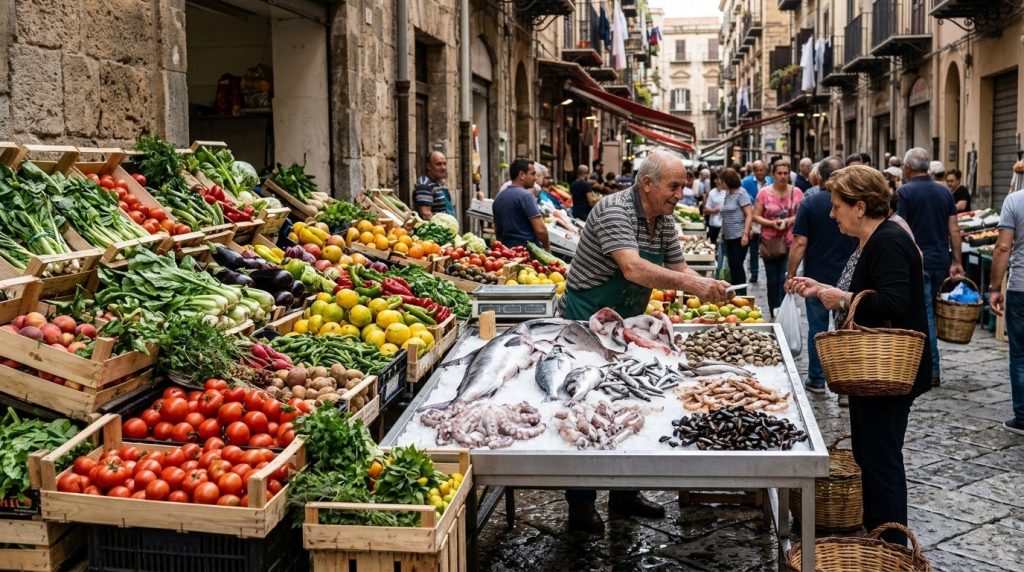
The cheapest full meal in Sicily is a market lunch. Palermo’s Ballarò and Catania’s fish market let you graze on fried snacks, fruit and grilled seafood for the price of one restaurant starter.
Getting around: car rental vs trains and buses
A car is the single biggest swing in your budget. Kayak data for Catania airport shows small cars averaging about USD 27 a day, falling to around USD 11 a day in January and rising to about USD 34 in August.
That sounds cheap, but the extras add up: one 2026 cost breakdown logged parking at EUR 5–8 (USD 5.60–9) a stop and EUR 188 (USD 211) in fuel over three weeks. Automatics and excess insurance cost extra.
Public transport costs far less if you stick to the main cities:
– Palermo to Catania: around 10 trains a day, from about USD 20 booked ahead. The fastest take just under 3 hours. – Catania to Taormina: train or bus for USD 5–10, about an hour. – Palermo airport train: EUR 6.80 (USD 7.60) to Palermo Centrale, in 34–36 minutes.
Skip the car if you are doing Palermo, Cefalu, Catania, Taormina and Syracuse. Rent one if you want Agrigento, the baroque southeast and beaches in one loop. Our Sicily itinerary shows both versions.
Sightseeing tickets: temples, theater and Etna
Headline sights are fairly priced:
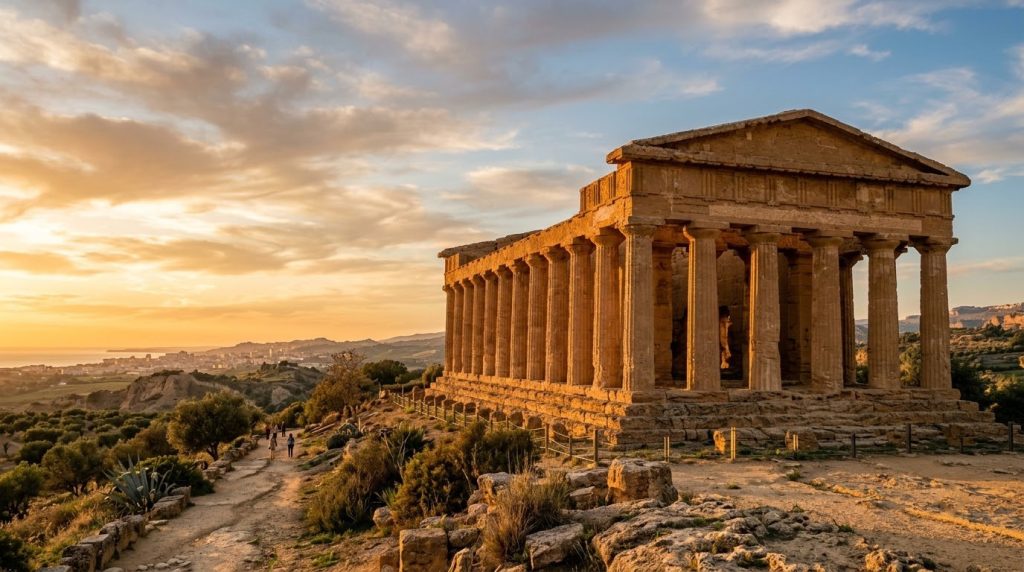
– Valley of the Temples, Agrigento: EUR 14 (USD 16) full, EUR 7 reduced, according to the official CoopCulture ticket page. An exhibition supplement of EUR 3 applies through October 31, 2026.
Visitors under 18 get in free, and so does everyone on the first Sunday of each month. – Teatro Antico, Taormina: EUR 14 (USD 16) full, EUR 7 reduced, per the regional archaeological parks site. – Mount Etna: the Funivia dell’Etna cable car to 2,500 meters costs EUR 54 (USD 61) round trip.
The Tour 3000 package, with the 4×4 bus and a volcanological guide to the summit area, is EUR 82 (USD 92).
Etna is the pricey one. Walking the Silvestri craters near Rifugio Sapienza costs nothing and still gives you lava fields and views.
Where Sicily is not cheap, and who should think twice
Three things blow up a Sicily budget. The first is August. Italian holidays push up hotels, car rental and ferries, so our best time to visit Sicily guide points budget travelers to late spring and early fall instead.
The second is Taormina and the Aeolian Islands, where hotel prices sit well above the rest of the island. The third is beach clubs: a lido day with a lounger and umbrella runs EUR 15–40 (USD 17–45), while free public beaches cost nothing.
Think twice about Sicily if you want a cheap beach-only trip in August, or if you won’t drive and want remote coves. You will pay for taxis and boat transfers. Against Sardinia, Sicily is still the cheaper island, as our Sardinia vs Sicily comparison found.
Free and low-cost sights worth your time
Several of Palermo’s best stops cost nothing. Ballaro market in the Albergheria quarter is free to wander and liveliest early, around 7:30am, while La Martorana and Chiesa del Gesu, two of the city’s richest church interiors, charge no entry fee at all. Palermo Cathedral’s exterior and courtyards are free; only the interior and treasury carry a separate ticket.
Villa Giulia, a public garden dating to 1778, and the Giardino Inglese are both free green spaces where locals outnumber tourists.
Outside the capital, free viewpoints and beaches do more of the work than paid attractions. Public beach sections exist alongside nearly every paid lido on the coast, and Mount Etna’s lower Silvestri craters cost nothing to walk, covered elsewhere in this guide.
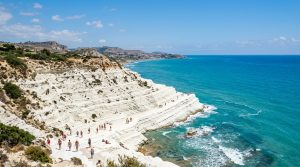
One caution: Scala dei Turchi, the white limestone cliffs near Agrigento, introduced a timed-entry ticket of about USD 7 (EUR 6) in 2026 with a daily visitor cap, after years of free, unrestricted access, so budget a small fee there now rather than expecting it to stay free.
Churches outside Palermo follow a similar mixed pattern worth knowing before you plan a day: most parish churches and smaller chapels across Sicily charge nothing, while the headline sites with mosaics or archaeological value, Monreale’s cathedral among them, usually separate a free main nave from a ticketed cloister, treasury or terrace.
Building a day around two or three free stops and one paid highlight keeps sightseeing costs down without skipping the island’s best interiors.
Phone, data and small daily costs
A prepaid Italian SIM or eSIM from Vodafone, TIM or WindTre typically costs USD 17-30 (EUR 15-27) for enough data to cover a one or two week trip, available at airport counters or phone shops in any city on the island. eSIM options from third-party providers can run cheaper for data-only plans if you still need your home number for calls.
A few other small costs add up over a week. Bottled water at a bar or shop runs about USD 1-2 (EUR 1-1.50) for a small bottle, though Palermo’s public drinking fountains, locally called nasoni, run free and are safe to refill from.
Public toilets at train stations and major sights sometimes charge a small fee, usually under USD 1 (EUR 1), so keep some coins handy. None of these line items are large individually, but a week of coffees, bottled water and the odd toilet fee can add USD 5-10 (EUR 4.50-9) a day beyond the main budget categories above.
Tipping follows the same light-touch rule as the rest of Italy: restaurants already add a coperto, or cover charge, of EUR 1-2.50 (USD 1.10-2.80) per person, and that is separate from and not instead of a tip. Rounding up the bill or leaving a few extra euros for good service is normal and appreciated; the US-style 15-20% is not expected and will not go unnoticed, just unmatched by local habit.
Where to stay
– Palermo: the best value base. Plenty of hotels and the island’s cheapest street food. Suits food lovers without a car. – Syracuse (Ortigia) and Catania: good mid-range value for the east, with easy day trips to Etna, Noto and Taormina by train or bus. Sleeping in Catania instead of Taormina saves real money. – Taormina: for splurges and couples who want sea and Etna views from the room.
Our best hotels in Sicily list breaks down picks by town and price tier.
Find your Sicily hotel on the map
Live prices from Booking, Airbnb and more — move the map or change dates to compare stays across Sicily.
Frequently Asked Questions
How much money do I need for a week in Sicily?
A mid-range week costs around USD 1,350 per person excluding flights, based on Tourlane’s 2026 estimate, or roughly USD 169–190 a day. Budget travelers using hostels, street food and trains can get by on about USD 60 a day. Add USD 700–900 for a typical economy round trip from the US East Coast.
What is the average cost of a meal in Sicily?
Street food like an arancina costs EUR 3–4.50 (USD 3.40–5.10). A plate of pasta at a trattoria runs EUR 8–12 (USD 9–13.50), plus a EUR 1–2 cover charge per person. A lunchtime pizza costs EUR 6–10. Dinner for two with wine at a mid-range restaurant usually stays well under Rome or Venice prices.
Is Sicily cheaper than mainland Italy?
For most travelers, yes. Food and mid-range hotels in Palermo, Catania and Syracuse generally cost less than in Rome, Florence or the Amalfi Coast. Top sites are fairly priced, at EUR 14 (USD 16) each for the Valley of the Temples and Taormina’s theater. Taormina and the Aeolian Islands in summer are the exceptions, and they price like the Amalfi Coast.
Do I need to rent a car in Sicily?
No, not for a first trip focused on Palermo, Cefalu, Catania, Taormina and Syracuse, since trains and buses link them cheaply. A car makes sense for Agrigento, the baroque southeast and remote beaches. Small cars average about USD 27 a day from Catania airport, but you’ll also pay for parking, fuel and insurance.
What is the cheapest month to visit Sicily?
Winter is the cheapest. Rental cars at Catania airport average about USD 11 a day in January against USD 34 in August. For a better balance of price and weather, May, early June, late September and October avoid the August peak while still giving you beach days.