Disclosure: Some links in this guide are affiliate links. If you book or buy through them, we may earn a small commission at no extra cost to you — it helps keep our guides free.
The 30-second version
City size: 440,935 residents at the end of 2025, with an urban area of 1.45 million (Wikipedia, 2025)
Zurich Card: USD 35 (CHF 29) for 24 hours or USD 68 (CHF 56) for 72 hours, including public transport and the airport transfer (Zurich Tourism, 2026)
Airport: about 9 km (5.5 miles) north of the center, with a rail station under Terminal B (Wikipedia, 2025)
Main station: about 449,800 passengers a day in 2025 (Wikipedia, 2025)
Weather: July highs near 24°C (75°F) and January highs near 3.5°C (38°F) (Wikipedia, 2025)
Zurich is Switzerland’s largest city, a financial hub with a car-light old town, a lakefront, and some of the best rail links in Europe. It rarely tops a postcard list, yet it rewards visitors who like museums, riverside walks, and easy trips into the mountains. It is also the arrival point for many trips to the country.
This guide covers when to go, how to arrive, how to get around, what to see, where to stay, and what to eat, with a three-day plan at the end. Deeper guides are linked in each section. If you are short on time, start with the Zurich itinerary.
Affiliate Disclosure: Some links in this guide are affiliate links. If you book through them, we earn a small commission at no extra cost to you. We only recommend services we genuinely trust. Learn more.
Is Zurich Worth Visiting?
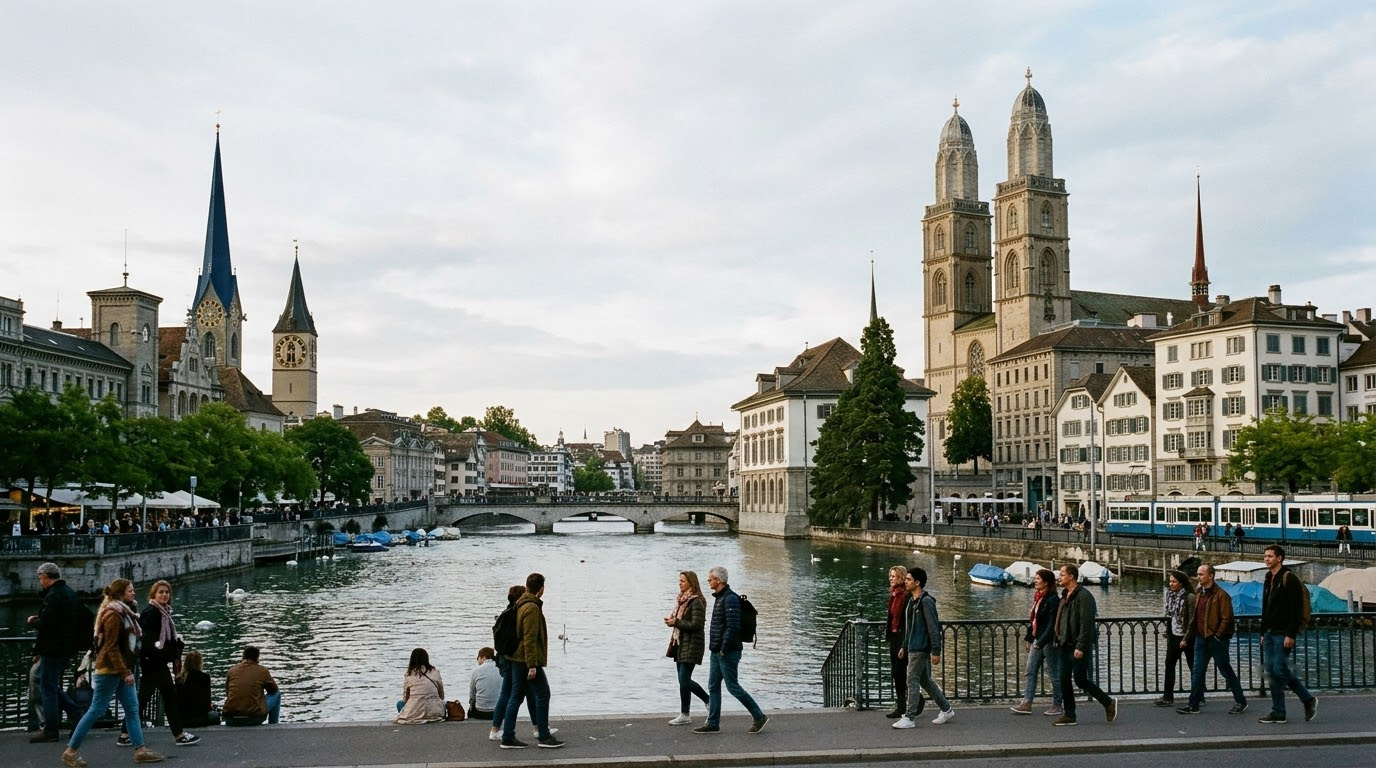
Yes, if you value culture, food, and logistics over dramatic scenery. Zurich sits at the northwestern tip of Lake Zurich at 408 m above sea level (Wikipedia, 2025), so the lake and the river Limmat shape the city center. The old town is walkable, and trams and boats cover the rest.
The city also anchors the Swiss rail network. The main station opened on 9 August 1847 and handles up to 2,915 trains a day (Wikipedia, 2025). That makes Zurich an easy base for day trips even if the city itself is not your main goal.
The honest caveat is price. Switzerland is costly, and Zurich is among its priciest cities for food and lodging. Read is Zurich expensive for a cost breakdown, and is Zurich worth visiting for a longer verdict. Safety questions are covered in is Zurich safe.
Best Time to Visit Zurich
Summer suits lake swimming, terraces, and long days. At the Fluntern climate station, July highs average 24.3°C (76°F) with lows near 14.4°C (58°F) (Wikipedia, 2025). Spring and early autumn are milder and quieter, and they work well for walking and museum days.
Winter is cold but manageable for a city break. January highs average 3.5°C (38°F), and lows dip to about -1.4°C (29°F) (Wikipedia, 2025). Museums, cafes, and covered passages carry the days, and many travelers use Zurich as a gateway to snow regions.
Many museums close on Mondays, a point the city’s own Zurich Card page notes (Zurich Tourism, 2026). Plan museum days for Tuesday to Sunday. A month-by-month comparison is in best time to visit Zurich.
How to Get to Zurich
Zurich Airport is one of Switzerland’s busiest, with 32,593,966 passengers in 2025 (Wikipedia, 2025). It lies about 9 km (5.5 miles) north of the center, and the rail station under Terminal B connects it with the city’s main station and onward intercity services.
Trains also link Zurich with other Swiss cities. Lucerne is reached by InterRegio services such as the IR 55 via Zug and the IR 70 via Thalwil (Wikipedia, 2025). If you are weighing a scenic lake base against the big city, read our Lucerne travel guide and the Lucerne vs Zurich comparison.
Check current journey times and fares on the Swiss Federal Railways timetable before you buy. Rail passes and point-to-point tickets can differ in value depending on your route.
Getting Around Zurich
The center is compact, and trams, buses, trains, and boats share one integrated network. The Zurich Card covers unlimited second-class travel on trams, buses, trains, boats, funiculars, and cable cars in the city and surrounding region (Zurich Tourism, 2026). It also includes the city-airport transfer and a trip up the Uetliberg.
Prices are USD 35 (CHF 29) for 24 hours and USD 68 (CHF 56) for 72 hours, with child rates of USD 24 (CHF 19) and USD 45 (CHF 37), and children under 6 ride free. The price depends on your start date, and rates can change from 13 December 2026. Rates are converted at the January 2026 rate from x-rates.
The Visitor Information desk at the main station is open Monday to Saturday from 8:30am to 7:00pm and Sunday from 9:00am to 6:00pm (Zurich Tourism, 2026). Ask there about current passes and event closures.
Top Things to Do in Zurich
Walk the old town. Start near the Grossmunster, the church where Huldrych Zwingli preached when the Swiss Reformation began in 1519 (Wikipedia, 2025). Cross the Limmat and wander the lanes on both banks.
Visit a museum. The Swiss National Museum and the Kunsthaus are the two big names (Wikipedia, 2025). A Zurich Card can offer free admission to many museums, so check what applies before paying at the door.
Go up the Uetliberg. The summit stands at 870 m. The S10 train from the main station runs about every half hour and takes around 20 minutes (Wikipedia, 2025). The observation tower charges about USD 2 (CHF 2).
Take a lake or river cruise. Short lake cruises and Limmat river cruises are included in the Zurich Card (Zurich Tourism, 2026).
Try a chocolate attraction. The city tourism site highlights the Lindt Home of Chocolate among its visitor attractions (Zurich Tourism, 2026).
How to Pace Your Sightseeing
Zurich works best in short, themed blocks. Pair one museum with one outdoor activity per day instead of stacking three indoor stops. Mornings suit the old town, when lanes are quiet and cafes are opening. Afternoons suit the lake, when terraces fill and boats run their fullest schedules.
If the forecast turns, swap the Uetliberg for another museum and keep the clear-weather slot for the viewpoint. The viewpoint is free to reach by train, so only the tower adds a small fee.
Planning Your Budget
Zurich costs are driven by lodging, restaurant meals, and paid attractions. Walking the old town, the riverbanks, and the lakefront costs nothing, so spend your budget on one or two paid highlights rather than many small ones.
Three habits help. First, compare the Zurich Card with a day ticket for your planned rides, because the card pays off mainly when you add a cruise, the airport transfer, and museum entries. Second, eat the main meal at lunch. Third, book lodging with free cancellation, then rebook if rates drop.
Trade fairs and major events can push hotel rates up sharply, so check dates before you lock in travel. Staying a short train ride outside the center is another way to lower the bill if you are comfortable with an extra commute.
Day Trips From Zurich
Rail links make day trips simple. Lucerne is the classic option, with lake, bridges, and mountain railways. Other popular directions include Alpine villages, lakeside towns, and historic cities in northern Switzerland. A full list with timing advice is in day trips from Zurich.
If you are choosing between Zurich and Geneva as a gateway, see Geneva vs Zurich for a side-by-side comparison.
Where to Stay in Zurich
Pick by priority.
Old town (Altstadt): best for atmosphere and walking. Rooms are smaller and rates higher.
Near the main station: best for rail connections and early departures. Convenient, though the area is less atmospheric after dark.
Lakeside and Zurichberg: quieter and greener, with a short tram ride to the center.
Western districts: trendier dining and nightlife, often with better value than the old town.
Book early for trade fairs and summer weekends, and check cancellation terms. Our comparison of neighborhoods and types of lodging is in best hotels in Zurich.
Where to Eat in Zurich
Zurich’s food scene ranges from traditional Swiss dishes to international cooking, a mix that reflects its population, where about 20% of residents speak two or more languages at home (Wikipedia, 2025). Expect cheese, sausages, and potato dishes in traditional restaurants, plus plenty of international options in the western districts.
Lunch menus and bakery stops keep costs down. Many travelers eat their main meal at midday and use supermarkets for evening picnics by the lake. Reserve ahead for dinner in the old town on weekends.
For a casual meal, look for bakeries, market stalls, and neighborhood cafes outside the tourist core, where prices drop and menus lean local. For a special dinner, choose a restaurant with a daily menu, which usually shows the kitchen’s strongest seasonal dishes. Chocolate and pastry shops make easy, affordable snack stops between museum visits.
Practical Tips Before You Go
Buy or validate your ticket before boarding, and keep it handy until you leave the vehicle. Download the rail operator’s app so you can buy tickets and check platforms on your phone. Pack layers: lake breezes and evening temperatures feel cooler than daytime highs suggest.
English is widely understood in tourist areas, and about 14% of residents were English speakers in 2024 (Wikipedia, 2025). A few words of German still go a long way in small shops and neighborhood cafes.
Sample 3-Day Zurich Plan
Day 1: Old town and river. Walk from the main station to the Grossmunster, cross the Limmat, and finish with a river or lake cruise. Pick up a Zurich Card if you plan several rides.
Day 2: Museums and Uetliberg. Spend the morning at the Swiss National Museum or the Kunsthaus, then take the S10 up the Uetliberg for sunset views.
Day 3: Day trip. Take a train to Lucerne or another nearby destination. Return by evening for a final dinner.
Two days cover the old town, a museum, and a cruise. Three days add the Uetliberg and a day trip.
Is the Zurich Card worth it?
It can be, if you use several trams, a cruise, the airport transfer, and a few museums in one or two days. It costs USD 35 (CHF 29) for 24 hours, so add up your planned rides before buying (Zurich Tourism, 2026).
Is Zurich a good base for day trips?
Yes. The main station handles up to 2,915 trains a day (Wikipedia, 2025), which puts many Swiss destinations within an easy rail ride.
Is Zurich safe for tourists?
It is generally considered a safe city for visitors, but standard city precautions still apply, such as watching bags in crowded stations. The dedicated guide is is Zurich safe.
What is the best month to visit Zurich?
Late spring to early autumn gives the mildest weather, with July highs near 24°C (75°F) (Wikipedia, 2025). See best time to visit Zurich for details.