Disclosure: Some links in this guide are affiliate links. If you book or buy through them, we may earn a small commission at no extra cost to you — it helps keep our guides free.
The 30-second version
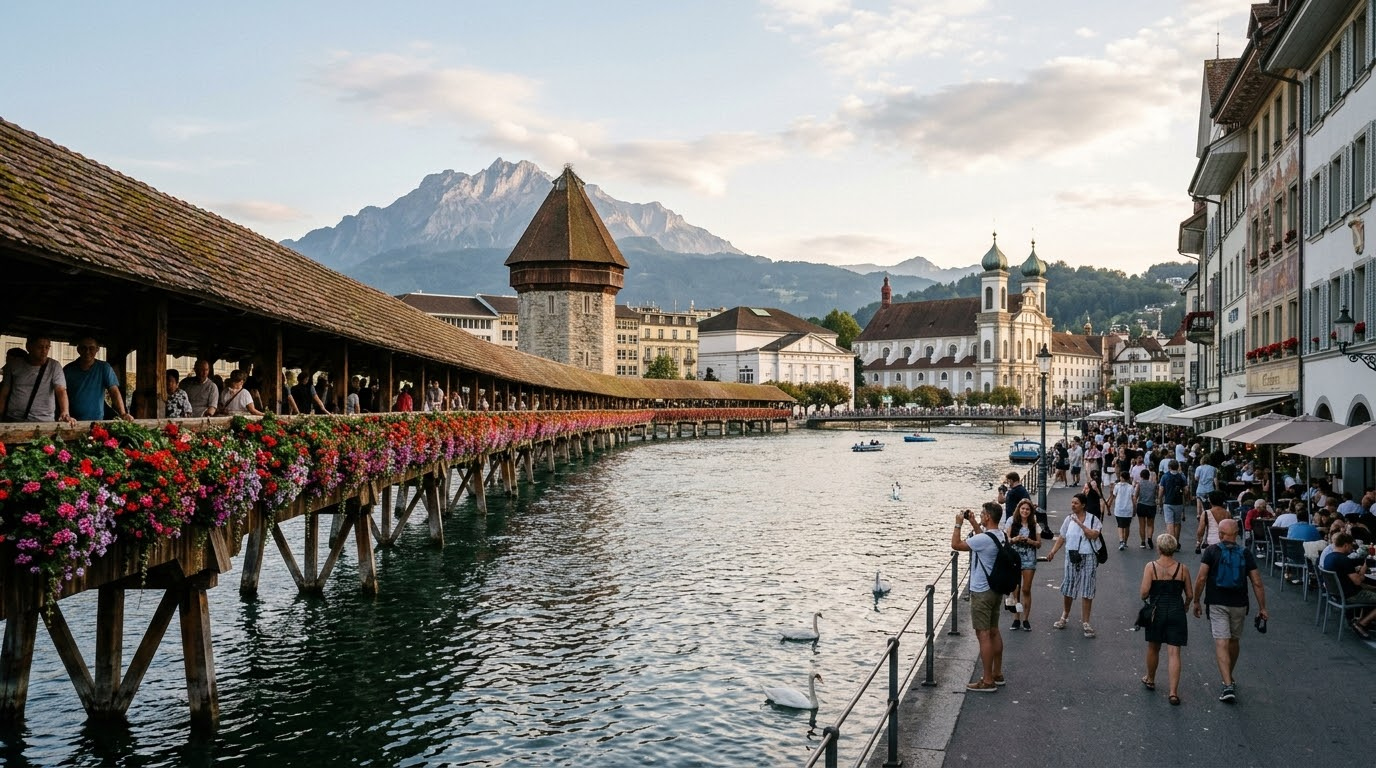
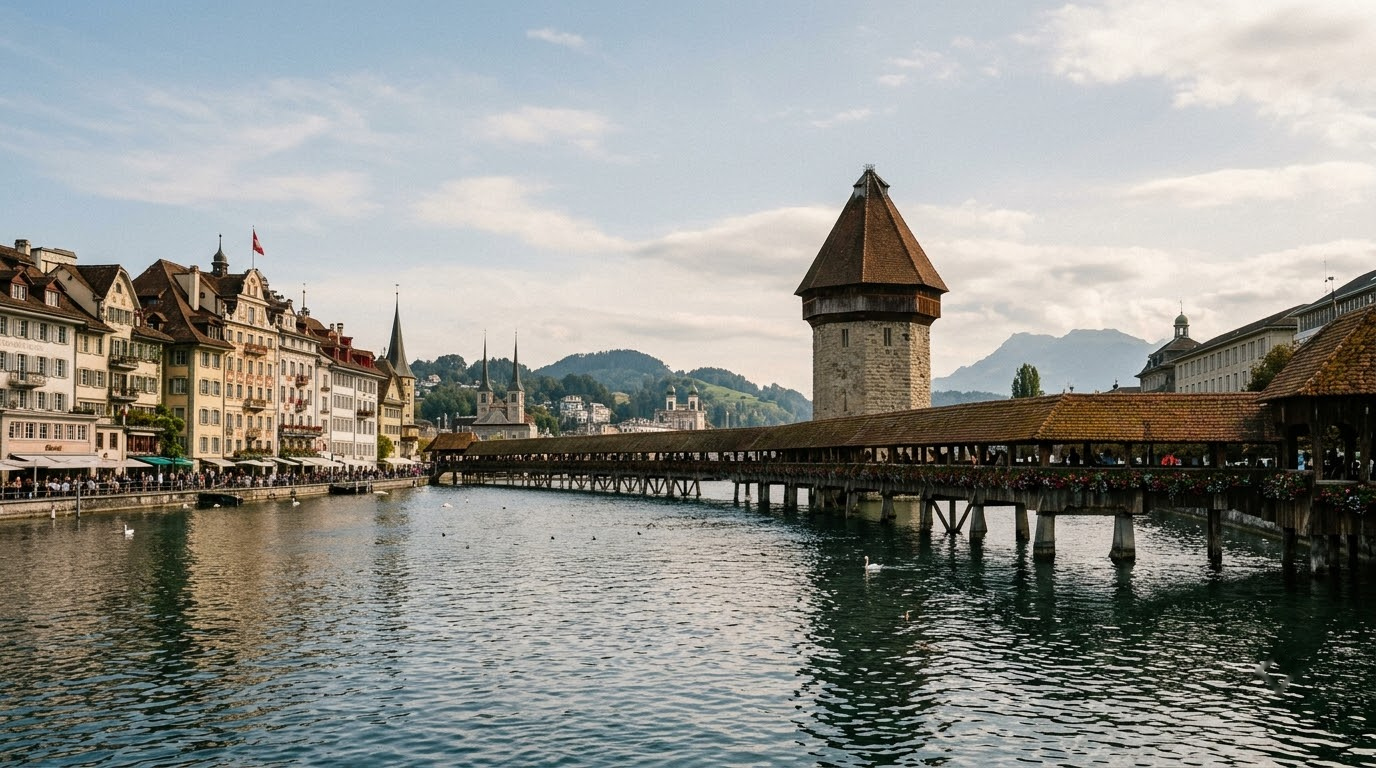
Chapel Bridge: the covered bridge is 204 m (669 ft) long and dates from 1333 (Wikipedia, 2025)
City size: about 86,700 residents in the city and roughly 247,400 in the urban area (Wikipedia, 2025)
Lake Lucerne: about 114 km2 in area, up to 214 m deep, with 32 passenger boat stops (Wikipedia, 2025)
Mountain access: Rigi Kulm stands at 1,797 m and Pilatus reaches 2,128.5 m at Tomlishorn (Rigi, Pilatus, 2025)
Weather: July highs average 24.9°C (77°F) and January highs 4.0°C (39°F) (Wikipedia, 1991-2020 normals)
Lucerne packs a medieval old town, a covered wooden bridge, a long Alpine lake, and two famous mountains into one compact city. You can walk the historic core in an afternoon, then ride a cogwheel train or a paddle steamer the next morning. That mix is why it works so well as a base for a first trip to Switzerland.
This guide is the overview: when to go, how to arrive, how to move around, where to stay, what to eat, and a three-day plan. Each section points to a deeper guide when you need more detail. If you only have a short window, start with the Lucerne itinerary.
Affiliate Disclosure: Some links in this guide are affiliate links. If you book through them, we earn a small commission at no extra cost to you. We only recommend services we genuinely trust. Learn more.
Is Lucerne Worth Visiting?
For most first trips to Switzerland, yes. The old town sits where Lake Lucerne drains into the Reuss River, so lake views, bridges, and mountain silhouettes appear within a few minutes of each other (Wikipedia, 2025). The city is small enough to cover on foot, which keeps local transport costs low on arrival days.
The trade-off is cost and weather. Switzerland is expensive, and mountain excursions only pay off on clear days. Build a flexible schedule so you can swap a summit day with a museum day when clouds sit low.
The lake also carries real history. The Rütli meadow on its shore is the traditional site of the founding of the Swiss Confederation (Wikipedia, 2025). That gives a boat ride more meaning than a scenic cruise alone.
Summer is the easiest season for lake cruises and mountain views. Lucerne’s July daily highs average 24.9°C (77°F), with lows near 14.6°C (58°F), based on 1991-2020 normals (Wikipedia, 2025). The record high reached 37.2°C (99°F), so a hot spell is possible.
Winter is cold and quieter. January highs average 4.0°C (39°F) and lows fall to about -1.6°C (29°F) (Wikipedia, 2025). Expect lower hotel demand in the city, but check which mountain lifts and boats are running before you book.
Spring and autumn suit travelers who want fewer crowds and fresh air for walking. Mountain operators also publish maintenance closures. Pilatus, for example, lists its gondolas and cable car as closed from 19 October to 27 November 2026, with access only by the cogwheel railway from Alpnachstad (Pilatus, 2026). Always check the operator’s own page before you plan a summit day.
How to Get to Lucerne
Most visitors arrive by train. Lucerne is served by InterRegio services, including the IR 55 via Zug and the IR 70 via Thalwil, which connect it with Zurich’s main station (Wikipedia, 2025). Trains run frequently enough that you rarely need to plan around a single departure.
Zurich Airport sits about 9 km (5.5 miles) north of central Zurich and has its own rail station under Terminal B (Wikipedia, 2025). Most international arrivals therefore reach Lucerne with one rail connection and no taxi. Check current journey times and fares on the Swiss Federal Railways timetable before you travel.
Many travelers pair the two cities. The neighboring city has its own overview in the Zurich travel guide, and the direct comparison lives in Lucerne vs Zurich.
Getting Around Lucerne
The old town and lakefront are walkable. You cross the Reuss on Chapel Bridge and on Spreuer Bridge, which dates from 1408 and is known for its 17th-century plague paintings (Wikipedia, 2025). Local buses cover the neighborhoods farther out, including the Swiss Museum of Transport on the northeastern lakeshore.
Boats are both transport and sightseeing. Passenger services on Lake Lucerne call at 32 stops and include historic paddle steamers (Wikipedia, 2025). The first steamer, the Stadt Luzern, began service in 1837. Check whether your rail pass or hotel guest card covers the boats before buying single tickets.
For mountain days, think in terms of a loop. Many visitors go up by one route and come down by another, for example rail up and boat back. Those loops usually need a rail pass or a multi-leg ticket to be good value, so price the full loop rather than one leg.
Planning Your Budget and Passes
Lucerne is a city where the largest costs are lodging and mountain tickets, not sightseeing in town. The bridges, the lakefront, and the old town are free to walk. A single mountain excursion with a boat leg can cost more than a full day of city sightseeing, so decide early how many summits you actually want.
Three habits keep costs under control. First, pick one headline mountain rather than two. Second, compare a multi-day rail pass against point-to-point tickets for your exact route, since the answer depends on how many lifts and boats you use. Third, book hotels with free cancellation and lock them in once the forecast looks stable.
Weather is the other budget item. A cloudy summit day wastes an expensive ticket, so check the operator’s live webcam or status page on the morning you go. If the summit is clouded in, swap to the lake or the museum and try the mountain the next day.
Top Things to Do in Lucerne
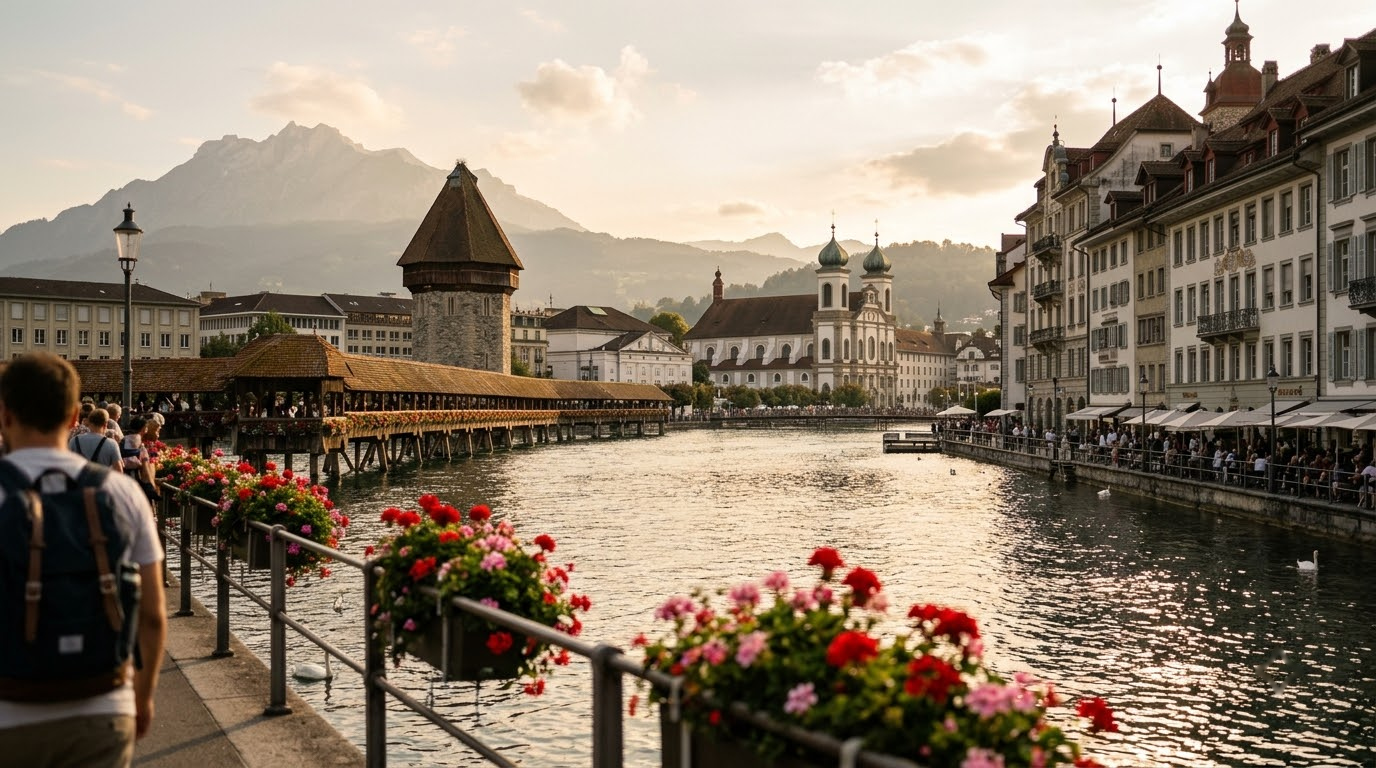
Walk the bridges. Chapel Bridge is the postcard shot. A fire on 18 August 1993 destroyed two-thirds of its interior paintings, and repairs costing USD 4.1 million (CHF 3.4 million) were finished before it reopened in April 1994 (Wikipedia, 2025). Spreuer Bridge is quieter and worth the short detour.
Ride up Pilatus. The Pilatus Railway is described by its operator as the steepest cogwheel railway in the world, and seat reservation is recommended in nice weather (Pilatus, 2026). On selected autumn weekends, a boat ride from Lucerne to Alpnachstad can be combined with the railway.
Take the Rigi. The Vitznau-Rigi-Bahn began running on 21 May 1871 and was the first mountain railway in Europe (Wikipedia, 2025). The Rigi is nicknamed the “Queen of the Mountains” and is a good choice if you prefer a broad panorama to a steep summit.
Visit the Swiss Museum of Transport. It covers locomotives, cars, ships, and aircraft, and it works well as a rainy-day plan (Wikipedia, 2025).
Climb the town wall. Remnants of the old walls still stand, including eight watch towers (Wikipedia, 2025). They give free high views over the roofs and the river.
Cruise the lake. Even a short steamer ride changes your view of the city. Longer routes reach lakeshore villages and rail connections to other peaks.
Old town and lakefront: best for walking to the bridges, the boat piers, and restaurants. Rates run highest here, and lake-facing rooms sell out first in summer.
Near the train station: practical for early mountain departures and airport transfers. The walk to the old town is short and flat.
Outer neighborhoods and lakeshore towns: quieter and often cheaper. Plan on bus or boat links for dinner in town.
Many Swiss hotels give overnight guests a visitor card with local perks, and the city tourism site presents the Lucerne Visitor Card as an advantage for overnight guests (Luzern Tourism, 2026). Ask what yours includes at check-in.
Book early for July, August, and December, and read cancellation terms carefully. Our area-by-area breakdown is in where to stay in Lucerne.
Where to Eat in Lucerne
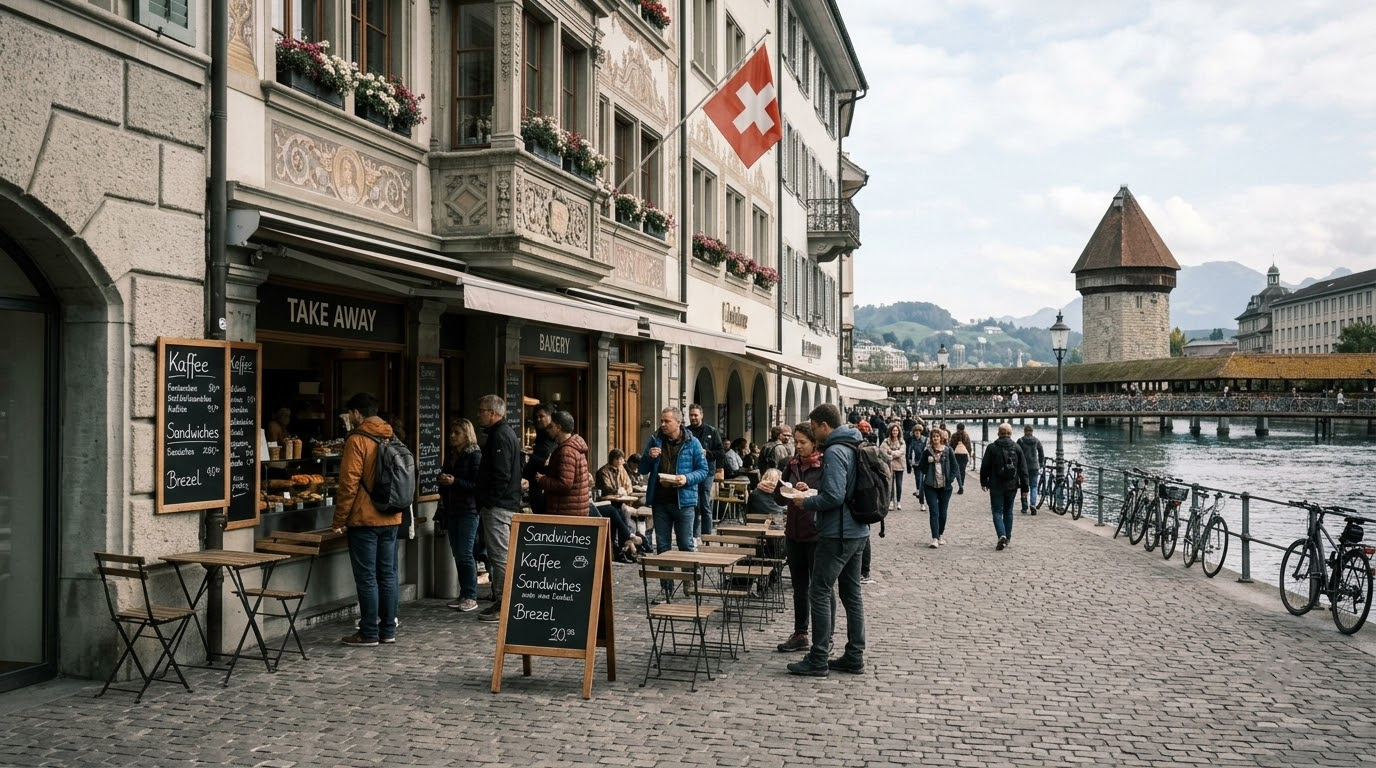
Expect Swiss German comfort food: cheese dishes, rosti, sausages, and lake fish at lakefront restaurants. Old town squares have terraces that charge a premium for the setting, while side streets and the area around the station offer lower-priced bakeries and casual lunches.
A good approach is to make lunch your main restaurant meal, since many places run cheaper set lunches, and keep dinners simpler. Supermarket picnics also work well for mountain days, and they free your budget for the one restaurant meal you really want.
Lake fish, regional cheese, and pastries from local bakeries are the best-value tastes of the region. Ask whether a daily special is on offer, because it is usually the freshest and fairest-priced plate on the menu. Reserve ahead for lakefront terraces on summer evenings, when the best tables fill first.
Carry a light jacket even in July, because lake breezes and mountain summits feel much cooler than the city center. Wear shoes with grip for wet bridge boards and steep station platforms. Keep a rain plan ready, since the Swiss Museum of Transport, covered bridges, and indoor food halls all work when showers arrive.
Photographers should visit Chapel Bridge early or late, when crowds thin and the light is softer. Tour groups cluster around midday. Early evening is also the best time for the lakefront promenade.
Sample 3-Day Lucerne Plan
Day 1: Old town. Cross Chapel Bridge, then Spreuer Bridge. Walk part of the town wall and finish with a lakeside stroll at sunset. Keep the evening light for dinner near the river.
Day 2: Mountain. Pick Pilatus or Rigi based on the forecast. Check the operator page for closures, book any boat or train leg ahead on busy summer days, and carry a warm layer, since summit temperatures sit well below the city.
Day 3: Lake and museum. Take a steamer to a lakeshore town, then spend the afternoon at the Swiss Museum of Transport. Leave time to collect luggage before your onward train.
Two days cover the old town and one mountain. Three days add a lake cruise and a museum without rushing, which is the pace most first-time visitors enjoy.
Is Lucerne expensive?
Yes, by most standards, since Switzerland has high prices for hotels, restaurants, and mountain lifts. Lower-cost habits include lunch as the main meal, walking, picnics, and checking whether a guest card or rail pass covers your transport.
What is the best month to visit Lucerne?
June to September gives the warmest weather, with July highs averaging 24.9°C (77°F) (Wikipedia, 2025). Shoulder months are quieter, but check lift maintenance schedules first.
Which is better, Pilatus or Rigi?
Pilatus is higher at 2,128.5 m (Tomlishorn) and is known for its steep cogwheel railway. Rigi, at 1,797 m, has a gentler profile and a long railway history (Rigi, 2025). Choose by forecast and by the transport combination you prefer.
Is Lucerne better than Zurich?
They suit different trips. Lucerne is a compact scenic base, while Zurich is a larger city with more museums and nightlife. See Lucerne vs Zurich for the full comparison.