Lucerne vs Zurich: Which Swiss City Makes the Better Base? (2026)
Disclosure: Some links in this guide are affiliate links. If you book or buy through them, we may earn a small commission at no extra cost to you — it helps keep our guides free.
You are a first-time visitor who wants Pilatus and Rigi within easy reach.
See hotels in Lucerne →You want museums, nightlife, restaurants or a 10-minute train to the airport.
See hotels in Zurich →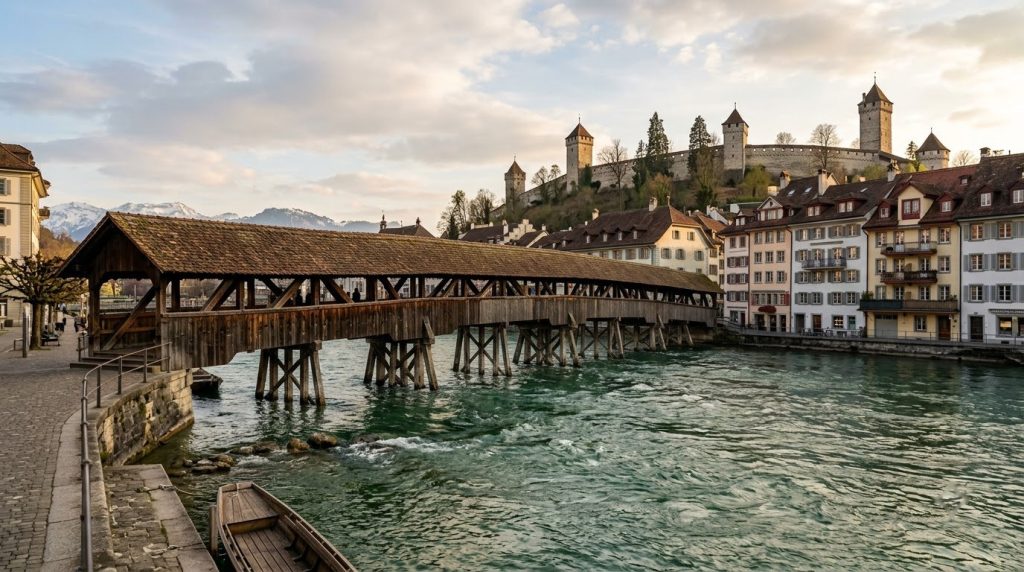
Lucerne beats Zurich as a base for most first-time visitors staying 2 to 4 nights: direct trains link the two in as little as 41 minutes, and Lucerne puts Mount Pilatus and Mount Rigi within an easy half-day by boat and cogwheel train. Pick Zurich only if you want museums, nightlife and restaurants, or a 10-minute train to the airport.
Both cities sit under a US State Department Level 1 advisory, so safety is not the tiebreaker.
| Factor | Lucerne | Zurich |
|---|---|---|
| Best for | First-timers, couples, families | Short stopovers, food, nightlife |
| Airport transfer | About 1 hour by train, USD 37 (CHF 31) | 10–15 minutes, USD 8 (CHF 7) |
| Mountain day trips | Pilatus and Rigi start at the lakefront | Uetliberg, a city hill 20 minutes away |
| Old town | Compact, walkable, on the lake and river | Larger, more urban |
| Size | About 86,700 people | About 444,000 people |
| Evenings | Quiet after 10 pm | The most choice in Switzerland |
| Verdict | Base for 3+ nights | Arrival or departure night |
The core difference: postcard town vs working city
Zurich is Switzerland’s largest city and its financial center. Lucerne is about a fifth of its size, and you feel it at the station: in Lucerne you step straight out onto the lake, while in Zurich you step onto Bahnhofstrasse, a shopping street of banks and boutiques.
The State Department rates Switzerland Level 1, “Exercise Normal Precautions” (last updated 20 May 2025). Pickpocketing around the main stations is the realistic risk in both.
If you are still deciding whether Lucerne earns a spot on your route at all, our take on whether Lucerne is worth visiting covers the crowds and costs honestly.
Getting there from the US and between the two cities
For either city you fly into Zurich Airport (ZRH). SWISS flies nonstop from New York, Newark, Boston, Chicago, Miami, San Francisco and Los Angeles, and New York to Zurich takes about 7 hours 45 minutes. US passport holders still enter Switzerland visa-free for up to 90 days in any 180. ETIAS, the EU travel authorization, has not started yet and has no confirmed launch date.
From the airport: – To Zurich HB (main station): trains every 5–10 minutes, 10–15 minutes, CHF 7 (about USD 8). – To Lucerne: about 1 hour. A full-fare 2nd-class single costs CHF 31 (USD 37) from the airport, or CHF 27 (USD 33) from Zurich HB.
Between the two cities, SBB runs around 40 direct trains a day, taking 41–52 minutes for the 40 km (25-mile) trip. Whichever city you pick, the other works as a day trip. Prices are converted at USD 1 = CHF 0.83.
Mountains and day trips: Lucerne wins clearly
This is the biggest gap. From Lucerne:
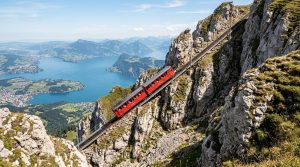
– Mount Pilatus Golden Round Trip: boat to Alpnachstad, the steep cogwheel railway up, then cable cars down to Kriens and a bus back to town. It costs USD 144 (CHF 119.80) in 2nd class, or USD 72 (CHF 59.90) with a Half Fare Card. The full loop runs only from May to October.
In 2026 the boat-and-cogwheel season ends on 18 October. – Mount Rigi: about an hour by boat to Vitznau, then roughly 30 minutes up by cogwheel train to Rigi Kulm. – Luzern-Interlaken Express: an hourly scenic train to Interlaken Ost in 1 hour 50 minutes, so Interlaken also works as a long day trip.
From Zurich, the nearby summit is Uetliberg, a forested hill 20 minutes away on the S10. It is pleasant, but it is not the Alps.
Doing two or more of these? Price out the Swiss Travel Pass, which starts at USD 306 (CHF 254) for 3 days in 2nd class. Our Lucerne itinerary shows how to fit the boat-and-mountain days around the old town.
City sightseeing, food and nights out: Zurich wins
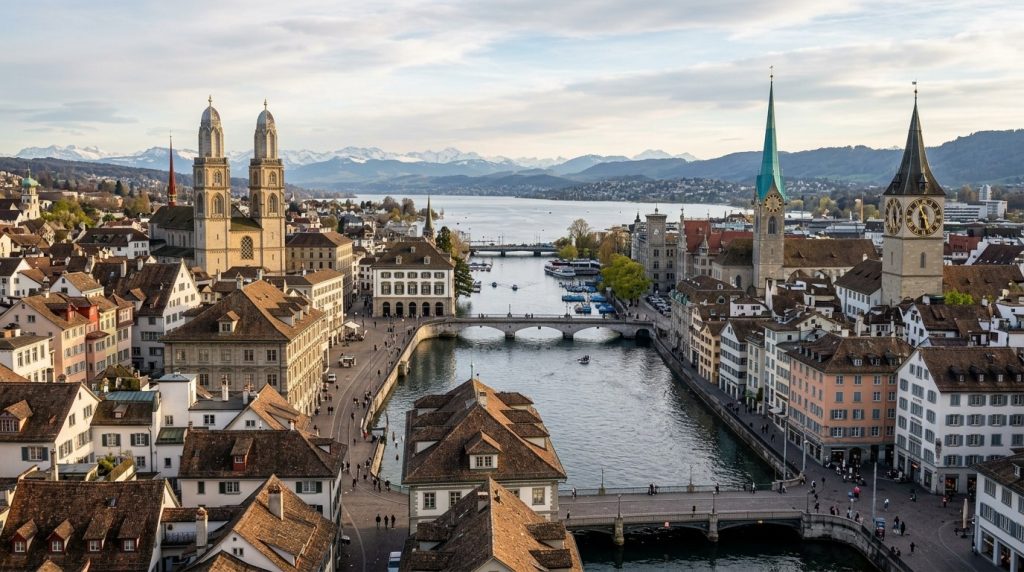
Zurich has the stronger city break: a bigger Altstadt (old town) on both banks of the Limmat, serious art museums, summer lake swimming, and the widest range of restaurants and bars in the country. If you want a bar open after 11 pm, Zurich is the easy call.
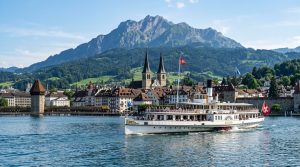
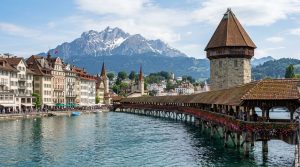
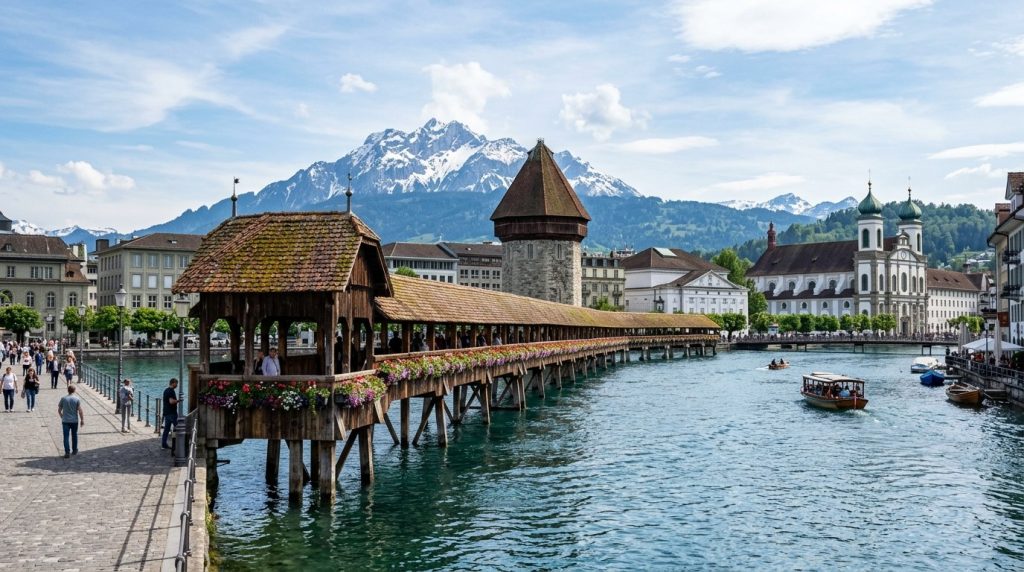
Lucerne’s sights cluster around the lake. The 204-meter Chapel Bridge has been the city’s landmark for about 650 years, although most of it was rebuilt after a fire in 1993. Add the Lion Monument and you cover the highlights in a day.
The full list of things to do in Lucerne also includes the Swiss Museum of Transport, which is the best rainy-day pick for families. After about 10 pm, though, Lucerne goes quiet.
Season matters more than you think
Lucerne’s edge depends on the mountains, which depend on weather and timetables. In summer and early fall it wins clearly. From late October round trips are cut back, and on a low-cloud day Pilatus means paying for fog.
Zurich holds up better off-season: museums, Christmas markets and a deep restaurant scene do not need a clear sky. Before you lock in a winter trip, check our guide to the best time to visit Zurich.
Verdict by traveler type
– First-timers (3–5 nights): stay in Lucerne. Spend your arrival or departure night in Zurich only if your flight times force it. – Couples: Lucerne for evening lake walks and the old town by night. Zurich if dinners and cocktail bars are the point of the trip. – Families: Lucerne.
The lakeside is walkable, the boats are a hit with kids, and children aged 6–15 pay half price on Pilatus. – Budget travelers: neither city has cheap hotels. Lucerne saves on transport if your plan is all mountains, and Zurich saves if you fly in and out within 48 hours. – Stopover of 1–2 nights: Zurich.
With a Zurich itinerary you can see the old town and the lake and still do a half-day in Lucerne by train.
Where to stay
– Lucerne Old Town (Altstadt): best for first-timers and couples. You can walk to Chapel Bridge and the boat piers, but expect the highest prices in summer. – Lucerne near the station and KKL: best for day-trippers. Trains and boats are steps away, which makes it easier with luggage.
See our breakdown of where to stay in Lucerne for the quieter lakeside streets. – Zurich Altstadt or near Zurich HB: best for a single arrival or departure night. The airport is 10–15 minutes away and trains to Lucerne leave every 30 minutes.
Find your Lucerne hotel on the map
Live prices from Booking, Airbnb and more — move the map or change dates to compare stays across Lucerne.
Frequently Asked Questions
How far is Zurich from Lucerne?
About 40 km (25 miles). Direct SBB trains take 41 minutes on the fastest service and about 52 minutes on average, with roughly 40 a day. A full-fare 2nd-class single from Zurich HB costs USD 33 (CHF 27), and the Swiss Travel Pass covers the trip.
Is Lucerne better than Zurich for first-time visitors?
For most first-timers, yes. Lucerne gives you the lake, the medieval Chapel Bridge and two classic mountains, Pilatus and Rigi, without long transfers. Zurich is better for museums, food and nightlife, and it makes sense for your first or last night because the airport is only 10–15 minutes from the main station.
Can you do Lucerne as a day trip from Zurich?
Yes. With trains every 30 minutes and a ride of under an hour, it is easy: old town and Chapel Bridge in the morning, a lake boat in the afternoon. Adding Mount Pilatus makes it a long day, because the Golden Round Trip alone needs at least five hours.
Is it worth going to Lake Lucerne?
Yes, if the weather is clear. Boats from the piers next to Lucerne station connect to Vitznau for Mount Rigi in about an hour, and to Alpnachstad for the Pilatus cogwheel railway. Between May and October, the boat legs are included in the Pilatus Golden Round Trip, which turns a lake cruise into a full mountain day.
Is Lucerne more German or French?
German. Lucerne and Zurich are both in German-speaking Switzerland, so signs and menus are in German, often with English too. English is widely spoken in hotels, at stations and on the boats. French-speaking Switzerland is in the west, around Geneva and Lausanne.