Best Time to Visit Zurich (2026)
Disclosure: Some links in this guide are affiliate links. If you book or buy through them, we may earn a small commission at no extra cost to you — it helps keep our guides free.
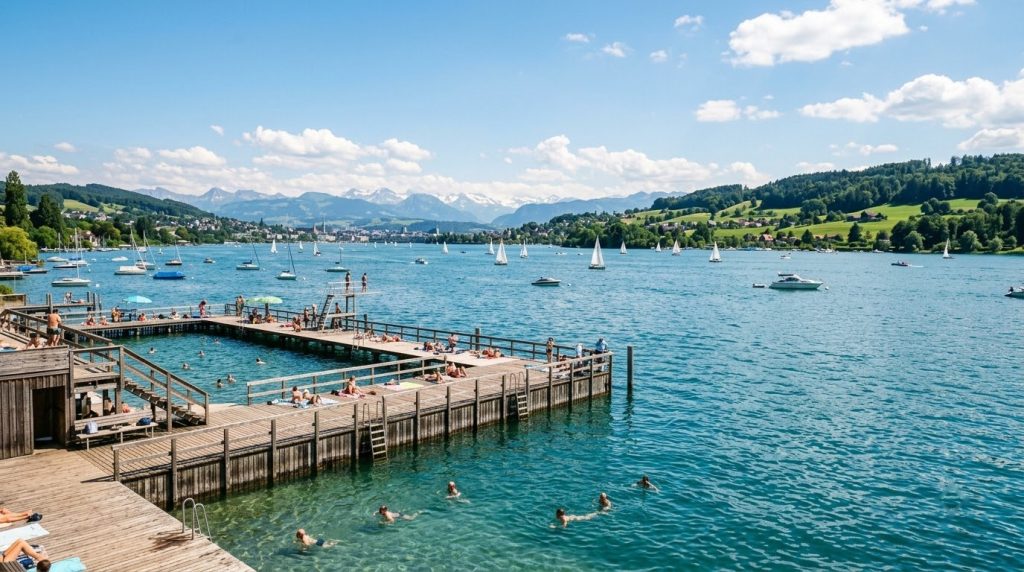
The best time to visit Zurich is June through August, when daytime highs reach 25°C (77°F) and the city holds close to 15 hours of daylight around the June solstice. Travelers chasing lower prices should target May, September, or October instead, since the Street Parade in August and Sechseläuten in April can spike hotel rates well above the summer average.
Zurich month by month
| Month | Temp | Daylight and lake | Crowds and prices | Verdict |
|---|---|---|---|---|
| January | 5°C (41°F) | ~8.5 hrs daylight, Badis closed | Quietest month, lowest rates | Cold, cheap, few crowds |
| February | 7°C (45°F) | ~10 hrs daylight, Badis closed | Still low season | Cold shoulder, good value |
| March | 11°C (52°F) | 12 hrs at the equinox, Badis closed | Rates creep up before Easter | Mild transition |
| April | 15°C (59°F) | Over 13 hrs daylight, Badis prepping | Sechseläuten (April 20) spikes downtown rates for a weekend | Good value except festival dates |
| May | 20°C (68°F) | ~15 hrs daylight, Badis open mid-month | Demand rising, still below peak | Value window opens |
| June | 23°C (73°F) | 15h42m at the solstice, Badis in full swing | Summer peak begins | Warm, busy, lake season |
| July | 25°C (77°F) | ~15 hrs daylight, Limmat at 18-22°C | Peak season, high demand | Warmest month, busiest |
| August | 25°C (77°F) | ~14 hrs daylight, lake swimming continues | Street Parade (August 8) sells out hotels citywide | Hot, festival premium |
| September | 20°C (68°F) | 12 hrs at the equinox, most Badis close late month | Strong demand, no single-event spike | Best balance of warmth and value |
| October | 15°C (59°F) | ~10.5 hrs daylight, Badis closed | Shoulder value, fewer tourists | Cool but excellent value |
| November | 9°C (48°F) | ~9 hrs daylight, Badis closed | Quiet before markets open (November 20) | Cold, dark, pre-market lull |
| December | 6°C (43°F) | 8h18m at the solstice, Badis closed | Christmas markets draw crowds through December 23 | Festive but cold and short on light |
Summer (June to August) – the lake city at its best
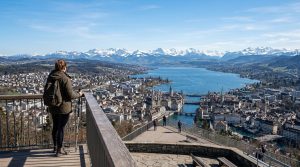
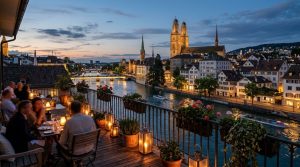
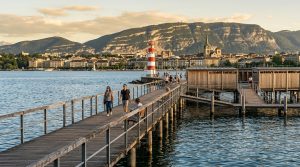
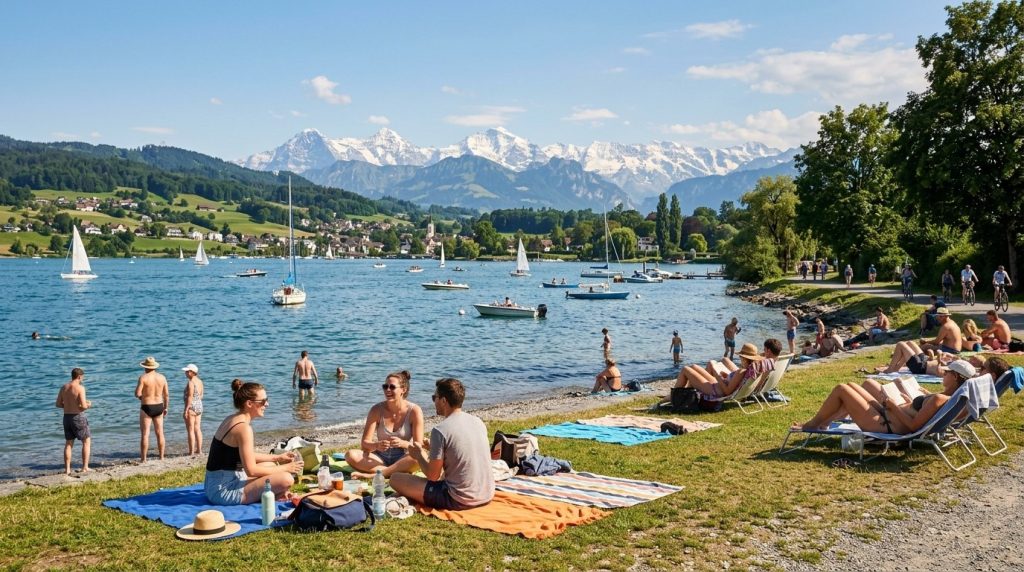
Summer is Zurich’s peak season because it is the only stretch when the city’s lake lidos, known locally as Badis, are fully open. The Badi season runs from mid-May into late September, and spots like Seebad Utoquai and Strandbad Mythenquai turn Lake Zurich’s shoreline into the city’s real summer living room.
The Limmat river itself sits at a swimmable 18-22°C through summer, and locals float sections of it during warm afternoons rather than treating the water as a photo backdrop.
Daytime highs peak at 25°C (77°F) in July and August, and daylight stretches close to 15h42m around the June solstice, so evenings on the water stay bright well past 9 p.m. The tradeoff is crowding and price: this is the most expensive and most booked stretch of the Zurich calendar outside the festival dates below.
The festivals that spike prices without warning
Two festivals, not the calendar, decide when Zurich hotel rates actually spike, and both catch first-time visitors off guard.
Sechseläuten runs April 17-20, 2026, with the main event on Monday, April 20, when the city’s guilds parade in historical costume and burn the Böögg, a giant snowman effigy, at exactly 6 p.m. Zurich tradition holds that the faster the Böögg’s head explodes, the better the coming summer will be.
The bigger price shock comes in August: the Street Parade, one of Europe’s largest techno street festivals, takes over the lakefront on Saturday, August 8, 2026, drawing hundreds of thousands of visitors for a single day of parade floats and open-air sound systems.
Hotels near the lake and Hauptbahnhof routinely sell out weeks ahead, and rates that stay reasonable all summer jump sharply for that one weekend. Anyone building a Zurich trip around either date should book accommodation as soon as dates are confirmed, and anyone trying to avoid the crowd should build the trip around a different weekend entirely.
Shoulder season (May, September, October) – the value window
May, September, and October deliver Zurich’s best value because the city still holds comfortable daytime highs of 15-20°C (59-68°F) without summer’s hotel premiums or festival surcharges.
September is the strongest single month in this window: temperatures average 20°C (68°F), most Badis stay open into late September for a final few swims, and demand is steady rather than spiking around one event. October and May trade a few degrees of warmth for noticeably thinner crowds at central sights like the Old Town and Lake Zurich promenade.
This same value logic plays out across the rest of the country, and for how it compares to alpine resorts and other Swiss regions, see our best time to visit Switzerland guide.
Winter – Christmas markets and a base for the mountains
Winter turns Zurich into a Christmas-market city and a rail gateway to the Alps rather than a destination chosen for its own weather.
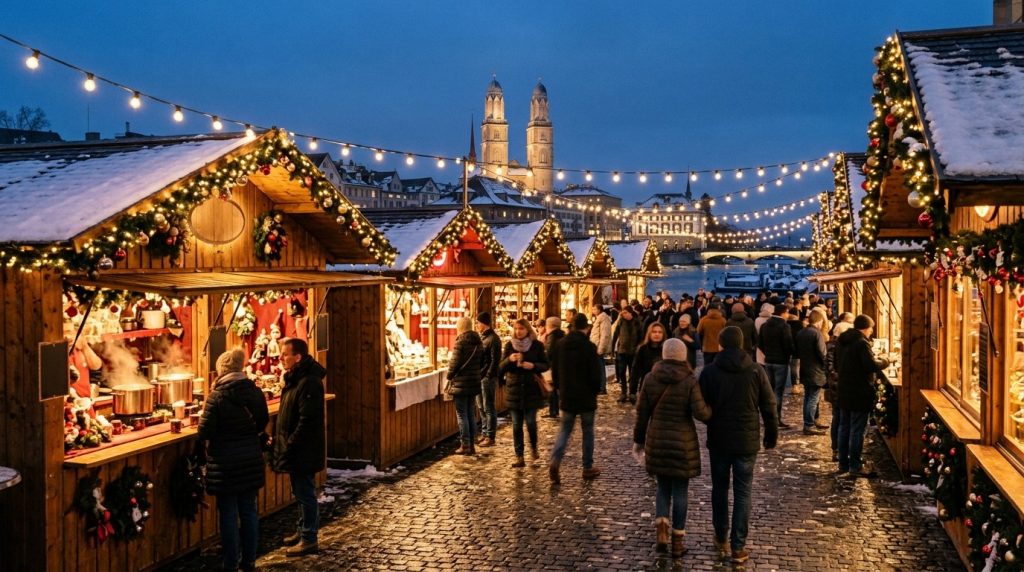
The Wienachtsdorf market at Sechseläutenplatz runs November 20 to December 23, 2026, with more than 100 stalls set against the Opera House and the lake, and it is the largest of several markets that light up the city center through December.
Daytime highs sit at 5-7°C (41-45°F) from November through February, and the December solstice brings the year’s shortest day at 8h18m of daylight.
Where winter earns its keep is as a base: Zurich’s main station puts the Bernese Oberland and other alpine resorts within a few hours by train, which is the better use of a winter trip if snow sports are the goal. Our Swiss Alps travel guide covers that onward leg in more detail.
When NOT to visit Zurich
Skip the first two weeks of January, when many restaurants and smaller attractions close for the post-holiday lull and daytime highs barely clear 5°C (41°F) under some of the year’s shortest daylight. Skip the Street Parade weekend in August unless attending it on purpose, since hotel rates spike citywide and central Zurich becomes difficult to move through on foot.
Late October through mid-November is the other trap: the Badis have closed, the Christmas markets have not opened yet, and daylight has dropped under 10 hours, so the city offers neither summer’s lake life nor winter’s festive pull.
The Zurich Card: when it pays off by season
The Zurich Card covers unlimited second-class travel on the city’s trams, buses, trains, boats, and the two funiculars, plus free entry to a long list of museums, and its value shifts with the season rather than staying constant year-round.
A 24-hour card costs USD 29 (CHF 29) and a 72-hour card costs USD 56 (CHF 56), with new rates taking effect from December 13, 2026, so check the current price against the dates of a trip booked close to that changeover.
In summer, when the Badis and the lake promenade are the main draw, the card’s transit coverage still pays for itself quickly if a day includes a tram to the lido, a train out to a nearby town, and a boat ride back, but the museum perk matters less because most visitors spend fewer hours indoors.
In winter, the balance flips: short daylight hours and near-freezing temperatures push more of a day toward museums and indoor sights, and the card’s free entry to the Kunsthaus and the Swiss National Museum starts to offset its price faster than the transit savings alone would.
Shoulder-season travelers doing a mix of a Christmas market, a lake walk, and a train trip out of the city typically fall somewhere between the two, and the card still beats paying separately for trams and a single museum ticket on most two-attraction days.
Travelers staying only one night, or those who plan to spend most of a short visit inside a single neighborhood on foot, often save more buying a single tram ticket or two rather than a full-day card, since the card’s price only pencils out once at least one museum and a couple of transit legs are both on the day’s agenda.
Families should also check child pricing separately, since a card bought at the adult rate for a short layover can cost more than point-to-point tickets for a one or two stop itinerary.
Kunsthaus Zurich as a wet-weather plan B
Kunsthaus Zurich, the city’s largest art museum, is a useful fallback across every season because a rain-soaked afternoon in July costs a visit just as much time as a grey week in November.
Standard admission to the permanent collection runs USD 24 (CHF 24) for adults, while major temporary exhibitions are priced separately and typically run USD 31 to USD 36 (CHF 31 to CHF 36), so check which ticket a current show requires before planning a half day around it.
The museum sits an easy tram ride from the main station and from the Old Town, which matters most in winter when nobody wants to walk far between stops.
Exhibition tickets at the Kunsthaus are tied to specific shows, so the exact fee can shift through the year as one exhibition closes and the next opens, and it is worth confirming the current show and its price online before counting on the lower collection-only rate.
The Swiss National Museum, housed in a castle-like building a short walk from the main station, adds a second free stop under the Zurich Card and covers a broad sweep of Swiss history that pairs naturally with an art-focused Kunsthaus visit on the same ticket day.
Pairing the two turns a single rainy or cold day into two full museum visits without paying for either ticket separately, which works especially well during the late-October-to-mid-November lull described below, when the Badis have closed and the Christmas markets have not yet opened.
What to pack for each Zurich season
Summer packing should center on light layers rather than heavy warm-weather gear, since daytime highs of 23 to 25 degrees C (73 to 77 degrees F) still cool off in the evening and a quick change into a dry layer matters if a Badi swim is on the agenda.
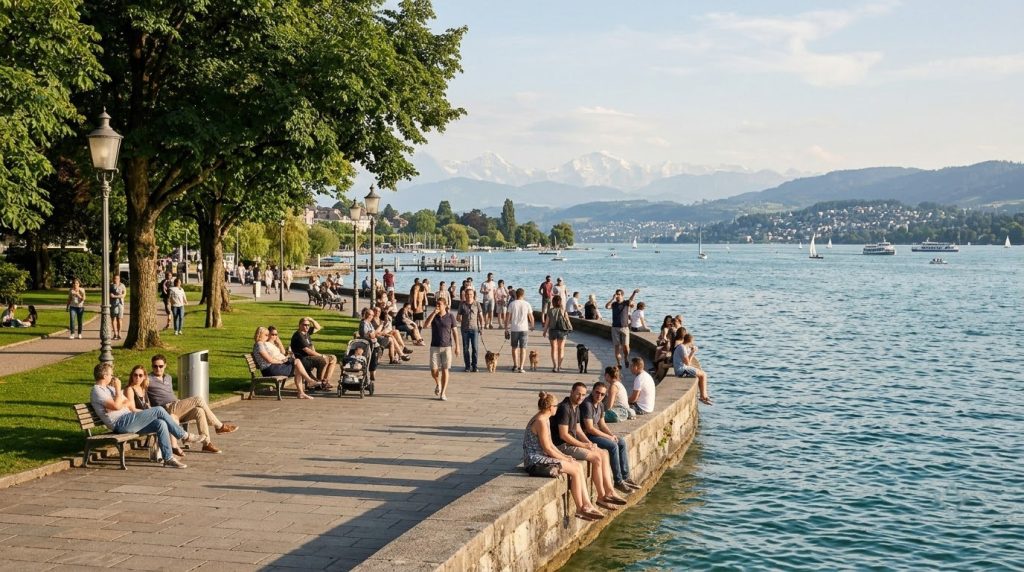
Pack a swimsuit and a quick-dry towel from May through September, when lake and river swimming are genuinely part of the local routine rather than a tourist add-on, and bring sun protection, since UV exposure at Zurich’s latitude in July and August is stronger than the mild-looking temperatures suggest.
Layering matters most in the shoulder months precisely because the daytime-to-evening swing is sharper than in high summer or deep winter.
A morning that opens cool can climb several degrees by early afternoon and drop back down well before a late dinner, so a base layer, a mid layer, and a packable outer shell cover more temperature range than one heavy jacket.
Pack lighter resort wear for summer evenings around the lake, since dinner at lake-facing restaurants rarely requires anything more formal than smart casual, even at properties in the luxury tier.
Winter demands real cold-weather gear: a warm coat, gloves, and solid waterproof footwear matter more than style, since cobblestone streets around the Christmas markets get slick with slush and the short daylight hours mean a lot of walking happens in near-dark conditions. Across every season, comfortable walking shoes outrank anything else in the bag, since Zurich’s Old Town and lakefront are built for walking, not driving.
Getting around Zurich in each season
Zurich’s trams and buses run on the same dense, reliable network year-round, so the core of the city stays just as easy to navigate in January as it is in July. What changes with the seasons is everything built around the lake and river.
Boat departures run far more frequently through the warmer months, when the Badis are open and demand is highest, then thin out noticeably once the weather turns, so a boat trip planned for deep winter needs a timetable check that a June visit does not.
Walking and cycling both work well from spring through autumn, when dry, flat routes along the lake promenade and through the Old Town are the fastest way to cover short distances. Public bike-share stations operate across the city in every season, though uptake drops sharply once temperatures fall below freezing and ice becomes a real risk on unheated cycle lanes.
Winter conditions on those same walking and cycling routes make the trams a safer default, and visitors who plan to cycle in the colder months should check conditions rather than assume the summer routine still applies.
Drivers connecting a Zurich stop to a wider Swiss itinerary should budget extra time for winter mountain passes, since some high-altitude roads close seasonally regardless of how clear the weather looks in the city itself, a detail that catches travelers who treat Zurich’s own mild winter as representative of the whole country.
For day trips toward the mountains by rail, the network itself does not slow for snow, but connecting cable cars and smaller regional lines can run reduced schedules outside peak ski season, which matters for anyone pairing a Zurich stay with a one-day trip into the Alps rather than a multi-day mountain base of its own, so a quick check of the specific route’s seasonal status beats assuming the city’s own mild winter extends all the way to the pass.
Plan your Zurich trip
The Swiss Travel Pass covers unlimited trains, buses, and boats across the country and is worth pricing against a point-to-point itinerary before booking. Second-class 2026 rates run USD 313 (CHF 254) for three days, USD 491 (CHF 399) for six days, and USD 540 (CHF 439) for eight days, converted at CHF 1 = USD 1.23 as of September 2026. And if Geneva is also in the running, our Zurich or Geneva breakdown notes the two cities are close to 3 hours apart by train, so many travelers do both.
For where to base a Zurich stay, our best hotels in Zurich guide breaks down neighborhoods by budget, and if the itinerary extends toward the mountains, our where to stay in Lucerne guide covers that connecting stop.
Find your Zurich hotel on the map
Live prices from Booking, Airbnb and more — move the map or change dates to compare stays across Zurich.