Is Lucerne Worth Visiting? (2026)
Disclosure: Some links in this guide are affiliate links. If you book or buy through them, we may earn a small commission at no extra cost to you — it helps keep our guides free.
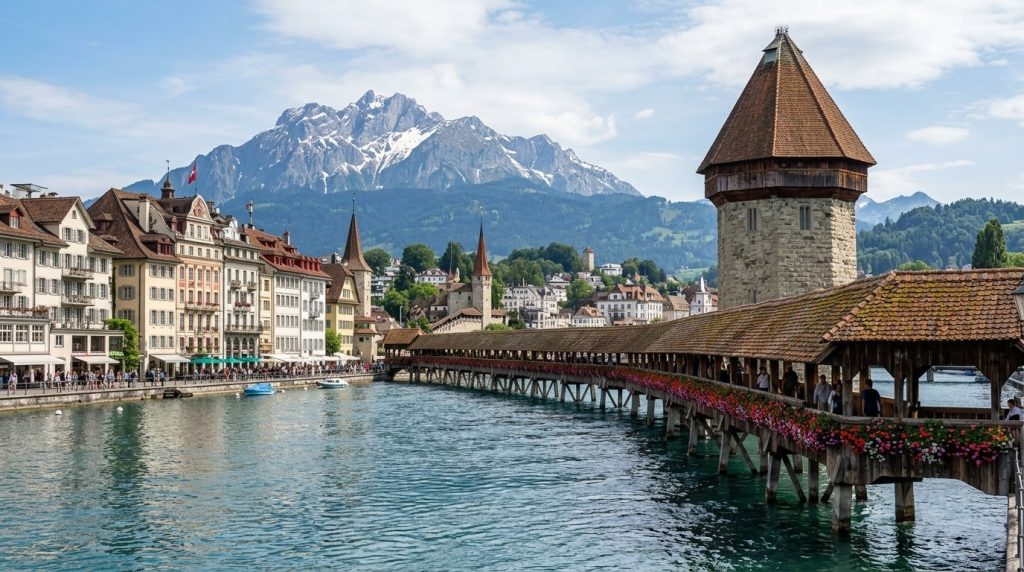
Lucerne is worth visiting, and worth at least one night of its own, if you plan to ride a mountain such as Mount Pilatus at USD 104 (CHF 84) or want a lake-town base rather than an alpine village, because the Old Town itself takes under three hours to walk end to end.
Skip the overnight and treat it as a day trip if the Chapel Bridge and a lake stroll are all you want, since Zürich sits only about 45 minutes away by direct train.
| Traveller type | Worth it? | Nights to give it | Why |
|---|---|---|---|
| Mountain-excursion travelers (Pilatus, Rigi, Titlis) | Yes | 2 nights | Room to do more than one cogwheel railway without a same-day Zürich commute |
| Lake-town base seekers | Yes | 1-2 nights | Walkable Old Town, lake cruises, and a train hub in one stop |
| First-time visitors short on time | Yes, as a day trip | 0 nights | Old Town and Chapel Bridge fit into a 45-minute train ride each way |
| Interlaken- or Zermatt-bound travelers | Optional stopover | 0-1 night | Worth comparing against a full alpine base before deciding |
| Nightlife or budget backpackers | No | 0 nights | Lucerne is quiet after dark and priced for lake-view rooms, not hostel beds |
What Lucerne Has That the Alpine Villages Do Not
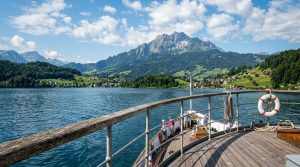
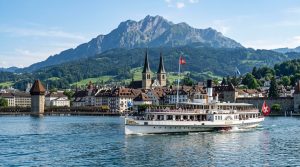
Lucerne’s advantage over an alpine village such as Zermatt or Grindelwald is that it functions as a transit hub, not a single-mountain base. The city sits on direct rail lines to three separate mountain excursions, Mount Pilatus, Mount Rigi, and Mount Titlis, plus lake steamers that leave from the same waterfront as the main train station.
An alpine village puts one mountain outside your window and little else within easy reach. Lucerne puts three mountains within roughly an hour and lets you swap plans if the weather turns on any given day, which matters in the Alps, where cloud cover can close a cable car with little notice.
It also means you are not committing an entire trip to one valley, since the city itself works as a base for day trips in several directions at once. For how the wider region beyond Lucerne stacks up, the Swiss Alps travel guide covers the alpine villages on their own terms.
The Old Town Is Smaller Than You Think
The Lucerne Altstadt is compact enough to see on foot in under three hours. Kapellbrücke, the wooden Chapel Bridge dating to 1333, takes about five minutes to cross end to end. The Musegg Wall towers add roughly 40 minutes if you climb the sections that are open to visitors, and the Lion Monument is a five-minute stop with free admission.
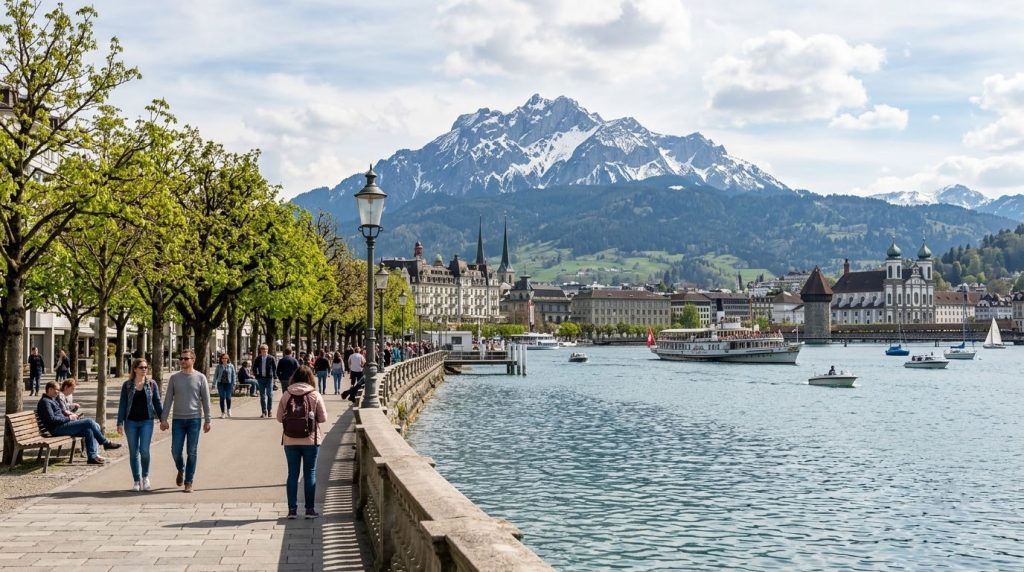
Add a coffee break and a slow lap of the lakefront promenade and a determined visitor has covered the entire Old Town by early afternoon. This is the fact that settles the whole question.
If the Old Town is the only item on your list, you do not need a hotel room in Lucerne, you need a train ticket and a few hours to spare.
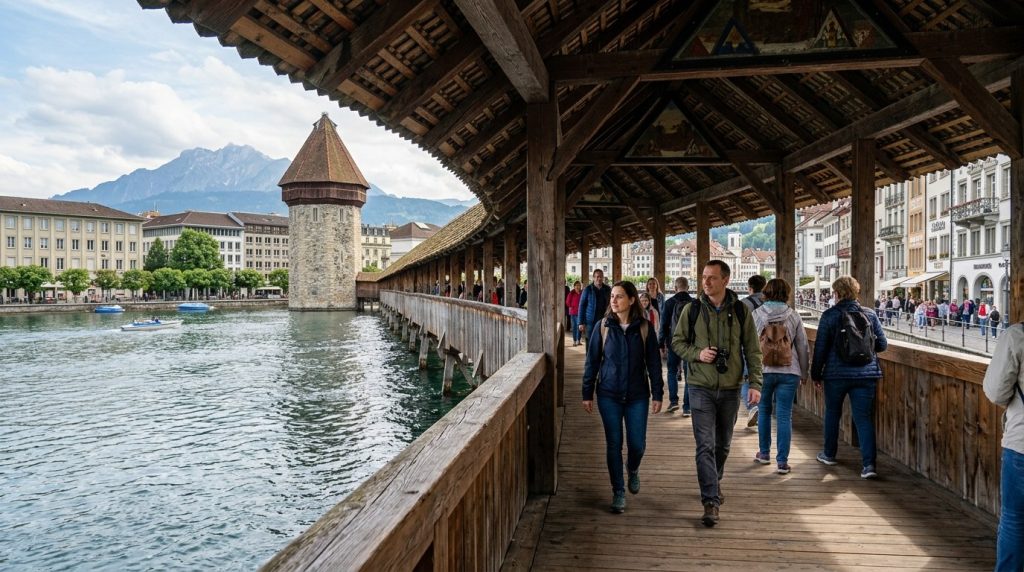
The Mountain Excursions Are the Real Reason to Stay
Staying overnight in Lucerne earns its keep only once a mountain excursion enters the plan.
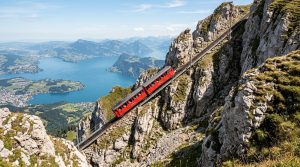
Mount Pilatus costs USD 104 (CHF 84) at full price, or USD 52 (CHF 42) with the 50 percent discount attached to a Swiss Travel Pass, though the Pilatus cableway has a maintenance closure running from 19 October to 27 November 2026 that rules it out for late-autumn trips.
Mount Rigi runs a comparable USD 96 (CHF 78) for the cogwheel railway and boat combination, with most visitors budgeting five to six hours for the full round trip. Mount Titlis, reached via a roughly 45-minute train transfer to Engelberg, costs USD 118 (CHF 96) and takes six to seven hours door to door.
None of these three fit into a single day alongside the Old Town without an early start and a late return, and that is the real argument for a night in Lucerne rather than a rushed day trip built around one mountain.
A Swiss Travel Pass itself runs USD 312 (CHF 254) for three days, USD 491 (CHF 399) for six days, or USD 540 (CHF 439) for eight days, using a CHF to USD rate of 1.23 verified today, and it is worth pricing against individual tickets before buying since one mountain rarely covers its cost.
For a longer list of what else fills the extra hours in town between excursions, see things to do in Lucerne.
Day Trip From Zürich, or Nights of Its Own
A day trip from Zürich genuinely works if the Old Town is the goal. Direct trains connect Zürich Hauptbahnhof to Lucerne in about 45 minutes, and Zürich Airport to Lucerne in roughly an hour, both frequent enough to plan around rather than build a whole day around.
That single fact is what makes Lucerne one of the easiest worthwhile day trips out of Zürich in Switzerland. The case for staying instead comes down to the mountains.
An overnight in Lucerne means catching one of the first cable cars up Pilatus or Rigi rather than losing the morning to a train from Zürich, and it means not repeating the same 45-minute or hour-long ride twice in one day.
Travelers weighing Lucerne against a full alpine base already have a dedicated answer in the Interlaken vs Lucerne comparison, which covers that exact trade-off in more depth than fits here.
Who Should Skip Lucerne
Skip Lucerne if a lake town does not add anything new to your trip, particularly if you already built in time at Lake Como or Lake Annecy and want different scenery this time rather than a repeat of the same formula.
Skip it if nightlife or a low nightly rate matters more than the view, since Lucerne quiets down early and hotel rates lean toward the lakefront premium rather than hostel pricing.
Skip it if your itinerary already includes the Jungfrau region, since Rigi and Pilatus offer a similar cogwheel-railway-to-a-viewpoint experience to Jungfraujoch, and stacking both into one trip is redundant rather than additive.
Skip it, too, if you have only one full day in Switzerland and must choose a single base, since Zürich or Geneva will serve a one-city itinerary better than a lake town built around excursions you will not have time to reach.
Best time to visit for the mountain excursions
Mid-May through mid-September is Lucerne’s warmest, sunniest stretch and the window when all three mountain excursions, Pilatus, Rigi and Titlis, reliably run without weather-related closures. June through August is also peak season, so the cogwheel railways and boats already described run at their busiest and most expensive, and lake-view hotel rooms book out furthest in advance.
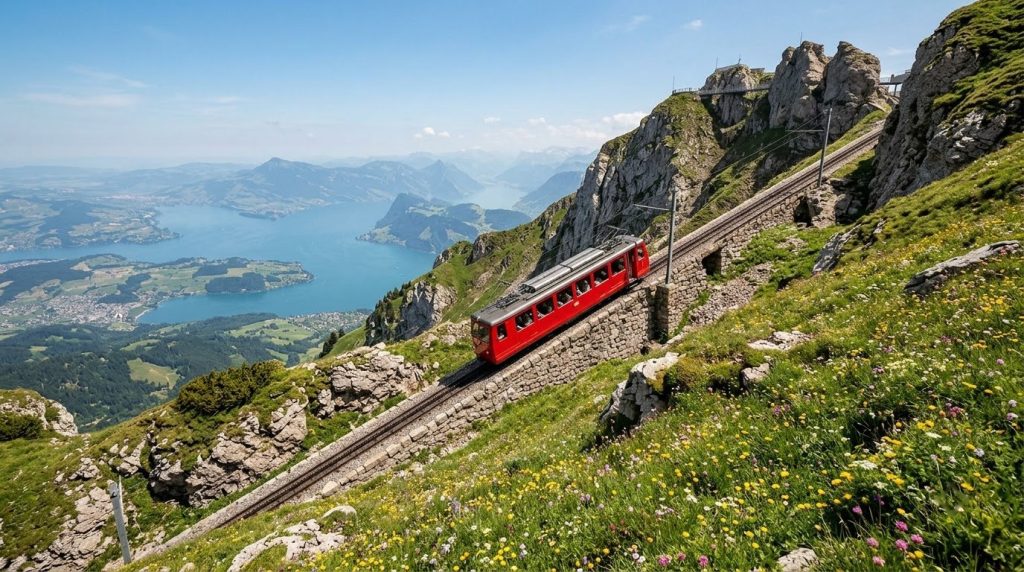
September is the sweet spot many repeat visitors land on: lift and cable-car operations are still fully open, crowds thin out once the school-holiday period ends, and the weather generally stays mild and sunny. October and November are a trickier bet.
Days turn greyer, colder and wetter, and gondola or cableway access can be limited or paused for seasonal maintenance, which lines up with the Pilatus closure from 19 October to 27 November 2026 already noted above, so always check an excursion’s current operating status before booking a night in Lucerne specifically to reach it in late autumn.
Winter, December through February, flips the picture again: the Old Town still works perfectly well as a short visit, and Titlis in particular stays open for snow sports on its glacier year-round, making it the most reliable of the three mountains for a winter trip, while Pilatus and Rigi’s winter schedules are more weather-dependent and worth confirming close to your travel dates.
For a traveller whose whole reason to stay overnight is a mountain excursion rather than the Old Town itself, May, June and September offer the most dependable combination of open lifts, decent weather and manageable crowds.
Whatever month you go, pack for a bigger temperature swing than the Lucerne forecast suggests: Pilatus tops out at 2,132 metres and Titlis’s glacier summit sits at 3,238 metres, both high enough that a warm, sunny day by the lake can still mean a genuinely cold, windy summit, so a proper jacket belongs in the bag even on a July visit.
Titlis in particular keeps snow underfoot year-round at the top, which is part of the appeal but also means summer sightseeing shoes are the wrong choice for anyone planning to walk around outside the main viewing platform.
Autumn and early winter bring a Swiss weather quirk worth knowing before writing off a grey morning in Lucerne: low-lying valleys and lakes frequently sit under a layer of mist or cloud, known locally as the Nebelmeer, or sea of fog, while the mountain summits above sit in full sunshine at the same time.
A dull, overcast morning at lake level is not a reliable sign that Pilatus, Rigi or Titlis will be cloudy too, so it is worth checking the specific mountain’s live webcam or summit forecast before cancelling an excursion based only on how Lucerne itself looks out the hotel window.
Each operator publishes current conditions and webcam links for exactly this reason, and checking them before breakfast takes less time than the regret of skipping a clear mountain day because the town below looked unpromising, and it costs nothing to look before deciding the day is a write-off.
Where to Stay if You Decide to Go
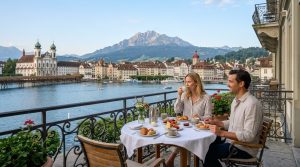
Once the mountain excursions justify a night or two, where you stay in Lucerne matters more than which mountain you pick first. Lakefront rooms near the Old Town cost more but put Chapel Bridge and the main train station within a few minutes’ walk, while neighborhoods further out trade that convenience for a lower nightly rate.
The full where to stay in Lucerne breakdown covers neighborhoods and price bands in more depth than fits here. The map below pulls live listings if you want to compare options directly.
Find your Lucerne hotel on the map
Live prices from Booking, Airbnb and more — move the map or change dates to compare stays around Lucerne.