Is Tokyo Worth Visiting? (2026)
Disclosure: Some links in this guide are affiliate links. If you book or buy through them, we may earn a small commission at no extra cost to you — it helps keep our guides free.
Yes, Tokyo is worth visiting: it drew 21.5 million international arrivals in 2024 and packs 170 Michelin-starred restaurants into one metro area, more than any other city on the planet. It is not worth it if you have fewer than four nights in the city, cannot tolerate crowds, or came to Japan specifically for temples, since Kyoto owns that experience.
| Traveller type | Worth it? | Nights to give it | Why |
|---|---|---|---|
| First-time visitor to Japan | Yes | 4-5 nights | Best entry point: the trains are navigable, English signage covers transit, and the food scene alone justifies the trip. |
| Foodie or fine-dining traveller | Yes | 3-4 nights | 170 Michelin-starred restaurants in one city, more than Paris or New York. |
| Budget backpacker | Yes, with limits | 3 nights | The weak yen makes it cheaper than in past years, but Tokyo still costs more than Southeast Asia. |
| Traditional-Japan seeker (temples, ryokan) | Skip or minimise | 1-2 nights max | Tokyo’s history is real, but Kyoto’s temple density does this better. |
| Family with young children | Yes, with planning | 3-4 nights | Extremely safe and clean, but long transit days and dense crowds tire small kids out fast. |
| Under 5 total days in Japan | No | 0-1 nights | Splitting a short trip between two cities means neither one gets done properly. |
What Tokyo does that nowhere else on Earth does
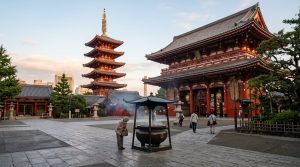
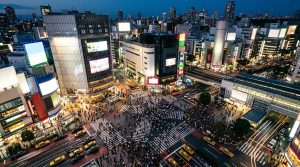
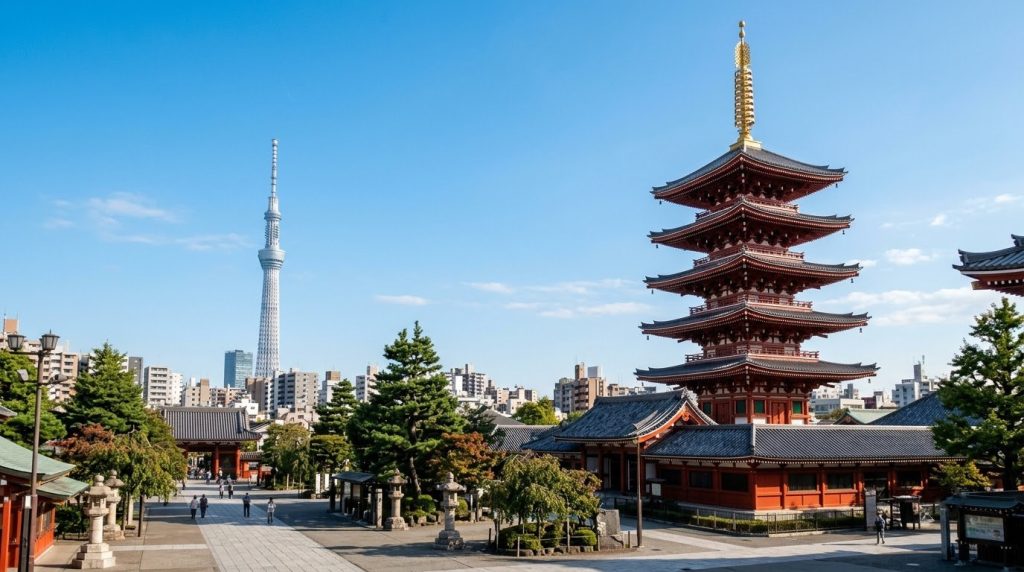
Tokyo’s single unmatched strength is density: more Michelin-starred kitchens, more train lines, and more neighbourhoods with their own distinct identity than any other city fits into one metro area. Shibuya, Shinjuku, Asakusa, and Ginza each feel like a different city, yet they sit minutes apart on the same subway map.
That combination of scale and specificity is why the city works for such a wide range of travellers, from a first-timer chasing sushi and neon to a design-focused visitor who wants nothing but architecture and vintage shopping. A 4-day Tokyo itinerary is enough to sample three or four of these neighbourhoods properly without feeling rushed between them.
No other city pairs a 24-hour convenience-store food culture with three-Michelin-star dining a subway ride apart, and that range, from a convenience-store rice ball to an omakase counter, is the point rather than a contradiction.
Is it overwhelming, honestly
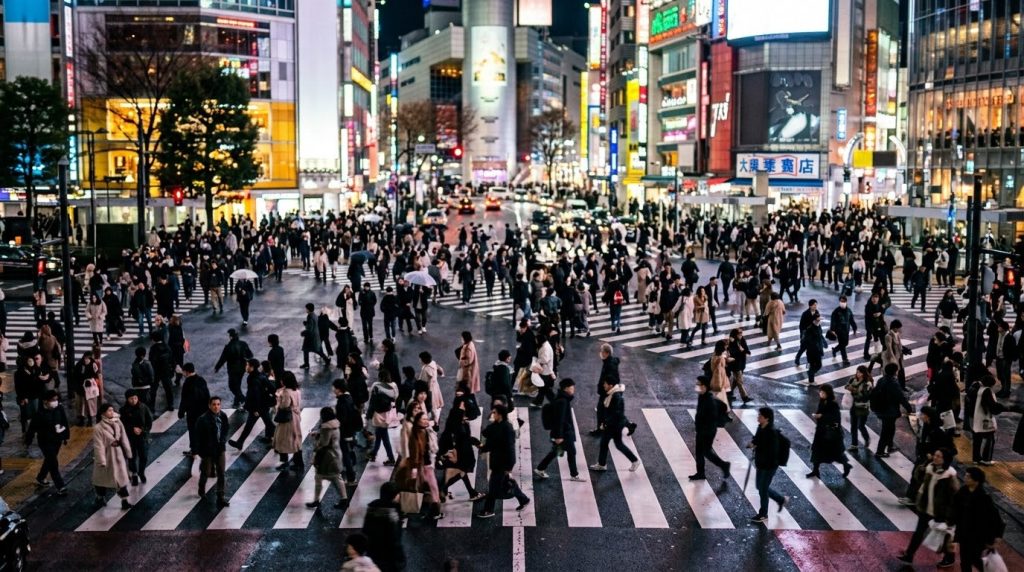
Tokyo’s scale is real, but the transit system, not the city itself, is what makes it navigable, so overwhelming resolves into learnable within about a day. Shinjuku Station alone handles roughly 3.53 million passengers a day across five rail operators, the busiest station on Earth, and it looks intimidating on a map before you’ve walked it once.
In practice, an IC card (Suica or Pasmo) taps you through every gate without a ticket machine in sight, and Google Maps routes trains, platforms, and exit numbers accurately enough that most visitors stop checking a paper map by day two.
The part that actually slows people down is deciding how long to stay in the first place; if that’s still open, how many days to spend in Tokyo breaks down the trade-offs by trip length. Rush-hour trains (roughly 7:30-9:00am and 5:30-7:00pm on weekdays) are genuinely packed and worth avoiding with luggage, but outside those windows the system is calm.
The other pressure point is the sheer number of exits at major stations, Shinjuku alone has more than 200, so building a five-minute buffer into any plan to surface at the right one is more useful than trying to memorise the layout in advance.
The language barrier, in practice
The language barrier is real in small restaurants and nearly nonexistent on the trains, so the honest answer changes by location, not by whether you’re in Tokyo at all. Japan ranked 96th of 123 non-English-speaking countries on the 2025 EF English Proficiency Index, in the “very low proficiency” tier, and that shows up fastest off the tourist track.
Tokyo Metro and JR East signage, ticket machines, and announcements are bilingual as standard, so the transit layer of a trip needs almost no Japanese. Neighbourhood ramen counters, standing bars, and family-run izakayas are a different story: menus are often Japanese-only, and staff may not speak English at all.
A translation app with a camera function closes most of that gap in seconds, and pointing at a vending-machine-style ticket photo works when words fail.
Convenience stores, department store food halls, and most mid-range restaurants near stations sit somewhere in between, with picture menus or plastic food models doing the job English text would otherwise do, so the barrier shrinks the moment you’re not deep in a residential side street.
The weak yen and what a trip actually costs now
The weak yen makes Tokyo a relative bargain right now, not the expensive city its reputation suggests. The rate this week sits near USD/JPY 153.5, down slightly from the 161-162 range the yen hit in June 2026, its weakest level since 1986, but still historically cheap for anyone spending US dollars.
A mid-range daily budget in Tokyo (meals, local transit, one paid attraction) runs about USD 122 (JPY 18,800) per person.
Hotels split roughly between USD 59 (JPY 9,000) for a clean 3-star room and USD 163 (JPY 25,000) for a 4- or 5-star stay, and a 7-day Japan Rail Pass costs USD 326 (JPY 50,000) if a trip extends beyond Tokyo.
None of that is cheap in absolute terms, but it buys noticeably more than it did even three years ago, and it puts a Tokyo trip closer to a Southern European city break than to the premium-Asia price tag the city carried a decade ago.
Costs also swing hard with the season, and the best time to visit Tokyo covers which months keep both crowds and prices down.
Who should skip Tokyo
Skip Tokyo, at least on this trip, if you want traditional Japan without modern noise, if your total time in Japan is under five days, or if you find crowds and neon draining rather than energising.
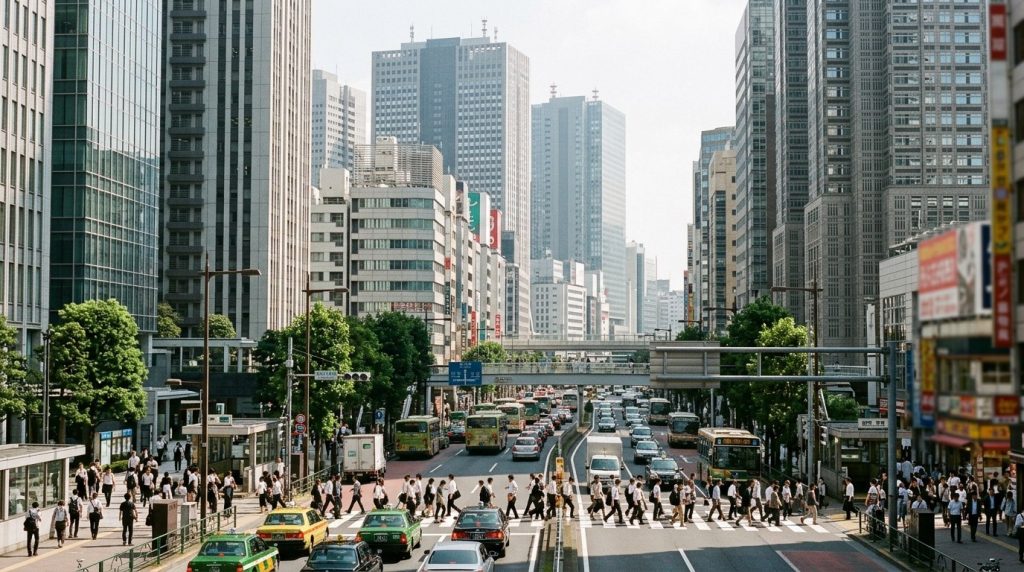
Travellers chasing slow ryokan mornings, onsen towns, and quiet temple visits will find Tokyo’s version of “traditional” thin and scattered between skyscrapers; Kyoto, Hakone, or Kanazawa deliver that experience far more directly.
Anyone with under five total days in Japan should also think twice about adding Tokyo to a Kyoto trip, since splitting a short window between two cities usually means neither gets seen properly; Tokyo vs Kyoto walks through that exact trade-off.
And travellers who find Shinjuku’s 3.53 million daily commuters more stressful than exciting should be honest that Tokyo’s rush hour is not exaggerated for tourists, it is the actual city on a Tuesday.
If none of that sounds like a dealbreaker, the traveller types in the table above who scored “Yes” almost always come away planning a second trip rather than regretting the first one.
Best time to visit Tokyo
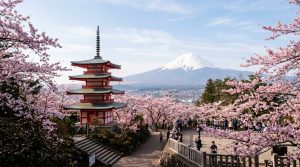
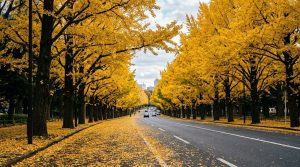
Cherry blossom season, typically late March into early April, and autumn foliage, typically late November into early December, are Tokyo’s two most popular windows, pairing the mildest, clearest weather of the year with the heaviest crowds and the highest hotel rates of any season.
Summer, July and August, brings heat and humidity that can make a full day of walking uncomfortable, on top of a typhoon season that runs roughly August through October, peaking around September, and that can disrupt trains and flights with little warning, sometimes grounding domestic routes for a full day.
Winter, December through February, is cold but dry and comparatively crowd-light, with clear skies that suit a tighter sightseeing schedule and some of the year’s lowest hotel rates outside the New Year holiday week, when many Tokyo residents travel home and leave the city noticeably quieter than usual.
Travelers chasing comfortable weather without peak-season prices tend to do best in late April to early June or in October, after the typhoon risk has mostly passed and before winter cold sets in, a window that also avoids the Golden Week holiday crush in early May when much of Japan travels domestically at once.
Rainy season, roughly June into mid-July, is a separate window from the typhoon season that follows it, bringing persistent humidity and frequent light rain rather than the sudden severe weather of a typhoon, and it deters fewer travelers than the heat that follows it in August.
None of Tokyo’s seasons rules out a trip outright; the differences are in crowd size, hotel pricing, and how much the weather itself becomes part of the daily planning.
Practical tips: cash, etiquette and tax-free shopping
Japan still runs largely on cash for small purchases, convenience stores, and many neighbourhood restaurants, even though major stores and chain restaurants now take cards widely; carrying some yen in small bills avoids an awkward moment at a ramen counter where a card reader turns out not to exist.
Tax-free shopping is changing this period: the longstanding rule lets visitors skip the 10 percent consumption tax on purchases of roughly USD 33 (JPY 5,000) or more at participating stores on the same day, but from November 1, 2026, Japan is shifting to a refund model, where visitors pay the full tax-included price at checkout and claim the refund before departure instead of getting the discount instantly in store, a change worth knowing about before budgeting for a shopping day.
Basic etiquette matters more than language ability: remove shoes where a raised floor or entryway signals it, stand to one side on escalators, and keep phone calls off train cars rather than assuming headphones make a call acceptable.
Eating or drinking while walking is uncommon outside a food stall’s immediate area, and tipping is not expected or practised anywhere, including restaurants, taxis, and hotels. None of this requires fluency, just attention to the cues locals already give.
Public bins are scarce on Tokyo streets, a legacy of heightened security after past incidents, so visitors typically carry small trash, such as a drink can or food wrapper, until reaching a convenience store or station bin rather than finding one on the nearest corner.
Trains run on a schedule precise enough that a departure board listing a minute-level time is treated as exact, which matters when connecting between lines on a tight transit window.
Does Tokyo work for a first trip to Japan?
Yes, and the table above already makes this the recommended starting point for most first-time visitors: bilingual transit signage, a dense concentration of food and sights, and direct international flights make it an easier landing than a smaller city with less English-language infrastructure.
How many days of a Japan trip should Tokyo get?
Four to five nights is the comfortable range for most first-time visitors splitting time with Kyoto or Hokkaido, enough to cover several neighbourhoods without feeling rushed, while a dedicated Tokyo-only trip can extend well past a week without running out of new ground to cover.
Where to stay if you decide to go
Staying near a JR Yamanote Line station, such as Shinjuku, Shibuya, or Ueno, cuts transit time to nearly everything on this page, since that loop line connects most of the neighbourhoods worth visiting.
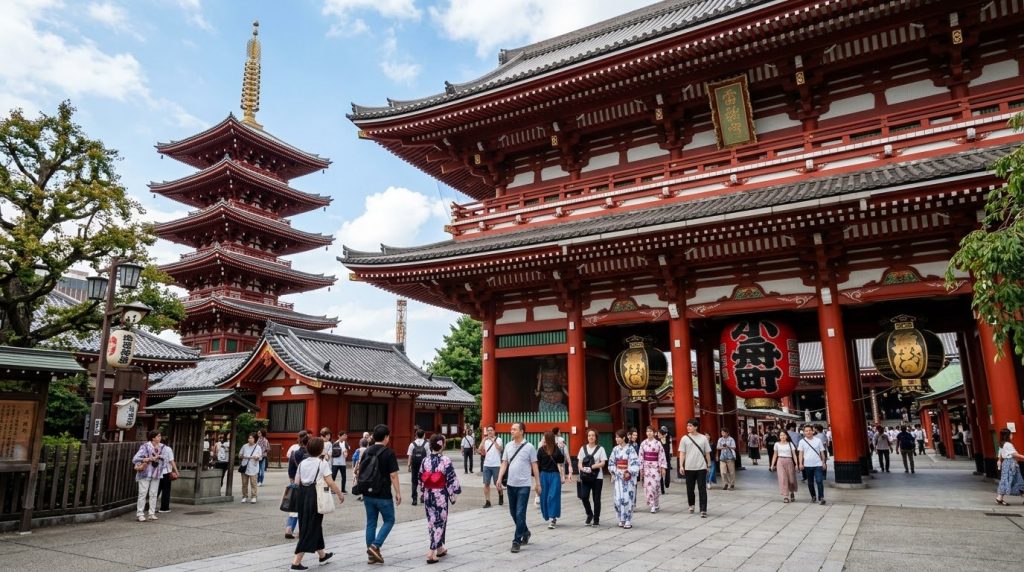
Find your Tokyo hotel on the map
Live prices from Booking, Airbnb and more — move the map or change dates to compare stays across Tokyo.