Is Tokyo Safe? An Honest City Guide for First-Timers (2026)
Disclosure: Some links in this guide are affiliate links. If you book or buy through them, we may earn a small commission at no extra cost to you — it helps keep our guides free.
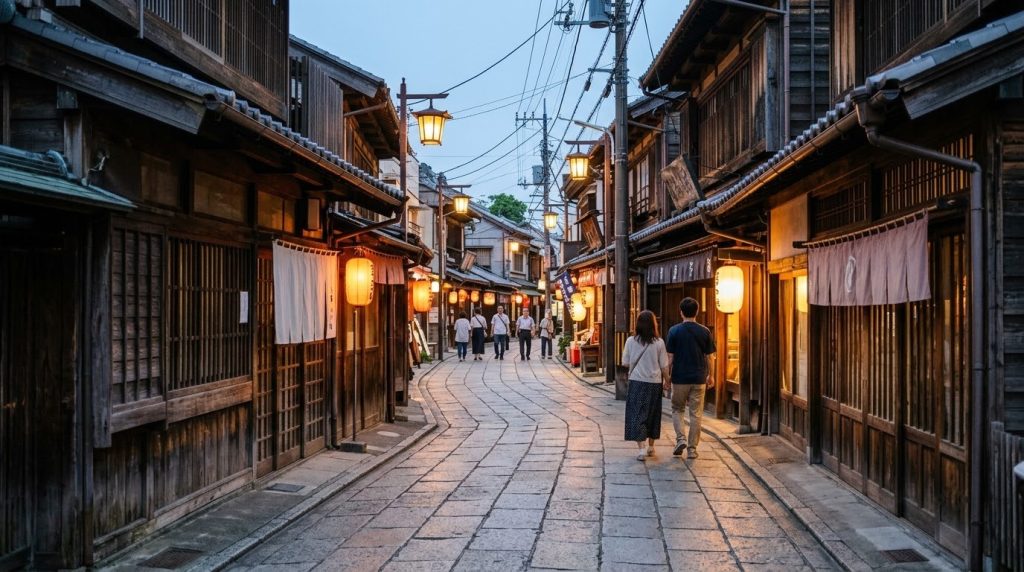
Yes, Tokyo is safe for almost every visitor: the US State Department rates Japan at Level 1, the lowest of its 4 levels, and Japan ranked 12th of 163 countries in the 2025 Global Peace Index. Violent crime against tourists is rare.
The two risks that actually catch Americans out are rip-off bars reached through street touts in Kabukicho and Roppongi, and the small but real chance of a strong earthquake.
| Risk | Reality | What to do |
|---|---|---|
| Street crime | Rare; walking alone at night is normal | Normal big-city common sense |
| Bar touts and spiked drinks | The main crime aimed at foreigners, centered on nightlife districts | Never follow a tout; pick bars yourself |
| Overcharged bar bills | Hidden fees, sometimes a forced ATM trip | Ask prices first; keep your card in your pocket |
| Earthquakes | 70% odds of a magnitude-7 quake under Tokyo within 30 years | Install the Safety Tips app; learn hotel exits |
| Late trains | Safe, but last trains run around 1 a.m. | Plan the ride home or use the GO taxi app |
| Rush-hour groping | Happens on packed trains | Women-only cars in the morning peak |
The honest answer: safer than any big US city you know
People leave laptops on cafe tables, kids ride the subway alone, and solo walks home after midnight are routine. If you are still deciding whether Tokyo is worth visiting at all, cost and crowds are the real trade-offs; safety is not a reason to stay home. US passport holders can also visit visa-free for up to 90 days.
“Safe” is not “risk-free,” though. The UK government’s travel advice says Tokyo’s entertainment districts “carry a higher risk of crime, particularly at night in and around clubs and bars,” and Japanese police single out Kabukicho, Roppongi, Shibuya and Ikebukuro. Nearly every serious problem a visitor runs into starts in one of those places, after dark, with alcohol.
The scams that actually happen: Kabukicho and Roppongi bar traps
A friendly tout (kyakuhiki) approaches you in English, promises cheap or all-you-can-drink deals, and walks you to a bar up a side street. The first drink is strong. The bill is not what you were promised.
The Tokyo Metropolitan Police Department describes victims who finish a “very strong” first drink, fall asleep, and wake up with an empty wallet and card charges; some bars walked drugged customers to an ATM to “settle” the tab. The UK Foreign Office adds that some visitors were arrested after arguing with staff over excessive bills. Other versions police flag:
– Dating-app setups: a match picks the bar, then vanishes before a huge bill arrives. – “Deposit first” offers: a tout takes an advance payment for a companion who never shows. – Card fraud: Kinshicho, Shimbashi and Ueno/Yushima also appear on police lists.
The fix: do not follow anyone who approaches you on the street. Touting is illegal in Tokyo, and in July 2026 Kabukicho police arrested a man accused of luring foreign tourists into shady bars. Ask for the menu and cover charge before ordering, and pay per round.
Neighborhoods to avoid after dark
No Tokyo neighborhood is off-limits; certain streets are worth skipping at 1 a.m.
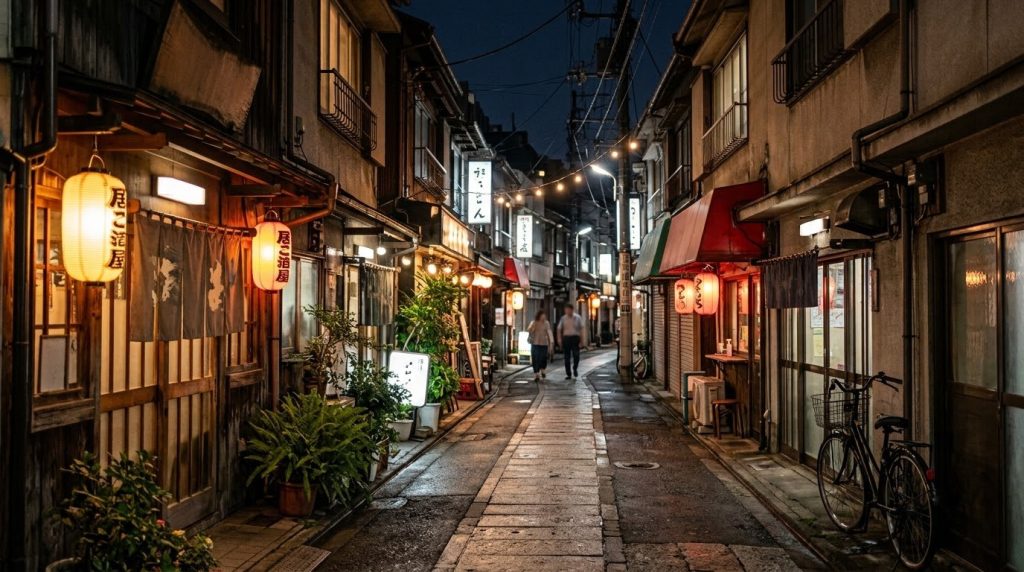
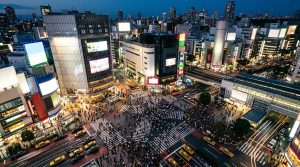
– Kabukicho (Shinjuku): walk through for the neon and eat there, but skip side-street bars and sidewalk pitches. – Roppongi: touts work the main crossing for the club crowd. Daytime Roppongi, with its museums, is a different place. – Ikebukuro and parts of Shibuya late at night, for the same reasons.
By day, the shrines, markets and sights on our list of the best things to do in Tokyo carry almost no crime risk beyond crowds.
Trains at night and getting around
Rail is the safest way around Tokyo at any hour. The catch is time: the JR Yamanote loop runs from about 4:30 a.m. to roughly 1:20 a.m., and last trains vary by station and direction. Check yours before you start drinking. Miss it and use the GO taxi app, which works in English and handles payment, so the ride home is the safe part of the night.
The same rules apply when you leave the city; our guide to the best day trips from Tokyo covers the train connections.
Solo and female travelers
Tokyo is one of the easiest big cities to explore alone, including for women. The issue women raise most is groping (chikan) on packed trains. Women-only cars, marked in pink or purple with platform markings, run mostly during the weekday morning rush; children and people with disabilities traveling with a caregiver can ride too. If someone touches you, say so loudly and tell station staff.
Solo men are the more common target of bar scams, so they should think twice about “one more bar” with a stranger.
Earthquakes in a city context
The government’s Headquarters for Earthquake Research Promotion puts the chance of a magnitude-7 quake directly beneath the Tokyo area at 70% within 30 years, per Nippon.com’s summary of official projections. Over a one-week trip the odds are small, and modern buildings are designed for shaking.
– Install JNTO’s Safety Tips app for earthquake, tsunami and typhoon alerts in English. – When an Earthquake Early Warning sounds, protect yourself first, even before shaking starts. – Learn your hotel’s evacuation route on arrival and follow staff instructions. – Near the coast during a strong quake, head for higher ground.
Weather adds its own risks; our guide to the best time to visit Tokyo covers heat and typhoon season.
What to do in an emergency
– 110 for police; 119 for fire and ambulance. – 03-3501-0110: Tokyo police English helpline, which JNTO lists as 24 hours. – 050-3816-2787: JNTO’s Japan Visitor Hotline, 24 hours, for illness and disasters.
Buy travel insurance with medical coverage; your US health plan likely will not pay a Tokyo hospital directly.
Where to stay
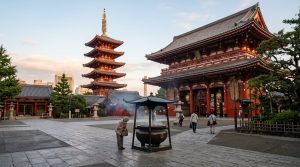
– Shinjuku (west and south of the station): the best transport hub, on the quiet side of the tracks from Kabukicho. Good for first-timers and the base for our 4-day Tokyo itinerary. – Ginza and Tokyo Station: polished, quiet after dark, direct to the shinkansen. Suits couples and families. – Asakusa: traditional, low-rise and calm at night, with prices that suit budget travelers.
Find your Tokyo hotel on the map
Live prices from Booking, Airbnb and more — move the map or change dates to compare stays across Tokyo.
Frequently Asked Questions
Is Tokyo safe for American tourists?
Yes. The US State Department rates Japan at Level 1, “exercise normal precautions,” its lowest level. Americans are not singled out for crime. The real risks are tout-run bar scams in Kabukicho, Roppongi, Shibuya and Ikebukuro, plus earthquakes. Skip street touts, check your last train and install the Safety Tips app.
Is it safe to walk around Tokyo at night?
Yes, in almost every neighborhood. Locals walk home alone after midnight on quiet, well-lit streets. The exception is nightlife zones, where touts work the sidewalks and rip-off bars operate upstairs. Walking through Kabukicho or Roppongi is fine; following anyone who invites you into a bar is not.
What is the most dangerous area in Tokyo?
Tokyo police name Kabukicho in Shinjuku as the main trouble spot, with rip-off bars and illegal casinos. Roppongi, Shibuya, Ikebukuro, Kinshicho, Shimbashi and Ueno also appear on police lists for touts and card fraud. None are dangerous by day; the risk is late-night bars reached through touts.
What should I do if there is an earthquake in Tokyo?
Protect yourself first: get under a sturdy table, away from windows and anything that can fall. Do not rush outside into falling glass. Afterward, follow hotel staff instructions and check the Safety Tips app or NHK World for English updates. Near the coast, move to higher ground in case of a tsunami.
Is Tokyo safe for solo female travelers?
Yes, it is one of the safest big cities for women traveling alone. The main issue is groping on crowded rush-hour trains, which is why many lines run women-only cars during the morning peak. Speak up loudly if it happens and tell station staff. Walking alone at night is generally safe outside nightlife bar strips.